Why Your Puppy Raids the Bathroom Trash Can (And 3 Crucial Tricks to Stop It Forever)
The Midnight Bin Bandit: Why Puppies Love Your Bathroom Trash
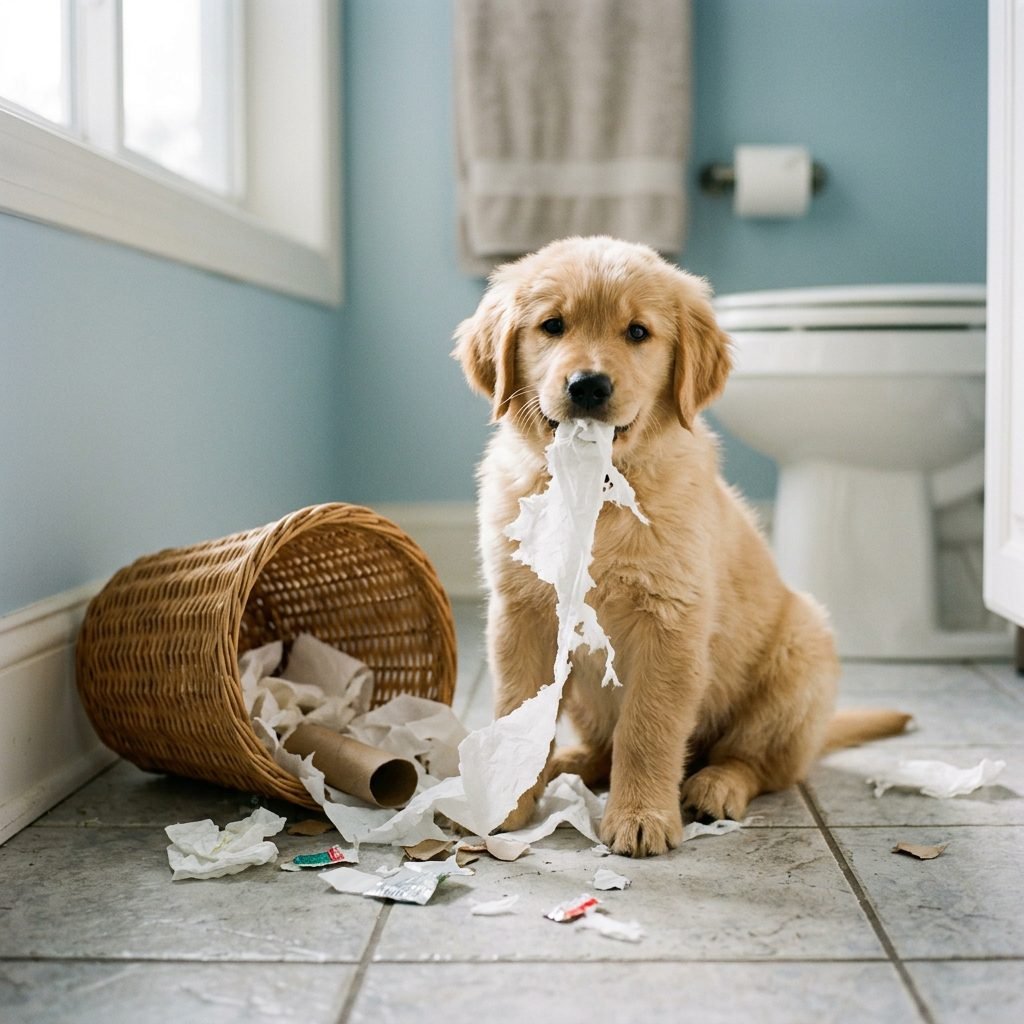
We have all been there. You walk into the bathroom to brush your teeth, only to find a ‘snowstorm’ of shredded tissues, a suspiciously chewed-up cotton swab, and a puppy looking at you with the most innocent, tail-wagging expression imaginable. It is frustrating, messy, and—let’s be honest—a little bit gross. But for your puppy, that bathroom trash can isn’t a receptacle for waste; it is a treasure chest of olfactory delights and interesting textures. As a canine specialist, I can tell you that this behavior is perfectly normal from a biological standpoint, but it is also something we need to curb immediately for the sake of your home and your puppy’s health.
In this comprehensive guide, we are going to dive deep into the canine psychology of trash raiding. We will explore why the bathroom, specifically, is such a high-value target compared to the kitchen or office. More importantly, I am going to share three crucial tricks that go beyond just ‘scolding’ your dog. We are looking for permanent solutions that address the root cause of the behavior, ensuring your bathroom stays clean and your puppy stays out of the vet’s office. So, grab a cup of coffee, and let’s turn your little scavenger into a well-behaved companion.
The Psychology of the Scavenger: Why the Bathroom?
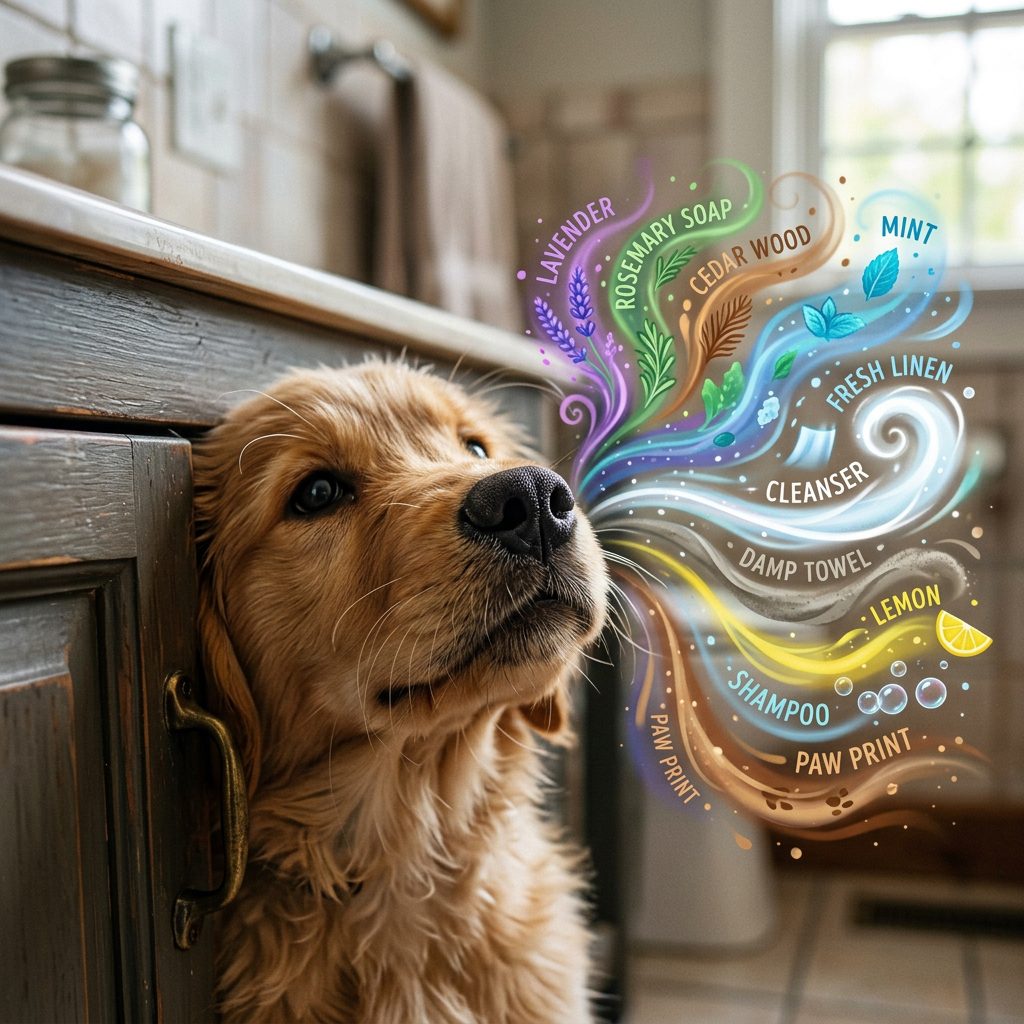
To stop the behavior, we first have to understand the ‘why.’ Dogs are opportunistic scavengers by nature. In the wild, their ancestors survived by investigating every potential food source, and that instinct hasn’t disappeared just because they now eat premium kibble from a ceramic bowl. The bathroom trash can is particularly alluring for several reasons.
1. The Scent Factor
Your bathroom trash contains items that are heavily scented with human pheromones. Tissues, cotton pads, and even discarded dental floss carry your unique scent in a concentrated form. To a puppy who views you as the center of their universe, these items are incredibly comforting and interesting. They aren’t trying to be ‘bad’; they are trying to get closer to you.
2. Texture and Shred-ability
Puppies explore the world with their mouths. The bathroom bin is filled with materials that have satisfying ‘mouth-feel.’ Tissues and toilet paper rolls provide immediate feedback when shredded—they rip, pop, and tear in a way that mimics the deconstruction of prey. This provides a massive hit of dopamine to a developing puppy brain.
3. Boredom and Isolation
Often, the bathroom is a place where puppies are left alone for short periods or a place they sneak into when the house is quiet. If a puppy is under-stimulated, the trash can becomes a self-contained toy box. It is the ultimate cure for boredom when no one is around to throw a ball.
The Hidden Dangers: Why You Must Act Now
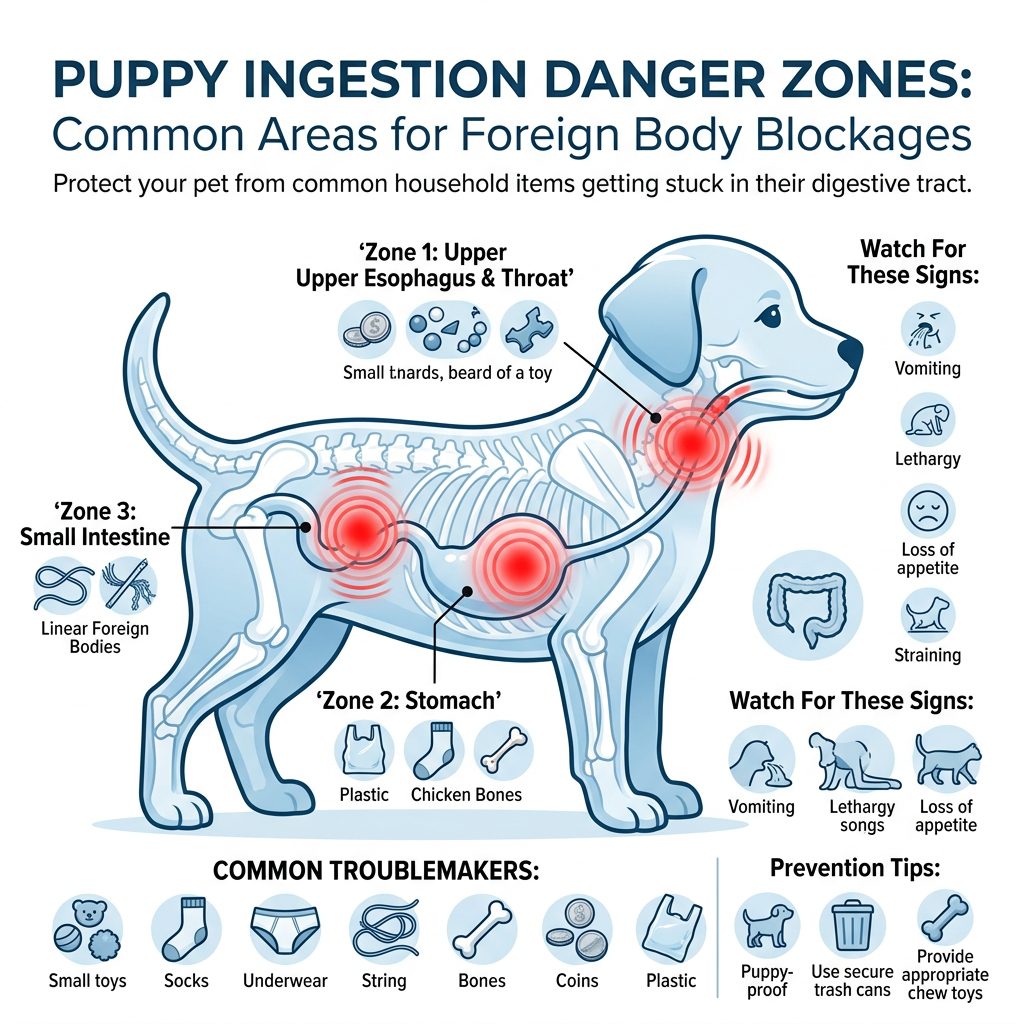
While the mess is annoying, the real reason we need to stop this habit is safety. The bathroom contains some of the most dangerous items a dog can ingest. Unlike kitchen scraps, which might just cause an upset stomach, bathroom waste can lead to surgical emergencies.
| Item | Risk Level | Potential Consequence |
|---|---|---|
| Dental Floss | Extreme | Linear foreign body; can ‘saw’ through intestines. |
| Used Razors | Extreme | Severe lacerations to the mouth, throat, and stomach. |
| Tissues/Paper | Medium | Choking hazard or mild intestinal blockage. |
| Q-Tips/Swabs | High | Internal punctures or ear canal damage if chewed. |
| Medication Wrappers | High | Residual toxicity from pills or ointments. |
As you can see, the stakes are high. A single piece of dental floss can cause thousands of dollars in vet bills and put your puppy’s life at risk. This is why management and training must work hand-in-hand.
Expert Tip: If you suspect your puppy has swallowed dental floss or a razor, do not wait for symptoms. Contact your emergency veterinarian immediately.
Trick 1: Environmental Management (The Fail-Proof Setup)
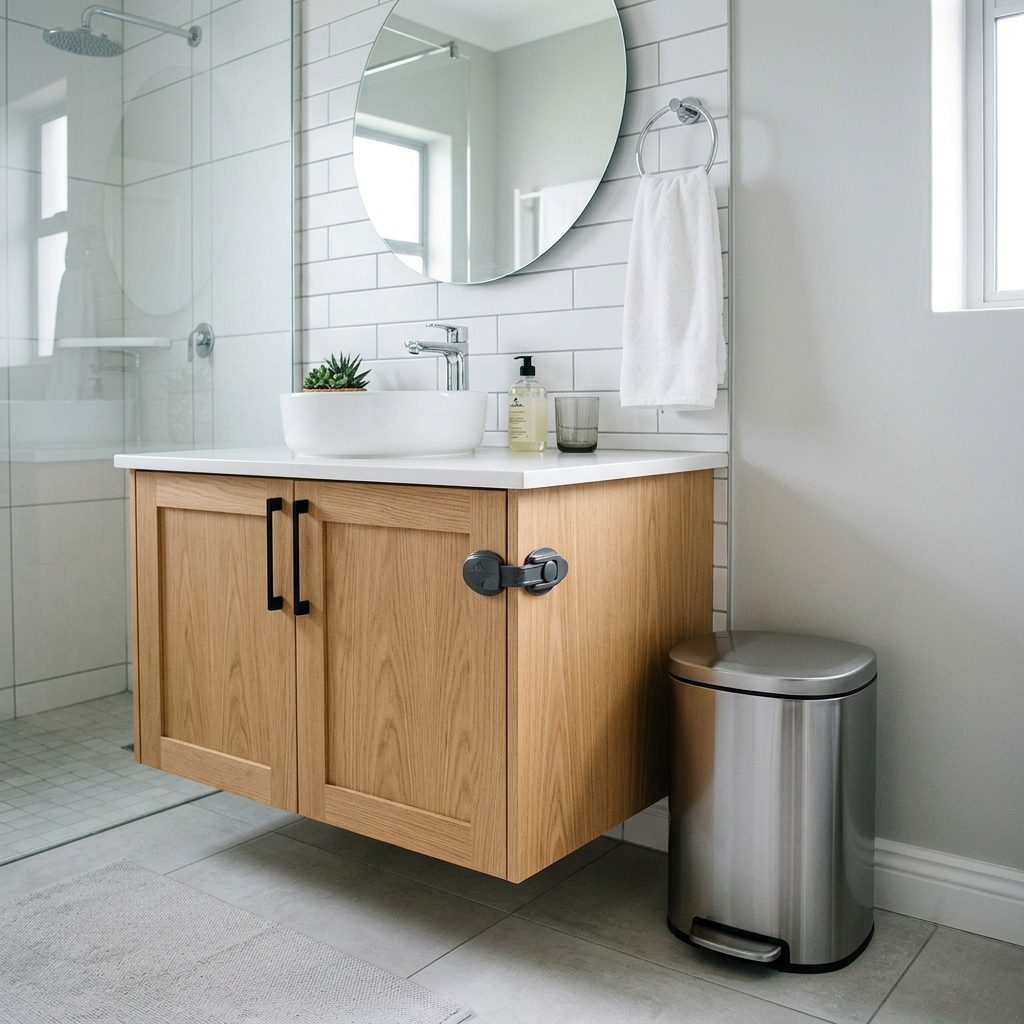
The first trick is the simplest, yet the one most owners overlook: Environmental Management. If the puppy cannot get to the trash, the puppy cannot fail. We want to prevent the ‘self-rewarding’ cycle of raiding the bin.
Upgrade Your Hardware
If you are using an open-top wicker basket or a simple plastic bin, you are inviting trouble. Savvy owners switch to stainless steel step-cans with heavy, soft-close lids. Better yet, look for models that have a locking mechanism. A puppy might figure out the foot pedal, but they rarely figure out a sliding lock.
The Out-of-Sight Strategy
The best place for a bathroom trash can is inside a cabinet. Use child-proof safety latches on the cabinet doors to ensure your puppy doesn’t learn how to ‘nose’ them open. This completely removes the visual and olfactory trigger from the puppy’s environment.
Consistent Boundaries
Use baby gates or simply keep the bathroom door closed at all times. This seems obvious, but consistency is where most owners fail. If the door is open ‘just once,’ and the puppy finds a treasure, the behavior is intermittently reinforced, making it much harder to break later.
Trick 2: Mastering the ‘Leave It’ and ‘Drop It’ Commands
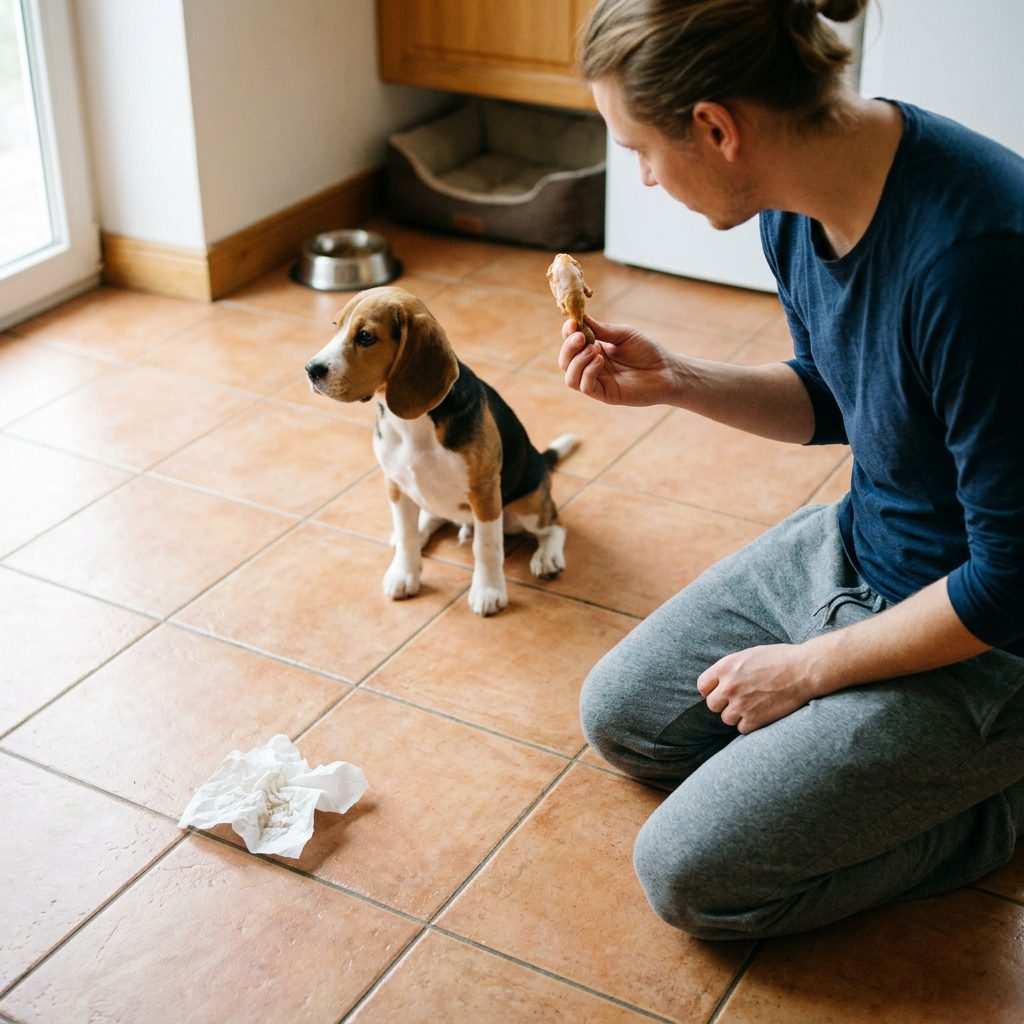
Management prevents the mess, but training changes the dog. You need a reliable ‘Leave It’ command for when you catch them eyeing the bin, and a ‘Drop It’ command for those moments they’ve already secured the ‘prize.’
Step-by-Step ‘Leave It’ Training
- The Closed Fist: Place a low-value treat in your hand and close your fist. Let the puppy sniff and lick. The moment they pull away, say ‘Yes!’ and give them a high-value treat from your other hand.
- The Open Palm: Once they master the fist, try an open palm. If they lung for it, cover it. If they look away, reward them. We are teaching them that ignoring the ‘boring’ thing leads to the ‘awesome’ thing.
- The Floor Drop: Drop a tissue on the floor. If they move toward it, cover it with your foot. When they make eye contact with you instead of the tissue, reward heavily.
The ‘Trade-Up’ Method for ‘Drop It’
Never chase your puppy if they have something in their mouth—this turns it into a game of ‘keep away.’ Instead, grab a piece of boiled chicken or a favorite squeaky toy. Show it to them. When they drop the trash to take the better item, use your verbal cue ‘Drop It’ and praise them. You want them to think, ‘Whenever I give Mom the trash, I get something even better!’
Trick 3: Biological Fulfillment (The Root Cause Solution)
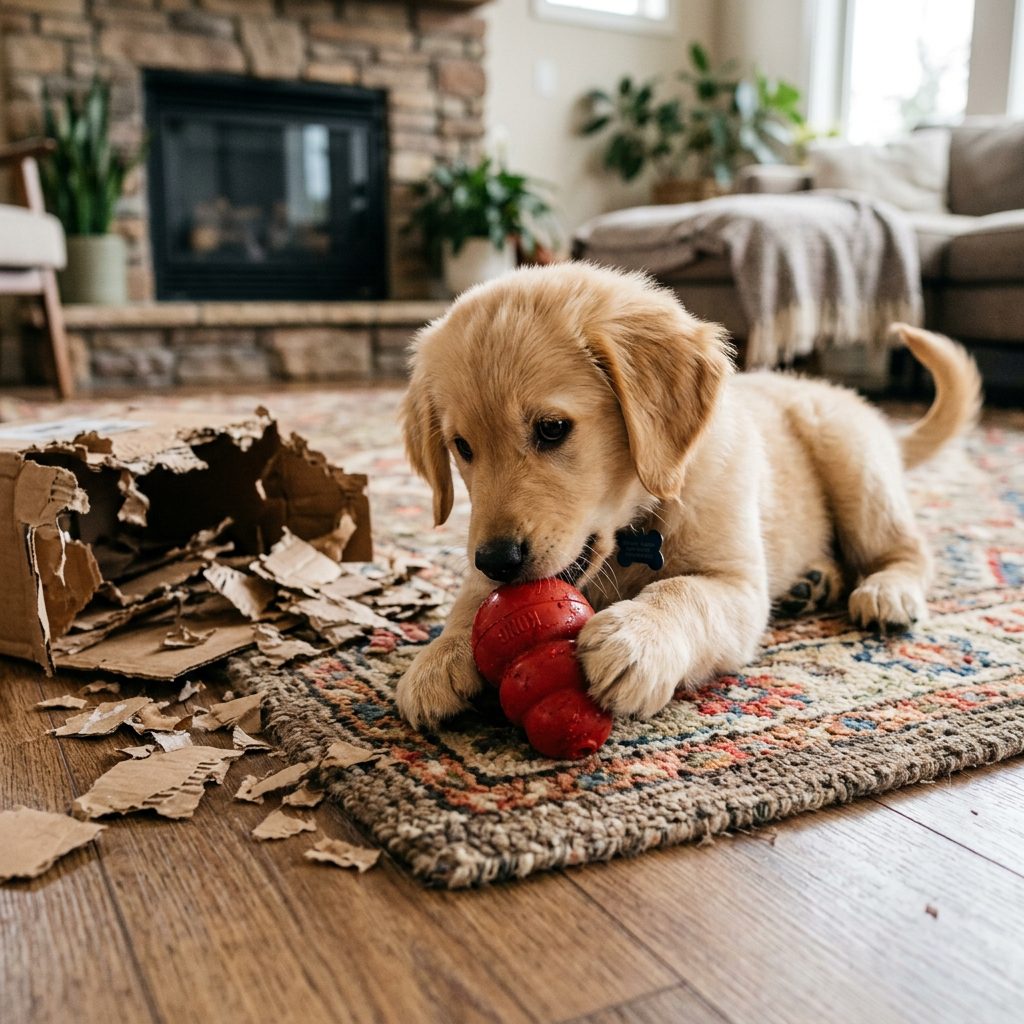
The final trick is to address why your puppy feels the need to scavenge in the first place. A puppy that is physically and mentally tired is a puppy that sleeps while you’re in the shower, rather than raiding the bin.
Destruction Outlets
If your puppy loves shredding tissues, give them a safe way to do it. Take an empty cardboard egg carton, put some kibble inside, and tape it shut. Let them rip it to shreds! This satisfies the biological urge to ‘deconstruct’ without the danger of ingesting bathroom chemicals.
Scent Work Games
Since the bathroom raid is scent-driven, engage their nose in a positive way. Hide ‘stinky’ treats around the living room and tell them to ‘Find it!’ Ten minutes of nose work is more exhausting for a puppy than a thirty-minute walk. When their brain is tired, the bathroom bin loses its luster.
High-Value Chews
Provide long-lasting chews like bully sticks or frozen Kongs. If a puppy has a designated ‘job’ (getting the peanut butter out of a toy), they won’t go looking for a ‘job’ in the trash can. Set your puppy up for success by giving them these high-value items specifically when you know you’ll be busy in the bathroom or elsewhere.
Troubleshooting: What to Do When They Slip Up
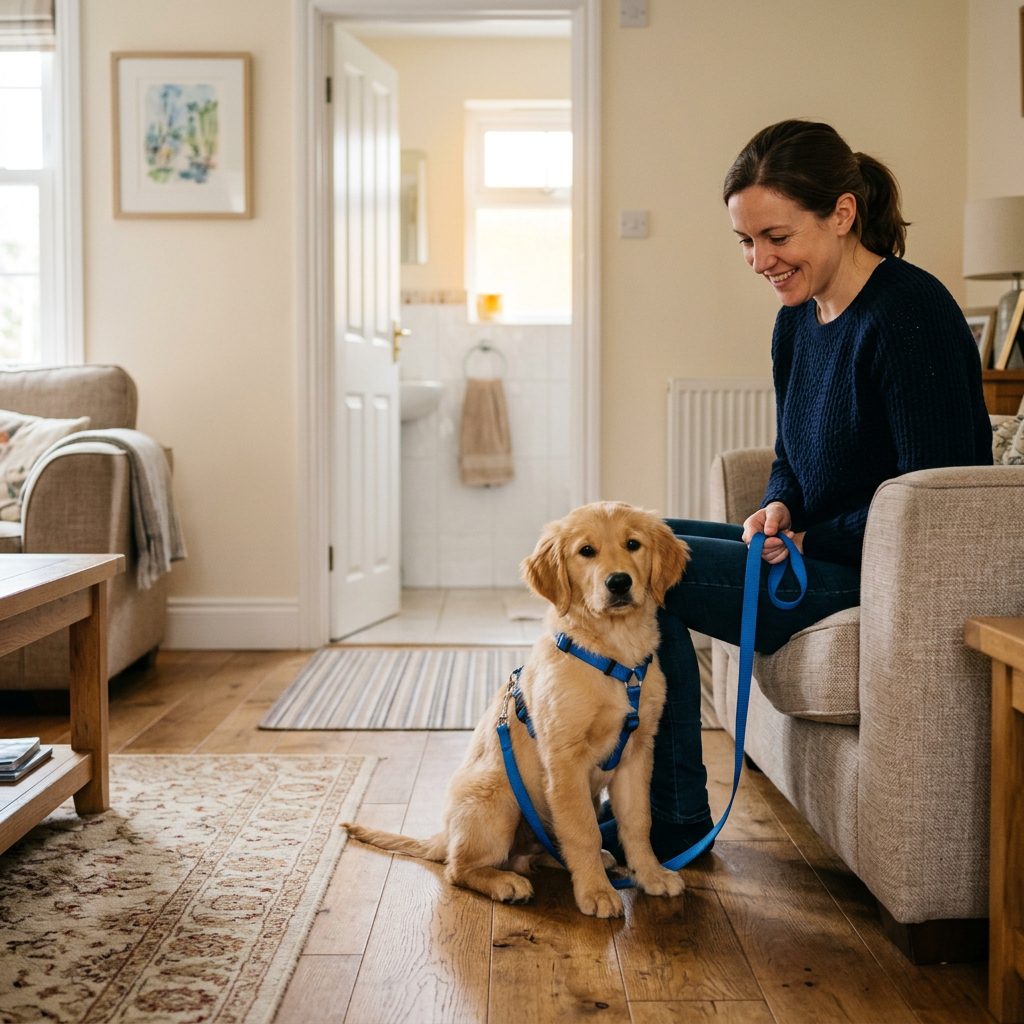
Even with the best training, accidents happen. How you react in the moment determines whether the behavior will continue.
Avoid the ‘Angry Chase’
As mentioned, chasing is a reward. If you see them with a tissue, stay calm. Use your ‘Trade-Up’ strategy. If you yell, the puppy learns to be ‘sneaky’ rather than learning to stop the behavior. They will just wait until you are out of the room to do it again.
Check for Nutritional Gaps
In rare cases, extreme scavenging (pica) can indicate a nutritional deficiency or a GI issue. If your puppy is eating non-food items obsessively despite training and enrichment, a quick chat with your vet is a good idea to rule out any underlying health concerns.
The ‘Succession’ of Freedom
Don’t give your puppy full run of the house too early. Use ‘tethering’ (keeping the puppy on a leash attached to you) or ‘exercise pens’ to limit their access to the bathroom until they have proven they can be trusted. Freedom is a privilege earned through consistent good behavior.
Conclusion
A Clean Bathroom and a Happy Pup
Stopping a bathroom trash raider doesn’t happen overnight, but with the right combination of management, training, and enrichment, you can break the habit forever. Remember, your puppy isn’t being ‘naughty’—they are just being a dog. By providing them with better outlets for their natural instincts and making the trash physically impossible to reach, you remove the conflict from your relationship.
Stay consistent, keep your ‘Trade-Up’ treats handy, and don’t forget to keep that bathroom door shut! You’ve got this, and your puppy will thank you for the clear boundaries and the fun new games you’ve introduced. Happy training!