Is This Friendly or Aggressive? The Truth About Puppy Tug Growling
If you have ever been in the middle of a spirited game of tug-of-war with your new puppy, you have likely heard it: that low, rumbling, almost prehistoric sound emanating from their tiny chest. To the uninitiated, it sounds like a miniature grizzly bear is about to launch an all-out assault. You might find yourself freezing, hands hovering over the toy, wondering, Is my sweet puppy turning aggressive? It is a common concern for savvy dog owners who want to ensure they are raising a well-adjusted, friendly companion. The good news is that for the vast majority of puppies, that growl is actually a sign of pure joy and intense engagement. In the world of canine communication, growling is a multi-faceted tool, and during play, it often serves as a soundtrack to their excitement rather than a warning of impending doom.
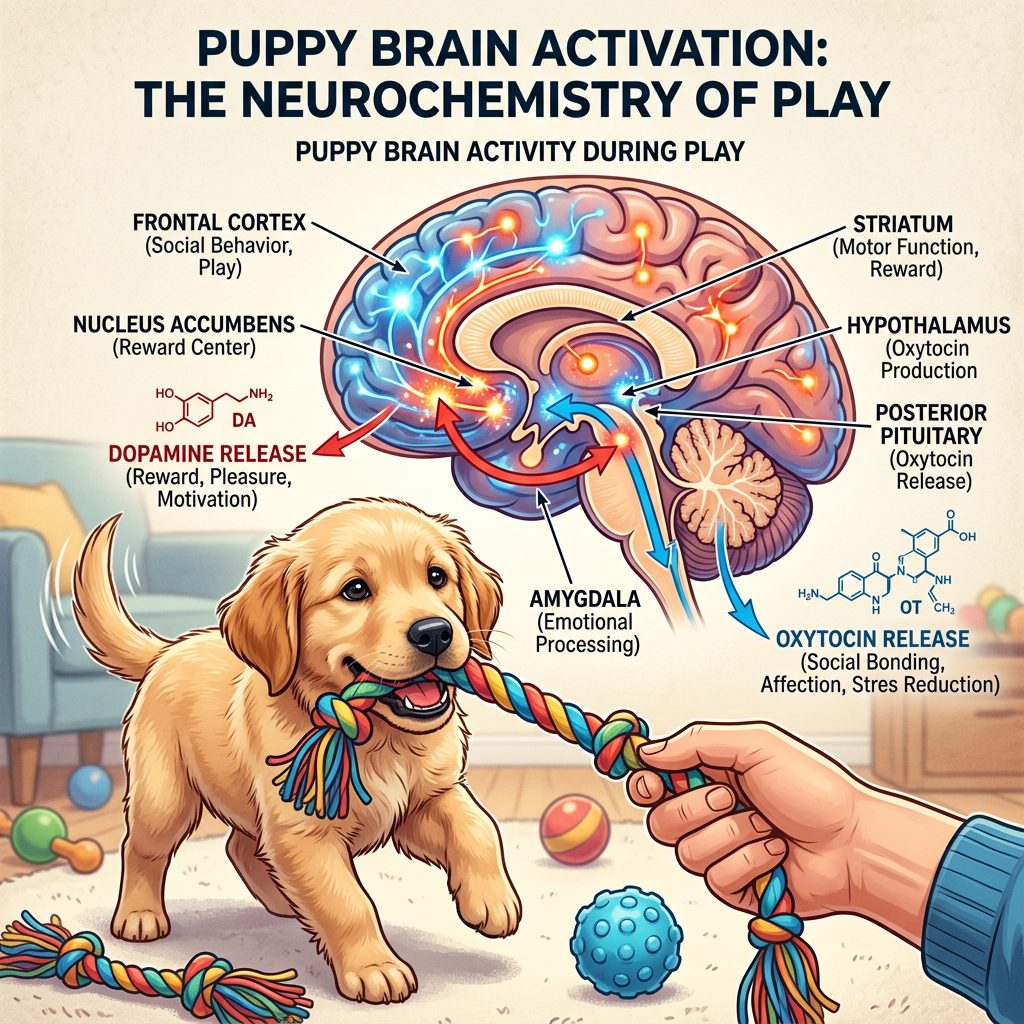
Understanding the nuance of puppy vocalizations is a superpower for any dog owner. It allows you to build a deeper bond based on trust and clear communication. In this comprehensive guide, we are going to dive deep into the neurobiology of play, the subtle physical cues that separate a ‘play growl’ from a ‘warning growl,’ and how you can use tug-of-war as a powerful training tool to teach impulse control. We will move past the outdated myths of ‘dominance’ and look at what the latest science tells us about how puppies learn to navigate their social world. By the end of this article, you will not only feel confident in your puppy’s play style but also have a roadmap for keeping your games safe, fun, and educational.
The Science of the Play Growl: Why Puppies Vocalize
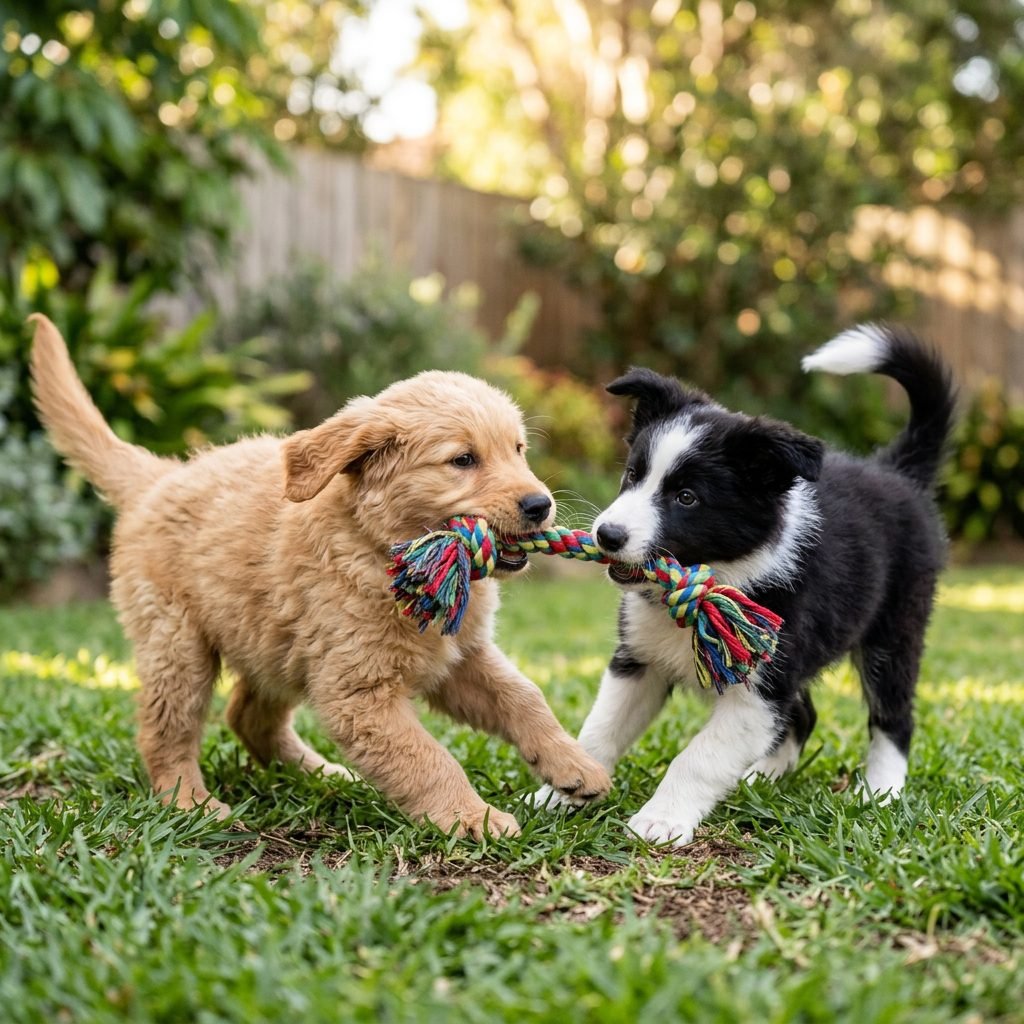
To understand why your puppy growls during tug, we first have to look at the nature of play itself. In the animal kingdom, play is essentially a dress rehearsal for life. For puppies, games like tug-of-war and wrestling are simulated versions of predatory behavior and physical combat, but with the ‘safety’ switched on. This is what behaviorists call meta-communication. It is the way dogs tell each other, ‘Everything I am doing right now is just a joke.’ One of the primary ways they signal this intent is through specific types of vocalizations.
The ‘Play-Fight’ Soundtrack
Research into canine acoustics has shown that play growls often have different tonal qualities than aggressive growls. Play growls tend to be higher-pitched, more rhythmic, and frequently interrupted by other sounds like huffs or sneezes. When a puppy growls during tug, they are often expressing a high state of arousal and ‘flow.’ They are fully immersed in the game. It is similar to a human athlete shouting or grunting during a heavy lift or an intense match; it is an expression of effort and adrenaline, not necessarily anger.
Vocalizing for Engagement
Sometimes, a puppy will growl specifically to keep you interested. If you stop tugging, and they give a little rumbling growl while shaking the toy, they are essentially saying, ‘Hey, don’t stop now! This is the best part!’ It is a solicitation for continued interaction. Understanding this helps us move away from the fear that growling is a sign of a ‘mean’ dog and see it instead as a sign of a dog who is deeply bonded with their play partner.
Expert Tip: If your puppy sneezes during an intense growling session, don’t worry! In dog language, a ‘play sneeze’ is a common signal used to de-escalate tension and reassure the partner that they are still just playing.
Decoding Body Language: Play vs. Aggression
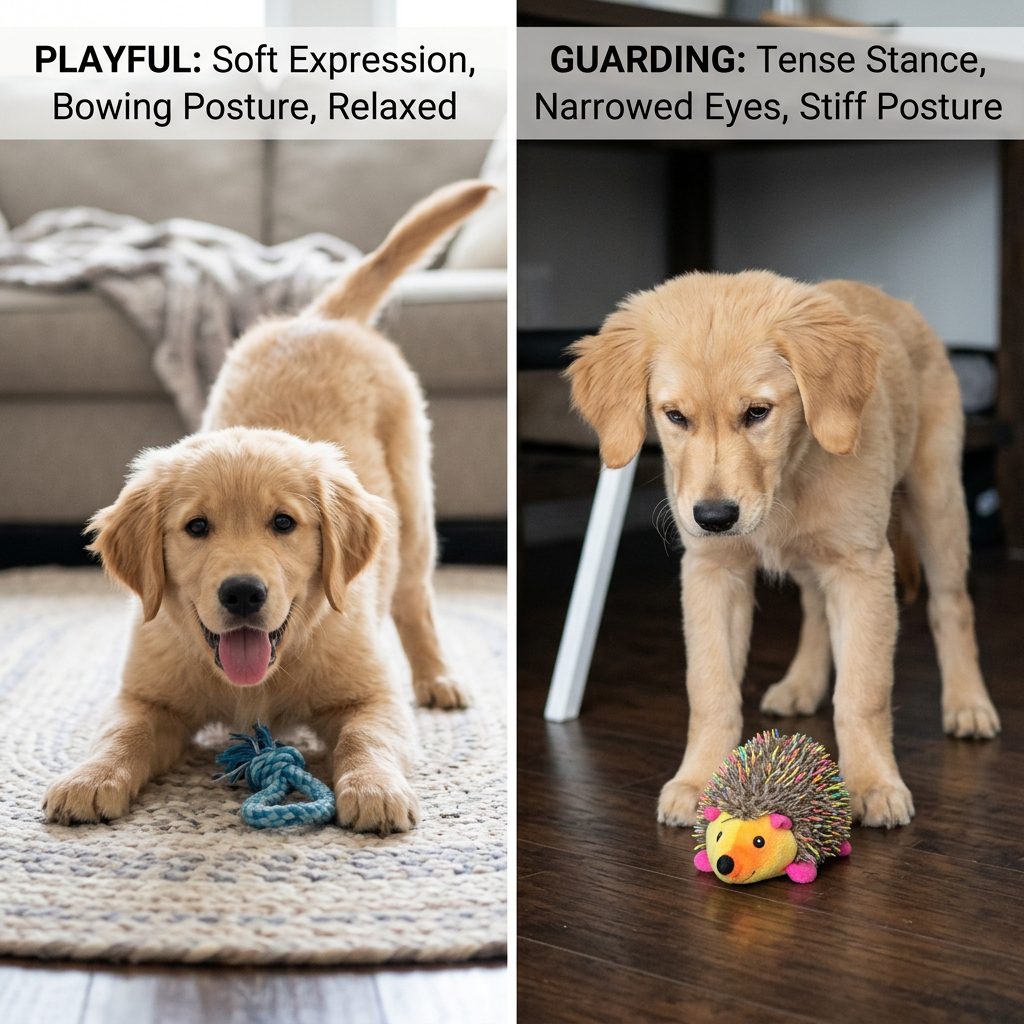
While the sound of the growl is important, it is the rest of the puppy’s body that tells the real story. As a savvy owner, you need to look at the ‘whole dog.’ A growl in a vacuum means very little; a growl accompanied by a stiff tail and a hard stare is a completely different message than a growl accompanied by a wiggly butt.
The ‘Loose and Wiggly’ Rule
In healthy play, the puppy’s body should look like a wet noodle. Their movements should be bouncy, exaggerated, and inefficient. If they are tugging, their whole hind end might swing back and forth. This is the hallmark of a dog who is having a great time. Conversely, if the body becomes rigid, the legs go stiff, and the tail stops wagging or moves in a very tight, fast vibration, the puppy has moved from ‘play mode’ into ‘defensive mode.’
The Eyes and Mouth
Watch your puppy’s face. During play, the eyes are usually soft or squinty, and you might see the ‘play bow’ where their front end goes down while their bottom stays up. If the puppy’s eyes become wide (showing the whites of the eyes, known as ‘whale eye’) or if they fixate on you with a cold, unblinking stare, it is time to pause. Below is a quick-reference table to help you distinguish between the two states.
| Feature | Playful Growling | Aggressive/Warning Growling |
|---|---|---|
| Body Posture | Loose, curvy, bouncy movements. | Stiff, frozen, or leaning forward. |
| Tail Position | Wagging broadly, often involving the whole hips. | Tucked tight or held high and vibrating stiffly. |
| Facial Expression | Soft eyes, open mouth, ‘play bow’ gestures. | Hard stare, lip curling, wrinkled muzzle. |
| The Growl Sound | Varies in pitch, often sounds ‘melodic’ or bouncy. | Low, steady, consistent pitch that vibrates the floor. |
| Response to Pauses | Will wait for you to restart or offer the toy back. | Will guard the toy or snap if you reach for it. |
The Golden Rules of Tug: Keeping it Safe and Fun
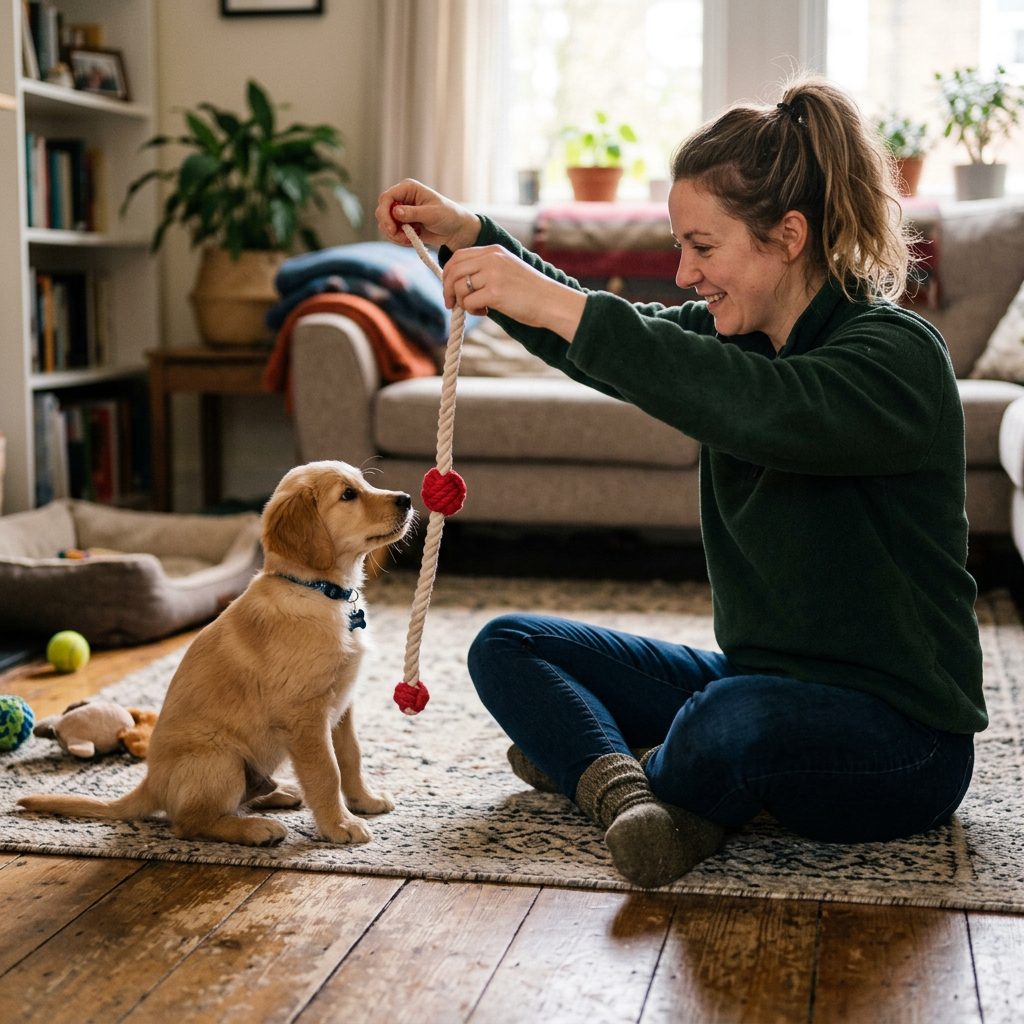
Tug-of-war is not just a game; it is a structured exercise that can improve your puppy’s behavior if played correctly. Many old-school trainers used to say that you should never let a dog win tug because it makes them ‘dominant.’ Modern behavior science has thoroughly debunked this. In fact, letting your puppy win occasionally builds their confidence! However, there are rules you should implement to ensure the game remains a positive experience.
Rule 1: Human Initiates, Human Ends
You should be the one to start the game. Bring the toy out, get them excited, and when you are done, put the toy away. This establishes that you are the ‘director’ of the fun. If the puppy brings you a toy and starts growling and lunging at your legs, ignore them until they sit calmly, then reward that calm with a game of tug.
Rule 2: Skin-to-Teeth is a Game Over
This is the most important rule for puppies. Their needle-sharp teeth are still learning where the toy ends and your hand begins. If those teeth touch your skin—even accidentally—the game stops immediately. Make a high-pitched ‘Ouch!’ sound, drop the toy, and walk away for 30 seconds. This teaches the puppy that being too reckless with their mouth ends the fun.
Rule 3: Frequent Breaks
Puppies can get ‘over-aroused’ quickly. When their adrenaline spikes too high, they lose the ability to think clearly, and that’s when play growling can accidentally tip into frustration. Every minute or two, stop tugging and ask for a ‘Sit.’ Once they sit and take a breath, resume the game as a reward. This builds incredible impulse control.
Step-by-Step Guide: Teaching the ‘Drop It’ Command
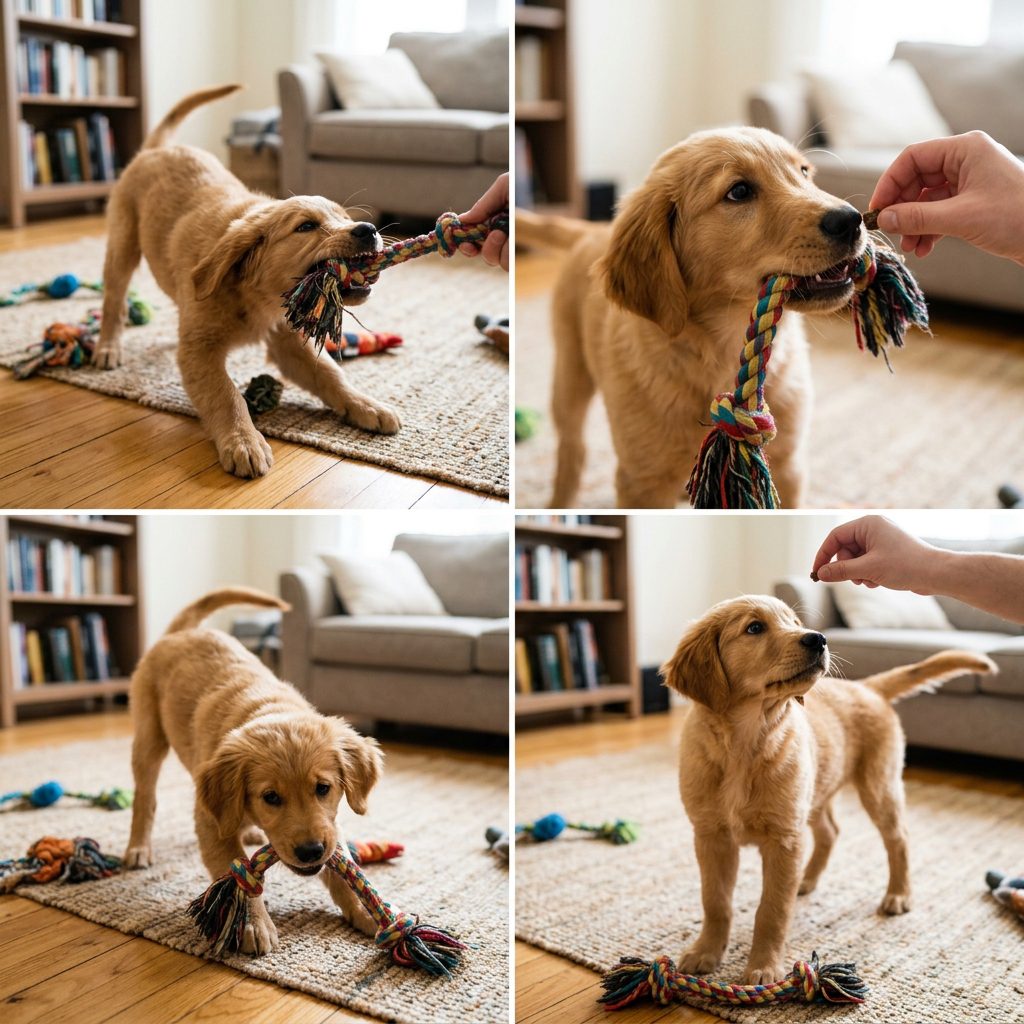
The ultimate safety valve for any game of tug is a rock-solid ‘Drop It’ command. This allows you to end the game instantly and ensures that the puppy is always listening to you, even when they are excited. Here is how to train it using positive reinforcement.
Step 1: Choose the Right Value
You need two things: a tug toy your puppy likes and a handful of high-value treats (like small pieces of boiled chicken or cheese). The treats must be ‘better’ than the toy.
Step 2: Start the Game
Engage in a low-intensity game of tug. Let them get a good grip and do a few gentle shakes. Don’t let them get too worked up just yet.
Step 3: The Trade-Off
Stop moving the toy. Hold it very still against your leg so it becomes ‘dead’ and boring. Place a treat right in front of the puppy’s nose. The moment they open their mouth to take the treat and let go of the toy, say ‘Drop!’ in a cheerful voice.
Step 4: Reward and Resume
Give them the treat, but here is the secret: give them the toy back immediately. Most puppies don’t want to drop things because they think the fun will end. By giving the toy back, you are teaching them that ‘Drop’ actually leads to more fun. Repeat this 5-10 times per session.
Step 5: Increase the Challenge
Once they are dropping the toy the second they see the treat, start saying the word ‘Drop’ before you show the treat. Eventually, they will drop the toy just for the word, and the treat becomes an occasional bonus.
Troubleshooting: When the Growling Crosses the Line
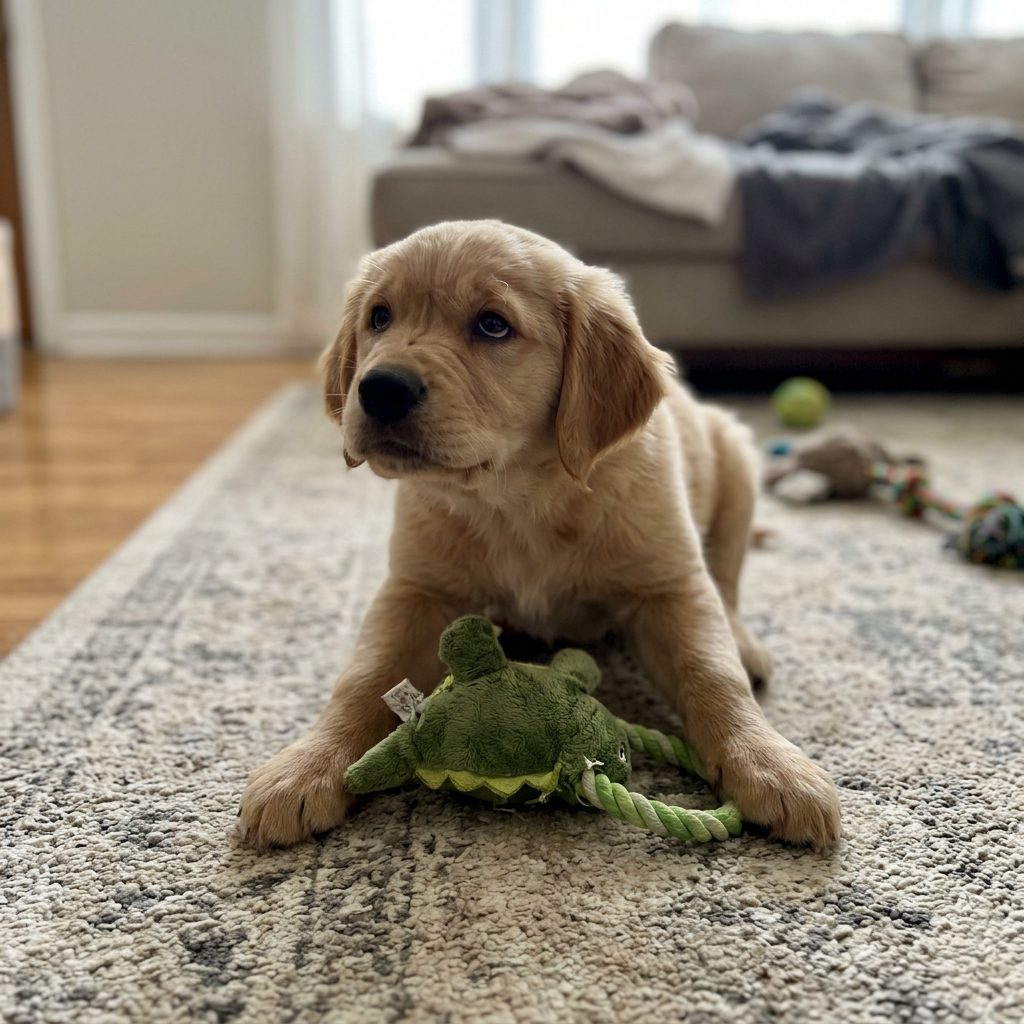
While most puppy growling is harmless, there are specific scenarios where you should take action. As a savvy owner, you need to recognize the difference between a high-arousal play growl and resource guarding. Resource guarding is a behavioral issue where a dog becomes possessive and aggressive over an item they perceive as valuable.
Signs of Resource Guarding
If your puppy growls when you simply walk near them while they have a toy, or if they ‘hover’ over the toy with a stiff body and low head, this is not play. If they snap or bite when you try to take the toy away without a trade, you are dealing with guarding. This is a fear-based behavior, not a dominance issue.
The ‘Trade Up’ Strategy
Never forcibly pry a toy out of a guarding puppy’s mouth. This only confirms their fear that you are a ‘toy thief.’ Instead, always ‘trade up’ for something better. If they have a toy they won’t give up, toss a handful of treats a few feet away. When they move to eat the treats, calmly pick up the toy and put it away.
When to Call a Professional
If your puppy’s growling is accompanied by snapping that breaks the skin, or if the puppy seems genuinely distressed rather than excited, it is time to consult a certified professional dog trainer or a veterinary behaviorist. Early intervention is key to preventing these behaviors from becoming lifelong habits.
Takeaway: Understanding your puppy’s limits is part of being a responsible owner. If the ‘vibe’ of the game feels scary or tense, trust your gut and take a break.
The Myth of Dominance in Tug-of-War
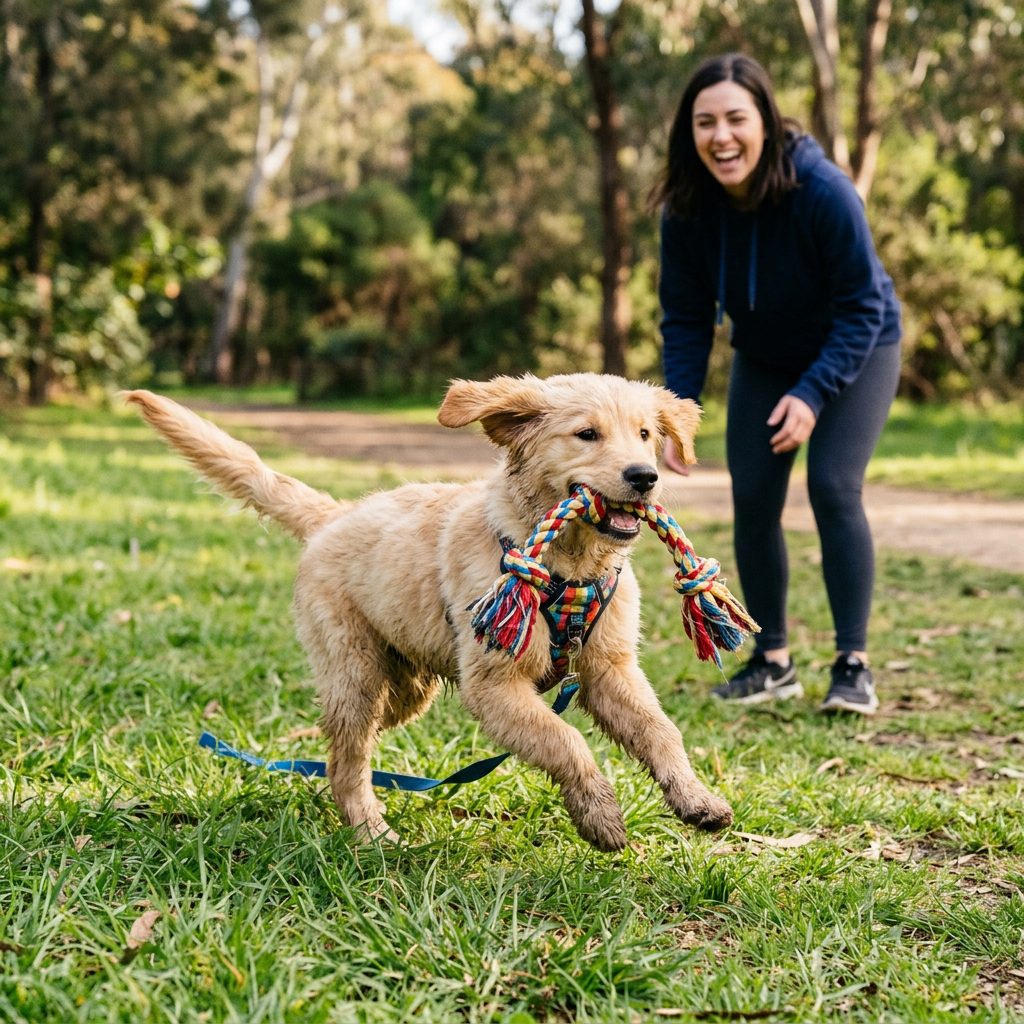
For decades, dog owners were told that they must always win a game of tug to remain the ‘alpha’ or ‘pack leader.’ We now know this is simply not true. Dogs do not view us as members of a canine pack hierarchy; they view us as social partners. In fact, studies have shown that dogs who play tug with their owners and are allowed to win frequently actually show higher levels of confidence and are more likely to want to play again.
Building Confidence
For a shy or fearful puppy, winning a game of tug can be a massive ego boost. It gives them a sense of agency and power in a world that is often overwhelming. When you let your puppy ‘win’ by letting go of the rope and letting them ‘parade’ around with it, you are reinforcing their bravery.
The Social Bond
Tug-of-war is a cooperative game. Even though you are pulling against each other, you are doing it together. This shared activity releases oxytocin in both the human and the dog, strengthening the bond. So, don’t worry about ‘losing’ the game. You aren’t losing status; you are gaining a best friend.
Conclusion
So, the next time you hear that ferocious-sounding rumble during your afternoon play session, take a deep breath and look at the tail. Is it wagging? Are the movements bouncy? Is your puppy having the time of their life? Chances are, the answer is a resounding yes. Puppy tug growling is one of the most misunderstood aspects of canine behavior, but once you know the ‘truth,’ it becomes just another part of the joy of puppyhood. By setting clear boundaries, teaching a solid ‘Drop It,’ and focusing on the loose, wiggly body language of play, you are turning a simple game into a foundational training exercise. Remember, you are your puppy’s teacher and protector. By listening to what their growls are actually saying, you are building a relationship based on mutual respect and, most importantly, a whole lot of fun. Happy tugging!