Working 9 to 5? The Ultimate Guide To Potty Train A Puppy While At Work
Bringing a new puppy into your life is a joyous milestone, but for the modern professional working a 9-to-5, it often comes with a side of intense “puppy guilt.” You find yourself staring at the office clock, wondering if your living room rug has survived the afternoon. The common myth is that you need to be a stay-at-home pet parent to successfully potty train a dog. I’m here to tell you as a canine specialist: that is simply not true.
Potty training while working full-time requires a different strategy—one built on consistency, clever environment management, and a realistic understanding of puppy biology. You aren’t just teaching them where to go; you are building a lifestyle that respects their physical limits while maintaining your professional commitments. In this comprehensive guide, we will break down the exact systems you need to ensure your pup becomes a house-trained pro, even if you’re away for eight hours a day.
Understanding the Biological Clock: Bladder Capacity by Age
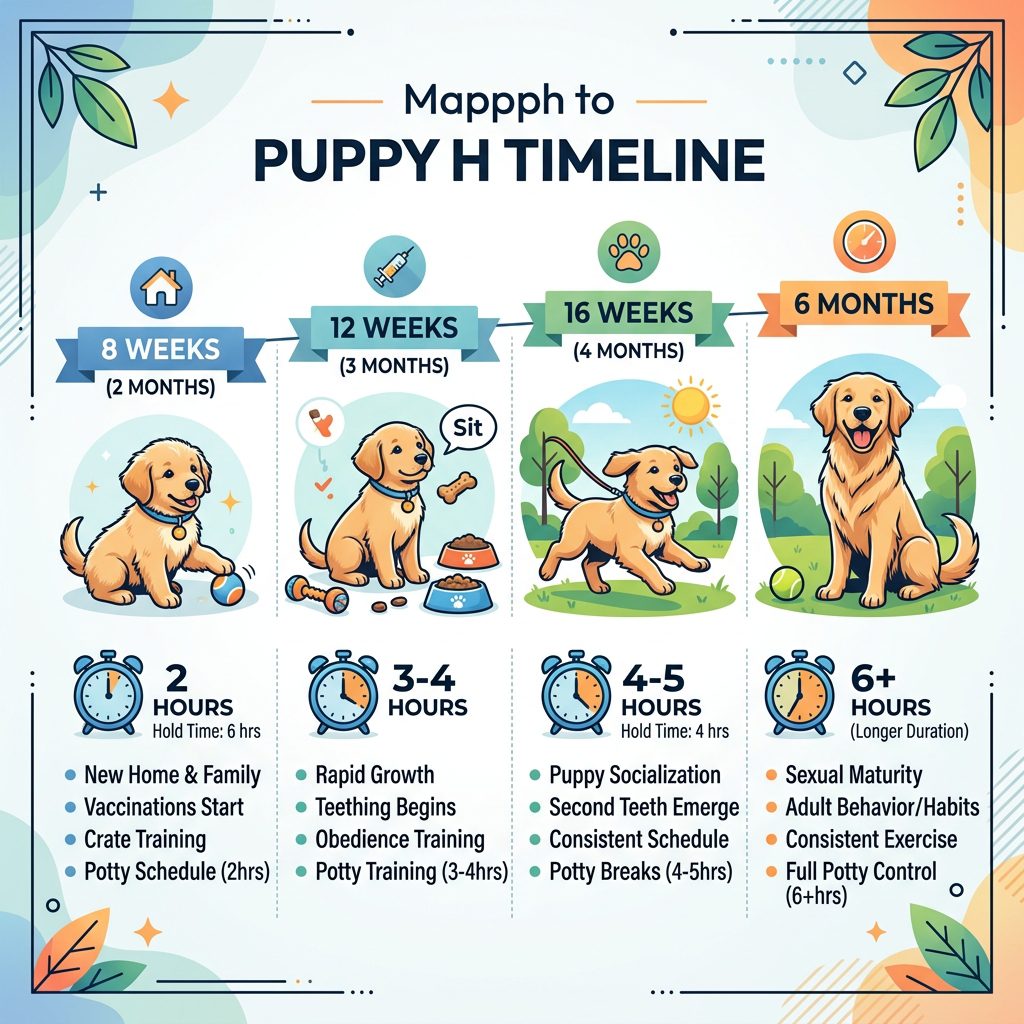
Before we dive into the “how,” we have to understand the “how long.” A puppy’s bladder is tiny, and their ability to hold it is dictated by their age and physical development. The general rule of thumb is that a puppy can hold their bladder for one hour for every month of age, plus one. However, when they are active or drinking water, this window shrinks significantly.
For a working owner, this means a 2-month-old puppy cannot physically wait until you get home from work. Understanding these limits helps you set realistic expectations and choose the right management tools. If you expect a 10-week-old pup to wait 8 hours, you aren’t training; you’re setting them up for a physiological failure.
| Puppy Age | Max Holding Time (Resting) | Ideal Potty Break Frequency |
|---|---|---|
| 8-10 Weeks | 1-2 Hours | Every 30-60 Minutes |
| 12-16 Weeks | 3-4 Hours | Every 2-3 Hours |
| 5-6 Months | 5-6 Hours | Every 4 Hours |
| 7+ Months | 6-8 Hours | Mid-day break recommended |
Expert Tip: These times are for when the puppy is resting. If your puppy is playing, sniffing, or has just eaten, they will need to go almost immediately!
The Setup: Crate vs. Playpen vs. Puppy-Proofed Room
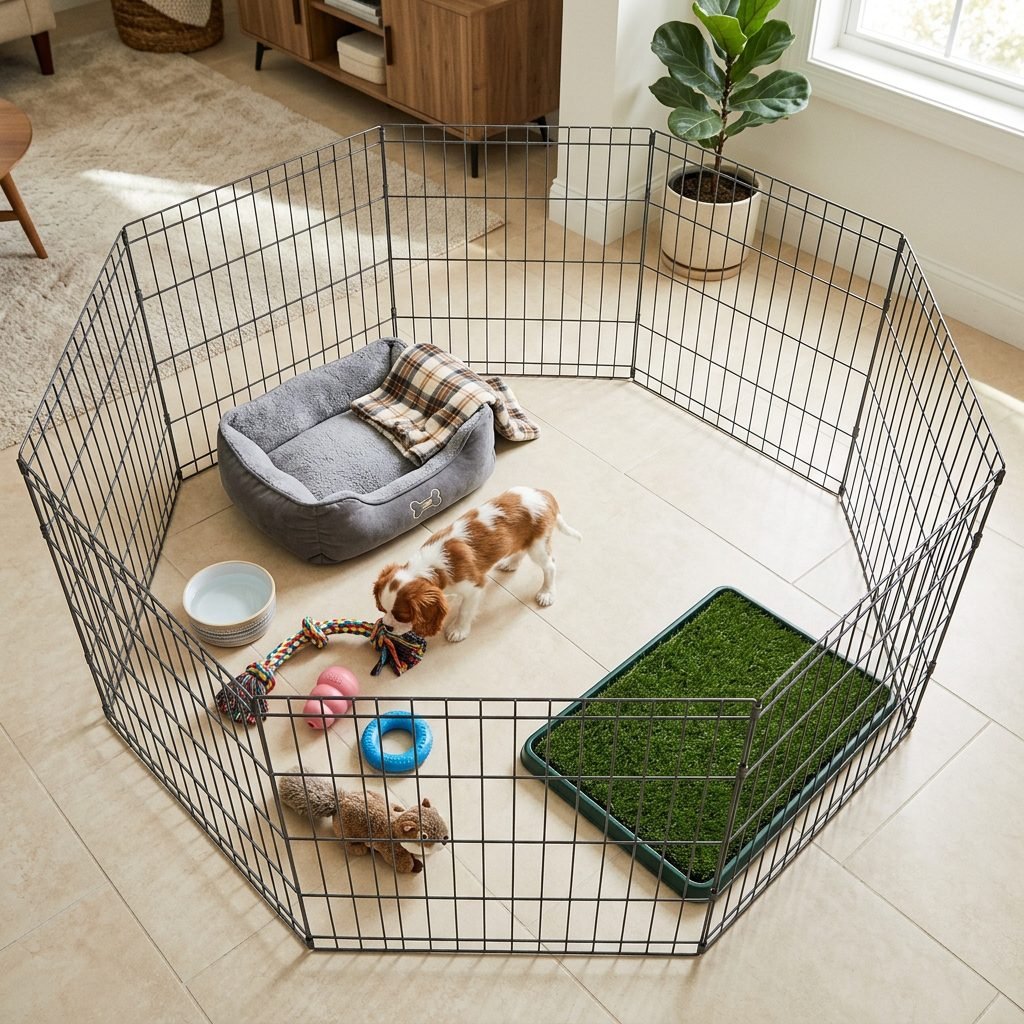
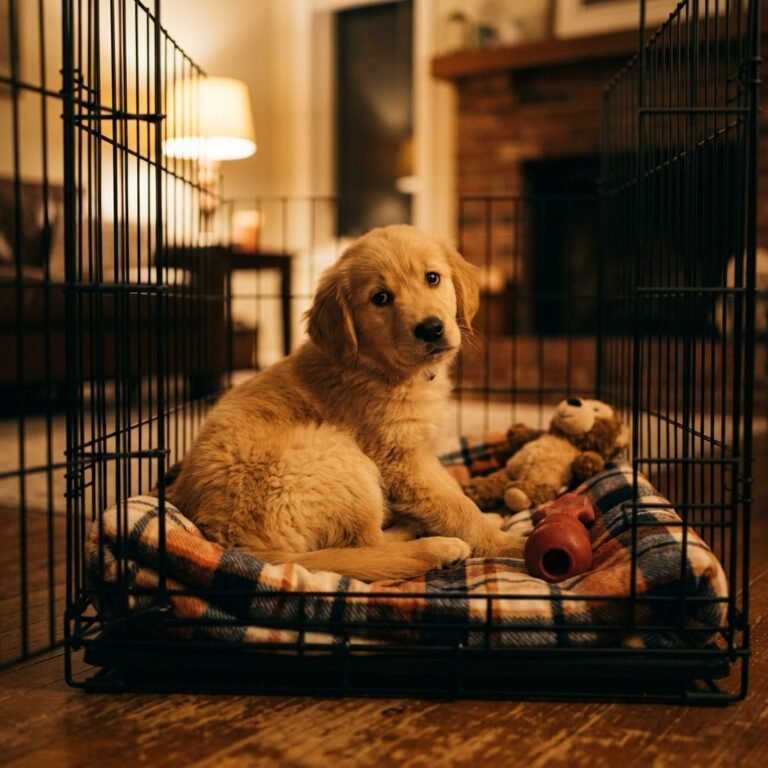
When you are at work, your puppy’s environment is your most powerful training tool. You have three primary options for containment, and the best choice depends on how long you’ll be away and your puppy’s current progress.
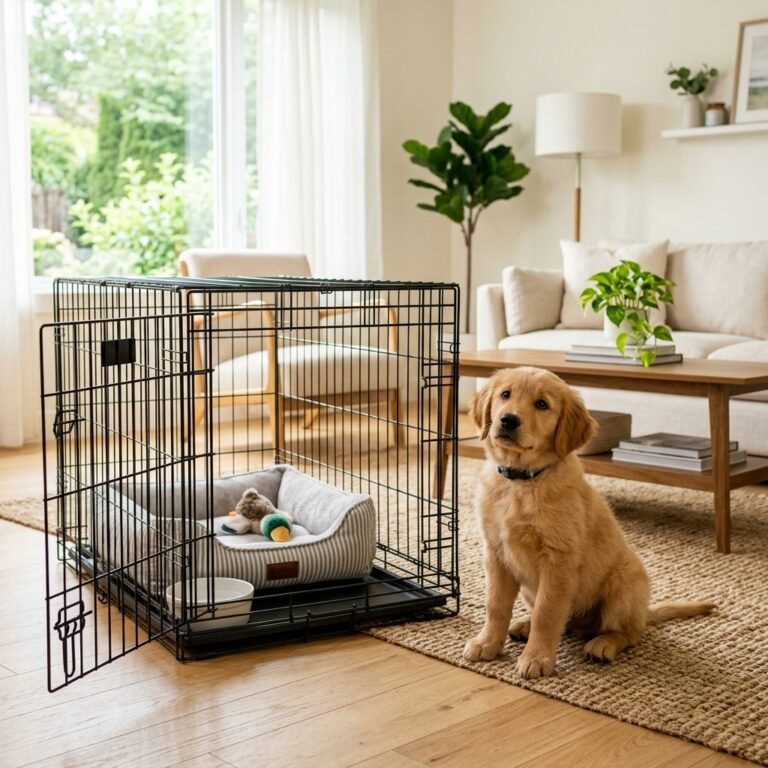
1. The Crate (The Gold Standard)
Crate training works because dogs have a natural instinct not to soil where they sleep. However, you cannot leave a young puppy in a crate for 8 hours. It is cruel and will force them to soil themselves, breaking their natural cleanliness instinct. Use the crate only if you have someone coming by every 2-4 hours.
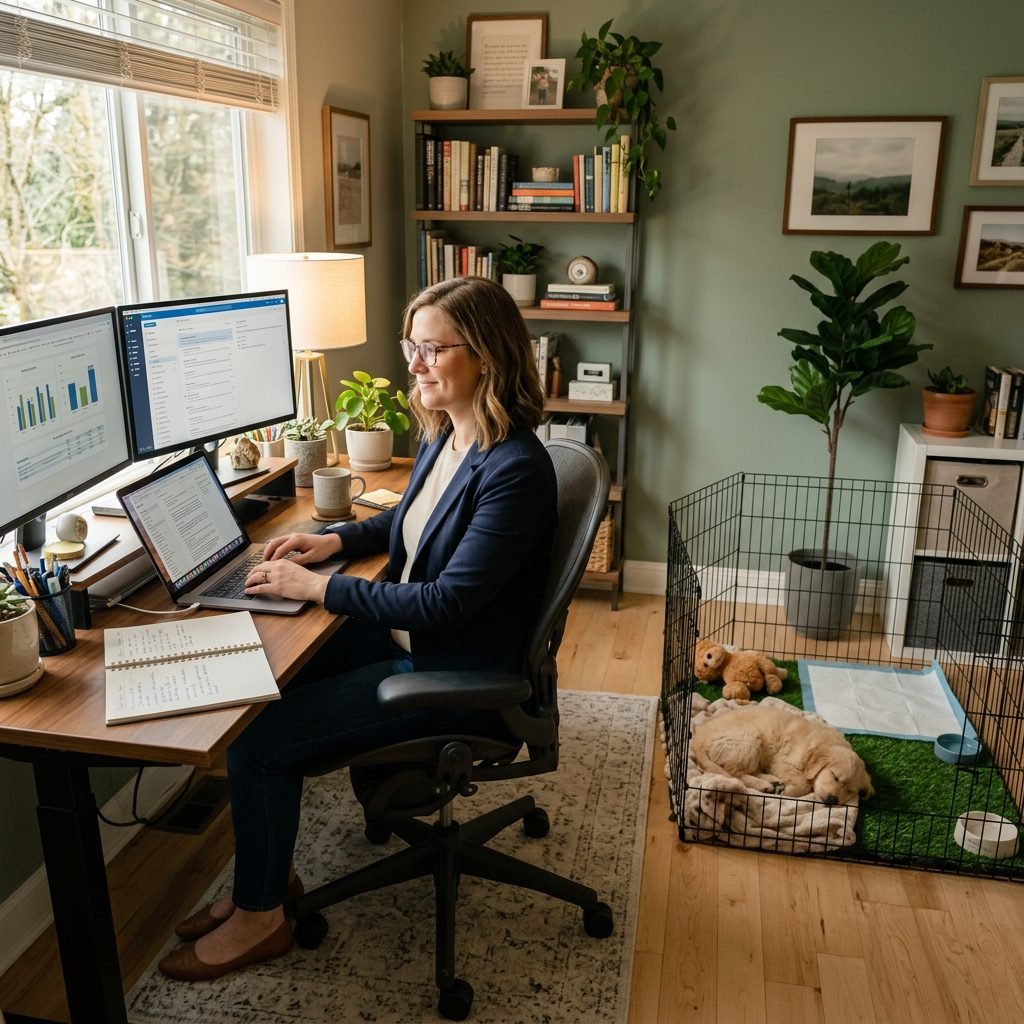
2. The Long-Term Confinement Area (The Playpen)
This is the secret weapon for 9-to-5 workers. A playpen provides enough space for a bed, water, toys, and a designated “potty zone” (like a grass patch or pee pad) as far from the bed as possible. This teaches the puppy that there is a specific place for business, even when you aren’t there to open the door.
3. The Puppy-Proofed Room
Using a laundry room or kitchen with baby gates is similar to a playpen but offers more space. Ensure the flooring is non-porous (tile or linoleum) for easy cleanup.
| Method | Pros | Cons |
|---|---|---|
| Crate | Fastest results, mimics natural den. | Cannot be used for long durations. |
| Playpen | Safe, allows for “legal” potty spot. | Slower transition to outdoors only. |
| Room | Most freedom for the pup. | Higher risk of destructive chewing. |
The 9-to-5 Potty Training Schedule
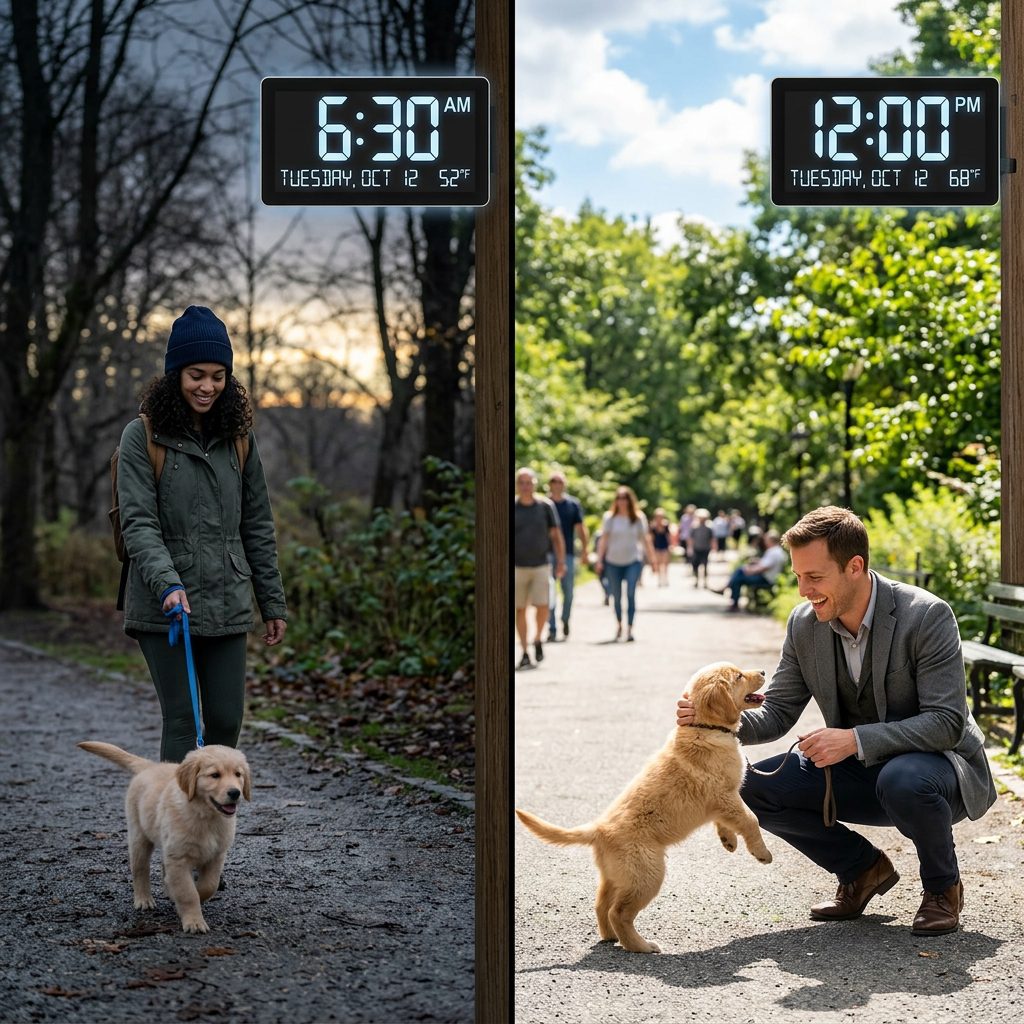
Consistency is the language of dogs. To succeed, you need a rigid morning, mid-day, and evening routine. Here is a sample schedule for a working professional with a 4-month-old puppy.
- 6:30 AM: Wake up and immediately take the puppy outside. No stops, no coffee first—straight to the grass.
- 6:45 AM: Breakfast and water. This is also a great time for a 10-minute training session to tire their brain.
- 7:15 AM: Second potty trip. Most puppies poop 15-30 minutes after eating.
- 7:30 AM – 8:00 AM: High-intensity play or a walk. A tired puppy is a sleeping puppy.
- 8:00 AM: Into the confinement area/playpen with a stuffed frozen KONG to keep them occupied as you leave.
- 12:00 PM – 1:00 PM: Mid-day break. Either you come home, or a dog walker arrives. Potty first, then a quick play, then back to the pen.
- 5:00 PM: Arrive home. Immediate potty trip.
- 5:30 PM: Evening meal followed by another potty trip.
- 6:00 PM – 9:00 PM: Supervised “free time” in the house, with potty breaks every hour.
- 10:00 PM: Final potty trip before bed.
Note: If you cannot make it home at lunch, you MUST hire a dog walker or use a playpen with an indoor potty solution.
Step-by-Step: Teaching the ‘Go Potty’ Command
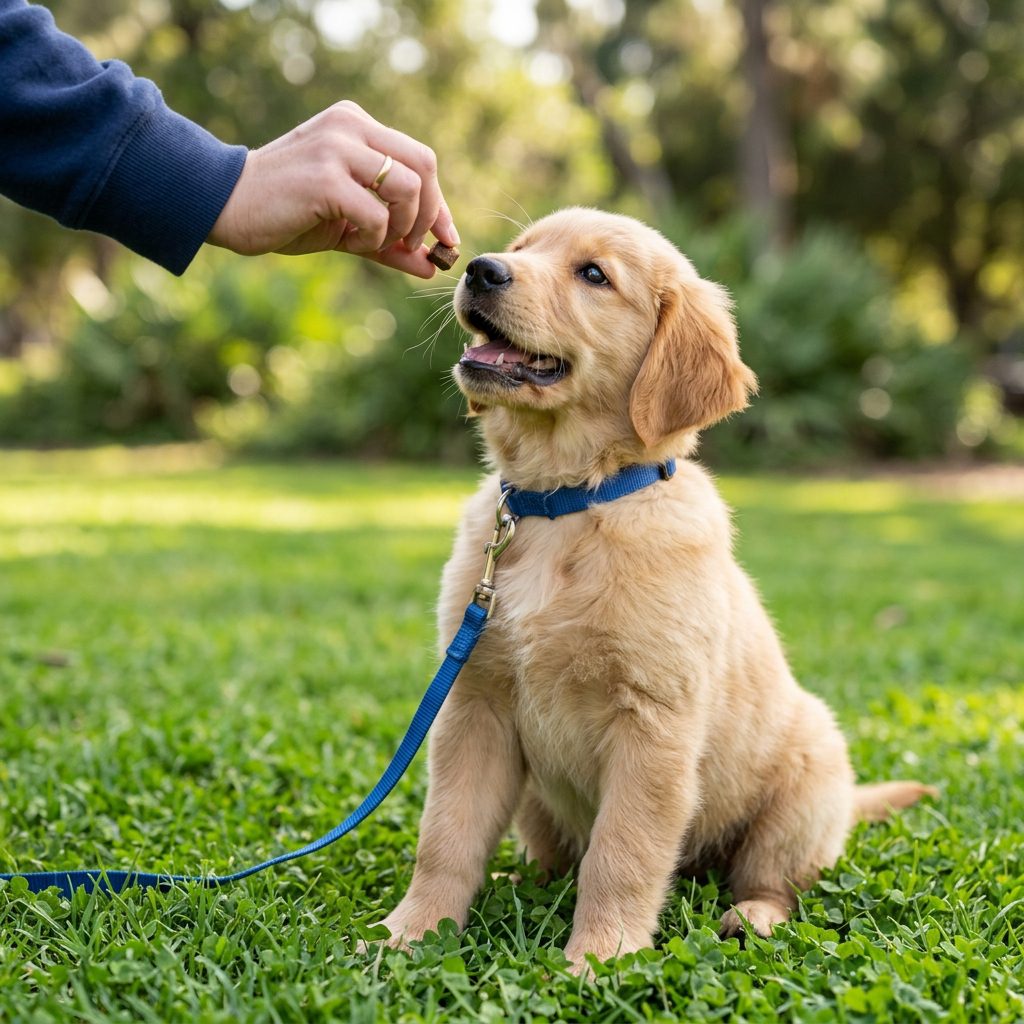
When you are on a tight schedule, you don’t have time to wait 20 minutes for your dog to find the “perfect” spot. You need them to go on cue. This is achieved through positive reinforcement and capturing the behavior.
- Choose a Spot: Always take your puppy to the same 5×5 foot area in your yard. The scent of previous visits will trigger their urge to go.
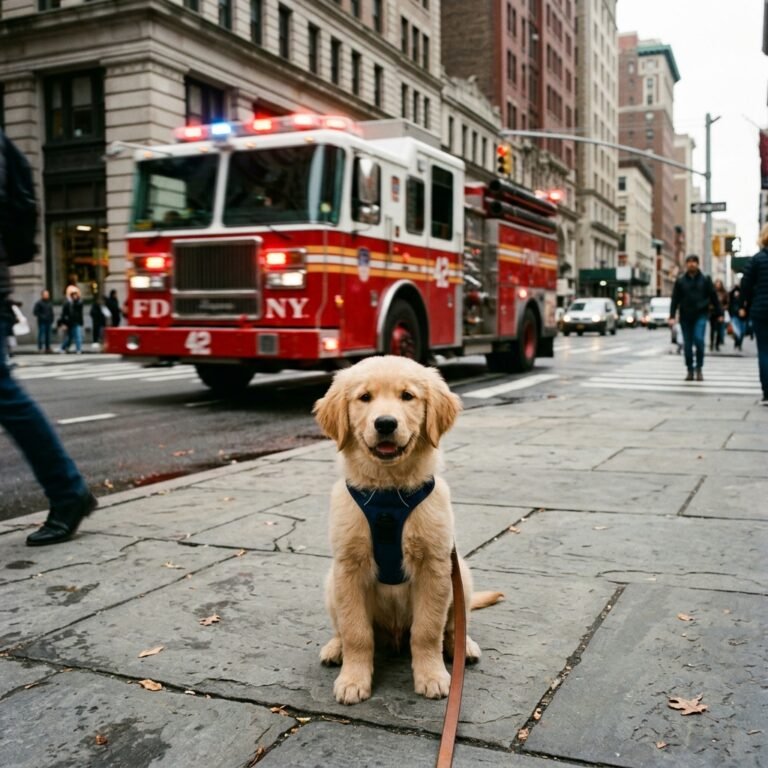
- Use a Leash: Even in a fenced yard, keep the puppy on a leash. This keeps them focused on the task rather than chasing butterflies.
- The Cue Word: As soon as the puppy begins to circle or sniff intently, say your cue word (e.g., “Go Potty” or “Hurry Up”) in a calm tone.
- The Reward: The second they finish, throw a “potty party.” Give them a high-value treat (something they only get for pottying) and plenty of verbal praise.
- The After-Party: Don’t take them inside immediately. Some puppies learn that as soon as they pee, the outdoor fun ends. Play for 2 minutes afterward to ensure they don’t “hold it” just to stay outside longer.
Troubleshooting: Dealing with Accidents and Regression
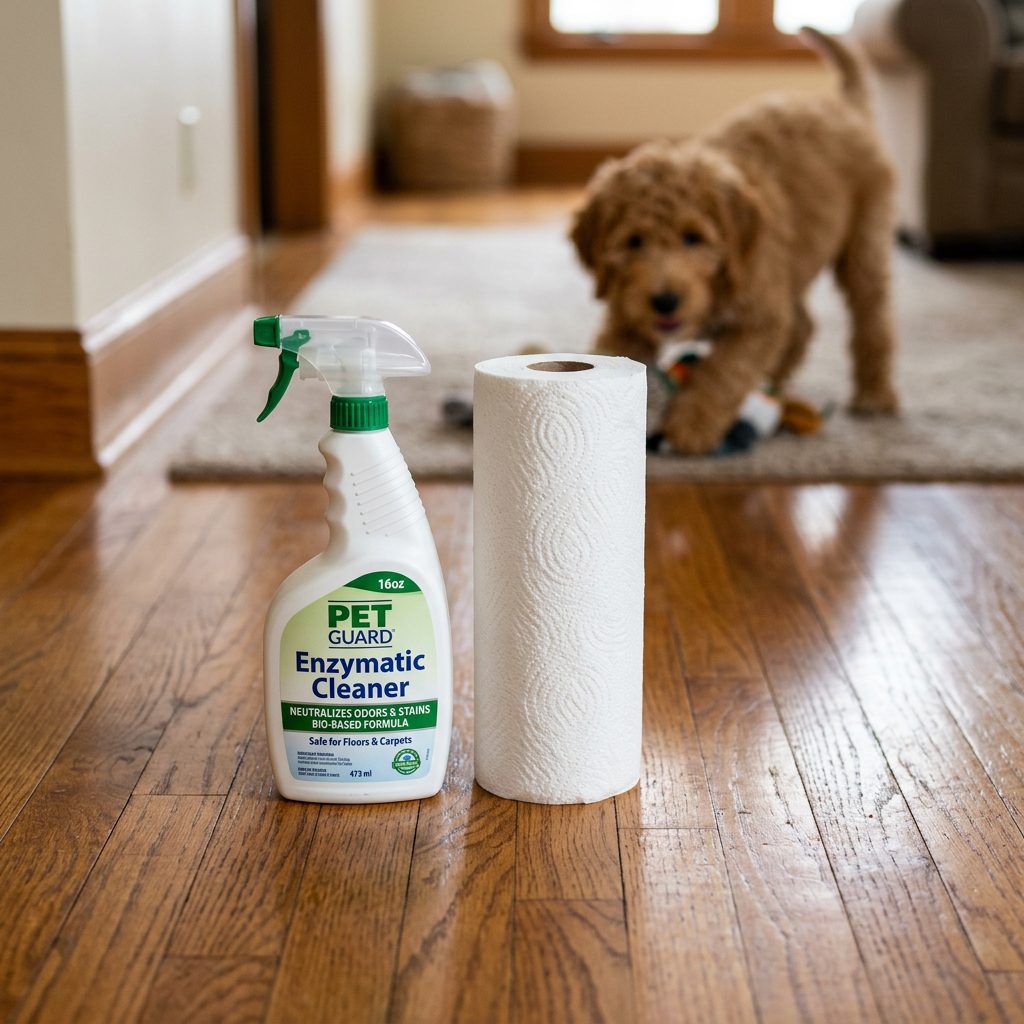
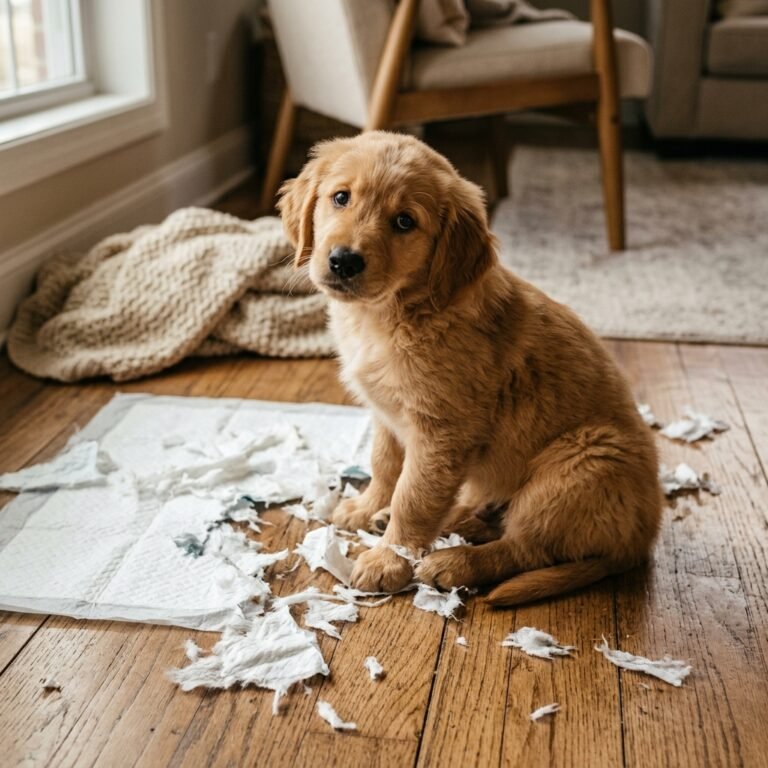
Accidents are a part of the process. How you react to them will determine how quickly your puppy learns. If you come home to a puddle, do not punish the puppy. They cannot associate a punishment now with an action they took three hours ago. All you will do is make them afraid of you.
The Cleanup Protocol
Standard household cleaners don’t work for dog urine. They often contain ammonia, which actually smells like pee to a dog, encouraging them to go in that spot again. You must use an enzymatic cleaner. These cleaners contain bacteria that literally eat the odor-causing proteins, removing the scent entirely from the puppy’s sensitive nose.
Handling Regression
It’s common for a puppy to be perfect for two weeks and then suddenly have three accidents in a day. This usually happens during teething or developmental leaps. If this occurs, “shrink the world.” Go back to the playpen, increase the frequency of breaks, and ensure you aren’t giving too much freedom too soon.
Expert Tip: If your puppy is consistently having accidents in their crate, the crate might be too large. It should only be big enough for them to stand up, turn around, and lie down comfortably.
Tech and External Help for the Busy Professional
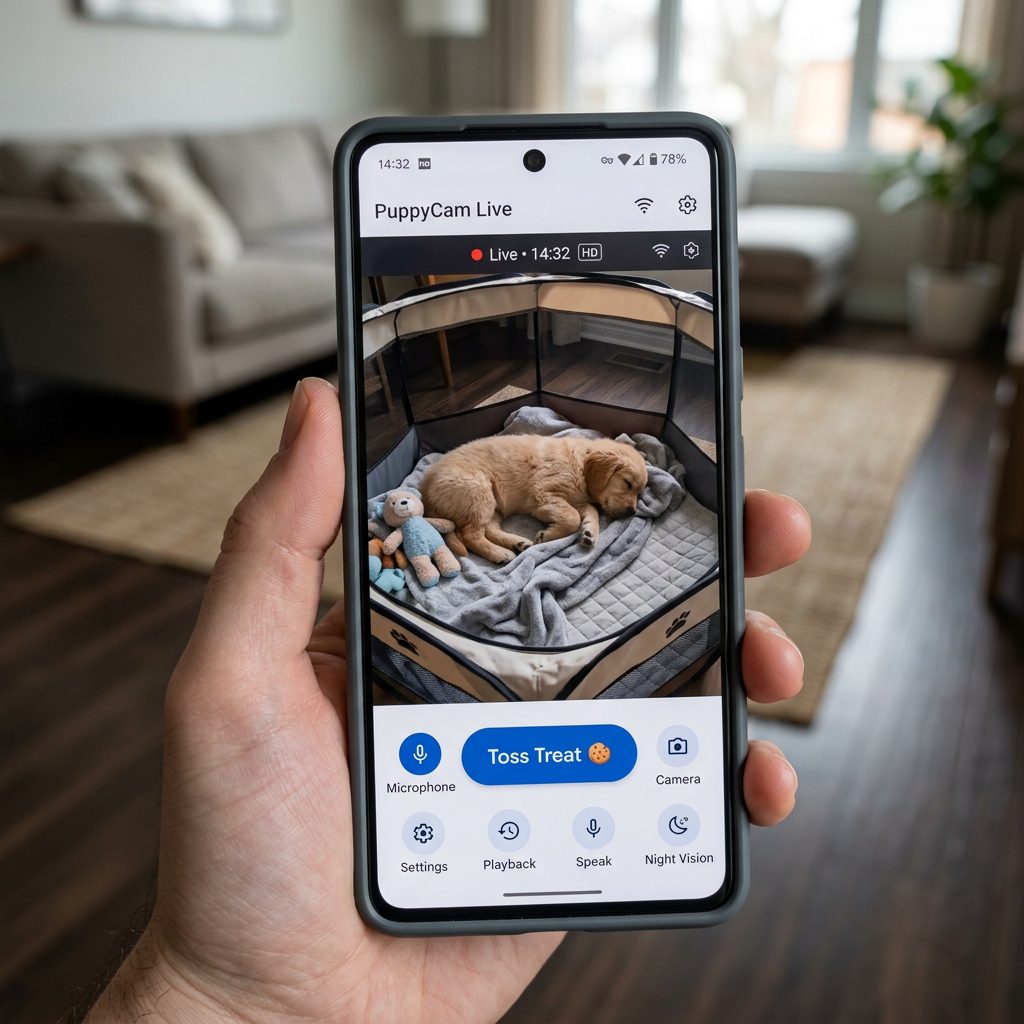
We live in a golden age of pet technology. If you are worried about your pup while at the office, use these tools to bridge the gap:
- Smart Pet Cameras: Devices like Furbo or Petcube allow you to see, talk to, and even toss treats to your puppy. More importantly, they alert you if the puppy is barking or distressed, which can be a sign they need to go out.
- Indoor Grass Patches: Real-grass subscription services (like Fresh Patch) are far superior to plastic pee pads. They keep the association with the texture of grass, making the eventual transition to “outdoors only” much smoother.
- Dog Walking Apps: Services like Rover or Wag can be lifesavers, but for a young puppy, consistency is key. Try to find one dedicated walker who understands your training cues.
- Smart Water Bowls: These can track how much your pup is drinking, helping you predict when they will need their next break.
Conclusion
Potty training a puppy while working a 9-to-5 isn’t just about avoiding messes; it’s about building a bond of trust and communication. By setting up a proper confinement area, sticking to a rigorous schedule, and using the right tools, you are giving your puppy the structure they crave. Remember, this phase is temporary. In a few months, your pup will have the physical maturity to wait for you, and the “puppy guilt” will be replaced by the joy of a well-adjusted, house-trained companion.
Stay patient, stay consistent, and don’t forget to celebrate the small wins—like the first full week without a single accident. You’ve got this!