7 Genius Tricks to Stop Puppy Bath Time Terror Tonight
The Splash Zone Struggle is Real
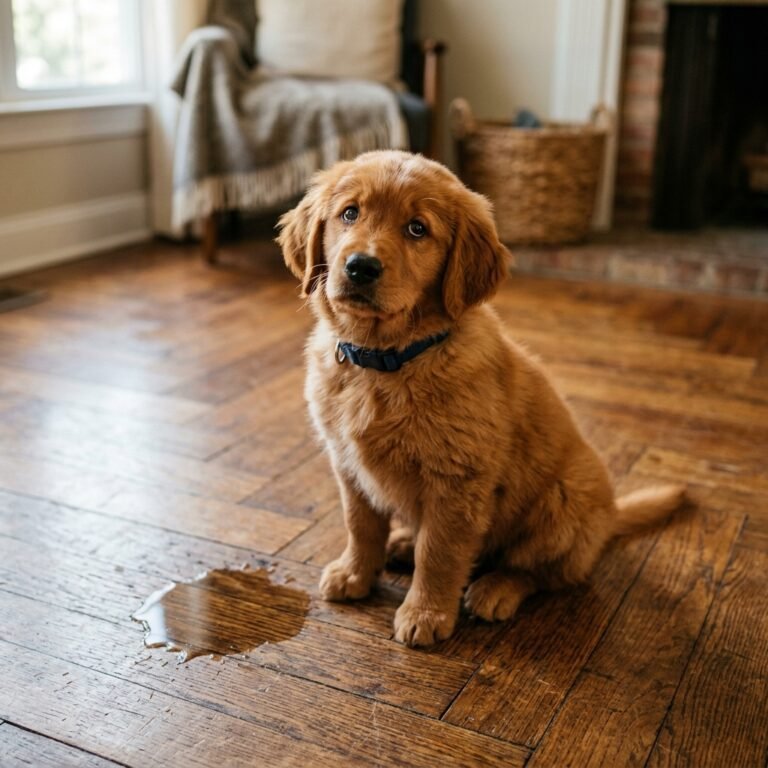
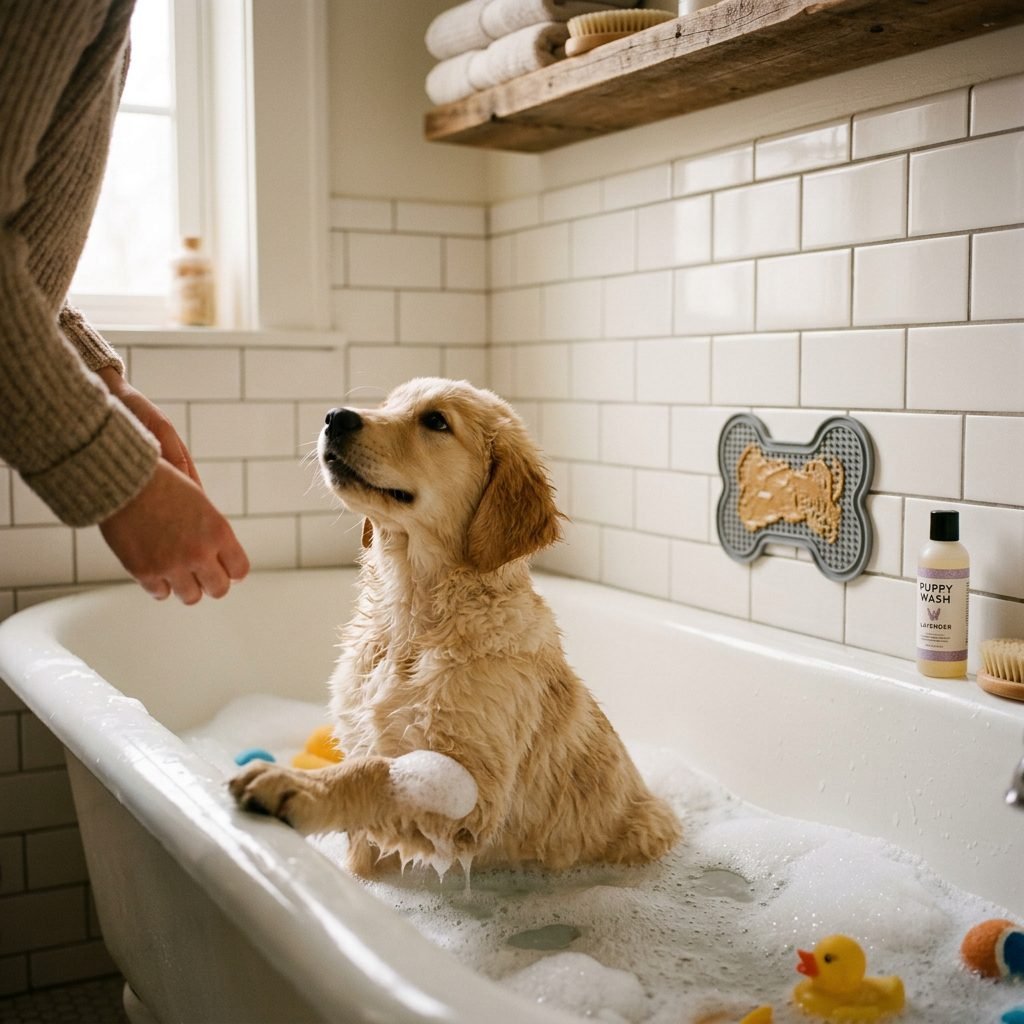
We have all been there. You have a brand-new, adorable puppy who smells like a mix of old kibble and mysterious backyard adventures. You decide it is time for their first real bath, envisioning a cute scene from a commercial involving suds and rubber ducks. Instead, you find yourself in a wrestling match with a slippery, four-legged whirlwind that seems convinced the bathtub is a portal to another dimension. This ‘bath time terror’ is one of the most common hurdles for new puppy owners, but it does not have to be your reality. As a canine specialist, I have seen the most fearful pups transform into ‘water babies’ with just a few strategic adjustments. The secret lies in understanding that your puppy is not being ‘bad’; they are likely overwhelmed by sensory input. From the echoing acoustics of the bathroom to the ‘Bambi on ice’ feeling of a slippery tub, the environment is often stacked against them. Tonight, we are going to flip the script. By using these seven genius tricks, you will address the root causes of their anxiety and replace fear with focus. Whether you have a tiny Chihuahua or a future-giant Great Dane, these techniques are designed to work with their natural instincts, ensuring that bath time becomes a moment of connection rather than a source of conflict. Let us dive into how you can stop the terror and start the suds safely and successfully.
Understanding the Puppy Perspective: Why the Terror Starts
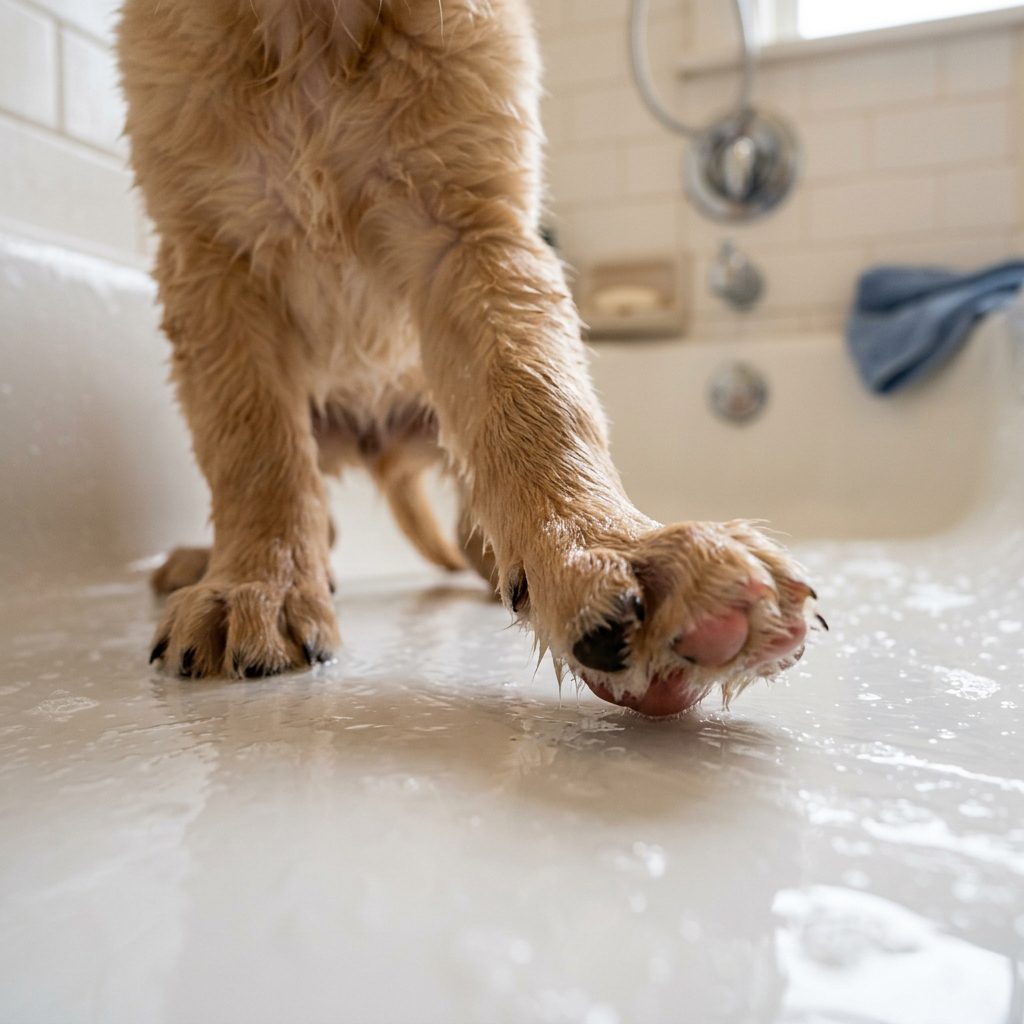
Before we implement the tricks, we must understand the why behind the whining. To a puppy, a bathtub is a giant, echoey chamber where they lose their footing. Their paws have sensitive pads that rely on traction to feel safe. When they step onto a slick porcelain or plastic surface, their ‘fight or flight’ response kicks in immediately because they feel physically unstable. Furthermore, their hearing is significantly more sensitive than ours. The sound of water rushing from a faucet can sound like a roaring waterfall, and the hiss of a showerhead can be genuinely terrifying.
The Sensory Overload Factor
Puppies also experience a heightened sense of smell. The strong, floral scents of human-grade shampoos (which you should never use, by the way) can be overwhelming. When you combine physical instability, loud noises, and strange scents, it is no wonder they want to escape. By recognizing these triggers, we can systematically neutralize them. We are not just washing a dog; we are managing an emotional experience. The goal is to keep their stress cortisol levels low so that their brain can process the event as a positive or neutral occurrence. This is the foundation of ‘Low-Stress Handling,’ a technique used by professional trainers and fear-free certified vets worldwide.
Trick 1: The Power of the Lick Mat Distraction
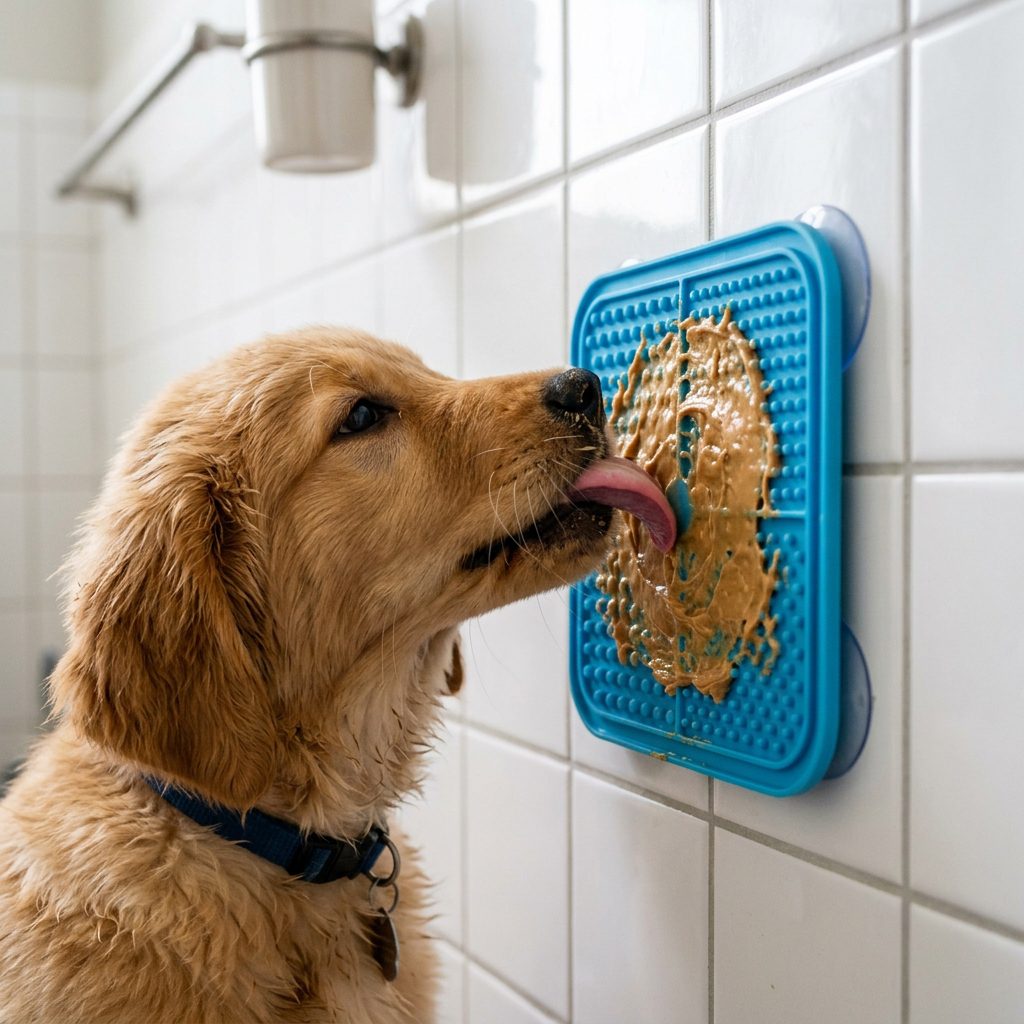
The first and perhaps most effective trick in our arsenal is the Silicone Lick Mat. This is a simple textured mat that suctions to the side of the bathtub. By spreading a high-value, puppy-safe treat like xylitol-free peanut butter, plain Greek yogurt, or mashed sweet potato onto the mat, you engage the puppy’s brain in a repetitive, soothing action: licking. Licking releases endorphins in dogs, which naturally lowers their heart rate and anxiety levels.
Why Distraction Works
When a puppy is focused on extracting every last bit of peanut butter from the crevices of a mat, they are practicing what trainers call ‘counter-conditioning.’ They are forming a positive association between the bathtub and their favorite snack. Instead of thinking, ‘I am trapped in the scary water box,’ they think, ‘I am in the place where the magic peanut butter wall exists.’ This shift in focus is crucial. It is important to place the mat at their eye level so they can remain standing comfortably while they lick. This keeps their head up and away from the water stream, making the washing process much easier for you. Remember to introduce the mat before you turn on any water to ensure they are fully engaged with the treat first.
Trick 2: Securing the Foundation with Non-Slip Surfaces
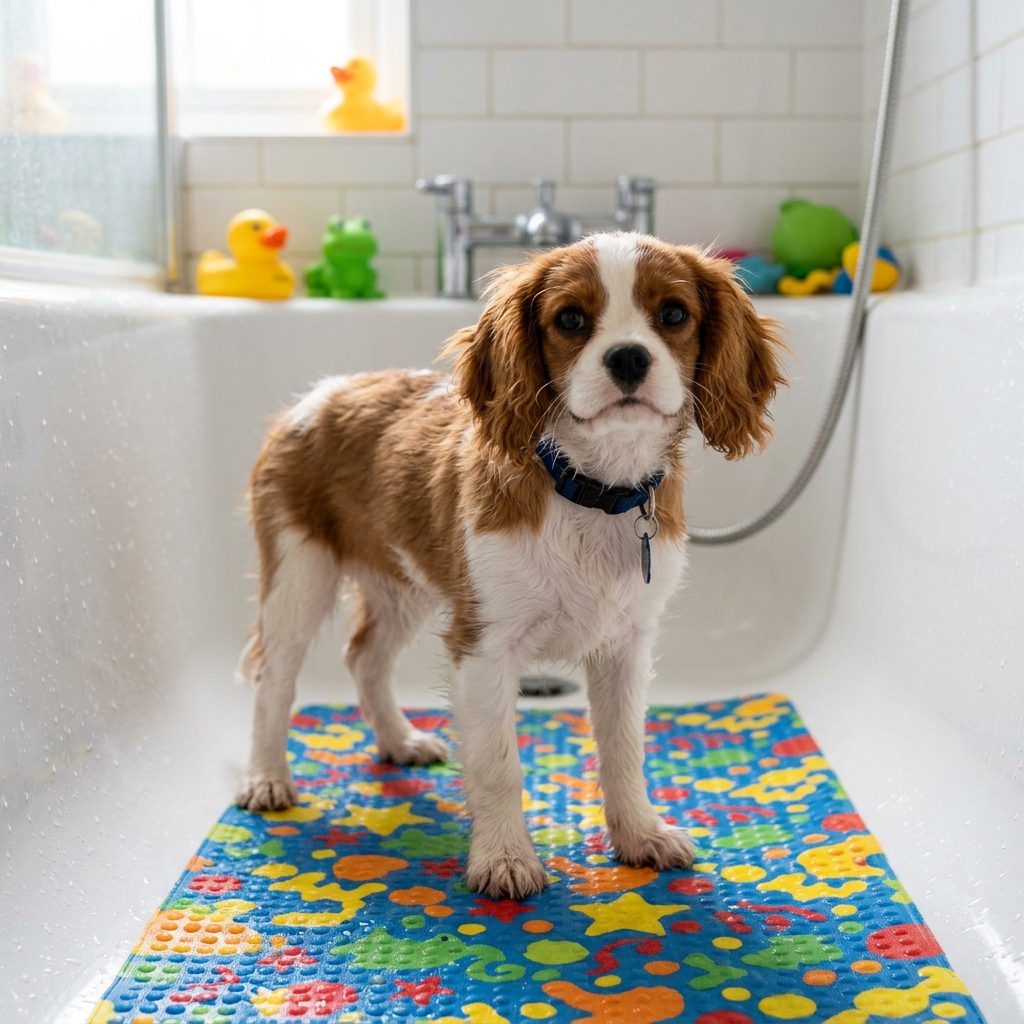
As we discussed, the feeling of slipping is a primary trigger for bath time terror. To solve this, you need to provide instant traction. A genius trick is to place a rubber bath mat or even a simple old yoga mat at the bottom of the tub. This gives the puppy’s claws something to grip, which immediately signals to their nervous system that they are safe and stable.
Creating a ‘Safe Zone’
If you do not have a mat handy tonight, you can even use a thick, wet towel laid flat across the bottom of the tub. The difference in the puppy’s body language will be night and day. Instead of ‘pancaking’ (pinning themselves to the floor) or frantically trying to climb out, they will stand with more confidence. This stability allows them to balance while you lift their paws to wash their underside.
Expert Tip: Ensure the mat covers the entire area where the puppy will be standing. Small patches of grip are better than nothing, but a full-coverage mat prevents any sudden slips that could cause a setback in their training progress.
Trick 3: Mastering the ‘Goldilocks’ Water Temperature
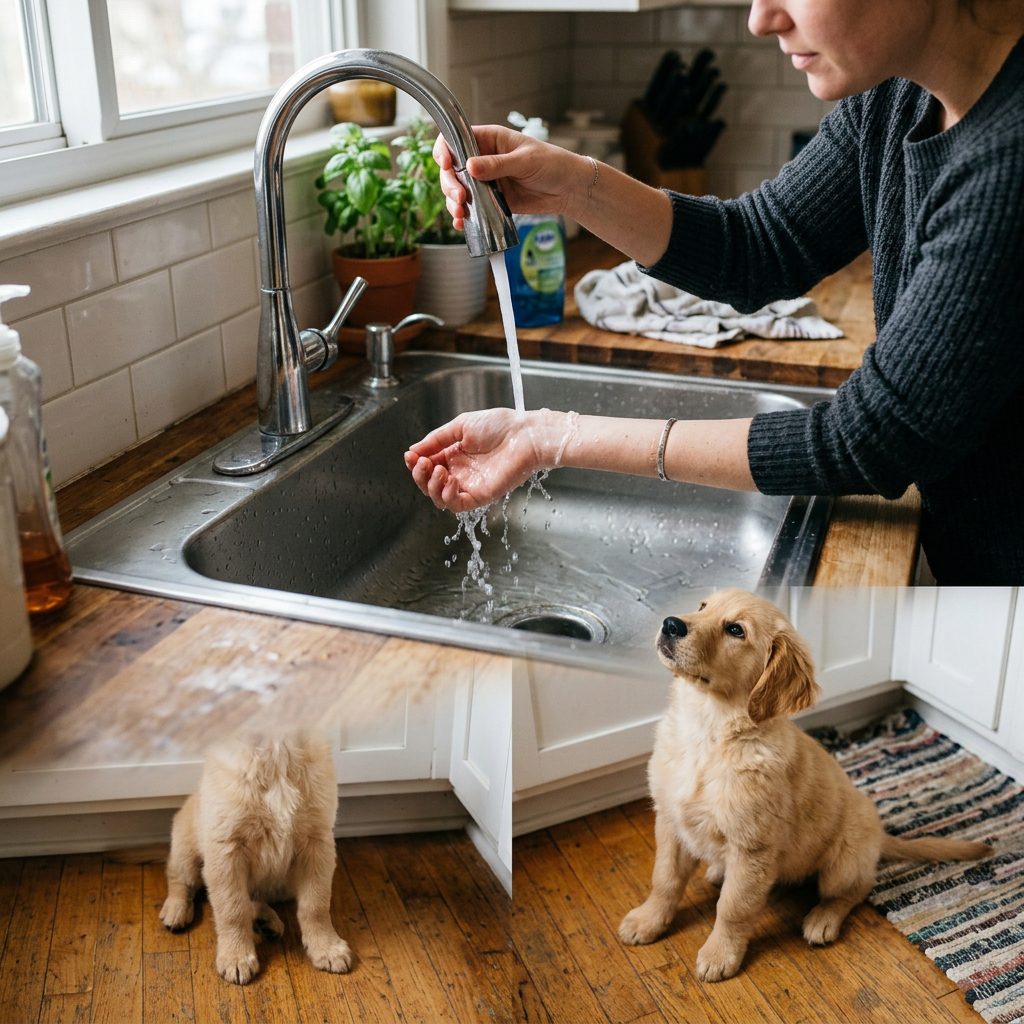
Puppies have much thinner skin than humans and their internal body temperature is higher (around 101-102.5 degrees Fahrenheit). Water that feels ‘nice and hot’ to you can be scalding or at least very uncomfortable for them. Conversely, cold water can send them into a shivering fit of panic. You want to aim for ‘lukewarm’—think of the temperature you would use for a human infant.
The ‘Wrist Test’ Technique
The best way to test the water is on the inside of your wrist, not your hand. Your wrist is more sensitive to temperature changes. If it feels neutral or slightly warm, it is perfect. Another genius sub-trick here is to fill the tub with only about two or three inches of water before you bring the puppy into the room. This eliminates the scary ‘roaring’ sound of the faucet filling the tub while they are present. By having the water pre-filled, you can gently place them in the warm, quiet pool, which is far less intimidating than being sprayed by a high-pressure hose immediately.
Trick 4: Ditching the Showerhead for the Pitcher Method
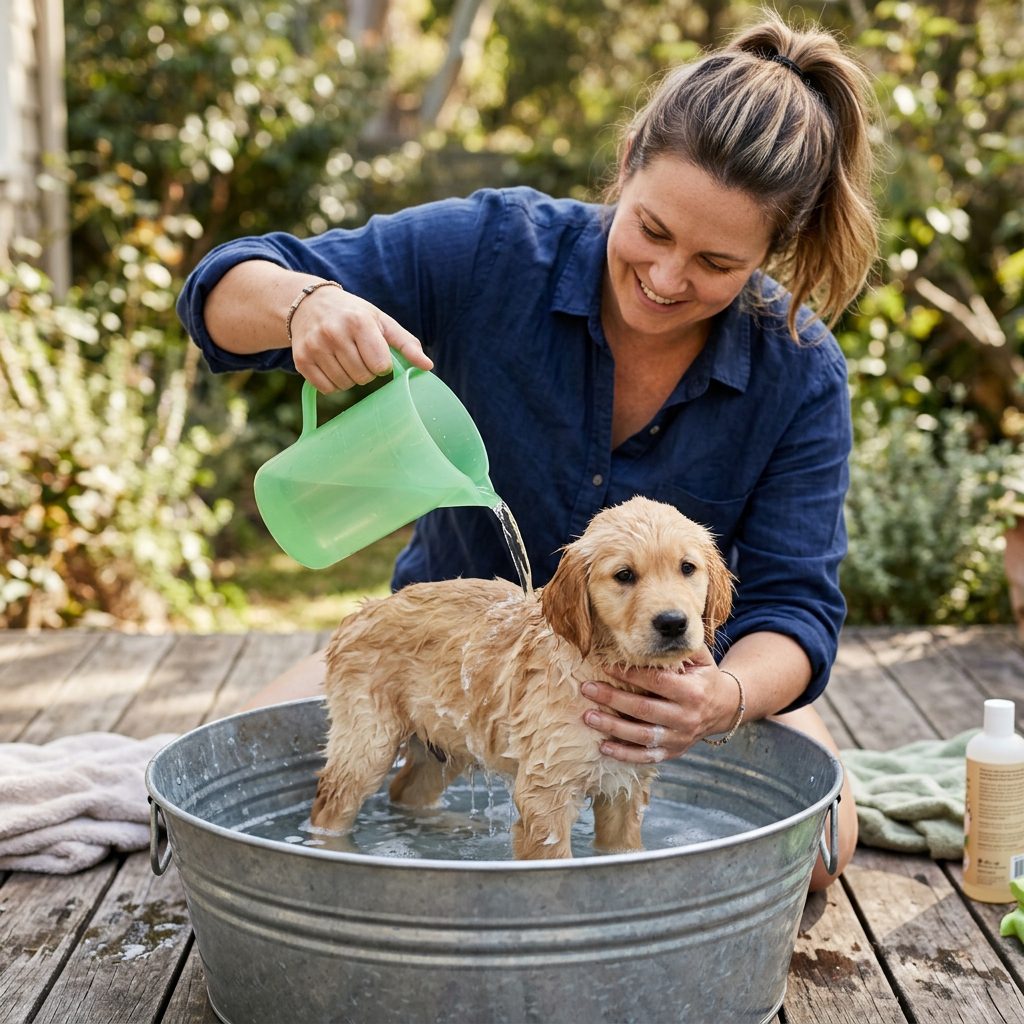
The sound and pressure of a standard showerhead are often the ‘final straw’ for a nervous puppy. The ‘hissing’ noise sounds like a predator, and the pressure can be painful on their sensitive skin. Instead, use a plastic pitcher, a large cup, or a handheld removable showerhead set to the lowest possible flow.
The Gentle Pour
Using a pitcher allows you to control exactly where the water goes, keeping it away from their sensitive ears, eyes, and nose. Start pouring water over their shoulders and back, moving toward the tail. This ‘paws-up’ approach is much less threatening. When you use a cup, you can also keep one hand on the puppy, providing a ‘calming touch’ that reassures them while the water is being applied. This physical contact acts as a grounding force. If you must use a showerhead, keep the nozzle directly against the puppy’s fur. This muffles the sound and prevents the water from splashing aggressively, making the sensation feel more like a massage and less like a rainstorm.
Trick 5: The ‘Dry Run’ Desensitization Strategy
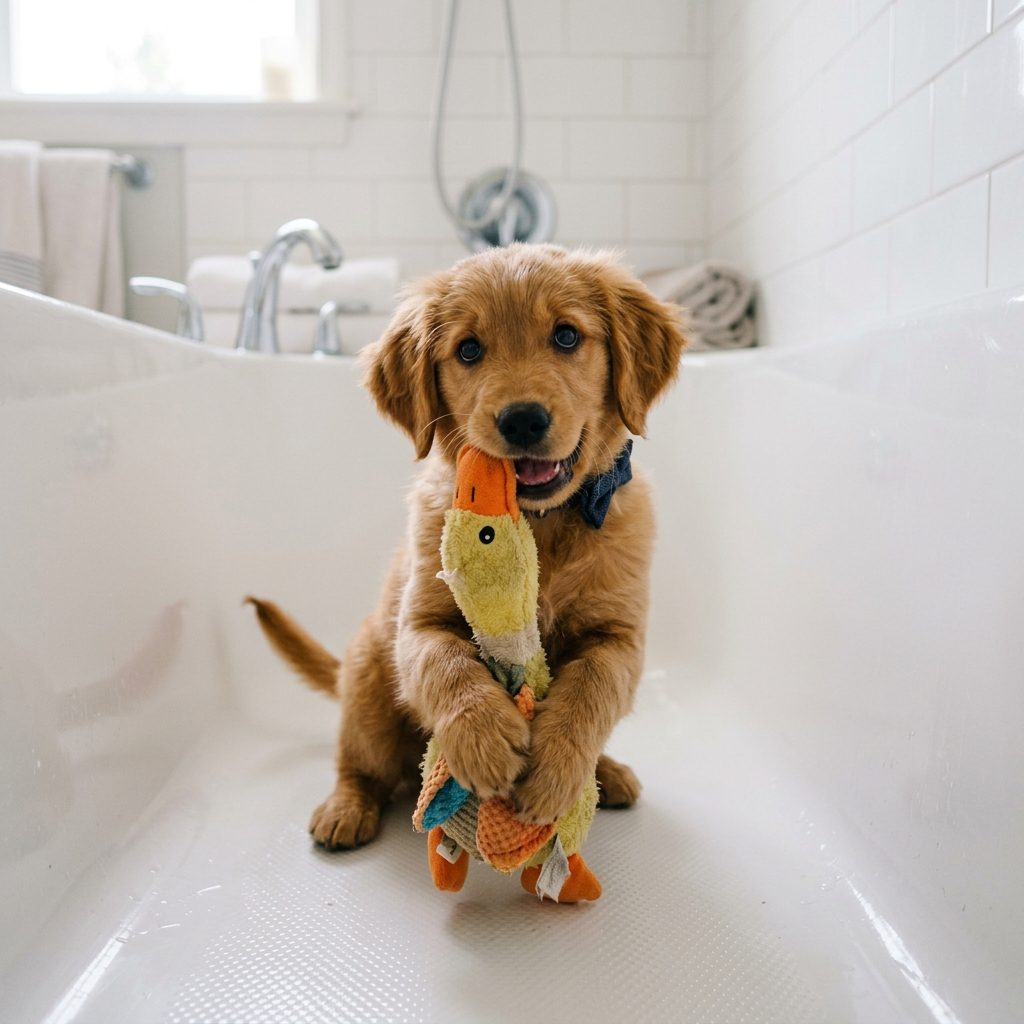
Training shouldn’t only happen when the puppy is dirty. One of the most genius ways to stop bath time terror is to perform ‘dry runs.’ This involves placing the puppy in the dry tub with no water at all. During these sessions, you provide intense praise, play with their favorite toys, and offer high-value treats. The bathtub should become a place where ‘good things happen,’ not just a place where they get wet.
Step-by-Step Desensitization
Follow this schedule to build confidence over a few days:
| Step | Activity | Goal |
|---|---|---|
| 1 | Play near the bathroom door | Remove ‘room’ anxiety |
| 2 | Sit in the dry tub with treats | Build surface confidence |
| 3 | Turn water on low (puppy outside tub) | Desensitize to sound |
| 4 | Wet only the paws with a sponge | Introduce moisture slowly |
By breaking the process down into these tiny, manageable steps, you are preventing the puppy from reaching their ‘threshold’—the point where they are too scared to learn. If at any point they show signs of extreme stress (heavy panting, whites of the eyes showing, or frantic scratching), back up to the previous step. We want to move at the puppy’s pace, not our own.
Trick 6: Protecting Sensitive Ears and Eyes
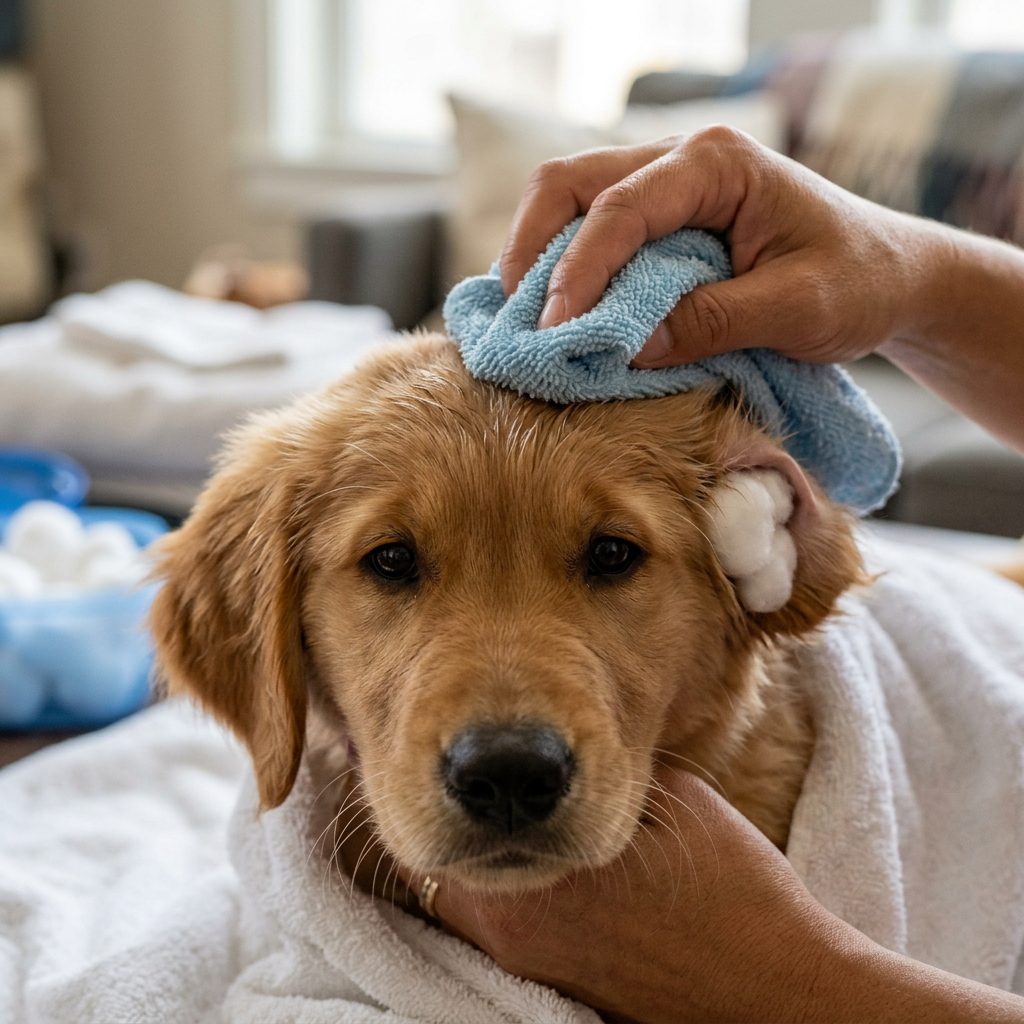
Nothing ruins a bath faster than getting soap in the eyes or water in the ears. For a puppy, water in the ears is not just annoying; it can lead to painful ear infections because their ear canals are L-shaped and trap moisture easily. A genius trick is to use cotton balls. Gently place a large cotton ball just inside the opening of each ear (do not push them deep!). This acts as a barrier against stray splashes.
The ‘No-Tears’ Shield
To protect the eyes, you can apply a tiny bit of sterile ophthalmic ointment (consult your vet first) or simply use a damp washcloth for the face instead of pouring water over their head. Most of the ‘terror’ happens when water hits the face, causing a ‘drowning’ sensation. By using a washcloth to gently wipe away eye boogers and food debris, you keep the head dry and the puppy calm. Never spray a puppy directly in the face. Think of the face as a ‘no-fly zone’ for the showerhead or pitcher. A clean, damp cloth is all you need for a sparkling clean puppy face.
Trick 7: The Post-Bath ‘Towel Burrito’ Celebration

The bath does not end when you turn off the water. The ‘after-party’ is just as important for setting the tone for future baths. Many puppies experience the ‘zoomies’ (Frenetic Random Activity Periods) after a bath because they are releasing pent-up nervous energy. Instead of letting them run wild and potentially slip on wet floors, transition them immediately into a Warm Towel Burrito.
The Power of the Warm Towel
Toss a couple of towels in the dryer for five minutes before the bath starts. As soon as you are done rinsing, scoop the puppy up into the warm towel. The warmth and the ‘swaddling’ effect are incredibly soothing. While they are wrapped up, give them a jackpot of treats—something they only get after a bath, like small pieces of boiled chicken or cheese. This makes the finale of the bath the most rewarding part. By the time they are dry, they should be in a state of ‘food coma’ and relaxation, associating the entire experience with warmth, safety, and delicious snacks.
Troubleshooting: Solving Common Puppy Bath Challenges
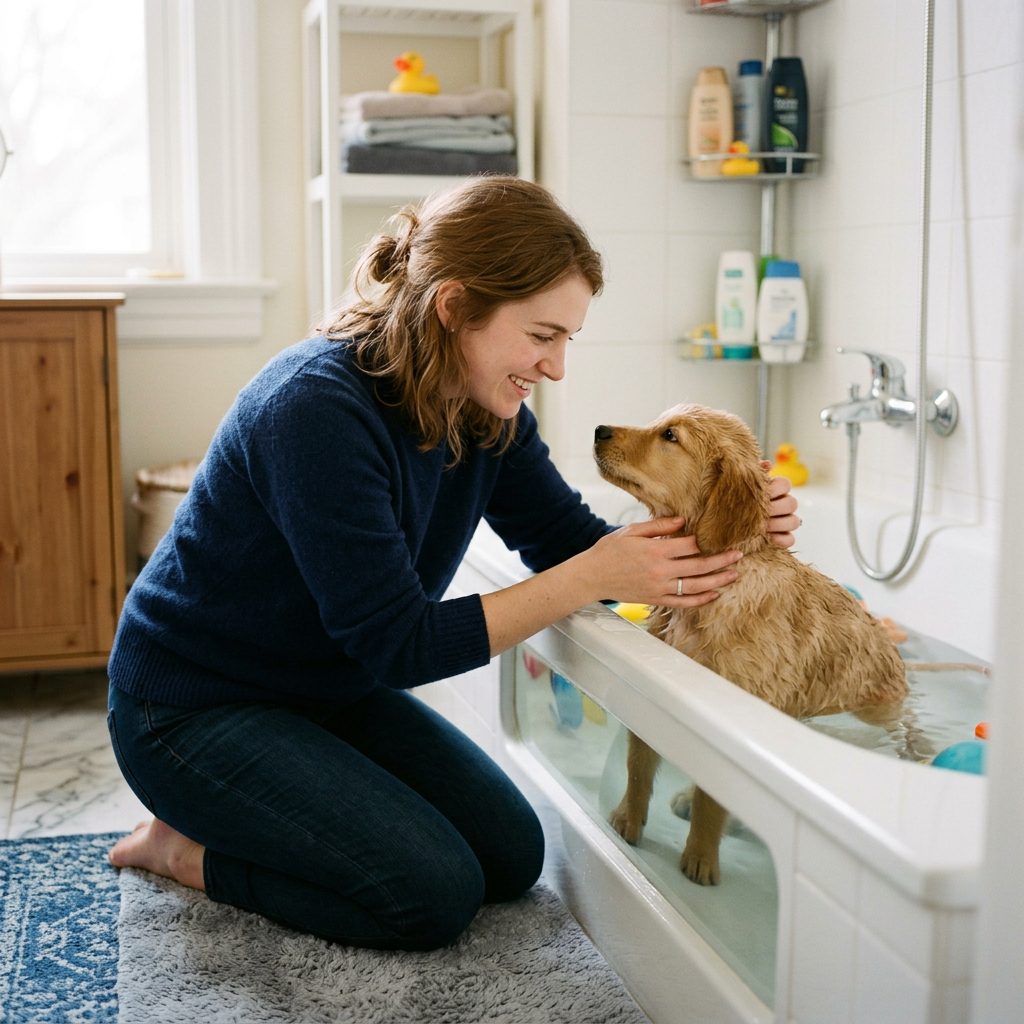
Even with the best tricks, you might encounter some specific behavioral hurdles. Every puppy is an individual, and some may have had negative experiences before they came into your care. It is important to stay patient and consistent. If your puppy is still struggling, refer to the table below for quick solutions to common problems.
Common Bath Time Issues and Fixes
| Observation | Possible Cause | Genius Fix |
|---|---|---|
| Shaking and Trembling | Cold or Anxiety | Check water temp; use a warmer room. |
| Nipping at the Water | Over-stimulation | Lower the water pressure; use a cup. |
| Trying to Jump Out | Lack of Stability | Add a thicker non-slip mat or towel. |
| Constant Whining | Fear of the Sound | Muffle the drain with a cloth; pre-fill tub. |
Remember, the goal is progress, not perfection. If tonight’s bath was 10% better than the last one, you are winning. Over time, these small victories compound into a dog that will eventually jump into the tub on their own! Always end on a positive note, even if you didn’t get all the soap off—you can always finish with a damp cloth later. Keeping the relationship intact is more important than a perfectly clean coat.
Conclusion
From Terror to Tranquility
Transforming your puppy’s bath time from a terrifying ordeal into a calm routine is a journey of patience, empathy, and strategic ‘genius’ tricks. By addressing the sensory triggers—stability, sound, temperature, and scent—you are providing your puppy with the tools they need to feel safe. Remember that your puppy looks to you for cues. If you are stressed, they will be stressed. Use a soft, encouraging voice, move slowly, and never skimp on the high-value treats. The lick mat, the warm towel burrito, and the pitcher method are not just ‘hacks’; they are ways to communicate to your puppy that you are their protector, even in the ‘scary’ bathtub. With consistency, the ‘bath time terror’ will soon be a distant memory, replaced by a clean, happy pup and a much drier bathroom floor. Happy bathing!