The Lifesaving Door Manners Training Guide: Stop Your Puppy From Door Darting Today!
The Danger Lurking at the Threshold
It happens in the blink of an eye. You open the front door to grab a package or greet a friend, and before you can react, a furry blur streaks past your legs. Your heart stops as you see your puppy heading toward the street. This scenario is every dog owner’s nightmare, and unfortunately, it is one of the leading causes of preventable accidents for young dogs. Door darting is more than just an annoying habit; it is a critical safety issue that demands immediate attention.
As a savvy dog owner, you know that your puppy’s world is filled with irresistible smells, moving cars, and exciting squirrels just beyond that wooden barrier. To a puppy, an open door isn’t a boundary—it’s an invitation to an adventure. Our goal today is to change that perception. We are going to transform the door from a ‘launching pad’ into a ‘cue for calm.’ By the end of this guide, you will have the tools, the plan, and the confidence to teach your puppy that the best things in life happen when they stay put and wait for your permission.
This isn’t just about obedience; it’s about building a relationship based on communication and trust. We will dive deep into the psychology of why dogs dart, the essential gear you need to stay safe during the learning process, and a step-by-step protocol that works for puppies of all temperaments. Let’s get started on making your home a safer place, one threshold at a time.
Understanding the ‘Why’ Behind the Dash
Why Do Puppies Dart?
Before we can fix the behavior, we have to understand what motivates it. For most puppies, door darting is a combination of natural curiosity and lack of impulse control. Puppies are biologically programmed to explore their environment. The outside world offers a sensory explosion that your living room simply cannot match. When that door opens, it’s like a curtain rising on a grand stage.
Common Motivators for Door Darting
- Environmental Reinforcement: The outside world is inherently rewarding. Smelling the grass, chasing a leaf, or seeing a neighbor provides immediate ‘dopamine hits’ to your puppy.
- Pent-up Energy: If a puppy hasn’t had enough physical or mental stimulation, they will look for any opportunity to release that energy. An open door is the ultimate escape valve.
- Fear or Anxiety: In some cases, a dog might dart out of a door because they are startled by something inside or are trying to escape a stressful situation. However, for most puppies, it is pure excitement.
- The ‘Chase’ Game: If you have ever chased your puppy after they slipped out, you might have accidentally taught them that darting leads to a fun game of tag. To a puppy, your frantic shouting and running are just part of the fun.
Understanding that your puppy isn’t being ‘bad’ or ‘defiant’ is the first step. They are simply following their instincts. Our job is to provide better alternatives and clearer boundaries.
Essential Gear and Management Tools
Setting Yourself Up for Success
Training takes time, but safety must be immediate. While you are working on the ‘software’ (the training), you need the ‘hardware’ (the gear) to ensure no accidents happen in the meantime. You wouldn’t teach a child to swim in the middle of the ocean without a life vest; don’t try to teach door manners without a safety net.
The Door Training Toolkit
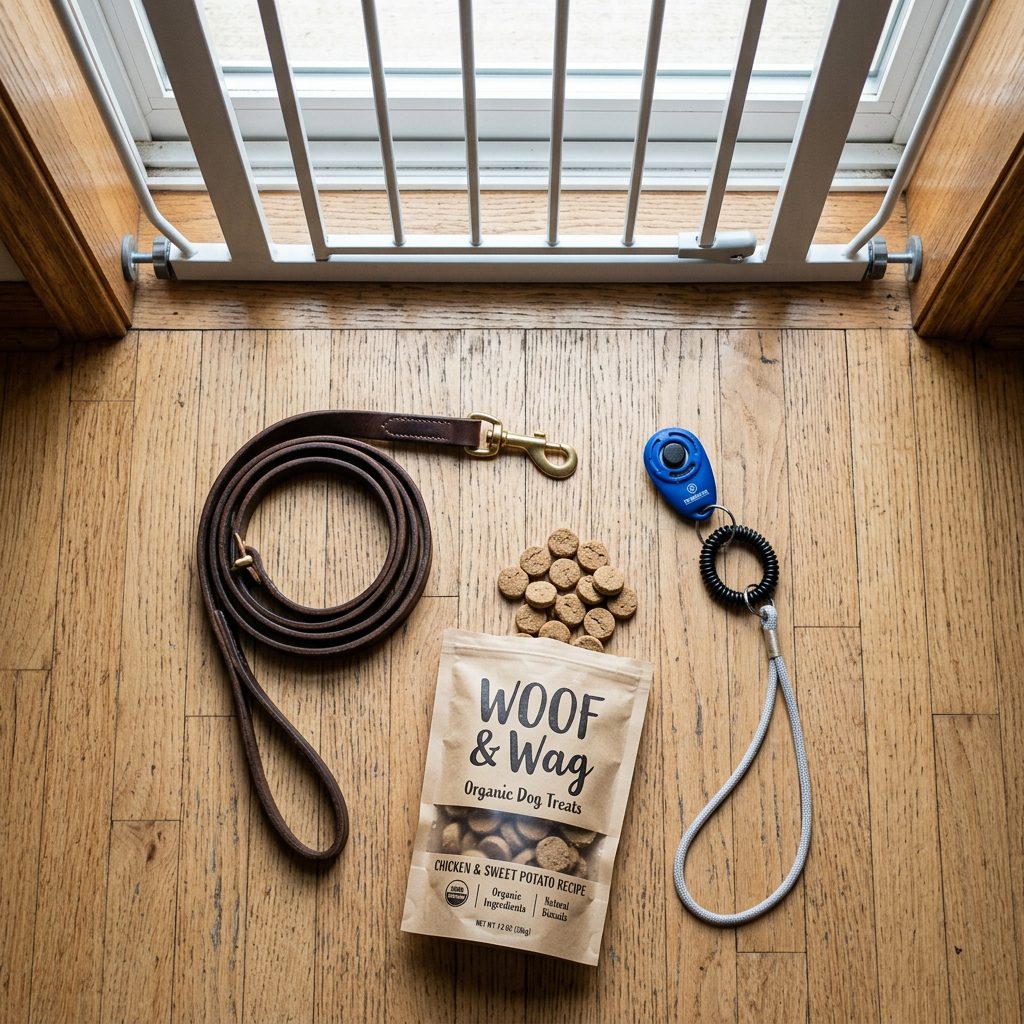
| Tool | Purpose | Why It’s Essential |
|---|---|---|
| High-Value Treats | Positive Reinforcement | You need to be more interesting than the squirrel outside. Use chicken, cheese, or specialized training treats. |
| Standard 6ft Leash | Physical Control | Prevents the puppy from actually reaching the threshold during early training phases. |
| Fixed-Point Anchor | Tethering | A heavy piece of furniture or a wall-mounted eye bolt to secure the leash while you practice opening the door. |
| Baby Gate or X-Pen | Management | Creates a secondary barrier to prevent access to the door when you aren’t actively training. |
| Clicker | Precision Marking | Helps mark the exact moment your puppy chooses to stay still. |
Using a management-first approach means that even when you aren’t training, the puppy cannot practice the bad behavior. If you have guests coming over, put the puppy behind a baby gate or in their crate before opening the front door. Every time your puppy successfully darts out, the behavior is reinforced, making your training job significantly harder. Stop the ‘self-rewarding’ cycle today by using these tools consistently.
The Step-by-Step Door Manners Protocol
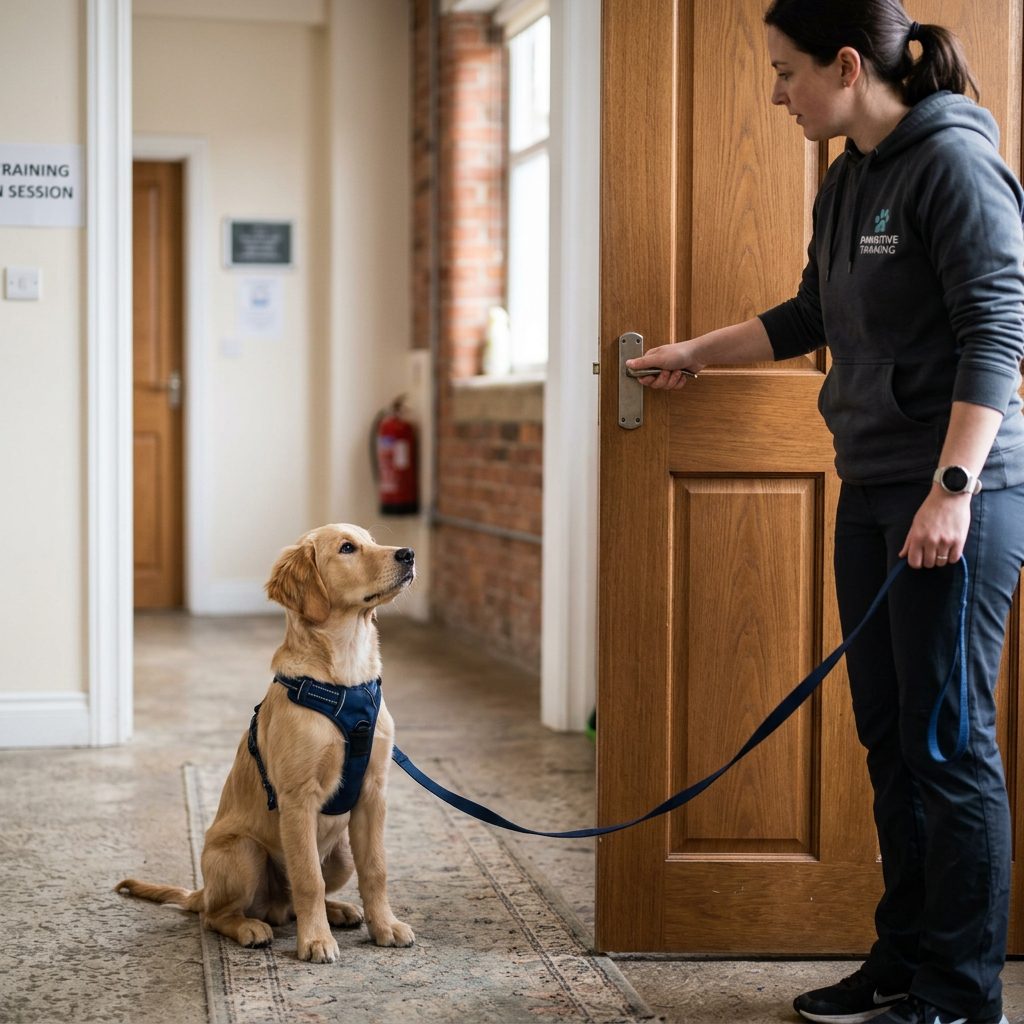
Phase 1: Building the ‘Wait’ Foundation
We don’t start at the front door. That’s like taking a calculus exam before learning addition. Start in a low-distraction environment like your kitchen or hallway. We want to teach the puppy that movement toward a goal stops when they move, and continues when they are still.
Step 1: The Invisible Barrier
- Stand near a doorway (not the exit yet). Have your puppy on a leash.
- Walk toward the doorway. The moment your puppy pulls ahead or gets excited, stop moving.
- Wait for them to look back at you or sit.
- The moment they offer a calm behavior, say ‘Yes!’ or click, and move forward one step.
- Repeat until you can walk through the interior doorway with a loose leash.
Step 2: The ‘Sit and Stay’ at the Door
Now move to the actual door you want to train. Keep the puppy on a leash.
- Ask your puppy to ‘Sit’ about three feet away from the door.
- Reach for the doorknob. If the puppy stands up, remove your hand from the knob and wait for the sit again.
- Repeat this until you can touch, jiggle, and turn the knob while the puppy remains seated. Reward heavily for the stay!
- Slowly crack the door open one inch. If the puppy moves, shut the door immediately (be careful of paws!).
- Gradually increase the distance the door opens. The goal is for the puppy to realize that their movement causes the door to close, while their stillness causes the door to open.
Step 3: The Release Command
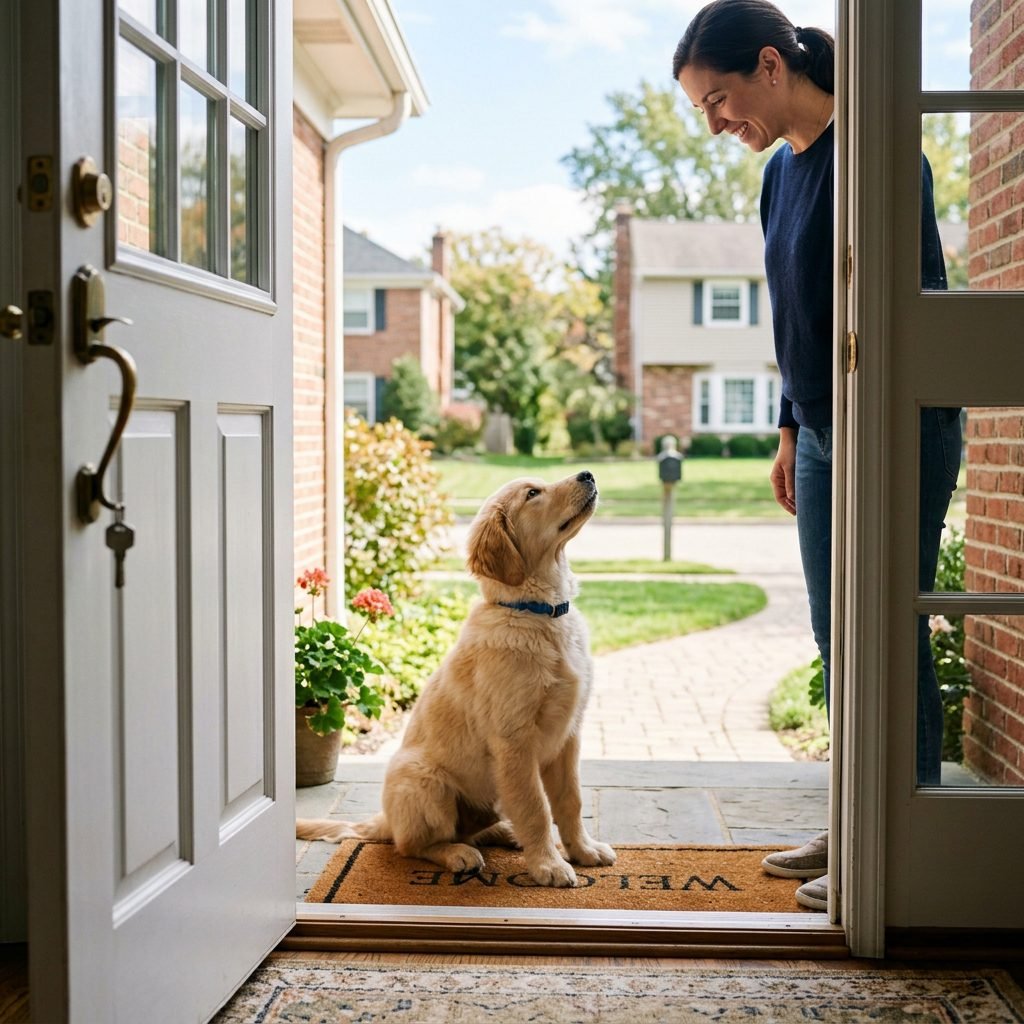
Never let the puppy just walk out. They must wait for a specific release word, like ‘Okay’ or ‘Free.’ This ensures that you are always the one giving permission to cross the threshold. If they cross without the word, gently bring them back and start the sequence over.
Managing Real-World Distractions
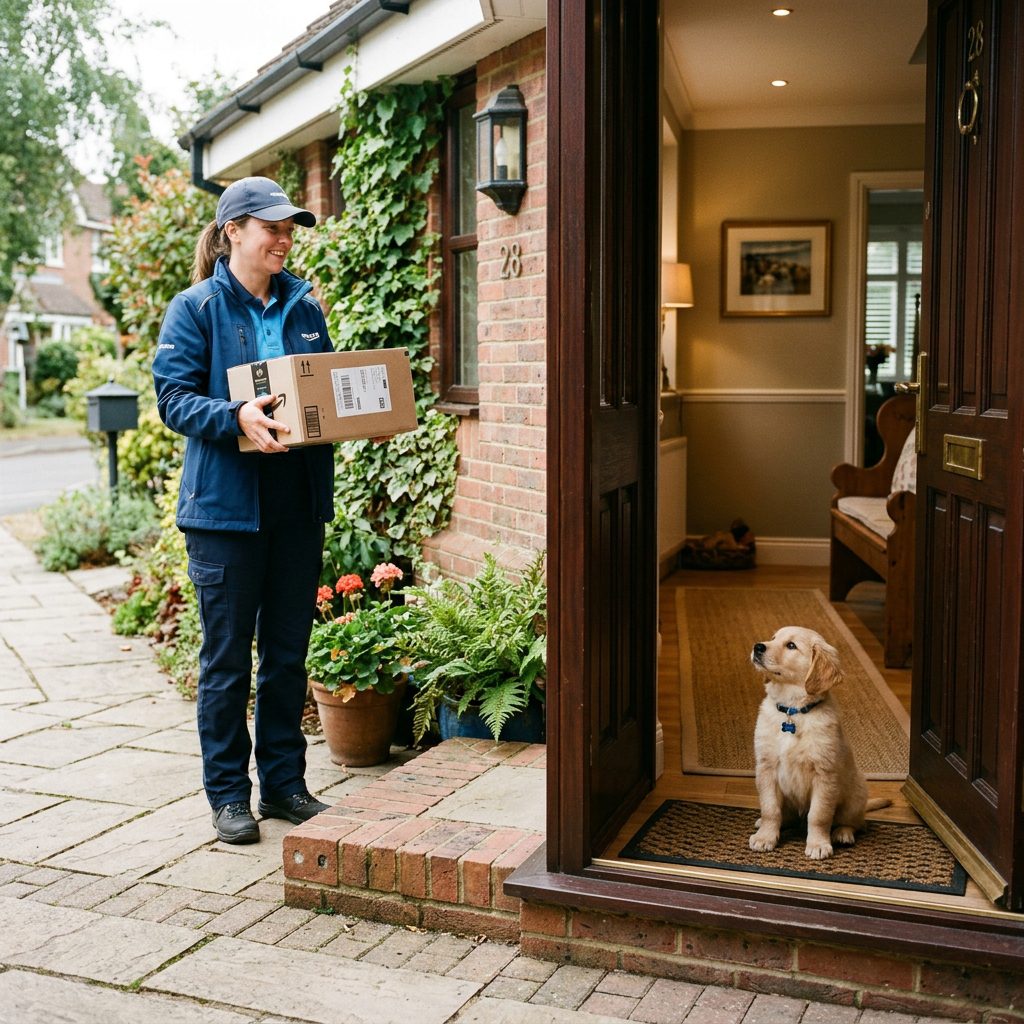
Proofing the Behavior Against the Real World
It’s easy for a puppy to stay sitting when it’s just you and them in a quiet house. It’s much harder when the mail carrier is walking up the path or a neighbor’s dog is barking across the street. This is called ‘proofing’ the behavior.
Increasing the Difficulty Gradually
Once your puppy is 90% successful with a quiet door, introduce ‘controlled’ distractions:
- The Doorbell: Have a family member ring the bell. The bell should become a cue for the puppy to go to their ‘place’ (like a bed or mat) rather than the door.
- The ‘Package Drop’: Drop a box near the door. If the puppy stays, they get a ‘jackpot’ of five high-value treats in a row.
- The Open Door Challenge: With the puppy on a long line (15-20ft leash), open the door wide. Step outside yourself while the puppy stays inside. This is the ultimate test of their impulse control.
Expert Tip: If your puppy fails at any level, don’t get frustrated. It just means you moved too fast. Go back to the previous step where they were successful and build their confidence back up.
Troubleshooting Common Training Mistakes
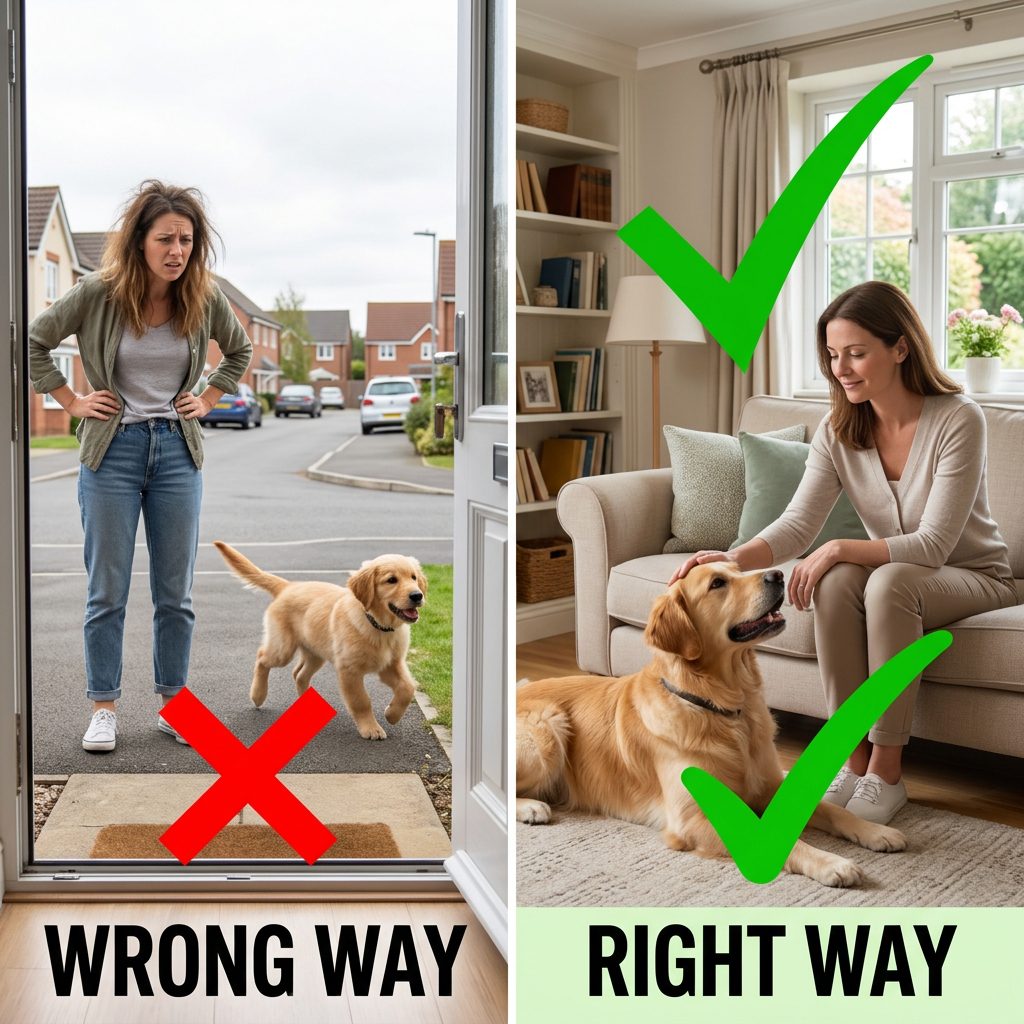
Avoid These Pitfalls
Even the best trainers hit roadblocks. Door darting is a high-arousal behavior, which means emotions can run high for both the dog and the owner. Avoid these common mistakes to keep your progress on track.
| Mistake | Why It Fails | The Fix |
|---|---|---|
| Shouting ‘No!’ | Adds stress and noise, which can actually excite the puppy more. | Use a calm, firm ‘Wait’ and use the door closing as the correction. |
| Moving Too Fast | The puppy doesn’t have the muscle memory yet. | Spend at least 5-10 minutes a day on the ‘boring’ basics (knob jiggling). |
| Inconsistency | If they are allowed to dart sometimes, they will try every time. | Everyone in the household must follow the ‘Sit to Open’ rule. |
| Lack of Rewards | The puppy loses motivation to ignore the outside world. | Use the ‘Good Stuff’ (real meat) exclusively for door training. |
The ‘Catch Me If You Can’ Trap
If your puppy does get out, do not chase them. Most puppies think this is a game. Instead, try one of these tactics:
- Run in the opposite direction: Make high-pitched noises and run away from the puppy toward the house. Most puppies will chase you back inside.
- The ‘Emergency Down’: If you have trained a solid ‘Down,’ use it. A dog that is lying down cannot keep running.
- The ‘Cookie Toss’: If they are close enough, toss a handful of treats on the ground to stop their momentum, then calmly step on their leash or grab their collar.
Advanced Maintenance and Long-Term Success
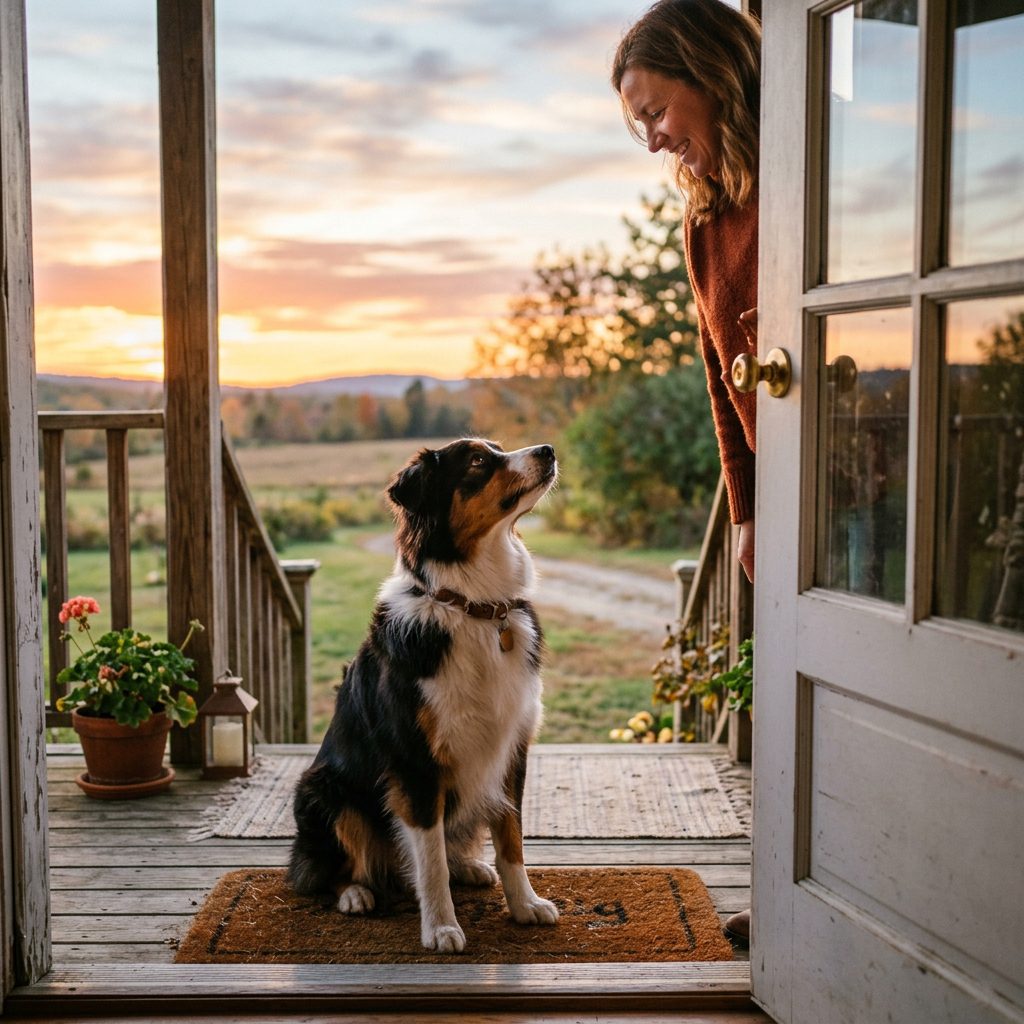
Making Door Manners a Way of Life
Training isn’t a one-time event; it’s a lifestyle. To ensure your puppy doesn’t regress, you must maintain these standards for the rest of their life. As your puppy matures into an adult dog, their impulse control will improve, but the ‘rules of the house’ should never change.
The ‘Four on the Floor’ Rule
Incorporate door manners into every exit. Whether you are going for a walk, heading to the car, or just letting them out to pee, the sequence should always be: Sit, Wait, Eye Contact, Release. This creates a powerful habit. Eventually, your dog will approach a door and automatically sit and look at you for permission without you even saying a word.
Mental Stimulation and Impulse Control Games
Strengthen your puppy’s ‘stay’ muscle with games that aren’t related to the door. Exercises like ‘Leave It’ with a piece of food on their paw or waiting for their food bowl to be placed on the floor all build the same neural pathways needed for door manners. A dog that can ignore a piece of bacon can eventually ignore a squirrel across the street.
Remember: A tired dog is a well-behaved dog. Ensure your puppy is getting appropriate physical exercise and mental ‘brain work’ (like puzzle toys) to reduce the frantic energy that leads to darting in the first place.
Conclusion
The Gift of Safety and Peace of Mind
Teaching your puppy door manners is one of the greatest gifts you can give them. It is the gift of safety, and for you, it is the gift of peace of mind. No longer will you have to brace yourself every time the doorbell rings or live in fear of a cracked door. By following this guide, you are not just ‘training a dog’; you are mastering the environment and ensuring that your puppy remains a safe and happy member of your family for years to come.
Consistency is your superpower. Stay patient, keep your treats handy, and celebrate the small wins. Every time your puppy chooses to stay seated while the world beckons outside, you have won a major victory in their development. You’ve got this, and your puppy is lucky to have an owner as dedicated as you!