Fun or Dangerous? How to Stop Your Puppy From Obsessively Snapping at the Garden Hose
The Allure of the ‘Hose Monster’
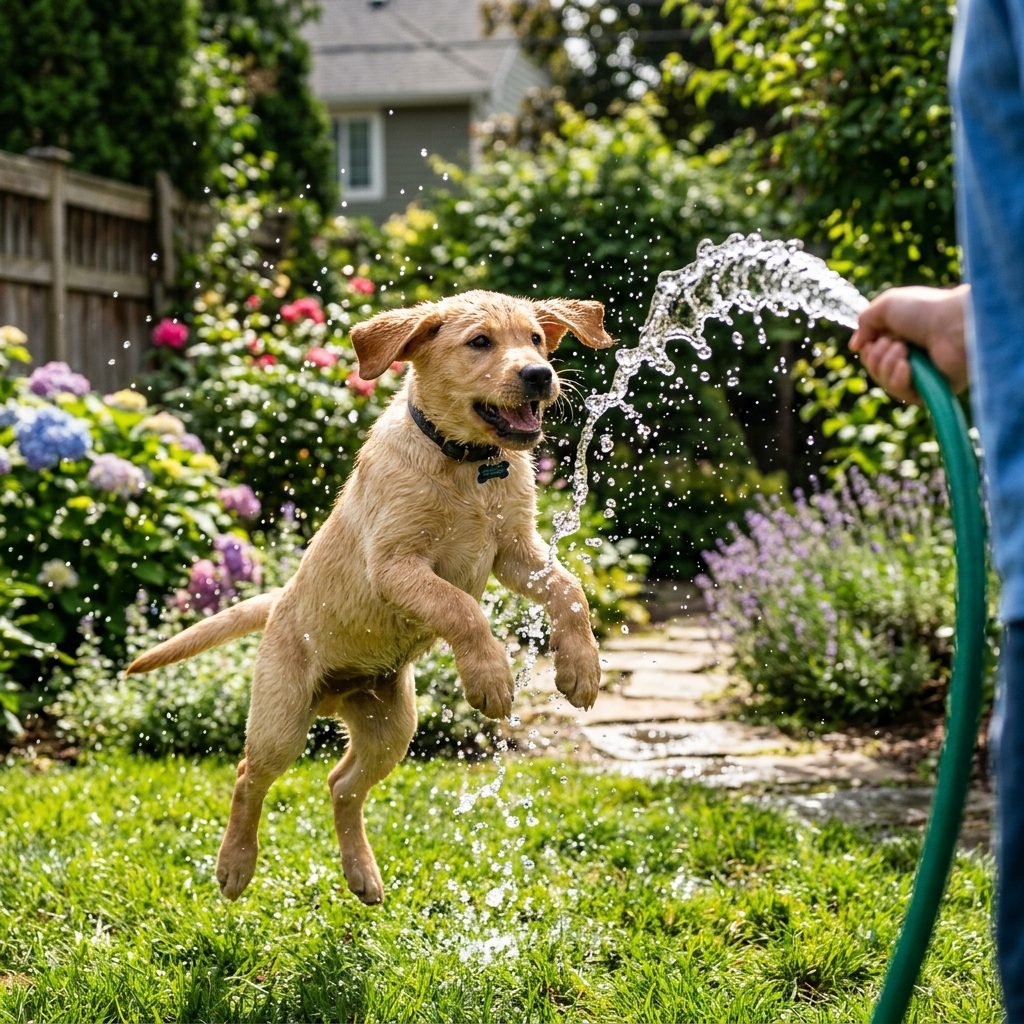
We have all been there: the sun is shining, the garden needs a drink, and as soon as you unravel that green coil, your puppy transforms. What was once a sleepy ball of fluff becomes a high-speed aquatic predator, snapping, lunging, and barking at the stream of water. It is one of those classic ‘dog owner’ moments that starts with a laugh. After all, watching a puppy try to ‘catch’ water is objectively hilarious. However, for many savvy dog owners, that laughter eventually turns to concern. Is this just harmless fun, or is your puppy developing an unhealthy obsession? In this comprehensive guide, we are going to dive deep into the psychology of why puppies snap at the hose, the very real physical dangers of uncontrolled water play, and a professional step-by-step training plan to regain control of your backyard chores.
As a canine specialist, I often see this behavior labeled as ‘just a puppy being a puppy.’ While true to an extent, the line between play and fixated obsession is thinner than you might think. When a dog becomes so focused on the hose that they ignore commands, injure their mouths, or drink excessive amounts of water, we have moved from playtime into the danger zone. Our goal today is not to ruin the fun, but to ensure that your puppy remains safe, sane, and responsive, even when the ‘hose monster’ makes an appearance. Let’s break down the science and the strategy behind managing this common but complex behavior.
Understanding the Obsession: Why Puppies Snap at Water
The Biological Drive Behind the Snap
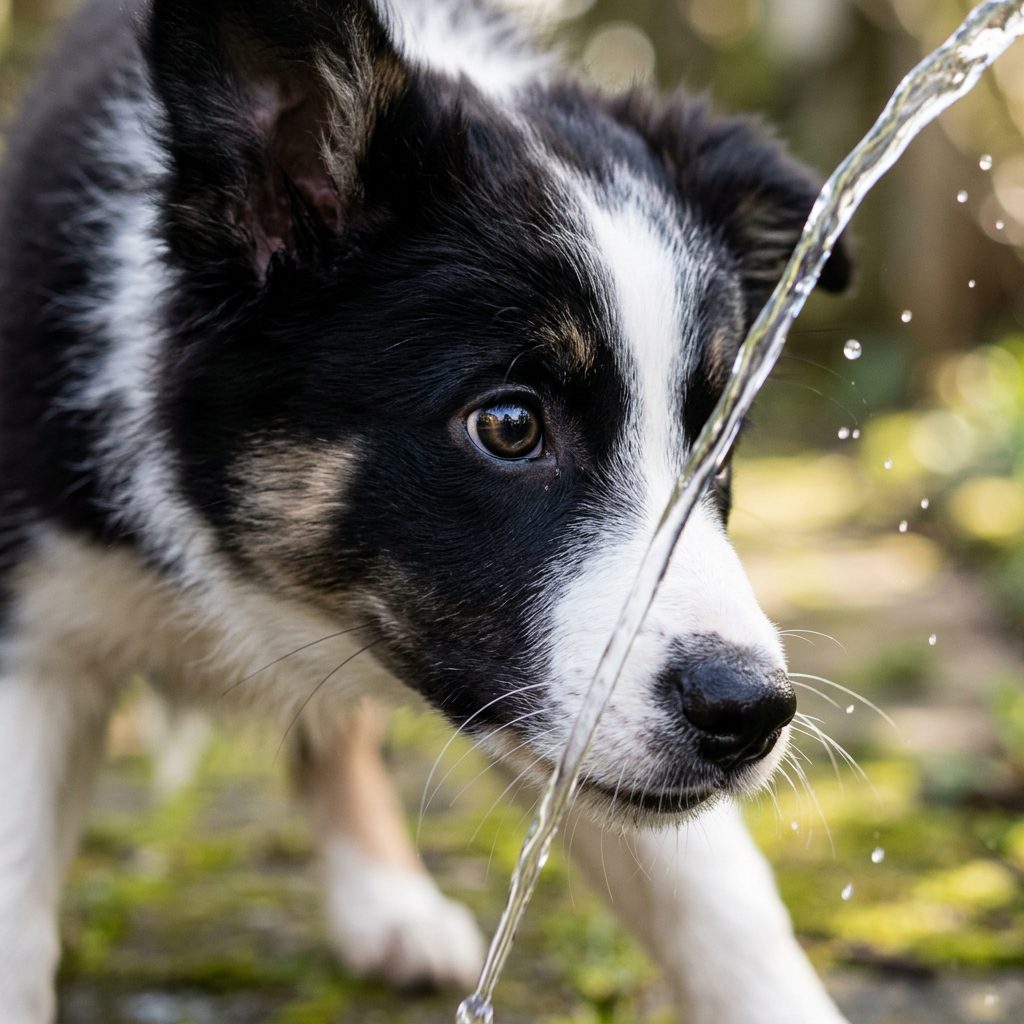
To stop a behavior, we first have to understand where it comes from. For most puppies, the garden hose triggers a deeply ingrained biological sequence known as the predatory motor pattern. This sequence—orient, eye, stalk, chase, grab-bite, and kill-bite—is what ancestors of the domestic dog used to hunt. When water shoots out of a nozzle in an unpredictable, fast-moving stream, it mimics the movement of small prey. Your puppy isn’t just ‘playing’; their brain is telling them there is something to catch.
Sensory Overload and Excitement
Beyond prey drive, the hose is a sensory explosion. The sound of rushing water, the cool temperature on a hot day, and the visual ‘sparkle’ of droplets in the sun are incredibly stimulating. Puppies, who are still learning how to regulate their arousal levels, can easily become over-stimulated. When a puppy’s ‘bucket’ of excitement overflows, they lose the ability to think rationally and revert to instinctive snapping. This is why you might notice your puppy getting ‘crazier’ the longer the hose is on.
Expert Insight: Some breeds, particularly herding breeds like Border Collies and Australian Shepherds, are more prone to ‘light and shadow’ or ‘movement’ fixations. For these dogs, the hose can become a gateway to obsessive-compulsive behaviors (OCD) if not managed early.
Finally, there is the simple element of reinforcement. If the puppy snaps at the water and the water ‘moves’ or ‘splashes’ them back, it creates a feedback loop of fun. Even if you are yelling ‘No!’, the puppy may perceive your attention as part of the game. To them, the hose is the ultimate interactive toy that never gets tired.
Fun vs. Dangerous: The Risks of Uncontrolled Hose Play
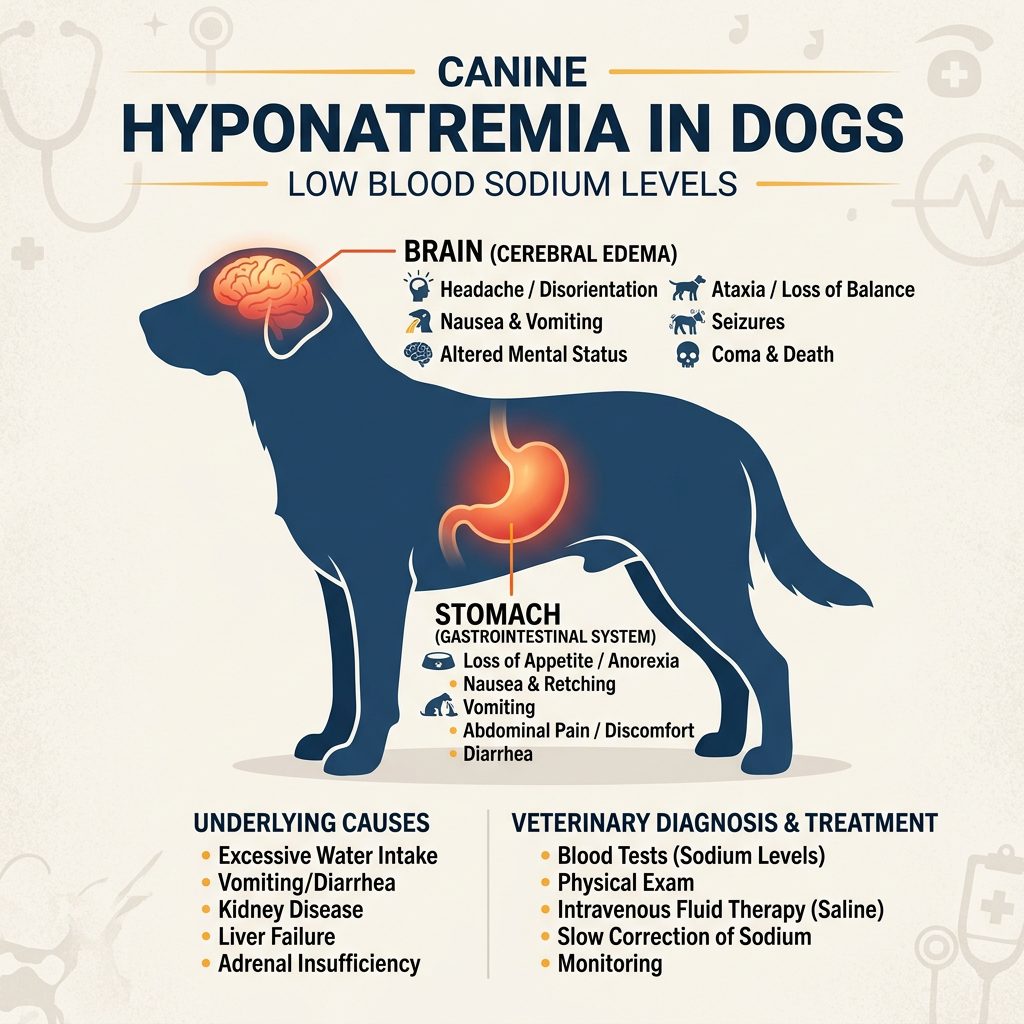
The Hidden Threat: Water Intoxication
While most owners worry about the puppy getting the patio wet, the most significant risk is a condition called hyponatremia, or water intoxication. When a dog snaps at a hose, they often ingest large quantities of water in a very short period. This excess water dilutes the sodium levels in the blood, causing cells to swell. This can lead to brain swelling, seizures, and in tragic cases, death.
Physical and Behavioral Tolls
It isn’t just about the water intake. The physical act of snapping at high-pressure water can cause dental issues, such as worn enamel or even fractured teeth. Furthermore, the high-pressure stream can cause accidental aspiration, where water enters the lungs, potentially leading to pneumonia. From a behavioral standpoint, allowing a puppy to obsess over the hose can lead to ‘frustration-based aggression’ where the dog becomes frantic or nippy when the hose is put away.
To help you distinguish between healthy play and a dangerous obsession, refer to the table below:
| Behavior Detail | Healthy Play | Warning Signs (Obsession/Danger) |
|---|---|---|
| Focus Level | Can be distracted by a treat or call. | Glassy eyes, ignores all external stimuli. |
| Physical State | Bouncy, happy tail, takes breaks. | Frantic lunging, shivering, or coughing. |
| Recovery | Calms down quickly when hose is off. | Paces or whines at the spigot for hours. |
| Water Intake | Laps at droplets occasionally. | Gulping the stream directly and constantly. |
If your puppy falls into the ‘Warning Signs’ category, it is time to implement a strict training protocol. Safety must always come before a few minutes of backyard entertainment.
Tools and Preparation for Success
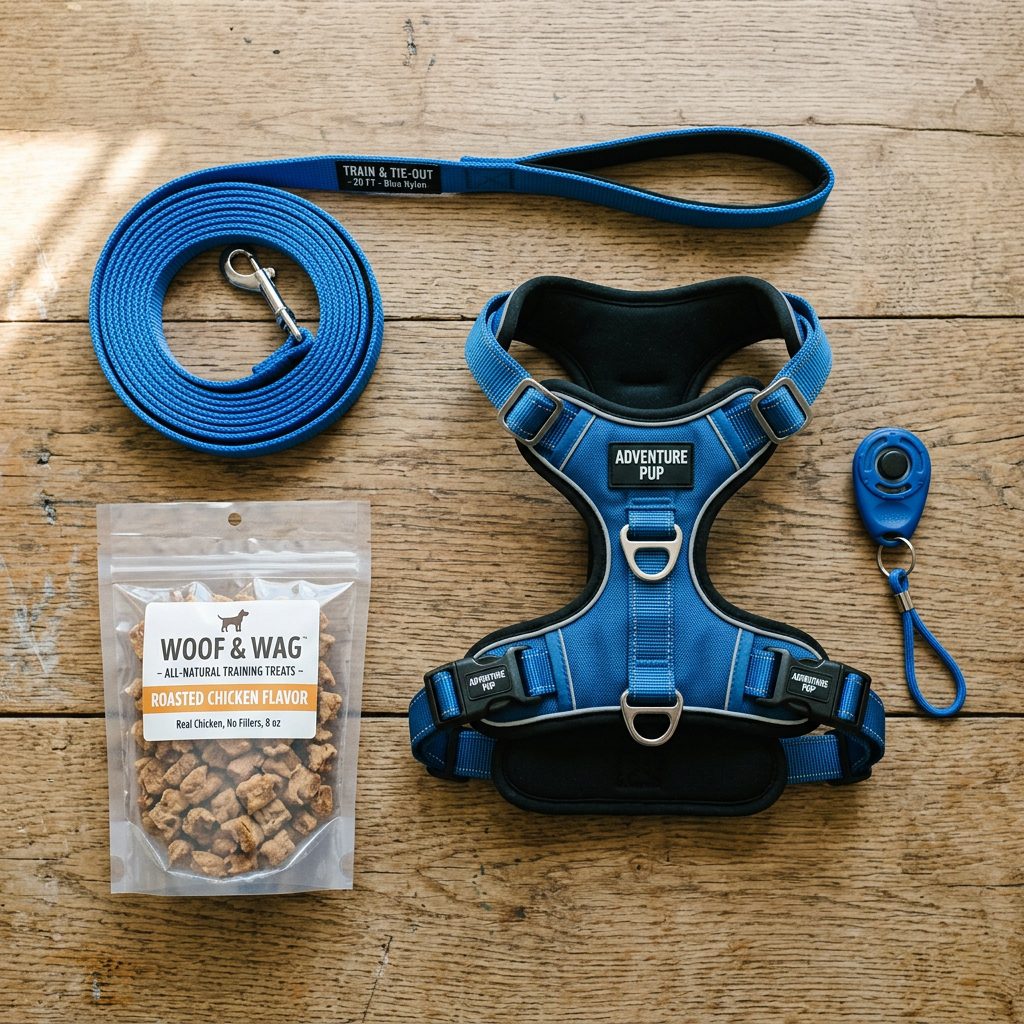
Setting the Stage for Training
You wouldn’t try to teach a child math in the middle of a carnival, and you shouldn’t try to train your puppy with the hose without the right tools. Preparation is 50% of the battle. Before you even turn the water on, you need to gather your gear. Our goal is to create a controlled environment where the puppy can learn that calmness is what earns rewards, not snapping.
The Essential Toolkit
- High-Value Treats: We aren’t talking about standard kibble. You need ‘the good stuff’—boiled chicken, cheese, or freeze-dried liver. The reward must be more interesting than the water.
- A Long-Line Leash (15-20 feet): This allows you to maintain physical control without being right on top of the puppy. It prevents them from charging the hose.
- A Clicker (Optional): If your puppy is clicker-trained, this is the best way to mark the exact second they choose to look away from the hose.
- A Flat Collar or Harness: Never use a choke or prong collar for this training, as the physical pain associated with the hose can actually increase the puppy’s frustration and obsession.
- A Helper: If possible, have a friend or family member handle the hose while you handle the puppy.
Pro Tip: Ensure your puppy has had a good walk or play session earlier in the day. A puppy with too much pent-up energy will find it nearly impossible to focus on impulse control training.
The Step-by-Step Guide to De-Sensitization
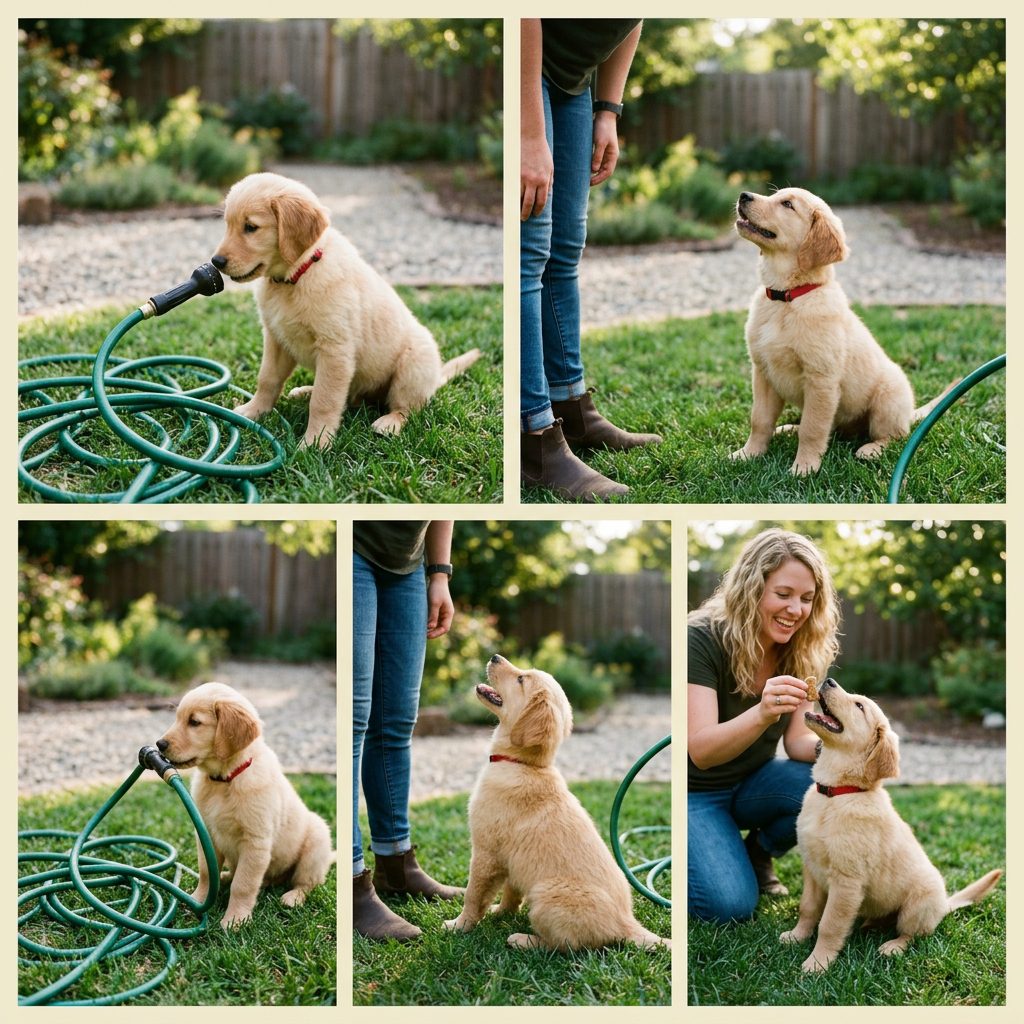
Re-wiring the Puppy Brain
This training protocol uses a technique called Counter-Conditioning and Desensitization (CC&D). We are changing the puppy’s emotional response to the hose from ‘Prey!’ to ‘Look at my owner for a treat!’ Follow these steps slowly; do not rush to the next phase until your puppy is 100% successful at the current one.
Step 1: The ‘Dead’ Hose
Place the hose on the ground, turned off. Walk your puppy around it on a leash. Every time they look at the hose and then look back at you, Click and Treat (C&T). We want them to realize that the hose is just a boring object and you are the source of all things delicious.
Step 2: The Distance Trickle
Have your helper turn the hose on to a very low trickle, about 20 feet away from the puppy. The puppy will likely perk up. The moment they look at the water, call their name. If they turn to you, C&T. If they lung towards the water, you are too close. Move further back until they can successfully choose you over the water.
Step 3: Introducing the ‘Leave It’ Command
Once the puppy is calm with the trickle, increase the pressure slightly. As the puppy starts to focus on the water, give a firm but friendly ‘Leave it’ command. When they disengage, offer a ‘jackpot’ (3-4 treats in a row). This builds a strong association that ignoring the ‘hose monster’ results in a massive payoff.
Step 4: Controlled Movement
Have your helper move the hose stream back and forth slowly. This is the ultimate test of prey drive. Keep your puppy on the long line. If they remain seated or standing calmly while the water moves, they are winning. If they snap, simply turn the water off immediately. This teaches the puppy that snapping equals the end of the fun.
Step 5: Generalization
Practice in different parts of the yard and at different times of day. Eventually, transition to having the puppy off-leash, but only when you are certain their ‘Leave It’ is rock solid. Remember, consistency is key. If you let them snap ‘just for fun’ one day, you reset their progress back to zero.
Troubleshooting Common Challenges
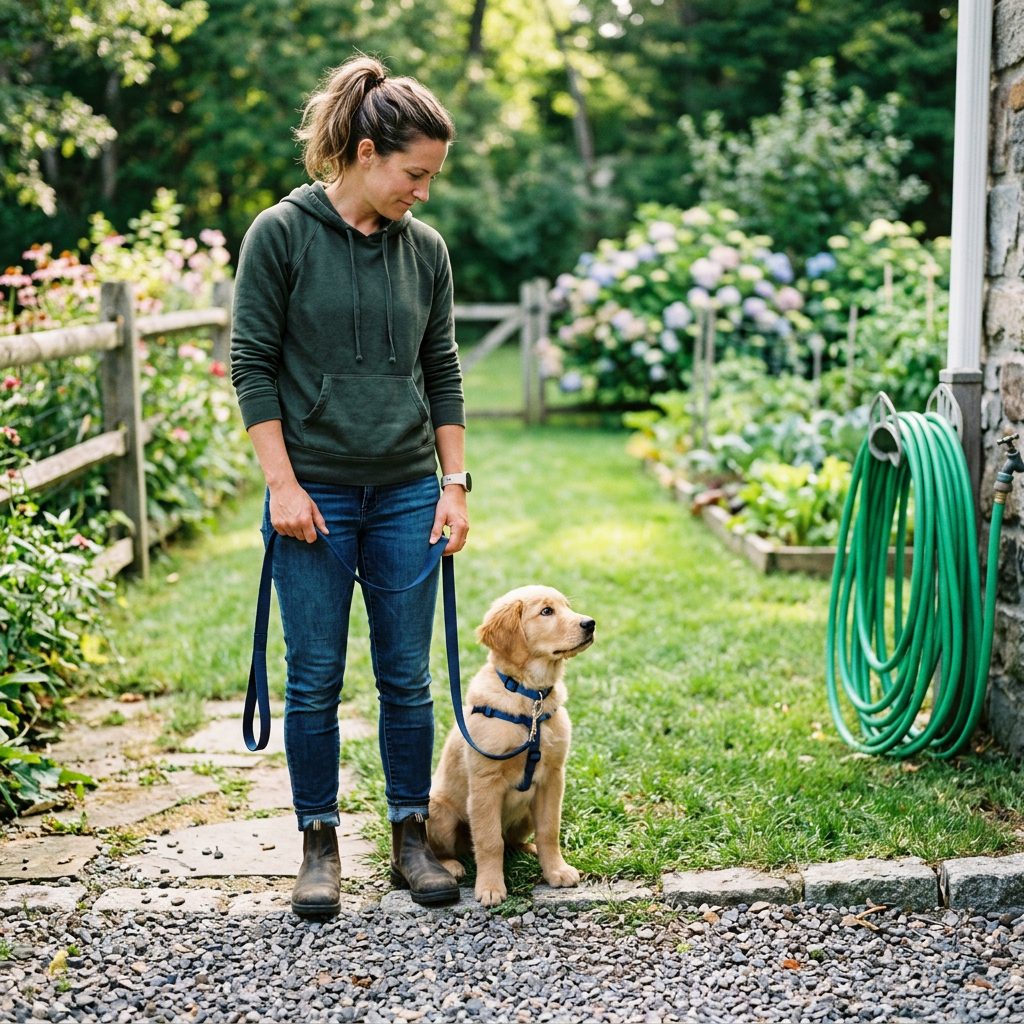
What to Do When Things Go Wrong
Even with the best training plan, puppies are unpredictable. You might hit a plateau or find that your puppy ‘forgets’ everything the moment the water pressure increases. Don’t panic; this is a normal part of the learning curve. The key is to remain calm and adjust your strategy rather than getting frustrated.
Problem: My Puppy Ignores the Treats
If your puppy finds the hose more rewarding than chicken or cheese, you have two options: increase the value of the treat (try sardine pieces or wet food in a squeeze tube) or increase the distance. Distance is your best friend in behavior modification. If they can’t focus at 10 feet, go to 30 feet. You must find the ‘threshold’ where the puppy is aware of the hose but still capable of listening.
Problem: The ‘Zoomies’ Trigger
Sometimes the water hitting the puppy’s coat triggers a frantic ‘zoomie’ session. If this happens, the puppy is over-aroused.
Training Tip: Immediately drop the hose (or have your helper turn it off) and walk the puppy inside or to a quiet ‘cool-down’ spot. Do not chase them, as this adds to the arousal. Wait for their heart rate to drop before attempting any more training.
The Importance of Consistency
The biggest mistake owners make is being inconsistent. You cannot have ‘Hose Snap Fridays’ and then expect the dog to be calm on ‘Garden Watering Monday.’ To a puppy, the rules must be black and white. If snapping at the hose is a ‘no-fly zone,’ it must always be a no-fly zone. Ensure everyone in the household—kids included—is on the same page with the training commands and boundaries.
Better Alternatives for Water Fun
Safe Ways to Splash
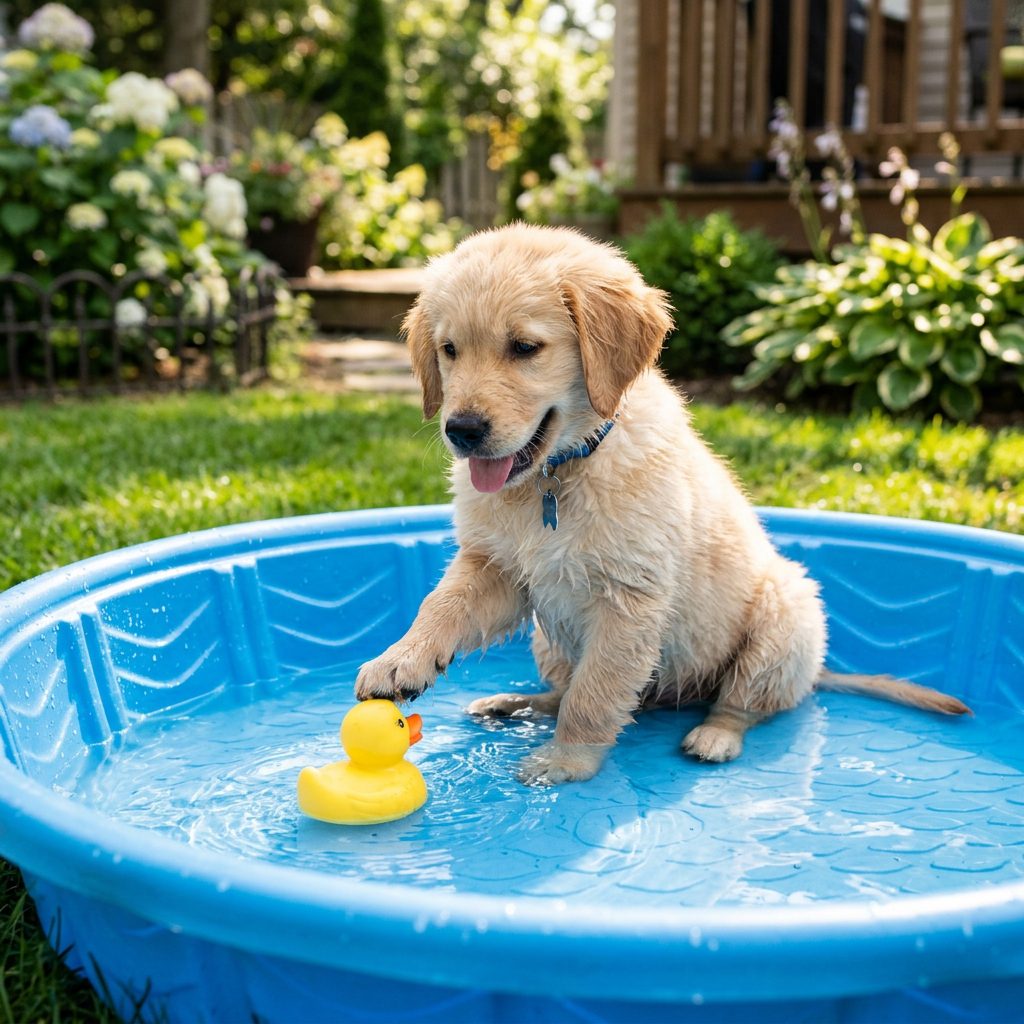
Just because the garden hose is off-limits for snapping doesn’t mean your puppy has to stay dry all summer! We want to redirect that love for water into safer, more controlled activities. This prevents the puppy from feeling frustrated and provides the physical cooling they need during hot months.
The Kiddie Pool Solution
A shallow, hard-plastic kiddie pool is the gold standard for safe puppy water play. Unlike the hose, the water in a pool is stationary, which doesn’t trigger the same ‘prey-snap’ reflex. You can toss floating toys or even ice cubes into the pool for the puppy to ‘bob’ for. This encourages lapping and splashing rather than aggressive snapping and gulping.
Sprinkler Mats
For puppies who love the spray, consider a ‘doggy splash pad’ or sprinkler mat. These have many small, low-pressure streams rather than one high-pressure jet. It is much harder for a dog to ‘obsess’ over twenty tiny streams than one big one. It provides a generalized cooling effect without the high-intensity focus of a nozzle.
Mental Enrichment: The ‘Ice Block’
If your puppy is a ‘water seeker’ because of the heat, try making a ‘puppy popsicle.’ Freeze some low-sodium chicken broth, water, and a few blueberries in a large Tupperware container. Give the resulting giant ice block to your puppy in the grass. It keeps them hydrated, cool, and mentally occupied for much longer than a hose session ever could—and it is 100% safe for their teeth and their brain.
Conclusion
Final Thoughts on Hose Safety
At the end of the day, our relationship with our dogs is built on a foundation of safety and mutual understanding. While it might seem like a ‘buzzkill’ to stop your puppy from snapping at the hose, you are actually doing them a massive favor. By teaching impulse control and preventing dangerous water ingestion, you are ensuring they live a long, healthy life free from obsessive behaviors. Remember that every puppy is an individual; some will learn to ignore the hose in a week, while others may need months of consistent work. Be patient, stay positive, and keep those high-value treats handy. Your garden—and your puppy’s health—will thank you. Now, go out there and enjoy the sun, knowing you have the tools to keep the ‘hose monster’ at bay!