Ring The Bell! How To Teach Your Puppy To Tell You When They Need To Potty
Welcome to the wonderful, slightly messy, but ultimately rewarding world of puppy parenthood! If you are reading this, you are likely a savvy dog owner who knows that communication is the bedrock of a great relationship with your canine companion. We have all been there: you look away for just a second, and suddenly there is a puddle on the rug. You wonder, Why didn’t they just tell me? The truth is, puppies often try to tell us, but their signals—a subtle sniff, a brief pause in play, or a quiet stare—are easily missed in our busy lives. Enter the potty bell. This simple tool acts as a bridge between puppy needs and human understanding. In this guide, we are going to dive deep into how to transform that jingle into a clear request for a bathroom break. We aren’t just talking about a quick trick; we are building a reliable communication system that reduces stress for both you and your pup. So, grab some high-value treats, pack your patience, and let’s get started on making those ‘oops’ moments a thing of the past.
Choosing the Right Gear: Bells, Buttons, and Beyond
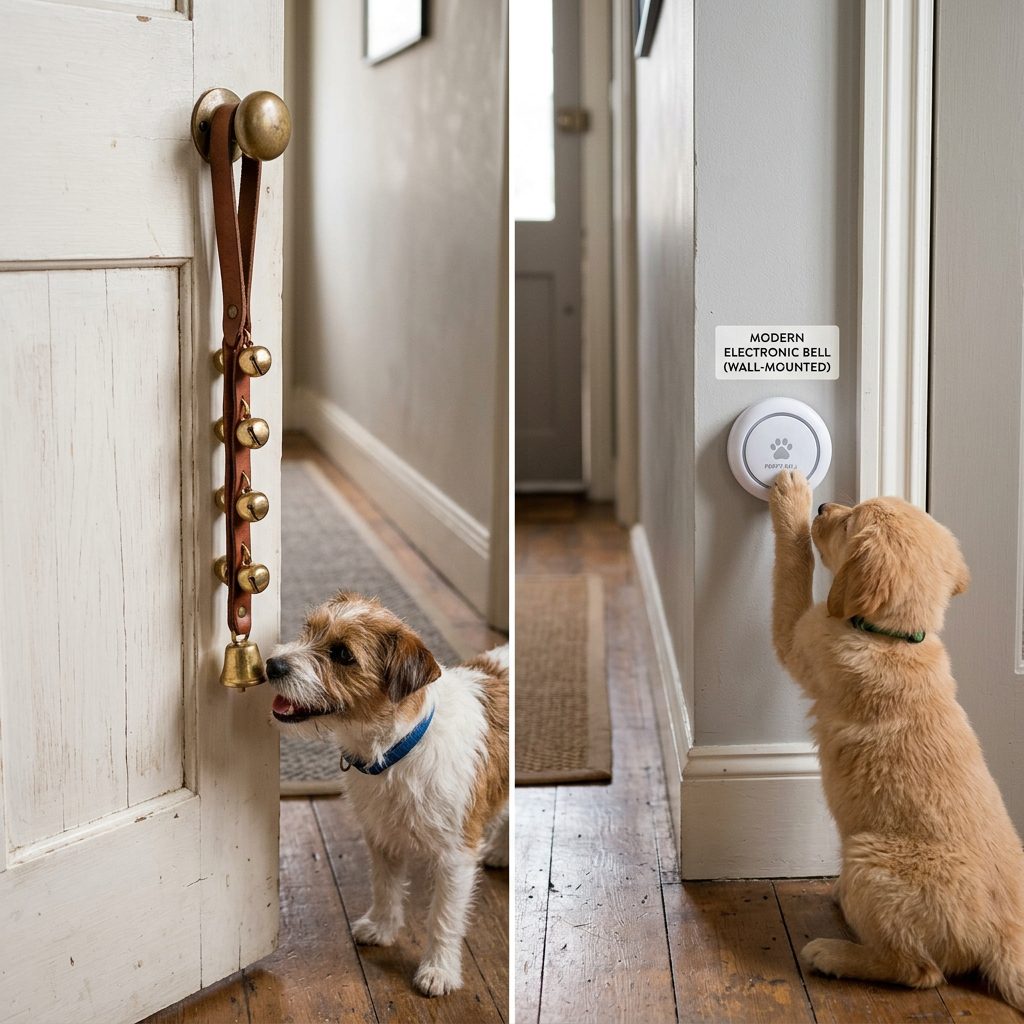
Before we start the training process, we need to select the right equipment. Not all bells are created equal, and the best choice depends on your puppy’s size, confidence level, and your home’s layout. Some puppies are intimidated by loud noises, while others are so enthusiastic they might pull a hanging bell right off the door. Most owners choose between traditional hanging bells or electronic touch buttons.
| Feature | Hanging Ribbons/Bells | Electronic Potty Buttons |
|---|---|---|
| Ease of Use | Requires physical nudging or pawing. | Light touch activates a chime. |
| Portability | Very portable; easy to move between doors. | Usually stays in one spot (adhesive). |
| Volume | Fixed sound level. | Adjustable volume and melodies. |
| Suitability | Great for larger or more tactile pups. | Ideal for small breeds or shy puppies. |
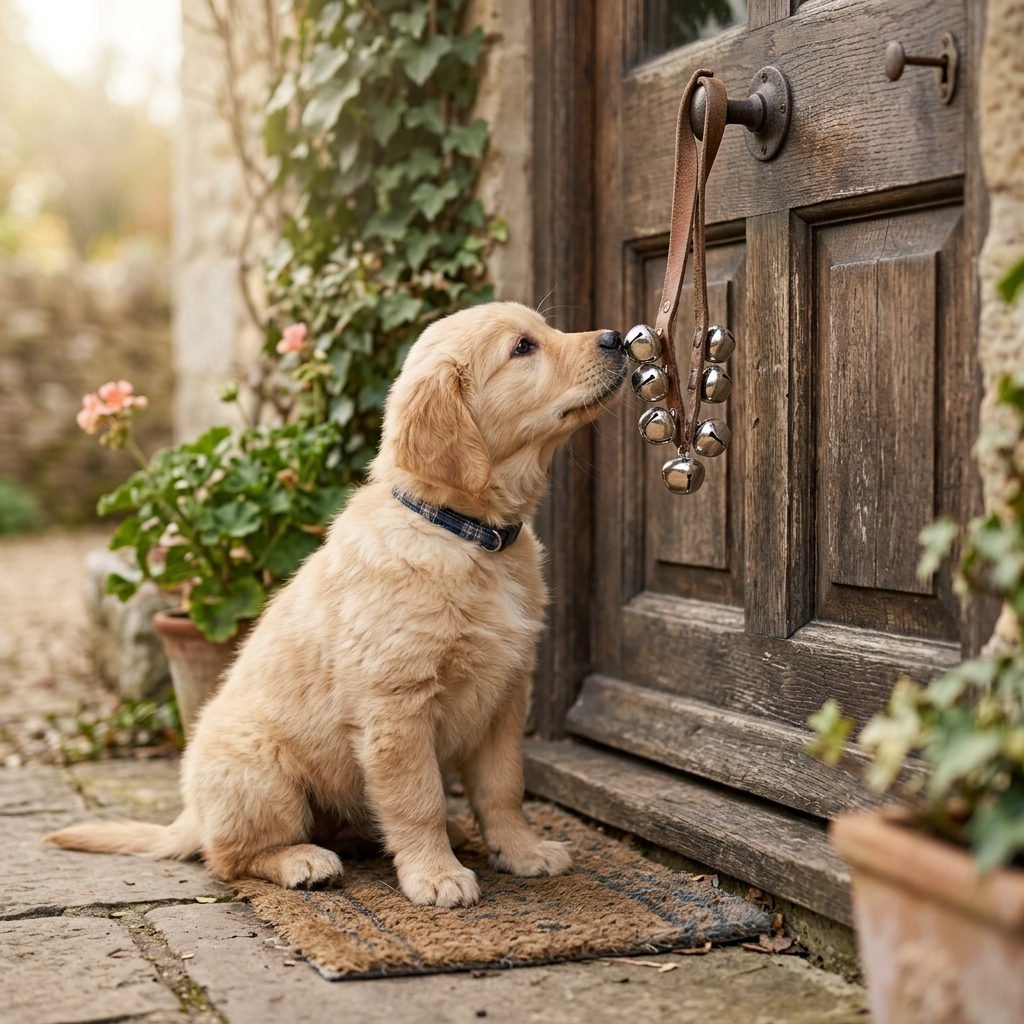
When choosing hanging bells, look for high-quality materials. Cheaper versions often use thin ribbons that puppies might mistake for chew toys. You want something durable with bells that are securely attached. If you go the electronic route, ensure the button is placed at your puppy’s nose or paw height. Pro Tip: If your puppy is particularly sound-sensitive, start with a very quiet bell or wrap the bells in a cloth initially to muffle the sound until they are comfortable with the concept.
The Three-Step Training Blueprint
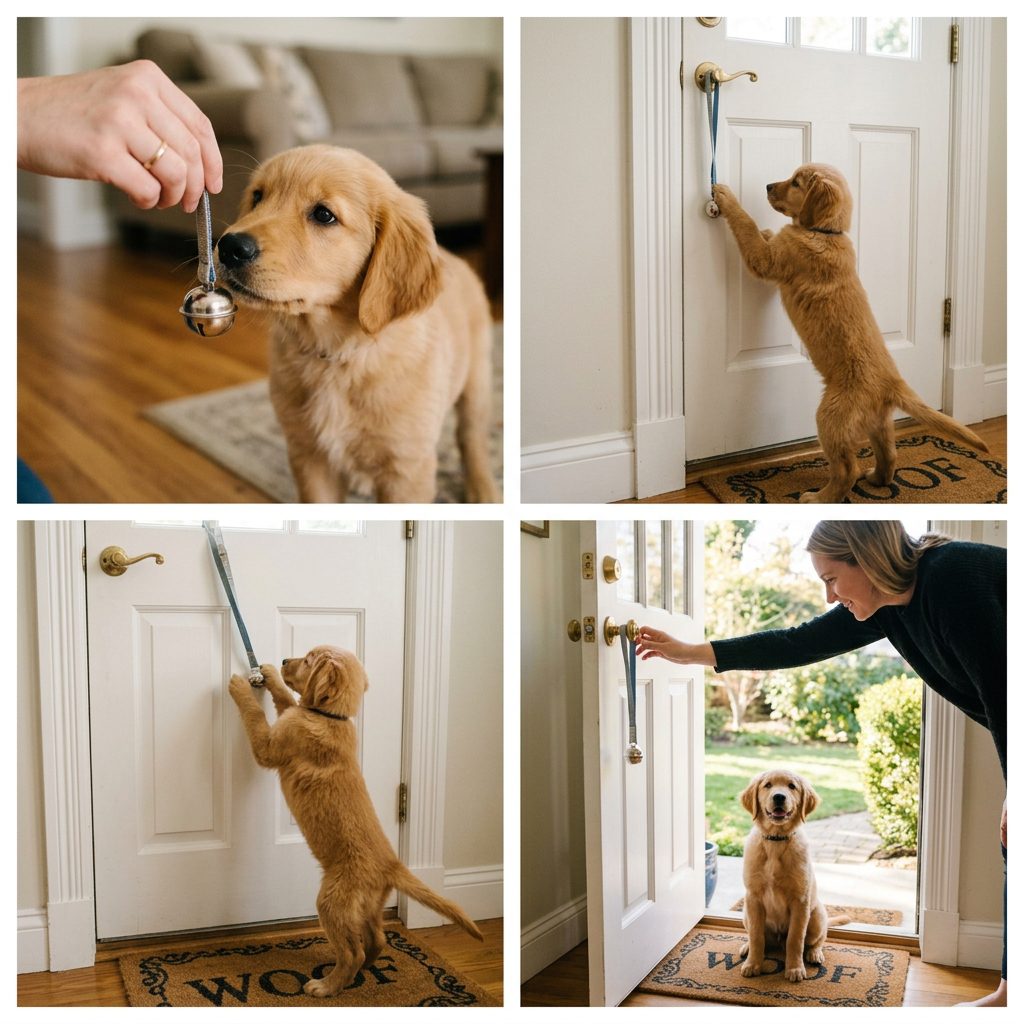
Training your puppy to ring a bell is a process of association. We want them to understand that Action (Ring) = Consequence (Door Opens). We break this down into three distinct phases to ensure the puppy isn’t overwhelmed. Do not rush these steps; every puppy learns at their own pace.
Phase 1: The ‘Touch’ Command
First, your puppy needs to learn how to physically interact with the bell. Hold the bell near their nose. The moment they sniff or touch it with their nose, say ‘Yes!’ (or click if you use a clicker) and give them a high-value treat. Repeat this 10 to 15 times until they are eagerly bumping the bell the moment you present it. We are building a positive association here.
Phase 2: Introducing the Door
Now, hang the bell on the door you use for potty breaks. Lure your puppy to the door and encourage them to ‘touch’ the bell as you did in Phase 1. As soon as they ring it, say ‘Yes!’, open the door immediately, and take them outside. At this stage, you are doing the work of prompting them. You want them to realize that the bell is the ‘key’ that unlocks the door.
Phase 3: The Transition to Independence
This is where the magic happens. You will start waiting for your puppy to initiate the ring. When it is time for a scheduled potty break, stand by the door and wait. Don’t say anything. The moment they even accidentally brush against the bell, praise them enthusiastically and go outside.
Consistency is the secret sauce. If you don’t open the door every single time the bell rings during this phase, the puppy will get confused and stop trying.
Troubleshooting the ‘Boredom Ring’ and Other Hurdles
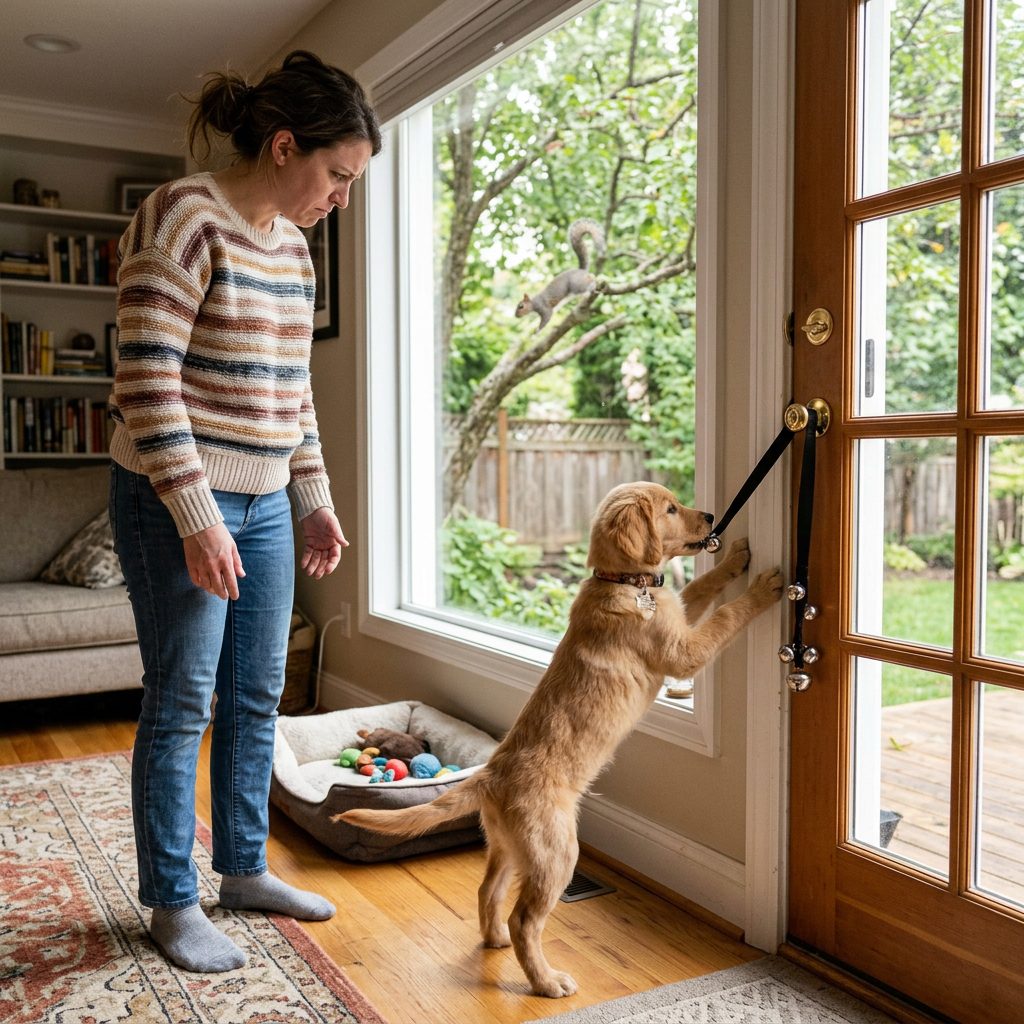
Once your puppy realizes that ringing the bell makes the door open, they might start ringing it just to go outside and chase squirrels or sunbathe. This is known as the ‘False Alarm’ or ‘Boredom Ring.’ It can be frustrating, but it is actually a sign that your puppy is very smart! They have mastered the mechanics; now they need to learn the context.
Handling False Alarms
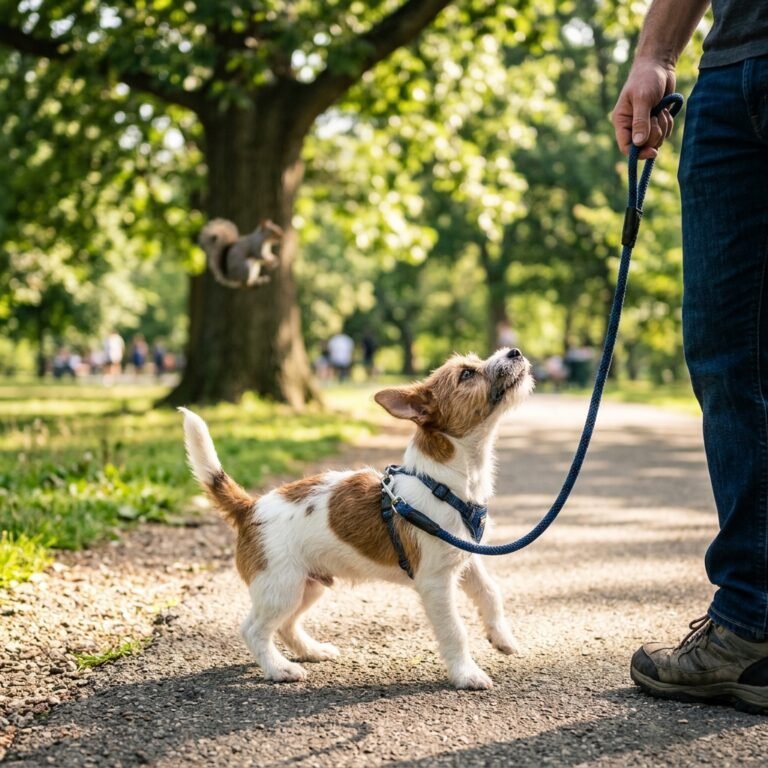
To fix this, you must make ‘bell-initiated’ trips purely functional. When the bell rings, put the puppy on a leash, take them to their designated potty spot, and give them two minutes. If they don’t go, bring them right back inside. No playing, no sniffing the garden, and no treats unless they actually perform. This teaches them that the bell is for business, not for leisure.
Fear of the Sound
If your puppy is scared of the jingle, you may have used bells that are too loud. You can try:
- Using a single, smaller bell.
- Wrapping the bells in a sock to dampen the sound.
- Placing treats around the bell on the floor so they approach it on their own terms.
The ‘Silent’ Puppy
Some puppies might ring the bell so softly you can’t hear it from the next room. In this case, an electronic button with adjustable volume or a louder set of bells is a necessary upgrade. You can also reward ‘harder’ rings more enthusiastically during training sessions to encourage a more vigorous signal.
The Golden Rules of Potty Success
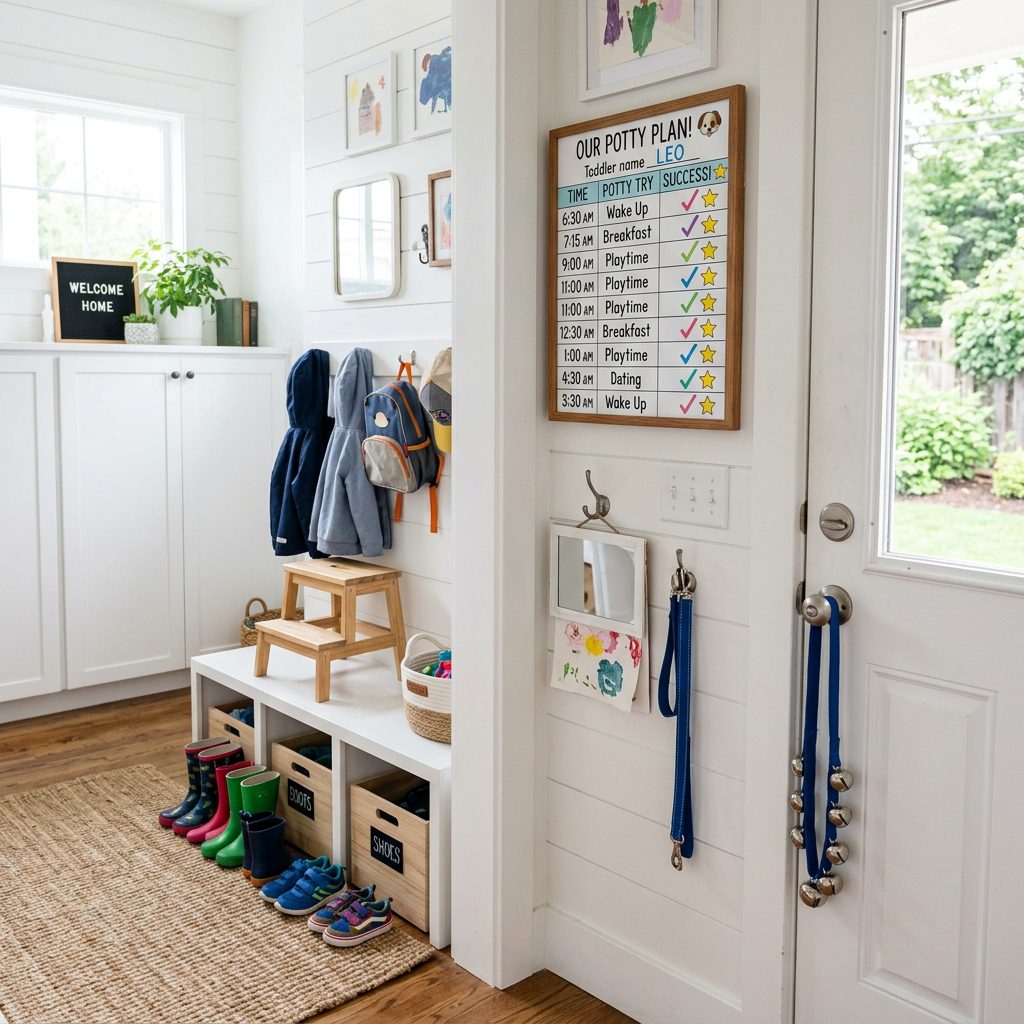
Even with a bell, your puppy still needs a structured environment to succeed. Bell training is an addition to, not a replacement for, a solid potty training schedule. Savvy owners know that management is just as important as training.
| Puppy Age | Maximum Hold Time | Recommended Frequency |
|---|---|---|
| 8-12 Weeks | 1-2 Hours | Every 30-60 minutes |
| 3-4 Months | 3-4 Hours | After every nap, meal, and play session |
| 5-6 Months | 5-6 Hours | 4-5 times a day |
Always remember to keep the bell at the same door. If you have multiple exits, choose the primary one for training. Once they are 100% reliable at one door, you can introduce a second bell at another location. Never scold your puppy for an accident. If they miss the bell and go on the floor, it simply means they weren’t ready for that much freedom yet. Clean it up with an enzymatic cleaner and go back a step in your training process. Patience is your greatest asset during this journey.
Conclusion
Teaching your puppy to ring a bell is more than just a party trick; it is an empowering form of communication that strengthens the bond between you and your dog. By following these steps—choosing the right gear, building the association through the three-phase blueprint, and handling the inevitable ‘boredom rings’ with consistency—you are setting your puppy up for a lifetime of success. Remember that every puppy is an individual. Some will catch on in a weekend, while others might take a few weeks to fully connect the dots. Stay positive, keep your training sessions short and fun, and soon enough, that little jingle will be the sweetest sound in your home—the sound of a puppy who knows exactly how to tell you what they need. Happy training!