
Amazon Package Nightmare? How To Stop Your Puppy From Barking At The Delivery Truck Every Single Day
The Daily Delivery Drama
We have all been there. You are finally settling into a deep-focus work session or perhaps enjoying a rare moment of peace while the baby naps, when suddenly, the air is shattered by a cacophony of shrill, frantic barks. You do not even need to look out the window to know what is happening: the Amazon truck has arrived. For many savvy dog owners, the rise of e-commerce has brought an unexpected side effect—a puppy who has decided that the delivery driver is Public Enemy Number One.
It starts with the distant rumble of a diesel engine. Then comes the hiss of the air brakes. By the time the driver is walking up the driveway, your puppy is a whirlwind of fur and noise. While it might seem like your puppy is just being ‘naughty,’ there is actually a fascinating psychological reason behind this behavior. In this guide, we are going to dive deep into why this happens and, more importantly, provide you with a comprehensive, professional roadmap to restore peace to your home. We are not just looking for a quick fix; we are looking for a long-term behavioral shift that turns your puppy from a frantic alarm system into a calm, collected companion.
Understanding the Psychology: Why the Truck Triggers the Bark
The ‘intruder’ Who Always Leaves
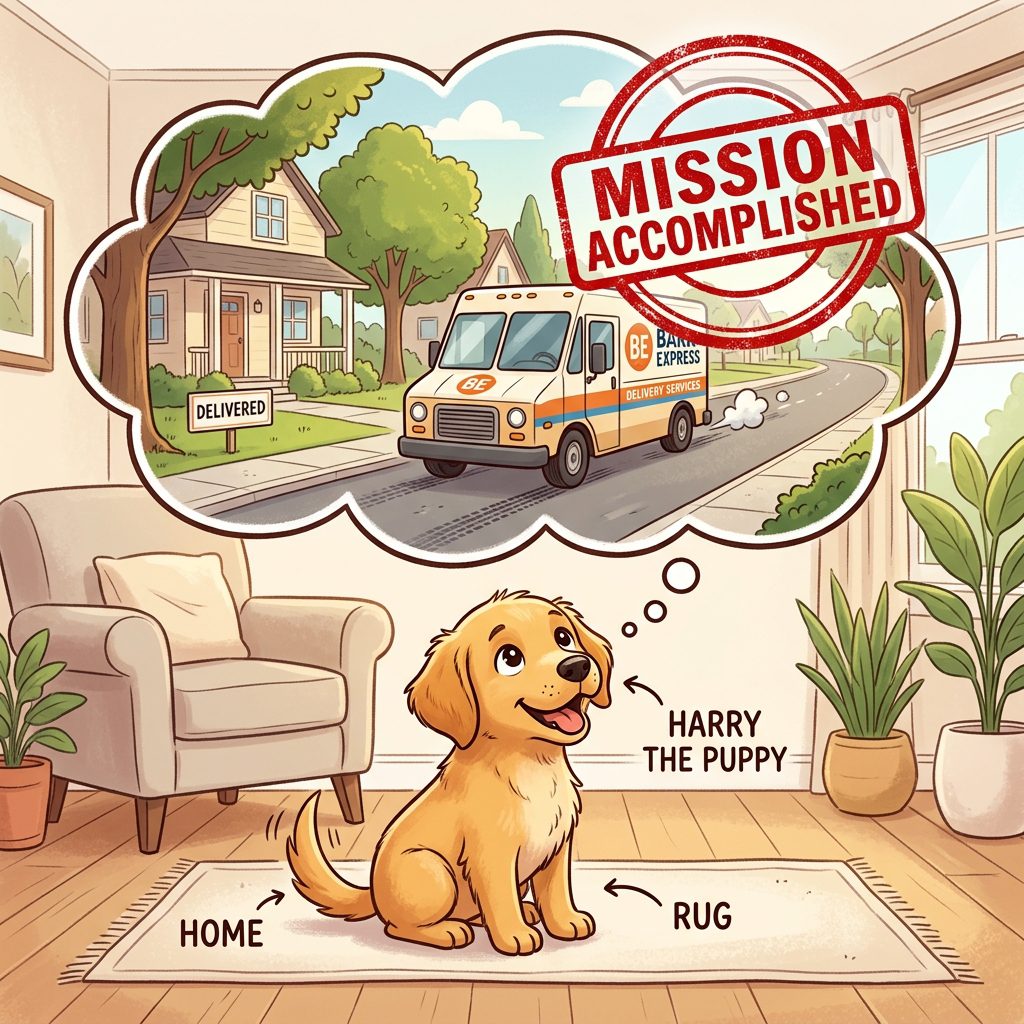
To understand how to stop the barking, we first have to look at the world through your puppy’s eyes. To a dog, the delivery truck is a massive, noisy intruder that encroaches on their territory every single day. But here is the kicker: from the puppy’s perspective, their barking actually works.
Think about the sequence of events:
- The scary truck arrives.
- The puppy barks and lunges.
- The driver drops the package and drives away.
In your puppy’s mind, they have successfully defended the fortress. They barked, and the ‘intruder’ fled. This creates a powerful ‘self-reinforcing’ behavior loop. Every time the truck leaves, the puppy feels a surge of success, making them even more likely to bark louder and longer the next time.
The Role of Genetics and Socialization
Some breeds are naturally more ‘alert-oriented’ than others. Herding and guarding breeds are genetically predisposed to notice changes in their environment. Furthermore, if your puppy was not exposed to large vehicles and uniformed workers during their critical socialization window (typically between 3 and 16 weeks), the delivery truck represents a ‘novel stimulus’ that triggers a fear-based fight-or-flight response. Understanding whether your puppy is barking out of fear or territoriality is the first step in tailoring your training approach.
The Essential Toolkit for Success
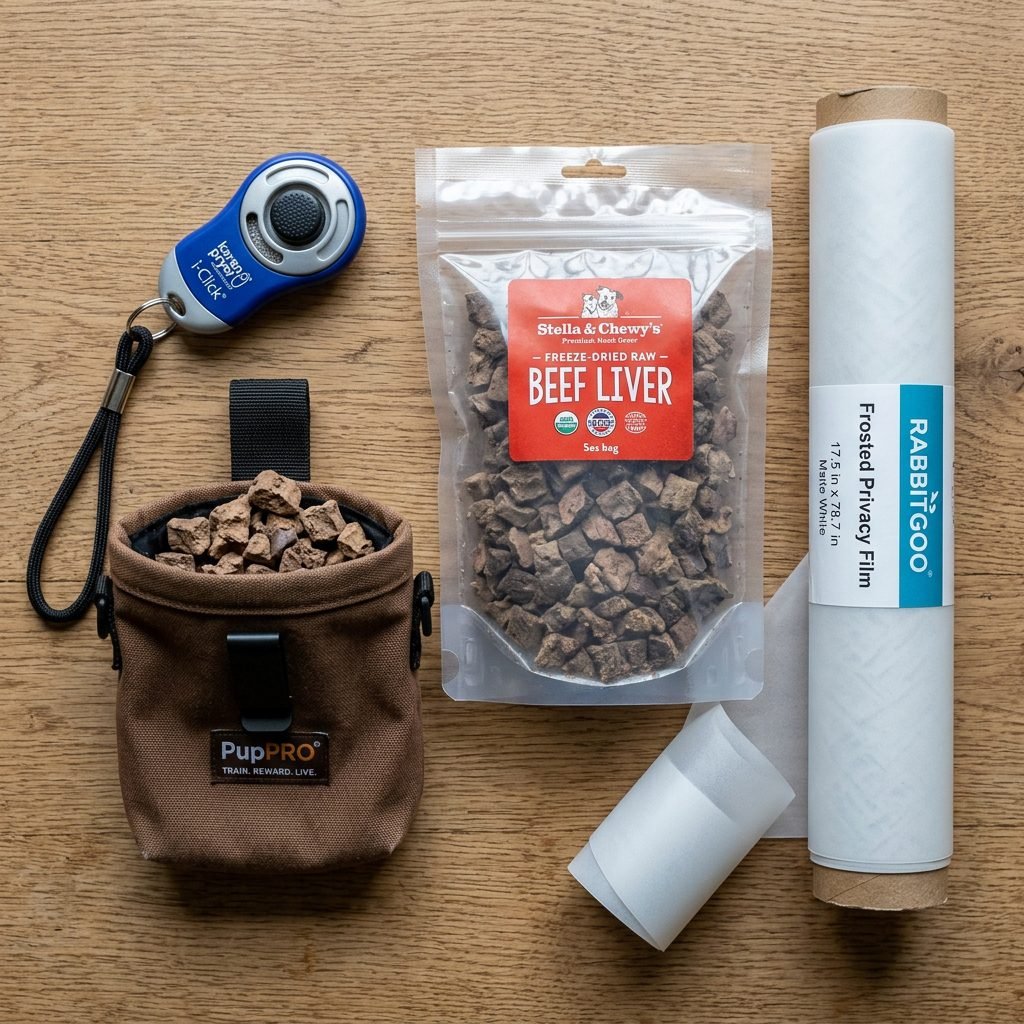
Preparation is Half the Battle
Before we dive into the training exercises, you need to gather the right tools. Training a puppy to remain calm during a high-arousal event requires more than just patience; it requires high-value rewards that can compete with the excitement of the truck.
| Tool | Purpose | Expert Recommendation |
|---|---|---|
| High-Value Treats | To reward calm behavior and create positive associations. | Freeze-dried liver, boiled chicken, or string cheese. |
| A Clicker | To mark the exact moment of ‘quiet’ or ‘good’ behavior. | Any standard plastic clicker or a consistent verbal marker like ‘Yes!’. |
| Visual Barriers | To prevent the puppy from seeing the truck during the initial phases. | Frosted window film or closed curtains. |
| A ‘Place’ Mat | A designated spot where the puppy feels safe and knows what to do. | An elevated dog bed or a specific rug. |
Expert Tip: Never use ‘low-value’ treats like standard kibble for this specific training. We are asking your puppy to ignore a giant, rumbling truck; the reward must be worth the effort!
Phase 1: Desensitization and Counter-Conditioning
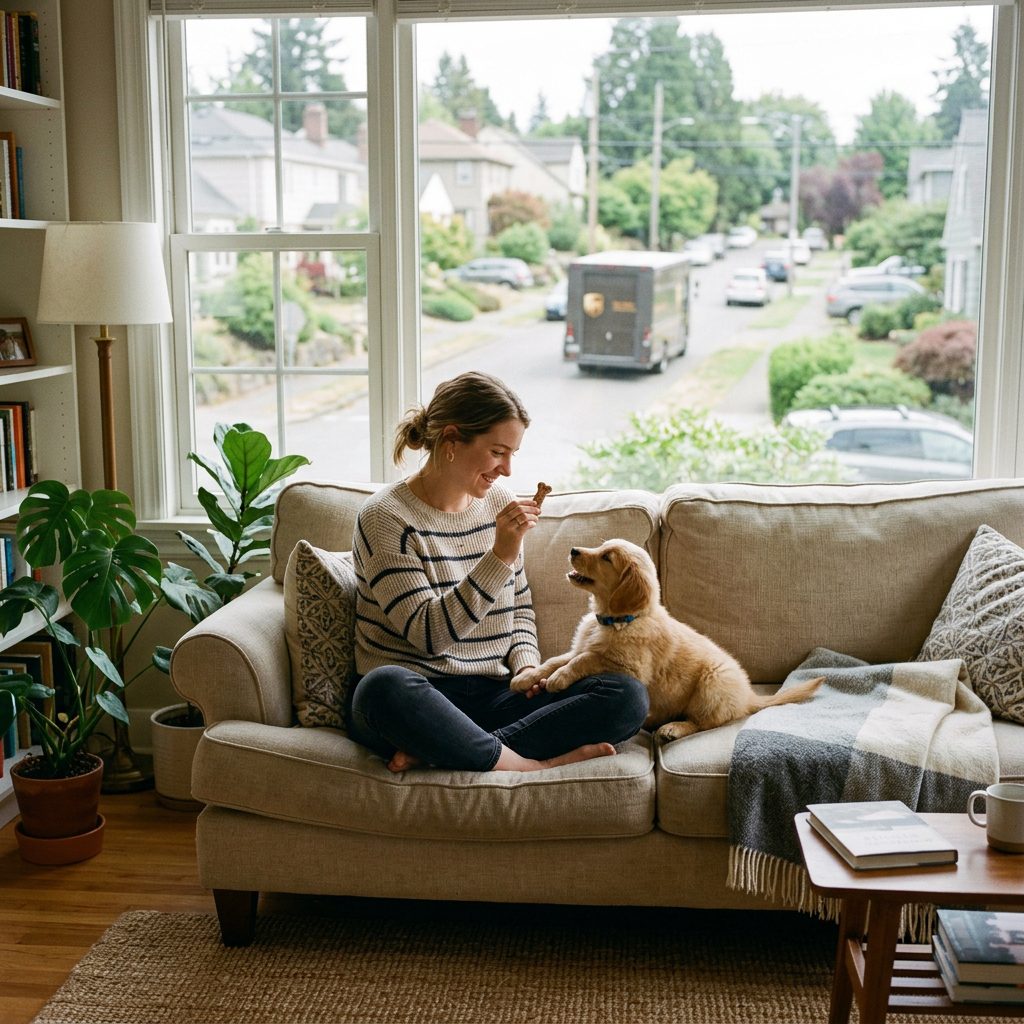
Changing the Emotional Response
The goal of Phase 1 is to change how your puppy feels about the truck. Currently, the truck equals ‘danger’ or ‘excitement.’ We want to change that so the truck equals ‘treats are coming!’
Step 1: Audio Desensitization
Start by playing recordings of delivery truck sounds (available on YouTube) at a very low volume. While the sound is playing, feed your puppy their favorite treats. The volume should be low enough that they notice the sound but do not bark. This is called staying below threshold.
Step 2: The ‘Look at That’ (LAT) Game
Once your puppy is comfortable with the sounds, move to the window (with the curtains partially open). The moment your puppy sees a truck in the distance—before they start barking—click and treat. You are rewarding them for simply observing the trigger without reacting. If they bark, you are too close or the stimulus is too intense; move back and try again at a greater distance.
Step 3: Creating a Positive Association
Every time a delivery driver approaches, start a ‘treat rain.’ Toss several small, high-value treats on the floor. This forces the puppy to put their nose down (a calming posture) and associates the arrival of the driver with a flurry of delicious snacks.
Phase 2: Teaching an Alternative Behavior
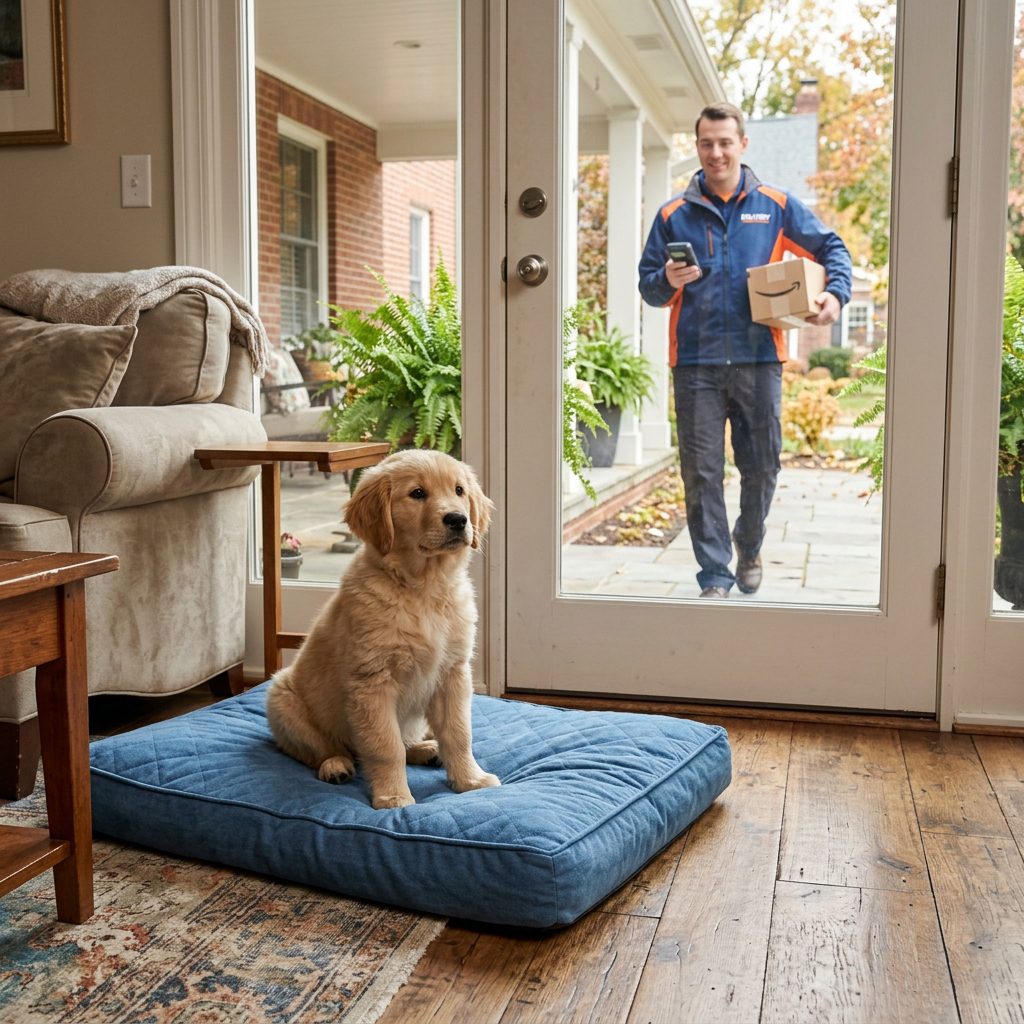
The ‘Place’ Command Strategy
It is much easier to tell a puppy what to do than what not to do. Instead of just saying ‘stop barking,’ we are going to teach them to ‘go to your place’ when the truck arrives.
- Define the ‘Place’: Choose a bed or mat that is away from the front door or the main ‘barking window.’
- Lure and Reward: Use a treat to lure your puppy onto the mat. The moment all four paws are on it, click and reward.
- Add the Cue: Once they are going to the mat reliably, add the verbal cue ‘Place.’
- Proofing with Distractions: Have a family member knock on a wall or ring the doorbell while you cue ‘Place.’ Reward heavily for staying on the mat.
- Real-World Application: When you hear the delivery truck, immediately cue ‘Place.’ If your puppy goes to their spot and stays there, they get a ‘jackpot’ of treats (5-10 treats in a row).
Why This Works
By giving the puppy a ‘job’ to do (staying on the mat), you are shifting their focus from the intruder to the task at hand. It occupies their brain and prevents the physical act of lunging at the window.
Management vs. Training: Staying Sane in the Meantime

The Power of Environmental Management
Training takes time—often weeks or months. In the meantime, every time your puppy successfully barks the truck away, your training progress takes a step backward. This is where management comes in.
Visual Blockers
If your puppy barks at the sight of the truck, the simplest solution is to remove the sight. Use frosted window film on the lower half of your windows. This allows light in but prevents the puppy from seeing the ‘intruder.’ You will be amazed at how much this alone can reduce barking.
White Noise and Sound Buffering
If the sound of the truck is the trigger, use a white noise machine or play calming classical music (specifically designed for dogs) near the front of the house. This masks the sound of the engine and the slamming of the van door.
Managing the ‘Stress Bucket’
Think of your puppy’s stress like a bucket. Every loud noise, stressful walk, or delivery truck adds water to the bucket. If the bucket overflows, you get an explosive barking fit. Ensure your puppy is getting enough ‘decompression time’—long sniffy walks and plenty of sleep—to keep their baseline stress levels low.
Troubleshooting Common Pitfalls
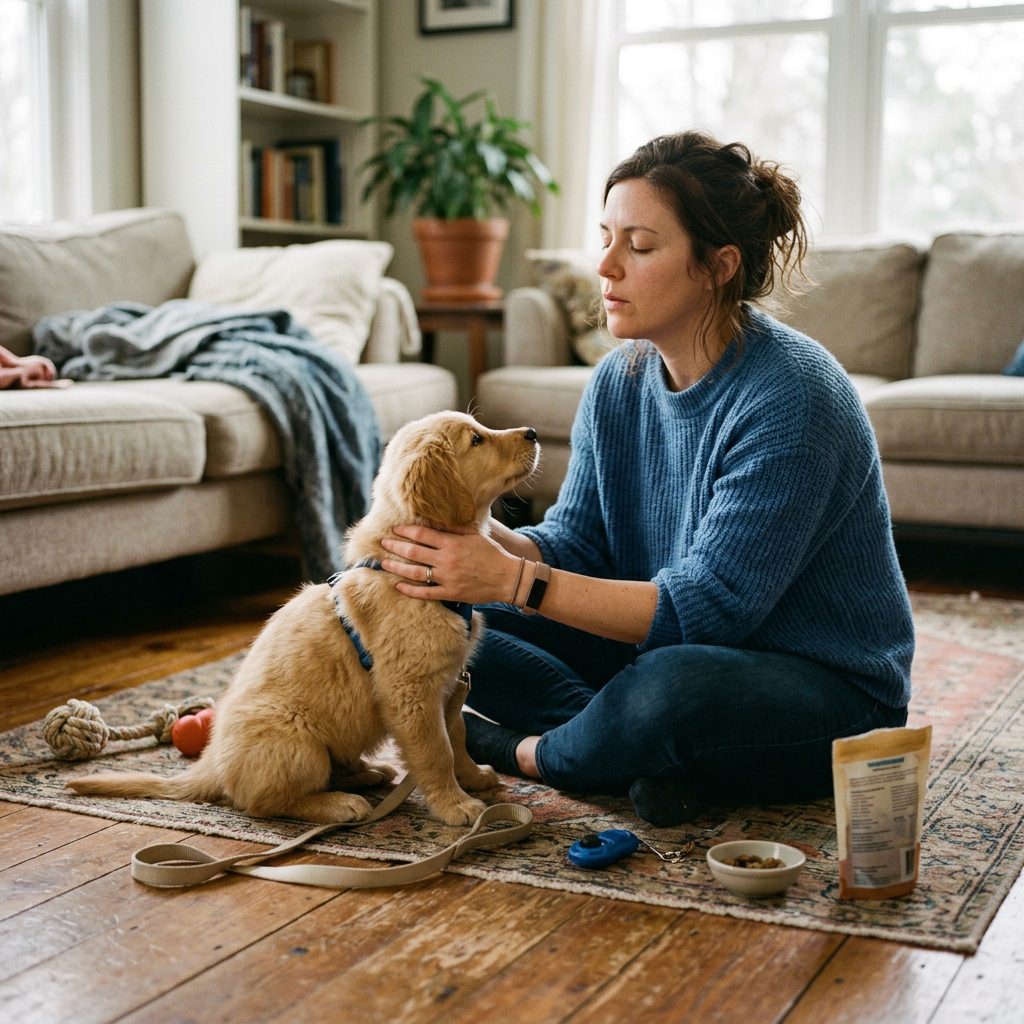
When Things Don’t Go to Plan
Even with the best training, setbacks happen. Here are the most common reasons savvy owners struggle:
- Inconsistency: If you let the puppy bark ‘sometimes’ but try to train them at other times, they will become confused. Everyone in the household must follow the same protocol.
- Moving Too Fast: If your puppy is still lunging and barking, you are likely asking too much of them too soon. Increase the distance from the truck or use higher-value rewards.
- Using Punishment: Shouting ‘No!’ or using a spray bottle often backfires. The puppy may think you are ‘barking’ along with them, or they may become more fearful of the truck because it is now associated with you being angry.
Remember: Training is not a straight line. It is a series of two steps forward and one step back. If you have a ‘bad’ delivery day, don’t despair. Just reset and start again tomorrow.
Conclusion
Restoring Peace to the Neighborhood
The ‘Amazon Package Nightmare’ does not have to be your permanent reality. By understanding that your puppy is simply trying to communicate and ‘protect’ their home, you can approach the problem with empathy rather than frustration. Through a combination of management (blocking the view), desensitization (changing their feelings), and alternative behaviors (the ‘Place’ command), you can transform those chaotic delivery moments into opportunities for calm and connection.
Stay consistent, keep your treats high-value, and celebrate the small wins. One day soon, that blue truck will pull up, the package will land on the porch, and your puppy will simply look at you, wag their tail, and wait for their reward. You’ve got this!