Silly Walks To Safe Paws: How To Get Your Puppy Used To Wearing Booties Painlessly
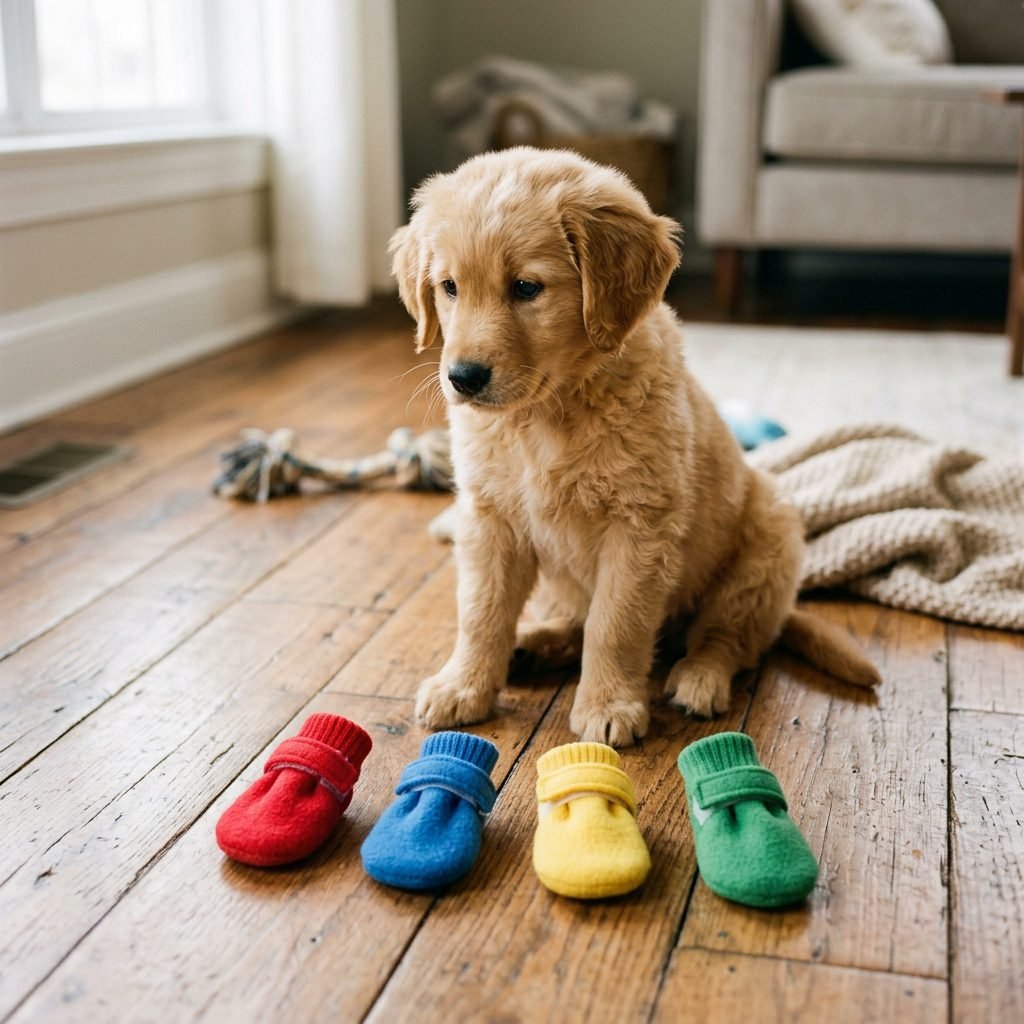
Watching a puppy try on booties for the first time is a rite of passage for many dog owners. The high-stepping, the ‘moonwalking,’ and the general confusion often lead to fits of laughter and viral social media videos. However, for a savvy dog owner, booties are more than just a source of entertainment; they are a critical tool for health and safety. Whether you are battling the scorching summer asphalt, the corrosive salt on icy winter sidewalks, or rugged hiking trails, protecting those tender paw pads is paramount. But how do you move from the ‘silly walk’ to a puppy that actually enjoys their footwear? The secret lies in a blend of canine psychology, patience, and a strictly positive approach.
As a canine specialist, I have seen many well-intentioned owners slap boots on their dogs and head straight outside, only to have the puppy freeze in terror or frantically try to chew them off. This can create a lasting negative association with paw handling. To avoid this, we must understand proprioception—the sense of self-movement and body position. When you put booties on a puppy, you are essentially ‘blinding’ their paws’ tactile feedback, which is why they lift their legs so high; they are trying to find the ground. This guide will walk you through the painless, step-by-step process of desensitizing your puppy to booties, ensuring their ‘safe paws’ are ready for any adventure.
Choosing the Right Gear: Not All Booties Are Created Equal
Before you even begin training, you must ensure you have the right equipment. A poorly fitted bootie is like a human wearing shoes two sizes too small—it will cause pain, blisters, and a total refusal to walk. Puppies have soft, developing joints and sensitive skin, so the material and fit are non-negotiable. You want something that offers a balance between protection and flexibility.
Understanding Different Bootie Types
- Fleece or Fabric Booties: Best for dry, cold weather. They are soft and provide a great ‘starter’ experience because they don’t interfere much with the puppy’s natural gait.
- Rubber Dipped Socks: These offer excellent grip and are waterproof, making them ideal for rainy days or light snow.
- Hard-Soled Rugged Boots: Designed for hiking or extreme heat. These require the most training because they are the heaviest and least flexible.
- Disposable Balloon-Style Boots: Great for quick trips, but they can be tight around the ankle, so use with caution.
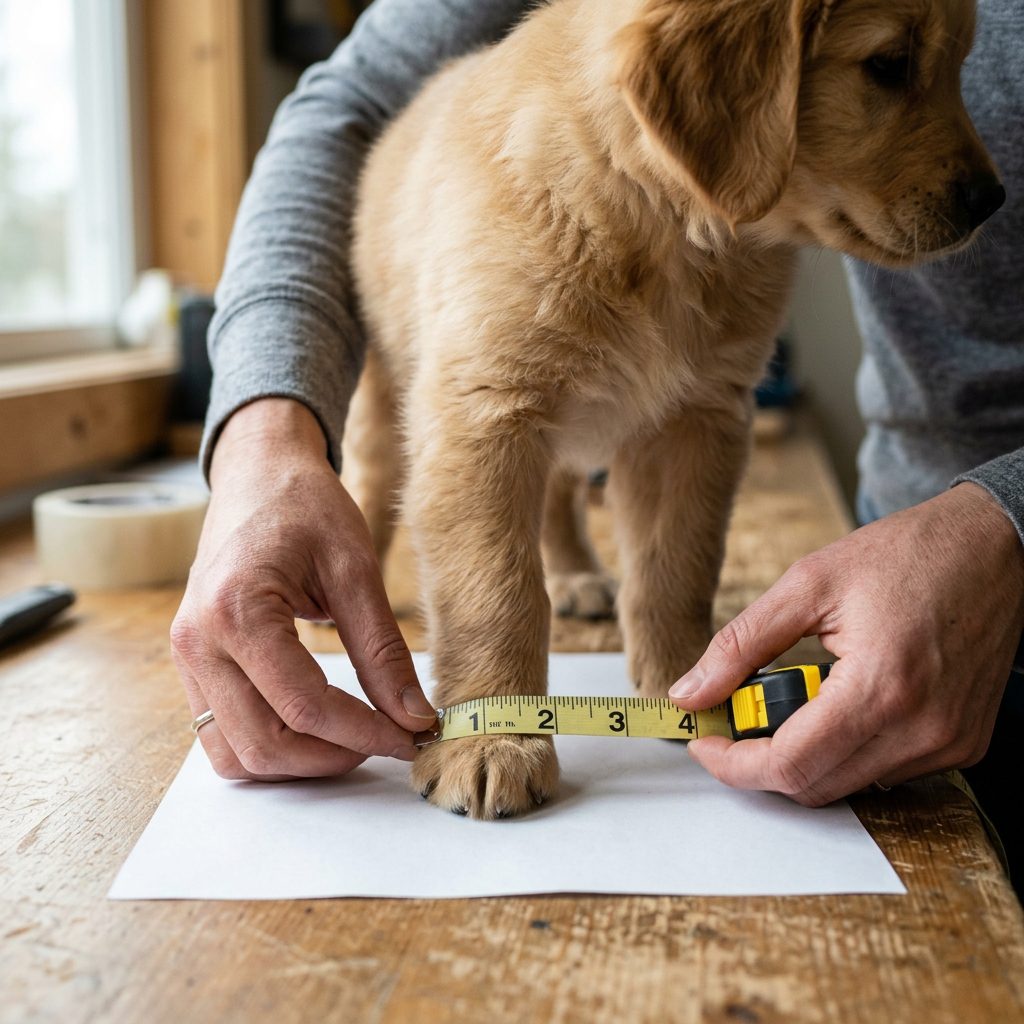
To find the perfect fit, you must measure your puppy’s paws while they are standing. A paw spreads out under the dog’s weight, so measuring a lifted paw will result in a size that is too small. Place a piece of paper under their front paw, lift the opposite paw so they put full weight down, and mark the widest points. Compare this to the manufacturer’s sizing chart.
| Size | Paw Width (Inches) | Example Breeds (Puppy Stage) |
|---|---|---|
| XX-Small | 1.0 – 1.5 | Chihuahua, Pomeranian, Toy Poodle |
| X-Small | 1.5 – 2.0 | Yorkshire Terrier, Jack Russell, Pug |
| Small | 2.0 – 2.5 | Beagle, Cocker Spaniel, French Bulldog |
| Medium | 2.5 – 3.0 | Golden Retriever, Lab, Border Collie |
Expert Tip: Always prioritize the front paws for sizing. In most dogs, the front paws are slightly larger than the rear paws because they carry more of the dog’s weight.
The Desensitization Phase: Making the Bootie a Best Friend
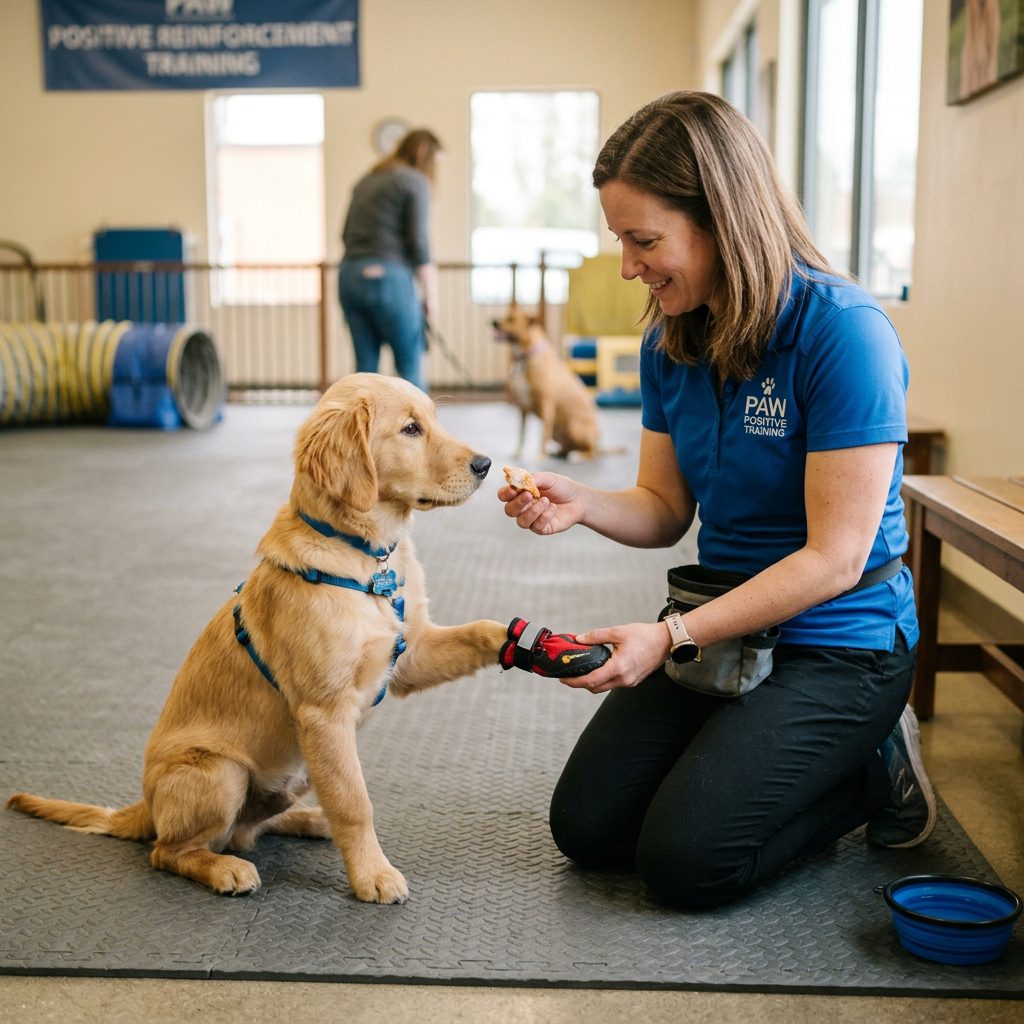
The biggest mistake owners make is rushing the process. We want the puppy to think the bootie is the most wonderful thing in the world. This starts with Classical Conditioning. Before the bootie ever touches the paw, it should be associated with high-value rewards like boiled chicken, string cheese, or their favorite toy.
Step 1: The ‘Look and Snack’
Place the booties on the floor. Let your puppy sniff them. Every time they investigate the bootie, give them a treat. We are building a positive emotional response. If they try to chew the bootie, gently redirect them and reward them when they stop. We want them to see the gear as a ‘treat dispenser’ rather than a toy.
Step 2: The ‘Touch and Treat’
Once they are comfortable with the object’s presence, start touching the bootie to their legs. Don’t try to put it on yet. Rub the bootie against their shins and paws. If they remain calm, reward them. This gets them used to the sensation of the material against their fur without the restriction of wearing it. Repeat this 10-15 times per session until the puppy doesn’t react to the contact.
Step 3: Handling the Paws
Many puppies are ‘foot shy.’ Spend time daily massaging their paws, clicking their nails gently, and spreading their toes. If your puppy won’t let you hold their paw for 10 seconds, they aren’t ready for booties. Use Low-Stress Handling techniques: hold the paw, give a treat, and release immediately. Gradually increase the duration of the hold.
The First Fitting: A Step-by-Step Guide to Success
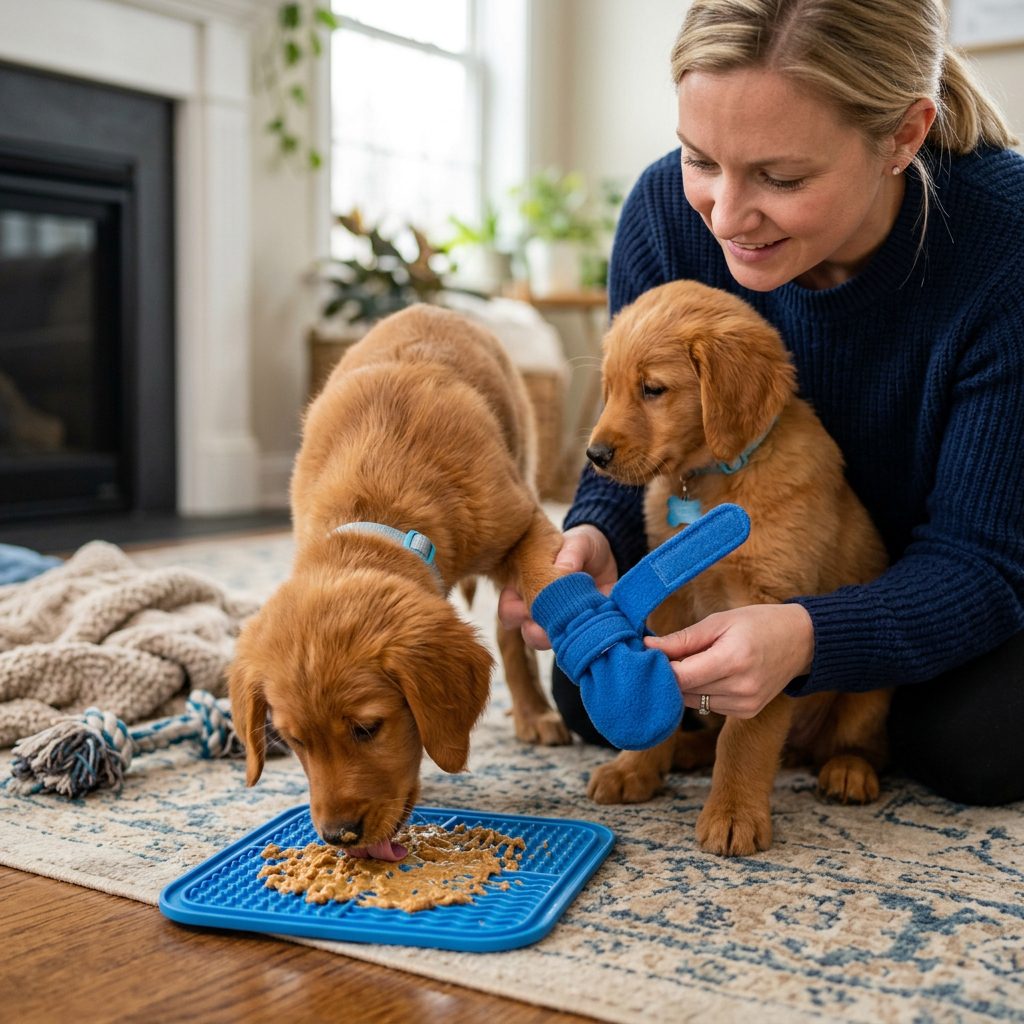
Now that your puppy is a pro at paw handling and loves the sight of their boots, it is time for the first fitting. This should happen in a familiar, indoor environment with plenty of traction—avoid slippery hardwood or tile floors for the first attempt, as the puppy’s lack of grip might cause a slip and a negative experience.
The Fitting Protocol
- Front Paws First: Start with just the two front paws. Putting all four on at once can be overwhelming and may cause the puppy to shut down or panic.
- The Distraction Technique: Have a helper hold a ‘Lickimat’ covered in peanut butter or yogurt at the puppy’s head height. While the puppy is focused on licking, quickly and gently slide the first bootie on.
- Secure but Not Tight: Ensure the velcro or cinch is snug enough that the bootie won’t fly off, but you should still be able to fit a pinky finger under the strap.
- Immediate Movement: As soon as the boots are on, encourage the puppy to move. Use a lure (a treat held in front of their nose) to get them to take a few steps. This prevents them from focusing on the ‘weird’ feeling on their feet.
Keep the first session incredibly short—no more than 30 to 60 seconds. Take the boots off before the puppy gets frustrated or tries to bite them. You want to end on a high note while they are still successful.
Remember: The goal is to make the experience so positive that the puppy gets excited when they see the booties come out of the closet.
Troubleshooting the ‘Silly Walk’ and Common Obstacles
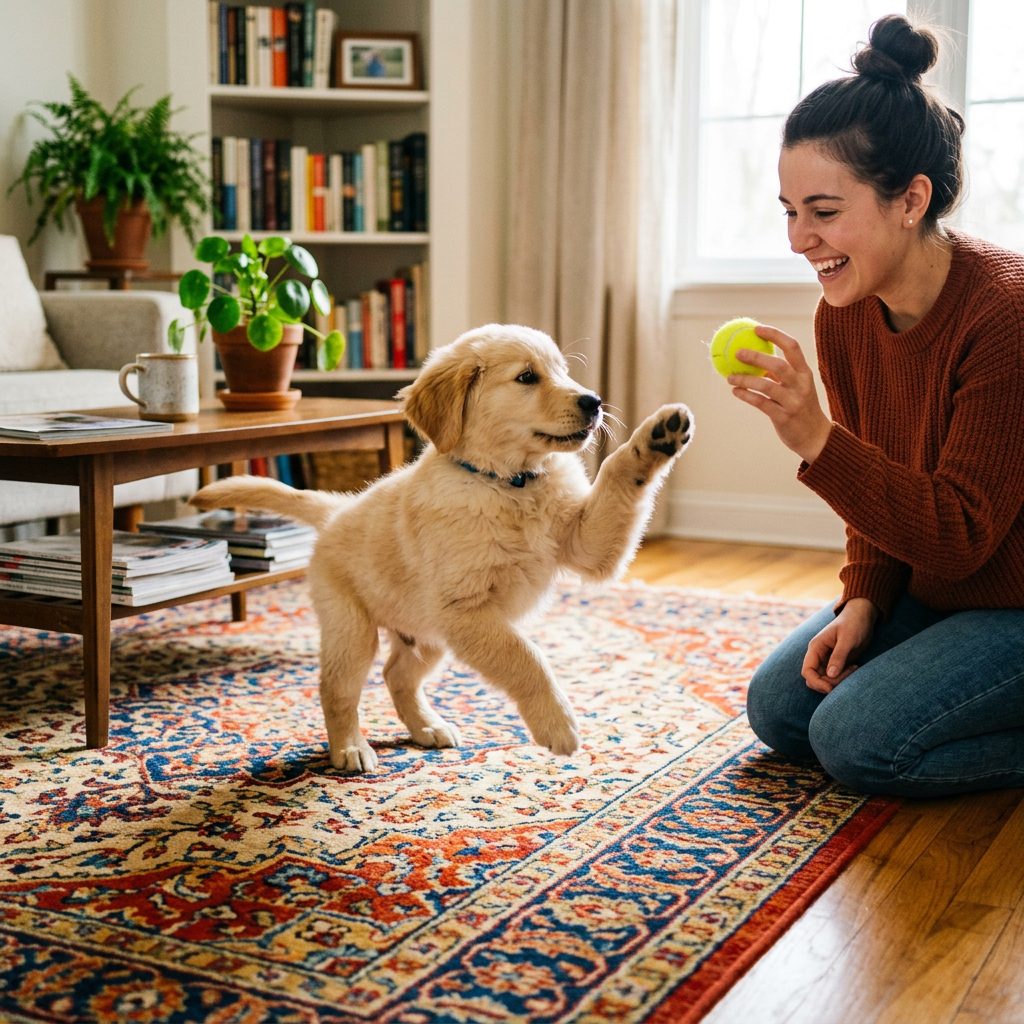
The ‘silly walk’ is scientifically known as a disruption in proprioceptive feedback. Your puppy’s brain is telling them there is something stuck to their foot, and their natural instinct is to lift the leg higher to ‘step over’ the obstacle. While it’s funny, we need to help them normalize their gait quickly to avoid muscle strain.
How to Encourage a Normal Stride
The best way to fix the silly walk is through engagement. If the puppy is focused on a task, their brain will eventually ‘map’ the sensation of the bootie and begin to ignore it. Play a game of ‘find it’ by tossing treats across the room, or practice basic commands like ‘sit’ and ‘touch.’ The more they move without thinking about their feet, the faster the silly walk disappears.
Common Problems and Solutions
| Problem | Possible Cause | Solution |
|---|---|---|
| Puppy won’t move | Fear or ‘Statue’ reflex | Use a high-value lure or a favorite squeaky toy to encourage a single step. Reward every micro-movement. |
| Kicking off boots | Size too large or loose strap | Check the sizing. Ensure the dewclaw (if present) is tucked in comfortably and the strap is above the carpal pad. |
| Chewing at boots | Discomfort or boredom | Increase the value of your treats. If they continue, remove the boots and check for rubbing or trapped fur. |
If your puppy has dewclaws, be extra careful. Booties can sometimes rub against the dewclaw, causing significant pain. You can place a small piece of athletic tape or a cotton ball over the dewclaw before putting the bootie on to provide a protective buffer.
Safety, Maintenance, and Real-World Application
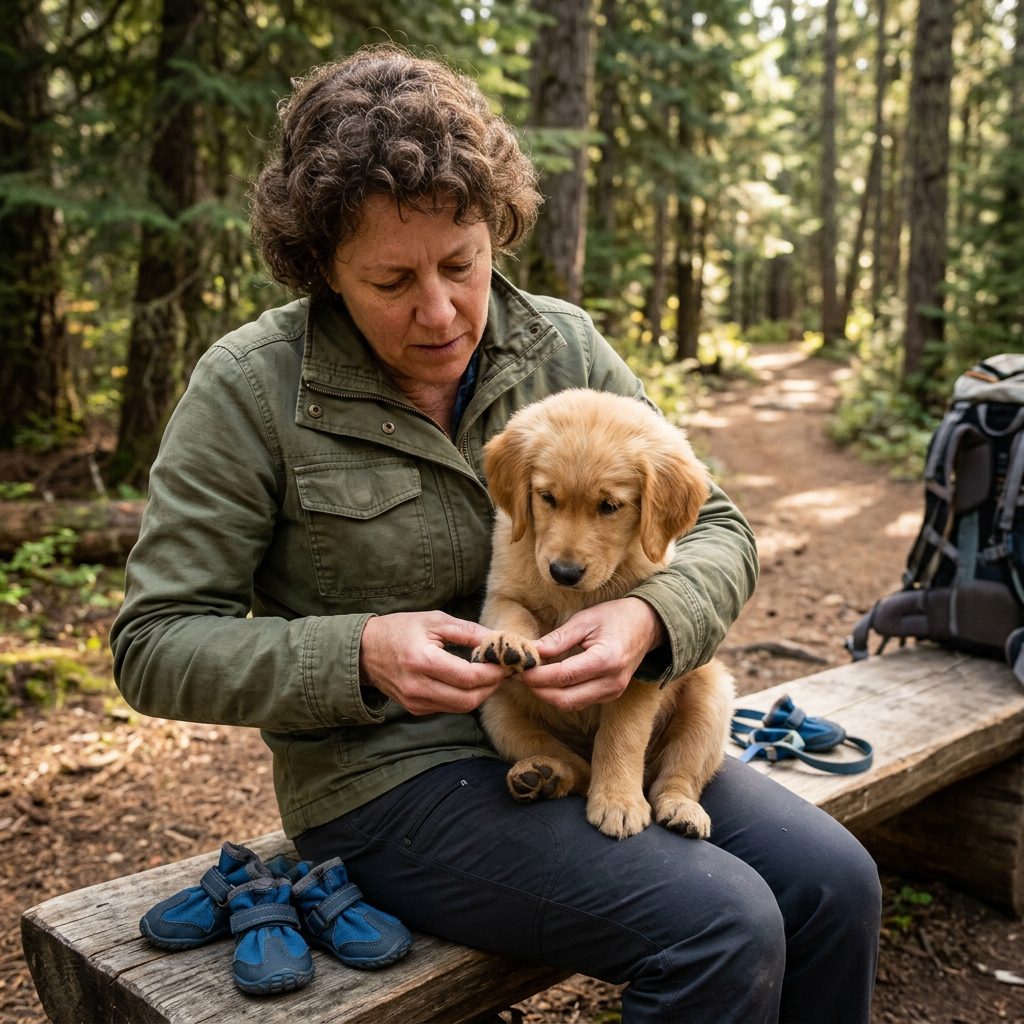
Once your puppy is walking comfortably indoors, you can transition to the great outdoors. However, wearing booties comes with its own set of safety responsibilities. Puppies cannot sweat through their skin; they primarily regulate temperature through panting and their paw pads. Covering the paws for extended periods can lead to overheating in hot weather.
The Golden Rules of Bootie Safety
- The 2-Hour Rule: Never leave booties on for more than two hours at a time. Moisture (sweat or rain) can get trapped inside, leading to bacterial or fungal infections between the toes.
- Post-Walk Inspection: Every time you remove the booties, inspect the paws. Look for redness, chafing, or dampness. Dry the paws thoroughly with a towel.
- Cleanliness is Key: Salt and chemicals from the road can build up on the booties. Wash them according to the manufacturer’s instructions to ensure they don’t carry irritants back onto your puppy’s skin.
- Check the Temperature: In the summer, even with booties, the ambient heat can be too much for a puppy. If the pavement is too hot for your hand, keep the walk very short, even with protection.
As your puppy grows, remember that their paw size will change rapidly. What fit last month may be dangerously tight this month. Perform a ‘fit check’ every two weeks during the first year of their life.
Conclusion
Transitioning from ‘silly walks’ to ‘safe paws’ is a journey that requires patience, consistency, and a lot of treats. By choosing the right gear, utilizing positive reinforcement, and respecting your puppy’s individual pace, you are doing more than just protecting their feet—you are building a foundation of trust and cooperation. Booties are an essential tool for the modern dog owner, allowing your puppy to explore the world safely, regardless of the weather or terrain. Keep the training sessions fun, stay vigilant about fit and safety, and soon enough, your puppy will be stepping out with confidence, ready for whatever adventure lies ahead. Happy walking!