Stop the Jump! 5 Secrets to Stop Your Puppy From Jumping on Guests Instantly
Welcome, fellow dog enthusiasts! We have all been there: the doorbell rings, your heart does a little flutter of excitement for your guest, and then—BAM!—your adorable, 15-pound ball of fur turns into a furry pogo stick. While it is undeniably cute when they are tiny, a jumping puppy quickly becomes a 60-pound problem that can knock over children, ruin expensive clothing, and make your guests feel more like they are entering a wrestling ring than a home. As a canine specialist, I can tell you that jumping is one of the most common complaints I hear from savvy dog owners. But here is the good news: jumping is a completely natural behavior that can be redirected with the right techniques. In this guide, we are going to dive deep into the psychology of the jump and reveal the five secrets to stopping this behavior in its tracks. We are not just looking for a quick fix; we are building a foundation of manners that will last a lifetime. So, grab some high-value treats, put on your trainer hat, and let’s get started on turning your bouncy pup into a polite greeter!
The Psychology of the Jump: Why Do They Do It?
Understanding the Greeting Ritual
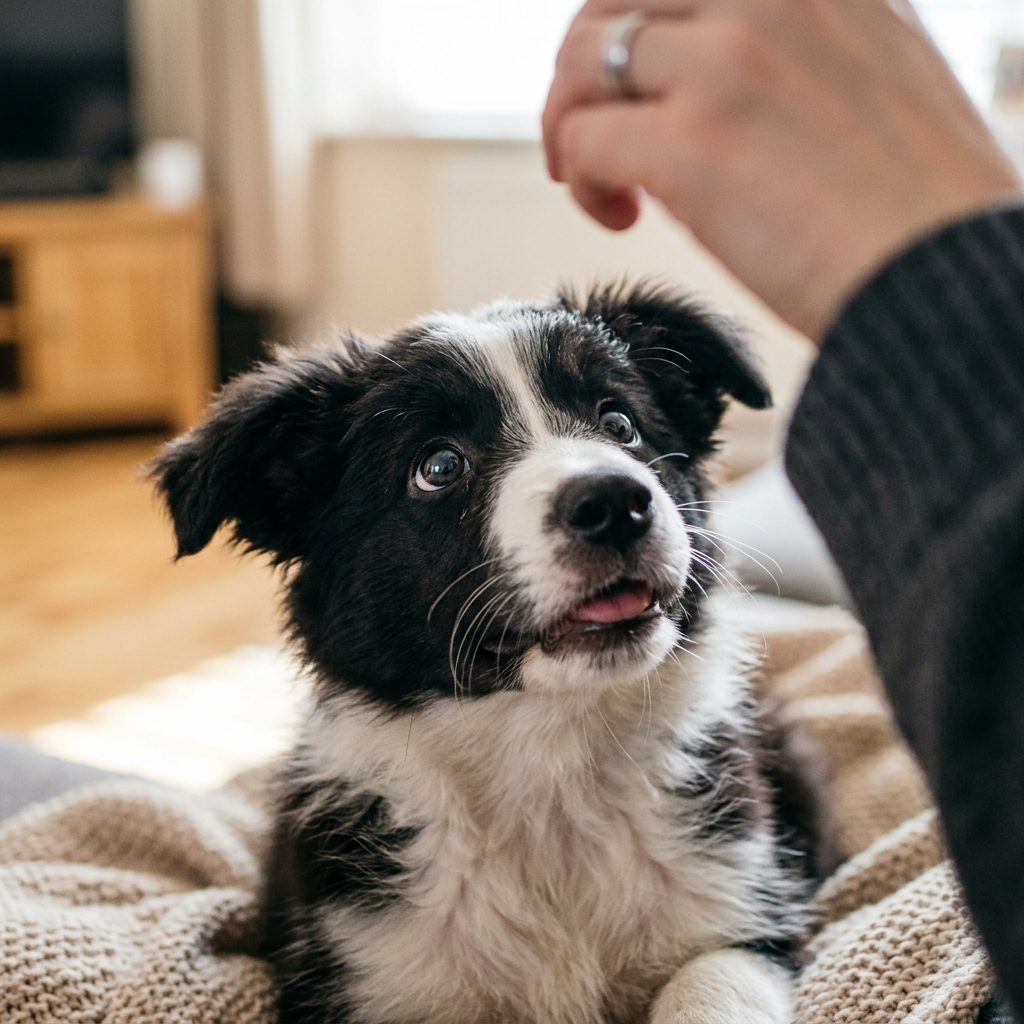
Before we can stop the jumping, we have to understand why our puppies are so obsessed with getting vertical. In the canine world, greetings often involve face-to-face contact. Puppies naturally want to lick the faces of their mothers and other adult dogs to show respect and gather information. Since humans are significantly taller than dogs, the only way for a puppy to reach your face is to launch themselves into the air. It is an act of social enthusiasm, not dominance.
The Attention Trap
The biggest reason jumping persists is that it works! Think about it: when your puppy jumps, what do you do? You might push them down, grab their paws, or even yell “No!” To a puppy, all of these reactions are forms of attention. Even negative attention is better than no attention at all. If your puppy jumps and you touch them—even to push them away—you have just rewarded the behavior. To stop the jump, we have to change the rules of the game. We need to teach the puppy that jumping makes the attention disappear, while keeping all four paws on the floor makes the attention appear. This shift in perspective is the key to everything we are about to discuss.
Secret 1: The ‘Be a Tree’ Method (Negative Punishment)
The Power of Ignoring
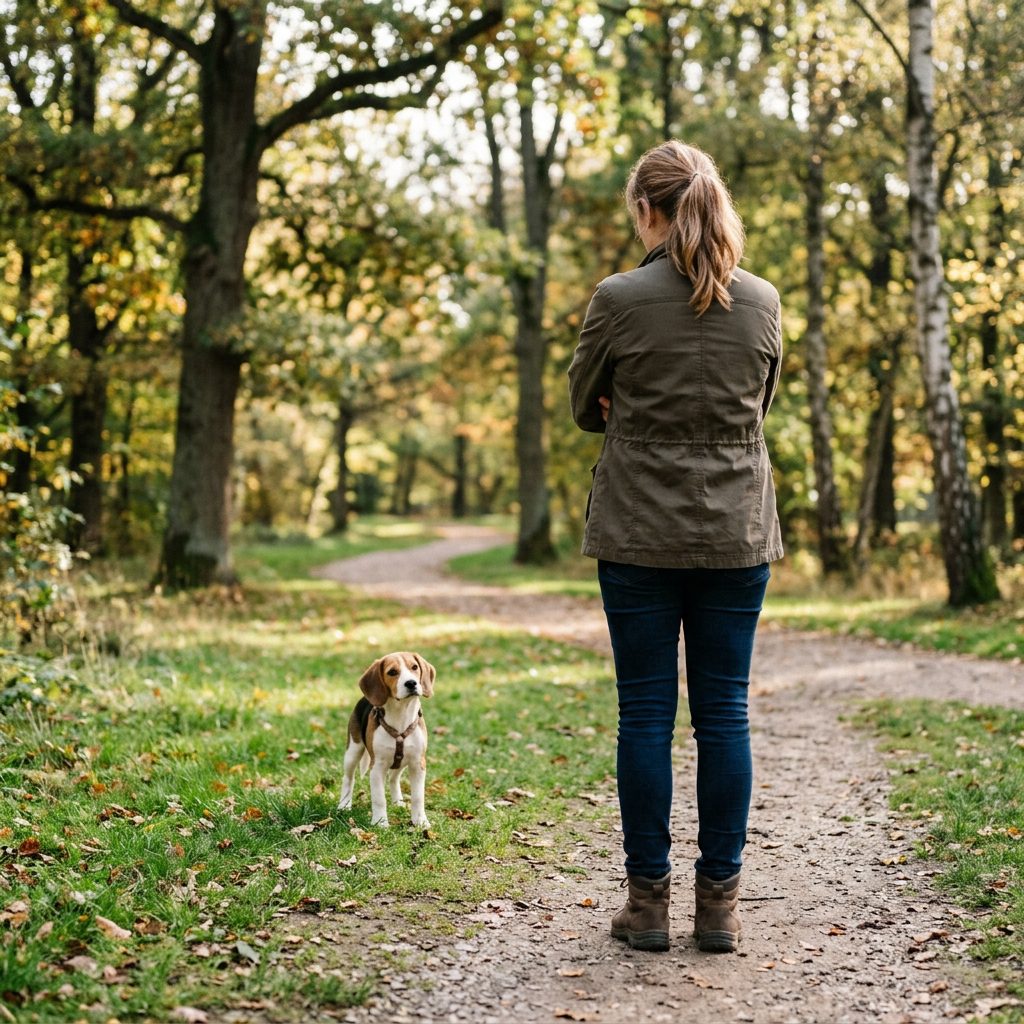
The first secret to stopping a jump instantly is to remove the one thing your puppy wants most: you. The ‘Be a Tree’ method is a classic in positive reinforcement training because it is incredibly effective and easy to implement. When your puppy launches toward you, you must become as boring as a piece of landscape. Do not look at them, do not speak to them, and do not touch them.
How to Execute the Turn
- As soon as the puppy’s front paws leave the ground, turn your back completely.
- Cross your arms over your chest to avoid dangling fingers that might be nipped.
- Wait for the puppy to stop jumping. They might try harder for a second (this is called an extinction burst), but eventually, they will get frustrated and sit or stand still.
- The moment all four paws are on the floor, turn back around and offer calm praise or a treat.
Expert Tip: If your puppy continues to jump at your back or grab your clothes, walk away entirely. Put a door or a baby gate between you and the puppy for 30 seconds. This ‘time-out’ clearly communicates that jumping equals the end of the party.
Secret 2: The Incompatible Behavior Strategy
Teaching the ‘Sit’ as a Greeting
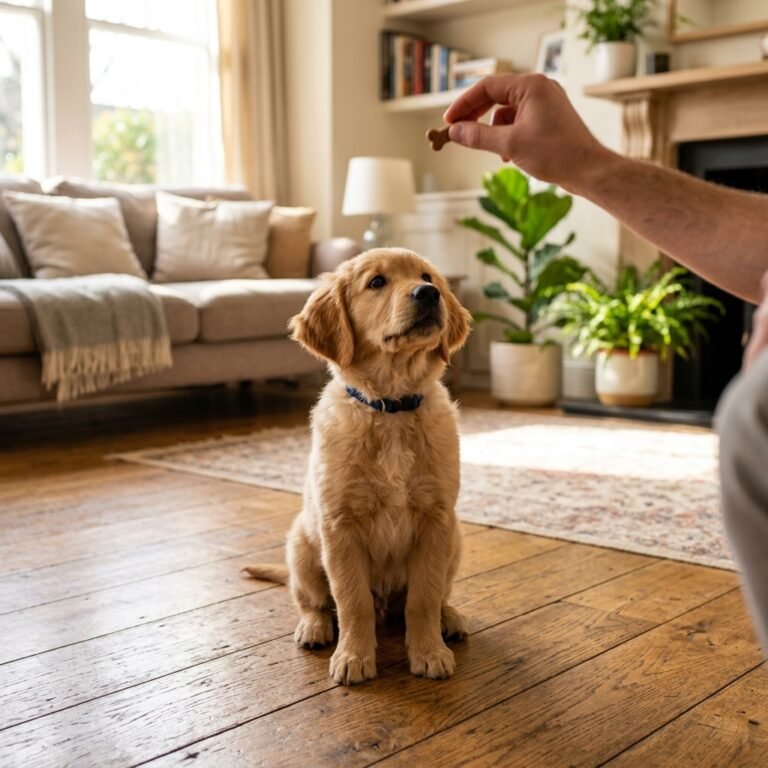
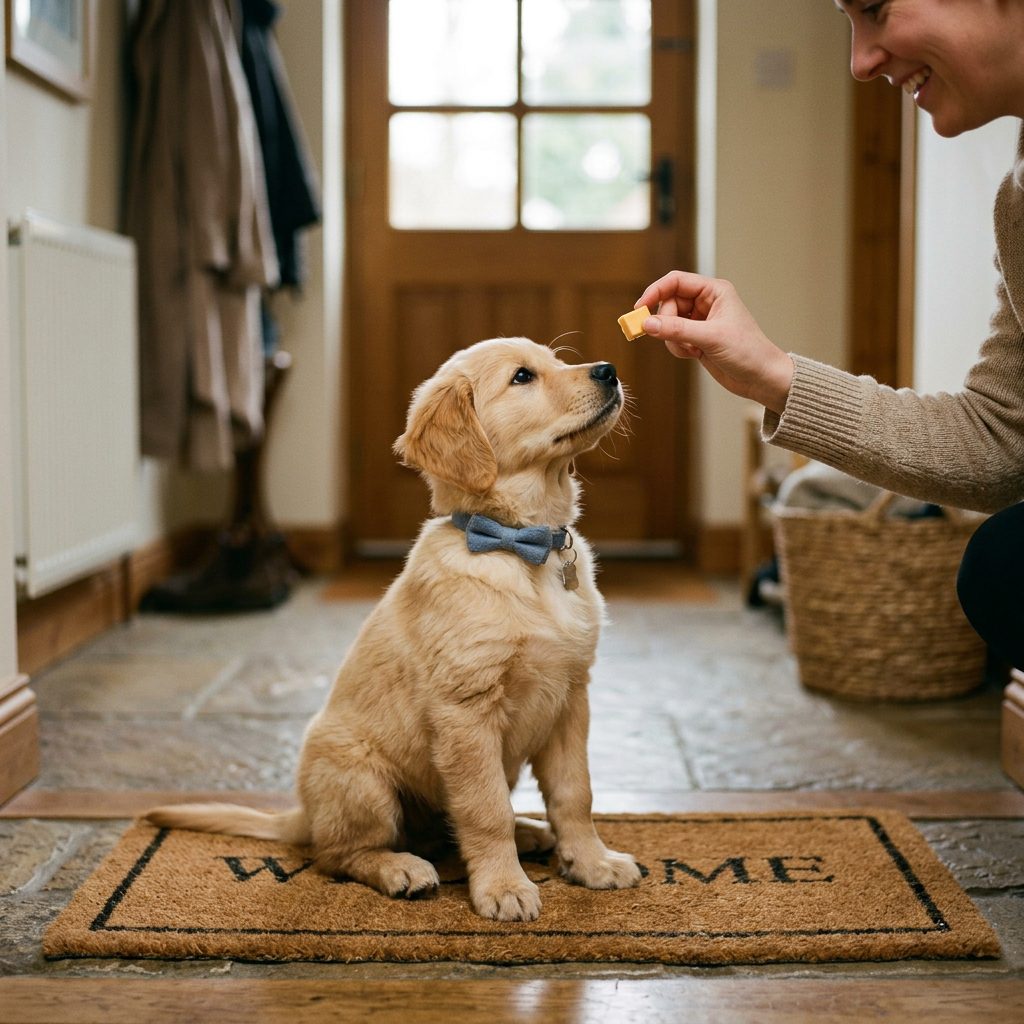
One of the most effective ways to stop an unwanted behavior is to replace it with a behavior that is physically impossible to do at the same time. A dog cannot jump and sit simultaneously. By teaching your puppy that ‘Sit’ is the magic key that unlocks pets and treats, you are giving them a clear alternative to the jump.
The ‘Four on the Floor’ Rule
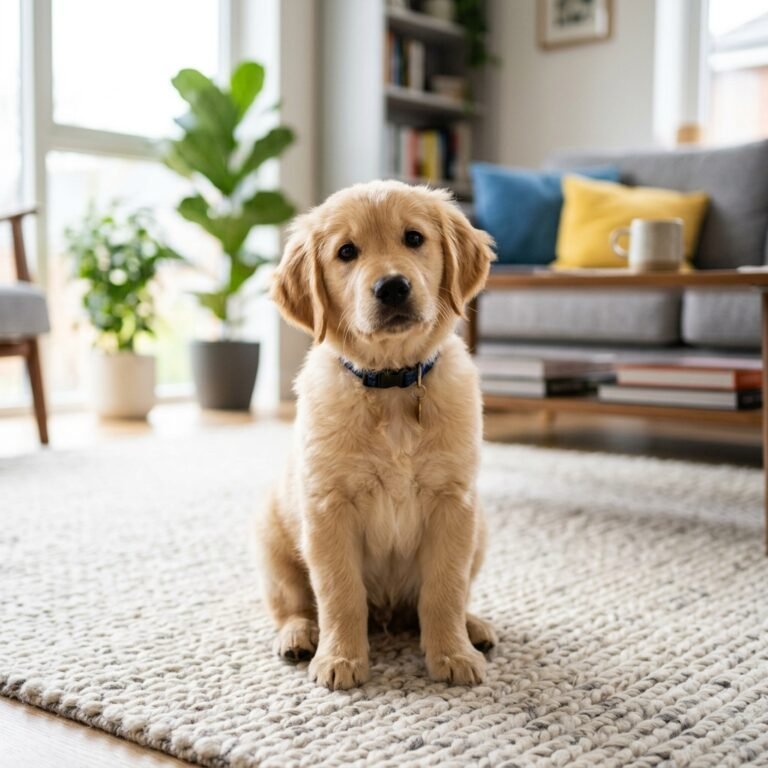
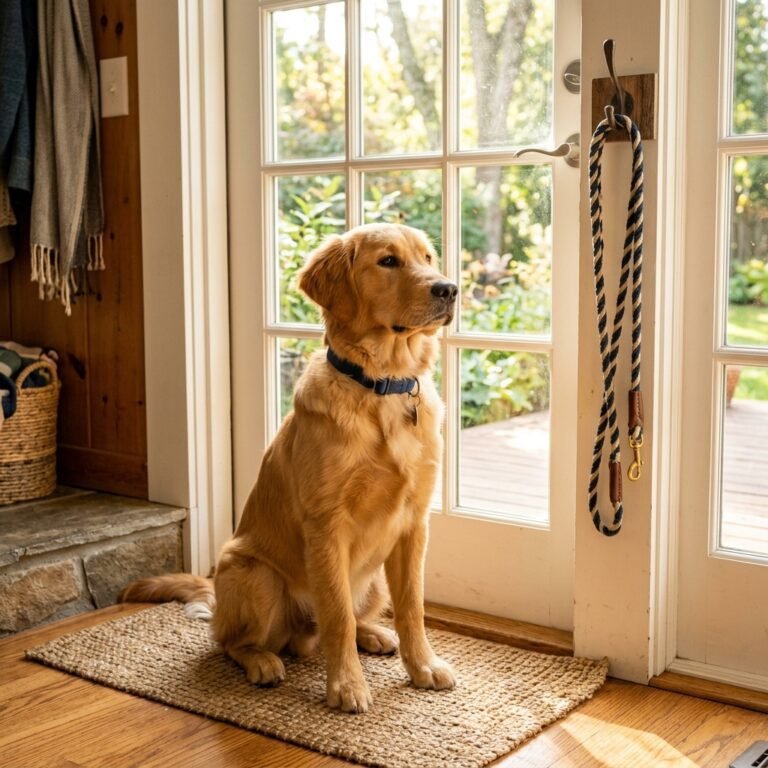
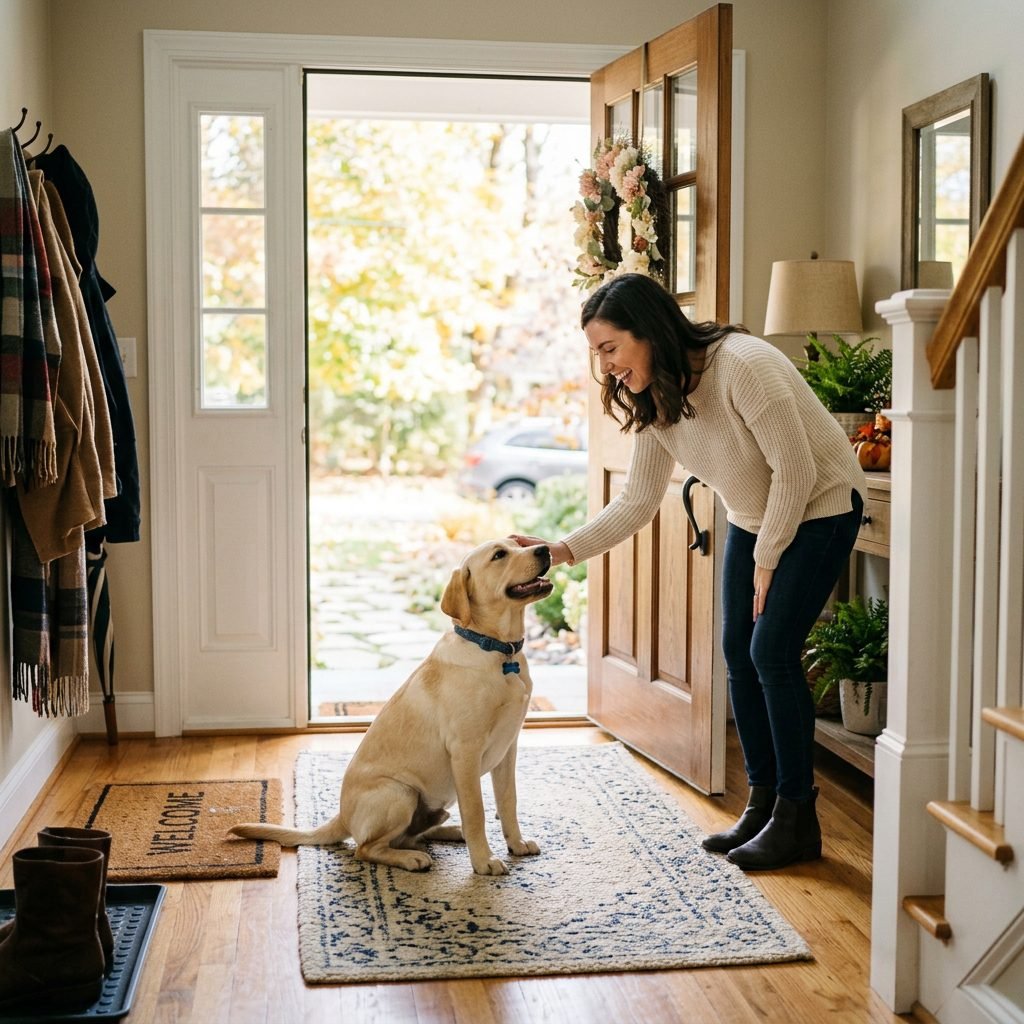
We want to generalize the idea that ‘four on the floor’ (or a seated position) is the only way to get what they want. Start by practicing this when you come home. Ignore the initial chaos, and the second the puppy sits, drop to their level and give them the attention they crave. If they stand up to jump, you stand up and ignore them again. It becomes a game of ‘Red Light, Green Light’ where the puppy’s paws control the action.
Table of High-Value Rewards for Training
| Reward Type | Best Used For | Distraction Level |
|---|---|---|
| Kibble | Daily practice at home | Low |
| Freeze-Dried Liver | Guest arrivals at the door | High |
| Small Bits of Cheese | Outdoor greetings | Medium |
| Favorite Squeaky Toy | Dogs who aren’t food motivated | High |
Secret 3: Environmental Management and the Leash
Taking Control of the Situation
While we are training the puppy to choose not to jump, we need to manage the environment so they don’t have the opportunity to practice the bad behavior. Every time your puppy successfully jumps on a guest, the behavior is reinforced. Management is the ‘instant’ part of stopping the jump.
The Step-on-the-Leash Trick
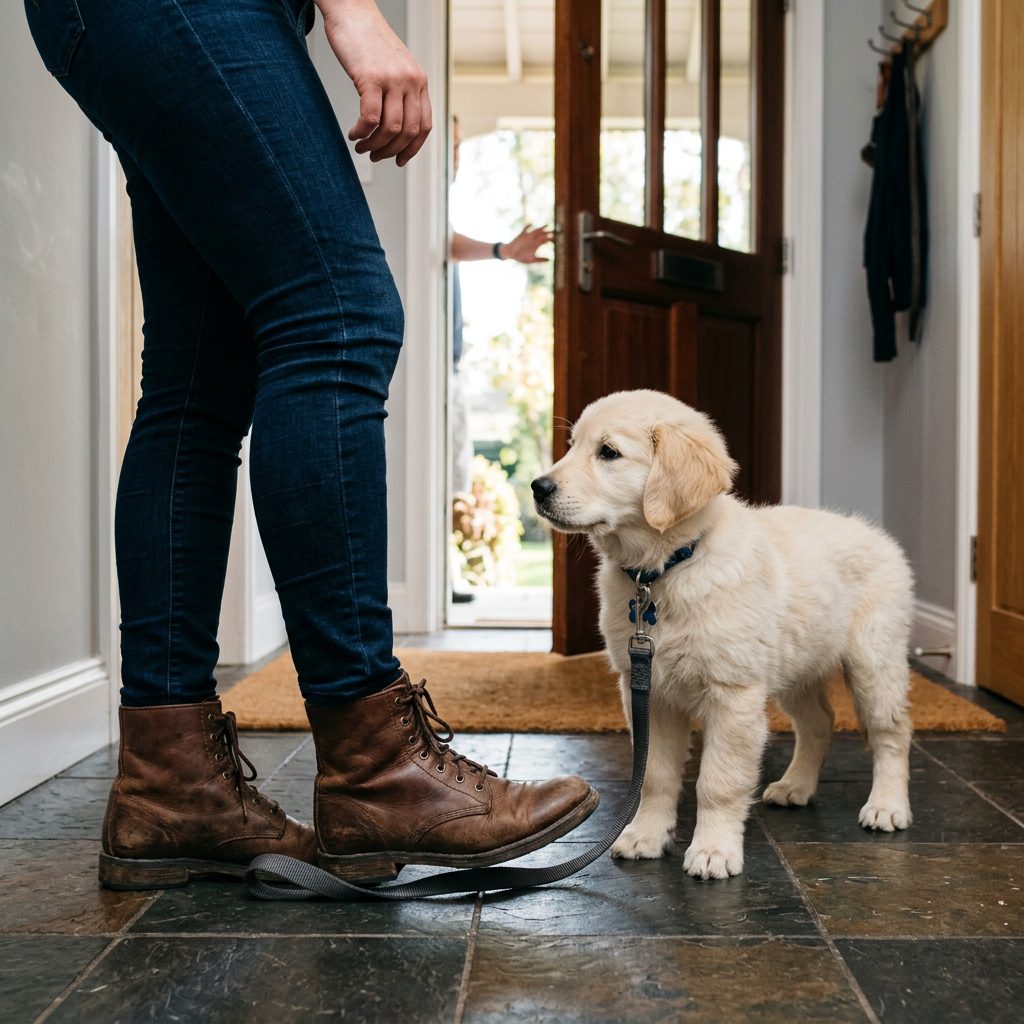
When you know a guest is coming over, put your puppy on a 6-foot leash. When the doorbell rings, stand with the puppy and step on the middle of the leash, leaving just enough slack for the puppy to stand or sit comfortably, but not enough for them to jump up. When the guest enters, the puppy will try to jump, feel the tension of the leash, and realize they are stuck. This prevents the ‘self-reward’ of the jump and allows you to reward the puppy for staying grounded. This is a game-changer for high-energy breeds who struggle with impulse control.
Using Baby Gates
If your puppy is too overstimulated, use a baby gate to keep them in a separate room while the initial ‘excitement wave’ of a guest’s arrival passes. Once the guest is seated and the puppy has calmed down, you can bring them out on a leash to practice calm greetings.
Secret 4: Capturing Calm and Timing Your Rewards
The Art of the Clicker
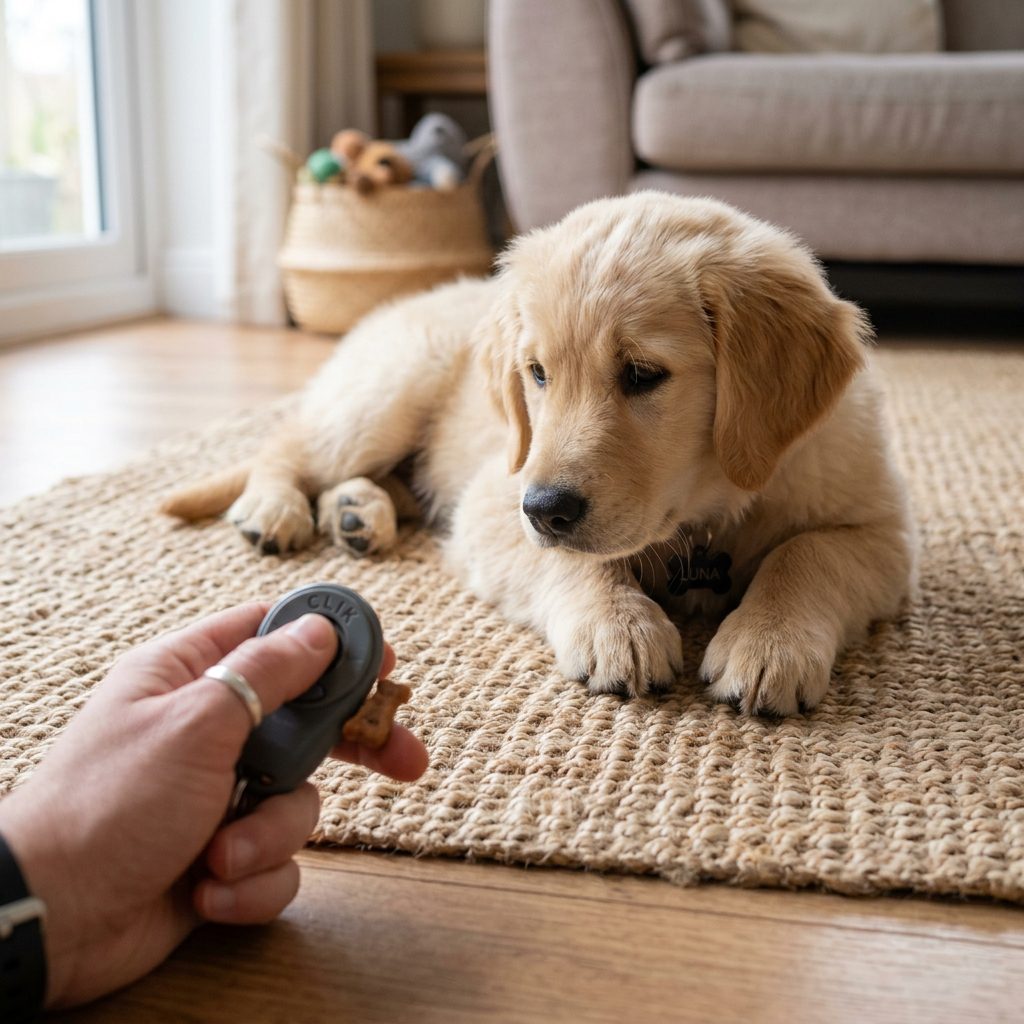
Timing is everything in dog training. If you reward your puppy even a second too late, you might accidentally be rewarding the jump rather than the sit. This is where a clicker or a consistent marker word like ‘Yes!’ becomes invaluable. You want to mark the exact moment the puppy chooses to keep their paws down.
Capturing the ‘Melt’
Sometimes, puppies don’t just jump; they vibrate with excitement. ‘Capturing calm’ involves rewarding your puppy when they aren’t doing anything at all. If your guest is sitting on the couch and your puppy decides to lie down at their feet, immediately (but quietly) drop a treat between their paws. You are teaching the puppy that being ‘boring’ and relaxed is actually the most rewarding thing they can do. Over time, the puppy will learn that the presence of guests is a cue to relax rather than a cue to go wild.
Canine Specialist Note: Avoid high-pitched ‘baby talk’ when guests arrive. This only ramps up the puppy’s arousal levels. Encourage guests to speak in a low, calm voice and keep their movements slow.
Secret 5: Training the Humans (The Hardest Part!)
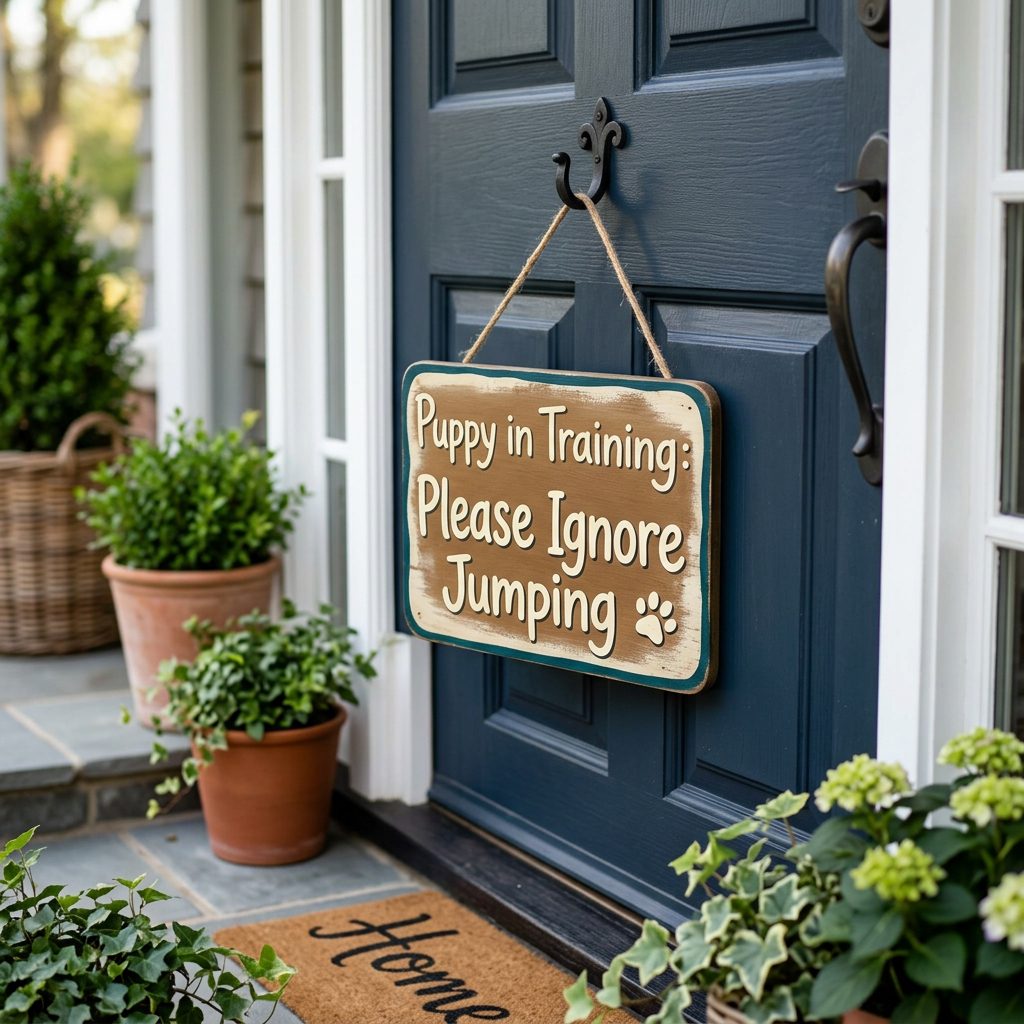
Managing Your Guests
Believe it or not, training the humans is often harder than training the puppy. We all have that one friend who says, “Oh, I don’t mind! I love dogs!” and proceeds to pet the puppy while they are jumping all over them. This completely undermines your hard work. You must be the advocate for your puppy’s education.
The Guest Protocol
Before your guest enters, give them a quick briefing. You can even put a sign on your front door that says: ‘Puppy in Training: Please ignore me until I have four paws on the floor!’ Instruct your guests to:
- Avoid eye contact with the puppy initially.
- Turn their back if the puppy jumps.
- Only pet the puppy when you give the ‘all clear’ signal.
- Wait until the puppy is sitting before offering any attention.
By controlling the humans, you ensure that the puppy receives a consistent message from everyone they meet. Consistency is the fastest path to a well-behaved dog.
Troubleshooting Common Jumping Hurdles
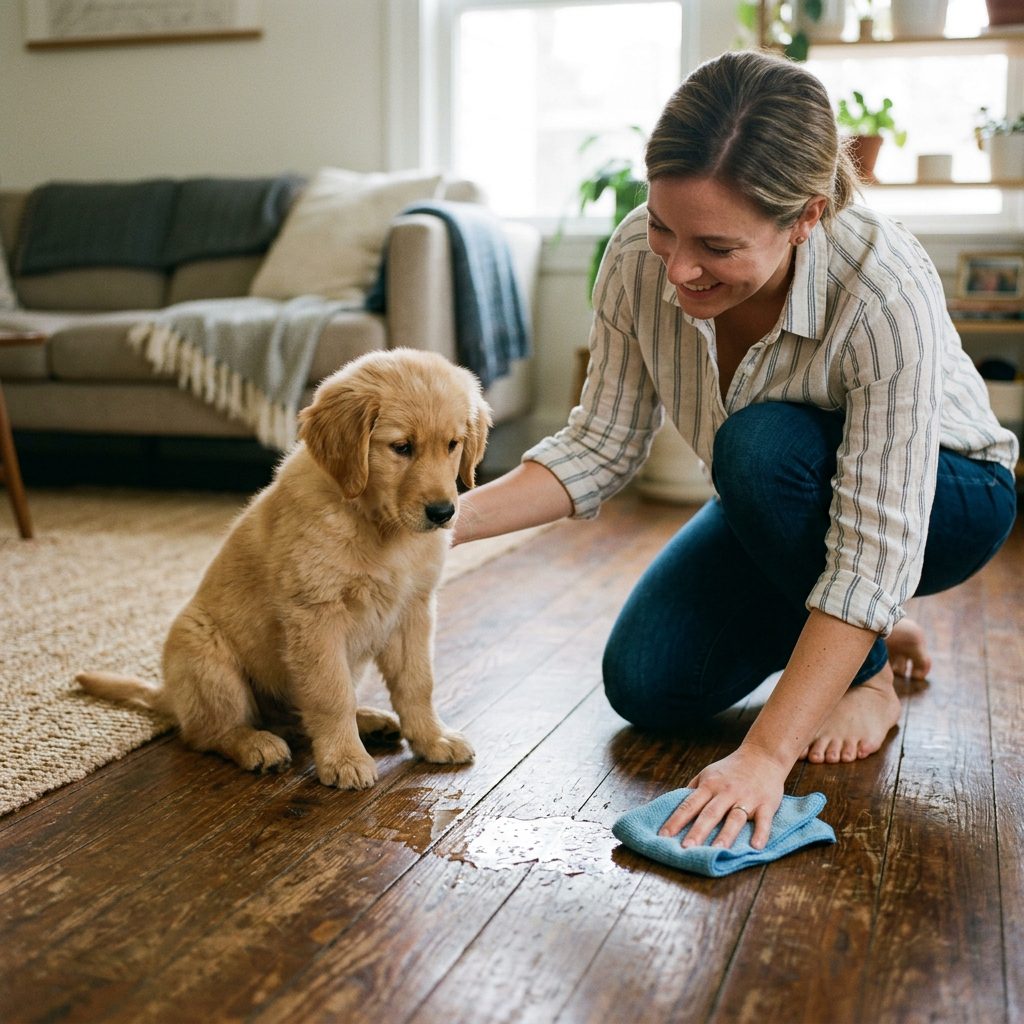
What to Do When Things Go Wrong
Even with the best training, setbacks happen. It is important to stay patient and realize that your puppy is still learning. Here are a few common scenarios and how to handle them:
The ‘Nip and Jump’ Combination
If your puppy is jumping and nipping at the same time, they are likely overstimulated. This is a sign that the environment is too intense for their current level of training. Increase the distance between the puppy and the guest, or use higher-value treats to regain their focus.
The Excitement Pee
Some puppies are so thrilled by guests that they submissively urinate. In this case, do not use the ‘Be a Tree’ method or any form of correction. Instead, keep greetings very low-key, avoid direct eye contact, and have the guest greet the puppy outdoors where clean-up is easier. As the puppy gains confidence, this behavior usually disappears.
The ‘Long-Distance’ Jumper
If your puppy starts their jump from three feet away, use a leash to manage the distance. Practice ‘Look at Me’ exercises to keep their focus on you as the guest approaches. Remember: the goal is to set the puppy up for success, not to test them until they fail.
Conclusion
Stopping a puppy from jumping is a journey of patience, consistency, and a lot of treats! By understanding that your puppy isn’t trying to be ‘bad’ but is simply trying to say hello in the only way they know how, you can approach training with empathy and clarity. Remember the five secrets: ignore the bad, reward the good, manage the environment with a leash, capture calm moments, and—most importantly—train your human guests to follow the rules. If you stay consistent, you will soon have a dog that is the talk of the neighborhood for all the right reasons. No more muddy paw prints, no more torn stockings, and no more frantic apologies at the front door. Just a happy, polite companion ready to welcome the world with four paws firmly on the floor. Happy training, and enjoy those calm greetings!