Save Your Deck! 5 Easy Ways to Stop Your Puppy From Chewing Your Wood Patio Furniture
The ‘Land Shark’ vs. Your Outdoor Oasis
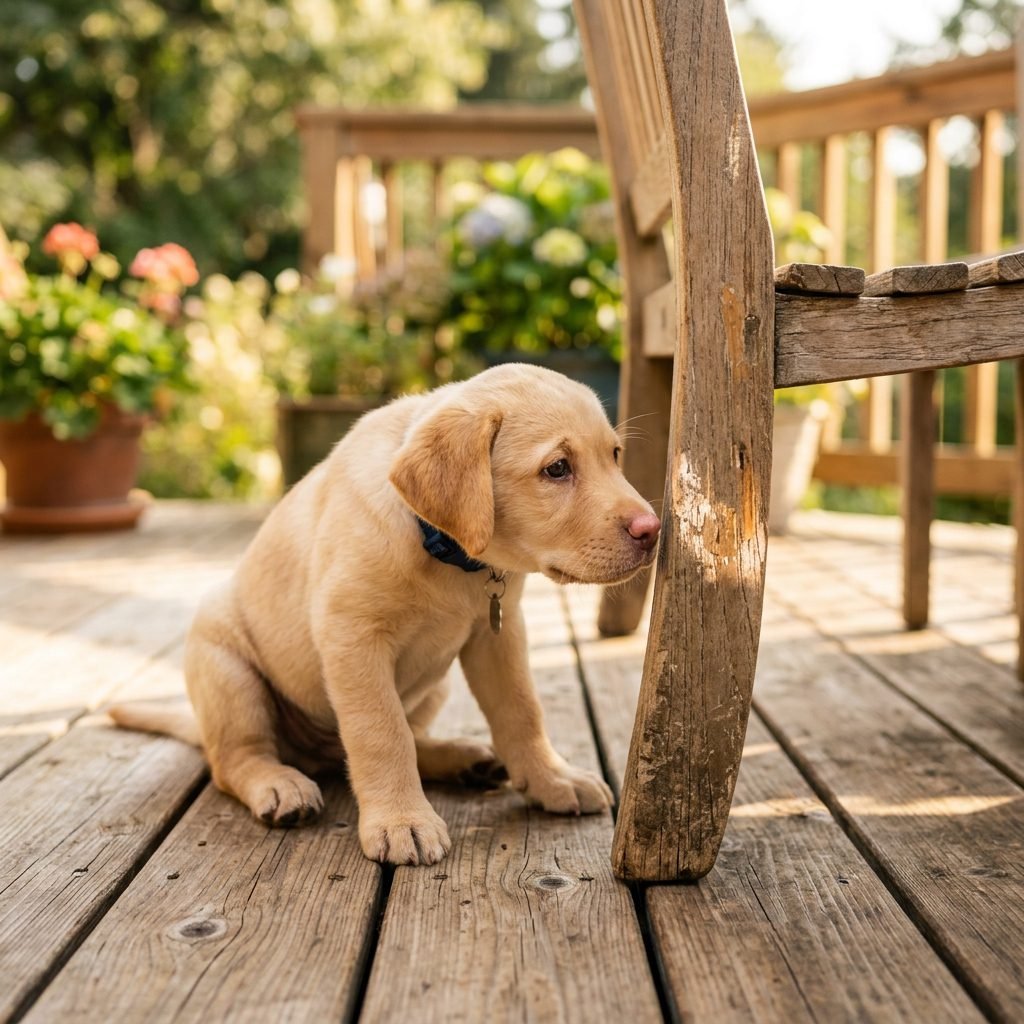
We’ve all been there: you’ve finally curated the perfect outdoor sanctuary, complete with weather-resistant cushions and that gorgeous cedar dining set you saved up for. Then, you bring home a new puppy. Within forty-eight hours, your expensive patio furniture looks like it’s been through a wood chipper. For many savvy dog owners, the ‘land shark’ phase is a rite of passage, but it doesn’t have to mean the end of your deck’s aesthetic appeal.
Puppies don’t chew wood out of malice. They are biological explorers, using their mouths to navigate a world full of interesting textures and scents. Wood, with its organic smell and satisfying resistance, is often the prime target for a teething canine. However, allowing this behavior to continue isn’t just bad for your furniture; it can be dangerous for your pup, leading to splinters, gum injuries, or even intestinal blockages. In this comprehensive guide, we will dive deep into five proven strategies to redirect that chewing energy, protect your investment, and ensure your puppy grows into a well-behaved companion who respects your outdoor space.
Understanding the Root Cause: Why Wood?

Before we jump into the solutions, it is crucial to understand why your puppy has a vendetta against your Adirondack chairs. As a canine specialist, I categorize chewing into three main buckets: teething relief, boredom, and sensory exploration.
The Teething Timeline
Puppies typically go through their most intense teething phase between 4 and 6 months of age. During this time, their adult teeth are pushing through the gums, causing significant discomfort. The firm, slightly yielding texture of wood provides the perfect counter-pressure to soothe those aching jaws. If you don’t provide an alternative that feels just as good, the table leg is the next best thing.
Boredom and Pent-up Energy
A puppy left alone on a deck with nothing to do will find their own entertainment. Wood is interactive—it changes shape as they chew it, it makes noise, and it releases scents. For a bored puppy, a wooden furniture set is essentially a giant, stationary puzzle toy.
The Sensory Experience
Wood is porous and holds onto smells. It might smell like the squirrels that ran across it, the BBQ sauce you spilled last week, or simply the earth itself. To a puppy, your patio furniture is a library of information waiting to be ‘read’ with their teeth.
Pro Tip: Always check your puppy’s gums during the teething phase. If you see excessive redness or bleeding, consult your vet, but know that some light discomfort is normal and drives the urge to chew.
Method 1: The ‘Bitter’ Truth – Using Taste Deterrents
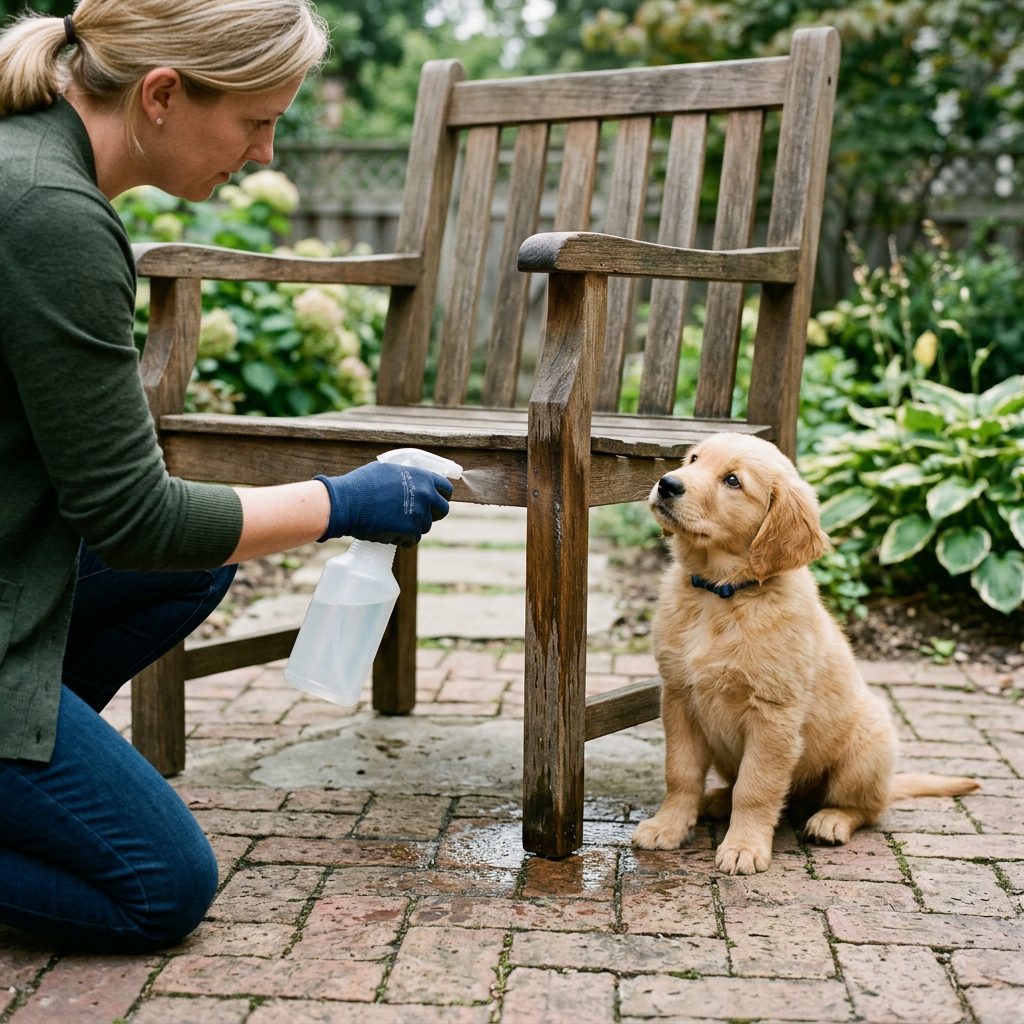
One of the fastest ways to break the habit is to make the furniture taste absolutely repulsive to your puppy. Taste deterrents are a classic tool in the trainer’s kit, but they must be used correctly to be effective.
Commercial vs. DIY Solutions
Most pet stores carry ‘Bitter Apple’ or ‘Bitter Cherry’ sprays. These use non-toxic but incredibly foul-tasting ingredients to discourage contact. However, some savvy owners prefer making their own. A mixture of two parts apple cider vinegar and one part white vinegar can often do the trick, though you must test it on an inconspicuous area of the wood first to ensure it doesn’t damage the finish.
| Deterrent Type | Pros | Cons |
|---|---|---|
| Commercial Bitter Sprays | Long-lasting, scientifically formulated. | Can be expensive; some dogs actually like the taste. |
| Vinegar Mixtures (DIY) | Inexpensive, non-toxic, readily available. | Smell can be pungent; needs frequent reapplication. |
| Lemon/Citrus Sprays | Pleasant scent for humans; natural. | Can be sticky; may bleach certain wood stains. |
The Application Strategy
Don’t just spray and walk away. To make this method work, you should apply the deterrent, then let your puppy ‘discover’ it while you are watching. When they go for a nibble and realize it tastes like feet, immediately offer them a high-value chew toy. This creates a clear contrast: Furniture = Yuck, Toy = Yum.
Method 2: The Art of Redirection and High-Value Alternatives
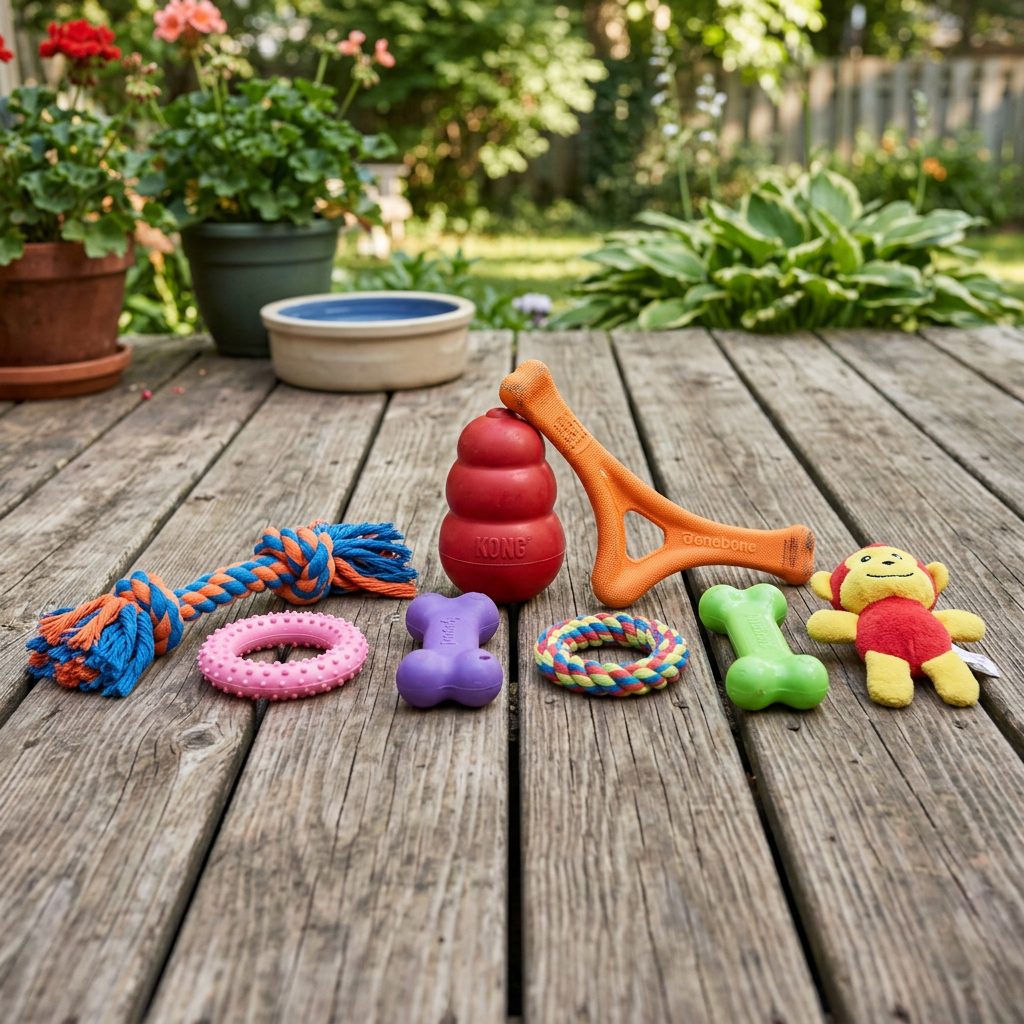
Stopping a behavior is only half the battle; you must also provide a legal outlet for the puppy’s natural urges. This is where redirection comes in. If you take away the wood, you must replace it with something better.
Selecting the Right Textures
If your puppy is specifically targeting wood, they likely enjoy the ‘crunch’ or the ‘firmness’ of it. Look for toys that mimic these sensations without the danger of splinters. Rubber toys with ridges, nylon chew bones, and even chilled carrots can be excellent substitutes.
The ‘Trade-Up’ Technique
Never just pull your puppy away from the furniture. Instead, use the ‘Trade-Up’ method. Approach your puppy with a toy that is more exciting than the chair leg—perhaps a Kong stuffed with frozen peanut butter or a squeaky toy. When they drop the wood to investigate the toy, praise them enthusiastically. You want them to think, ‘Every time I look at that chair, my human gives me something even better!’
Safe Chew Alternatives Table
| Toy Type | Best For | Durability |
|---|---|---|
| Hard Rubber (e.g., Kong) | Aggressive chewers & teething. | High |
| Nylon Bones | Puppies who like the ‘crunch’ of wood. | Very High |
| Frozen Ropes | Soothing sore, inflamed gums. | Medium |
| Natural Coffee Wood Chews | Dogs obsessed with the texture of real wood. | Medium (Safe splinters) |
Method 3: Mental Stimulation – Tired Puppies Don’t Chew

As the saying goes, ‘A tired dog is a good dog.’ This is doubly true for puppies. Often, destructive chewing is simply a manifestation of excess mental energy. If your puppy’s brain is tired, they won’t have the bandwidth to plan a demolition of your deck.
The Power of ‘Sniffaris’
Physical exercise is great, but mental exercise is what truly exhausts a pup. Take your puppy on a ‘Sniffari’—a walk where they lead the way and sniff everything they want for as long as they want. Fifteen minutes of intense sniffing is equivalent to an hour of running in terms of mental fatigue.
Puzzle Feeders on the Deck
Instead of feeding your puppy from a bowl, use a slow feeder or a puzzle toy on the patio. This changes the deck from a ‘chewing zone’ into a ‘problem-solving zone.’ By the time they finish their meal, they’ll likely want a nap rather than a snack on your table legs.
Daily Enrichment Schedule
Consistency is key. Use the following table to plan a day that keeps your pup’s mind occupied:
| Time of Day | Activity | Goal |
|---|---|---|
| Morning | 15-minute training session (Basic cues) | Mental Focus |
| Midday | Puzzle feeder or stuffed toy | Independent Play |
| Afternoon | Sniffari walk or backyard exploration | Sensory Input |
| Evening | Calm ‘settle’ training on a mat | Impulse Control |
Method 4: Training the ‘Leave It’ Command
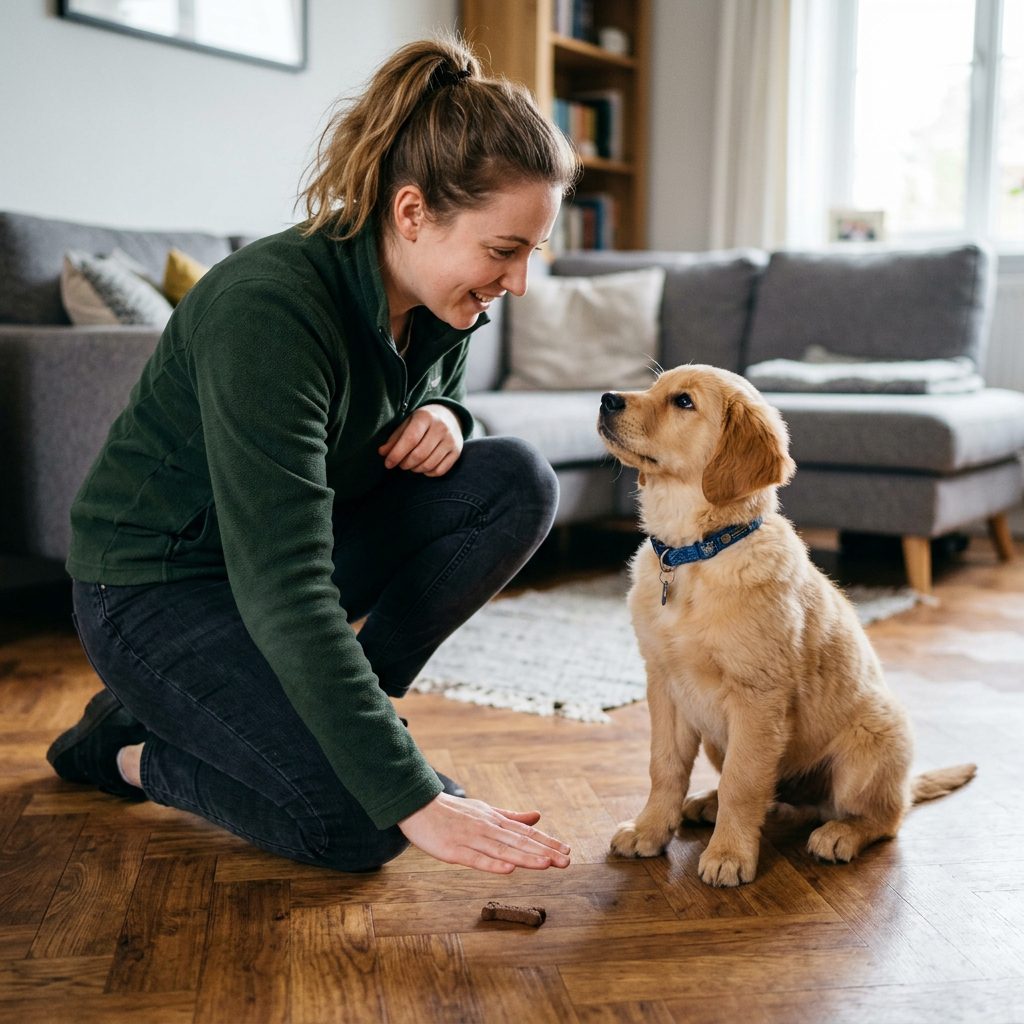
While deterrents and toys are great, nothing beats solid communication. Teaching your puppy the ‘Leave It’ command is the ultimate long-term solution for protecting your furniture (and anything else they shouldn’t touch).
Step 1: The Hidden Treat
Place a low-value treat in your closed fist. Let the puppy sniff and lick your hand. The moment they pull back or stop trying to get it, say ‘Yes!’ or click your marker, and give them a high-value treat from your other hand. You are teaching them that ignoring something leads to a better reward.
Step 2: The Floor Challenge
Place a treat on the floor and cover it with your hand. Tell them to ‘Leave it.’ When they stop trying to get to it, reward them from your hand. Gradually move your hand further away until they can ignore the treat on the floor just by hearing the cue.
Step 3: Generalizing to the Furniture
Once they understand the concept, take the training to the deck. When you see your puppy eyeing the furniture, give the ‘Leave it’ cue before they make contact. When they look at you instead of the wood, throw a party! Give them treats, praise, and their favorite toy. You are building a reflex where the sight of the furniture triggers them to look at you for direction.
Expert Tip: Timing is everything. You must catch the puppy in the ‘decision-making’ phase—that moment they are staring at the chair leg but haven’t yet opened their mouth.
Method 5: Strategic Management and Physical Barriers
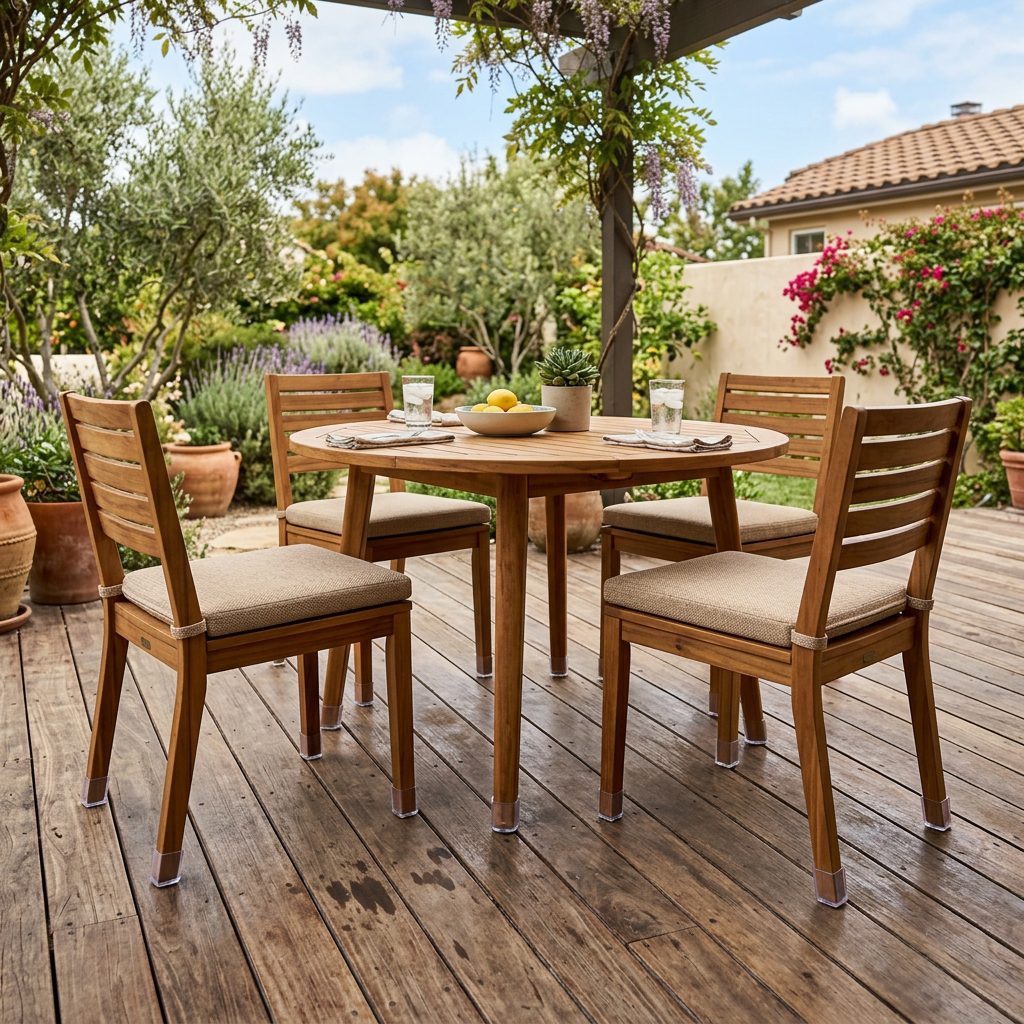
Sometimes, you just need to prevent the interaction entirely while the puppy is still learning. Management is not ‘giving up’; it is setting your puppy up for success by removing the opportunity to fail.
Exercise Pens and Baby Gates
If you aren’t able to supervise your puppy 100% of the time while you’re on the deck, use an exercise pen (Ex-pen). This allows the puppy to be outside with you, enjoying the fresh air, but keeps them safely away from the wooden furniture. It creates a ‘puppy-safe’ zone within your outdoor space.
Furniture Wraps and Guards
For particularly expensive pieces, consider temporary physical protection. You can wrap the legs of chairs in heavy-duty plastic wrap or use plastic corner guards designed for baby-proofing. While not the most attractive solution, it is temporary and far cheaper than replacing a teak dining set.
Design Hacks for Dog Owners
If you are in the market for new furniture, consider materials that are less appealing to dogs. Metal, wrought iron, or high-density polyethylene (HDPE) lumber (like Polywood) are much less satisfying to chew than cedar or pine. If your puppy is a chronic wood-lover, switching to these materials can save you years of stress.
Conclusion
Building a Lifetime of Good Habits
Stopping your puppy from chewing your wood patio furniture is a journey that requires patience, consistency, and a little bit of strategy. Remember that this is a phase, but how you handle it now will dictate your dog’s behavior for years to come. By combining taste deterrents, redirection, mental stimulation, formal training, and smart management, you aren’t just saving your deck—you’re teaching your puppy how to exist harmoniously in your home.
Don’t get discouraged by setbacks. There will be days when a chair leg gets a new ‘distressed’ look despite your best efforts. When that happens, take a deep breath, reapply your deterrent, and go back to the basics of training. Your deck is a place for relaxation, and with these five steps, it will stay that way for both you and your four-legged best friend. Enjoy your outdoor oasis—you’ve earned it!