Ouch! How to Stop a Puppy From Nipping Your Ankles Every Time You Walk Downstairs
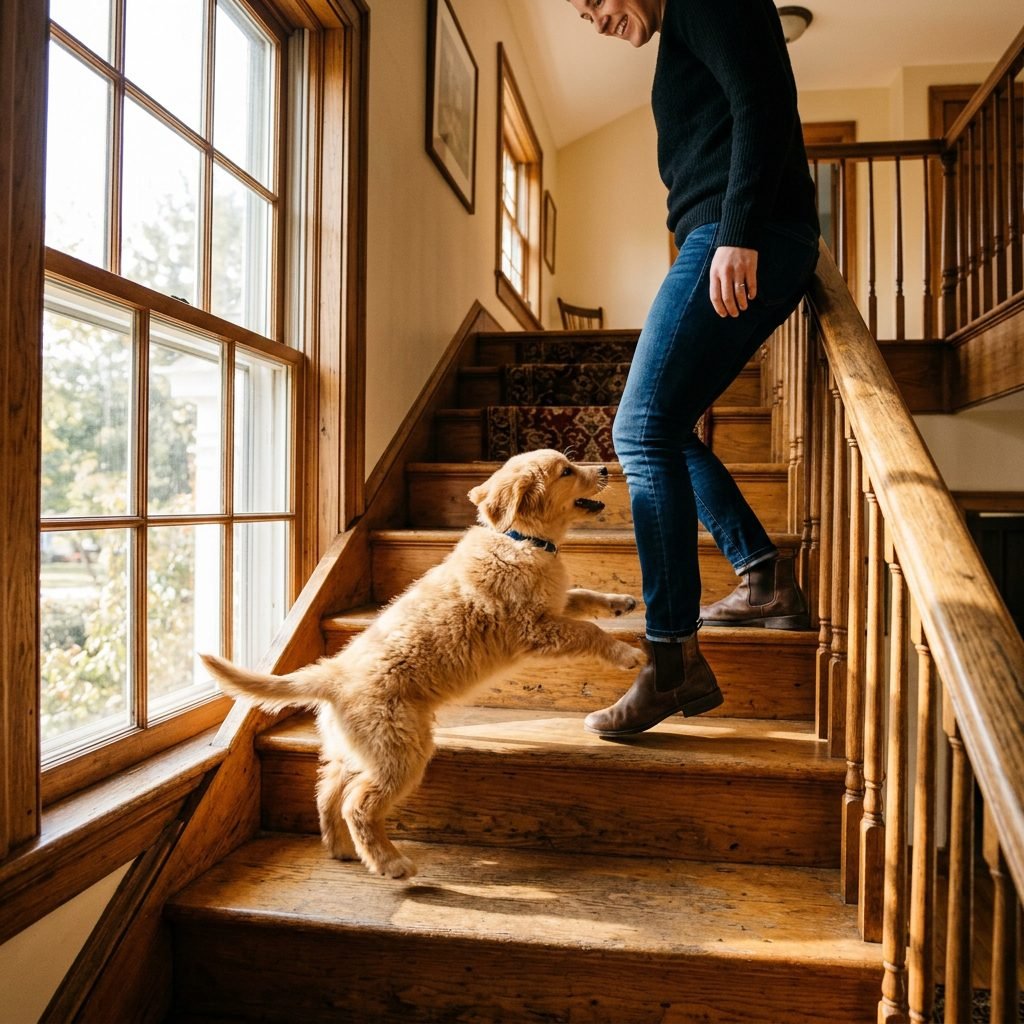
We’ve all been there. You’ve just woken up, you’re slightly bleary-eyed, and you’re heading downstairs for that much-needed first cup of coffee. But suddenly, your ankles are under siege. A pair of tiny, needle-sharp teeth has latched onto your pajama bottoms or, worse, your bare skin. It’s the classic puppy “ankle-nipping” gauntlet, and while it might seem like your furry friend has a personal vendetta against your Achilles tendons, there is actually a very logical (and biological) reason for it.
As a canine specialist, I can tell you that the stairs represent a perfect storm of excitement for a puppy. The movement of your feet, the vertical change, and the anticipation of what’s at the bottom (breakfast! walkies! outside!) turn your puppy’s prey drive and herding instincts up to eleven. Stopping this behavior isn’t about punishment; it’s about redirection, management, and teaching your puppy that calm behavior is the only way to get where they want to go.
In this comprehensive guide, we are going to break down exactly why your puppy does this, the tools you need to stop it, and a step-by-step training protocol to ensure your stairs become a bite-free zone. Grab a handful of treats, and let’s get started!
The Science of the ‘Land Shark’: Why Ankles and Why Stairs?
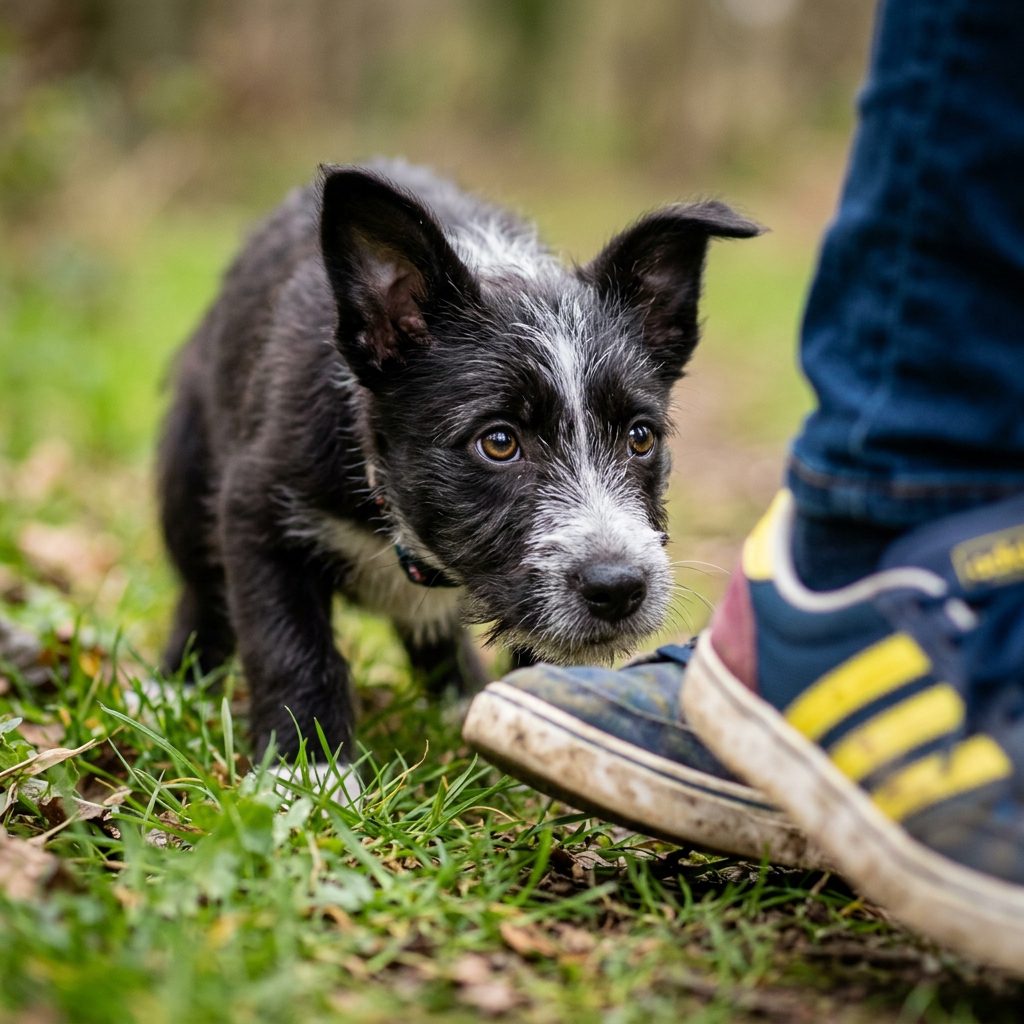
Before we jump into the ‘how-to,’ we need to understand the ‘why.’ Puppies aren’t being mean; they are being puppies. Their world is navigated through their mouths, and your moving feet are the most exciting toys in the house.
Herding Instincts and Prey Drive
Many breeds, particularly herding dogs like Border Collies, Shepherds, and Heelers, are genetically hardwired to move objects by nipping at heels. Even if your puppy isn’t a herding breed, the ‘predatory motor pattern’—the sequence of searching, stalking, chasing, and biting—is triggered by the fast, rhythmic movement of your feet going down the stairs.
The Excitement Factor
Stairs are high-arousal areas. For a puppy, the stairs usually lead to something high-value: the kitchen (food), the back door (potty/play), or the living room (family time). This surge of dopamine makes them lose their impulse control, leading to the ‘zoomies’ or ‘nippies.’
| Trigger | Why It Happens | Puppy’s Perspective |
|---|---|---|
| Fast Movement | Triggers chase instinct | “That’s a squirrel! I must catch it!” |
| Vertical Height | Changes the hierarchy of space | “I can reach your face/hands/ankles easier!” |
| High Arousal | Lack of impulse control | “I’m so excited I don’t know what to do with my mouth!” |
Essential Tools for Your Training Kit

To stop the nipping, you need to be prepared before you even step onto the first riser. You cannot train effectively if you are constantly yelping in pain or trying to shake a puppy off your leg.
- High-Value Treats: We’re talking small bits of boiled chicken, cheese, or specialized training treats. These need to be more exciting than your ankles.
- A Short Training Leash: A 4-foot leash gives you control over the puppy’s proximity to your legs.
- A ‘Long’ Target Toy: A tug toy or a plush toy that is long enough to keep the puppy’s mouth away from your hands and feet.
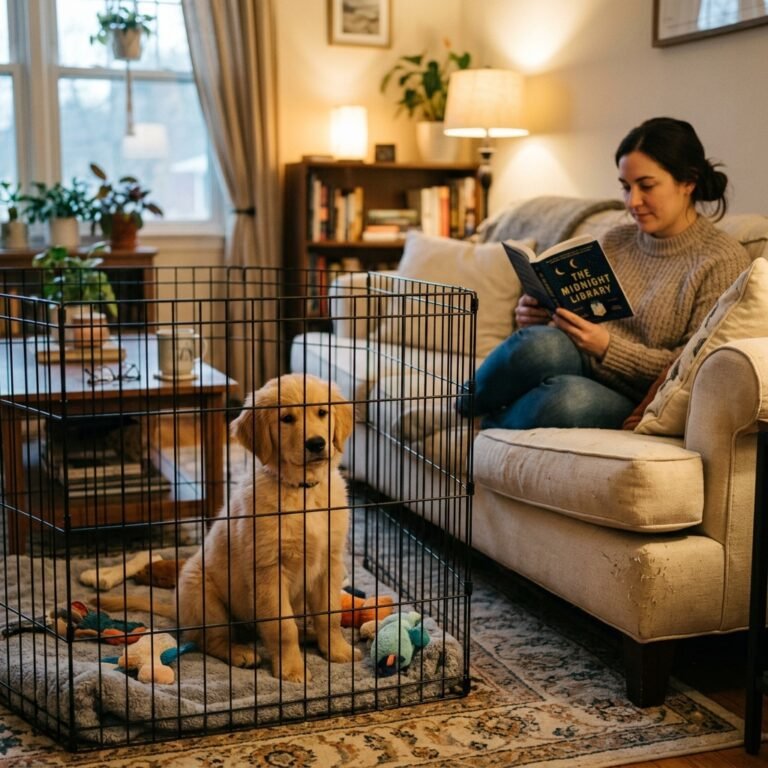
- Baby Gates: Essential for management when you aren’t in ‘training mode.’
Expert Tip: Keep a jar of treats at the top of the stairs and the bottom. You never want to be caught without a reward when your puppy chooses a good behavior!
Step-by-Step: The ‘Calm Descent’ Protocol
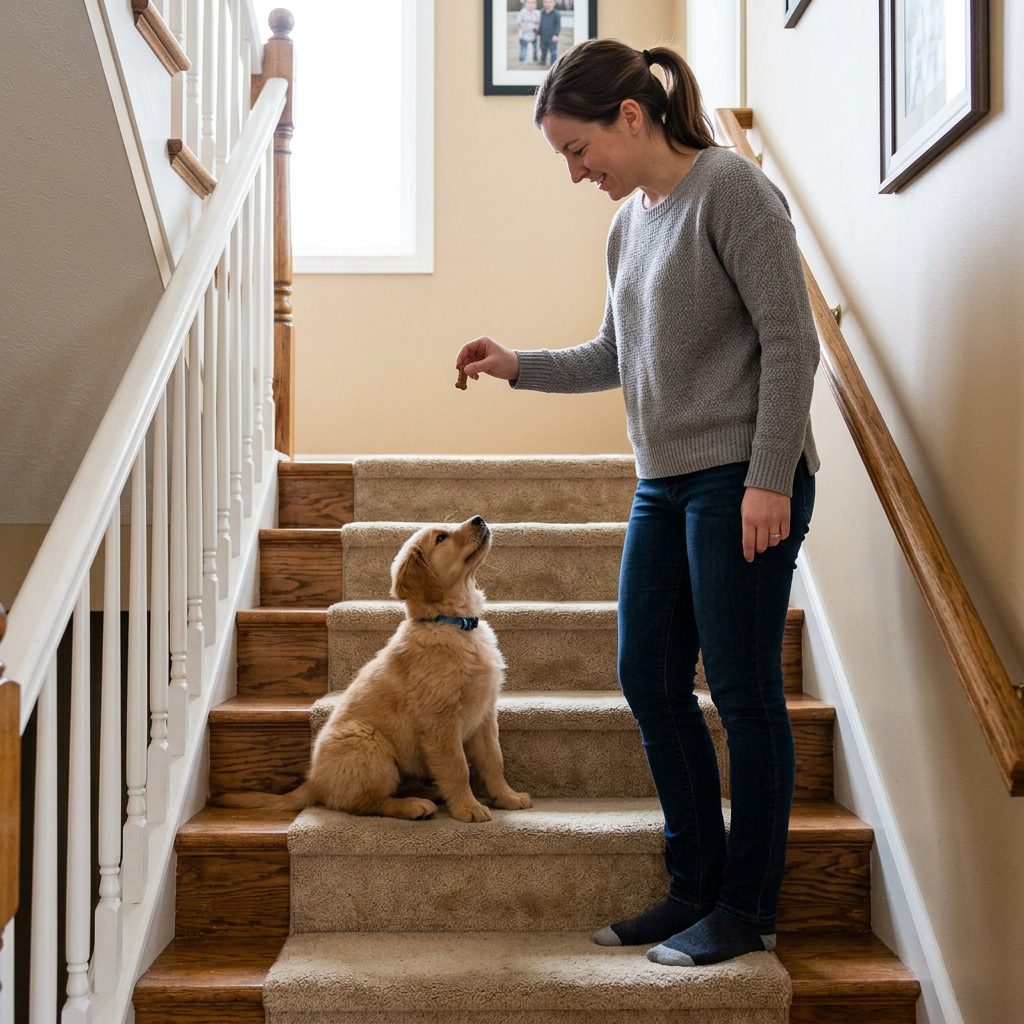
This is the core of our training. We want to change the puppy’s association with the stairs from ‘Chase Mode’ to ‘Work Mode.’
Step 1: The ‘Sit-Stay’ at the Top
Never start the descent while the puppy is already jumping or biting. Ask for a ‘Sit.’ Wait for eye contact. If they can’t sit, they aren’t ready to move. This sets the tone that calm behavior is the ‘key’ that unlocks the stairs.
Step 2: One Step at a Time
Take exactly one step down. If the puppy stays calm or follows without nipping, immediately mark the behavior (use a clicker or a verbal ‘Yes!’) and deliver a treat. You are rewarding the *absence* of biting.
Step 3: The ‘Find It’ Game
If the puppy starts to get that ‘glint’ in their eye, toss a treat two steps down ahead of you. This redirects their focus away from your ankles and toward the floor. It changes the game from ‘Chase the Human’ to ‘Find the Food.’
Step 4: Increasing Duration
Gradually move from rewarding every step to rewarding every three steps, then every five, until you can reach the bottom with a calm puppy by your side.
| Training Phase | Goal | Success Metric |
|---|---|---|
| Initial | Single step calm | Puppy looks at you for a treat after 1 step |
| Intermediate | Halfway descent | No mouthing for 5-7 steps |
| Advanced | Full flight | Puppy walks loosely by your side the whole way |
The ‘Statue’ Technique and Redirection
What happens if they nip despite your best efforts? You need a ‘Plan B’ that doesn’t involve shouting, which often just excites the puppy more.
Be a Statue
The moment teeth touch skin or clothes, stop moving. Become the most boring object in the world. Puppies nip because your movement is fun. If the movement stops, the ‘game’ ends. Wait for the puppy to let go and sit. Once they are calm, resume the walk.
The Toy Carry
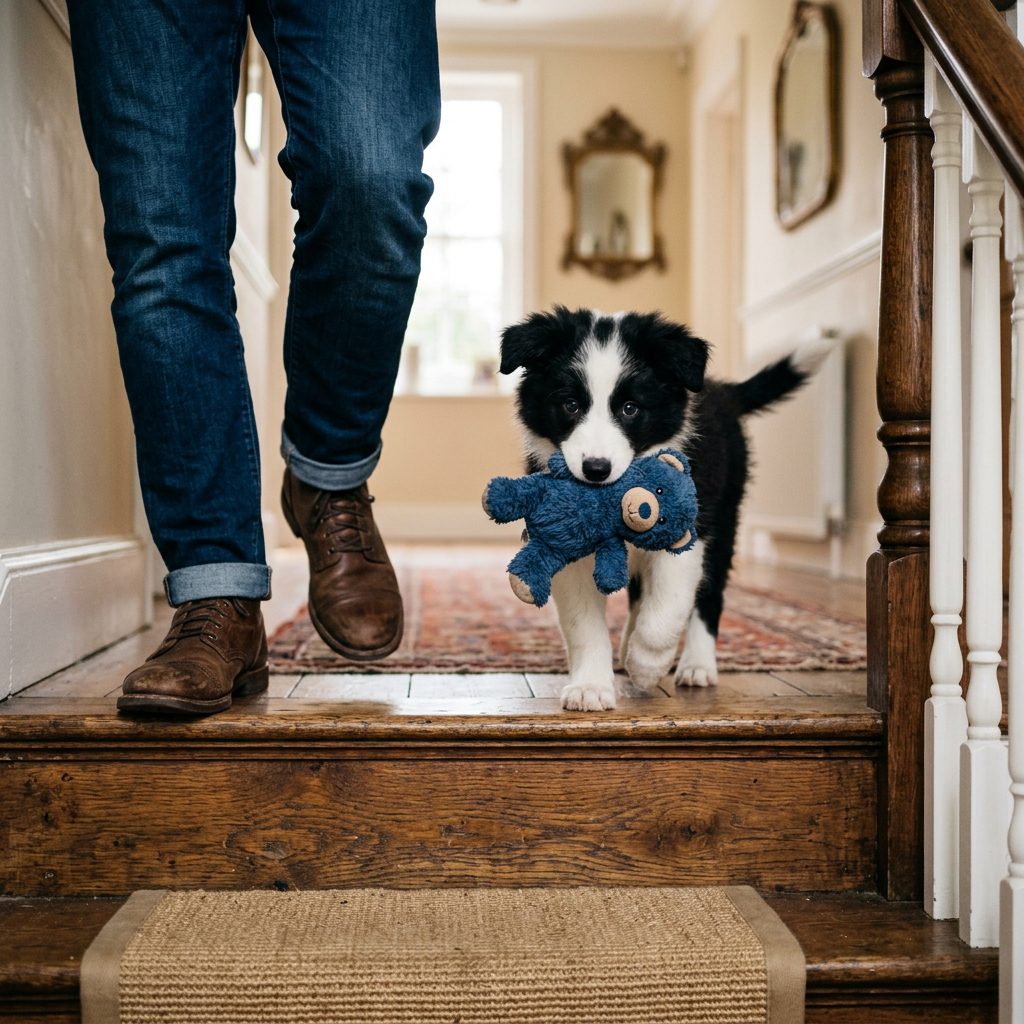
Some puppies simply have a high ‘oral drive.’ For these dogs, give them a job. Have them carry a favorite stuffed toy down the stairs. It is physically impossible for them to nip your ankles if their mouth is already full of a plush duck!
- Choose a toy they love.
- Present it at the top of the stairs.
- Encourage them to ‘Hold it’ all the way down.
- Trade the toy for a high-value treat at the bottom.
Common Mistakes to Avoid
Even the best dog owners fall into these traps. Avoid these common pitfalls to speed up your puppy’s learning process:
- Squealing or Yelping: While some suggest yelping like a littermate, for many high-drive puppies, this sounds like a wounded prey animal and actually increases their excitement.
- Running Away: If you run down the stairs to escape, you have just initiated the best game of ‘Tag’ your puppy has ever played.
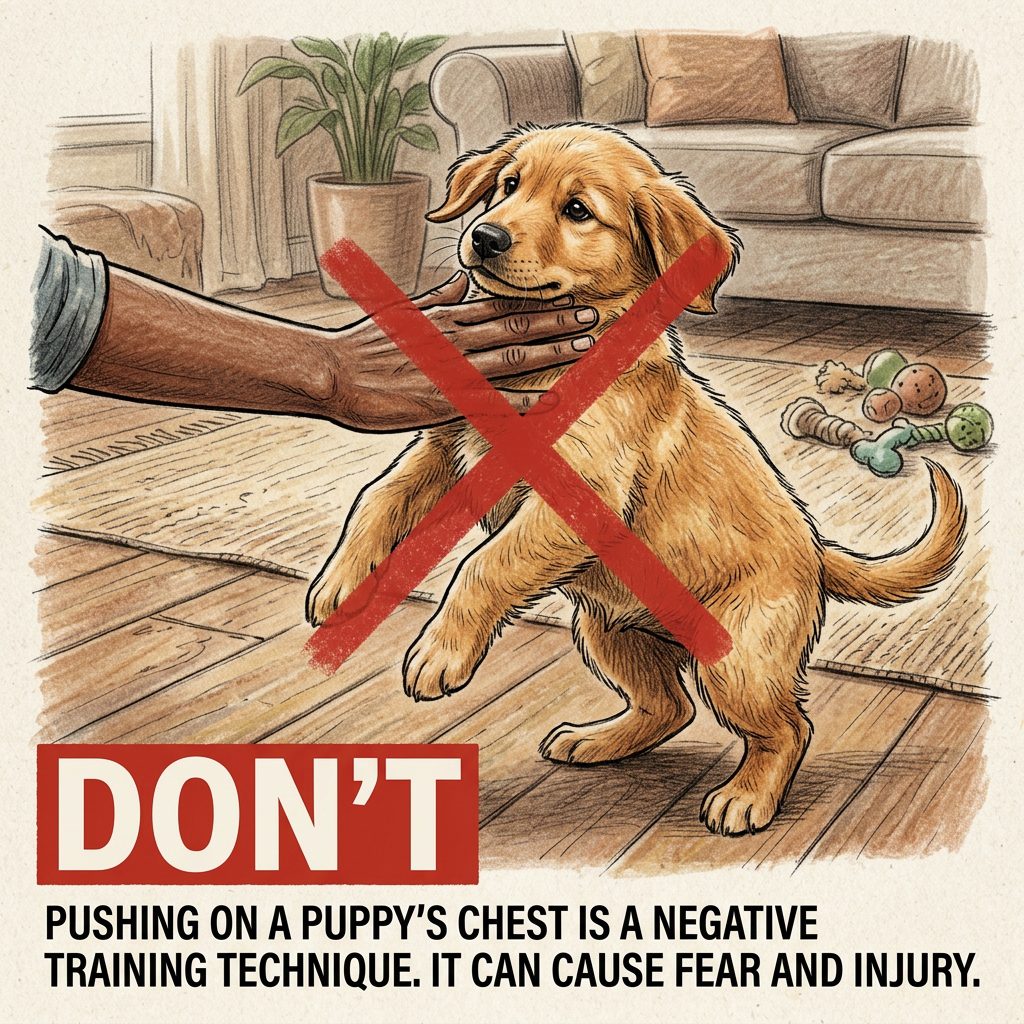
- Pushing the Puppy Away: Using your hands to push them away is seen as ‘play wrestling.’ It reinforces the biting behavior.
- Inconsistency: If you let them nip when you’re in a hurry but scold them when you’re not, the puppy will never learn the rule.
Remember: Consistency is the language of dogs. If nipping is ‘illegal’ on Monday, it must be ‘illegal’ on Sunday.
Management: When You Can’t Train
Let’s be real: you won’t always have the time or patience for a 10-minute training session every time you need to go downstairs. Management is your best friend during these times.
The ‘Leash Hook’ Method
If you need to get down quickly, put the puppy on a leash and hold it short so they cannot reach your ankles. Walk briskly and keep them at your side.
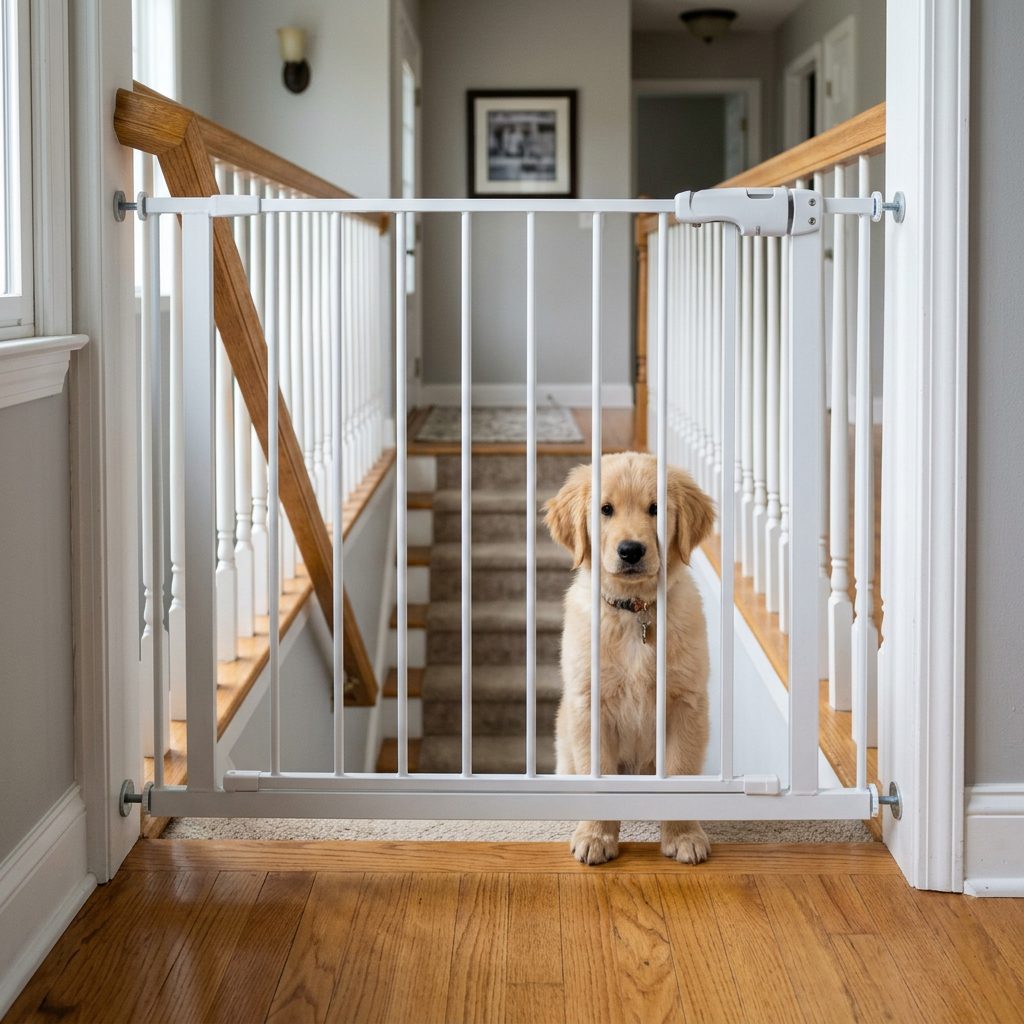
The Gate Strategy
Use baby gates to keep the puppy at the top of the stairs while you go down, then call them down once you are safely at the bottom. This breaks the ‘chase’ cycle entirely.
Exercise and Mental Stimulation
A tired puppy is a well-behaved puppy. If your puppy is constantly nipping on the stairs, it may be a sign of pent-up energy. Ensure they have had a good play session or a sniff-walk before expecting them to navigate high-arousal areas calmly.
Conclusion
Stopping a puppy from nipping your ankles on the stairs is a journey, not a sprint. It requires patience, a lot of treats, and an understanding of your puppy’s natural instincts. By transforming the stairs from a playground into a place of focus and reward, you aren’t just saving your ankles—you’re building a stronger bond with your dog based on communication and trust.
Don’t get discouraged by setbacks. Some days your puppy will be a star, and other days they’ll be a ‘land shark’ again. Stay consistent, keep your cool, and soon enough, you’ll be enjoying your morning coffee without a single tooth-mark on your slippers. Happy training!