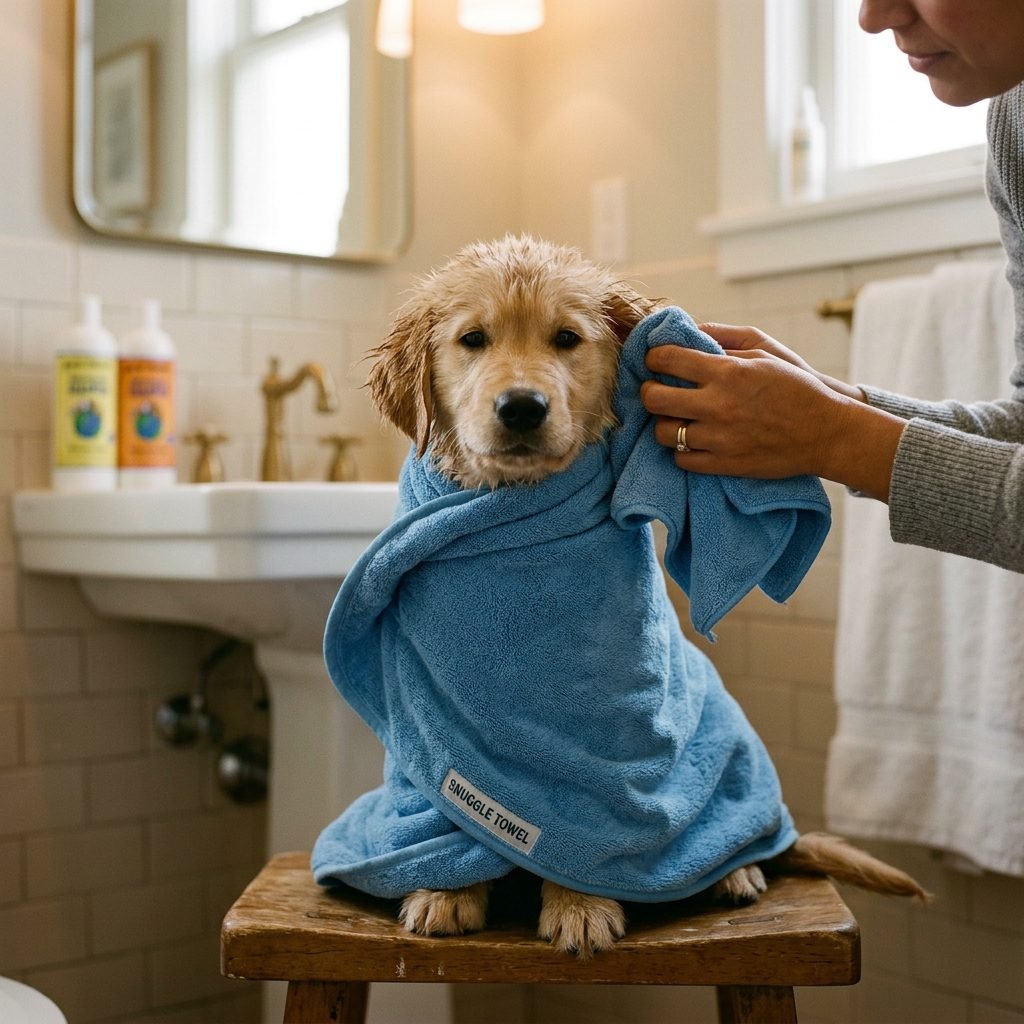
The Towel Dry Trick: Stop Your Wet Puppy Biting You After Baths
If you have ever bathed a puppy, you know the drill. One minute, you are rinsing off the suds from a shivering, pathetic-looking little creature. The next, you have a high-velocity, water-spraying ‘land shark’ tearing through your house, launching themselves at your ankles, and nipping at your hands with those needle-sharp teeth. This phenomenon, often called the ‘post-bath zoomies’ (or Frenetic Random Activity Periods—FRAPs), is usually accompanied by a sudden urge to bite anything and everything—especially the person holding the towel.
As a canine specialist, I have seen many owners leave the bathroom looking like they have just wrestled a cactus. But what if I told you that bath time doesn’t have to end in a bloodbath? The Towel Dry Trick is a specialized handling technique designed to lower your puppy’s arousal levels, manage their sensory input, and replace biting behavior with a calm, rewarding experience. In this guide, we are going to dive deep into why your puppy bites after a bath and how you can master the art of the ‘Calm Wrap’ to keep your skin intact and your puppy relaxed.
Understanding the ‘Wet Puppy Frenzy’: Why They Bite
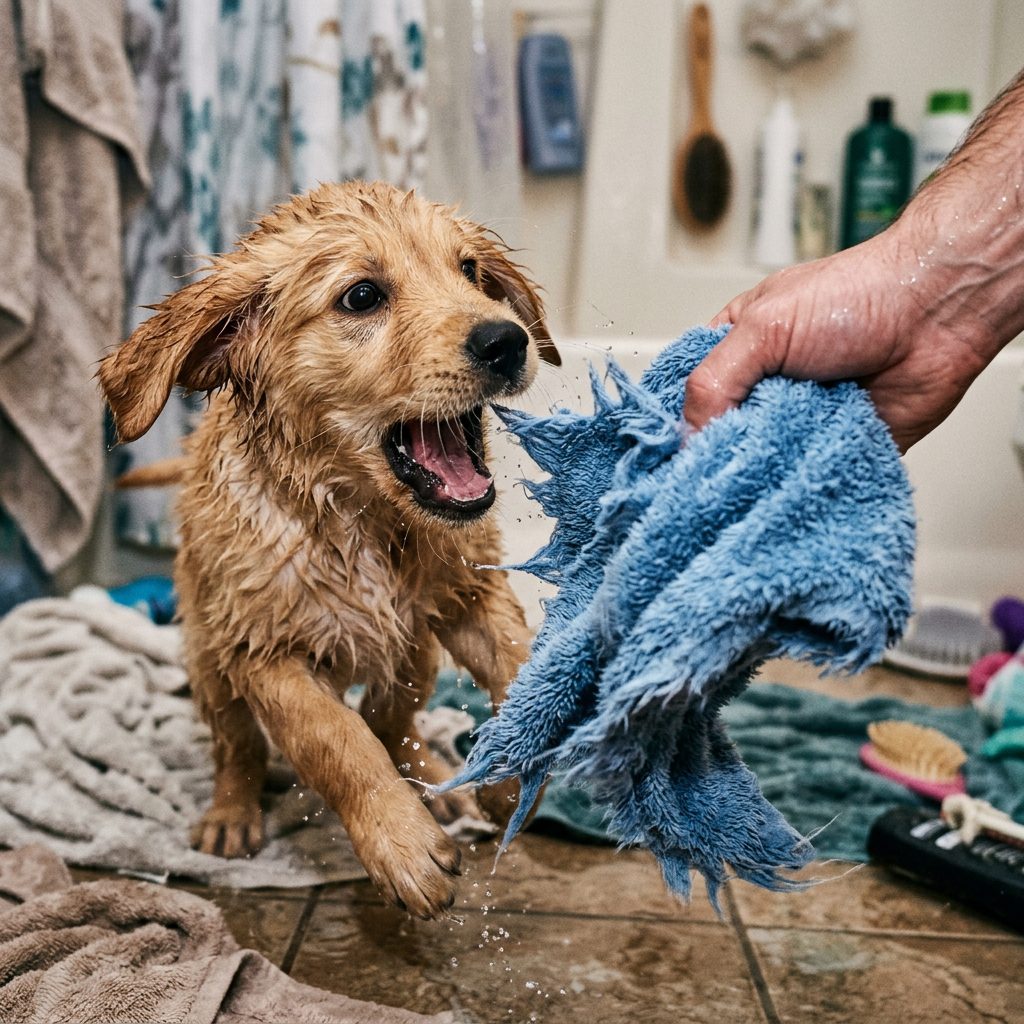
Before we can fix the behavior, we have to understand the ‘why.’ Puppies don’t bite after baths because they are being ‘bad’ or ‘dominant.’ In fact, it is usually a cocktail of physiological and psychological triggers that lead to this explosive behavior.
1. Sensory Overload
A bath is an assault on a puppy’s senses. The sound of rushing water, the feel of the spray, the scent of the shampoo, and the sensation of being wet all combine to overstimulate their developing nervous system. When a puppy is overstimulated, their ‘fight or flight’ response can kick in, often manifesting as frantic play-biting.
2. Temperature Regulation and Relief
When a puppy is wet, they lose body heat quickly. The frantic running and biting is a way to generate body heat and shake off the stressful experience of being restrained in a tub. The biting is often an outlet for the massive spike in cortisol (the stress hormone) they experienced during the washing process.
3. The Texture of the Towel
To a puppy, a towel is the ultimate toy. It is floppy, it moves when you move, and it feels great on their gums. When you try to dry them, the towel mimics the movement of ‘prey,’ which triggers their natural drive to grab and shake. Your hands, being close to the towel, often become collateral damage.
The Essential Kit: Tools for a Bite-Free Dry
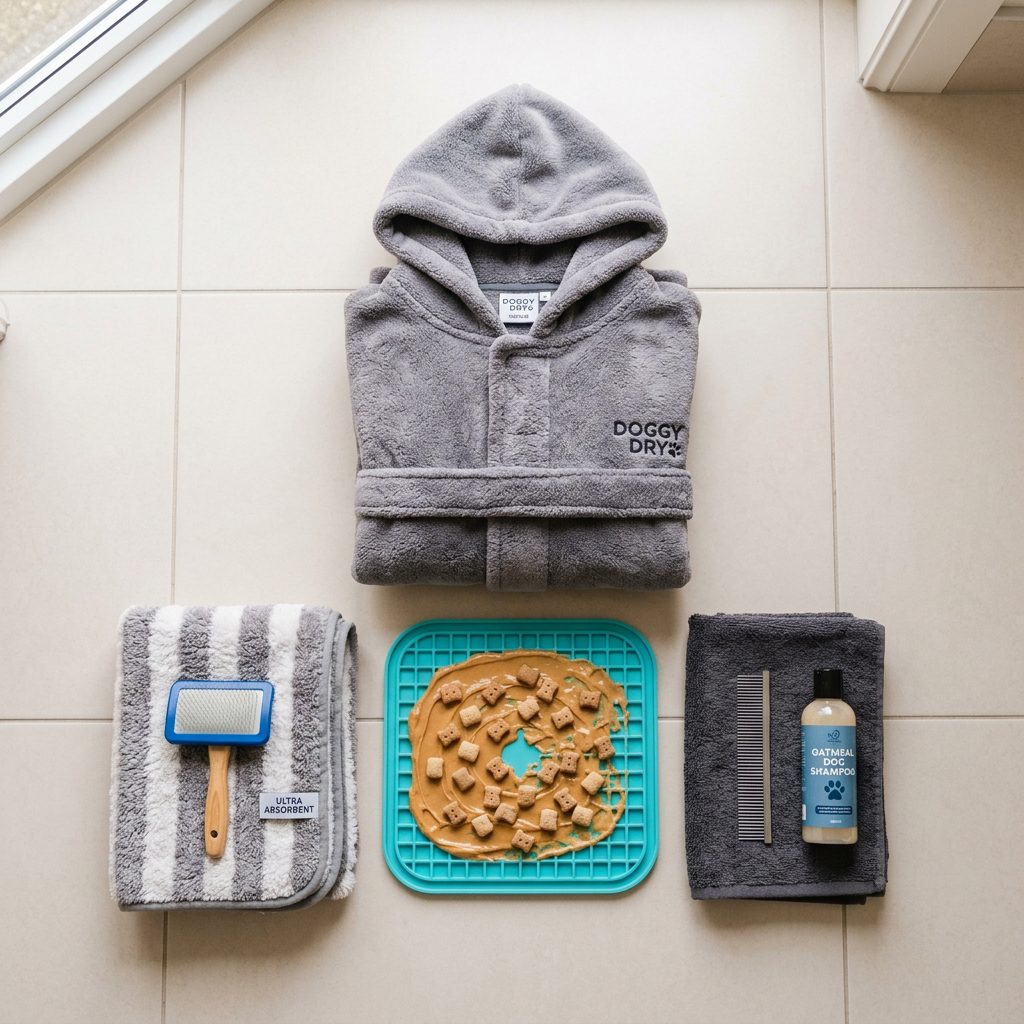
Success starts with the right equipment. If you are using a thin, scratchy old bath towel, you are making the job harder than it needs to be. You need tools that absorb moisture quickly and provide a sense of security.
Recommended Drying Gear
I always recommend high-absorbency materials that reduce the time you need to spend rubbing the puppy. The less friction you create, the less likely you are to trigger a biting response.
| Tool Type | Benefits for Biting Puppies | Best Use Case |
|---|---|---|
| Microfiber Dog Robe | Hands-free drying; prevents the puppy from seeing the towel as a toy. | Best for puppies who hate being rubbed. |
| Large Microfiber Towel | Absorbs 7x its weight; dries the puppy faster with less movement. | Best for the ‘Towel Dry Trick’ wrap. |
| Lick Mat with Suction | Provides a high-value distraction during the drying process. | Best for puppies who are food-motivated land sharks. |
| Happy Hoodie | Compresses the ears to muffle noise and provide a sense of calm. | Best for puppies sensitive to sound or touch. |
Expert Tip: Keep two towels ready. One for the puppy to stand on (to prevent slipping) and one for the actual drying process. A slipping puppy is a stressed puppy!
The Towel Dry Trick: A Step-by-Step Guide
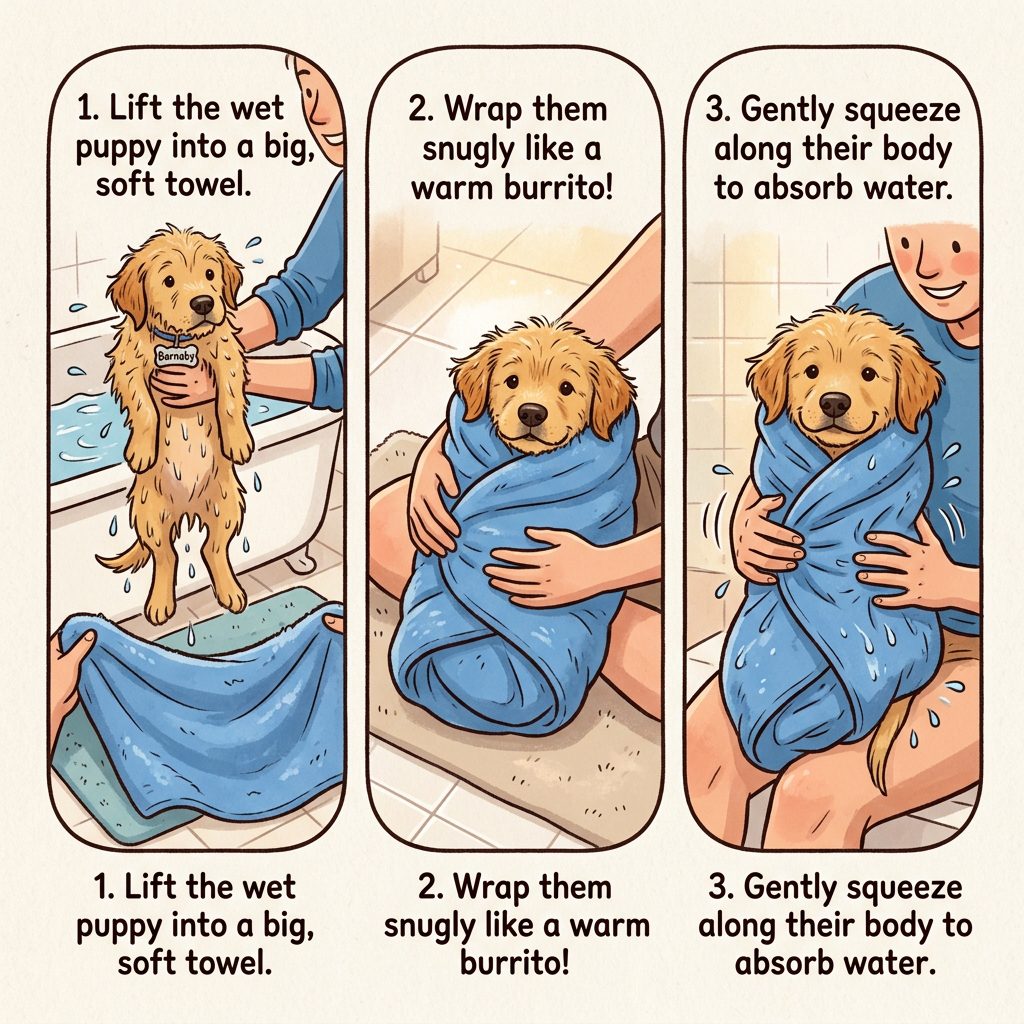
This is the core technique. The goal is to move away from ‘rubbing’ and toward ‘compressing.’ Compression is naturally calming for dogs (think of the Thundershirt effect), whereas vigorous rubbing is stimulating and encourages play-biting.
Step 1: The Pre-Exit Prep
Before you even turn off the water, have your large microfiber towel spread out on the floor or a grooming table. If your puppy is small, you can do this in your lap while sitting on the floor. Prepare a ‘distraction’—a lick mat smeared with peanut butter or wet food is perfect.
Step 2: The ‘Burrito’ Scoop
Lift your puppy directly from the tub into the center of the towel. Immediately wrap the sides of the towel over their back and under their chin. You want to swaddle them firmly but gently. This limits their range of motion and prevents them from reaching around to nip your hands.
Step 3: The Compression Method
Instead of the ‘back and forth’ scrubbing motion most people use, use a squeezing motion. Press your hands firmly over the towel against the puppy’s body. Hold for 3 seconds, release, and move to the next spot. This deep pressure touch helps lower their heart rate and keeps them from getting ‘revved up.’
Step 4: The ‘Toy Swap’ Technique
If the puppy tries to bite the towel near their chest, immediately offer a long, soft toy or a chew. By giving them an appropriate ‘mouth target,’ you satisfy their urge to bite while keeping your hands safe. Never pull the towel away quickly, as this mimics prey movement and encourages them to chase it.
Troubleshooting: What to Do When the ‘Land Shark’ Appears
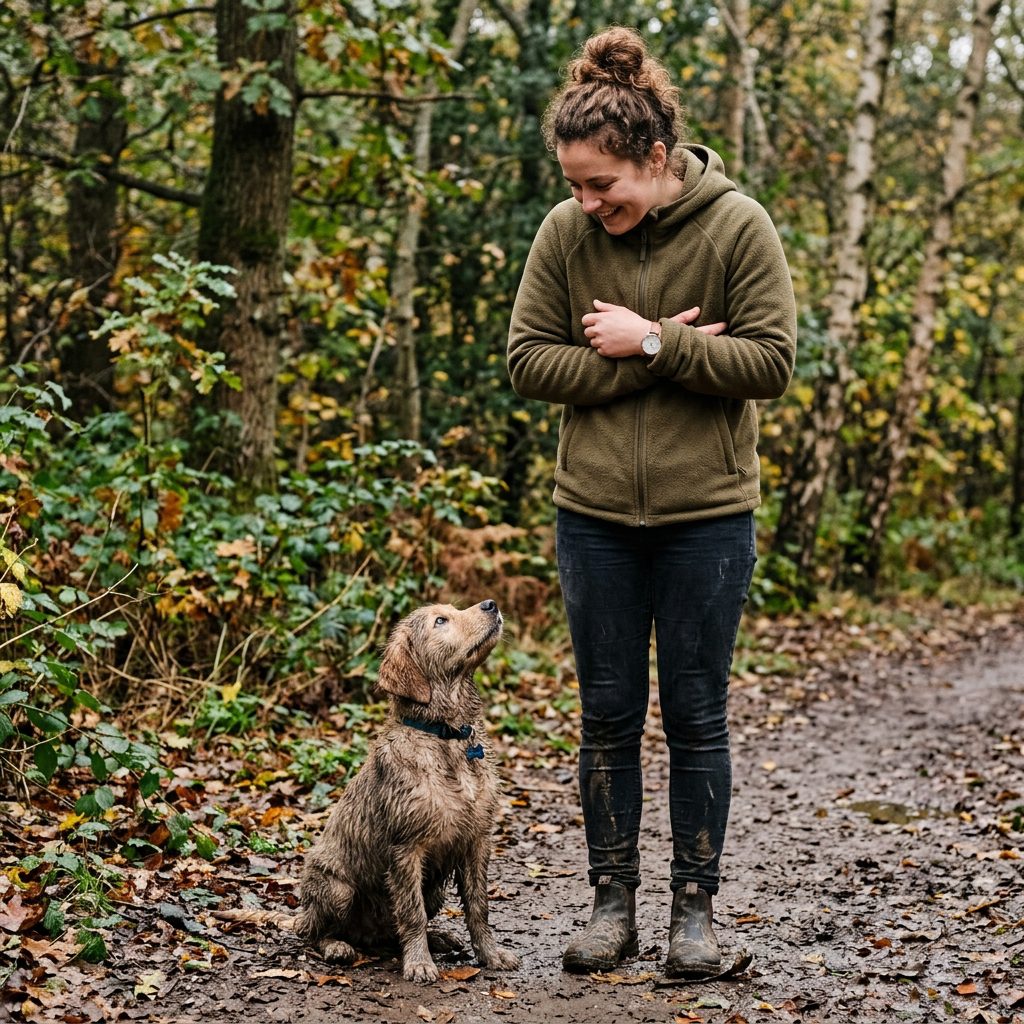
Even with the best technique, some puppies are particularly ‘mouthy.’ If your puppy breaks out of the wrap and starts targeting your hands, follow these steps to de-escalate the situation without making it a game.
- The ‘Be a Tree’ Method: If they start nipping, stop all movement. Puppies are attracted to moving targets. By becoming still and boring, you remove the ‘reward’ of the game.
- The Reverse Timeout: If the biting persists, calmly stand up and step behind a baby gate or close the door for 30 seconds. This teaches the puppy that ‘biting makes the fun person go away.’
- Check Your Energy: Are you laughing, yelping, or pushing the puppy away? To a puppy, this looks like play! Keep your voice low, calm, and use minimal verbal feedback.
Remember: Never scold or hit a puppy for post-bath biting. They are in a state of high arousal and physical discomfort; punishment will only increase their stress and potentially make them fear baths altogether.
Long-Term Success: Desensitization and Counter-Conditioning
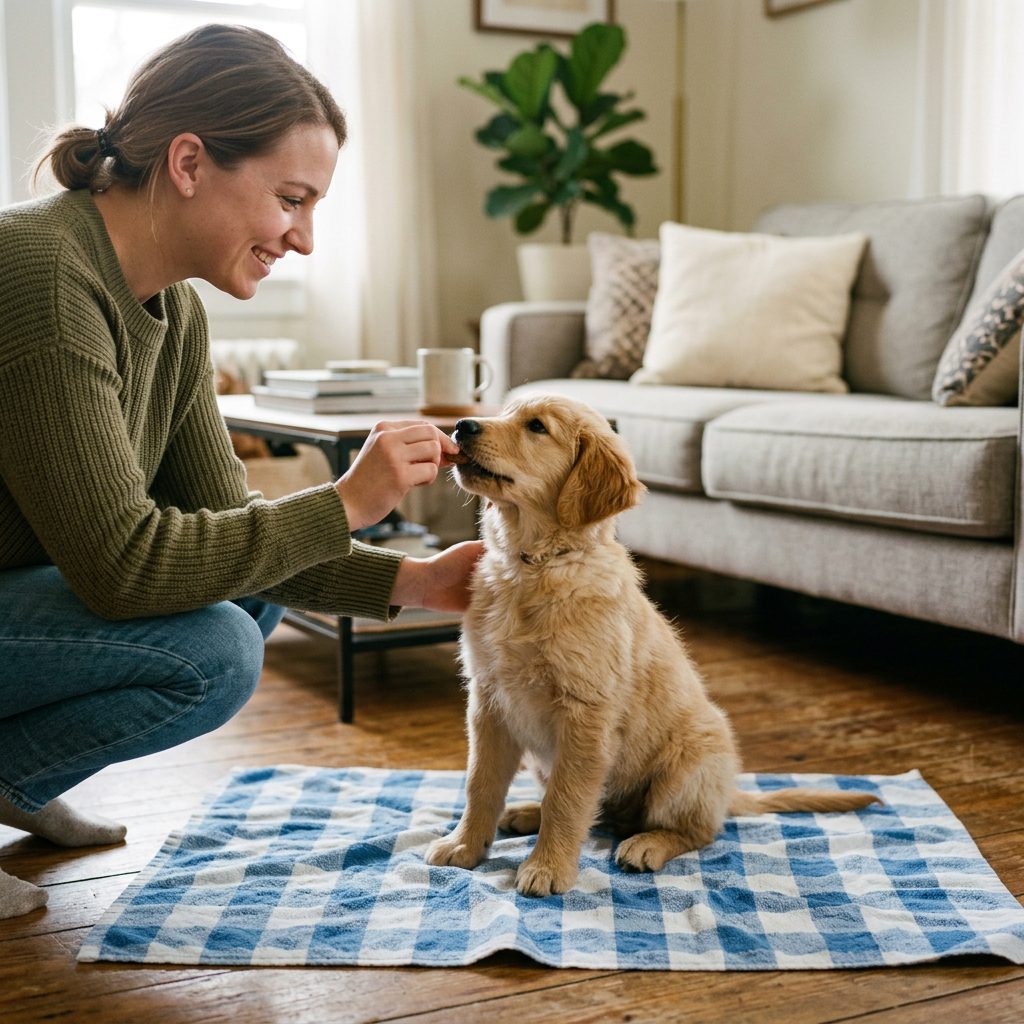
The ‘Towel Dry Trick’ works best when your puppy doesn’t view the towel as a scary or overly exciting object. You should practice ‘dry runs’ (pun intended) when the puppy isn’t even wet.
How to Desensitize Your Puppy to Towels
- Floor Time: Leave towels on the floor during the day with treats hidden inside them. Let the puppy explore the towel on their own terms.
- The ‘Towel Is a Cape’ Game: Gently drape a dry towel over the puppy’s back while giving them high-value treats. Do this for 10 seconds, then remove it. Gradually increase the time.
- Handling Drills: Practice the ‘compression’ touch when the puppy is tired and relaxed on the sofa. This associates the firm touch with relaxation rather than bath-time stress.
By turning the towel into a ‘predictor’ of treats and calm handling, you change the puppy’s emotional response from ‘OMG TOY!’ to ‘Oh, this is the snuggle cloth.’
Conclusion
Stopping a wet puppy from biting isn’t about being ‘tough’ or ‘dominant’; it is about understanding their sensory needs and managing the environment. By using the Towel Dry Trick—focusing on compression rather than friction, using high-quality absorbent materials, and providing a calm ‘swaddle’—you can turn a chaotic bath time into a bonding experience.
Be patient with your little ‘land shark.’ They aren’t trying to hurt you; they are just overwhelmed by the world and their own wet fur. With consistency, the right tools, and a lot of peanut butter, you will soon have a puppy that looks forward to their post-bath snuggles rather than seeing them as a wrestling match. Happy splashing!