Is Your Puppy Sleeping in This Weird Position? Here’s What It Means
Decoding the Secret Language of Puppy Slumber
If you have recently brought a new puppy into your home, you have likely spent a significant amount of time just watching them sleep. It is one of the great joys of puppy parenthood—until they twist themselves into a shape that looks like a furry game of Tetris. You might find yourself wondering, Is that actually comfortable? or Does this mean they are cold? As a canine specialist, I can tell you that your puppy’s sleeping position is much more than just a cute photo opportunity. It is a window into their physical health, their emotional state, and even their evolutionary history.
Puppies are professional sleepers, often clocking in between 18 to 20 hours of shut-eye per day. During these long stretches of rest, their bodies are doing the heavy lifting of growing bones, developing immune systems, and processing everything they learned during their morning zoomies. In this comprehensive guide, we are going to dive deep into the science of puppy sleep. We will break down the most common (and the weirdest) positions, explain the biological ‘why’ behind them, and help you determine when a sleeping habit is a sign of a happy pup or a signal that something might be wrong. Let’s decode the secret language of your puppy’s nap time.
The Science of Puppy Sleep: Why They Sleep the Way They Do
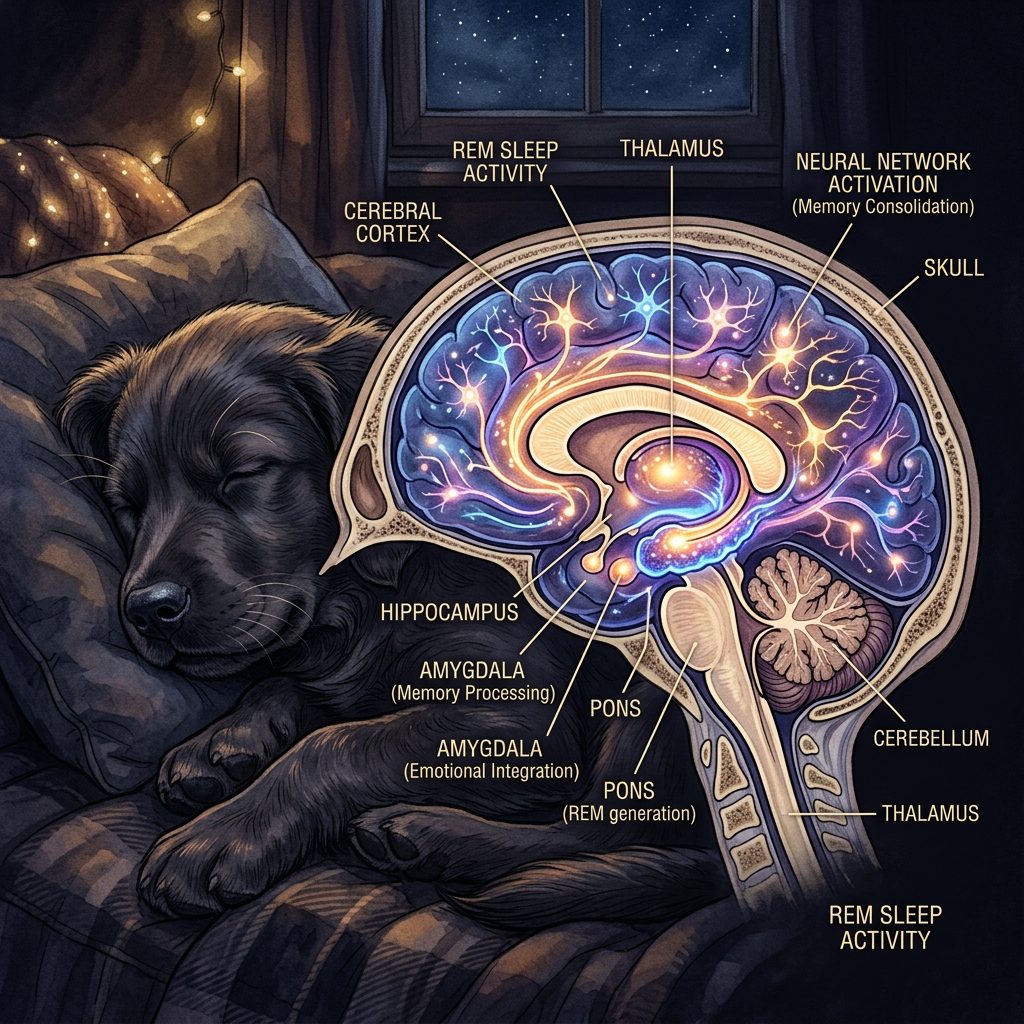
Before we get into the specific positions, it is essential to understand that puppy sleep is fundamentally different from adult dog sleep. Puppies spend a much higher percentage of their sleep time in the REM (Rapid Eye Movement) stage. This is the stage where dreaming occurs and where the brain processes memories and new skills. If you see your puppy twitching, paddling their paws, or letting out tiny muffled barks, they are likely in the middle of a very active REM cycle.
The Ancestral Connection
Many of the ‘weird’ positions we see today are holdovers from their wild ancestors. Wolves and wild dogs have to be strategic about how they sleep to stay warm and protect themselves from predators. Even though your puppy is safe in your living room, those primal instincts are still hardwired into their DNA. For example, curling into a tight ball protects vital organs, while sleeping on the back is a sign of ultimate trust because it leaves those same organs exposed.
Temperature Regulation
Puppies are not very good at regulating their own body temperature for the first several weeks of their lives. Their sleeping position is often their primary way of cooling down or warming up. If they are spread out flat on a cool tile floor, they are likely trying to shed heat. If they are huddled in a corner or curled up with their littermates (or your feet), they are seeking warmth. Understanding this thermal motivation can help you adjust your home environment to keep them comfortable.
The ‘Belly Up’ or The Cockroach Position
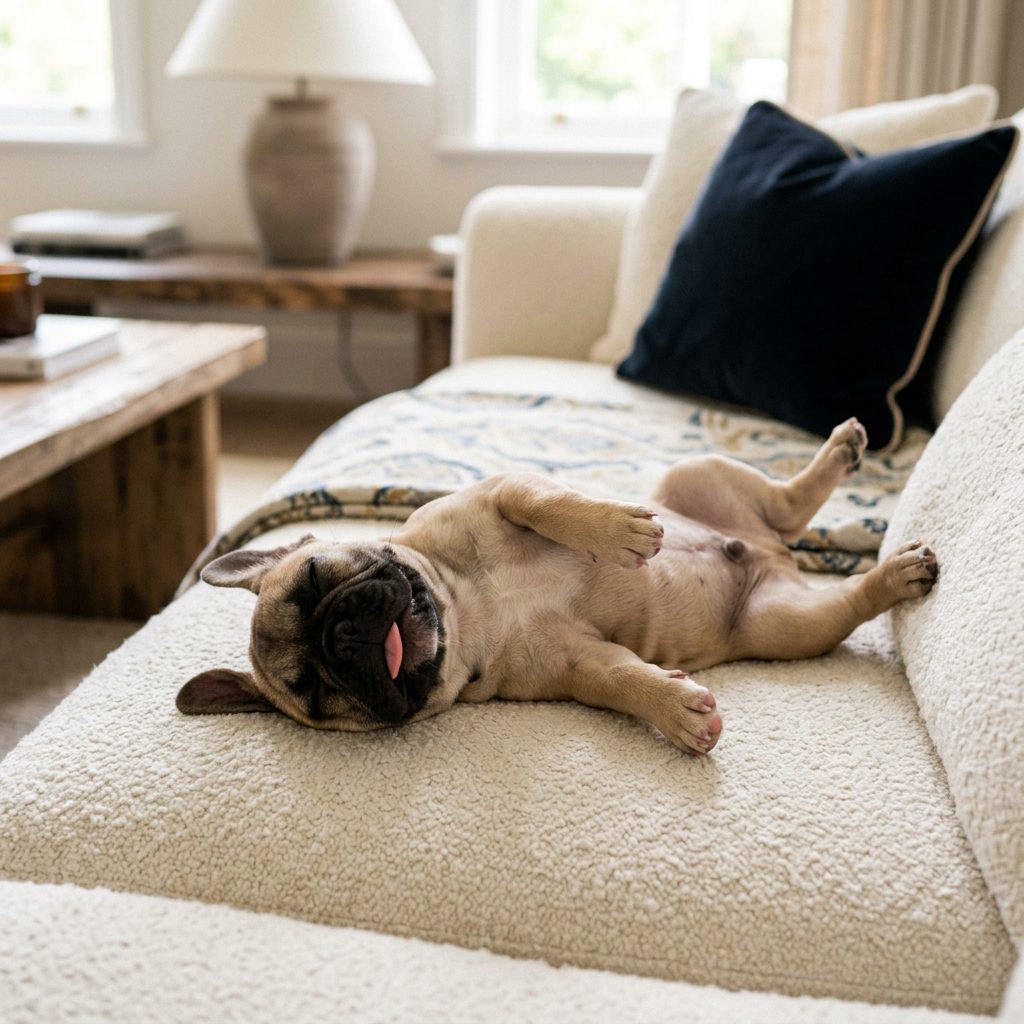
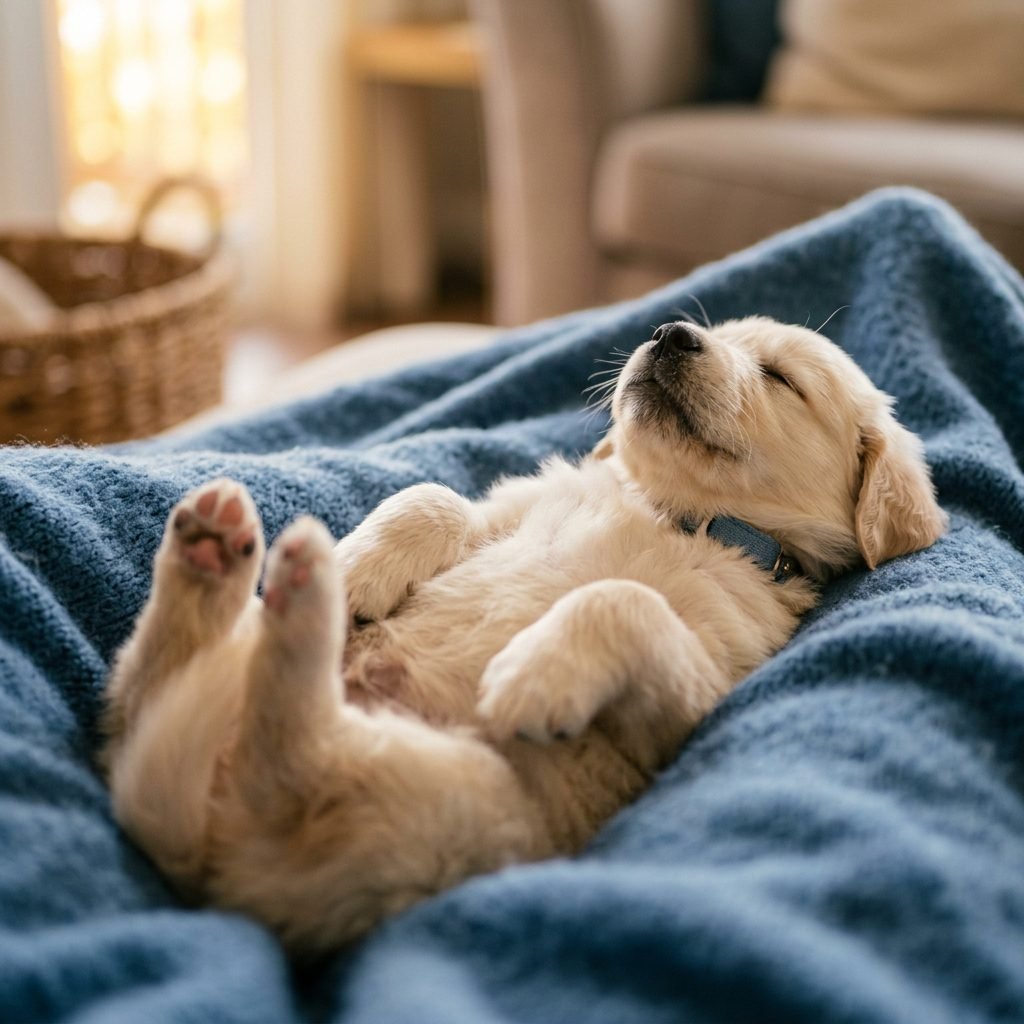
Perhaps the most hilarious and common ‘weird’ position is the Belly Up, also known as ‘The Cockroach.’ This is when your puppy lies flat on their back with all four legs pointing toward the ceiling, often at odd angles. While it looks ridiculous, it is actually a fantastic sign for you as an owner.
What It Means: Trust and Comfort
In the animal kingdom, the belly is the most vulnerable part of the body. By exposing their stomach and throat, your puppy is communicating that they feel 100% safe and secure in their environment. They have no fear of predators or threats. This position is also a primary cooling mechanism. The hair on a puppy’s belly is much thinner than the hair on their back, and their paws contain sweat glands. By exposing these areas to the air, they can cool down rapidly after a vigorous play session.
Key Takeaways for This Position:
- High Trust: Your puppy feels completely at home.
- Temperature Control: They might be a little warm and are trying to cool off.
- Total Relaxation: The muscles are completely loose and not ready to spring into action.
Expert Tip: If you see your puppy sleeping like this, try to resist the urge to rub that belly! Interrupting this deep, trusting sleep can startle them. Let them enjoy their ‘zen’ moment.
The Superman: Ready for Action
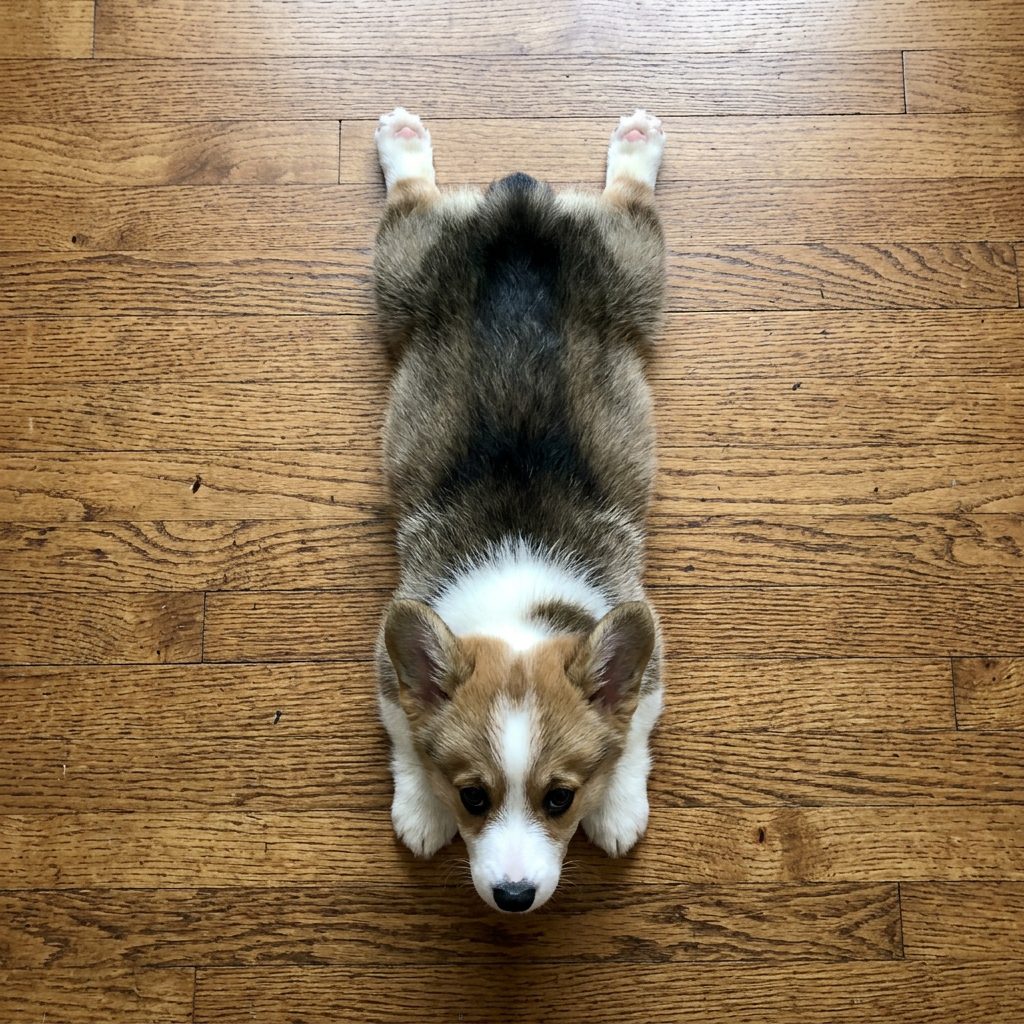
The Superman position is when a puppy lies on their stomach with their front legs stretched forward and their back legs stretched straight out behind them. It looks exactly like a superhero flying through the air.
What It Means: High Energy and Playfulness
This is the favorite position of high-energy breeds and puppies who don’t want to miss a second of the action. The Superman is a ‘functional’ sleep position. Because their legs are already extended, it is incredibly easy for the puppy to pop back up onto all fours the moment they hear a treat bag crinkle or a toy squeak. It is essentially a ‘power nap’ position.
Physical Benefits
This position also feels great on a puppy’s developing joints. It allows for a full stretch of the hips and spine. You will often see ‘splooting’ (where the back legs are out) in breeds like Corgis, Pitbulls, and Labradors. It’s a sign of good hip flexibility, though in older dogs, a sudden change in ability to sploot might warrant a vet visit.
| Position | Meaning | Best For |
|---|---|---|
| Belly Up | Trust & Cooling | Deep Sleep |
| Superman | Ready to Play | Quick Naps |
| Side Sleeper | Comfort & Safety | REM Cycle |
The Curled-Up Donut
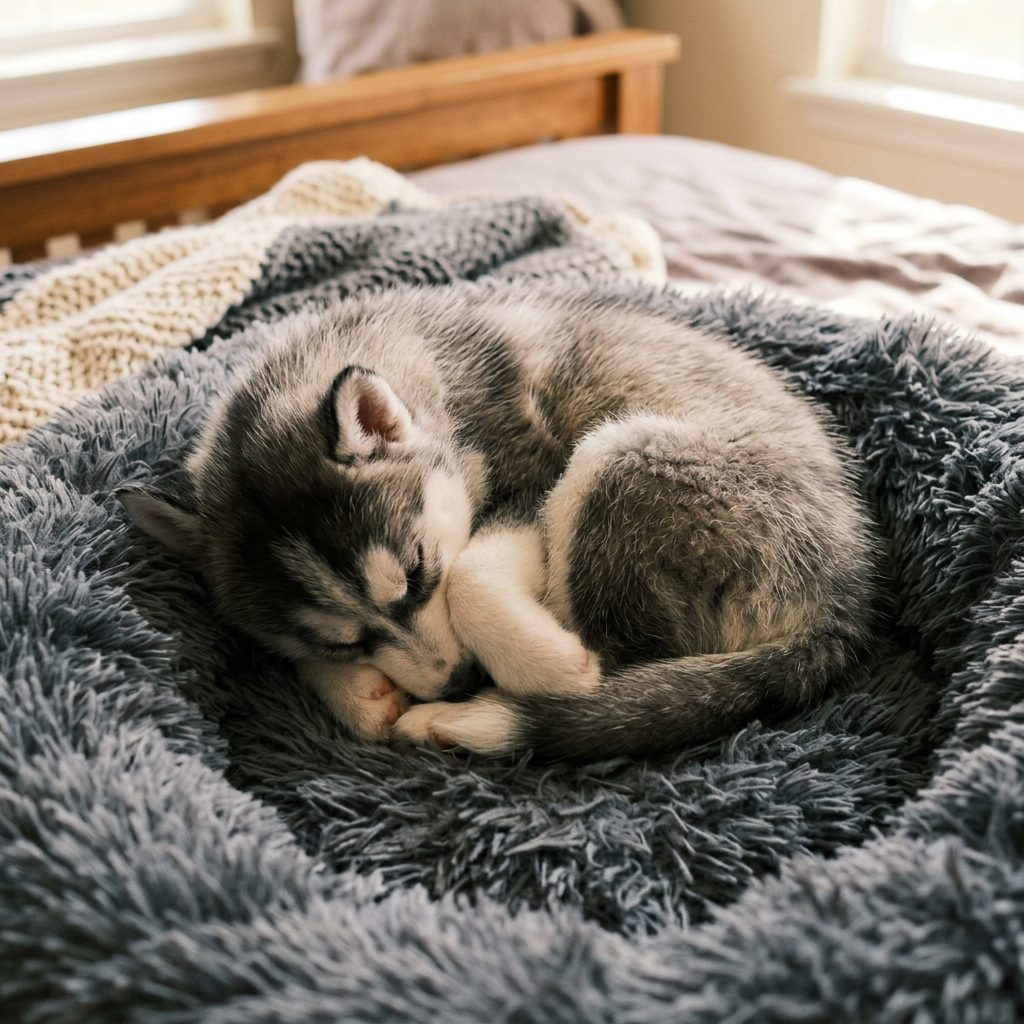
The Donut or ‘Curled-Up’ position is when your puppy tucks their paws under their body and curls their tail around their face, forming a tight circle. This is perhaps the most ‘natural’ of all sleeping positions.
What It Means: Protection and Warmth
In the wild, dogs sleep this way to protect their vital organs from predators and to conserve body heat. If your puppy is new to your home, you might see them sleeping like this more often as they adjust to their new surroundings. It provides a sense of security and ‘cocooning.’ However, it isn’t always about fear; many puppies simply find this position cozy, especially during the colder winter months.
The Limitation of the Donut
While the Donut is great for warmth, it is actually the least restorative position for a puppy’s muscles. Because the muscles are held in a tense, curved state to maintain the shape, the puppy is less likely to enter the deepest stages of REM sleep. If your puppy only sleeps in a donut, they might not be feeling fully relaxed or warm enough in their sleeping area.
- Check the Temp: If they are curled tight, try adding a blanket.
- Sense of Security: Ensure their crate or bed is in a quiet, low-traffic area.
The Side Sleeper: The Sign of a Happy Pup
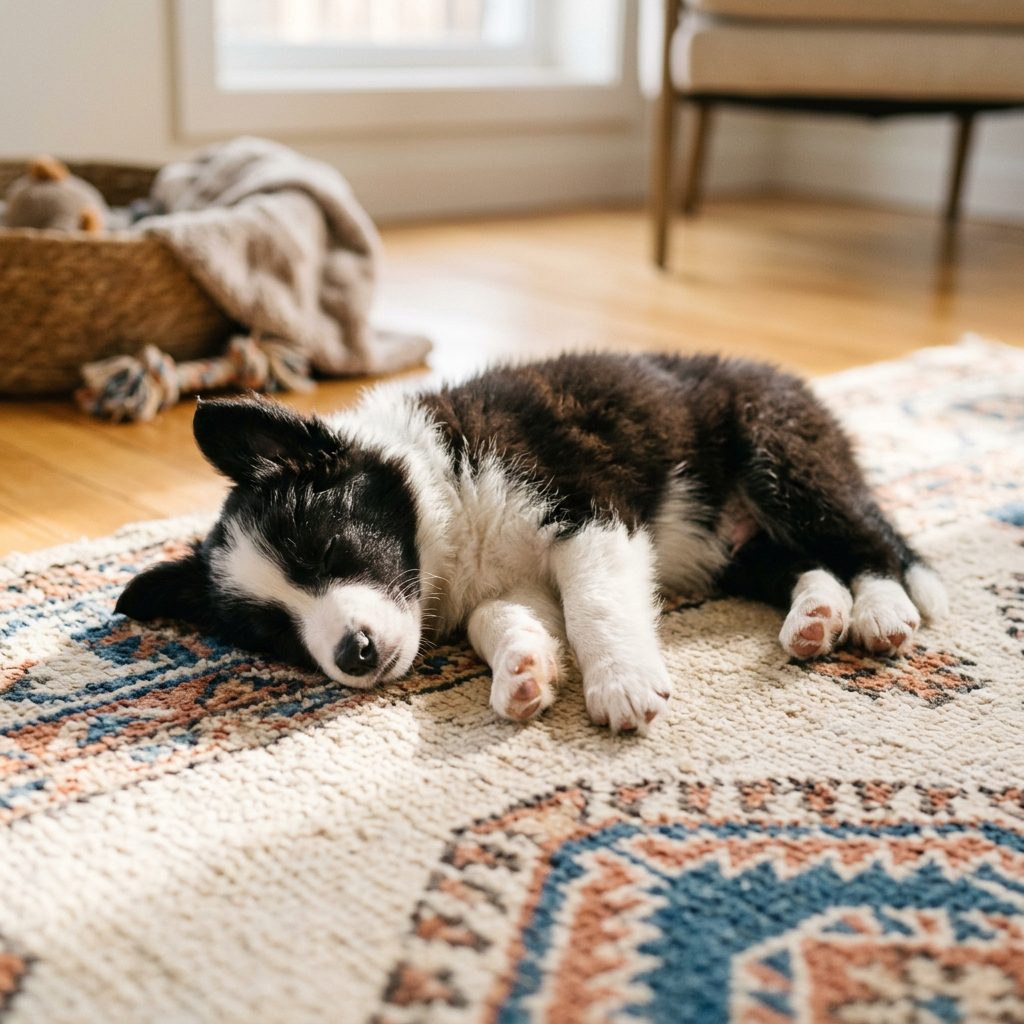
If your puppy flops onto their side with their legs extended naturally, they are a Side Sleeper. This is one of the most common positions for adult dogs, but puppies often transition into it as they become more confident in their environment.
What It Means: Peace and Deep Rest
The side sleeper is the ‘Goldilocks’ of positions. It offers a balance between the vulnerability of the belly-up pose and the protection of the donut. When a puppy sleeps on their side, they are relaxed enough to enter deep REM sleep. This is when you are most likely to see the ‘sleep running’ or hear the little whimpers of a puppy dreaming about chasing squirrels.
Health Indicators
Side sleeping is a sign of a puppy with a healthy heart and respiratory system. They aren’t putting pressure on their chest, allowing for deep, rhythmic breathing. If your puppy moves from a curled position into a side sleeping position during the night, it’s a sign they have reached a state of total comfort and thermal equilibrium.
Special Note: Side sleepers are usually very bonded with their owners. If they choose to sleep on their side leaning against your leg, they are using you as their ‘safe base’ for deep rest.
When Should You Worry? Unusual Sleeping Habits
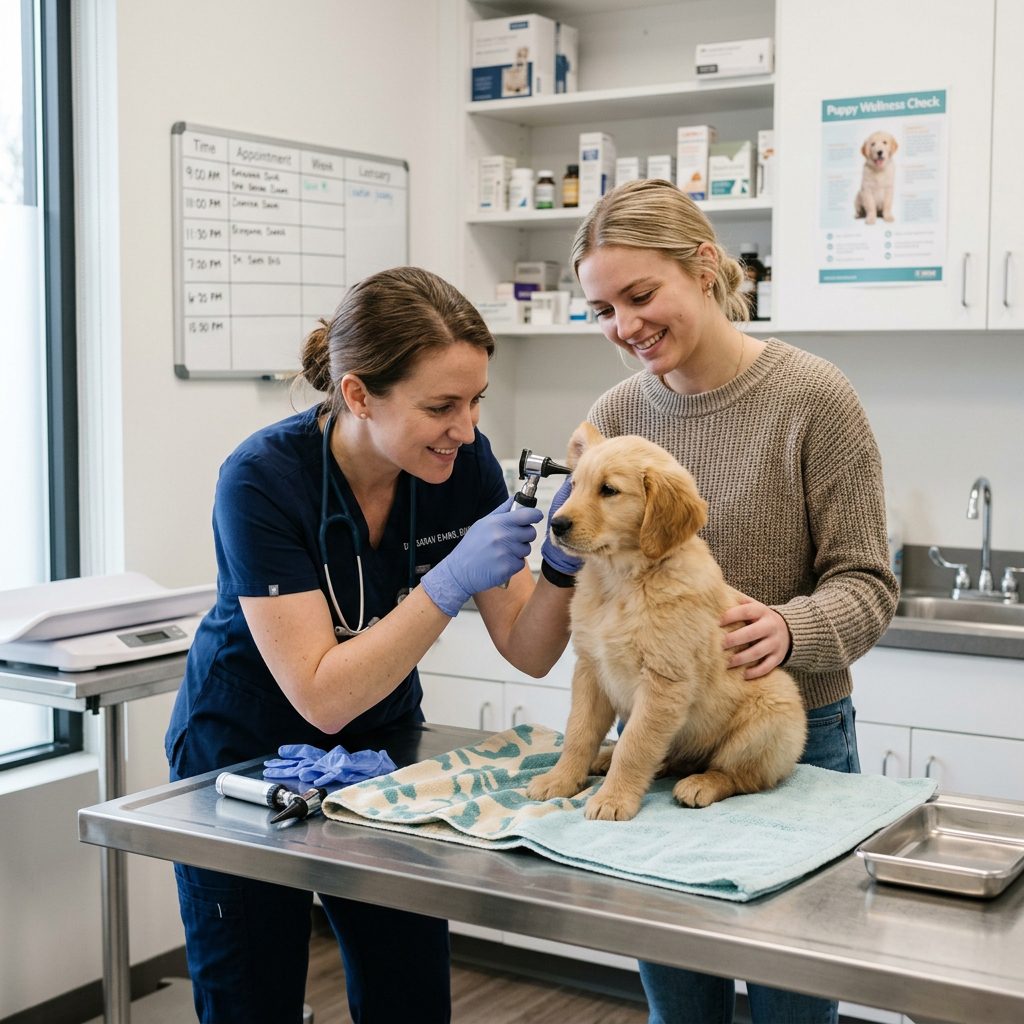
While most weird positions are perfectly normal, there are a few sleeping behaviors that savvy dog owners should keep an eye on. Understanding the difference between a ‘cute quirk’ and a ‘medical symptom’ is key to puppy health.
Heavy Panting While Sleeping
If your puppy is panting heavily while sleeping and it isn’t a hot day, they may be overheating or experiencing stress. Check the ambient temperature of the room. Puppies can overheat much faster than adult dogs, especially in ‘snuggle’ type beds that trap heat.
The ‘Head Pressing’ Warning
If you notice your puppy sleeping with their head pressed firmly against a wall or a hard surface, and they seem disoriented when they wake up, this is not a normal sleeping position. Head pressing can be a sign of neurological issues or toxic ingestion. This is a situation where you should contact your veterinarian immediately.
Sleep Apnea and Snoring
While some snoring is normal (especially in flat-faced breeds like Pugs or Bulldogs), excessive gasping or long pauses in breathing during sleep are not. If your puppy seems to struggle for air while napping, a respiratory check-up is a good idea.
| Behavior | Normal? | Action Required |
|---|---|---|
| Twitching/Paddling | Yes (Dreaming) | None, let them sleep. |
| Light Snoring | Yes | Monitor for changes. |
| Head Pressing | No | Call Vet immediately. |
| Waking up Screaming | Rarely | Consult a behaviorist or vet. |
Conclusion
Sweet Dreams for Your Growing Pup
Your puppy’s sleeping positions are a fascinating look into their personality and well-being. Whether they are ‘flying’ like Superman, ‘splooting’ on the kitchen tile, or trusting you enough to show off their belly in the ‘cockroach’ pose, each position tells a story. As a savvy owner, your job is to provide the safe, comfortable environment they need to get those 20 hours of growth-inducing rest. By paying attention to these cues, you can ensure your puppy isn’t just sleeping, but truly recharging for a long, healthy life by your side. So, the next time you see your pup in a ‘weird’ position, grab your camera for the memory, but rest easy knowing they are likely just feeling safe, happy, and loved.