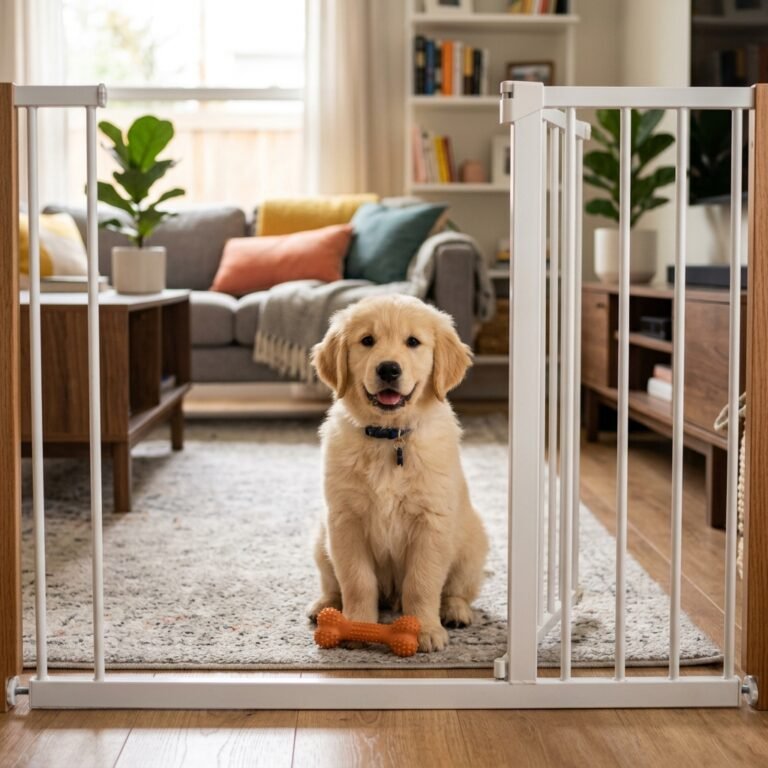
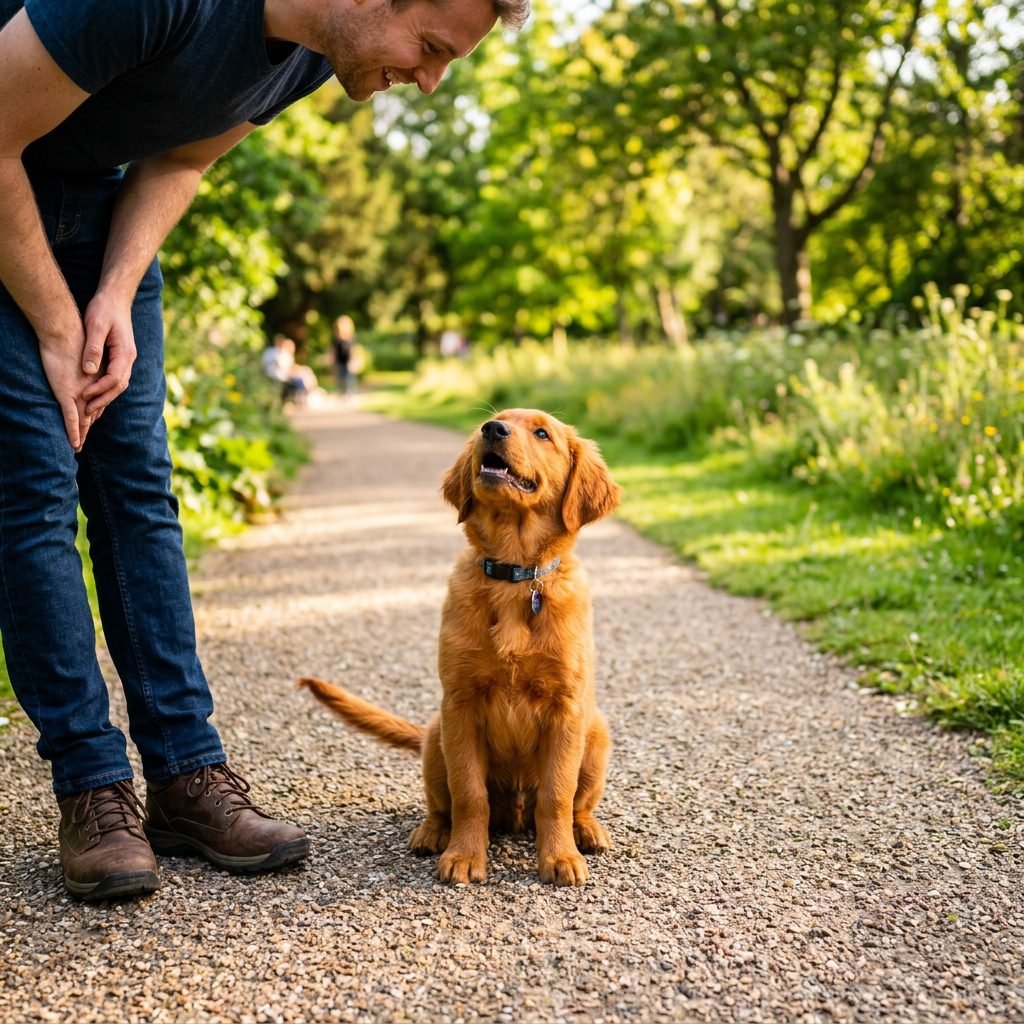
The Ultimate Safety Hack: How to Teach Your Puppy the ‘Middle’ Command (Step-by-Step)
The Command That Changes Everything
As a savvy dog owner, you already know that basic obedience is the foundation of a happy life with your furry friend. You’ve mastered ‘Sit,’ you’re working on ‘Stay,’ and ‘Down’ is coming along nicely. But what if I told you there is one specific command that acts as a ‘Swiss Army Knife’ for safety, focus, and bonding? Enter the Middle command.
Sometimes called ‘Center’ or ‘Anchor,’ the Middle command tells your puppy to move behind you and position themselves right between your legs, facing the same direction as you. While it looks like a cute trick, it is actually the ultimate safety hack. Whether you are navigating a crowded sidewalk, waiting for an elevator, or trying to manage a reactive dog approaching from a distance, having your puppy in ‘Middle’ provides them with a physical and emotional security blanket. In this comprehensive guide, we are going to dive deep into why this command is a game-changer and provide a detailed, step-by-step roadmap to mastering it with your pup.
Why ‘Middle’ is the Ultimate Safety Tool
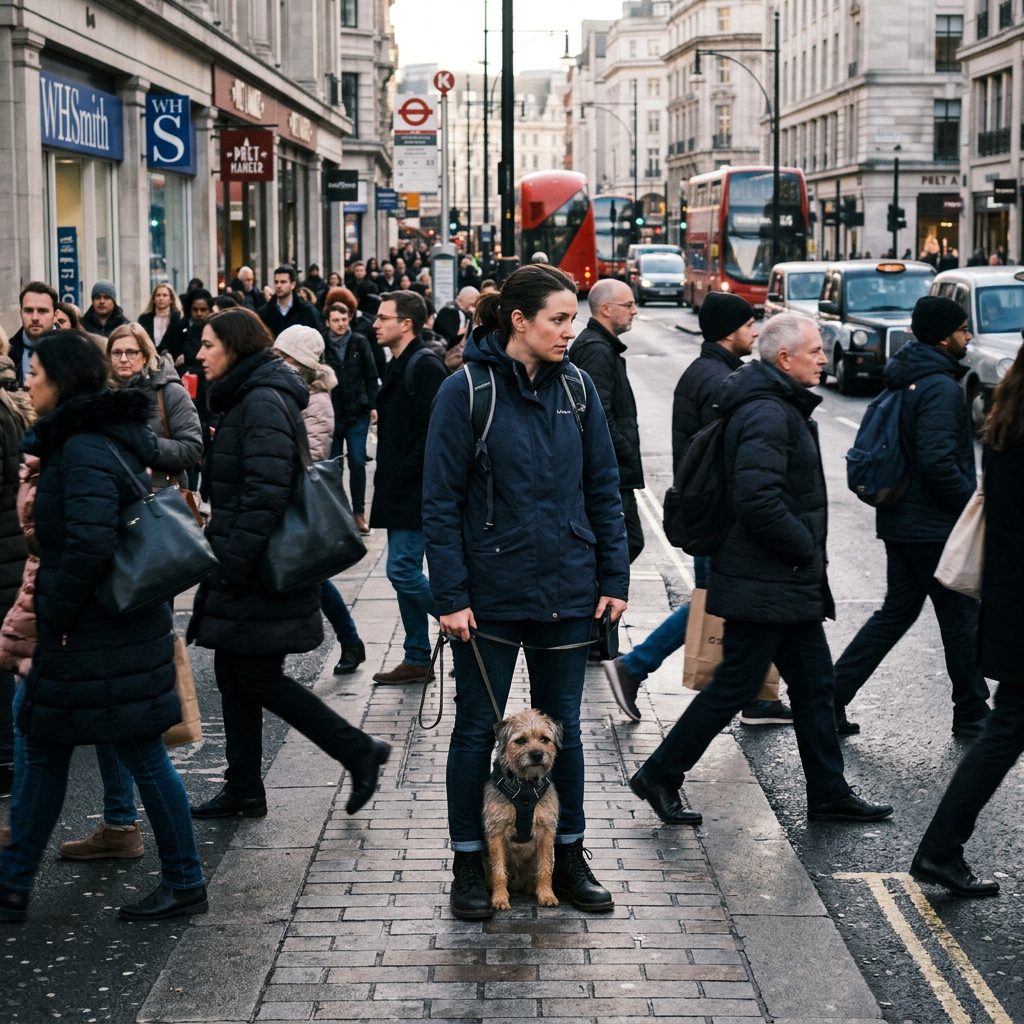
Before we pick up the treats, let’s talk about the ‘why.’ Understanding the psychological and practical benefits of this position will help you stay motivated during the training process. The Middle command isn’t just about positioning; it’s about spatial management and confidence building.
1. Physical Protection
When your dog is between your legs, you are effectively using your body as a shield. In a busy environment, this prevents people from accidentally stepping on your puppy or children from rushing up and grabbing them without permission. It creates a ‘safe zone’ where you have 360-degree control over what interacts with your dog.
2. Emotional Security
For many puppies, the world can be a big, scary place. By teaching them that the space between your legs is a place of high rewards and safety, you give them a ‘home base.’ When they feel overwhelmed, many dogs will eventually learn to offer this behavior naturally, seeking out the Middle position to reset their emotions.
3. Managing Reactivity
If you have a puppy that is overly excited or slightly nervous around other dogs, Middle is a lifesaver. It breaks the line of sight and forces the dog to focus on you rather than the ‘trigger’ walking past. It’s much harder for a dog to lung or bark when they are tucked securely between your knees.
| Feature | Middle Command | Standard Heel |
|---|---|---|
| Visibility | Dog is shielded by owner’s body | Dog is exposed on the side |
| Focus | High (Dog looks up at owner) | Moderate (Dog looks forward/side) |
| Safety | Maximum (Physical barrier) | Moderate (Owner must block) |
| Bonding | Intimate physical proximity | Standard proximity |
Preparation: Setting the Stage for Success
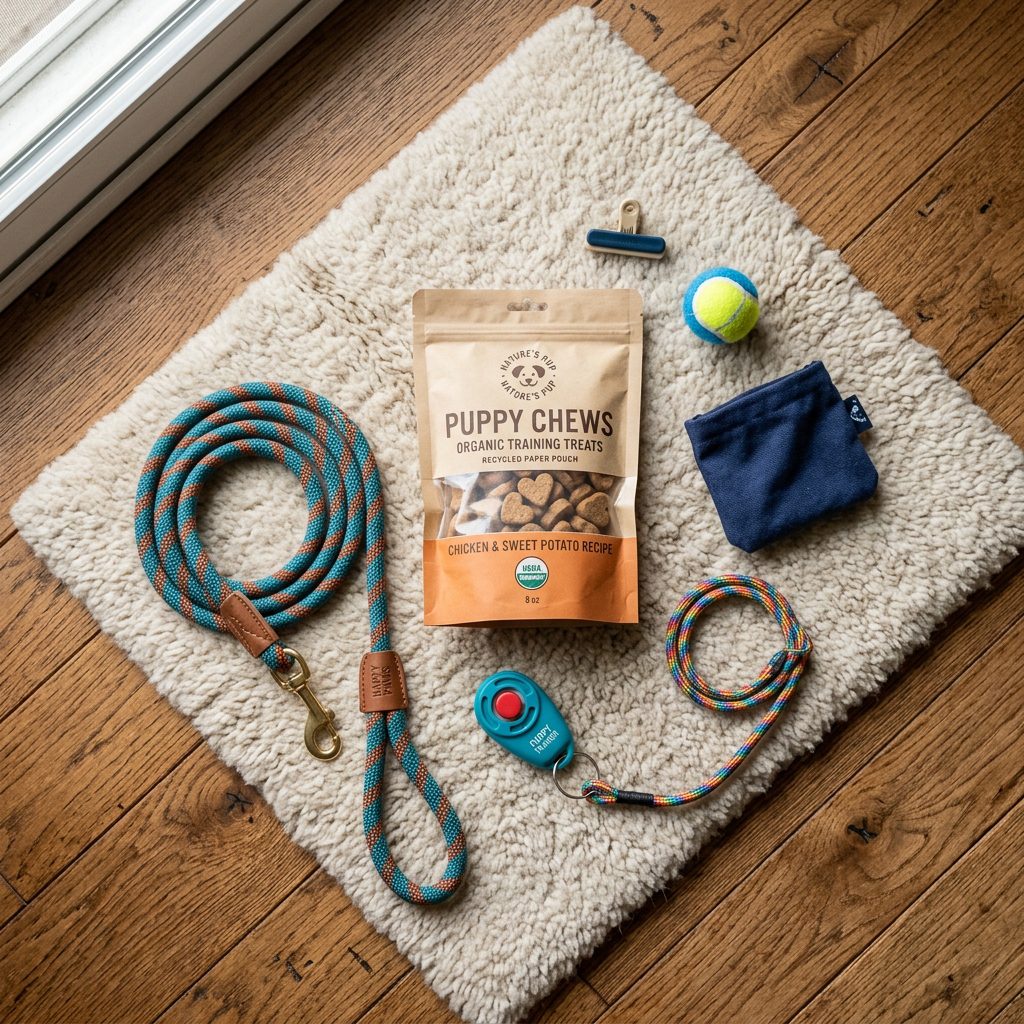
Training a new behavior requires the right environment and the right tools. Because ‘Middle’ involves your puppy moving behind you and through your legs, we need to ensure they are comfortable with body handling and close proximity.
Essential Gear
- High-Value Treats: Think pea-sized pieces of boiled chicken, cheese, or specialized training treats. Since this is a multi-step movement, you need something they’ll work hard for.
- A Non-Slip Surface: Puppies can get frustrated or scared if they slip. Train on a rug, yoga mat, or grass—avoid slick hardwood or tile during the initial stages.
- A Clicker (Optional): If you use clicker training, have it ready to mark the exact moment your dog enters the ‘sweet spot.’
- Patience: Some puppies find the sensation of walking between legs a bit strange at first. We’ll go at their pace.
Expert Tip: If your puppy is naturally ‘hand-shy’ or nervous about things being over their head, spend a few days just tossing treats between your legs while you stand still, before you ever ask them to move into the position.
Step-by-Step Guide: Teaching the ‘Middle’ Command
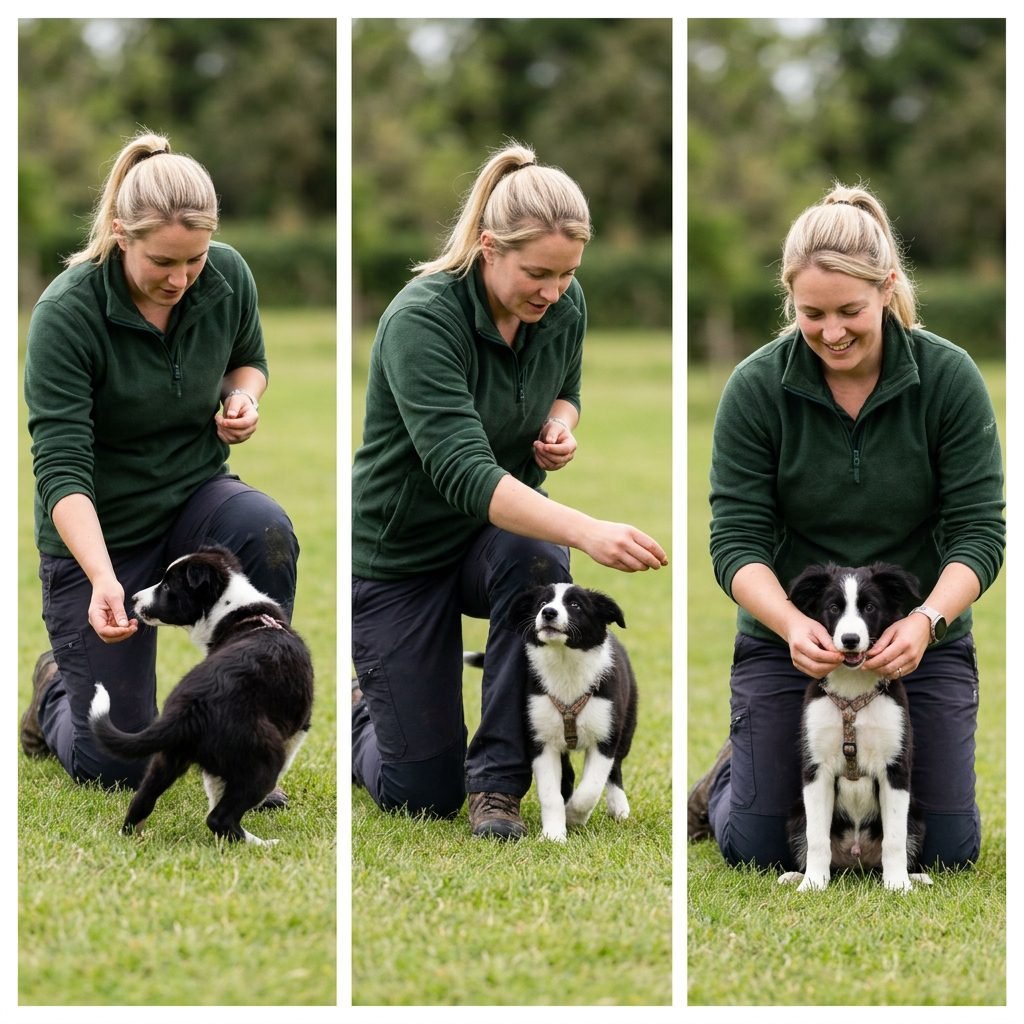
We will use a technique called luring to guide your puppy into position. Follow these phases carefully, and don’t rush to the next one until your puppy is 90% successful at the current level.
Phase 1: The Lure (The ‘U’ Shape)
- Stand with your legs wide apart (wider than your dog’s width).
- Hold a treat in both hands. Have your puppy standing in front of you.
- Take the hand on your right side and lead the puppy around your right leg to your back.
- As the puppy reaches your heels, switch the lure to your left hand, reaching between your legs.
- Guide the puppy through your legs so they are facing forward, just like you.
- Mark and Reward! Give the treat the second they are in the ‘Middle’ position.
Phase 2: Adding the Verbal Cue
Once your puppy is following the treat lure smoothly, it’s time to name the behavior. Say ‘Middle’ (or ‘Center’) just as you begin the hand motion. By pairing the word with the action, the puppy begins to associate the sound with the physical movement.
Phase 3: Fading the Lure
We don’t want to carry treats in our hands forever. Start using the same hand motion but without a treat in the guiding hand. Once the puppy gets into position, ‘mark’ the behavior and then pull a treat from your pocket or pouch. This teaches them to work for the reward rather than just following the food.
Phase 4: Increasing Duration
Now that they are getting into position, we want them to stay there. Instead of giving one treat and letting them leave, give a ‘jackpot’ of 3-5 treats, one after another, while they remain between your legs. This builds the value of the ‘stay’ aspect of the command.
| Training Day | Focus Area | Goal |
|---|---|---|
| Day 1-3 | Luring with treats | Smooth movement around the leg |
| Day 4-7 | Adding the cue ‘Middle’ | Association of word and action |
| Day 8-12 | Fading the hand lure | Responding to verbal cue + small gesture |
| Day 13+ | Distractions & Duration | Holding position for 30+ seconds |
Troubleshooting Common Challenges
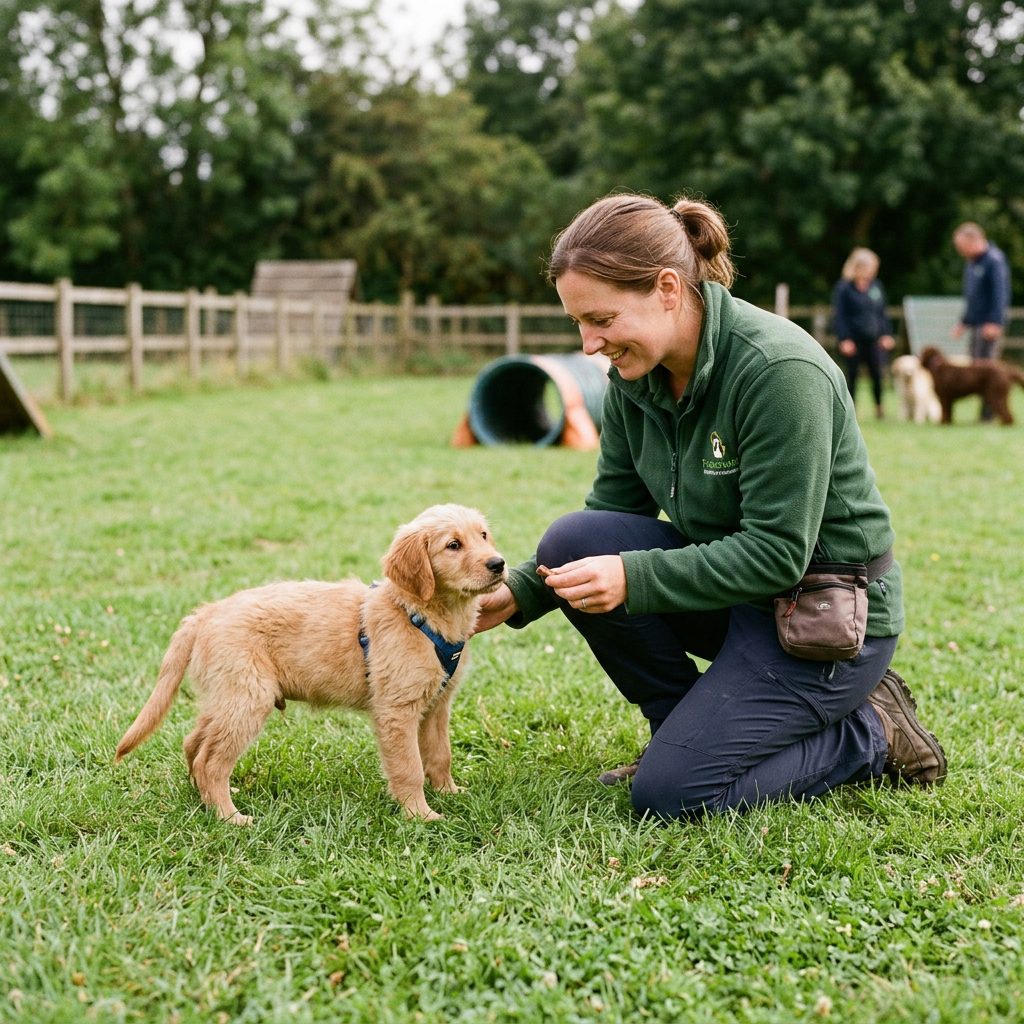
Not every puppy takes to ‘Middle’ immediately. Depending on their size, breed, and temperament, you might hit a few bumps in the road. Here is how to handle the most common issues.
My Puppy is Too Big!
If you have a Great Dane or a large German Shepherd, ‘Middle’ might look a bit different. You may need to stand with a very wide gait, or simply use the command as a ‘tuck’ where they sit close to your legs rather than directly between them. The goal is proximity and control, not a perfect geometric fit.
My Puppy is Scared to Go Behind Me
Some dogs don’t like being in ‘blind spots.’ If your puppy hesitates to go behind your legs, simplify the step. Stand against a wall so they only have one way to go, or practice just the ‘through the legs’ part without the ‘around the back’ part first. Reward heavily for even the smallest step toward the back of your legs.
My Puppy Keeps Walking Through and Out the Front
This is common! They are excited for the treat. To fix this, use your hand to ‘block’ their forward motion once they are in the middle. Feed them while they are still in the position, and use a release word like ‘Okay!’ or ‘Free!’ to tell them when they are allowed to leave the safety zone.
“Training is not a linear path. If your dog struggles with a step today that they mastered yesterday, just go back one level and build their confidence back up. It’s all part of the process.”
Real-World Applications: When to Use ‘Middle’
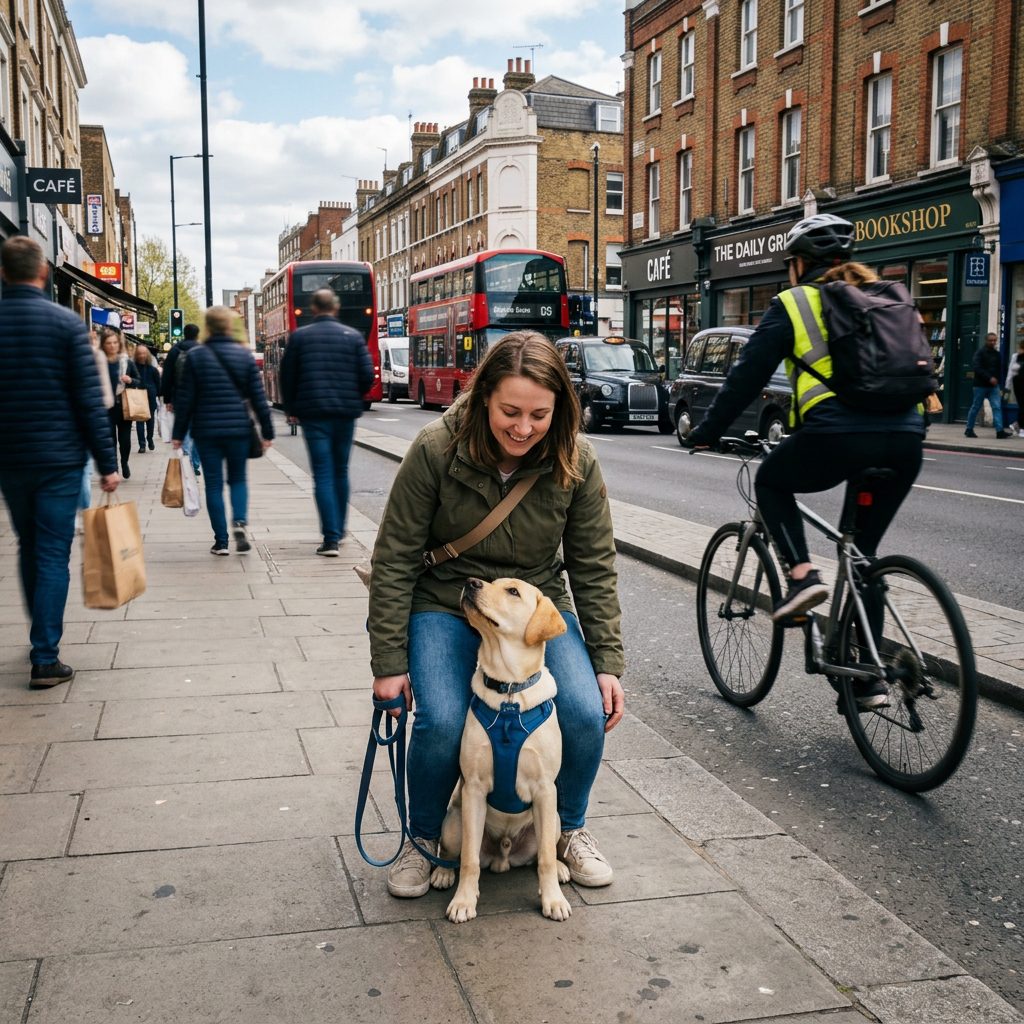
Now that your puppy understands the command, let’s put it to work. This isn’t just for the living room; it’s for the real world. Here are the best times to deploy the Middle command for maximum safety.
1. The ‘Elevator Protocol’
Elevators are confined spaces where you never know who (or what) is on the other side of the door. As you wait for the elevator, put your pup in ‘Middle.’ This keeps them away from the door’s opening edge and ensures they aren’t tripping people getting off.
2. Crossing Busy Streets
While waiting for the light to change, ‘Middle’ keeps your puppy back from the curb and away from the flow of pedestrian traffic. It also ensures they don’t dart into the street if they see something interesting on the other side.
3. Meeting New People
If someone asks to pet your dog, putting them in ‘Middle’ first allows you to control the interaction. You can ask the person to approach slowly, and your dog feels supported by your presence.
4. The ‘Moving Middle’ (Advanced)
Once your dog is a pro, you can actually walk slowly while they stay between your legs. This is incredibly useful for navigating through very tight crowds or narrow hallways at the vet’s office.
| Scenario | Why it works | Success Tip |
|---|---|---|
| Vet Waiting Room | Prevents nose-to-nose contact | Bring high-value treats to maintain focus |
| Dog Park Entrance | Calms excitement before entry | Wait for a ‘Sit’ in middle before releasing |
| Outdoor Cafe | Keeps dog from under waiters’ feet | Use a mat between your legs for comfort |
Conclusion
A Bond Built on Trust
Teaching your puppy the ‘Middle’ command is one of the most rewarding investments you can make in their training. It goes far beyond a simple ‘trick’—it is a functional behavior that communicates to your dog: ‘I have your back, and you are safe with me.’
Remember that consistency is key. Practice in short, 5-minute bursts several times a day. Start in your quiet living room, move to the backyard, then the front porch, and finally the local park. Each time you successfully use ‘Middle’ in a real-world situation, you are reinforcing your role as a capable leader and your puppy’s role as a confident companion.
So, grab those treats, find a quiet spot, and start luring! Before you know it, your puppy will be diving into the Middle position with a wagging tail, ready to take on the world by your side. Happy training!