Scared of a Bag? How to Stop Your Puppy Barking at Plastic Trash Bags Forever
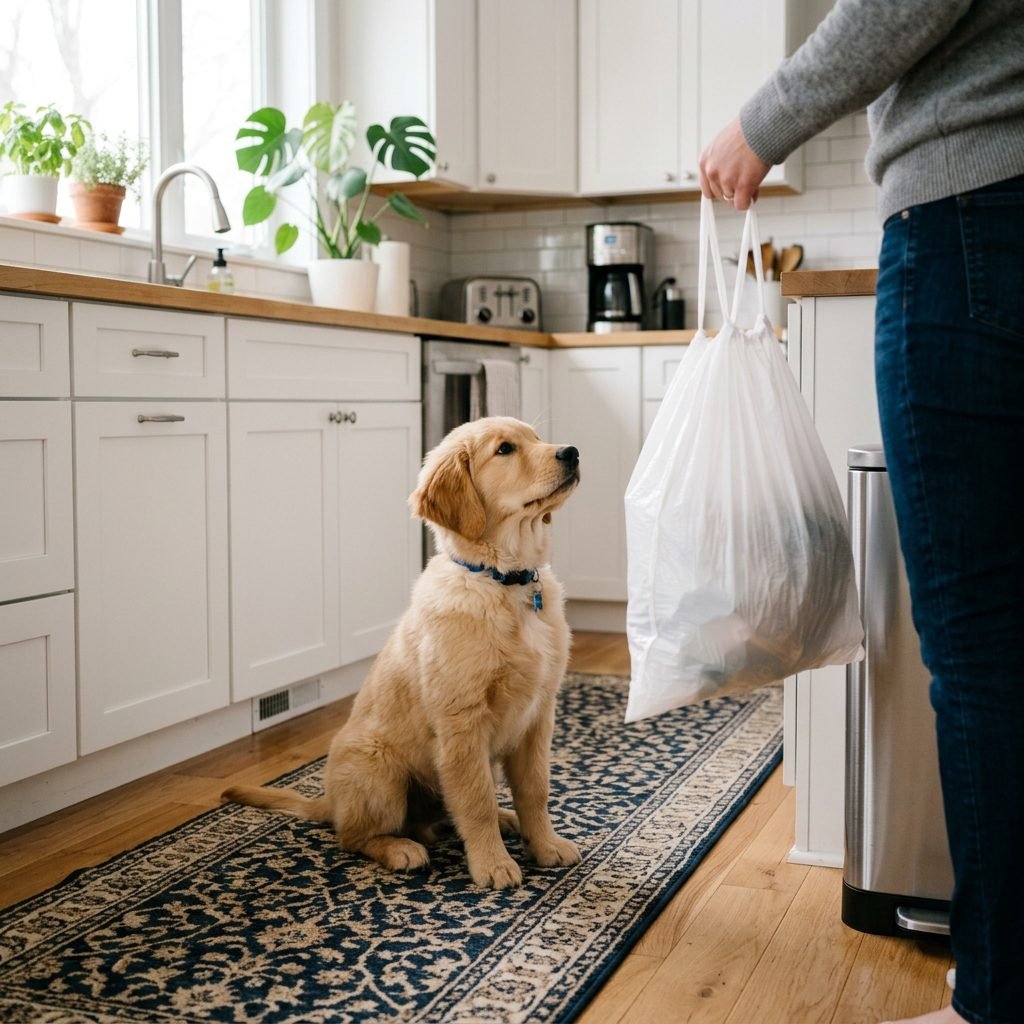
We have all been there. You are peacefully cleaning up after dinner, you reach for a fresh plastic trash bag, and suddenly, your kitchen sounds like a high-stakes police standoff. Your adorable, usually sweet puppy has transformed into a tiny, barking fury, lunging and retreating from that crinkling white monster in your hand. While it might seem silly to us—after all, it is just a bag—to a puppy, a plastic trash bag is a noisy, unpredictable, and fast-moving predator. This fear is not just common; it is a fascinating look into how your puppy perceives the world through their heightened senses. In this guide, we are going to dive deep into the canine psyche to understand why these household items trigger such a strong reaction. More importantly, I will walk you through a professional-grade desensitization and counter-conditioning plan that will turn that ‘scary’ bag into a cue for treats and tail wags. By the end of this article, you will have the tools to help your puppy navigate the world with confidence, one crinkle at a time.
The Science of the Scare: Why Plastic Bags Trigger Puppies
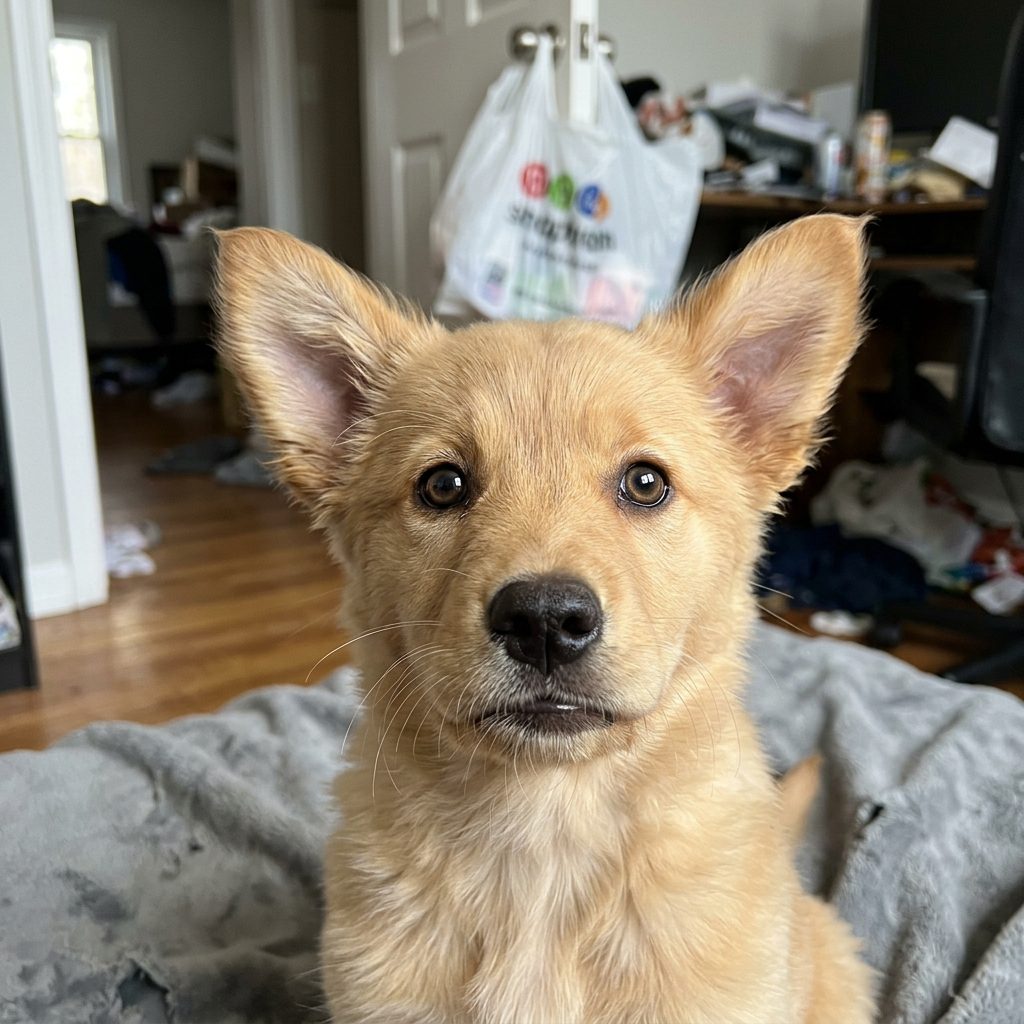
To solve the problem, we first need to understand the ‘why.’ Puppies go through several critical fear periods during their development, typically once between 8 and 11 weeks and again during adolescence (6 to 14 months). During these times, a single startling experience can create a lasting impression. Plastic bags are the ‘perfect storm’ of scary stimuli for three main reasons: sound, movement, and novelty.
1. High-Frequency Auditory Sensitivity
Dogs hear at much higher frequencies than humans. The sharp, erratic ‘crinkle’ of a plastic bag can be physically uncomfortable or even painful for a sensitive puppy. To them, it does not sound like plastic; it sounds like a series of unpredictable explosions.
2. Unpredictable Movement
When you shake out a bag to open it, the movement is sudden and changes the shape of the object instantly. In the wild, sudden, erratic movement usually indicates a predator or a threat. Your puppy’s instinctual ‘fight-or-flight’ response kicks in before their logical brain can realize it is just for the trash.
3. The ‘Newness’ Factor
For a savvy dog owner, it is easy to forget that everything is new to a puppy. If they were not exposed to large, flapping objects during their primary socialization window, a trash bag represents a significant anomaly in their safe home environment.
Preparation: Setting the Stage for Training Success
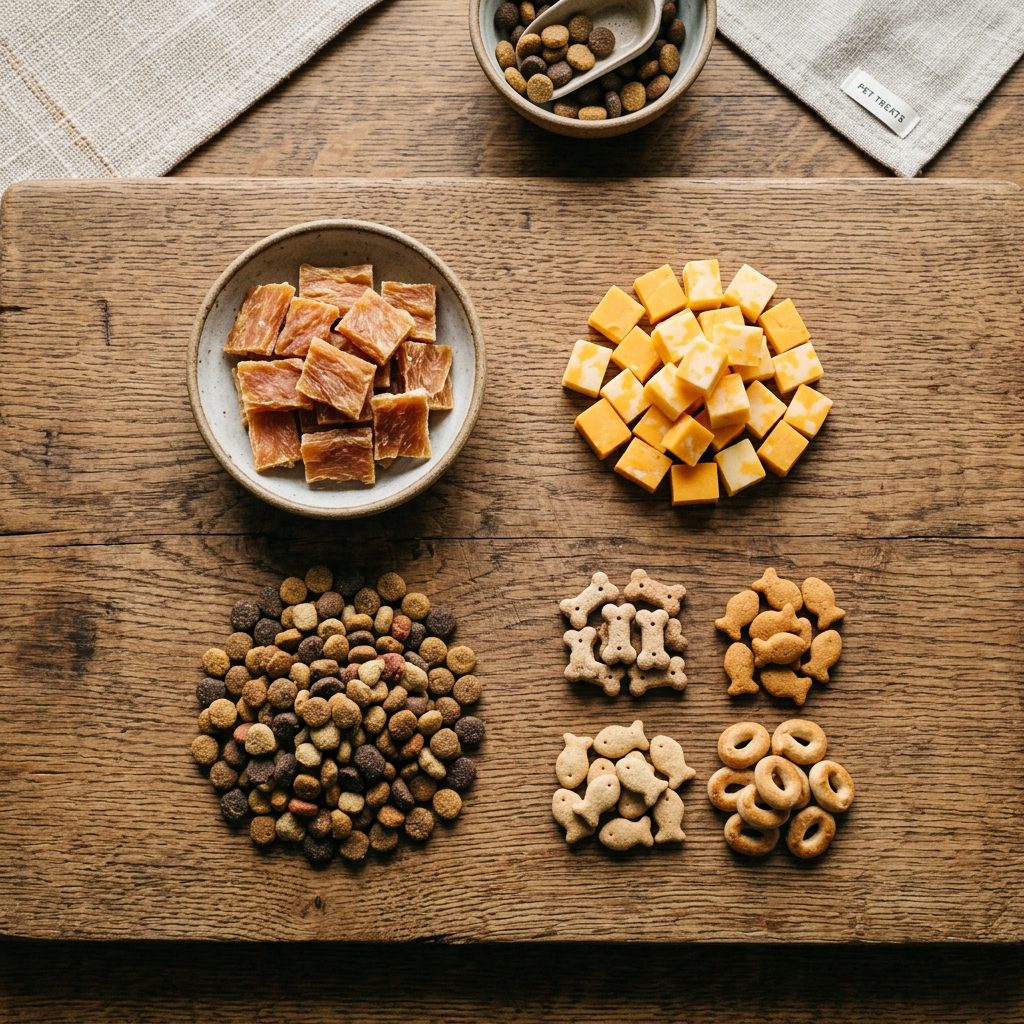
Before we jump into the training, we need to gather our supplies. You cannot expect a puppy to learn if they are already over-threshold (meaning they are too scared to listen). We need to create a controlled environment where we can manage the intensity of the ‘scary’ stimulus. Success in dog training is 90% preparation and 10% execution.
Creating a Treat Hierarchy
For this specific fear, ‘kibble’ usually won’t cut it. We need high-value rewards that make the puppy think, ‘Wow, if that scary bag means I get this, then I love that bag!’ Use the table below to plan your rewards.
| Reward Level | Food Item | When to Use |
|---|---|---|
| Low Value | Standard Kibble | Basic commands in a quiet room with no bags present. |
| Medium Value | Store-bought training treats | Seeing the bag from a distance while it is folded. |
| High Value | Boiled chicken, String cheese, or Freeze-dried liver | When the bag makes noise or moves. This is the ‘Big Guns’ reward. |
Expert Tip: Always train when your puppy is slightly hungry. A pre-dinner training session ensures they are highly motivated by the treats you are offering.
Phase 1: Desensitization – Scent and Sight Without Sound
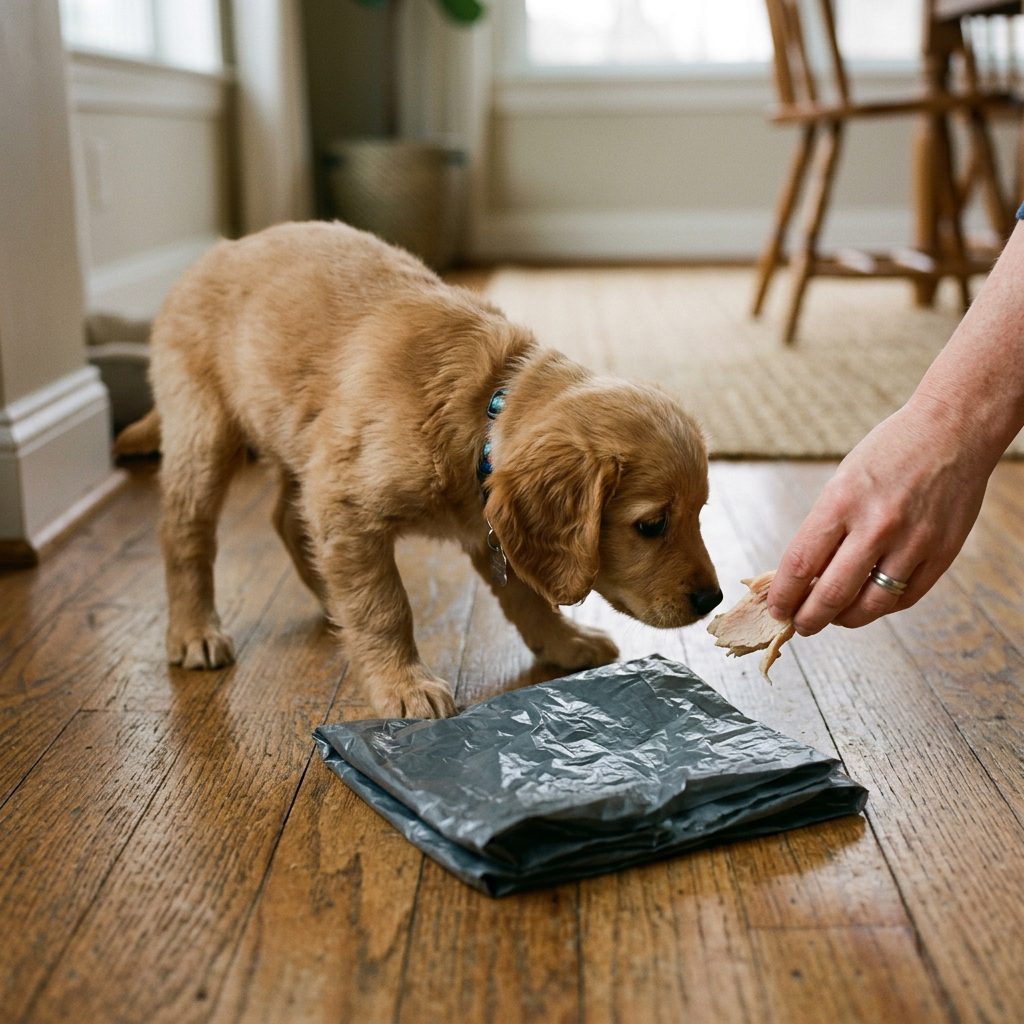
The biggest mistake owners make is trying to fix the fear by ‘showing’ the puppy the bag and shaking it to prove it is okay. This actually floods the puppy with fear and makes the problem worse. Instead, we start with the lowest possible intensity.
Step 1: The ‘Boring’ Bag
Place a folded, unused trash bag on the floor in the middle of the room before you even bring the puppy in. Let the puppy enter the room at their own pace. If they look at the bag, even from across the room, click (or say ‘Yes!’) and toss a high-value treat away from the bag. This rewards the calm observation and gives them a ‘reset’ by moving away.
Step 2: Investigation Rewards
Eventually, your puppy’s curiosity will kick in. When they take a step toward the bag, reward them. If they sniff the bag, give them a ‘jackpot’ (3-4 treats in a row). We are teaching them that the presence of the bag predicts wonderful things. Do this for 2-3 minutes, several times a day, until the puppy is completely indifferent to the folded bag on the floor.
Phase 2: Counter-Conditioning – Introducing the Crinkle
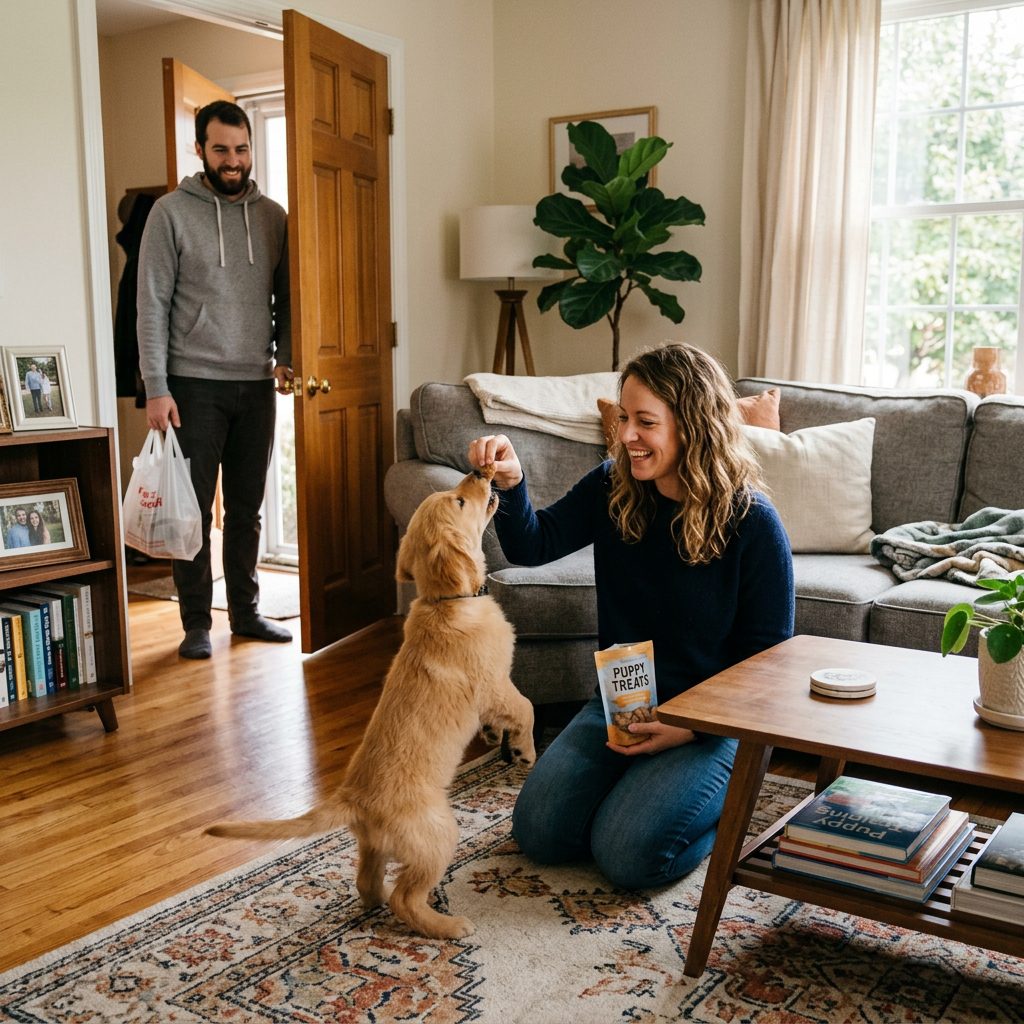
Now that the puppy is cool with a static bag, we need to introduce the sound. This is where most dogs struggle, so go slow. You will need a partner for this phase to make it easier.
Step 1: Distance is Your Friend
Have your partner stand in another room or at least 15 feet away with a bag. You stand with your puppy, loaded with high-value treats. Have your partner give the bag a tiny, soft crinkle—just a second of noise.
Step 2: The ‘Look at That’ (LAT) Game
The moment the bag crinkles and your puppy looks toward the sound, mark it with a ‘Yes!’ and reward. We are changing the emotional response from ‘I’m scared of that noise’ to ‘Hey, I heard that noise, where is my chicken?’
Step 3: Increasing Intensity
Only when your puppy looks at you expectantly after the soft crinkle should you increase the volume. Gradually have your partner move closer or make the crinkling sound more vigorous. If your puppy barks or hides, you have moved too fast. Go back to the previous step where they were successful.
Phase 3: Mastering the ‘Flap’ and Real-World Use
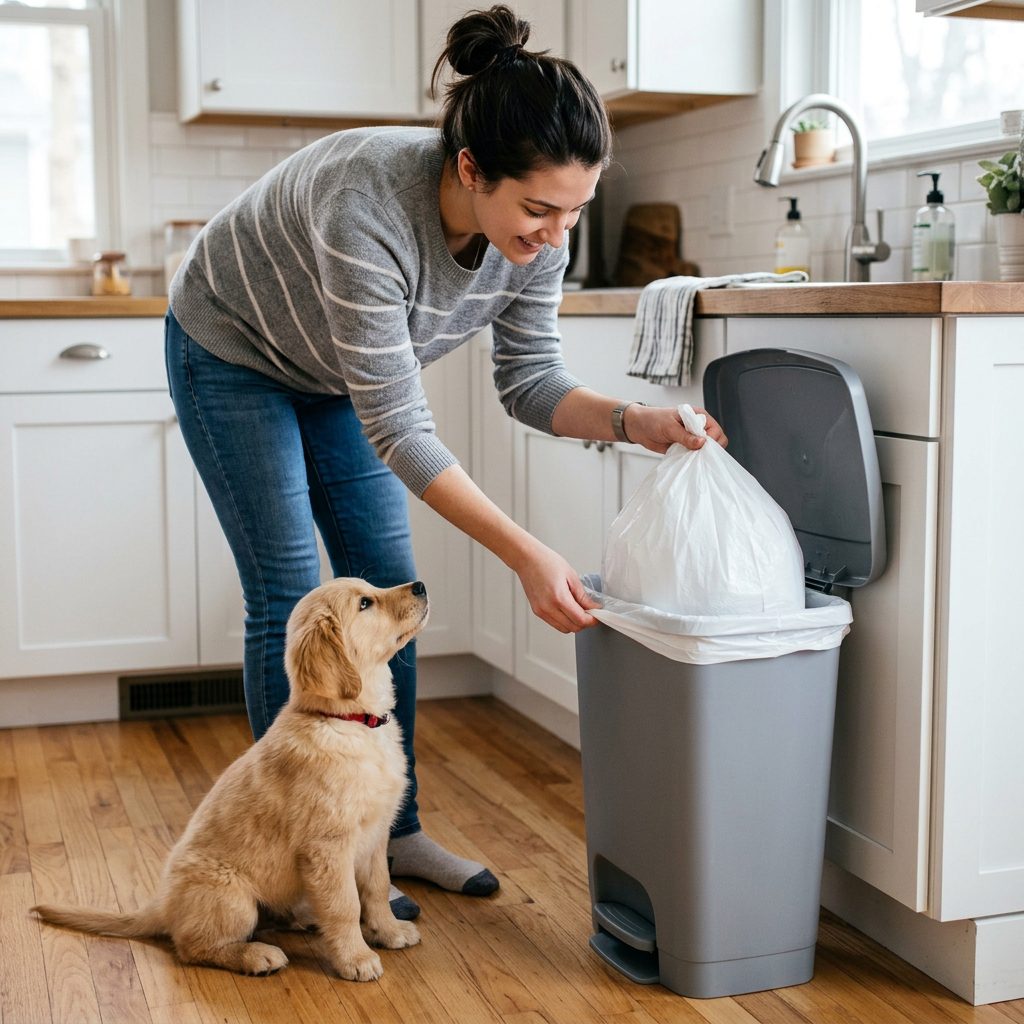
The final boss of bag training is the ‘flap’—that big, wind-catching movement we use to open a bag before putting it in the bin. This combines sound, movement, and a sudden change in size.
Step 1: The Micro-Flap
Hold the bag yourself. Instead of a full shake, just gently open the top. Reward. Then, do a very small, low-energy shake. Reward. We want to build up to a full, vigorous shake over several sessions.
Step 2: The Kitchen Integration
Move the training to the kitchen. Go through the motions of changing the trash. If your puppy stays calm or looks to you for a treat while you are actively putting a bag in the bin, they have graduated! You have successfully rewired their brain’s response to this stimulus.
| Action | Puppy’s Goal Behavior | Owner’s Action |
|---|---|---|
| Opening the cabinet | Stays in a ‘Sit’ or ‘Down’ | Reward with Medium Value treat |
| Shaking the bag | Looks at owner calmly | Reward with High Value treat |
| Placing bag in bin | Remains relaxed | Final ‘Jackpot’ reward |
Troubleshooting: What to Do If Your Puppy Regresses
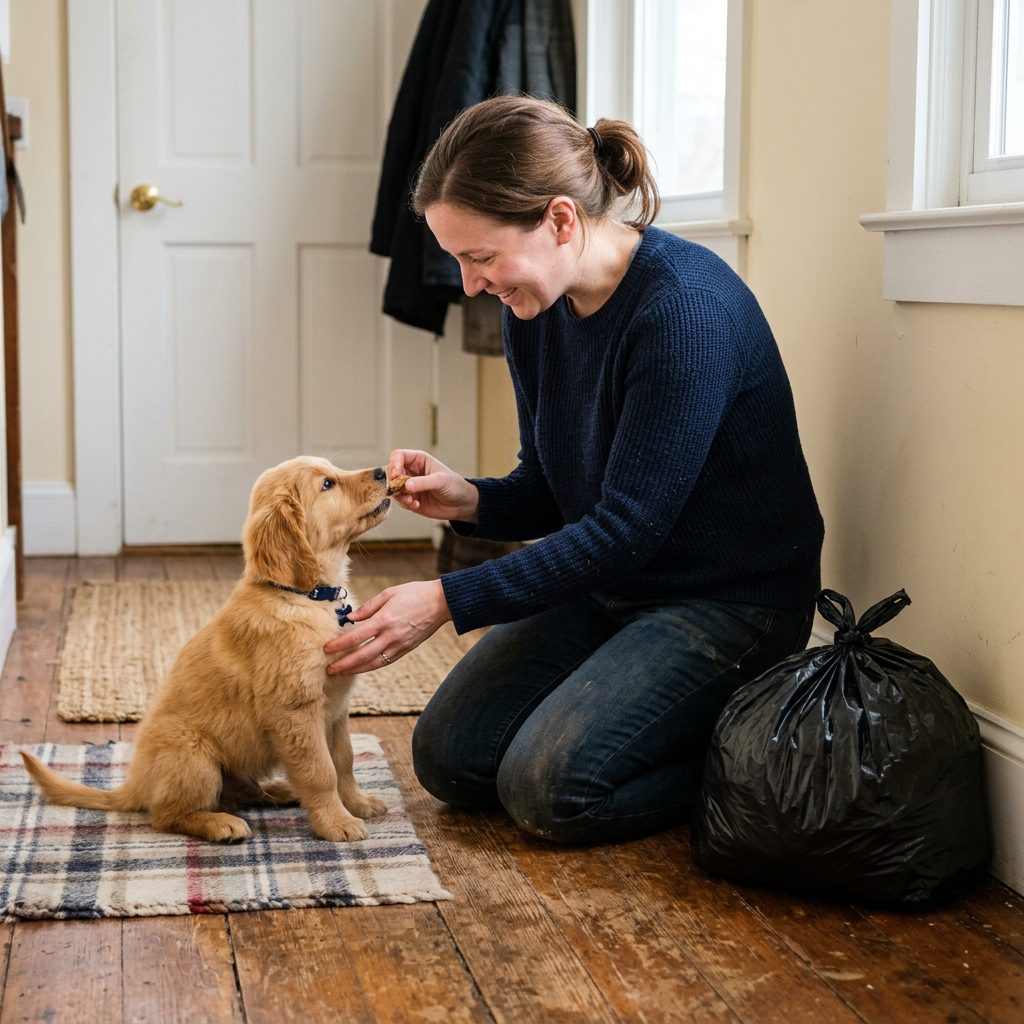
Training is rarely a straight line. You might have a great day where the puppy doesn’t bark at all, followed by a day where they seem to have forgotten everything. This is normal! Here is how to handle setbacks.
Don’t Punish the Bark
If you yell ‘No!’ or ‘Quiet!’ when your puppy barks at a bag, you are actually confirming their fear. They think, ‘See? The human is stressed and loud too! This bag really is a threat!’ Instead, calmly remove the bag or the puppy from the situation.
Check the Threshold
If your puppy is barking, you are too close or the noise is too loud. Increase the distance. Go back to Phase 1 for a few repetitions to rebuild their confidence. Ensure you aren’t accidentally ‘looming’ over the puppy with the bag, which can be perceived as an intimidating gesture.
Check for Generalization
Sometimes a puppy learns that *white* kitchen bags are okay, but they still freak out at *black* lawn bags or *blue* recycling bags. If this happens, simply repeat the phases with the new color. Dogs don’t generalize well, so they need to learn that ‘all bags’ are treat-dispensing machines, not just the kitchen ones.
Conclusion
Helping your puppy overcome their fear of plastic bags is about more than just a quiet kitchen; it is about building a foundation of trust and communication. By using desensitization and counter-conditioning, you are teaching your puppy that they can rely on you to keep them safe when the world gets loud and weird. Remember, patience is your greatest asset. Some puppies will master this in a weekend, while others might take a few weeks of consistent work. Stay positive, keep your treat pouch full, and celebrate the small victories. Before you know it, the sound of a crinkling bag will be the sound of a happy, confident dog ready for their next reward. Happy training!