This Life-Saving Command Will Train Your Puppy to Ignore Dropped Pills Instantly!
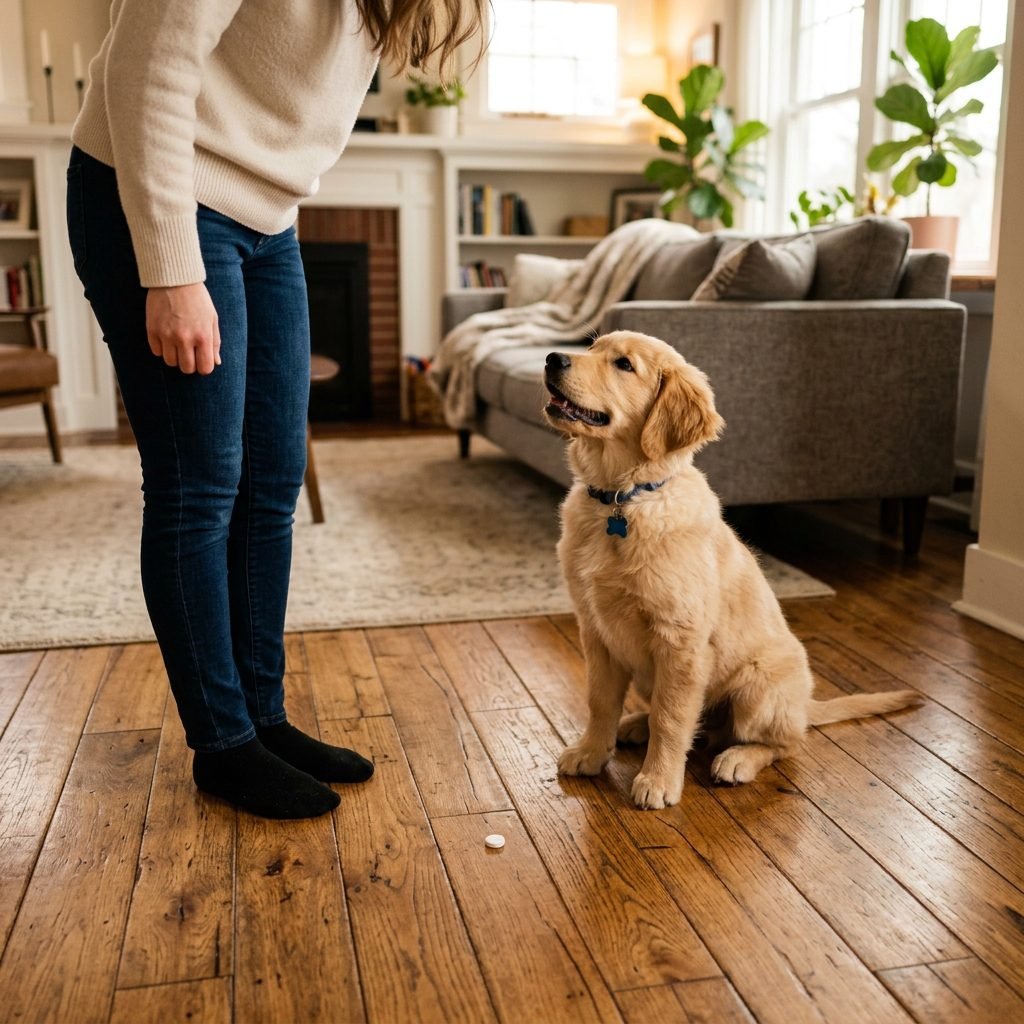
We have all been there. You are standing in the kitchen, perhaps a bit bleary-eyed in the morning, reaching for your daily multivitamin or a prescription medication. Your hand slips, and suddenly, a small white pill is skittering across the tile floor. In that split second, your heart stops. Why? Because your curious, lightning-fast puppy is already diving toward it, thinking you have just dropped a delicious new treat.
For a dog owner, this is one of the most heart-stopping scenarios imaginable. Many common human medications—from simple over-the-counter painkillers to complex prescriptions—are highly toxic to dogs. In some cases, even a single pill can lead to organ failure or worse. That is why today, we are going to master the most important safety skill in your training arsenal: the Automatic Leave It command.
In this guide, we won’t just teach your dog to wait for a command; we will train their brain to see a dropped item as a signal to look at you instead of the floor. This proactive approach turns a potential disaster into a routine training moment. Let’s dive into how you can save your puppy’s life with a few simple, fun training sessions.
Understanding the Danger: Why ‘Leave It’ is Non-Negotiable
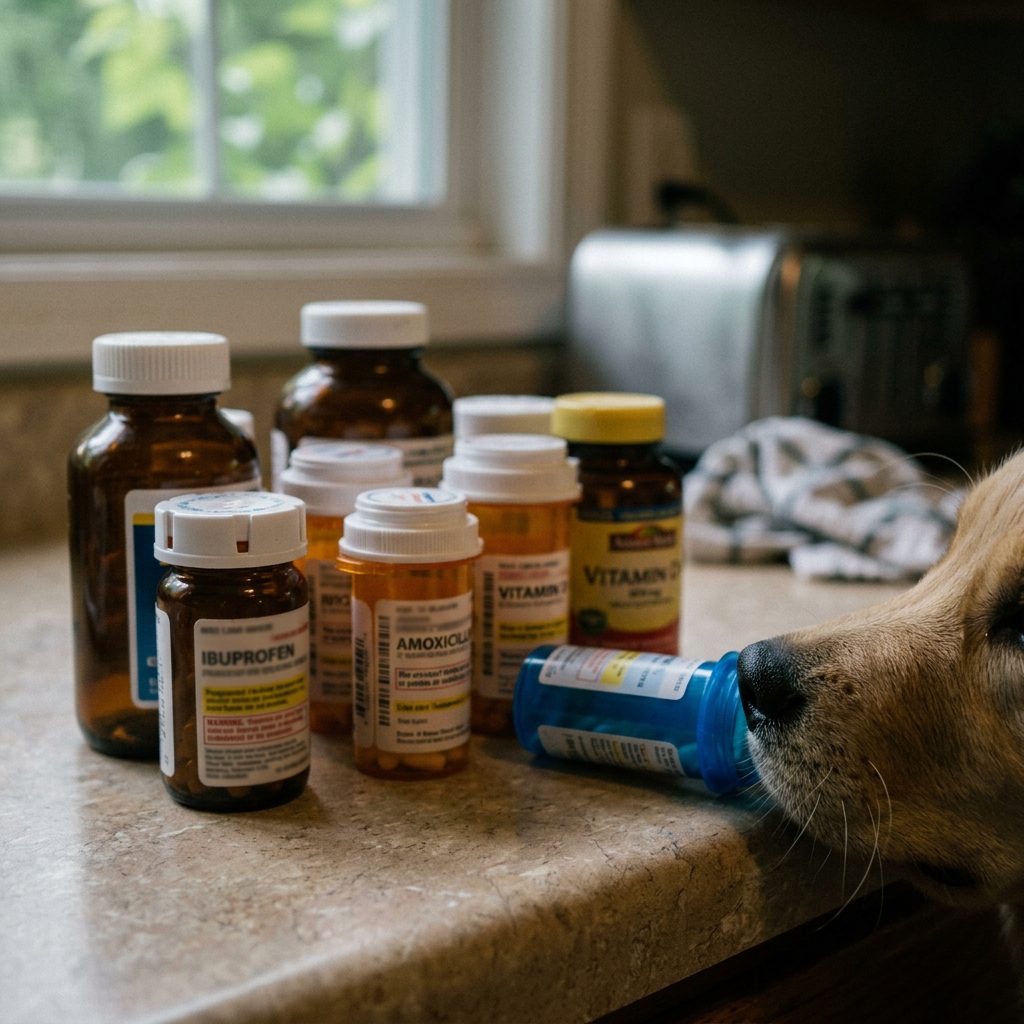
Before we get into the ‘how-to,’ we need to understand the ‘why.’ Puppies explore the world with their mouths. To them, a dropped pill isn’t a chemical compound; it’s a small, crunchy object that might taste interesting. Unfortunately, the canine physiology is vastly different from ours, and what heals us can harm them.
Common Household Medications That Are Toxic to Dogs
It is a common misconception that ‘human-safe’ means ‘pet-safe.’ Below is a look at some of the most frequent culprits in accidental pet poisonings.
| Medication Type | Common Brand Names | Danger Level | Potential Effects |
|---|---|---|---|
| NSAIDs | Advil, Motrin, Aleve | Severe | Stomach ulcers, kidney failure |
| Acetaminophen | Tylenol | Critical | Liver damage, red blood cell destruction |
| Antidepressants | Zoloft, Prozac, Effexor | High | Seizures, tremors, serotonin syndrome |
| Sleep Aids | Ambien, Lunesta | Moderate to High | Agitation or extreme lethargy, respiratory distress |
| ADHD Meds | Adderall, Ritalin | Extreme | Life-threatening heart rate spikes, seizures |
Expert Tip: Always keep the number for the Pet Poison Helpline (855-764-7661) or ASPCA Animal Poison Control (888-426-4435) saved in your phone. Seconds count in an emergency!
Phase 1: The ‘Hand-Closed’ Foundation
The secret to a rock-solid ‘Leave It’ isn’t about yelling or being ‘alpha.’ It is about choice-based training. We want your puppy to choose to ignore the item because they know that looking at you results in something even better.
Step 1: The Hidden Treasure
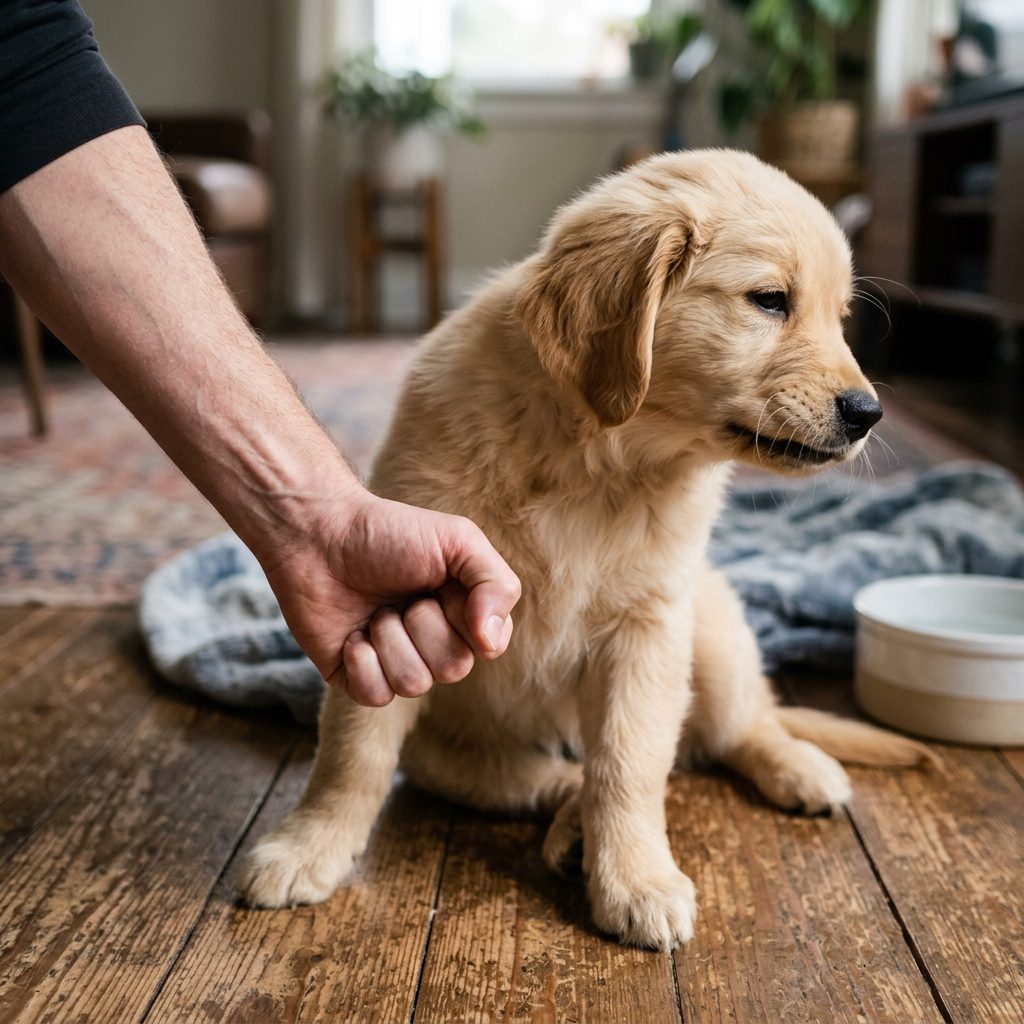
Take a piece of low-value kibble in one hand and a high-value treat (like a small piece of chicken or cheese) in your other hand, hidden behind your back.
- Present your closed fist with the kibble to your puppy.
- Your puppy will likely sniff, lick, and paw at your hand. Ignore this. Do not say anything.
- The moment your puppy stops trying to get the treat and pulls their head back—even for a second—say ‘Yes!’ or click your clicker.
- Immediately give them the high-value treat from your other hand.
Repeat this until the puppy sees your closed fist and immediately backs away. They are learning that ‘ignoring the boring treat leads to the amazing treat.’
Phase 2: Moving to the Floor (The Gravity Test)
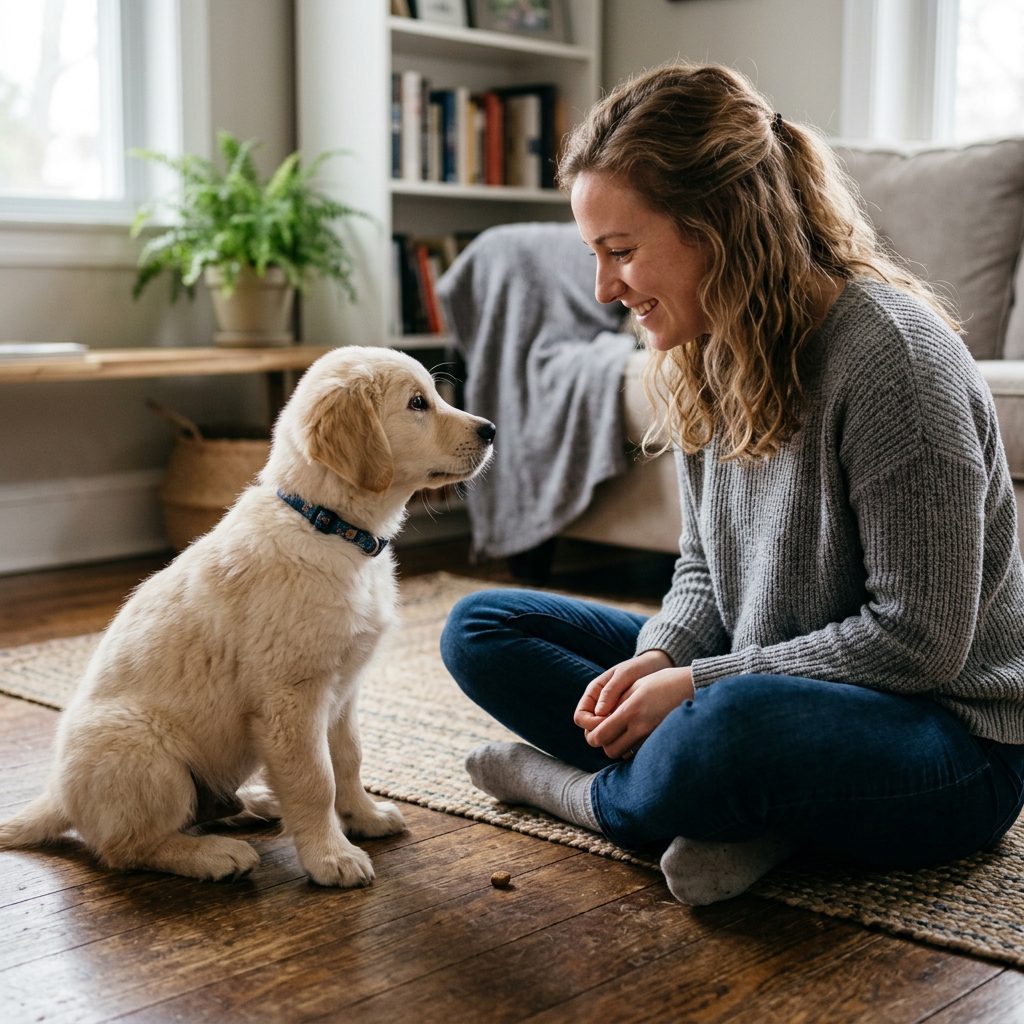
Once your puppy is a pro at ignoring your hand, it’s time to move the challenge to the ground. This mimics the ‘dropped pill’ scenario more closely.
Step 2: The Covered Treat
- Place a piece of kibble on the floor and immediately cover it with your hand.
- Just like Phase 1, wait for your puppy to stop investigating your hand.
- When they look up at you, mark the behavior (‘Yes!’) and reward them with a treat from your pocket.
- Crucial Rule: Never let them eat the ‘decoy’ treat on the floor. This reinforces that dropped items are never for them.
Step 3: The Uncovered Challenge
Now, place the treat on the floor but keep your hand ready to cover it if the puppy lunges. This builds the ‘impulse control’ muscle. If the puppy looks at the treat and then looks back at you, they have won the game! Shower them with praise and a high-value reward.
Phase 3: The ‘Automatic’ Response (The Life-Saver)
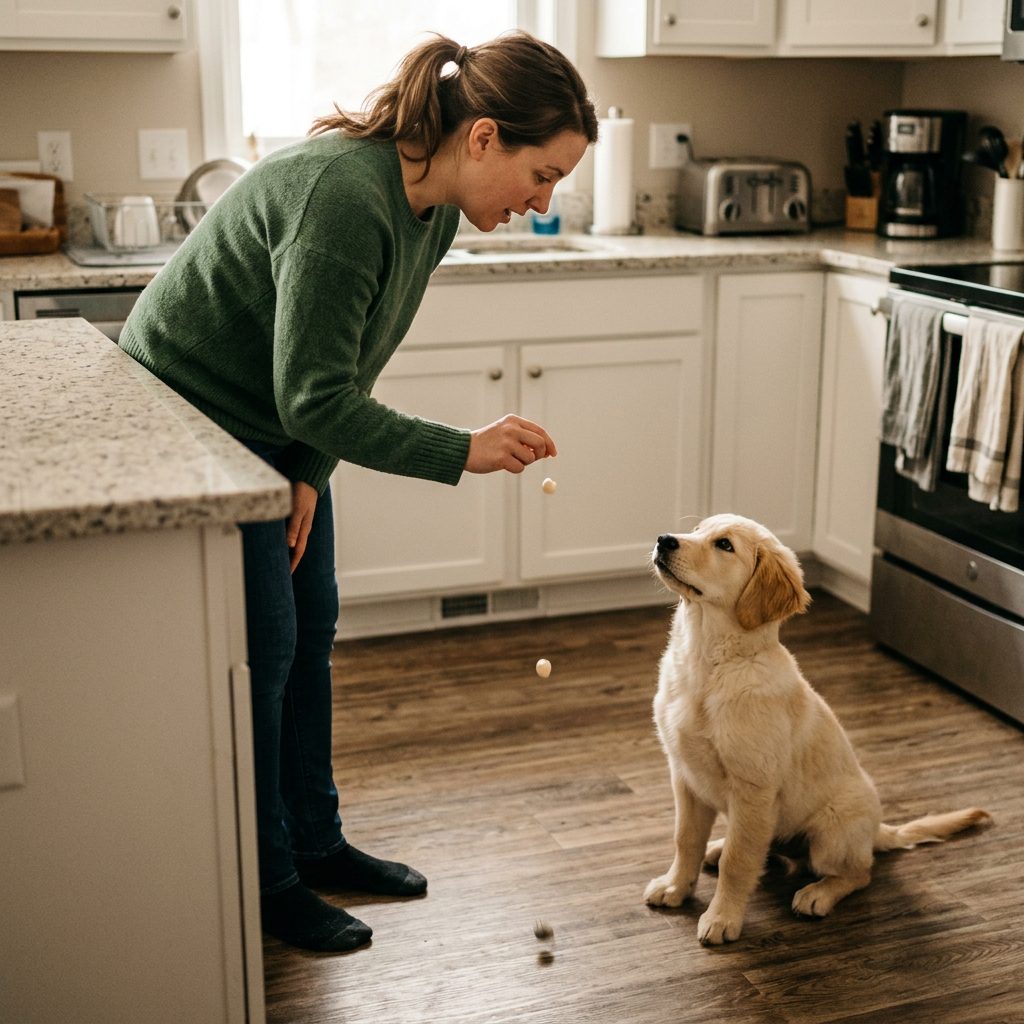
This is where we turn a command into a reflex. In a real-life situation, you might not have time to say ‘Leave It’ before the pill hit the floor. We want the sound of the pill hitting the floor to be the cue itself.
Training the ‘Drop’ Cue
Start standing up. Drop a piece of kibble. As it hits the floor, if your dog moves toward it, cover it with your foot. Wait for the dog to look up at you. When they do, reward them heavily. We are conditioning the dog to think: ‘When something hits the floor, I look at Mom/Dad to see if I get a reward.’
Increasing Distractions
To make this ‘pill-proof,’ you need to practice in different rooms and with different distractions. Use a variety of non-toxic items to practice:
- Coins (to mimic the ‘clink’ of a pill)
- Bottle caps
- Empty capsules (available at health stores) filled with nothing
Note: Always practice this with a leash on if you are in an unsecured area, ensuring you have total control over the puppy’s access to the dropped item.
Common Mistakes and Troubleshooting
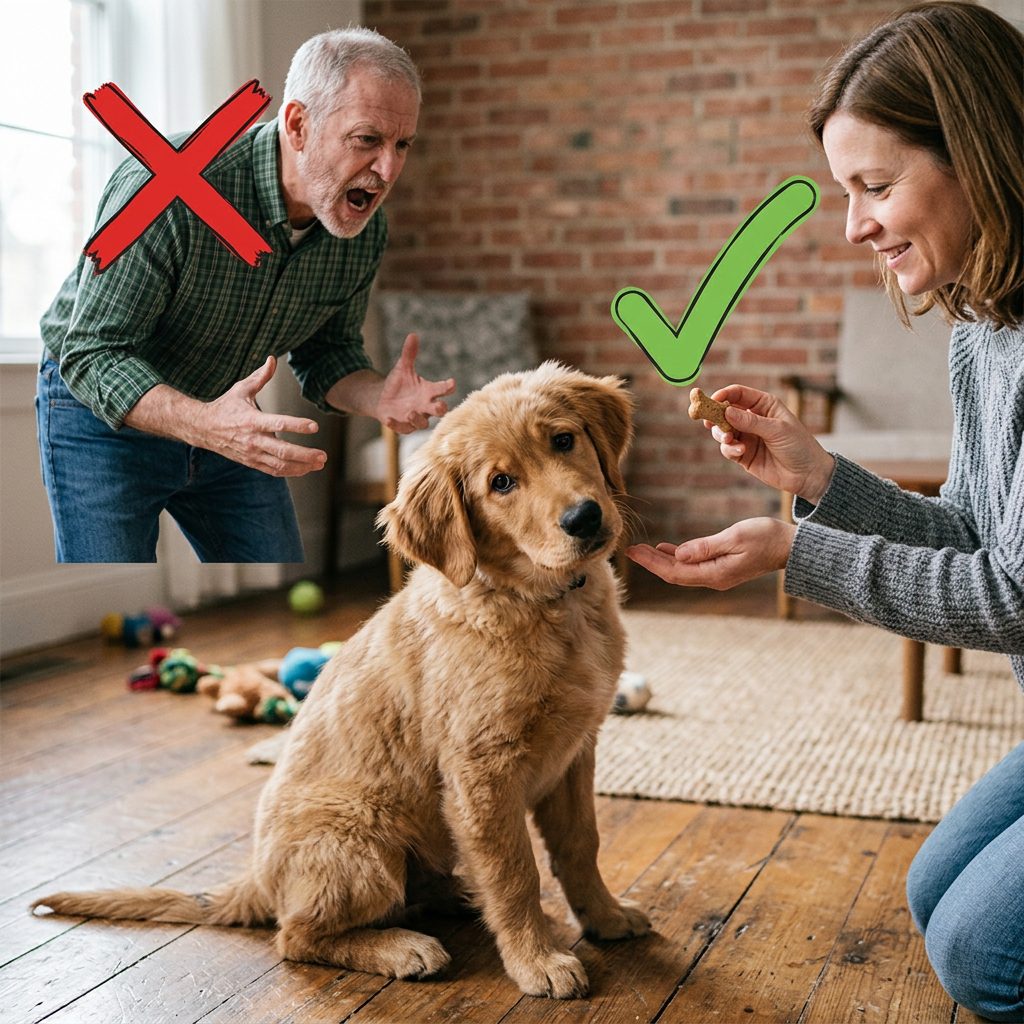
Training a puppy isn’t always a straight line. If your puppy is struggling, you might be making one of these common errors:
1. Using Low-Value Rewards
If you are asking your dog to ignore a piece of hot dog but only rewarding them with dry kibble, the ‘math’ doesn’t add up for them. Always ensure the reward is better than the ‘forbidden fruit.’
2. Moving Too Fast
If your puppy lunges for the treat every time you move your hand away, go back to Phase 1. There is no shame in reinforcing the basics for a few more days.
3. Using the Word ‘No’ Too Much
‘Leave It’ should be a positive choice, not a fear-based reaction. If you yell, the dog might become ‘hand-shy’ or try to snatch the item faster because they are stressed.
| Problem | Possible Cause | Solution |
|---|---|---|
| Puppy snatches item before you can react | Distance is too close | Practice with the puppy on a leash until impulse control improves |
| Puppy ignores you entirely | Treat value is too low | Switch to boiled chicken, liver treats, or string cheese |
| Puppy only listens in the kitchen | Lack of generalization | Practice in every room of the house and even outdoors |
Emergency Protocol: If the Worst Happens
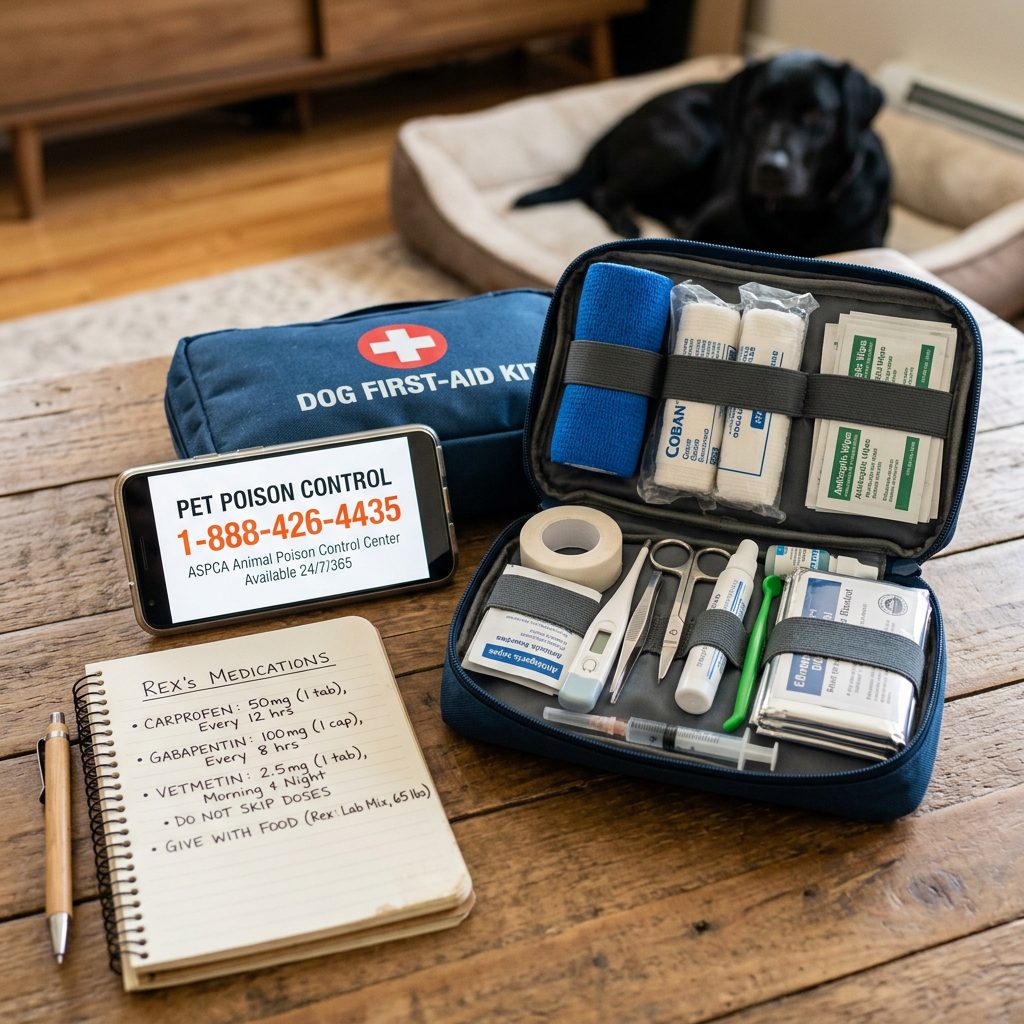
Even with the best training, accidents can happen. If your puppy manages to swallow a pill, you must act instantly but calmly.
Immediate Steps to Take:
- Identify the Medication: Note the name, the dosage (mg), and how many pills were likely consumed.
- Call the Professionals: Contact your vet or a pet poison hotline immediately. Do NOT wait for symptoms to appear.
- Do Not Induce Vomiting Unless Instructed: Some substances cause more damage coming back up (like caustic chemicals), and some medications can cause aspiration if the dog is lethargic.
- Check the Clock: Knowing exactly when the ingestion happened helps the vet determine the best course of treatment (like activated charcoal or IV fluids).
Safety Warning: Never give your dog human medications like Advil or Tylenol for pain relief. Even a small dose can be fatal.
Conclusion
Training your puppy to ignore dropped pills is more than just a party trick; it is a vital safety net that protects your furry best friend from the hazards of a human household. By focusing on choice-based training and building a strong ‘Automatic Leave It’ reflex, you are giving your puppy the tools they need to stay safe even when you aren’t at your most alert.
Remember, consistency is the key. Spend just five minutes a day practicing these steps, and soon you will have the peace of mind that comes with knowing your puppy will look to you for guidance the next time a pill hits the floor. Happy training, and stay safe!