
The Ultimate Guide to Apartment Balcony Potty Patch Training
Living in a high-rise apartment offers stunning views and a vibrant urban lifestyle, but it also presents a unique challenge for dog owners: the dreaded 2:00 AM elevator ride for a potty break. If you have ever stood in your pajamas waiting for a slow elevator while your pup does the ‘gotta-go’ dance, you know the struggle is real. Enter the balcony potty patch—a game-changing solution that brings a slice of the outdoors to your private outdoor space. This isn’t about being lazy; it is about creating a convenient, stress-free routine for both you and your canine companion. In this ultimate guide, we will dive deep into the world of balcony potty systems, exploring the best options for your specific needs and providing a foolproof training protocol to ensure success. Whether you have a tiny Chihuahua or a medium-sized mix, mastering the balcony potty patch will transform your apartment living experience from a logistical hurdle into a seamless, modern lifestyle.
Choosing the Right Potty Patch: Real Grass vs. Synthetic
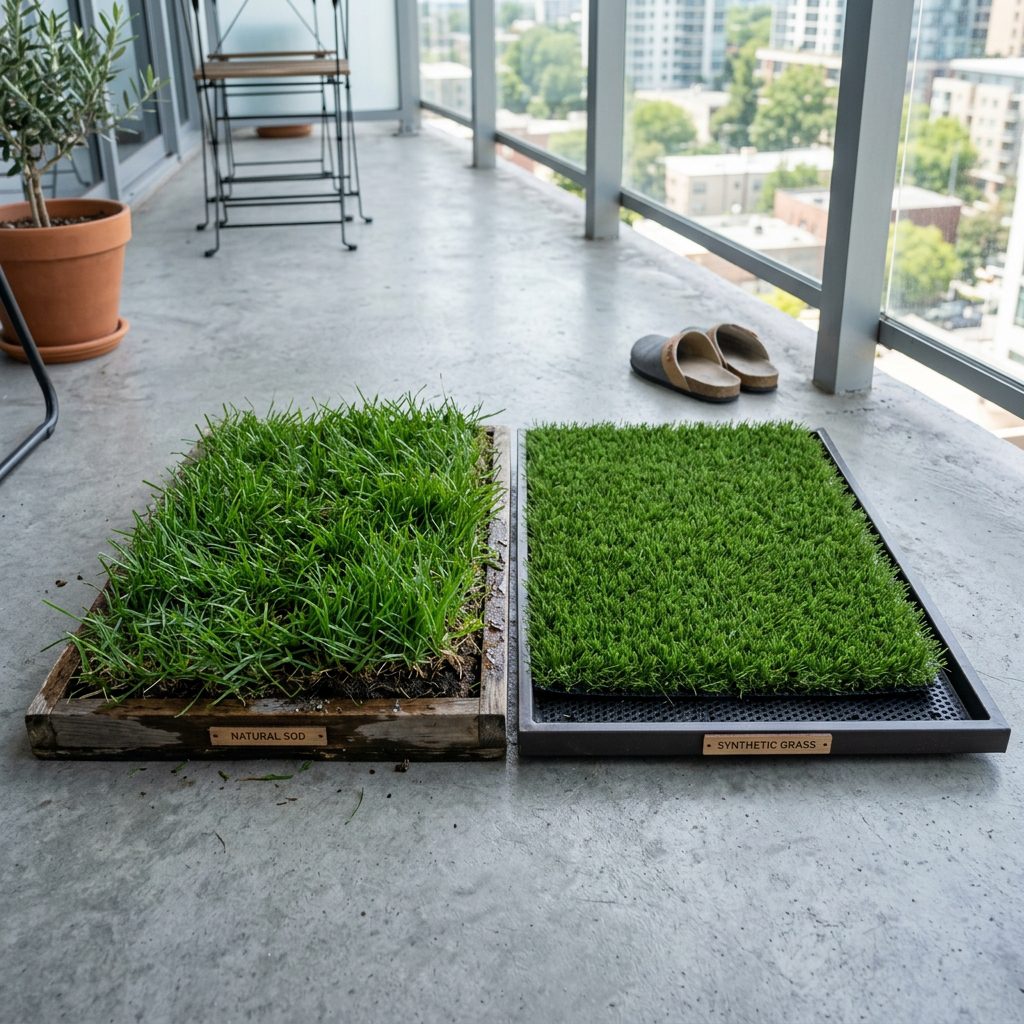
The first step in your journey is selecting the right substrate. Not all potty patches are created equal, and your dog’s natural instincts will play a huge role in which one they prefer. Savvy owners usually choose between three main categories: real sod, synthetic grass, and grated plastic systems. Real sod is often the gold standard because it contains natural soil microbes that help break down odors, and most dogs have an innate substrate preference for the feel of real grass under their paws. Synthetic options, however, are a one-time investment that can be hosed down easily. Grated systems are best for dogs who tend to shred grass or for owners who want the absolute easiest cleanup process.
Comparison of Common Potty Patch Types
| Feature | Real Grass Sod | Synthetic Turf | Grated Plastic Tray |
|---|---|---|---|
| Odor Control | Excellent (Natural absorption) | Moderate (Requires cleaning) | Low (Requires daily rinsing) |
| Dog Preference | Very High (Natural feel) | High (Mimics grass) | Moderate (Requires training) |
| Maintenance | Replacement every 2-4 weeks | Weekly deep cleaning | Daily rinsing |
| Initial Cost | Low (Subscription based) | Moderate | Moderate |
Expert Tip: If your dog is particularly picky or was raised in a rural area, start with real grass. The familiar scent of earth and chlorophyll acts as a natural trigger for them to eliminate.
Setting the Stage: Safety and Placement
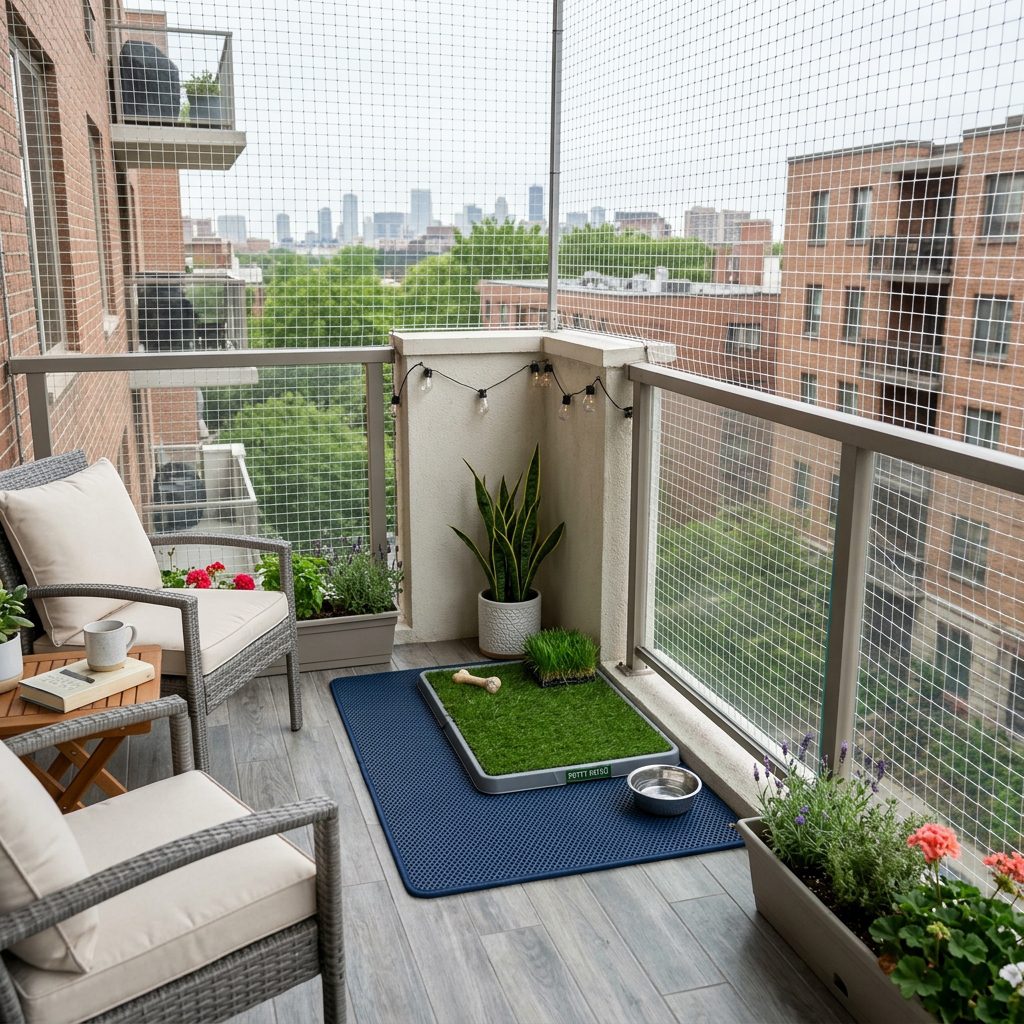
Before you bring your dog out to their new ‘restroom,’ you must ensure the environment is safe and inviting. Apartment balconies can be intimidating for some dogs, especially those sensitive to heights or city noise. Placement is key. You want the potty patch to be easily accessible but not in the middle of your high-traffic walking path. Ideally, choose a corner that is sheltered from wind and direct rain. This provides your dog with a sense of security while they are in a vulnerable state.
Balcony Safety Checklist
- Secure the Perimeter: Ensure your balcony railings are ‘puppy-proof.’ If the gaps are wide enough for your dog’s head to fit through, install balcony netting or clear acrylic shields.
- Non-Slip Surface: Place a non-slip rubber mat under the potty tray to prevent it from sliding when your dog steps on it.
- Weather Protection: Consider a small awning or a ‘potty porch’ cover if your balcony is completely exposed to the elements. Dogs are less likely to use the patch if they are getting soaked by rain.
- Visual Barriers: If your dog is reactive to people or cars below, use a privacy screen to block their view, allowing them to focus on the task at hand.
By treating the potty patch as a dedicated ‘zone,’ you help your dog understand its purpose. Avoid placing food bowls or beds near the patch, as dogs naturally prefer to keep their elimination areas separate from their living and eating quarters.
The 4-Phase Step-by-Step Training Protocol
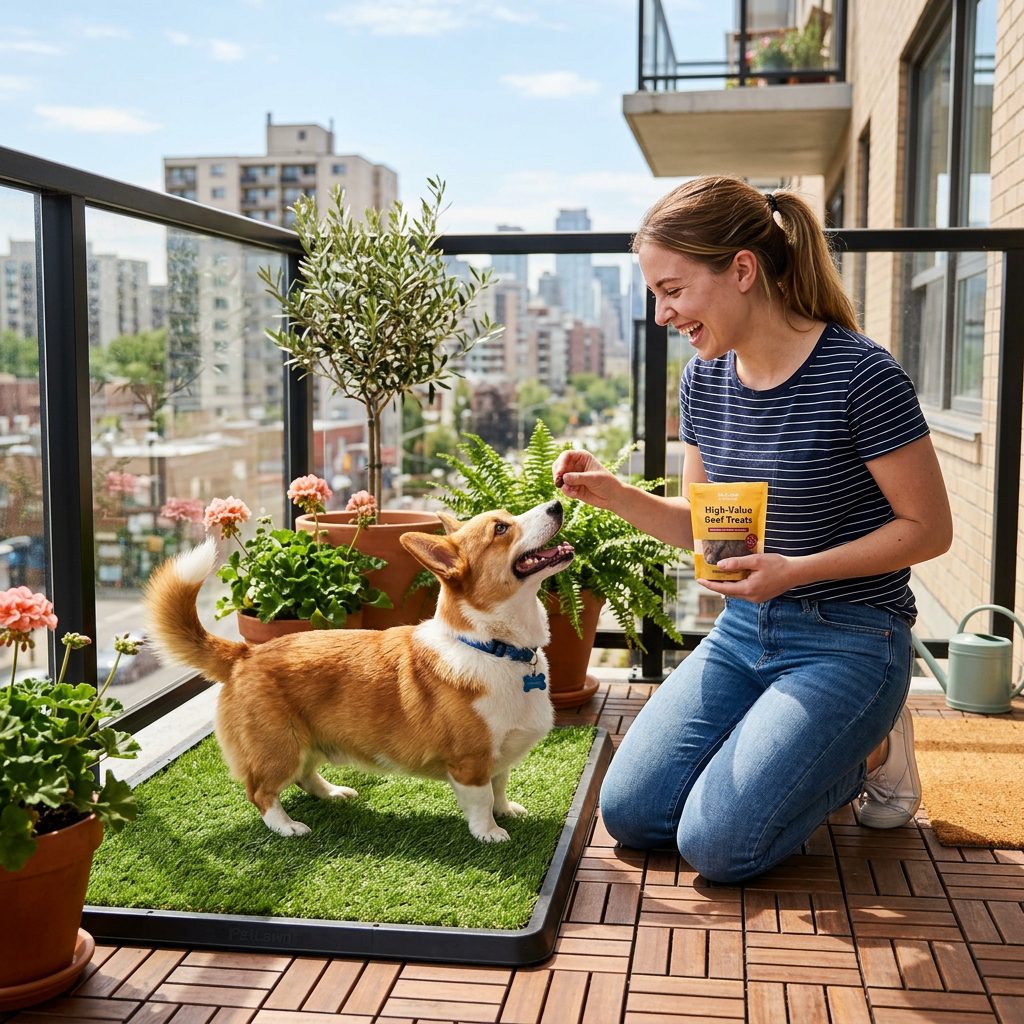
Training your dog to use a balcony potty patch requires patience, consistency, and a lot of positive reinforcement. You are essentially teaching them a new ‘house rule’ that contradicts their previous training of only going downstairs. Follow these four phases for a smooth transition.
Phase 1: Introduction and Scent Association
Start by introducing your dog to the patch while they are on a leash. Let them sniff it at their own pace. To help them understand the purpose, you can ‘prime’ the patch. Take a paper towel used to soak up a small amount of their urine from a previous walk and tuck it under the grass or grate. This olfactory cue tells their brain, ‘This is a place where I have gone before.’
Phase 2: Timing the Transitions
The best times to train are when your dog naturally needs to go: first thing in the morning, immediately after meals, and after a vigorous play session. Instead of heading for the front door, lead them directly to the balcony. Use a specific verbal cue like ‘Go Potty’ or ‘Do Your Business.’ Keep the interaction low-key and boring until they succeed.
Phase 3: The Reward System
The moment your dog finishes using the patch, throw a ‘potty party.’ Provide high-value treats (think boiled chicken or small pieces of cheese) and plenty of verbal praise. The reward must happen within three seconds of the act to create a strong mental connection. Never scold your dog if they have an accident inside or refuse to use the patch; this will only create anxiety around the balcony.
Phase 4: Fading the Leash
Once your dog is consistently using the patch while on a leash, you can start letting them out to the balcony off-leash. Monitor them from the doorway. If they start to circle and sniff, give your verbal cue. Once they are 100% reliable, you can transition to a ‘demand’ system where they signal you when they need access to the balcony.
Maintenance and Odor Management
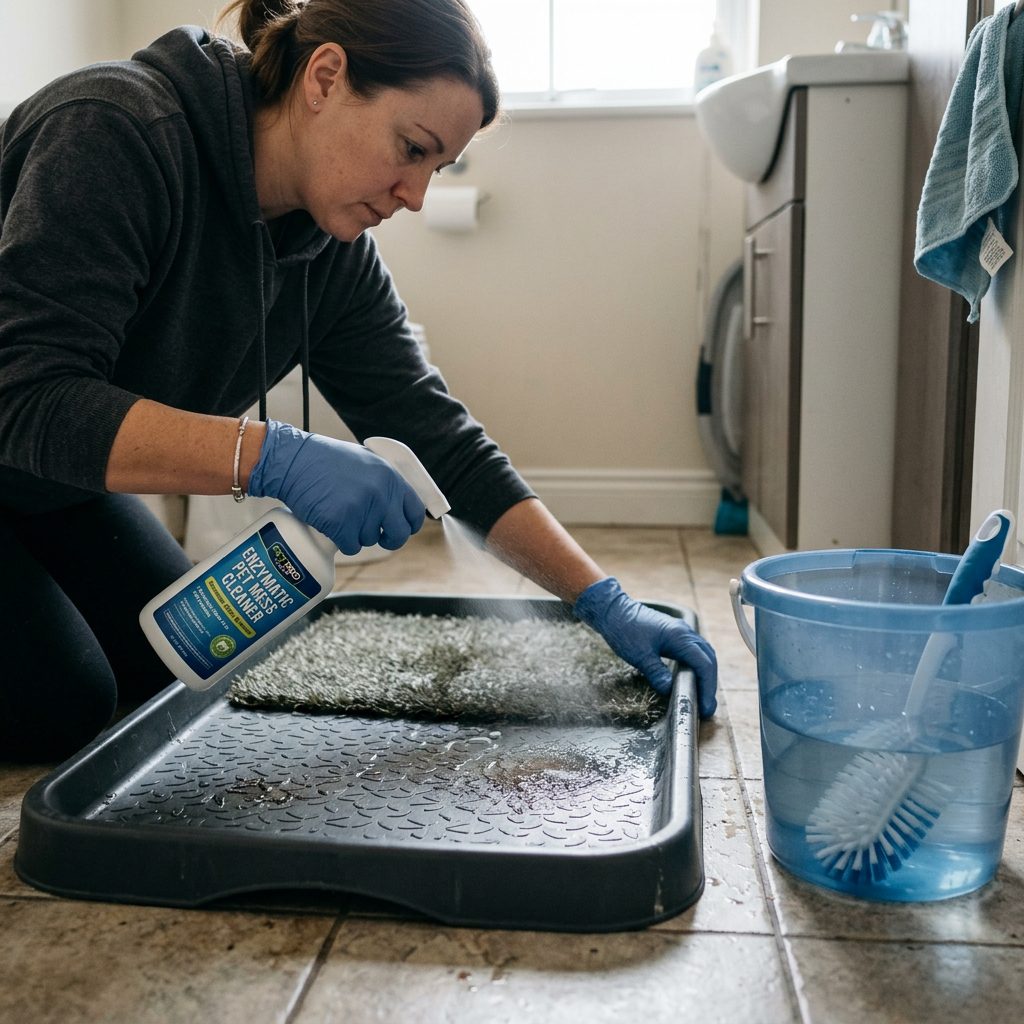
One of the biggest concerns for savvy dog owners is the potential for odors to waft into the apartment or, worse, to a neighbor’s balcony. Proper hygiene is non-negotiable. If you are using real grass, the soil will do some of the work for you, but it still needs to be replaced regularly. For synthetic or plastic systems, a strict cleaning schedule is the only way to prevent the buildup of ammonia and bacteria.
Recommended Maintenance Schedule
| Frequency | Task | Method |
|---|---|---|
| Daily | Waste Removal | Pick up solid waste immediately and dispose of it in a sealed bin. |
| Daily | Rinse | Pour a small amount of water over the urine area to flush it into the collection tray. |
| Weekly | Enzymatic Wash | Spray the entire patch with an enzymatic cleaner designed specifically for pet urine. |
| Monthly | Deep Scrub | Disinfect the collection tray and the balcony floor underneath the patch with pet-safe soap. |
| Bi-Weekly | Replacement | (For real grass) Discard the old sod and replace with a fresh, living unit. |
Always use enzymatic cleaners rather than standard household bleach or ammonia. Ammonia-based cleaners can actually smell like urine to a dog, which might encourage them to mark other areas of your home. Enzymatic cleaners contain specialized bacteria that ‘eat’ the odor-causing molecules, leaving the area truly clean.
Troubleshooting Common Challenges
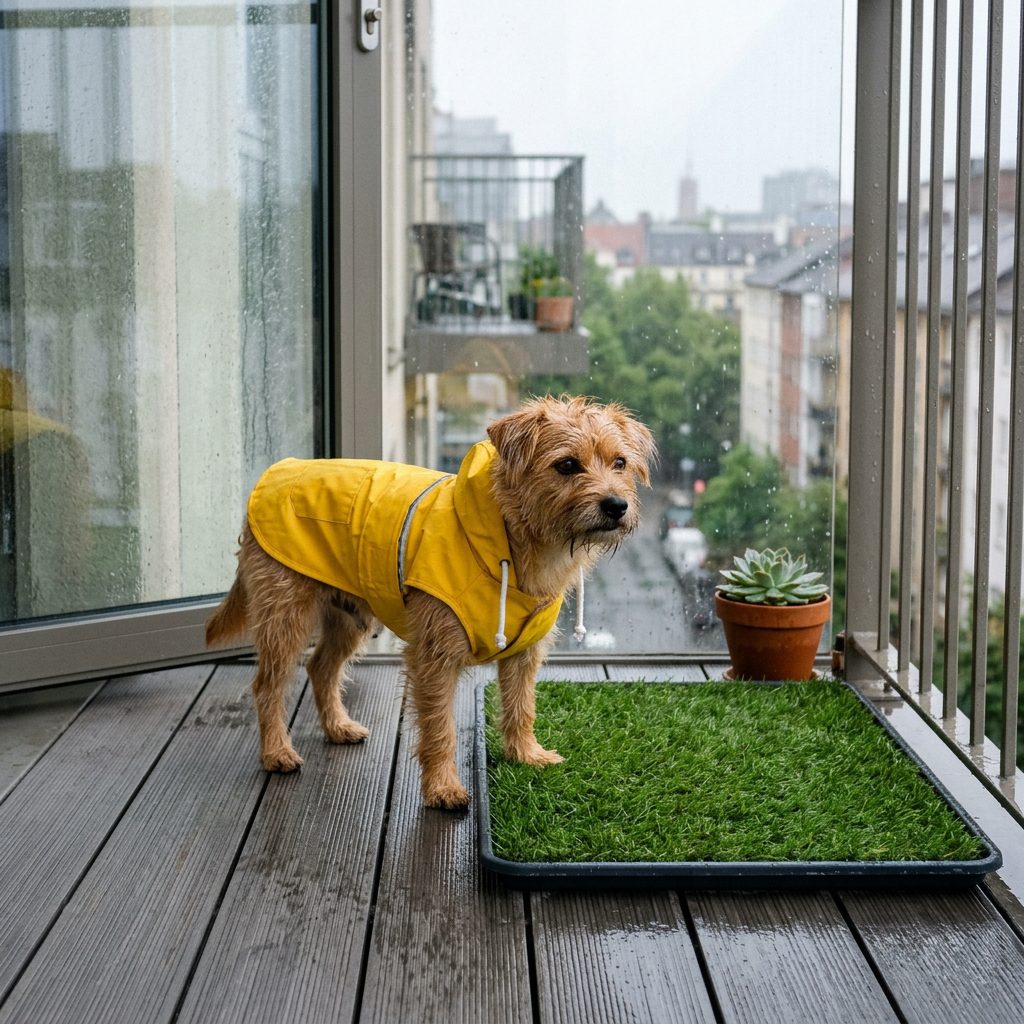
Even with the best plan, you might hit a few bumps in the road. Here is how to handle the most common issues apartment dwellers face during potty patch training.
The ‘I Won’t Step on It’ Syndrome
Some dogs dislike the texture of the patch. If your dog refuses to step on synthetic grass, try placing a piece of real sod on top of it for a week. Gradually, as they get used to the location, you can remove the sod. You can also try ‘shaping’ the behavior by rewarding them just for putting one paw on the patch, then two, then all four.
Weather-Related Regression
If it is snowing or raining heavily, your dog might suddenly ‘forget’ their training. To combat this, keep the area as dry as possible. Some owners use a large patio umbrella to create a dry zone. If the patch gets frozen, bring it inside for a few minutes to thaw (if it is a portable tray) or use a pet-safe ice melt around the perimeter of the balcony.
The ‘It’s a Bed, Not a Bathroom’ Issue
Occasionally, a dog will decide the nice new grass patch is a perfect spot for a nap. If this happens, it usually means they don’t associate the scent with elimination yet. Increase the ‘scent marking’ by using more pheromone-based attractant sprays, and ensure you are strictly following the timing protocol (taking them there only when you know they have a full bladder).
Conclusion
Mastering balcony potty patch training is a journey that requires consistency, but the payoff is immense. By providing your dog with a safe, clean, and convenient place to go, you are enhancing their quality of life and making your own apartment experience much more enjoyable. Remember that every dog learns at a different pace. Stay patient, keep your cleaning routine strict, and always lead with positive reinforcement. Soon enough, those midnight elevator rides will be a thing of the past, and you and your pup can enjoy the high-rise life to its fullest. Happy training!