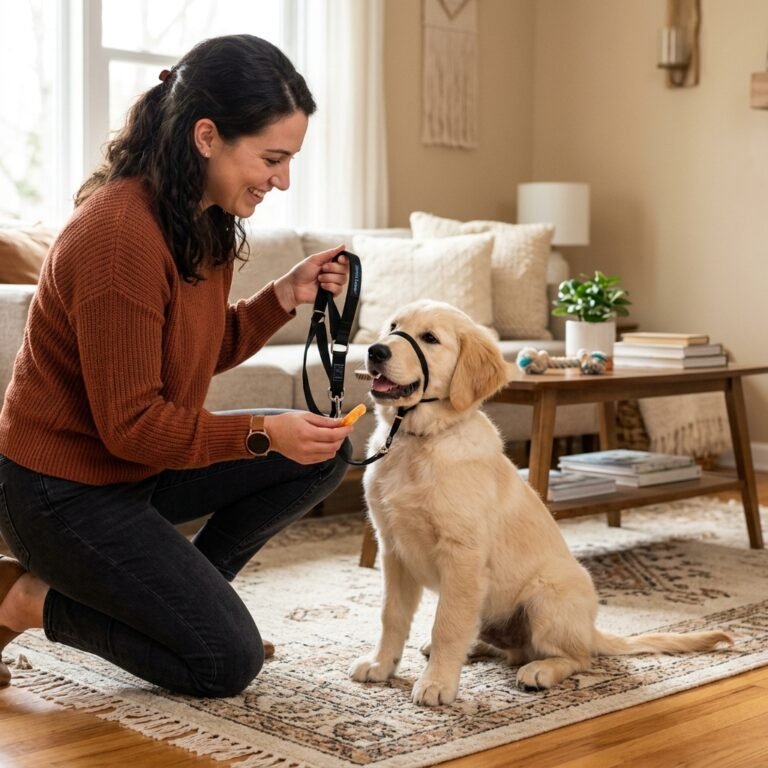
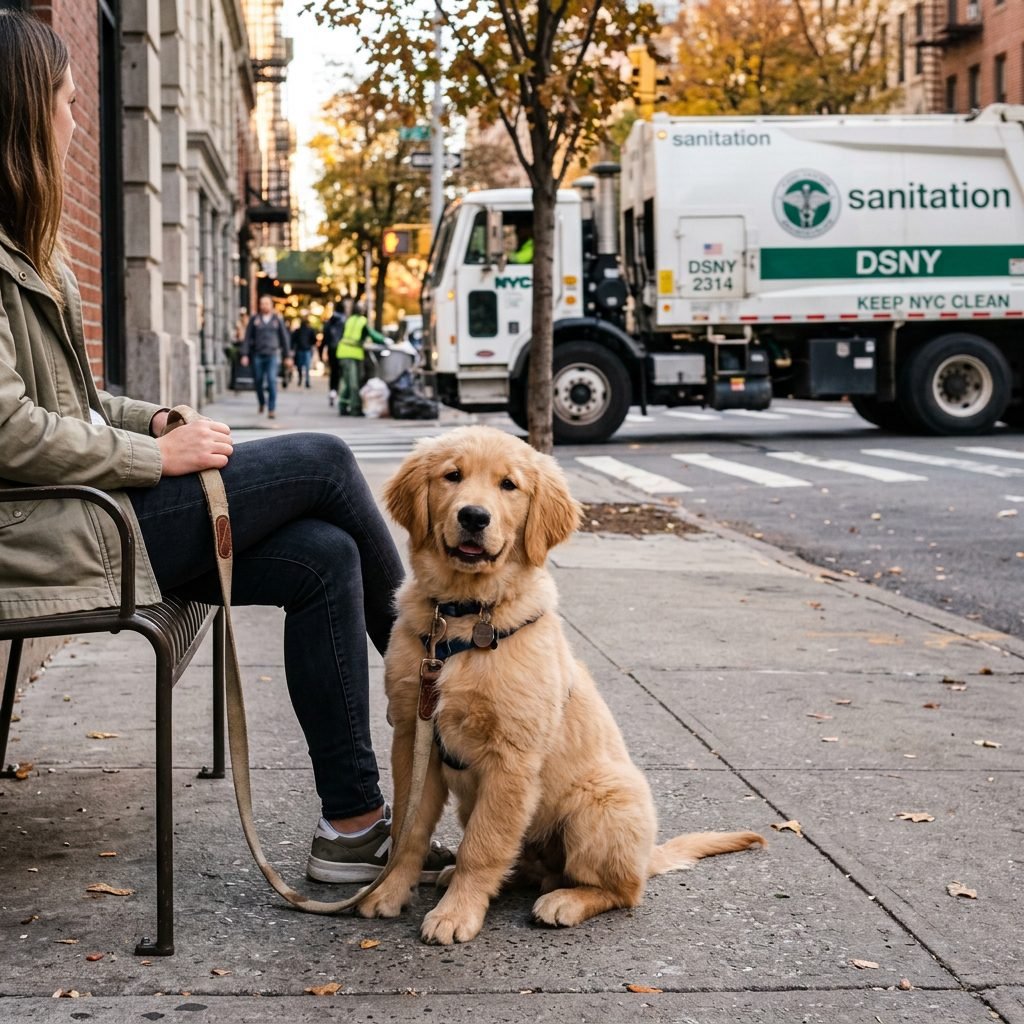
How To Stop Your Puppy Barking At Garbage Trucks (The Panic-Free Method!)
We have all been there. It is a quiet Tuesday morning, you are sipping your freshly brewed coffee, and suddenly, a mechanical roar shatters the peace. The garbage truck has arrived. Before you can even set your mug down, your sweet little puppy transforms into a frantic, barking tornado.
If you are nodding your head right now, you are absolutely not alone! For our canine companions, garbage trucks are essentially giant, noisy, smelly monsters that invade their territory once a week. It is completely natural for your puppy to feel overwhelmed, but that does not mean you have to accept the weekly chaos.
Welcome to the Panic-Free Method. As a canine behavior specialist, I have helped countless savvy dog owners just like you turn these stressful mornings into calm, manageable training opportunities. We are going to use scientifically backed techniques—specifically desensitization and counter-conditioning—to change how your puppy feels about that big, scary truck. Instead of panic, we want them to feel neutral, or maybe even excited for a tasty reward!
The goal is not just to silence the bark; it is to remove the underlying fear and anxiety that causes the bark in the first place.
In this comprehensive guide, we will dive deep into the canine psychology behind the barking, gather our essential training tools, and walk through a foolproof, step-by-step plan to bring peace back to your trash days. Let us get started on building your puppy’s confidence!
Why Your Puppy Hates the Garbage Truck (The Psychology)
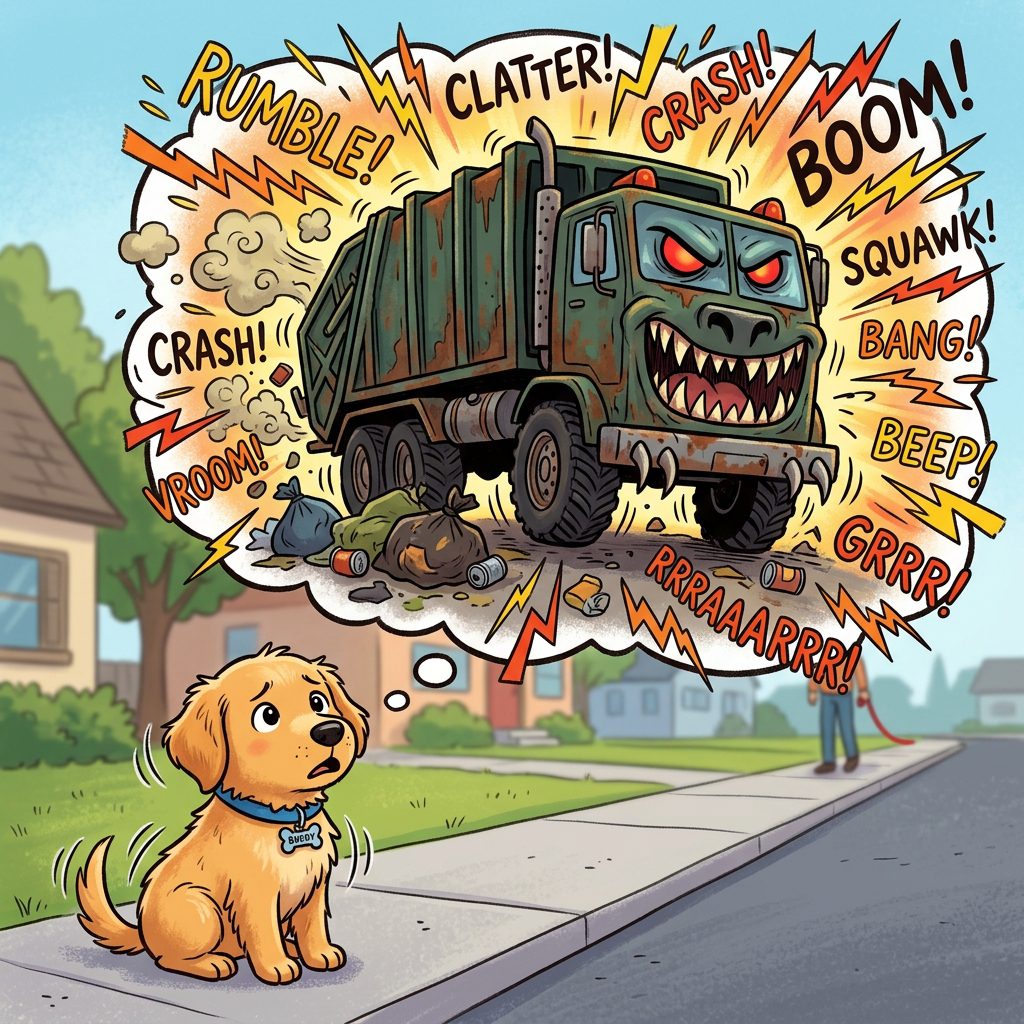
To truly fix a behavior, we first have to understand the why behind it. When your puppy barks at the garbage truck, they are not trying to be naughty or give you a headache. They are reacting to a massive sensory overload. Let us break down the three main reasons this specific vehicle triggers such an extreme reaction.
1. The Startle Factor and Noise Phobia
Dogs have an incredibly acute sense of hearing. What sounds loud to us is absolutely deafening to them. Garbage trucks hiss with air brakes, grind metal against metal, and drop heavy bins with a massive thud. This unpredictable cacophony triggers your puppy’s startle response. If they have not been properly socialized to these specific industrial sounds during their critical fear periods, the noise alone is enough to send them into a panic.
2. Territorial Instincts
Even at a young age, many puppies begin to develop a sense of territory. The garbage truck does not just drive by; it stops right in front of your house, makes a lot of noise, and then—from your puppy’s perspective—retreats because your dog barked at it! That is right, your puppy thinks their barking successfully chased the monster away. This is called self-reinforcing behavior. Every week they bark, the truck leaves, and their belief that barking works is strengthened.
3. Scent Overload
We know dogs explore the world through their noses. A garbage truck is a rolling buffet of overwhelming, pungent, and confusing odors. Combined with the terrifying sounds and massive size, the smell adds another layer of intense stimulation that can push a sensitive puppy right over their threshold.
Understanding these triggers is the first step in our Panic-Free Method. We are not just dealing with a bad habit; we are dealing with genuine fear and instinct. By approaching this with empathy, we can effectively rewire their emotional response.
The Panic-Free Method Prep: Tools, Timing, and Tactics
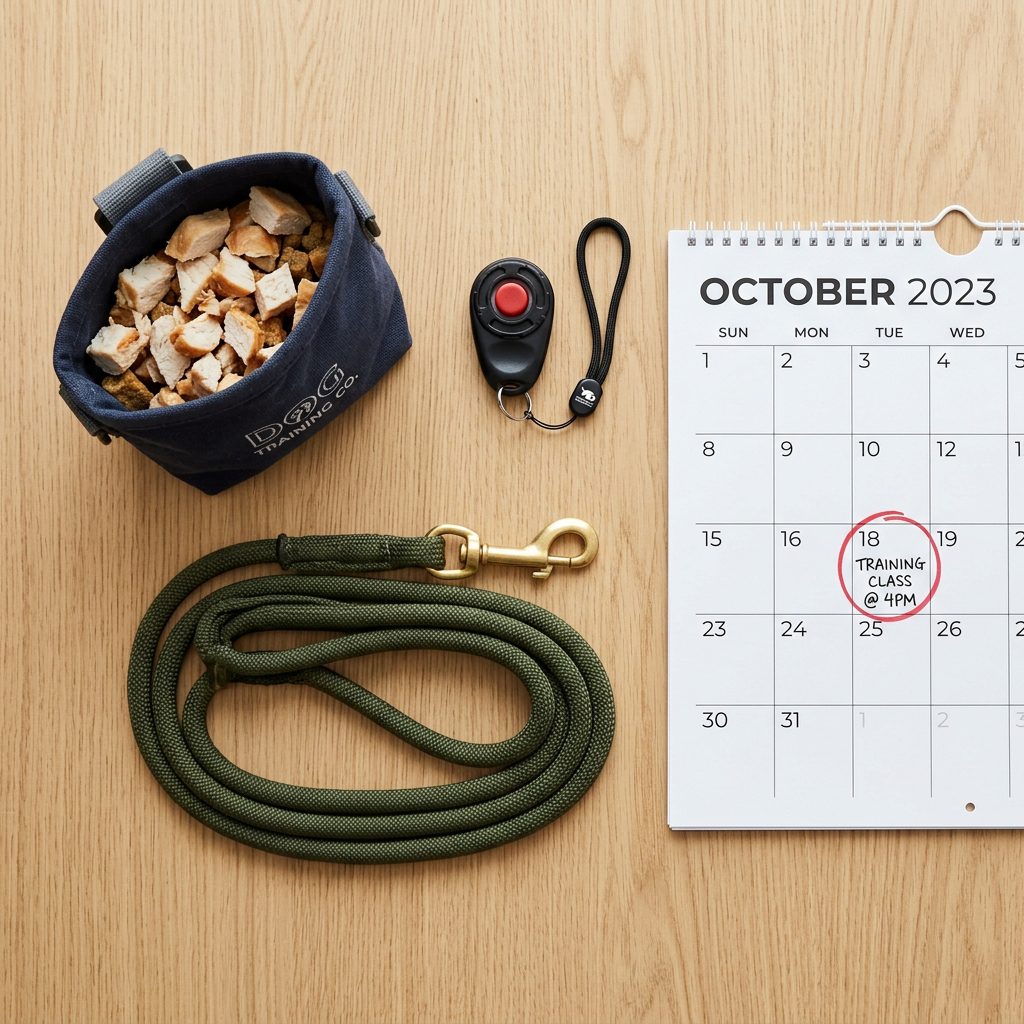
Before the truck even turns onto your street, you need to be prepared. Timing is everything in dog training, and trying to find your treats while your puppy is already barking is a recipe for failure. Here is exactly what you need to set yourself up for success.
Know Your Enemy’s Schedule
You cannot train effectively if you are caught off guard. Track exactly what time the garbage truck arrives over a few weeks. Does it come at 7:00 AM sharp, or is there a two-hour window? Knowing this allows you to preemptively set up your training environment.
The Essential Training Toolkit
We are going to rely heavily on positive reinforcement. This means you need rewards that vastly outweigh the fear of the truck. Standard kibble will not cut it here. You need high-value, irresistible treats.
| Training Tool | Purpose in the Panic-Free Method | Pro-Tip for Savvy Owners |
|---|---|---|
| High-Value Treats | To create a positive association (Counter-conditioning). | Use boiled chicken, hot dogs, or freeze-dried liver. Cut them into pea-sized pieces so your dog does not get full too quickly. |
| Treat Pouch | For quick, easy access to rewards. Timing is critical! | Wear it around your waist 10 minutes before the truck is scheduled to arrive. |
| Standard 6-Foot Leash | To manage your puppy’s movement and prevent them from rushing the window or door. | Avoid retractable leashes; you need precise control over the distance between your puppy and the trigger. |
| White Noise Machine or Music | To muffle the sound of the truck during the early stages of training. | Classical music or reggae has been scientifically proven to have a calming effect on dogs. |
Once you have your toolkit assembled and your schedule mapped out, you are officially ready to begin the active training phase.
Step-by-Step Guide: Executing the Panic-Free Method
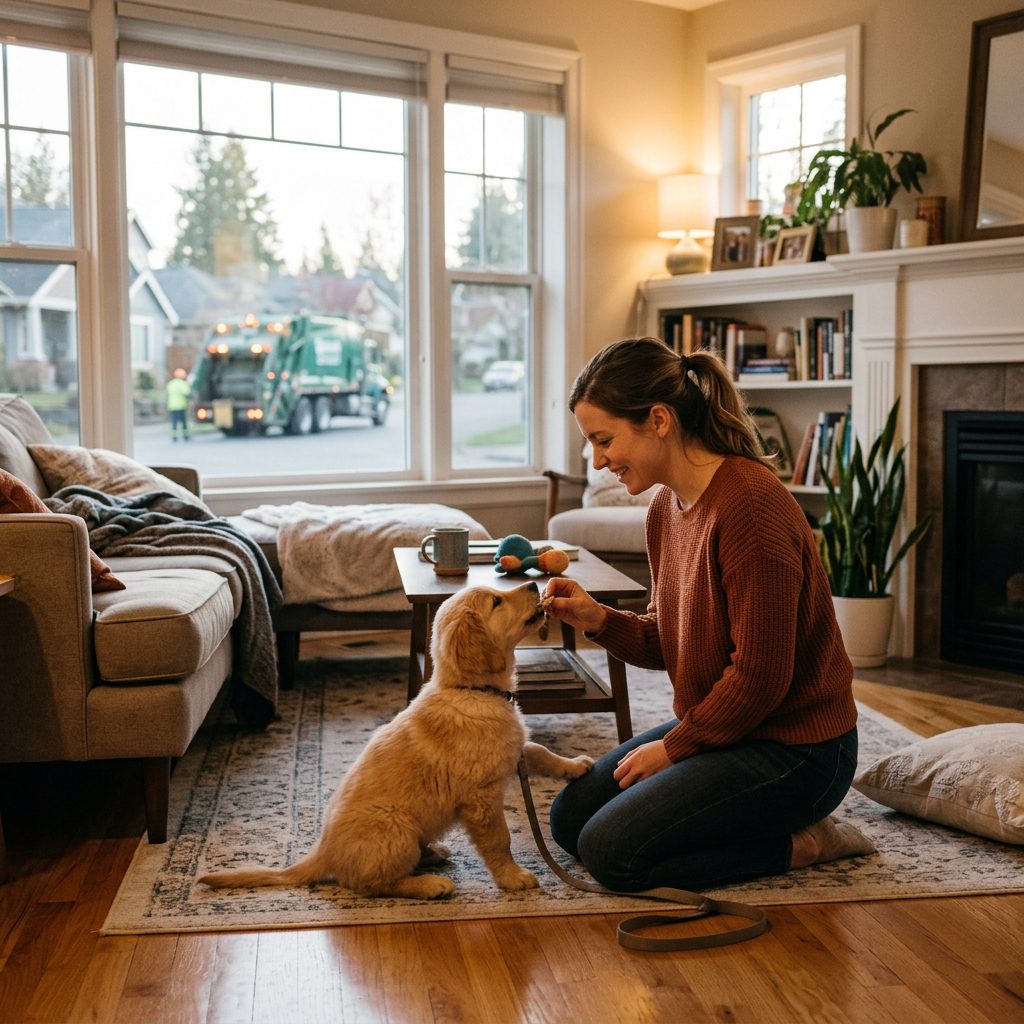
The core of the Panic-Free Method relies on two psychological concepts: Desensitization (gradually exposing your puppy to the trigger at a level they can handle) and Counter-Conditioning (changing their emotional response from negative to positive). Here is how we put it into practice.
Step 1: Find Your Puppy’s Threshold
A threshold is the distance at which your puppy notices the garbage truck but is not yet reacting (barking, lunging, or freezing). If your puppy is barking, you are too close. For the first few sessions, you might need to be in the furthest room of your house with the windows closed and white noise playing. The moment your puppy hears the distant rumble and looks towards the sound, immediately say Yes! and give them a high-value treat.
Step 2: The Look at That Game
Once your puppy is comfortable at a distance, we play the Look at That game. The sequence is crucial:
- The truck makes a noise or comes into view.
- Your puppy looks at the truck.
- You immediately mark the behavior by saying Yes! or clicking your clicker.
- Your puppy turns their head back to you.
- You deliver the treat.
We are teaching the puppy: When you see or hear that scary truck, it is actually a cue to look at me for a piece of chicken! This shifts their focus away from the perceived threat and onto you, their trusted leader.
Step 3: Gradually Decrease the Distance
Over the course of several weeks, slowly move closer to the trigger. Move from the back bedroom to the living room. Then, try opening a window an inch. Eventually, move to the front porch with your puppy on a leash. Do not rush this step. If your puppy barks, you have moved too fast. Calmly increase the distance again and end the session on a positive note.
Step 4: The Jackpot Reward
When the truck is directly in front of your house—the loudest and scariest moment—you need to deliver a jackpot. Instead of one small treat, continuously feed your puppy small pieces of chicken in rapid succession for the entire duration the truck is out front. The moment the truck drives away, the treats stop. The garbage truck literally becomes a dispenser of joy!
Consistency is your best friend. Even one missed session where the puppy is allowed to bark frantically at the window can set your training back by weeks.
Troubleshooting Common Setbacks
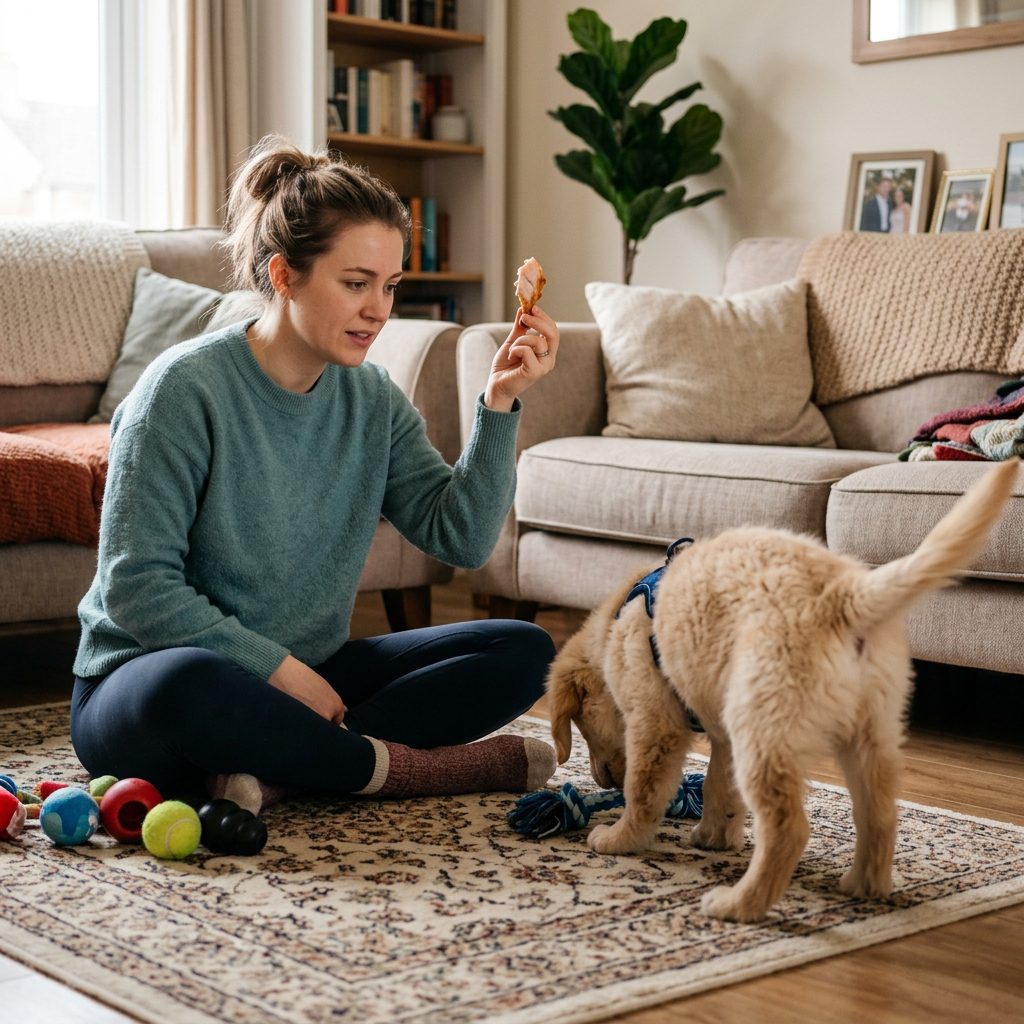
Dog training is rarely a perfectly linear journey. You will have great days, and you will have days where the garbage truck sneaks up on you and chaos ensues. Here is how to handle the most common roadblocks savvy dog owners face when using this method.
What if my puppy will not take the treat?
If your puppy refuses a piece of premium boiled chicken, it means one thing: they are over their threshold. Their brain has entered fight or flight mode, and the digestive system literally shuts down. You cannot train a dog in this state. Immediately increase the distance between your puppy and the truck. Go to another room, close the blinds, and try again next week from a much further distance.
What if the truck arrives when I am not ready?
Life happens! If you are in the shower or on a work call and hear the truck pulling up, do not panic. Your best strategy here is management. Quickly call your puppy into a room away from the street, close the door, and turn on the TV or a white noise machine. If you cannot train actively, your goal is to prevent the rehearsal of the bad behavior (the barking). Remember, every time they bark at the truck, the behavior gets stronger.
My dog does fine with the recycling truck, but barks at the garbage truck!
Dogs are incredibly specific learners. To your puppy, the recycling truck and the garbage truck might sound completely different. The recycling truck might have different brakes, a different hydraulic whine, or a different smell. You will need to treat each truck as a separate training scenario, applying the exact same step-by-step method for both.
Common Mistakes to Avoid at All Costs
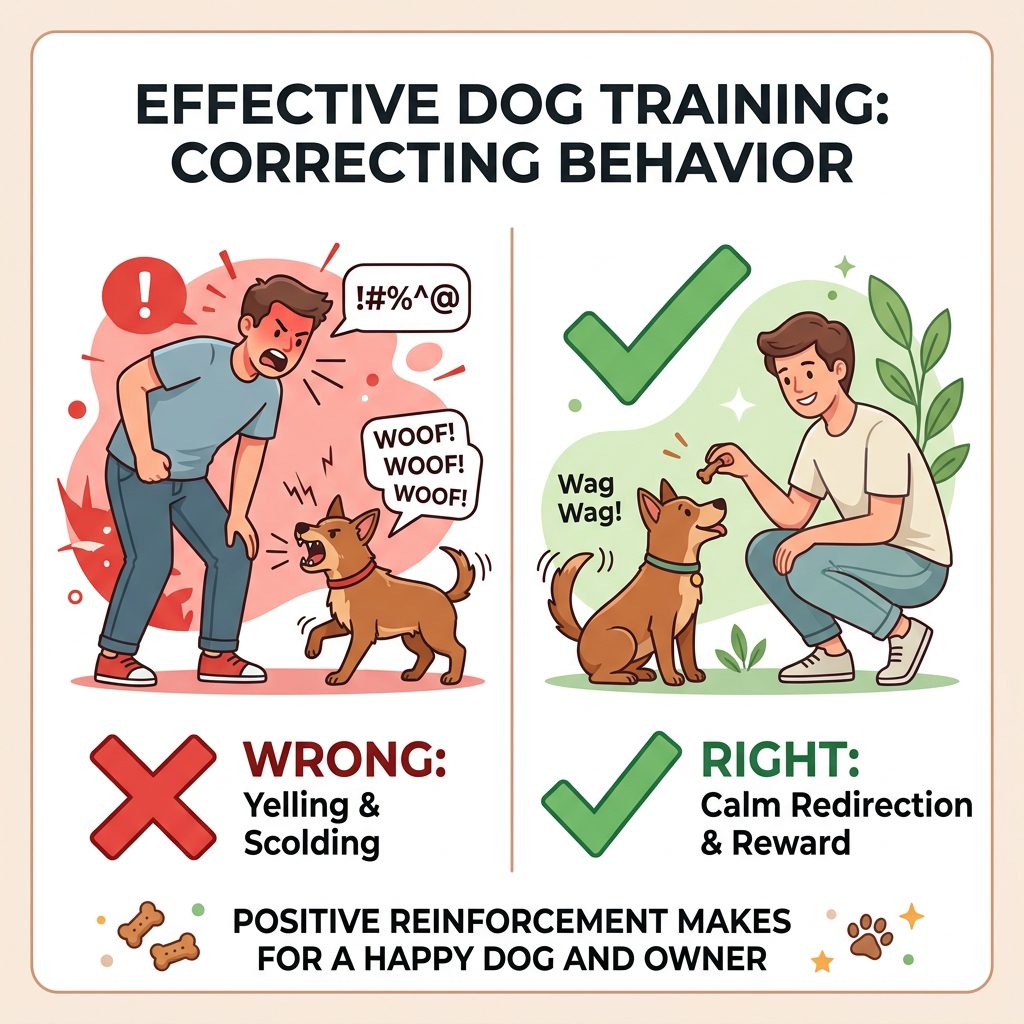
Even the most dedicated dog owners can accidentally sabotage their training efforts if they are not careful. To ensure the Panic-Free Method works seamlessly, make sure you avoid these common pitfalls.
1. Yelling No! or Quiet!
When your puppy is barking their head off at the window, it is incredibly tempting to yell Quiet! However, to your puppy, you are just barking along with them! This validates their fear and makes them think, Wow, Mom and Dad are upset about the monster too! I better bark louder! Always remain calm. Your relaxed energy will help soothe your puppy.
2. Forcing the Interaction
Never drag your puppy toward the garbage truck to show them it is okay. Flooding a dog with their fear trigger does not cure the fear; it causes learned helplessness or aggressive defensive reactions. Always let your puppy choose to look at the truck from a safe distance, and reward them for making brave choices.
3. Using Low-Value Treats
As mentioned earlier, dry kibble will not compete with a roaring diesel engine. If you are struggling to keep your puppy’s attention, upgrade your treats. Smelly, soft treats are the key to unlocking your dog’s focus during high-stress situations.
Conclusion
Stopping your puppy from barking at the garbage truck does not happen overnight, but with the Panic-Free Method, you are setting the foundation for a lifetime of calm, confident behavior. By understanding the psychology behind their fear, utilizing high-value rewards, and respecting their threshold, you are doing exactly what savvy dog owners do best: advocating for your dog’s mental well-being.
Remember to celebrate the small victories. The first time your puppy looks at the truck and then looks back at you instead of barking is a massive milestone! Stay patient, stay consistent, and keep those treat pouches fully stocked. Before you know it, trash day will just be another quiet, peaceful morning in your household. Happy training!