Untied And Annoyed? How To Stop A Puppy From Biting Your Shoelaces While Walking
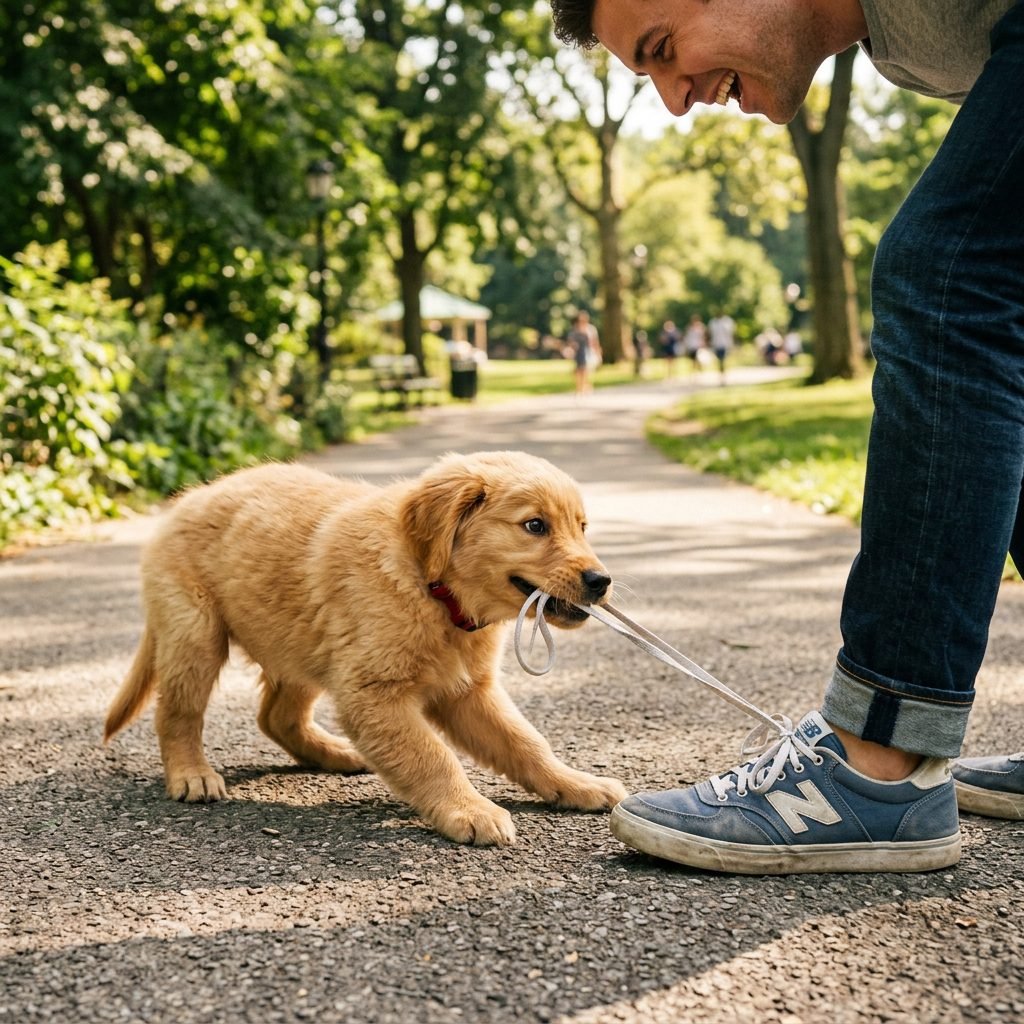
Picture this: You have finally managed to get your energetic puppy clipped into their leash, you have your treats ready, and you are looking forward to a peaceful morning stroll. You take three steps, and suddenly, you feel a sharp tug at your ankles. You look down, and there is your furry friend, growling playfully while death-gripping your shoelaces. You untangle them, walk another two feet, and—snap—they are back at it again. If this sounds familiar, you are not alone. For a puppy, your shoelaces are essentially interactive, floppy, moving snakes that are conveniently located at eye level. While it might seem cute for the first thirty seconds, shoelace biting is a habit that can quickly turn a pleasant walk into a frustrating ordeal, and more importantly, it can be a safety hazard for both you and your pup.
As a canine specialist, I have seen many savvy owners struggle with this exact behavior. It is a classic case of a puppy’s natural instincts clashing with human expectations of decorum. In this comprehensive guide, we are going to dive deep into the ‘why’ behind the bite, the tools you need to reclaim your footwear, and a step-by-step training protocol to ensure your walks are focused on exploring the world, not eating your shoes. We will also cover common mistakes to avoid and how to troubleshoot those particularly stubborn lace-lovers. By the end of this article, you will have a clear roadmap to transition from ‘untied and annoyed’ to walking with a focused, well-behaved companion.
Understanding the Obsession: Why Your Puppy Loves Your Laces

Before we can fix the behavior, we have to understand what is going on inside that little puppy brain. To a puppy, shoelaces aren’t just functional fasteners; they are high-value entertainment. Here are the primary reasons why your laces are under attack:
1. The Prey Drive and Movement
Puppies are born with an innate prey drive. Anything that moves quickly, flutters, or dangles triggers their instinct to chase and grab. When you walk, your shoelaces bounce and sway in a rhythmic, unpredictable fashion. To a puppy, this looks exactly like a small animal scurrying away. The faster you walk, the more the laces move, and the more ‘alive’ they seem.
2. Teething and Texture
Puppies go through an intense teething phase where their gums are sore and itchy. The texture of shoelaces—usually a woven cotton or synthetic blend—provides a satisfying resistance when chewed. It feels good on their teeth. Additionally, your shoes carry your scent most strongly, making them a comforting, familiar object to interact with.
3. Attention Seeking
Even negative attention is attention. When your puppy bites your laces, what do you do? You stop. You look at them. You might talk to them (even if it is to say ‘No!’). You might even reach down to pry their mouth open. From the puppy’s perspective, they just figured out a magic button that makes their favorite human stop walking and play with them. They have successfully initiated a game of ‘tug-of-war,’ and in their mind, they are winning.
The key to stopping the behavior is realizing that your puppy isn’t being ‘bad’; they are being a puppy. Our job is to provide them with a more rewarding alternative.
The Shoelace Survival Kit: Tools and Preparation
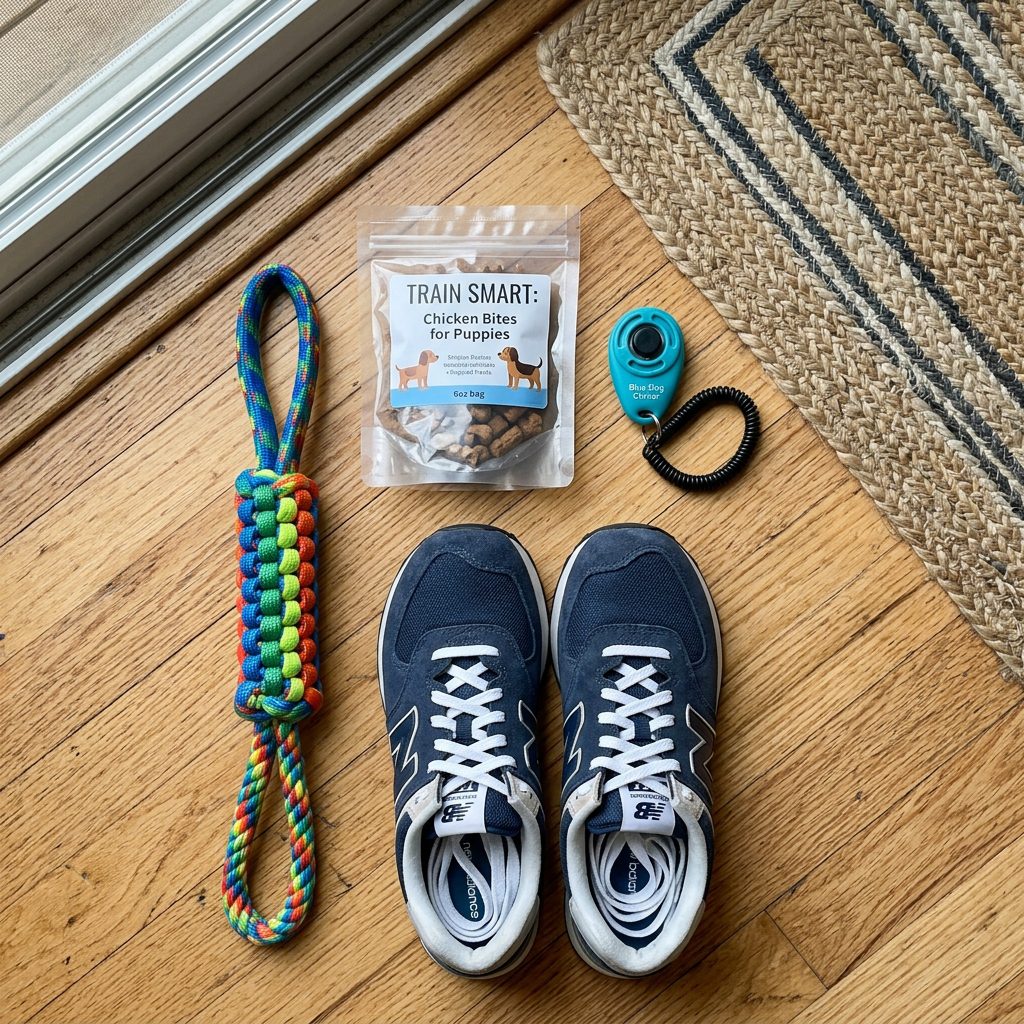
Success starts before you even step out the door. If you try to train this behavior without the right tools, you are setting yourself and your puppy up for failure. You need to be more interesting than your laces. Here is a breakdown of the gear that will help you succeed.
| Tool | Purpose | Why It Works |
|---|---|---|
| High-Value Treats | Reward | Must be better than the ‘reward’ of biting laces (e.g., boiled chicken, cheese). |
| A Long Tug Toy | Redirection | Provides a legal outlet for their biting and chasing instinct. |
| Short Training Leash | Management | Keeps the puppy close enough to manage their head movement. |
| Clicker (Optional) | Marking | Precisely marks the moment the puppy chooses to look at you instead of the laces. |
| Deterrent Spray | Prevention | Bitter apple spray can make the laces taste unpleasant (use as a last resort). |
Preparation Steps
- Burn off steam: A puppy with too much pent-up energy is more likely to act out. Engage in 5-10 minutes of indoor play before the walk.
- Tuck those laces: Before you even start training, minimize the temptation. Double-knot your laces and tuck the loops into the sides of your shoes. If there is nothing dangling, there is nothing to chase.
- Choose the right footwear: During the height of this training phase, consider wearing slip-on shoes or boots that don’t have dangling laces. This removes the stimulus entirely while you work on foundational ‘Leave It’ commands.
The Step-by-Step Guide to Shoelace-Free Walks
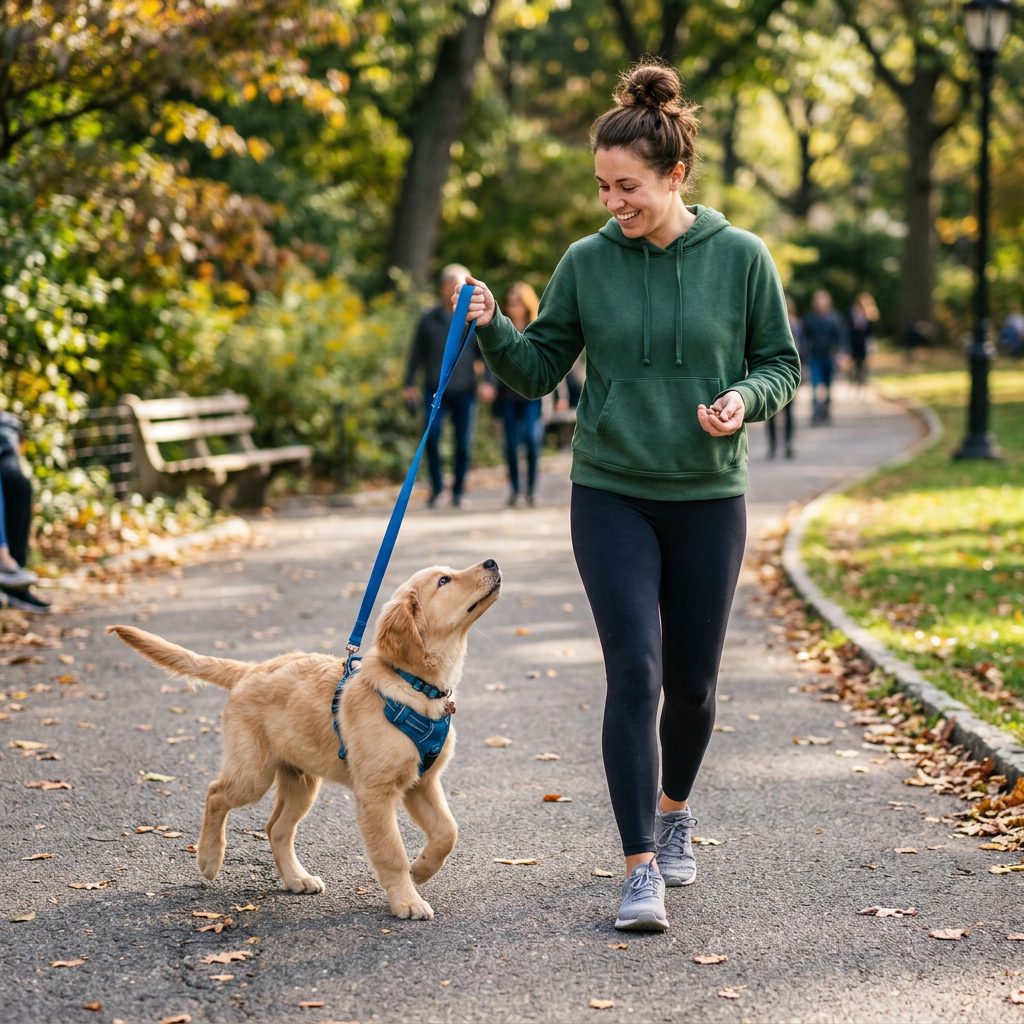
Now that we have the ‘why’ and the ‘what,’ let’s get into the ‘how.’ This training protocol relies on Positive Reinforcement and Proactive Redirection. We want to teach the puppy that walking nicely by your side is far more lucrative than attacking your feet.
Step 1: The ‘Leave It’ Foundation
You cannot expect your puppy to leave your laces alone outside if they don’t know what ‘Leave It’ means inside. Start in your living room with a treat in a closed fist. When the puppy stops sniffing/pawing at your hand, click and reward. Progress to a treat on the floor, then eventually to a dangling shoelace. Only move to the walk once they are 90% successful indoors.
Step 2: The Proactive Reward (The ‘Look at Me’)
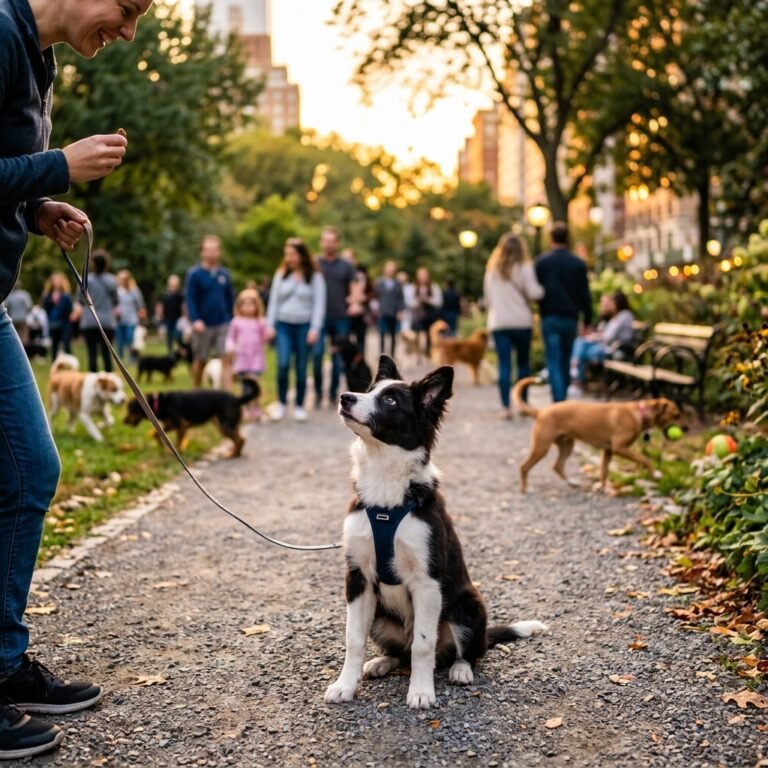
The best way to stop a bite is to prevent it from happening. As you begin your walk, hold a few high-value treats in your hand. Every few steps that your puppy walks without looking at your shoes, give them a treat. You are reinforcing the ‘default’ behavior of walking calmly. If they look at your laces but don’t bite, say ‘Yes!’ and reward immediately. You are rewarding the choice to resist temptation.
Step 3: The Redirection Technique
If your puppy starts to fixate on your laces (you will see their ears go forward and their body stiffen), immediately present the tug toy. Wiggle it on the ground to make it more exciting than your feet. When they grab the toy, keep walking for a few steps while they hold it. This fulfills their need to carry or bite something while moving.
Step 4: The ‘Game Over’ Response
If the puppy successfully grabs your laces, do not pull away. Pulling away mimics the movement of prey and encourages them to grip tighter. Instead, become a statue. Stop moving entirely. Cross your arms and look away. The ‘game’ of movement has ended. Once they let go (even for a second), ask for a ‘Sit,’ reward them, and then resume the walk with a focus on Step 2.
Step 5: Increasing Duration
Gradually increase the number of steps between treats. Start with a treat every 3 steps, then every 10, then only at street corners. This builds the puppy’s ‘focus muscle’ over time.
Troubleshooting Common Challenges
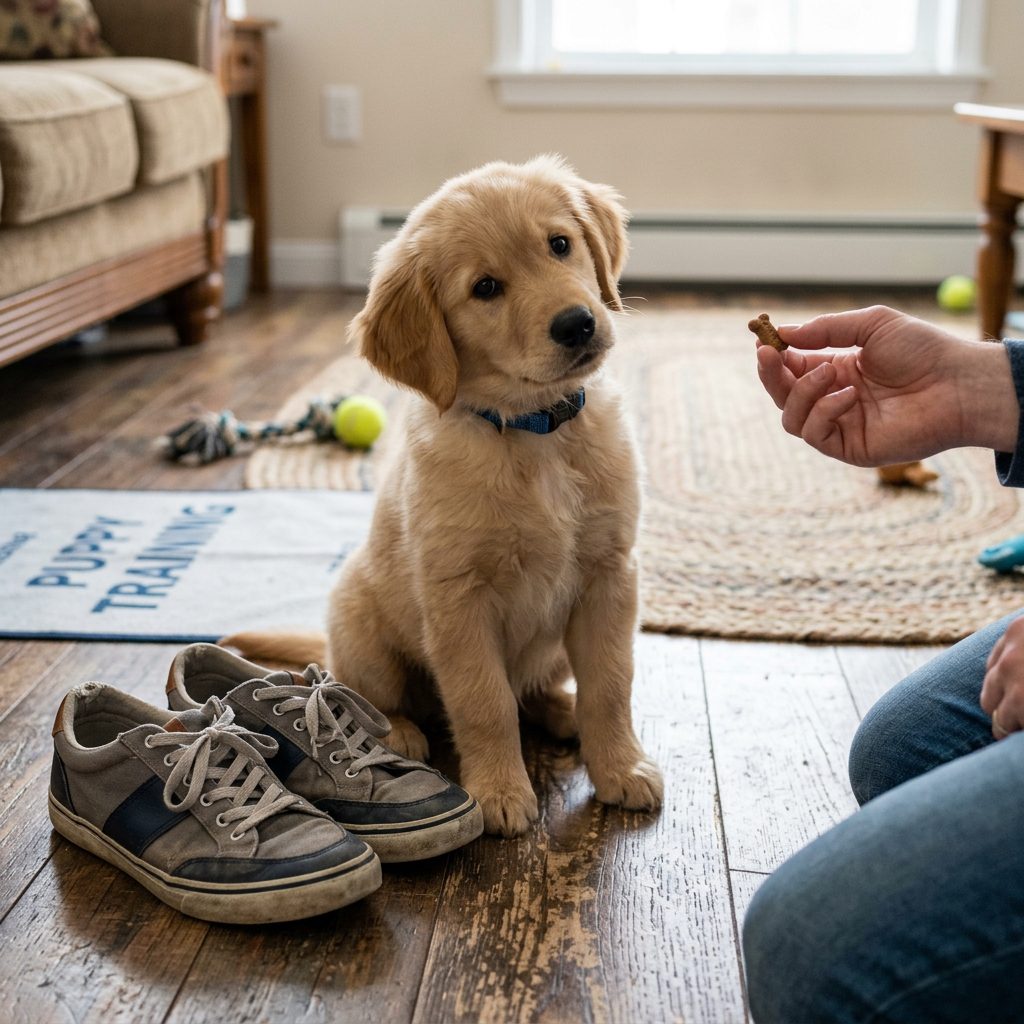
Even with the best training, puppies are unpredictable. Here is how to handle common roadblocks that might arise during your training sessions.
What if my puppy won’t let go?
If your puppy has a ‘death grip’ on your laces and becoming a statue isn’t working, do not get angry. Instead, use a ‘trade.’ Place a high-value treat right in front of their nose. They will have to open their mouth to take the treat. As soon as they drop the lace, move the treat away from your feet so they have to step back to get it. This creates physical distance between them and the ‘target.’
What if they start jumping instead?
Often, when we stop a puppy from biting laces, they try a different attention-seeking behavior, like jumping on your legs. The solution remains the same: ignore the jumping, and reward the moment all four paws are on the ground. Use a ‘Scatter Feed’ (tossing a few treats on the grass) to get their nose on the ground and their mind off your legs.
My puppy is ‘Zooming’ on the leash
If your puppy is biting laces, growling, and running in circles (the ‘zoomies’), they are likely overstimulated. Their ‘bucket’ is full, and they can no longer process training. At this point, the walk should end. Calmly pick them up if possible, or shorten the leash and head home. Next time, try a shorter walk or a quieter environment.
Consistency is the enemy of bad habits. If you allow the biting ‘just once’ because you are in a hurry, you reset the puppy’s progress.
Long-Term Management and Prevention
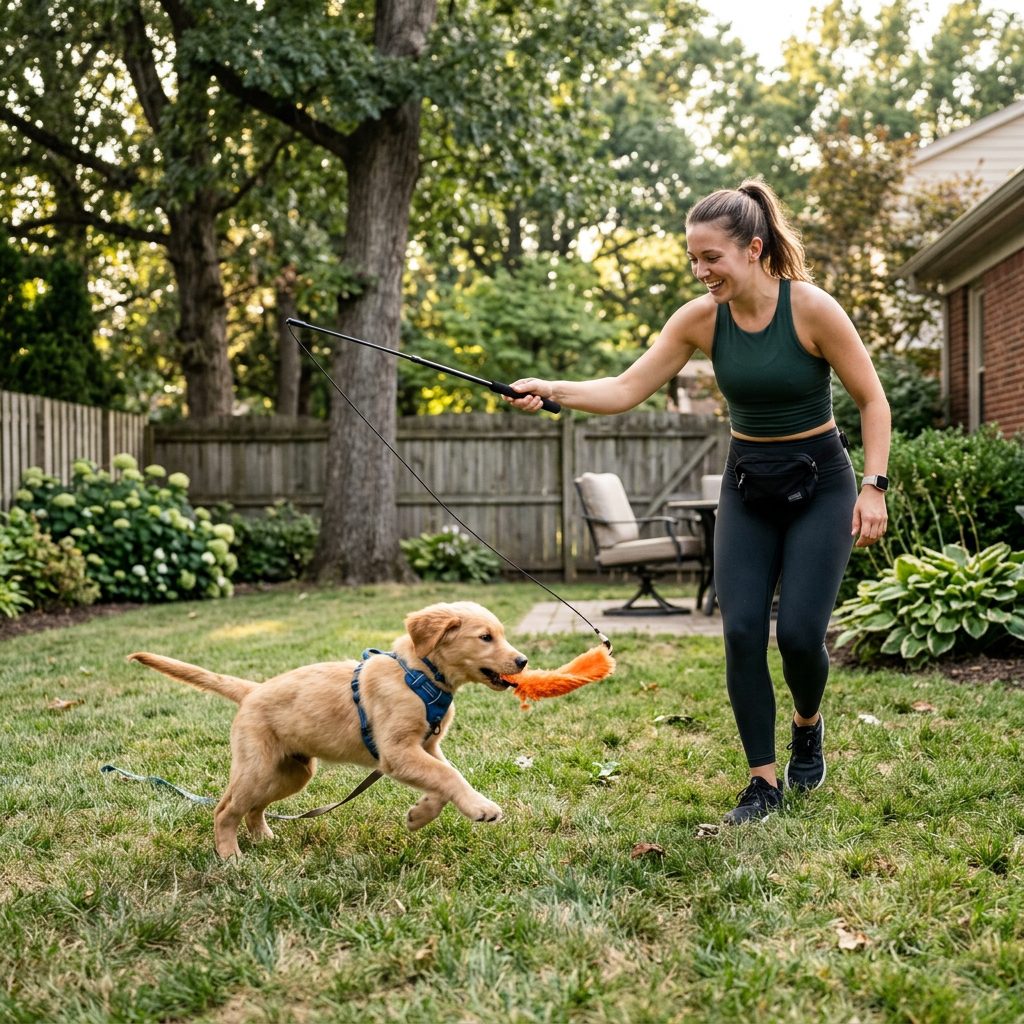
Training takes time, and you won’t solve this in a single afternoon. While you are working on the behavioral side, use these management strategies to make your life easier and keep your laces intact.
Environmental Control
If you know your puppy is particularly bitey in the morning, save your ‘training walk’ for the afternoon when they are calmer. Use a head halter (like a Gentle Leader) if the puppy is older, as this gives you more control over where their nose goes, making it physically harder for them to reach your laces.
Alternative Outlets
Ensure your puppy has plenty of appropriate items to bite throughout the day. A puppy who has spent 20 minutes chewing a frozen Kong or playing with a flirt pole is much less likely to seek out your shoelaces for entertainment. Biting is a biological need; our goal is to direct it toward appropriate objects.
The Power of the ‘Find It’ Game
If you see your puppy starting to focus on your feet, shout ‘Find it!’ and toss a handful of treats into the grass. This redirects their focus from your shoes to the ground, engaging their nose (which is a calming activity for dogs) and breaking the cycle of fixation.
Conclusion
Stopping a puppy from biting your shoelaces is a journey that requires patience, consistency, and a good sense of humor. Remember, your puppy isn’t trying to annoy you; they are simply interacting with a world that is full of exciting, moving objects. By understanding their motivations—whether it is prey drive, teething, or a desire for attention—you can provide the right alternatives and rewards to shape their behavior.
Focus on being proactive rather than reactive. Reward the good choices, ignore or redirect the bad ones, and don’t be afraid to use management tools like tucked laces or deterrents while your puppy is still learning. With time, those dangling laces will lose their luster, and you will find yourself enjoying long, uninterrupted walks with a companion who is more interested in the scents of the neighborhood than the strings on your shoes. Happy training!