Leash Bitter? How to Train Your Puppy to Stop Chewing on the Leash Handle During Walks
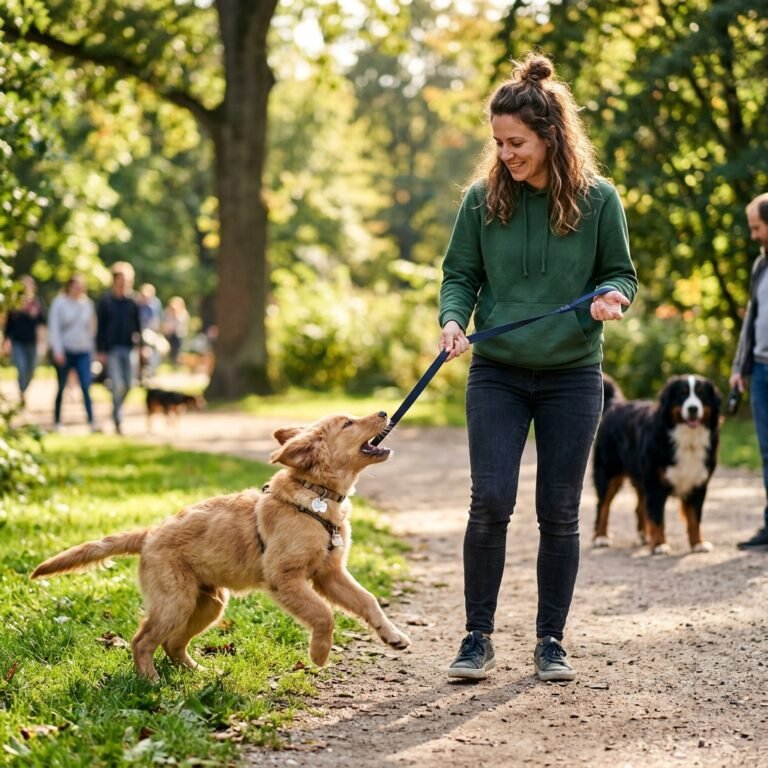
Welcome to the wonderful, and sometimes slightly damp, world of puppy parenthood! If you are reading this, you have likely experienced the specific frustration of a walk that turns into a game of tug-of-war. You are ready for a brisk stroll, but your puppy has other ideas—specifically, that your expensive nylon leash handle is the most delicious chew toy ever invented. Don’t worry, savvy dog owner; you are not alone. Leash biting is one of the most common hurdles in early canine education. It is not just a nuisance; it can lead to frayed gear, safety risks if the leash snaps, and a whole lot of stress for both ends of the lead.
In this comprehensive guide, we are going to dive deep into the canine psyche to understand why your puppy is obsessed with that handle. We will then equip you with a professional-grade toolkit and a step-by-step training protocol designed to transform your ‘leash bitter’ into a model walker. Whether you are dealing with a teething puppy or a high-energy adolescent who thinks everything is a game, we have the solutions you need. Let’s turn those chaotic tugging matches into the peaceful, bonding walks you’ve been dreaming of.
Understanding the ‘Why’: The Psychology of Leash Biting
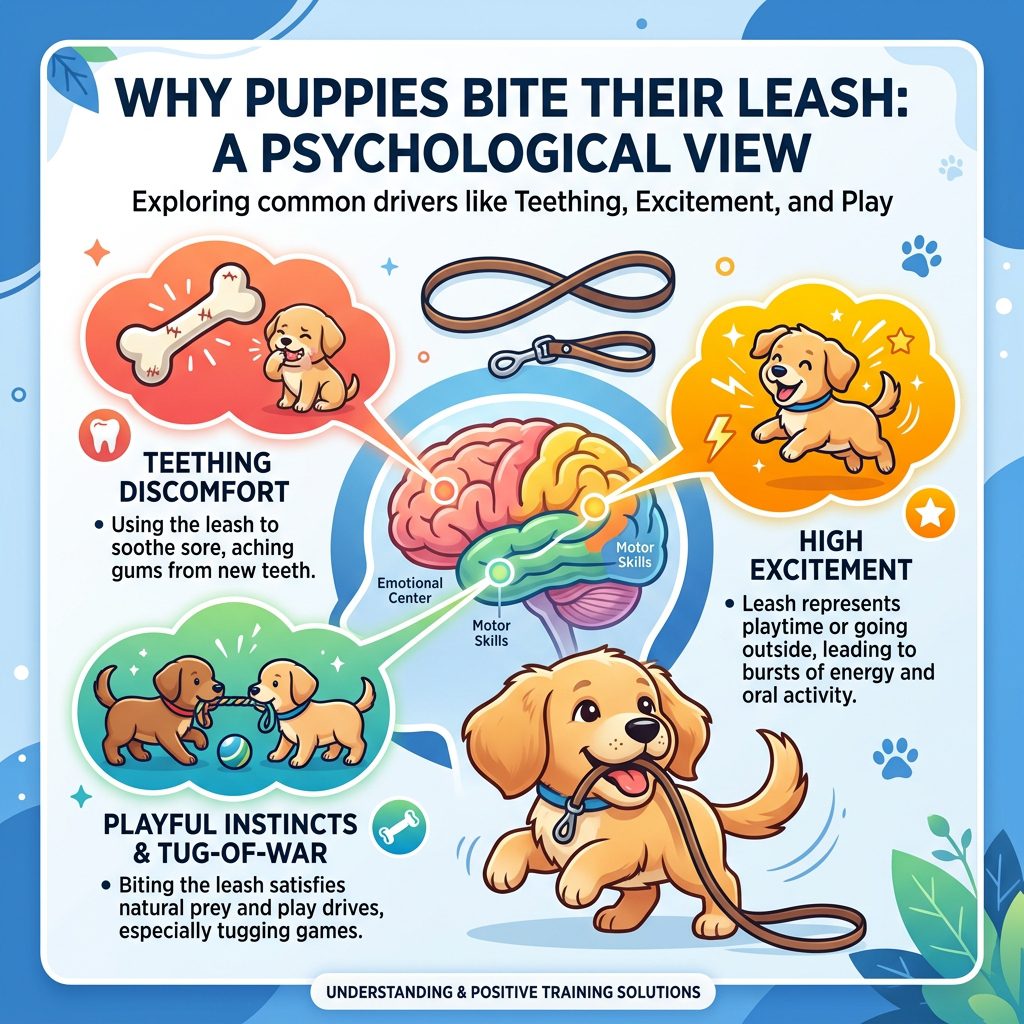
Before we can fix the behavior, we have to understand where it is coming from. Puppies don’t bite the leash to spite you; they do it because it serves a purpose in their world. Understanding these motivations allows us to address the root cause rather than just the symptom.
1. The Teething Phase
Just like human babies, puppies go through a significant teething period. Between the ages of 3 and 6 months, those needle-like baby teeth are falling out to make room for adult chompers. This process is uncomfortable! Chewing on something with a bit of ‘give,’ like a leash handle or the leash itself, provides soothing pressure on their sore gums.
2. Overstimulation and Arousal
The world is a big, exciting, and sometimes scary place. For many puppies, the sight of the leash signals that something exciting is about to happen. This spike in adrenaline (arousal) needs an outlet. Since puppies explore the world with their mouths, they often redirect that pent-up energy onto the closest thing available: the leash. If your puppy starts biting the leash ten minutes into the walk, they might be overstimulated by the environment.
3. Attention-Seeking Behavior
Puppies are social geniuses. They quickly learn that if they bite the leash, you will stop, look at them, talk to them (even if you are scolding), and perhaps even try to pull the leash out of their mouth. To a puppy, any attention is good attention. If they feel ignored during a walk, biting the handle is a guaranteed way to get you to engage with them.
4. The Instinctive Prey Drive
Many breeds have a high prey drive. A moving, dangling leash looks a lot like a tail or a small animal scurrying away. When the leash flickers in their peripheral vision, their predatory instincts kick in, and they ‘hunt’ the leash handle.
Pro Tip: Observe when the biting starts. Is it right at the door? During the middle of the walk? When you see another dog? Identifying the trigger is 50% of the solution.
The Essential Toolkit: Gear and Preparation
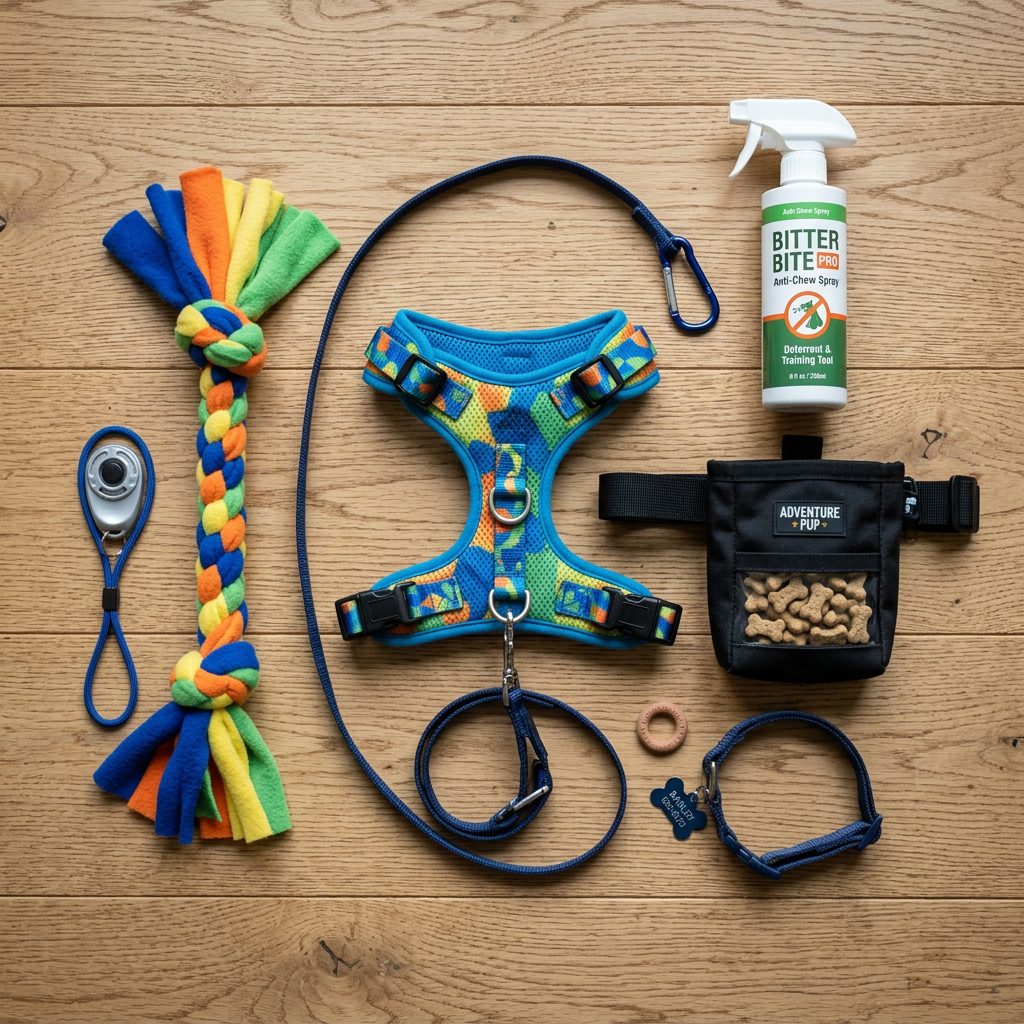
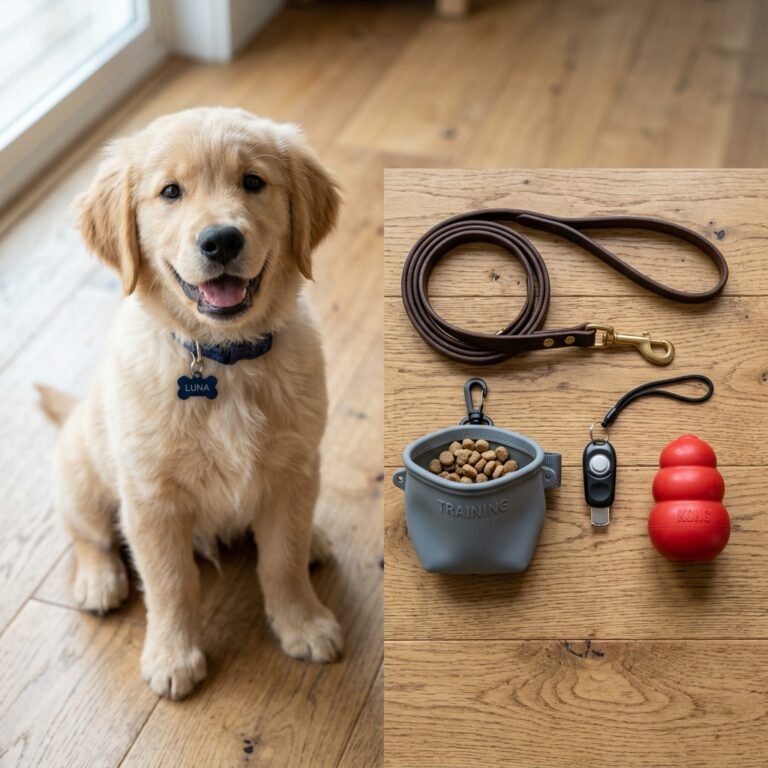
Success in training starts with having the right tools. You wouldn’t try to build a house without a hammer, and you shouldn’t try to stop leash biting without a few strategic items. Here is what you need to gather before you start your training sessions.
| Tool | Purpose | Why It Works |
|---|---|---|
| Double-Ended Leash | Management | Allows for better control and can be clipped to a harness in two places, making it harder to grab. |
| Bitter Deterrent Spray | Aversion | Applying a pet-safe bitter spray to the handle makes the ‘target’ taste unpleasant. |
| High-Value Treats | Motivation | Small pieces of chicken, cheese, or freeze-dried liver to reward ‘Leave It’ behaviors. |
| Alternative Toy | Redirection | A long tug toy or a ‘fleece tug’ that is more appealing than the leash. |
| Front-Clip Harness | Control | Redirects the puppy’s body toward you rather than away, reducing the leverage for tugging. |
Applying Bitter Sprays Correctly
When using a bitter spray (like Bitter Apple or Bitter Cherry), do not just spray it and walk out the door. Let it dry on the leash handle first. The goal is for the puppy to realize that the leash handle is no longer a fun or tasty object. Note: Never spray the deterrent directly on your puppy.
The Power of High-Value Rewards
During the training phase, ‘kibble’ usually won’t cut it. You are competing with the high-octane fun of a tug-of-war game. You need treats that make your puppy think, ‘Wow, I’d much rather look at my owner than bite this strap!’
The Step-by-Step Training Protocol: Stop the Bite
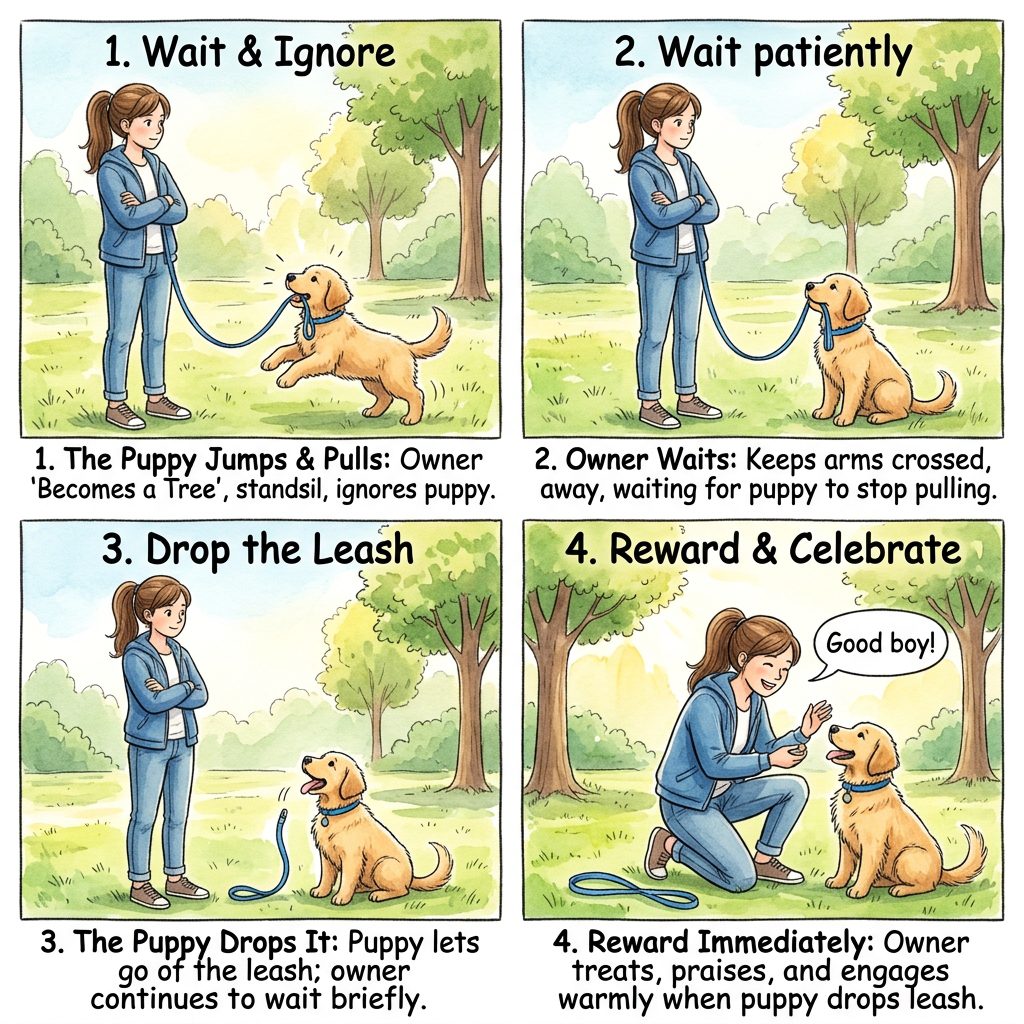
Now that we understand the ‘why’ and have our gear, it is time to get to work. We will use a combination of management (preventing the behavior) and active training (teaching a new behavior).
Step 1: The ‘Pre-Walk’ Calmness Check
Most leash biting starts before you even leave the house. If your puppy is spinning, barking, and jumping as you reach for the leash, their arousal levels are already too high. The Rule: The leash only gets clipped on when the puppy is sitting or standing calmly. If they mouth the leash the moment it’s on, take it off and wait 30 seconds. Repeat until they can wear the leash without attacking it.
Step 2: The ‘Leave It’ and ‘Drop It’ Foundation
You cannot effectively stop leash biting if your puppy doesn’t understand these two commands. Practice them inside your home without the distraction of the outdoors.
- Leave It: Place a treat in your closed hand. When the puppy stops sniffing/licking the hand, say ‘Yes!’ and reward with a different treat from your other hand. Gradually move to the floor, then to the leash.
- Drop It: Trade a toy for a high-value treat. When they release the toy, say ‘Drop It’ and reward. Eventually, use this when they have the leash handle in their mouth.
Step 3: Redirection During the Walk
Carry a ‘legal’ chew toy with you. If you see your puppy’s eyes glaze over and they start targeting the leash, immediately offer the toy. You are telling them: ‘You can’t chew that, but you can chew this!’
Step 4: The ‘Be a Tree’ Technique
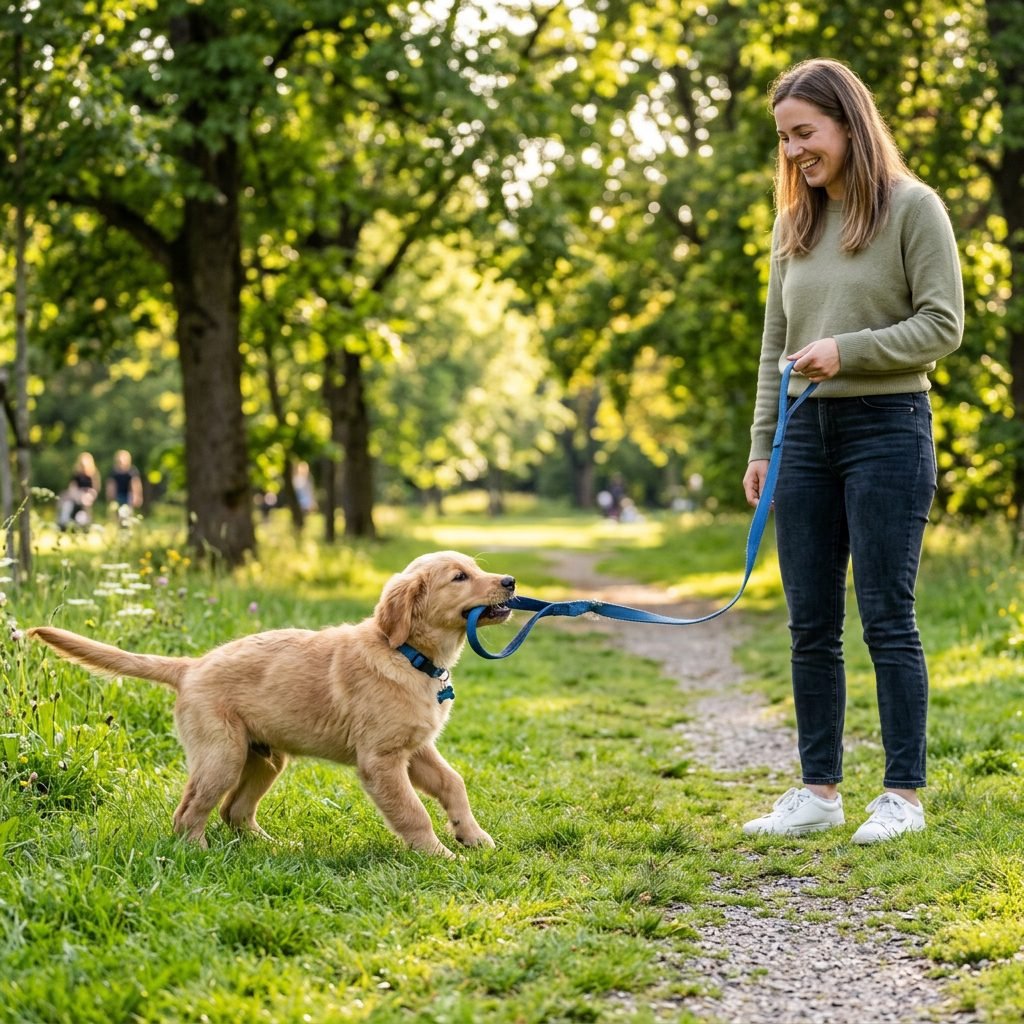
If your puppy successfully grabs the leash and starts a game of tug, stop moving immediately. Do not pull back. Do not yell. If you pull back, you are playing the game. By becoming as boring as a tree, the game ends. Wait for the puppy to let go. The moment they do, reward them with a treat and continue the walk.
Step 5: Reward the ‘Slack’
Don’t just wait for the puppy to do something wrong. When the leash is loose and the puppy is walking nicely without biting, give them a treat and verbal praise. Reinforce the behavior you want to see!
Troubleshooting: When the Biting Won’t Stop
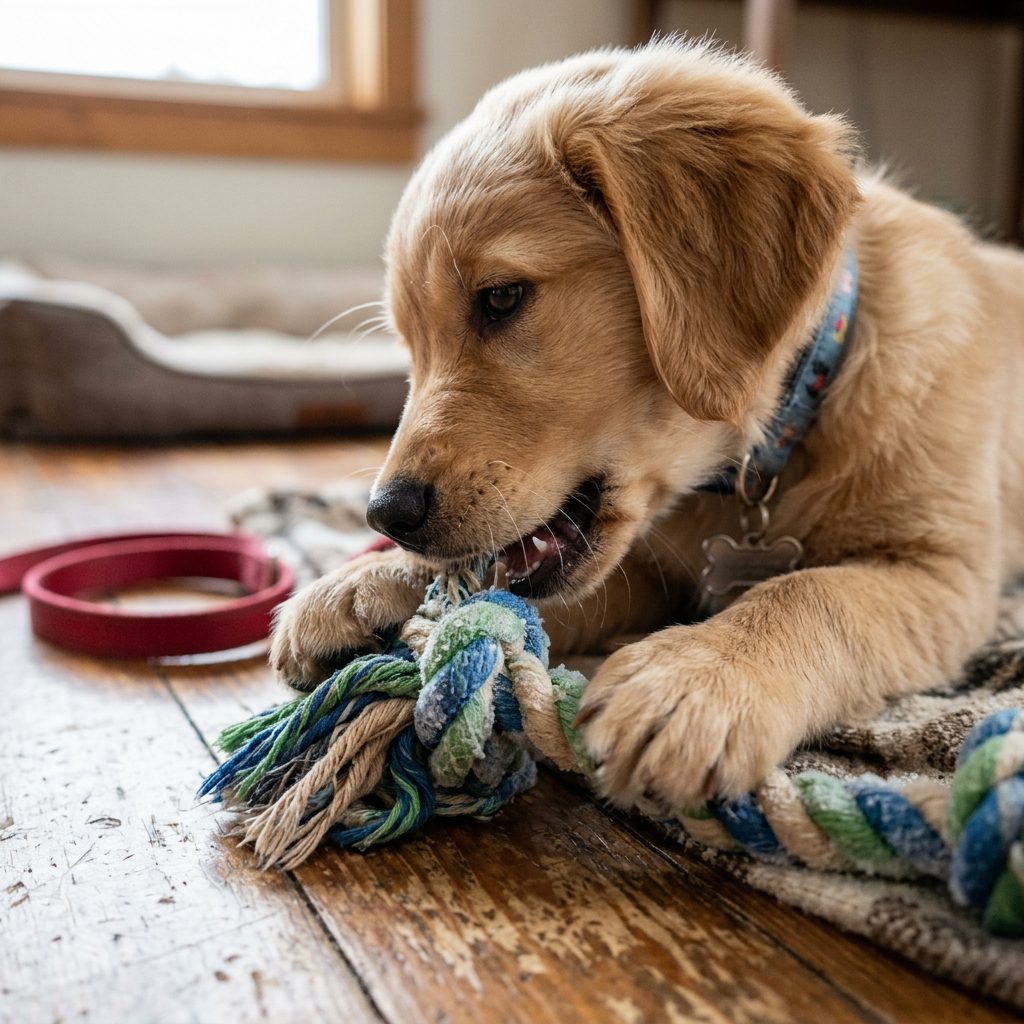
Even with the best training, some puppies are more persistent than others. If you find yourself struggling, consider these troubleshooting tips.
Is the Walk Too Long?
Puppies have short attention spans. A 30-minute walk might be too much for a 4-month-old. If the biting starts halfway through, your puppy might be tired and ‘cranky.’ Try shorter, more frequent walks instead.
The ‘Two-Leash’ Method
If your puppy is obsessed with one leash, try using two. Clip one to the harness and one to the collar. When they grab leash A, drop it (while still holding leash B). When they go for leash B, drop it and pick up leash A. It is very hard to play tug with someone who won’t hold the other end of the rope!
Check for Teething Pain
If the biting is frantic, your puppy might be in significant pain. Try giving them a frozen washcloth or a chilled chew toy 10 minutes before the walk to numb their gums.
Expert Tip: Never use a metal chain leash as a permanent solution to biting. While it stops the chewing, it can damage a puppy’s delicate teeth if they bite down hard in excitement. Focus on training rather than physical deterrents.
Prevention and Long-Term Success Strategies
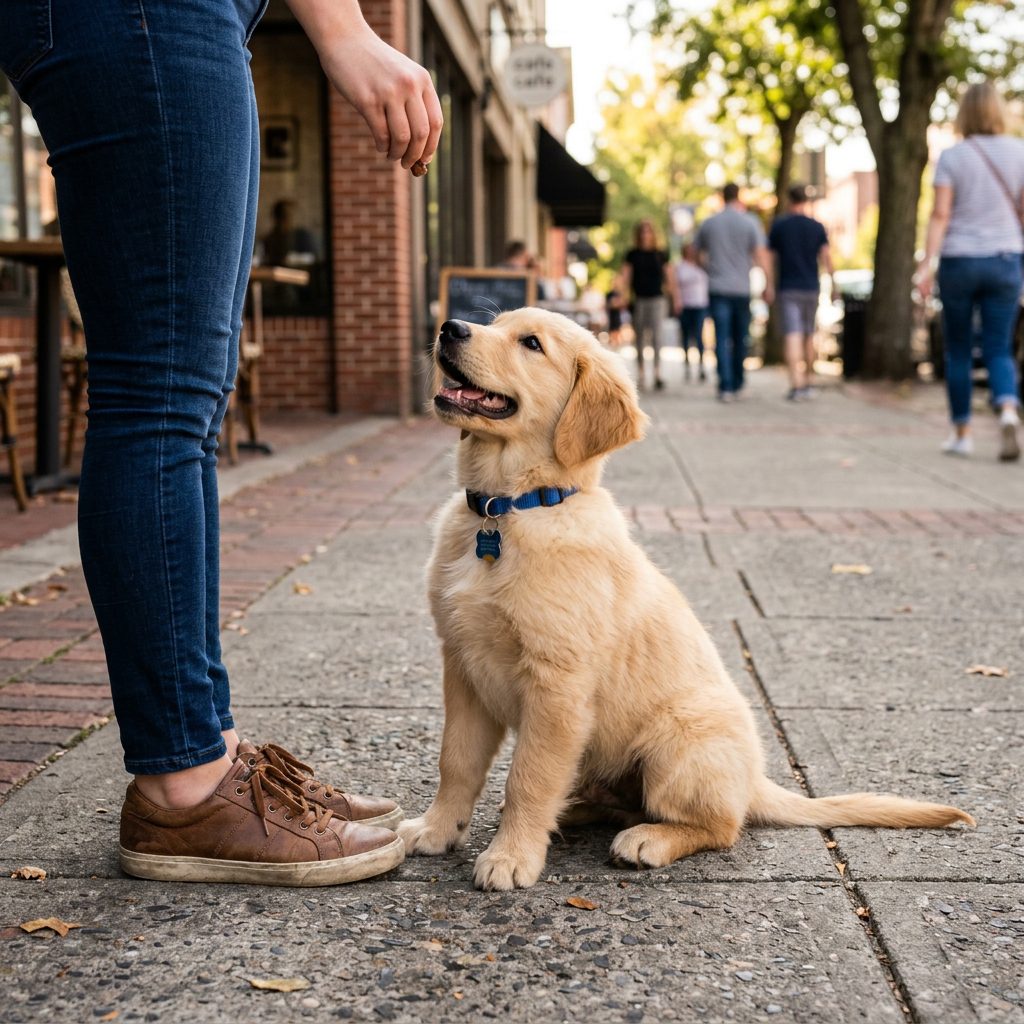
Training isn’t just about the time you spend on the walk; it’s about your puppy’s entire lifestyle. A well-rested, mentally stimulated puppy is much less likely to act out on the leash.
1. Mental Stimulation
A bored puppy is a destructive puppy. Incorporate puzzle feeders, ‘sniffari’ walks (where the puppy leads the way and sniffs everything), and short training sessions throughout the day. A tired brain leads to a calm body.
2. The ‘Capturing Calm’ Technique
Whenever you see your puppy lying down quietly at home, walk over and drop a treat between their paws without saying a word. You are teaching them that being calm is a highly rewarded ‘job.’
3. Consistency is Key
Everyone in the household must follow the same rules. If you ‘Be a Tree’ but your partner plays tug with the leash, the puppy will be confused and the behavior will persist. Consistency builds confidence.
| Daily Routine Item | Benefit for Leash Walking |
|---|---|
| 10 Mins of ‘Leave It’ Practice | Builds impulse control. |
| Scent Work / Hide and Seek | Reduces overall anxiety and arousal. |
| Enforced Naps (Crate or Pen) | Prevents overstimulation ‘zoomies.’ |
Conclusion
Training a puppy to stop biting the leash handle requires patience, consistency, and a good sense of humor. Remember that this is a phase, and with the right approach, it will pass. By understanding the underlying causes—whether it’s teething, excitement, or a quest for attention—you can tailor your training to meet your puppy’s specific needs. Focus on rewarding the behaviors you want to see, stay calm when things go wrong, and always carry those high-value treats! You are building a foundation of communication and trust that will last a lifetime. Happy walking!