Clean House Miracle: How To Teach Your Puppy To Put Toys Away In Their Box!
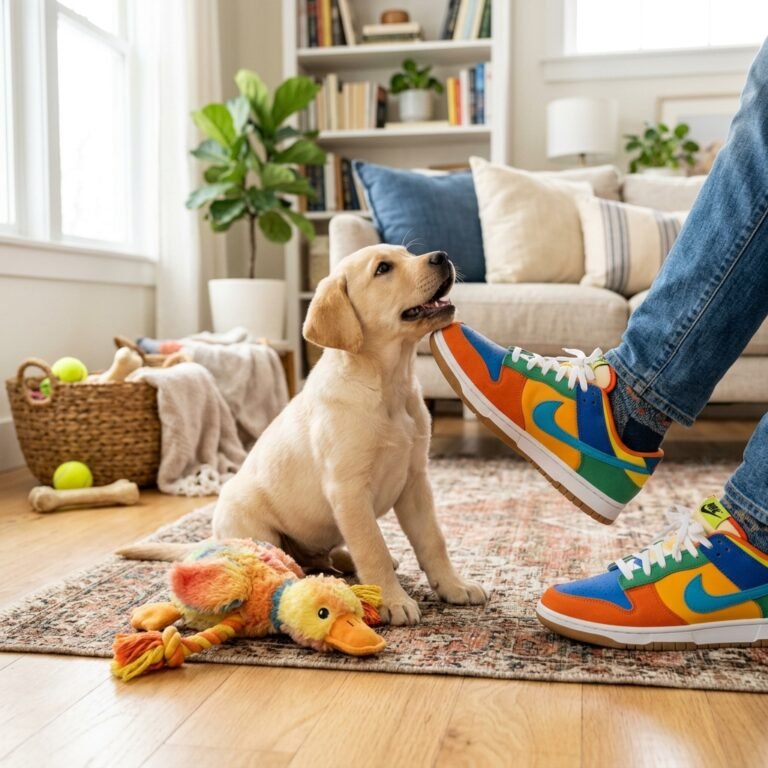
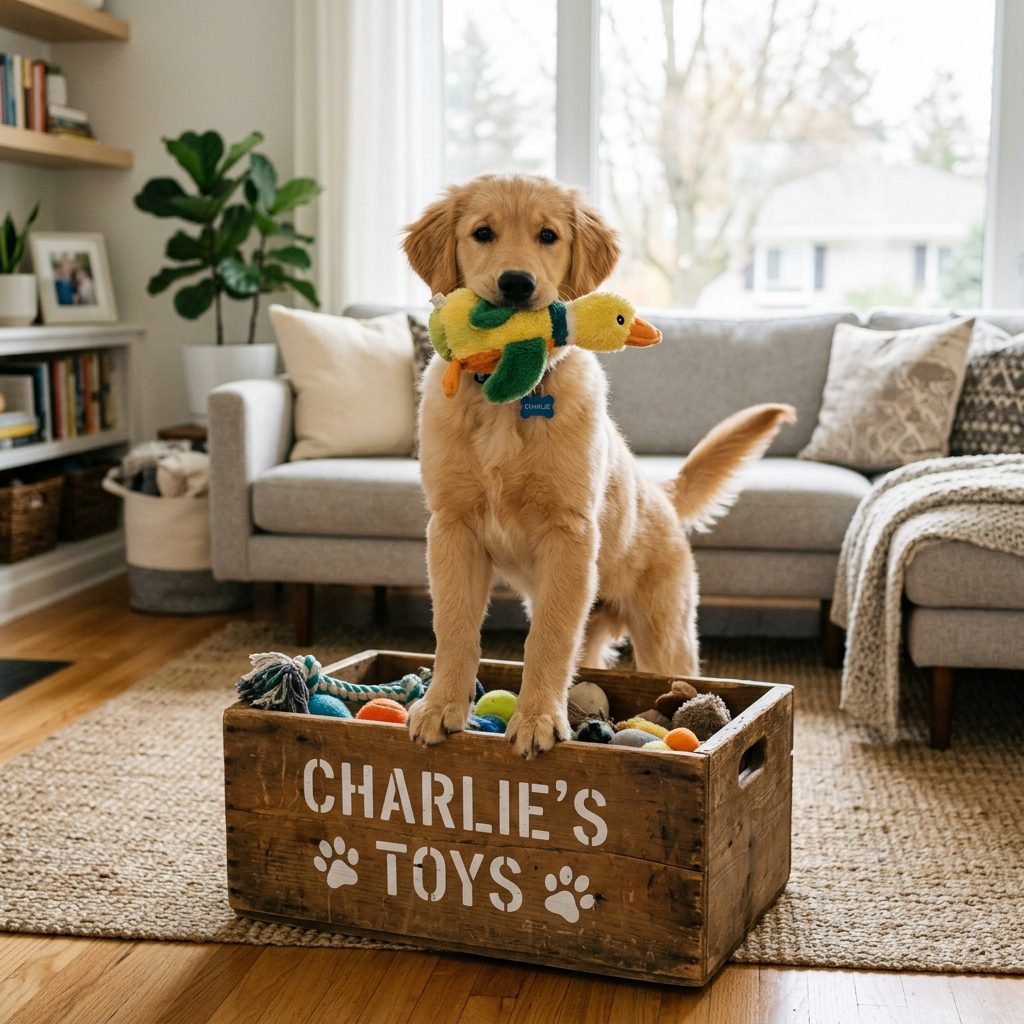
We have all been there. You are walking through your living room in the middle of the night, perhaps to grab a glass of water, and suddenly—SQUEAK! You have just stepped on a rubber chicken, narrowly avoided a tennis ball, and nearly tripped over a frayed rope toy. Living with a puppy often feels like navigating a plush-filled minefield. But what if I told you that your puppy could actually be the solution to the mess they created? Welcome to the Clean House Miracle.
Teaching your puppy to put their toys away in a designated box is not just about aesthetics or saving your toes from rogue squeakers. It is a high-level cognitive exercise that provides immense mental stimulation. For a savvy dog owner, this trick is the ultimate blend of utility and impressive behavior. It taps into your dog’s natural desire for a ‘job,’ builds their vocabulary, and strengthens the bond between you through clear, rewarding communication. In this guide, we will dive deep into the mechanics of ‘The Clean Up’ command, moving from basic foundation skills to the final, polished behavior of a puppy who tidies up their own nursery.
The Gear List: Setting Your Puppy Up for Success
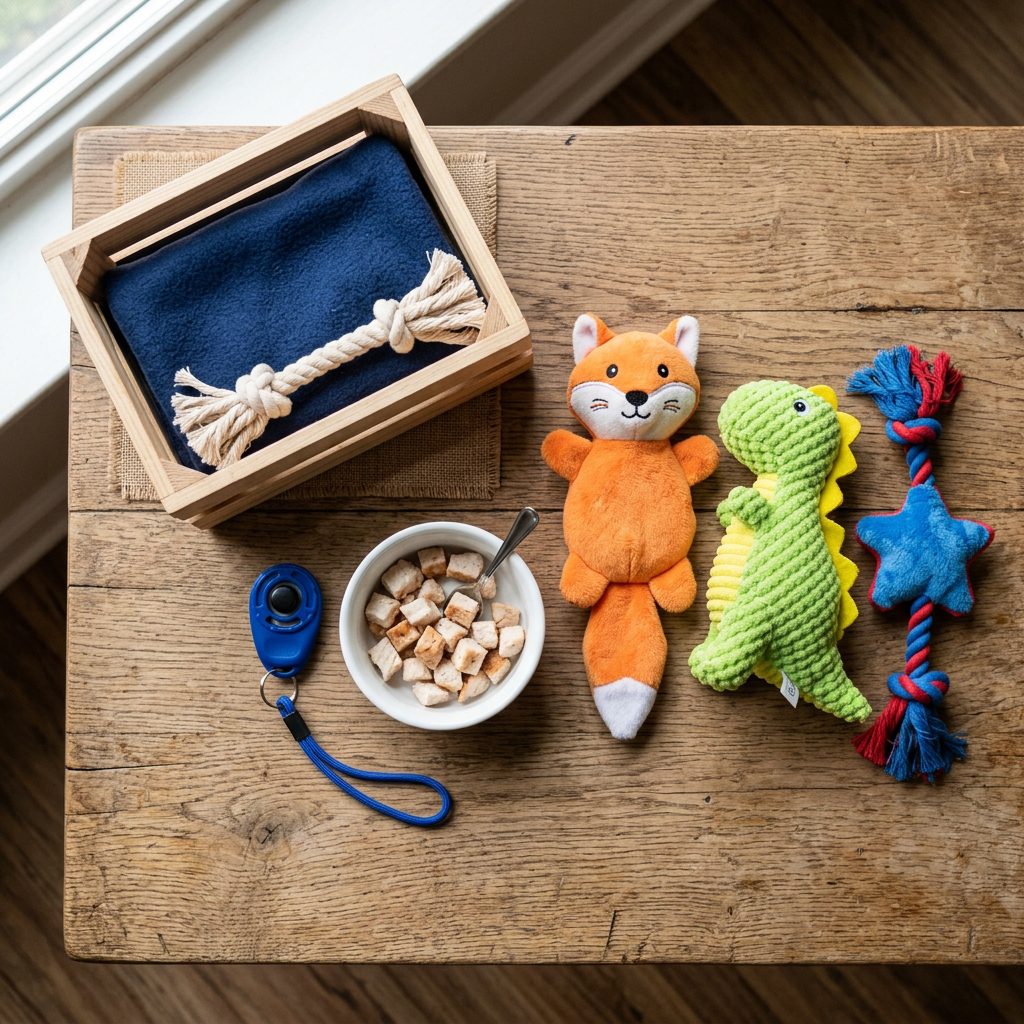
Before we start clicking and rewarding, we need the right environment and tools. You cannot expect a puppy to succeed if the ‘basket’ is a five-foot-tall wicker hamper they cannot reach. We need to think about ergonomics, motivation, and clarity. Choosing the right reward is just as important as the box itself. High-value treats—think small pieces of boiled chicken, freeze-dried liver, or string cheese—are essential for teaching complex, multi-step behaviors like this.
Selecting the Perfect Toy Box
The box should be low enough that your puppy can easily lower their head over the rim without straining. For small breeds, a shallow tray might be best; for larger breeds, a sturdy wooden or heavy plastic bin works well. Avoid soft fabric bins initially, as many puppies will simply try to eat the bin instead of putting toys into it.
| Tool | Purpose | Expert Recommendation |
|---|---|---|
| Toy Box | The target for the behavior. | Low-profile, sturdy, and non-collapsible. |
| Clicker | To mark the exact moment of success. | A standard button clicker for clear timing. |
| High-Value Treats | To reinforce the complex behavior. | Small, pea-sized bites of moist protein. |
| Target Toys | Items the dog already likes to carry. | Soft plushies or rubber dumbbells. |
Trainer Tip: Use a box that is distinct from your dog’s bed. If the toy box looks or feels too much like their sleeping area, they may get confused and try to nap in the ‘clean up’ zone!
Phase 1: The Foundation Skills (Take It and Drop It)
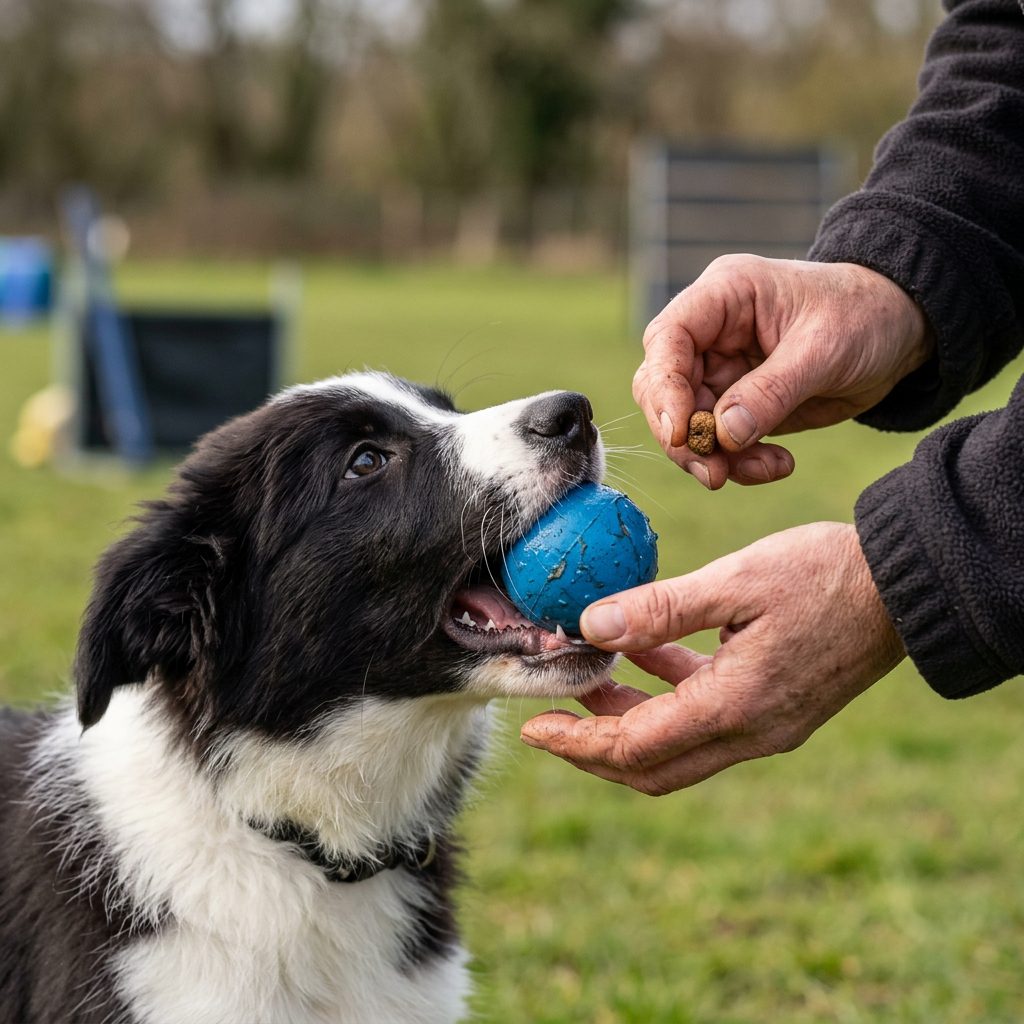
You cannot teach a dog to put a toy in a box if they do not know how to hold a toy or, more importantly, let go of it on command. Most owners struggle with ‘Clean Up’ because they skip these two critical steps. We are looking for a reliable ‘Drop It’ that happens immediately upon request, not after a thirty-second game of tug-of-war.
Mastering the ‘Take It’
Start by offering a favorite toy. The moment your dog’s teeth touch the toy, say ‘Take it!’ and praise them. We want them to understand that picking up the object is a specific, named action. If your puppy is not naturally mouthy, you may need to wiggle the toy to pique their prey drive.
Mastering the ‘Drop It’
This is where the magic happens. Once the puppy has the toy, hold a high-value treat to their nose. Most puppies will naturally open their mouth to take the treat, dropping the toy in the process. The instant the toy hits the floor, mark with your clicker or a verbal ‘Yes!’ and give the treat. Repeat this until the puppy starts dropping the toy the moment they see the treat, then add the verbal cue ‘Drop it’.
- Step A: Present toy, cue ‘Take it’.
- Step B: Present treat, cue ‘Drop it’.
- Step C: Mark and reward the second the toy is released.
- Step D: Gradually phase out the treat-to-nose lure and use only the verbal cue.
Phase 2: The Step-by-Step ‘Clean Up’ Process
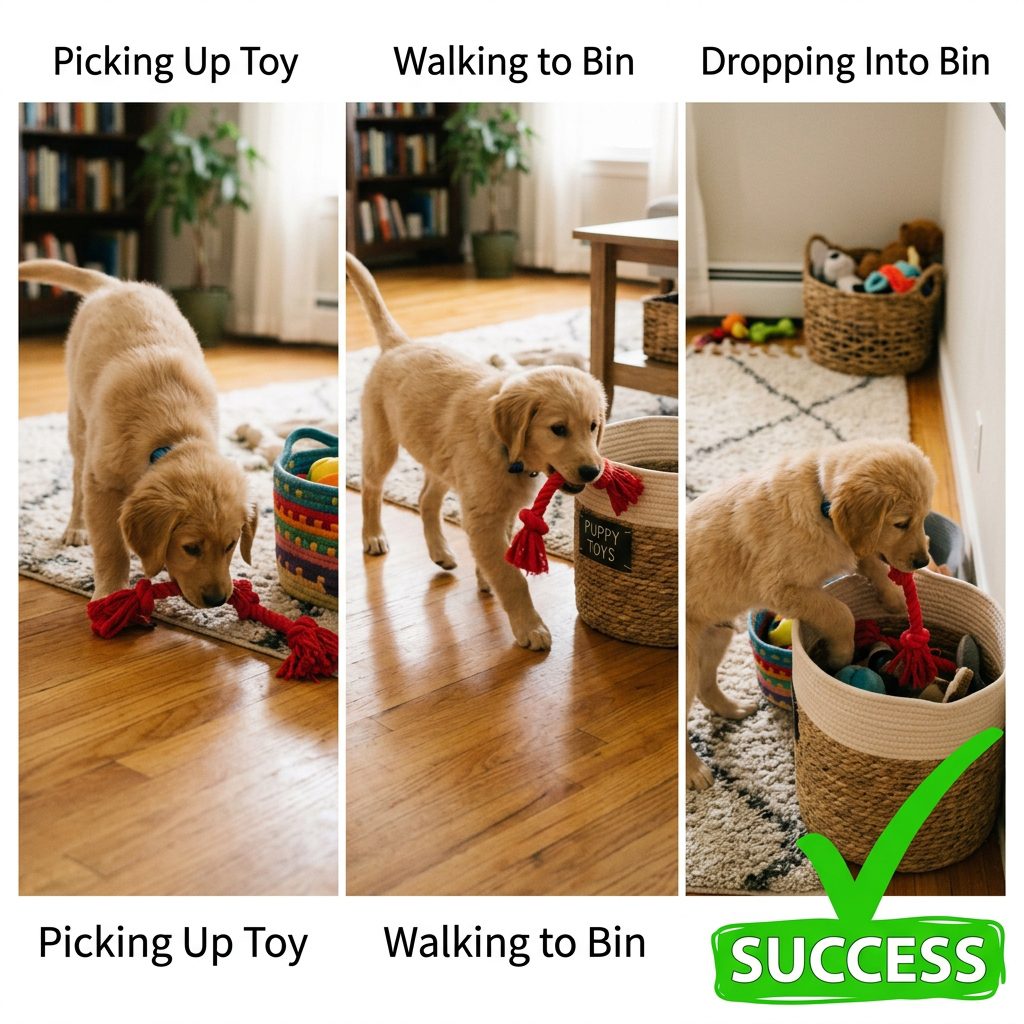
Now that your puppy understands ‘Take It’ and ‘Drop It’, it is time to introduce the box. This is a process known as shaping. We are going to reward small approximations of the final goal until the puppy connects the dots. Do not rush this; your puppy is learning spatial awareness and a complex chain of events.
Step 1: The Box is the Target
Place the empty toy box between you and your puppy. Encourage your puppy to pick up a toy nearby. Lead them toward the box using a treat lure if necessary. When their head is over the box, give the ‘Drop it’ cue. If the toy falls into the box, throw a party! Give multiple treats and lots of verbal praise. We want the box to be the highest-value spot in the house.
Step 2: Increasing Distance
Once they are consistently dropping the toy into the box from a few inches away, start placing the toy further back. The goal is for the puppy to pick up the toy, walk to the box, and drop it inside without you having to stand right over the bin. This is where the ‘Clean Up’ verbal cue is introduced. As they head toward the box, say ‘Clean up!’.
Step 3: The ‘Search and Rescue’ Phase
Scatter three toys around the room. Point to one and say ‘Clean up’. If they put it in the box, immediately point to the next one. Only reward after they have successfully placed the toy inside the bin. If they drop it outside the bin, do not reward. Simply say ‘Oops!’ and encourage them to try again. This teaches precision.
| Training Stage | Action Required | Success Criteria |
|---|---|---|
| Stage 1: Luring | Guide the dog to the box with a treat. | Toy lands in the box with help. |
| Stage 2: Verbal Cue | Say ‘Clean Up’ as they approach the box. | Dog associates the word with the action. |
| Stage 3: Independence | Point to toys from a distance. | Dog retrieves and deposits toys autonomously. |
Phase 3: Troubleshooting and Common Pitfalls
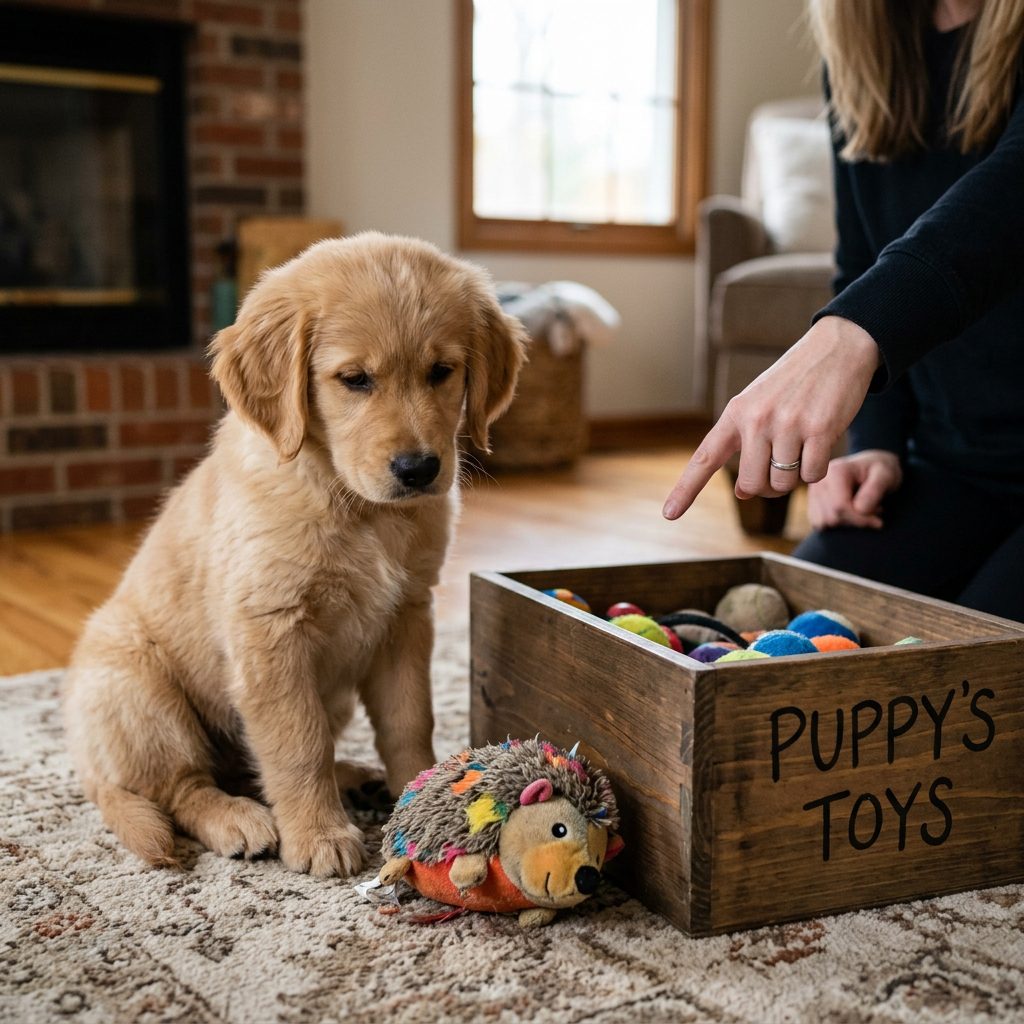
Even the smartest puppies will hit a wall during this training. It is a multi-step behavior: find toy, pick up toy, carry toy, find box, drop toy. That is a lot for a young brain! If your puppy is struggling, look for these common issues.
The ‘Close Enough’ Problem
Many puppies will drop the toy six inches away from the box and look at you for a treat. If you reward this, you are teaching them to ‘Mess Up’ rather than ‘Clean Up’. You must be firm: no toy in the box, no treat. If they miss, point at the toy and say ‘Get it’, then gesture toward the box. Only reward the ‘swish’.
The ‘Play-Break’ Distraction
If your puppy starts playing with the toy instead of putting it away, the session has gone on too long or the toy is too exciting. Training sessions should be short—no more than 5 to 10 minutes. If they start a game of tug, calmly take the toy away, end the session, and try again later with a less ‘exciting’ toy.
The ‘Box Tipping’ Issue
Some puppies get so excited they try to climb into the box or tip it over. If this happens, use a heavier box or hold the box steady with your foot. We want them to focus on the opening of the box, not the box as a toy itself.
Expert Insight: If your puppy gets frustrated, go back to a simpler step. Success builds confidence. If they fail three times in a row, you are asking for too much, too soon.
The 7-Day Clean House Miracle Schedule
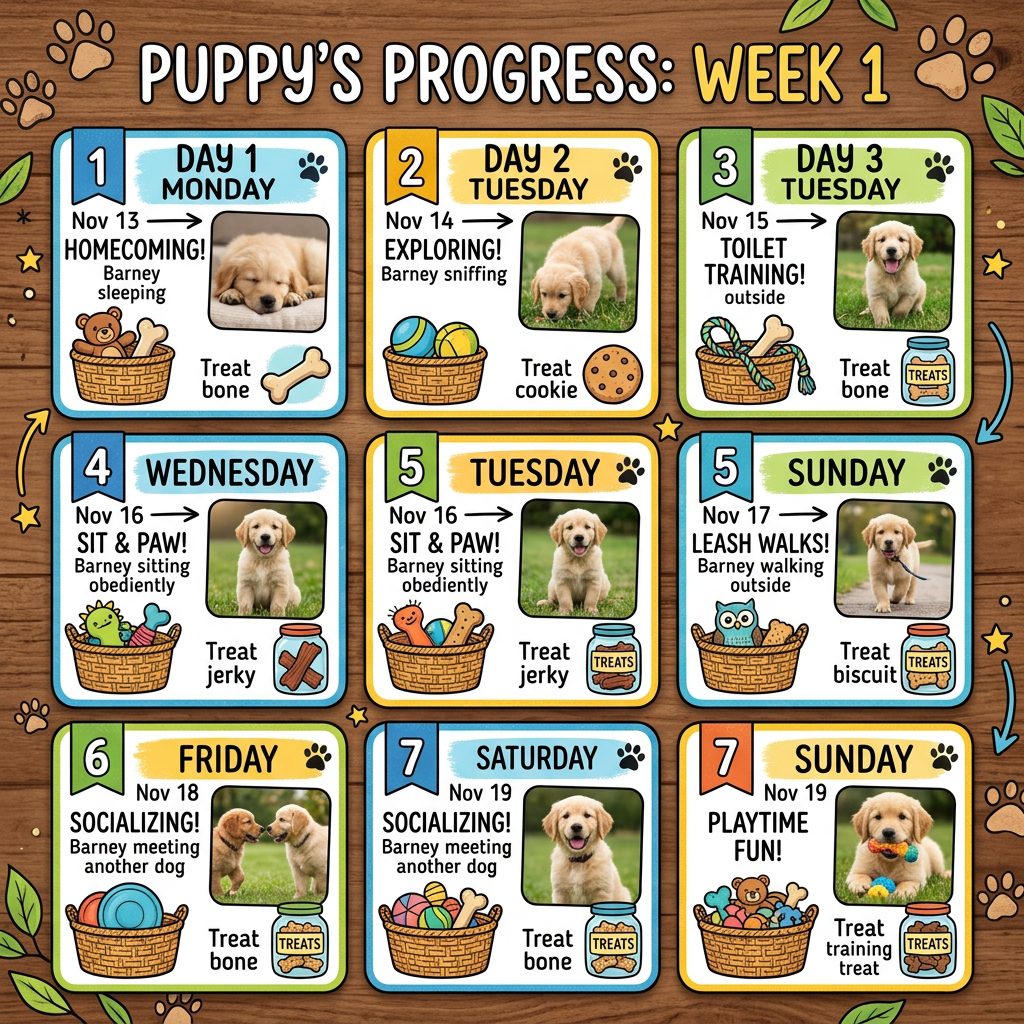
Consistency is the secret sauce to puppy training. You cannot train this once and expect it to stick forever. Follow this week-long plan to cement the behavior in your puppy’s long-term memory. Each session should be broken into two 5-minute blocks per day.
| Day | Focus Area | Goal |
|---|---|---|
| Day 1 | Take It / Drop It | 100% reliability on release to hand. |
| Day 2 | The Box Intro | Dropping the toy into the box from 2 inches away. |
| Day 3 | Adding the Cue | Introduce the ‘Clean Up’ command. |
| Day 4 | Distance Work | Puppy carries toy 3 feet to the box. |
| Day 5 | Multi-Toy Challenge | Cleaning up 2 toys in a row for one reward. |
| Day 6 | Generalization | Move the box to a different room. |
| Day 7 | The Miracle | Clean up all toys in the living room. |
By Day 7, your puppy should understand the concept. However, remember that puppies go through ‘teenage’ phases where they might ‘forget’ their training. If this happens, simply go back to Day 3 for a quick refresher. Keep the rewards high-value and the energy positive!
Conclusion
Teaching your puppy to put their toys away is more than just a tidy-home hack; it is a testament to the incredible communication you have built with your canine companion. It transforms a daily chore into a fun, rewarding game that tires out their brain and keeps your floors clear. Remember to be patient, stay consistent, and always end your training sessions on a high note. Before you know it, you will be able to sit back on the couch, give a single command, and watch the Clean House Miracle unfold before your eyes. Happy training!