Introducing a Puppy to an Older Cat: How to Keep the Peace and Avoid Disaster
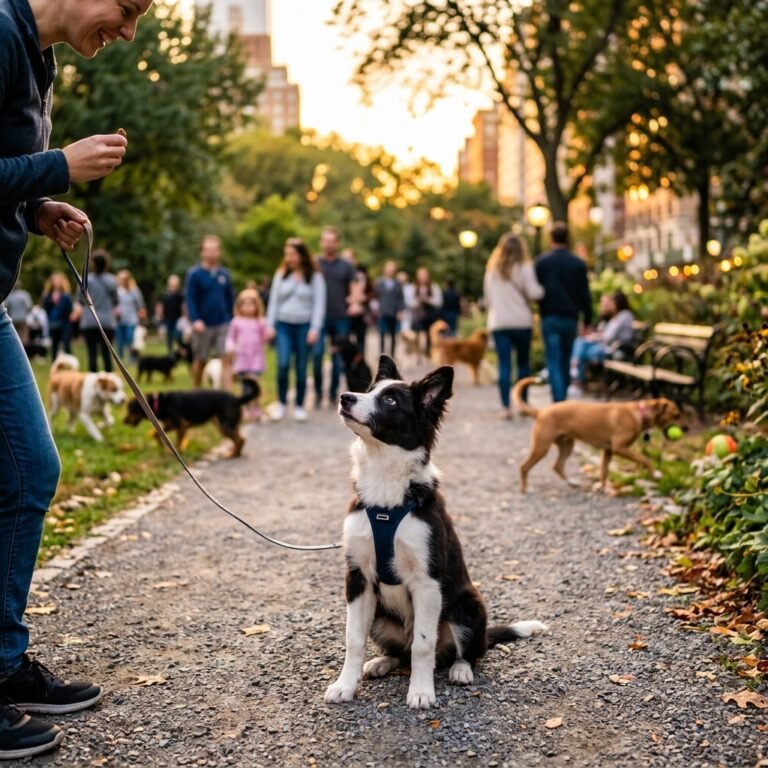
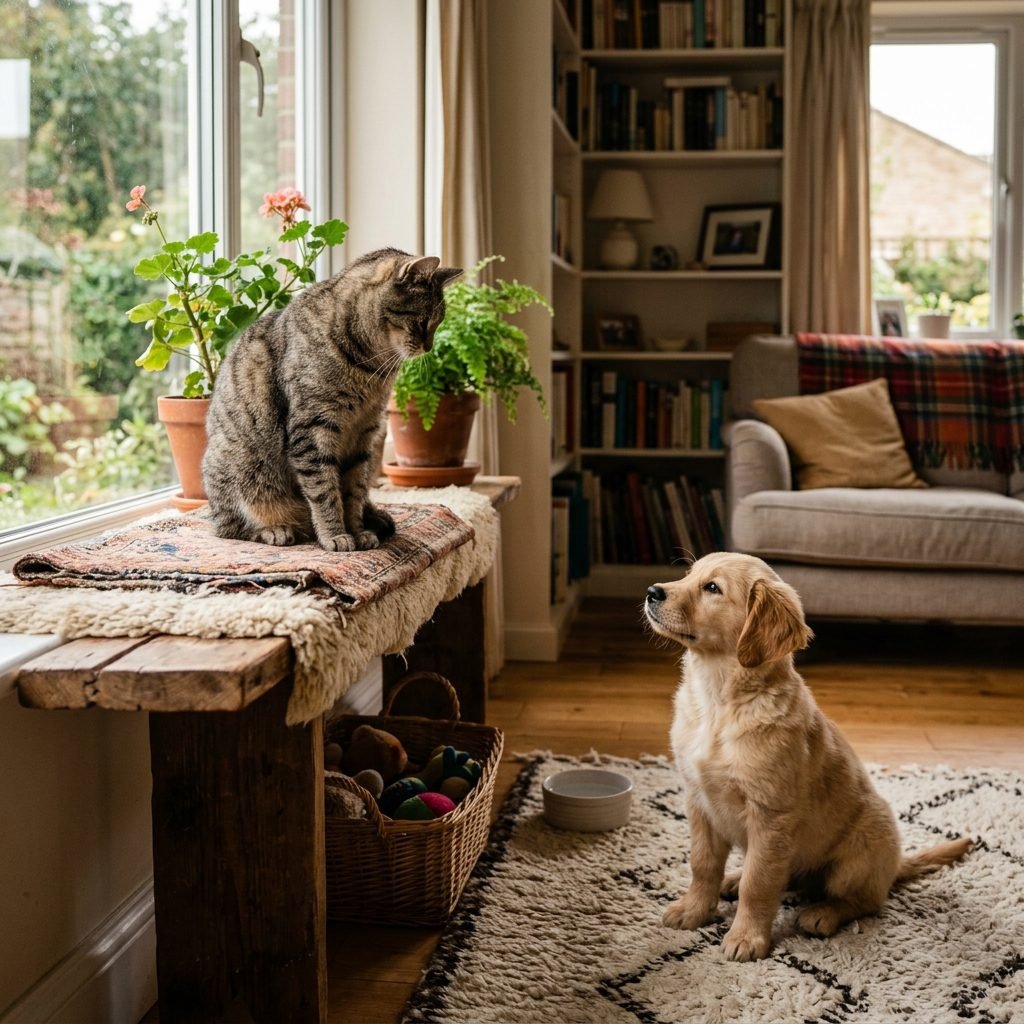
Welcome, savvy pet parents! Bringing a new puppy into your home is an incredibly exciting milestone, but when you already have a senior cat reigning over the household, that excitement can quickly turn into anxiety. You are essentially mixing a chaotic, bouncy ball of energy with a dignified elder who is very set in their ways. It can feel a bit like mixing oil and water, but fear not—harmonious multi-pet households are entirely possible with the right strategy.
Older cats require a special level of empathy during this transition. They may have arthritis, decreased vision, or simply a lower tolerance for nonsense. A puppy, on the other hand, sees everything as a potential playmate or a game of chase. If left to their own devices, this dynamic can lead to immense stress for your cat and dangerous behavioral habits for your dog.
Expert Tip: The golden rule of pet introductions is that you can never go too slow, but you can definitely go too fast. Patience, management, and positive reinforcement are your best friends during this process.
In this comprehensive guide, we are going to walk you through a proven, step-by-step behavioral approach to introducing a puppy to an older cat. We will cover the essential tools you need, the psychology behind scent swapping, how to manage those crucial first visual meetings, and how to troubleshoot common setbacks. Let us set your furry family up for a lifetime of peace and mutual respect!
Preparation: Tools Needed Before the Big Day
Before your new puppy even sets paw in your home, your environment needs to be properly optimized. Management is the foundation of good dog training, and it is absolutely vital when protecting a senior cat’s peace of mind. You want to create a space where your cat feels completely secure and your puppy is set up to make good choices.
Creating the Feline Safe Zone
Your older cat needs a sanctuary room—a space where the puppy is strictly forbidden. This room should contain the cat’s litter box, food, water, and comfortable resting spots. Furthermore, you need to establish a ‘Cat Superhighway’ throughout your house. Because older cats may not be able to sprint away as quickly as they used to, providing vertical escape routes (like cat trees, sturdy shelving, or cleared-off mantels) allows them to navigate the room without ever having to touch the floor where the puppy roams.
Essential Introduction Gear
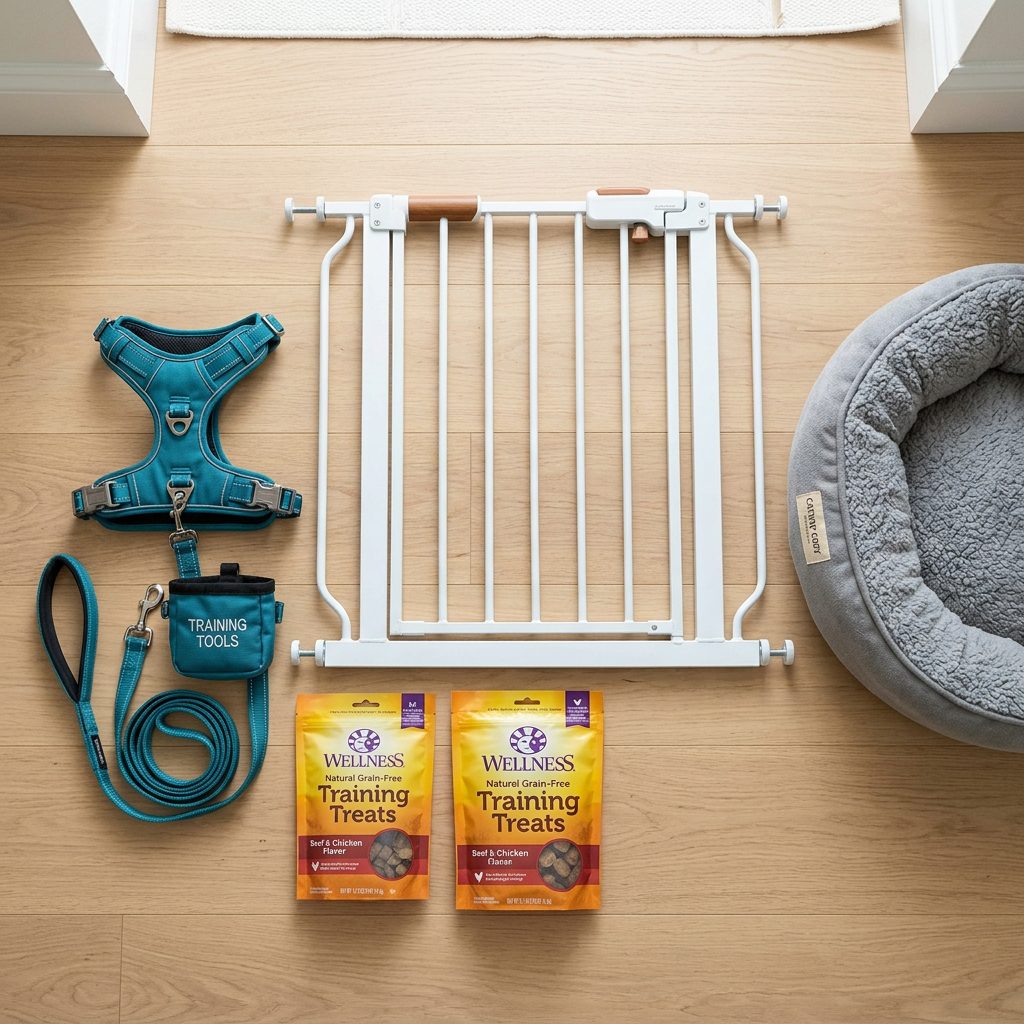
To execute a flawless introduction, you will need a few specific tools. Here is a breakdown of the essential gear you should gather before the puppy’s arrival:
| Essential Item | Purpose | Why It Is Crucial for Success |
|---|---|---|
| Extra-Tall Baby Gates | Physical separation while allowing visual and auditory access. | Puppies can be surprisingly bouncy; tall, sturdy gates prevent accidental ambushes and give the cat a choice to approach safely. |
| High-Value Training Treats | Rewarding the puppy for calm behavior and the cat for bravery. | Builds a positive association. The puppy learns that ignoring the cat brings rewards, while the cat learns the puppy’s presence equals treats. |
| Cat Trees or Wall Shelving | Providing vertical escape routes and safe observation decks. | Older cats need to feel safe; height gives them confidence and security, especially if their mobility is declining. |
| A Sturdy Leash and Harness | Controlling the puppy during face-to-face introductions. | Prevents the puppy from practicing the bad habit of chasing the cat, which can trigger the cat’s prey response or defensive aggression. |
Having these tools ready eliminates the need to scramble in the moment. Remember, your energy dictates the room’s energy. If you are prepared and calm, both your older cat and your new puppy will feel that stability.
Step 1: Scent Swapping and Complete Separation
The first step in our introduction protocol actually involves zero visual contact. Both dogs and cats are highly olfactory creatures; they experience the world primarily through their noses. By introducing their scents before they ever lay eyes on each other, you remove the visual trigger of a strange animal while allowing them to process the new roommate mentally.
The Art of Scent Swapping
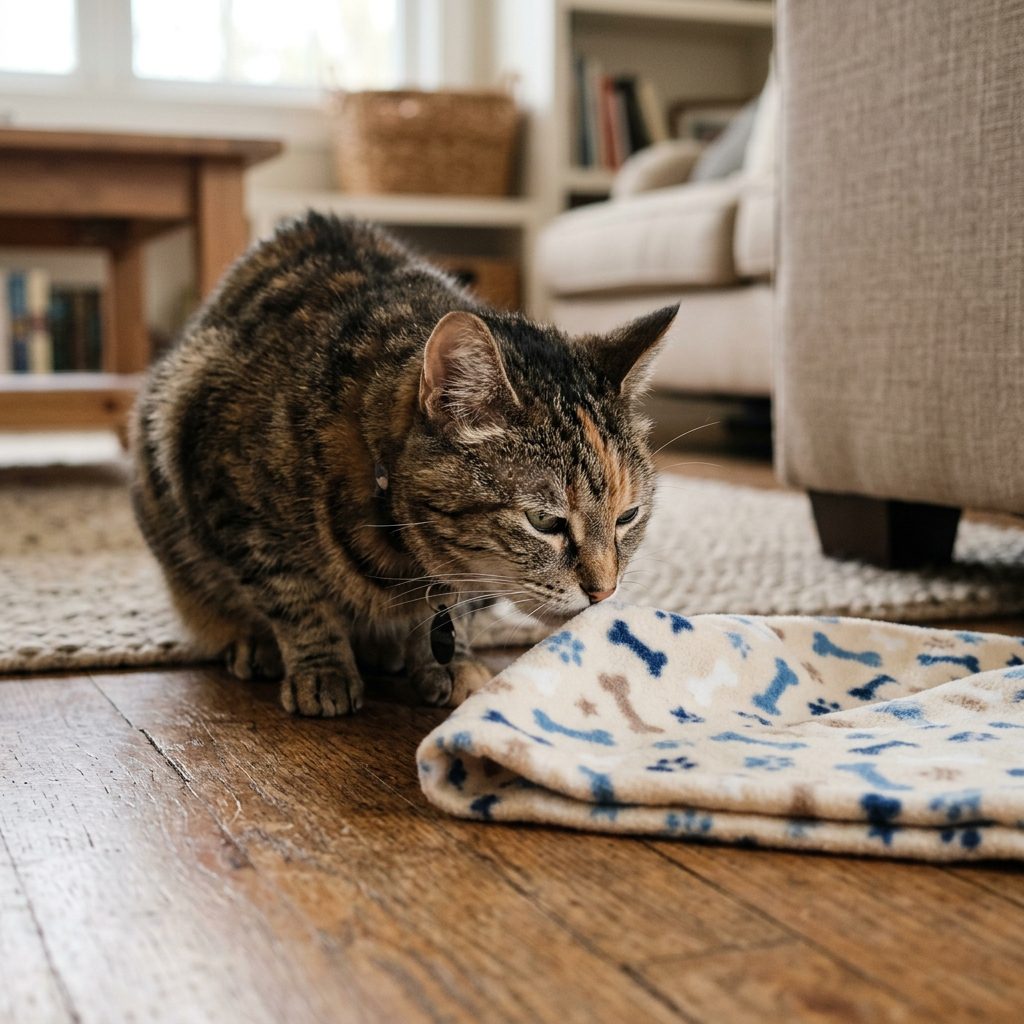
When you bring the puppy home, confine them to a specific area (like an exercise pen or a puppy-proofed room) and let your older cat have the rest of the house. Over the first few days, you will practice ‘scent swapping’. Take a blanket or towel that the puppy has slept on and place it near (but not directly on) the cat’s food bowl or favorite resting spot. Do the same with the cat’s bedding, placing it in the puppy’s area.
- Monitor the Reactions: Watch how your cat responds to the puppy’s blanket. Do they sniff it curiously? Do they hiss and run away? If they hiss, move the blanket further away until they can tolerate its presence.
- Create Positive Associations: Whenever your cat investigates the puppy’s scent calmly, offer a high-value treat (like a dab of tuna or a lickable cat treat). Similarly, when your puppy calmly sniffs the cat’s blanket without tearing it up, reward them with a piece of chicken or cheese.
- Room Swapping: Once both animals are comfortable with the swapped bedding, allow the puppy to explore the main house while the cat is safely closed in another room. This lets the puppy map the environment and smell the cat’s territory without the pressure of a face-to-face meeting.
Do not rush this stage. For a senior cat, the sudden intrusion of a new scent can be jarring. Spend at least 3 to 5 days on scent swapping, or longer if your cat seems particularly stressed. Patience here pays massive dividends later.
Step 2: The First Visual Introduction (Barrier Method)
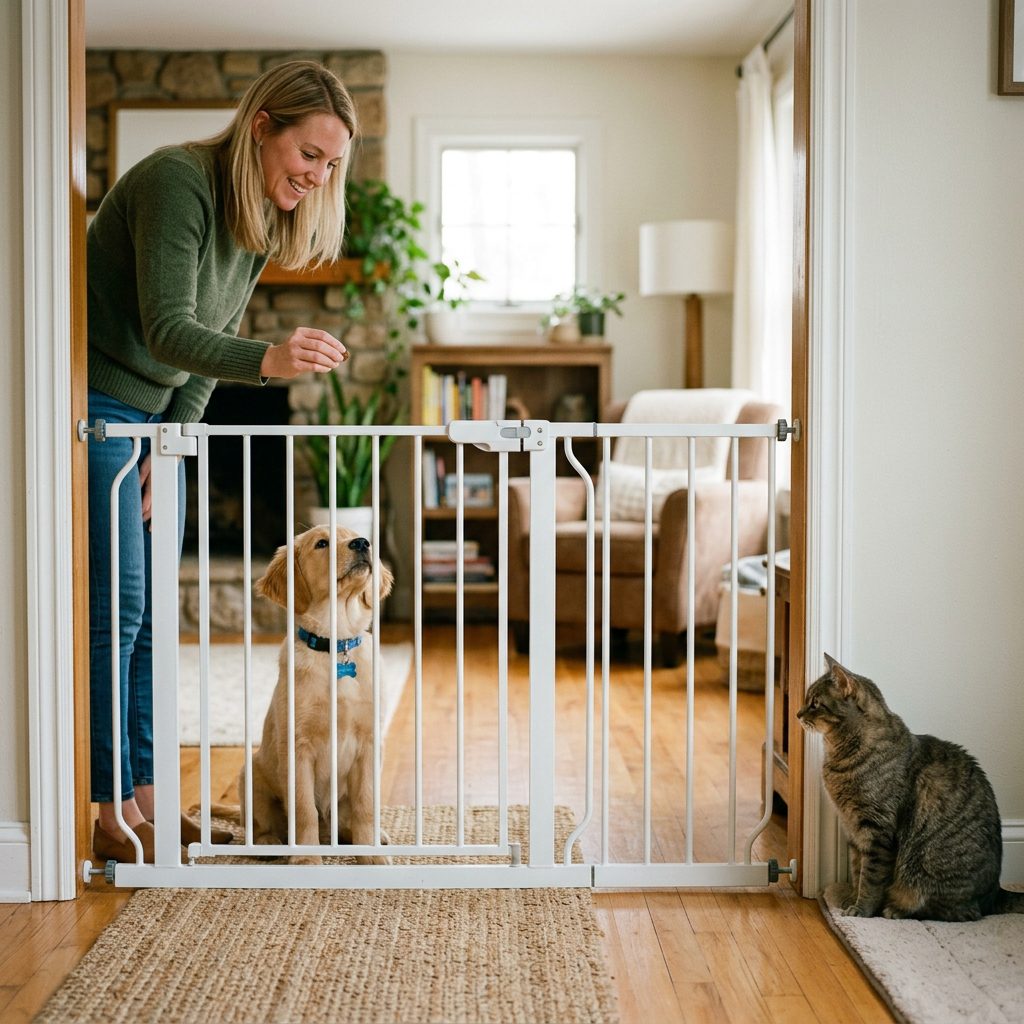
Once both pets are completely relaxed with each other’s scents, it is time for the first visual introduction. This must be done using a secure physical barrier, such as an extra-tall baby gate or a glass door. The goal here is desensitization: we want both animals to see each other, acknowledge each other, and then realize that the other animal is incredibly boring.
Executing the Barrier Meeting
Choose a time when the puppy has already been exercised and is in a calm, slightly tired state. A hyperactive puppy bounding up to a baby gate will instantly terrify a senior cat. Have the puppy on a leash even behind the baby gate, just in case they try to jump it. Allow the cat to approach the gate at their own pace. Never force the cat to the gate, and never hold the cat in your arms during this process—if the cat panics, they could severely scratch you.
Implementing the ‘Look at That’ Game
As a savvy dog owner, you can utilize a brilliant training technique called ‘Look at That’ (LAT). Here is how it works during the barrier introduction:
- Wait for the puppy to look at the cat through the gate.
- The exact millisecond the puppy looks at the cat (and before they bark or lunge), click your training clicker or say a marker word like ‘Yes!’.
- When the puppy turns their head back to you to receive their treat, praise them warmly and deliver a high-value reward.
- Repeat this process. The puppy will quickly learn: ‘Looking at the cat earns me treats from my human, so I should look at the cat and then look right back at my human.’
Meanwhile, toss delicious treats to your older cat for simply staying in the room and remaining calm. Keep these sessions extremely short—no more than 3 to 5 minutes. End the session on a positive note before either animal gets stressed, and separate them again.
Step 3: Controlled, Leashed Face-to-Face Meetings
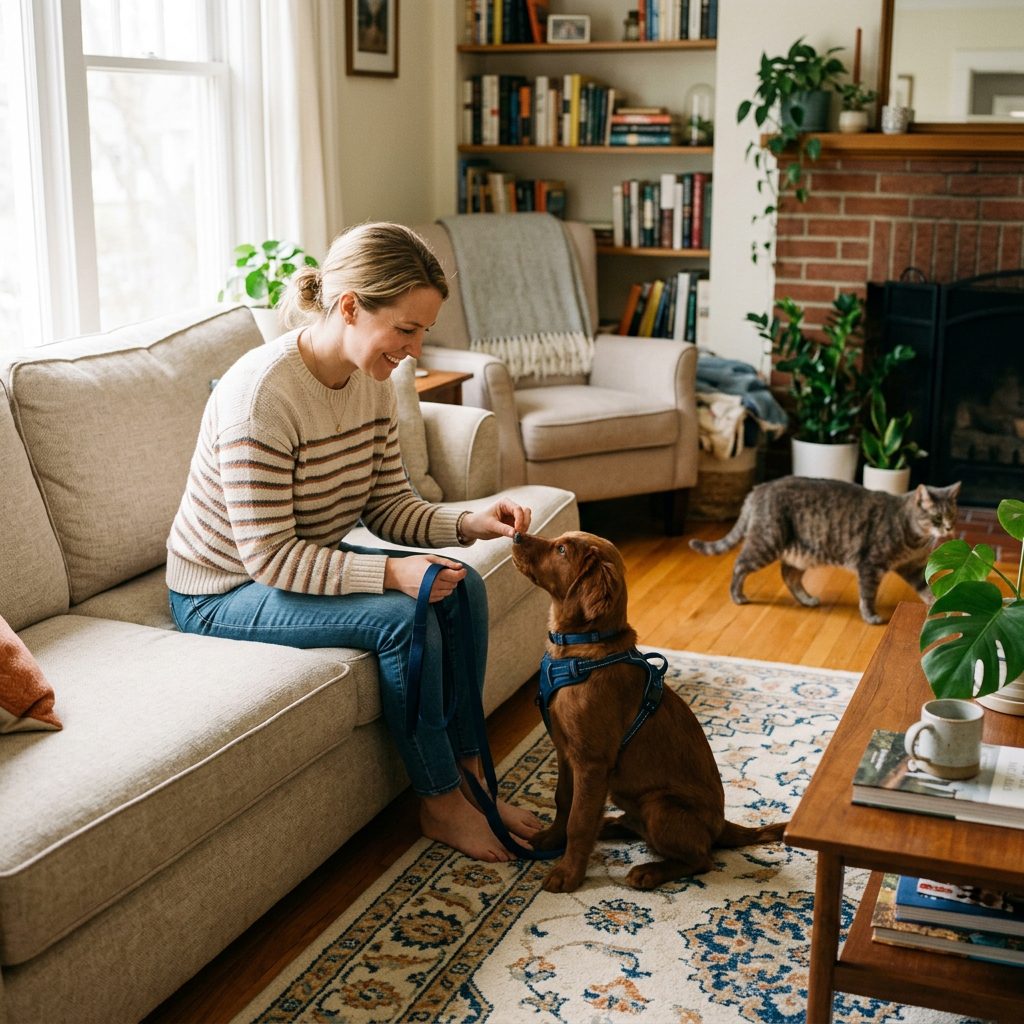
When your puppy and cat can eat meals on opposite sides of the baby gate without any tension, barking, or hissing, you are ready to remove the barrier. However, removing the barrier does not mean removing the management. The puppy must remain on a leash for these initial face-to-face interactions.
Managing the Shared Space
Bring the puppy into the living room on a standard 6-foot leash (no retractable leashes!). Have the puppy sit or lie down near you, and reward them heavily for focusing on you. Leave the door open so the senior cat can enter the room whenever they feel courageous enough. Ensure the cat has immediate access to their vertical ‘Superhighway’ so they can observe from above if they prefer.
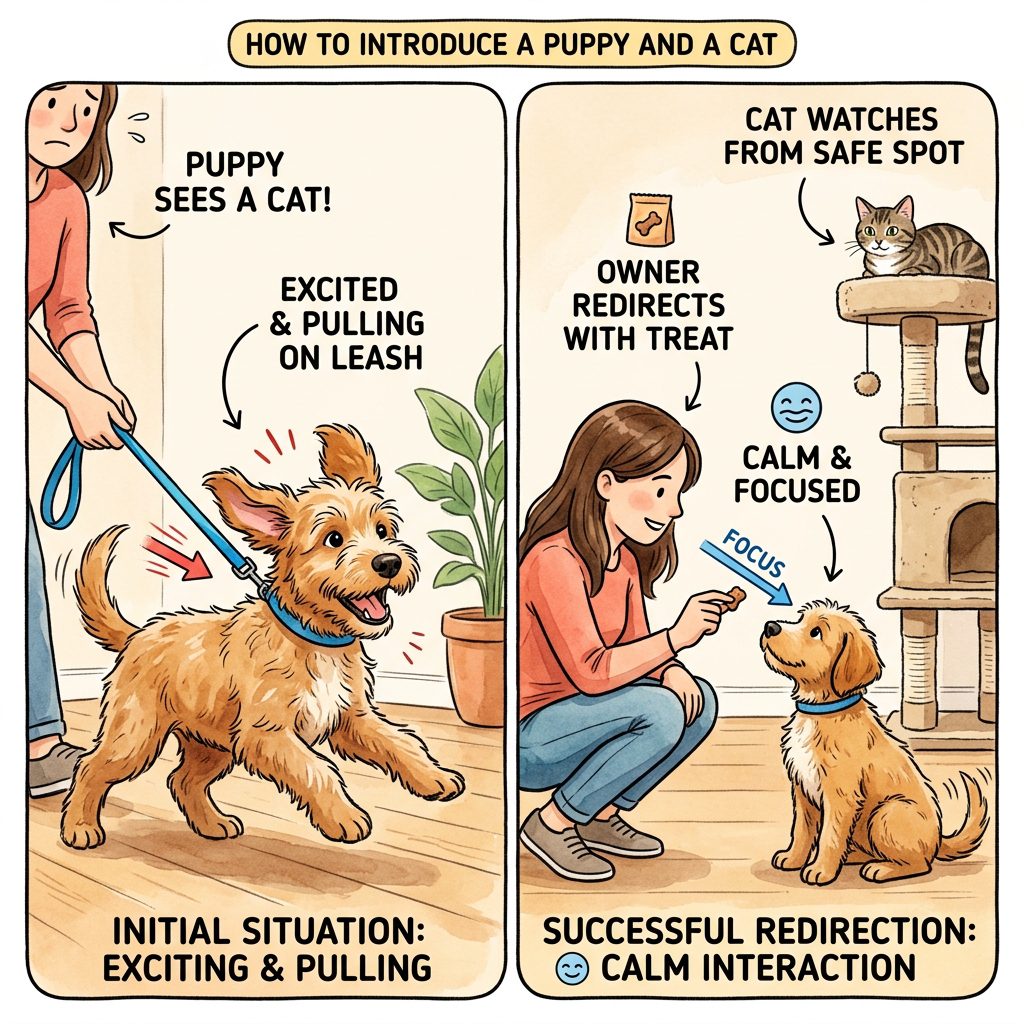
If the cat enters the room, keep the puppy’s attention on you using the ‘Look at That’ game or by practicing basic obedience cues like ‘Touch’, ‘Sit’, or ‘Down’. The message you are sending to the puppy is that the cat is a normal, unexciting part of the environment, and engaging with the human is far more rewarding than bothering the feline.
Reading Body Language
As a responsible pet parent, you must be hyper-vigilant about reading both animals’ body language during these sessions:
- Signs of a Relaxed Cat: Slow blinking, ears facing forward, tail relaxed or gently swaying, willing to accept treats, lying down with paws tucked.
- Signs of a Stressed Cat: Ears pinned back (airplane ears), tail thrashing loudly, dilated pupils, hissing, growling, or crouching low to the ground.
- Signs of a Relaxed Puppy: Loose, wiggly body, soft eyes, open mouth with a relaxed tongue, easily distracted by you and treats.
- Signs of a Fixated Puppy: Stiff body, hard staring at the cat, closed mouth, whining, pulling hard on the leash, ignoring high-value treats.
If the puppy becomes fixated and cannot be distracted, they are over their threshold. Calmly use the leash to guide the puppy further away from the cat until they can focus on you again. Do not punish the puppy; simply increase the distance. Continue these leashed sessions daily until the puppy reliably ignores the cat’s movements.
Troubleshooting Common Mistakes and Bad Reactions
Even with the best preparation, animals are unpredictable. Introducing a puppy to an older cat rarely goes perfectly linearly. You might take two steps forward and one step back. Here are some of the most common issues savvy dog owners face during this transition, and exactly how to troubleshoot them like a pro.
Issue 1: The Puppy Wants to Play and Chases the Cat
This is the most common hurdle. Puppies use chasing as a form of play, but to a senior cat, being chased is terrifying. If the puppy lunges or tries to chase, it means you progressed too fast and gave the puppy too much freedom. Solution: Immediately reinstate the leash indoors. Work heavily on the ‘Leave It’ command. If the puppy tries to chase, abruptly turn and walk the opposite way, guiding them away with the leash. Never allow the puppy to practice the behavior of chasing, as it is highly self-rewarding.
Issue 2: The Senior Cat Goes on the Offensive
Sometimes, an older cat won’t run away; instead, they will stand their ground, hiss, swat, and actively try to attack the puppy. This usually stems from fear, territorial insecurity, or pain (such as arthritis) making them feel vulnerable. Solution: Respect the cat’s boundaries. Do not scold the cat for setting boundaries; they are communicating the only way they know how. Increase the distance between them, go back to barrier training, and ensure the cat’s safe zones are completely impenetrable to the puppy. Consider consulting your vet to ensure the cat isn’t acting out due to undiagnosed pain.
Issue 3: Resource Guarding
Tension often spikes around high-value resources like food bowls, toys, or even you (the owner). A puppy might try to eat the cat’s food, or the cat might swat the puppy away from the water bowl. Solution: Feed them in completely separate, secure areas. Keep cat food elevated on a counter or in the cat’s safe room. Pick up high-value dog chews when the cat is roaming. Ensure that both pets receive plenty of one-on-one attention from you so they don’t feel the need to compete for your affection.
Expert Tip: Never force the animals into close proximity to ‘work it out’. This outdated advice usually results in severe behavioral trauma. Always prioritize management and voluntary interaction.
Conclusion
Introducing a bouncy new puppy to a dignified older cat is a journey that requires empathy, consistency, and a solid understanding of animal behavior. As a savvy dog owner, you now have the blueprint to navigate this transition smoothly. By preparing your home, utilizing scent swapping, managing visual introductions with baby gates, and strictly controlling those first face-to-face meetings, you are setting both of your beloved pets up for success.
Remember, the goal in the first few months is not necessarily for them to become best friends who cuddle in the same bed. The primary goal is peaceful coexistence and mutual respect. Some cats and dogs eventually become inseparable, while others simply learn to respectfully share the space. Both outcomes are huge wins! Stay patient, keep your training sessions positive, and celebrate the small victories. Before you know it, your hyper puppy and your senior cat will settle into a comfortable, harmonious routine, making your multi-pet household a truly joyful place.