The Easiest Way to Train Your Puppy to Lay on Their Side for Stress-Free Brushing
Welcome back, savvy dog parents! If you are reading this, chances are you have a beautiful, fluffy, and incredibly wiggly puppy at home. We all know the scenario: you bring out the grooming brush, and suddenly your sweet little furball turns into a squirming alligator performing a death roll. Brushing is an absolutely non-negotiable part of your dog’s health and hygiene, especially if you have a breed prone to matting like a Poodle mix, Golden Retriever, or Shih Tzu. But it does not have to be a daily wrestling match. In fact, grooming should be a beautiful bonding experience between you and your dog.
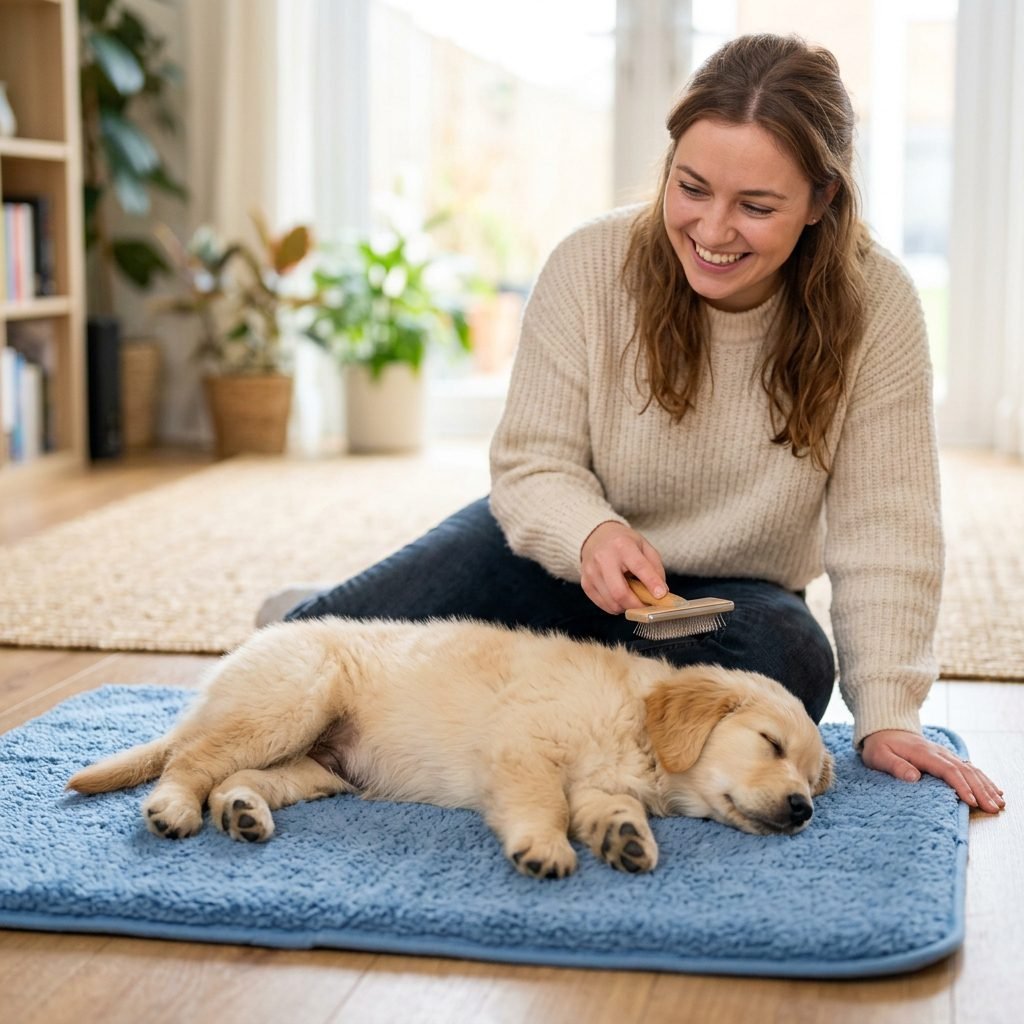
Today, we are going to dive deep into a transformative technique that professional trainers and groomers swear by: teaching your puppy to voluntarily lay on their side for grooming. This position, formally known as lateral recumbency, gives you unparalleled access to those hard-to-reach, high-friction areas like the armpits, belly, and inner thighs where painful mats love to hide. More importantly, it teaches your puppy how to actively relax and opt-in to the grooming process.
Grooming is a lifelong necessity. Investing the time to teach your puppy to relax on their side now will save you thousands of dollars in professional grooming fees and prevent a lifetime of stress for both of you.
Grab a cup of coffee, a handful of high-value treats, and let us embark on the easiest, most effective way to train your puppy to lay on their side for stress-free brushing. By the end of this comprehensive guide, you will have a clear, actionable roadmap to transform your grooming routine from chaotic to calm.
Why Laying on the Side is a Grooming Game-Changer
Why Laying on the Side is a Grooming Game-Changer
Before we dive into the ‘how,’ it is crucial to understand the ‘why.’ When you try to brush a puppy while they are standing or sitting, they are in an active, engaged posture. They are ready to play, jump, or walk away. By teaching them to lay flat on their side, you are encouraging a physiological shift from an active state to a resting state. It is much harder for a puppy to be hyperactive when they are stretched out comfortably on the floor.
Unrestricted Access to Matting Hotspots
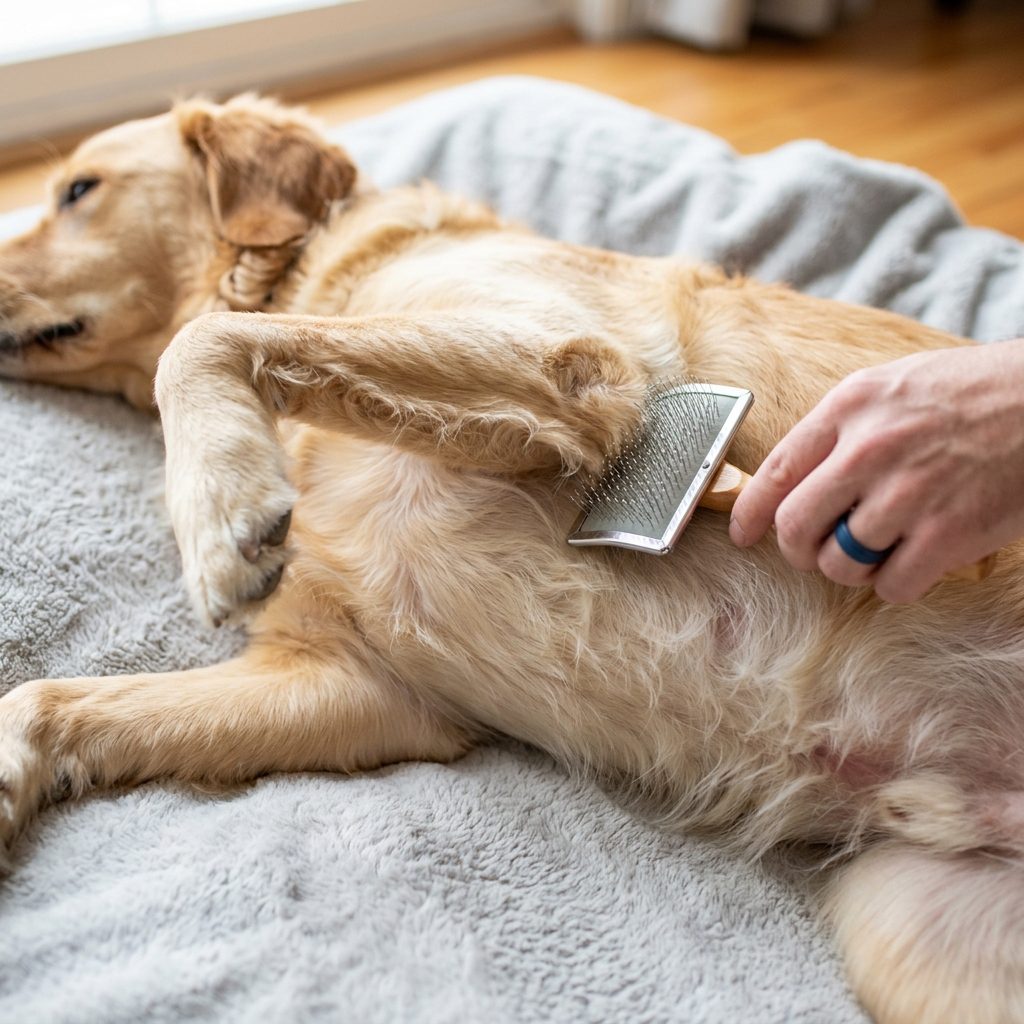
When your dog is standing, reaching their belly, the inside of their legs, and their armpits requires you to awkwardly lift their limbs or contort your own body. These areas experience the most friction from walking and wearing harnesses, making them ground zero for severe tangles and mats. When your puppy is laying on their side, these areas are completely exposed and supported, allowing you to use your slicker brush and metal comb safely and effectively without accidentally pulling their skin.
Building Unshakeable Trust
Laying on the side is a vulnerable position for a dog. When your puppy learns that they can lay in this position while you handle them, and that nothing scary or painful happens, their trust in you skyrockets. This trust translates beyond grooming. It makes veterinary examinations, nail trims, and checking for ticks infinitely easier. You are essentially teaching them a ‘chill out’ button that you can rely on in various husbandry situations.
- Safety First: Less squirming means a significantly lower risk of accidentally poking your puppy with the brush pins or snipping them if you use grooming shears.
- Energy Conservation: Both you and your puppy will expend far less energy, making grooming sessions quicker and less exhausting.
- Positive Conditioning: You are replacing the negative association of restraint with a positive association of relaxation and rewards.
The Grooming Toolkit: What You Need Before We Start
The Grooming Toolkit: What You Need Before We Start
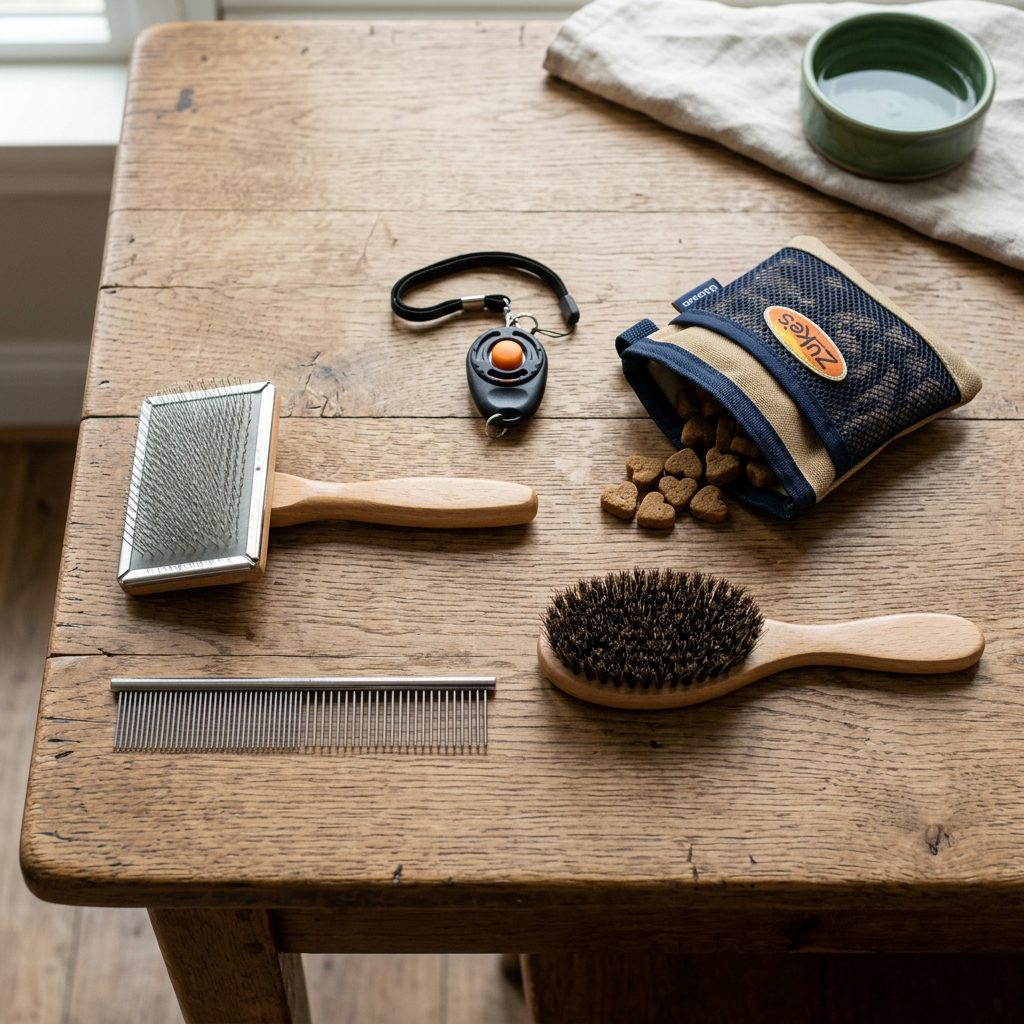
Setting your puppy up for success means having the right environment and the right tools ready to go before you even ask them to lay down. If you have to get up to grab a brush or find treats, you will lose your puppy’s focus and break the relaxation spell. Here is exactly what you need to gather for your side-lying training sessions.
| Tool / Item | Specific Purpose in Training |
|---|---|
| High-Value Training Treats | Tiny, soft, and smelly treats (like boiled chicken, hot dogs, or freeze-dried liver) to heavily reward the puppy for staying in position. |
| Comfortable Mat or Blanket | Provides a clear, comfortable target for the puppy to lay on. A non-slip surface prevents them from sliding around and feeling insecure. |
| Clicker or Marker Word | A tool to precisely communicate to the puppy the exact moment they do the right thing (e.g., the moment their shoulder touches the mat). |
| Soft Bristle Brush | Used in the initial stages of training because it feels like a massage and will not accidentally pull hair if the puppy suddenly moves. |
| Slicker Brush & Metal Comb | The actual grooming tools you will transition to once the puppy is completely relaxed and desensitized to the training process. |
Pro Tip: Always conduct these initial training sessions in a quiet, distraction-free room. Turn off the television, put away squeaky toys, and ensure other pets are in a different area so your puppy can focus entirely on you and the treats.
Step-by-Step Guide to the ‘Settle on Your Side’ Command
Step-by-Step Guide to the ‘Settle on Your Side’ Command
Now we get to the fun part: the actual training! We are going to use a highly effective positive reinforcement technique called ‘luring and shaping.’ Do not rush these steps. Your puppy dictates the pace. If they struggle at step three, you need to go back to step two for a few days.
Phase 1: The Down Position
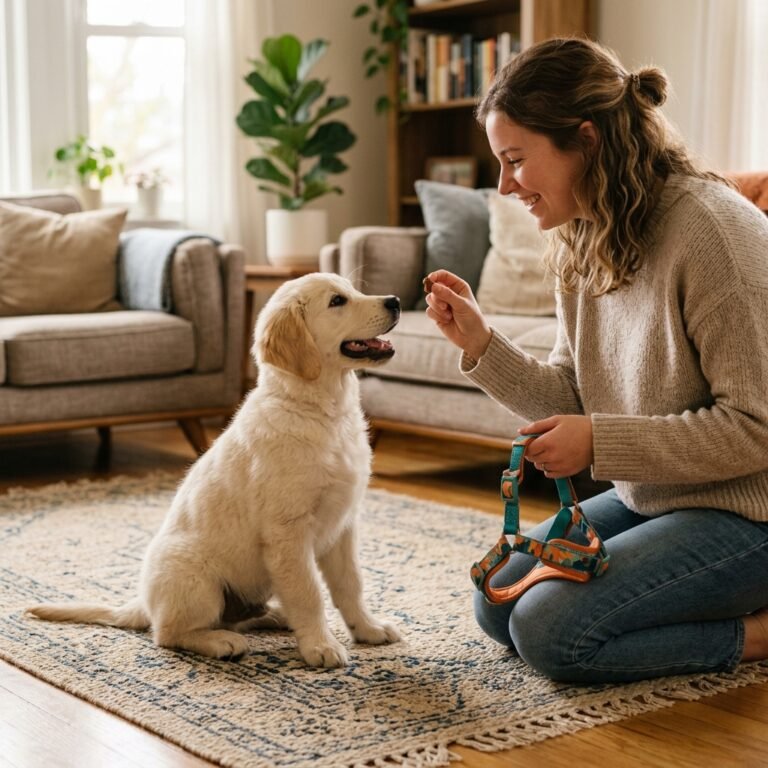
Before your puppy can lay on their side, they need to master the basic ‘Down’ command. Start with your puppy in a sit. Hold a high-value treat right in front of their nose, and slowly lower it straight down to the floor between their front paws. As their elbows touch the floor, say ‘Yes!’ (or click your clicker) and release the treat. Practice this until they can smoothly drop into a down position without hesitation.
Phase 2: The Side Roll Lure
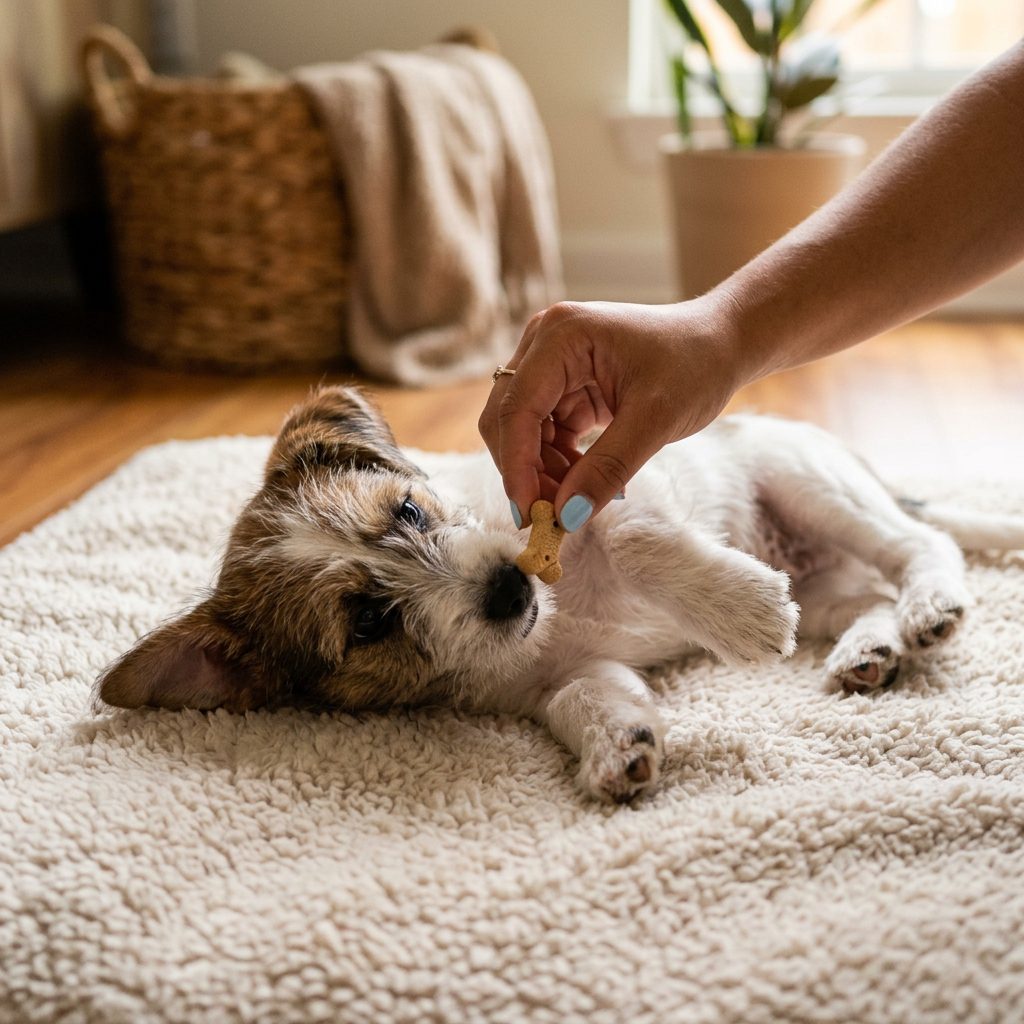
Once your puppy is in the ‘Down’ position, take another treat and hold it to their nose. Slowly move the treat toward their shoulder, and then slightly back toward their ribs. Your puppy’s nose will follow the treat, and naturally, their weight will shift. As they reach for the treat, their body will roll over onto one hip, and eventually, their shoulder will hit the mat. The exact millisecond their side touches the floor, enthusiastically say ‘Yes!’ and give them a jackpot of treats (3-4 treats in a row right on the floor between their paws). This keeps their head down rather than popping back up to get the treat from your hand.
Phase 3: Adding Duration
We do not just want the puppy to flop over and pop right back up; we need them to stay there. Lure them onto their side. Once they are there, continue to slowly feed them treats one after another while they remain in position. Space out the treats: one second, then two seconds, then three seconds. If they get up, the treats stop. Gently lure them back down and try again. Introduce a verbal cue like ‘Chill,’ ‘Side,’ or ‘Flat’ right as you begin the luring motion.
- Get your puppy into a standard Down position.
- Use a treat to lure their nose to their shoulder, causing their weight to shift.
- Mark and reward the exact moment their side touches the floor.
- Continuously feed treats on the floor to build duration.
- Slowly fade the food lure by using an empty hand to guide them, rewarding from your other hand.
Troubleshooting Common Puppy Resistance
Troubleshooting Common Puppy Resistance
Puppies have short attention spans and can easily become frustrated or overstimulated. It is completely normal to run into a few roadblocks while teaching lateral recumbency. Here is how to handle the most common issues savvy dog owners face during this training.
The Pop-Up Toaster
Does your puppy hit the floor and immediately spring back up like a pop-up toaster? This usually means you are rewarding them too high up, or you are waiting too long between treats. When you deliver the treat, place it directly on the mat right between their front paws so they have to keep their head down to eat it. Increase your rate of reinforcement—feed them continuously like a Pez dispenser to show them that staying down is highly profitable.
The Mouthy Monster
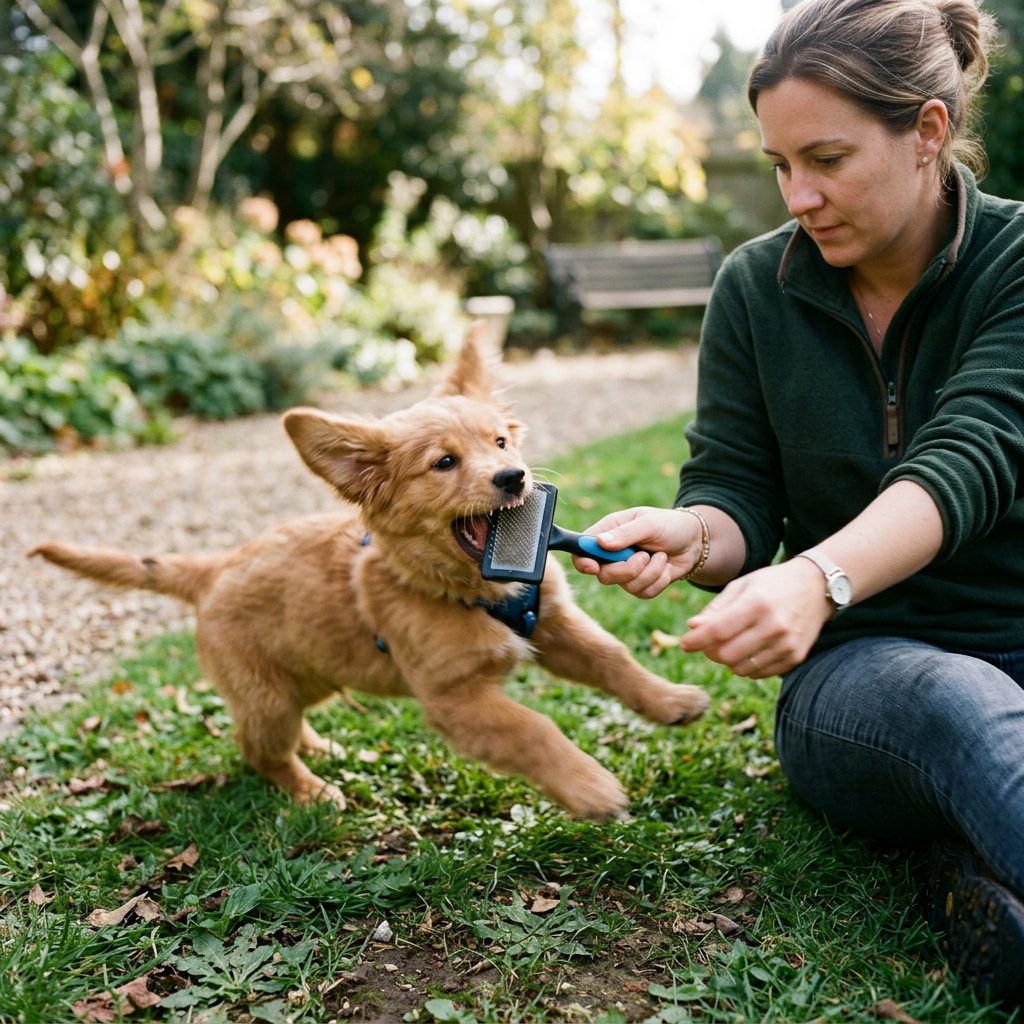
If your puppy is trying to bite your hands, nibble the brush, or chew on the treats aggressively, they are likely overstimulated. Training should be calming. If the puppy gets mouthy, immediately stand up, calmly pick up your tools, and walk away for two minutes. This teaches them that teeth on skin or tools ends the fun game. When you resume, try using a slightly lower-value treat (like regular kibble) to reduce their arousal level.
The Squirmy Worm
Some puppies hate feeling restrained. The beauty of this method is that there is zero physical restraint. If your puppy is squirming, ensure you are not accidentally holding them down or leaning over them in an intimidating way. Keep your body language relaxed, sit next to them rather than looming over them, and let them get up if they want to. We want them to choose to stay. If they get up, simply reset and try again.
Remember, frustration travels down the leash. If you feel yourself getting annoyed, end the session on a positive note with a simple command like ‘Sit,’ give a treat, and try again tomorrow. Training should always be a joyful experience.
Transitioning to Actual Brushing
Transitioning to Actual Brushing
Once your puppy can happily lay on their side for 30 to 60 seconds while you gently stroke their fur with your hands, it is time to introduce the grooming tools. Do not just grab the slicker brush and go to town. We must desensitize them to the tools just as carefully as we taught the position.
The Desensitization Process
Start by asking your puppy to lay on their side. Show them the back of the brush (not the bristles) and let them sniff it. Reward them for ignoring it. Next, gently tap the back of the brush against their shoulder, say ‘Yes!’, and reward. Progressively move to using a soft bristle brush, making one single, gentle stroke down their back, followed immediately by a treat. The sequence is always: Brush stroke -> Mark (‘Yes!’) -> Treat.
Establishing a Routine
Consistency is the secret to a beautifully groomed dog. Short, frequent sessions are infinitely better than one long, stressful session once a month. Use the table below as a guideline for how often you should be practicing this side-lying brushing routine based on your dog’s coat type.
| Coat Type | Examples | Recommended Brushing Frequency |
|---|---|---|
| Short & Smooth | French Bulldog, Beagle, Pug | 1-2 times per week (focus on deshedding) |
| Double Coated | Golden Retriever, Husky, Corgi | 3-4 times per week (daily during shedding season) |
| Curly / Drop Coat | Goldendoodle, Poodle, Shih Tzu | Daily (crucial to prevent severe matting) |
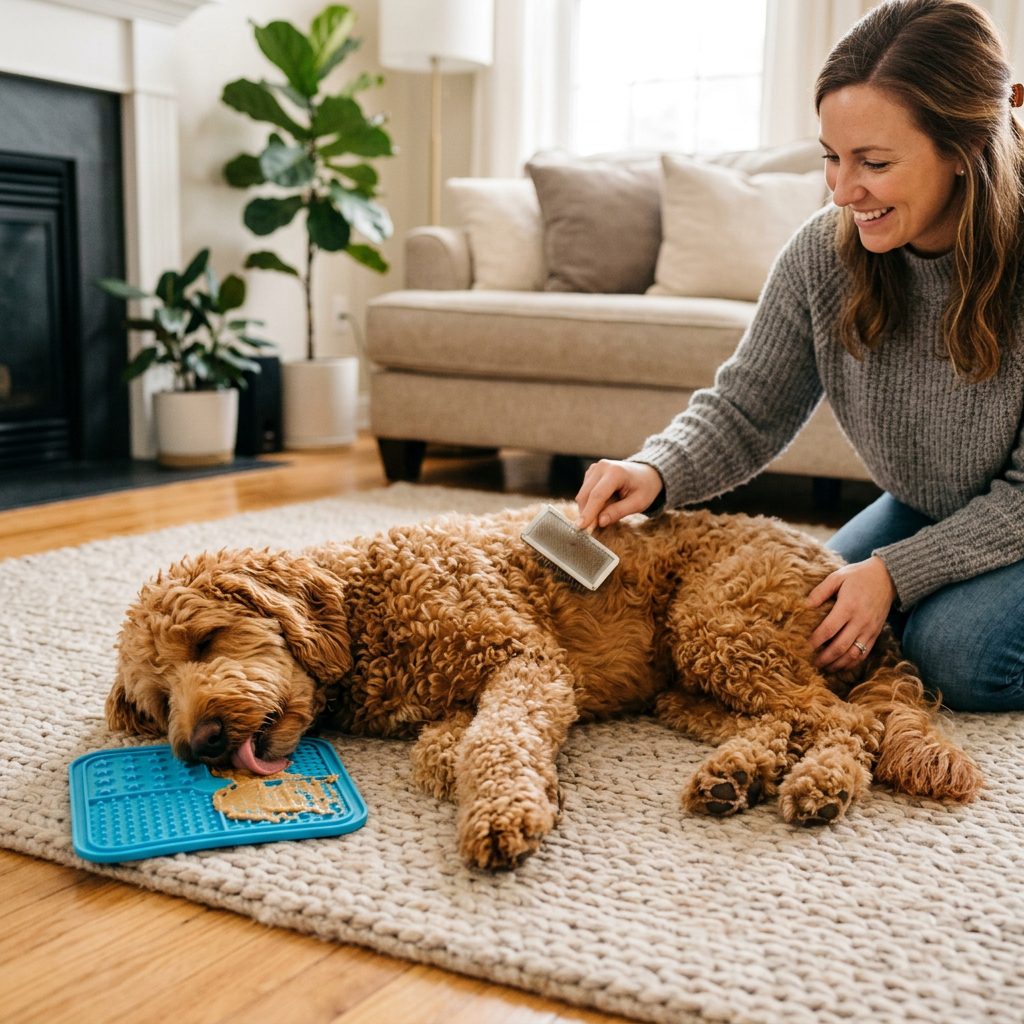
As your puppy becomes a pro at this, you will slowly fade out the continuous treats. Eventually, you will only need to give them one treat at the beginning to get into position, and a nice big jackpot at the end when you say ‘All done!’ You can also incorporate a lick mat smeared with dog-safe peanut butter or plain yogurt. Place the lick mat on the floor near their nose while they are on their side; this provides continuous reinforcement and keeps them happily occupied while you work through their coat.
Conclusion
Wrapping Up Your Stress-Free Grooming Journey
Training your puppy to lay on their side for brushing is one of the most valuable investments you can make in their lifelong care. It transforms grooming from a stressful chore into a relaxing, spa-like bonding session. By understanding the importance of the lateral recumbency position, gathering the right high-value tools, and patiently working through the luring and shaping steps, you are setting your savvy pup up for success.
Remember that every puppy learns at their own pace. Some will master the side-settle in a single afternoon, while others might take a couple of weeks to fully relax into the posture. Celebrate the small victories, stay consistent with your positive reinforcement, and never force or physically restrain your puppy into submission. With a little bit of patience and a lot of treats, you will soon be able to comb through your dog’s coat with ease, ensuring they stay healthy, mat-free, and incredibly happy. Happy brushing!