How To Teach Puppy Wait For Food Bowl Without Jumping (5-Minute Hack!)
Picture this: it is dinnertime, and the moment your hand even brushes against your puppy’s food bowl, they turn into a bouncing, yipping, uncontrollable kangaroo. They jump on your legs, they spin in circles, and they might even try to knock the bowl right out of your hands before it hits the floor. If this sounds like your daily mealtime routine, you are absolutely not alone! As savvy dog owners, we know that puppies are little bundles of pure energy and instinct, and food is one of their biggest motivators.
However, allowing your puppy to jump and lunge for their food is not just annoying; it can lead to accidental spills, scratched legs, and more importantly, long-term behavioral issues like resource guarding and a lack of impulse control. Teaching your puppy to wait patiently for their food is one of the most foundational skills you can impart. It establishes you as the provider of resources, builds their focus, and sets the tone for a calm, well-behaved adult dog.
The best part? You do not need weeks of intense obedience classes to fix this specific issue. Today, I am going to share a brilliant, incredibly effective 5-Minute Hack that leverages your puppy’s natural desires to teach them that calmness is the only key that unlocks their dinner. By the end of this guide, you will have a clear, actionable plan to transform your chaotic kitchen into a zen dining space for your furry best friend.
Impulse control isn’t about suppressing your puppy’s excitement; it’s about channeling that excitement into a productive, calm behavior that benefits both of you.
Let us dive straight into the psychology, the tools, and the exact steps you need to master this mealtime miracle!
Why Your Puppy Jumps at Mealtime (The Psychology)
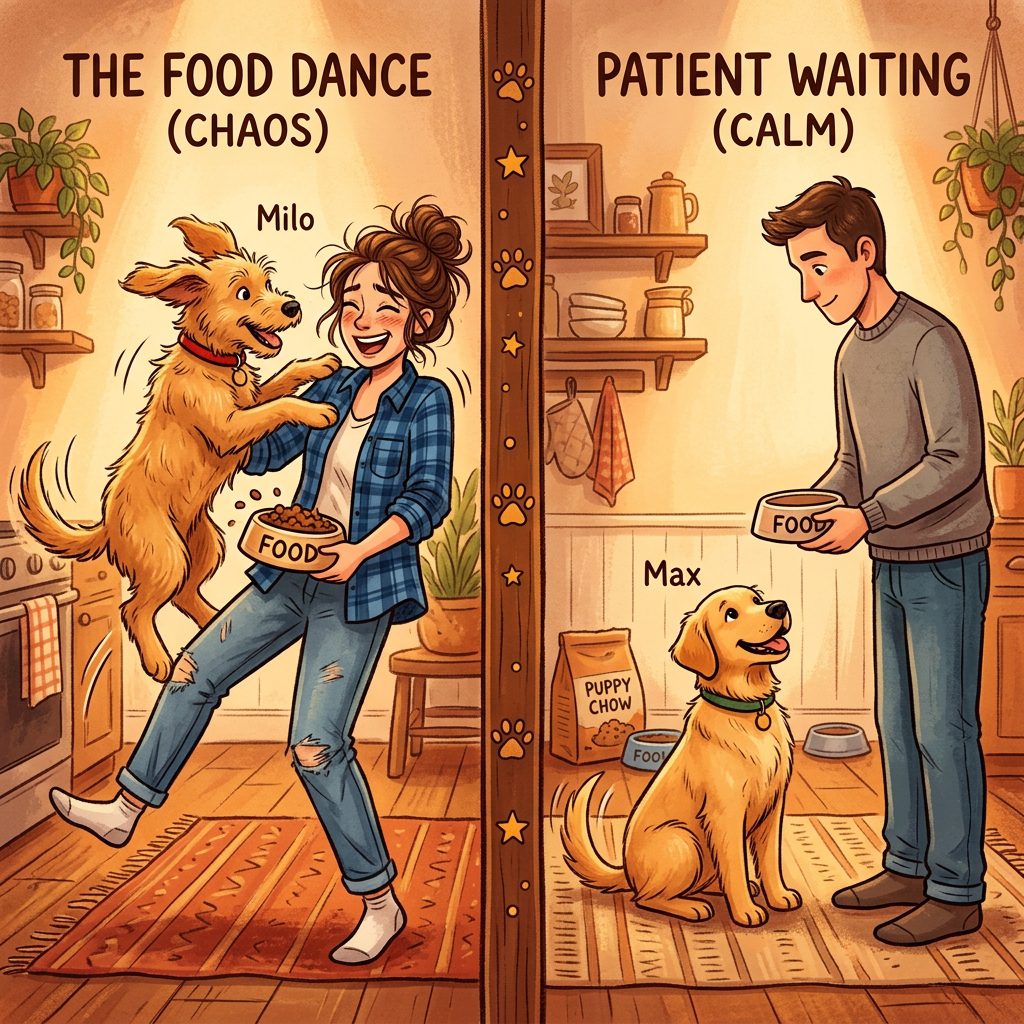
Before we jump into the 5-minute hack, it is crucial to understand exactly why your puppy loses their mind when the kibble comes out. Puppies are driven by basic survival instincts, and in the wild, the one who gets to the food first is the one who eats. When your puppy jumps and lunges, they are not trying to be dominant or naughty; they are simply reacting to a highly stimulating resource with overwhelming enthusiasm.
Furthermore, dogs are masters of association. If they have jumped in the past and eventually the food bowl made its way to the floor, they have inadvertently learned that jumping is part of the sequence that results in eating. We need to rewire that sequence. We need to teach them that gravity only works when their bottom is glued to the floor.
The Benefits of Teaching ‘Wait’
- Safety First: Prevents your puppy from knocking the bowl out of your hands, slipping on spilled food, or accidentally biting your fingers in their rush.
- Mental Stimulation: Asking a hungry puppy to think and control their body before eating burns mental energy, which is just as tiring as physical exercise.
- Respect for Boundaries: It teaches your dog that all good things come through you, reinforcing a healthy, cooperative bond.
- Foundation for Other Commands: The impulse control learned here easily translates to waiting at open doors, waiting to cross the street, and waiting to greet guests.
Let us look at a quick breakdown of how your puppy’s mindset shifts when you implement structured feeding.
| Puppy Behavior (Unstructured) | What It Means in Puppy Language | The Goal (Structured Feeding) |
|---|---|---|
| Jumping on your legs | “Give it to me now! I demand the food!” | Sitting calmly, realizing patience gets the food. |
| Lunging at the bowl mid-air | “I must intercept the prey before it escapes!” | Watching the bowl descend without breaking position. |
| Frantic barking or whining | “I am so overstimulated I cannot contain myself!” | Quiet focus, using eye contact to say “please.” |
| Inhaling food instantly | “I must eat fast before someone takes it.” | Eating at a normal pace, knowing the food is secure. |
By understanding this psychological shift, you can approach the training with patience and empathy, knowing you are giving your puppy a valuable life skill.
Tools Needed for the 5-Minute Hack
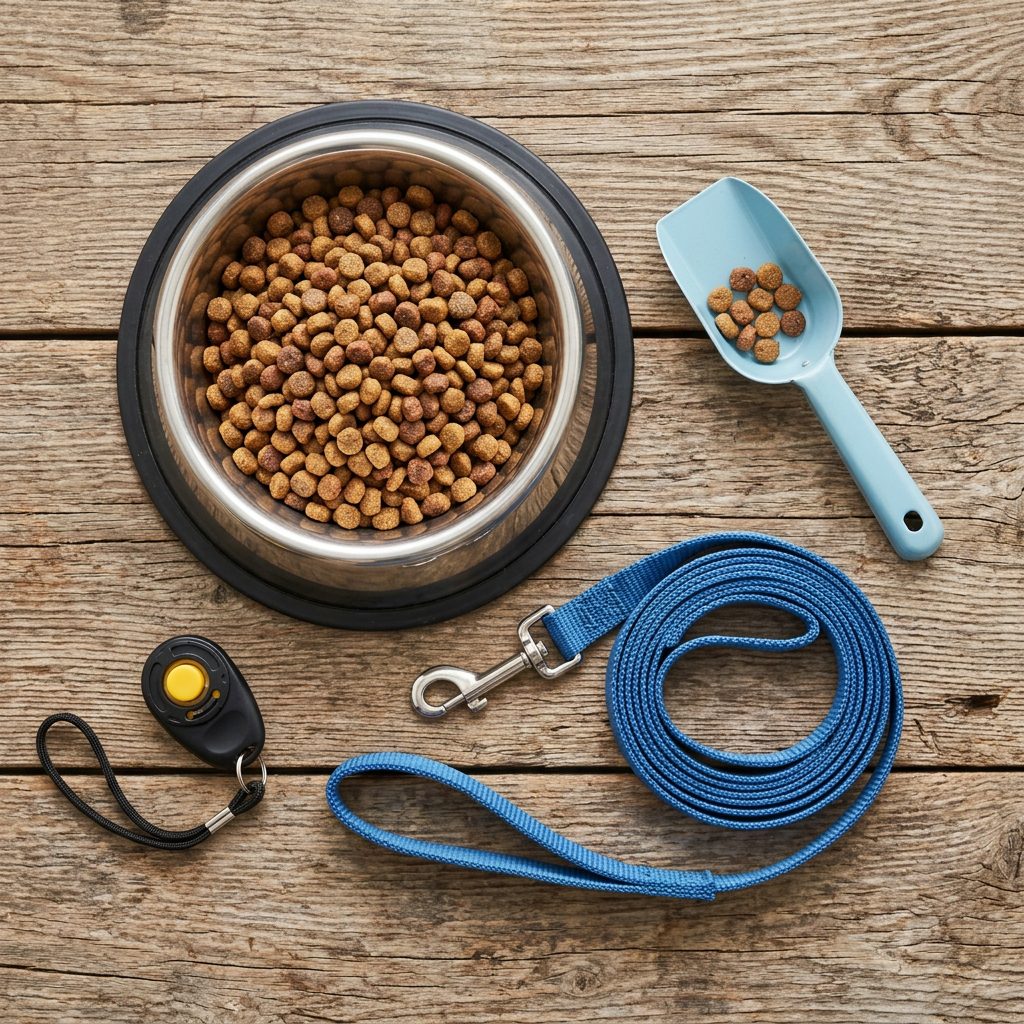
One of the reasons this hack is so popular among savvy dog owners is that it requires almost zero special equipment. You likely already have everything you need in your kitchen. However, setting up your environment correctly is the secret sauce to making the 5-minute hack work flawlessly.
Your Mealtime Toolkit
- Your Puppy’s Regular Meal: You do not need high-value training treats for this. The kibble or raw food they normally eat is high-value enough because they are hungry.
- A Sturdy Food Bowl: A stainless steel or heavy ceramic bowl with a non-slip rubber base is ideal. If you accidentally drop it, it won’t shatter, and it won’t slide across the floor when they finally get to eat.
- A Quiet Environment: For the first few sessions, remove all other distractions. Put other pets in another room, turn off the loud television, and ask family members to give you space. Your puppy needs to focus entirely on you and the bowl.
- A 4-to-6 Foot Leash (Optional but Recommended): If your puppy is a chronic jumper who physically launches themselves at you, stepping on a leash (leaving just enough slack for them to sit comfortably but not jump) can prevent rehearsing the bad behavior while you train.
- Your Patience and Timing: This is the most critical tool. Your reaction time must be sharp. If you hesitate, the puppy learns the wrong lesson.
Once you have your tools gathered, take a deep breath. Your energy matters. If you are frustrated or rushed, your puppy will pick up on that anxious energy and mirror it. Project calm, confident authority.
The 5-Minute Hack: Step-by-Step Guide (The Elevator Game)
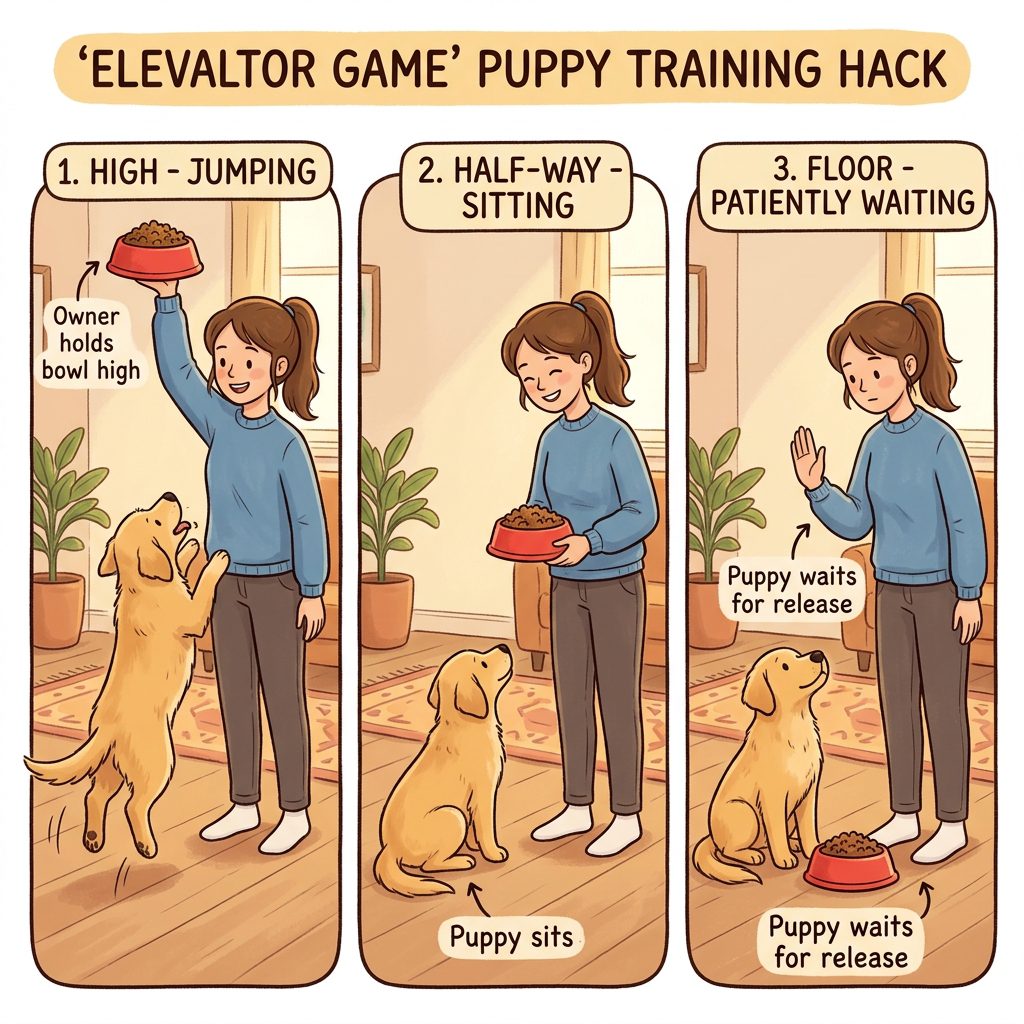
Welcome to the core of the 5-minute hack, affectionately known in the dog training world as The Elevator Game. This method is purely based on operant conditioning. The bowl is the elevator. Your puppy’s bottom is the button that controls the elevator. If their bottom is on the floor, the elevator goes down. If their bottom comes off the floor, the elevator goes back up. It is that simple!
Step 1: The Initial Sit
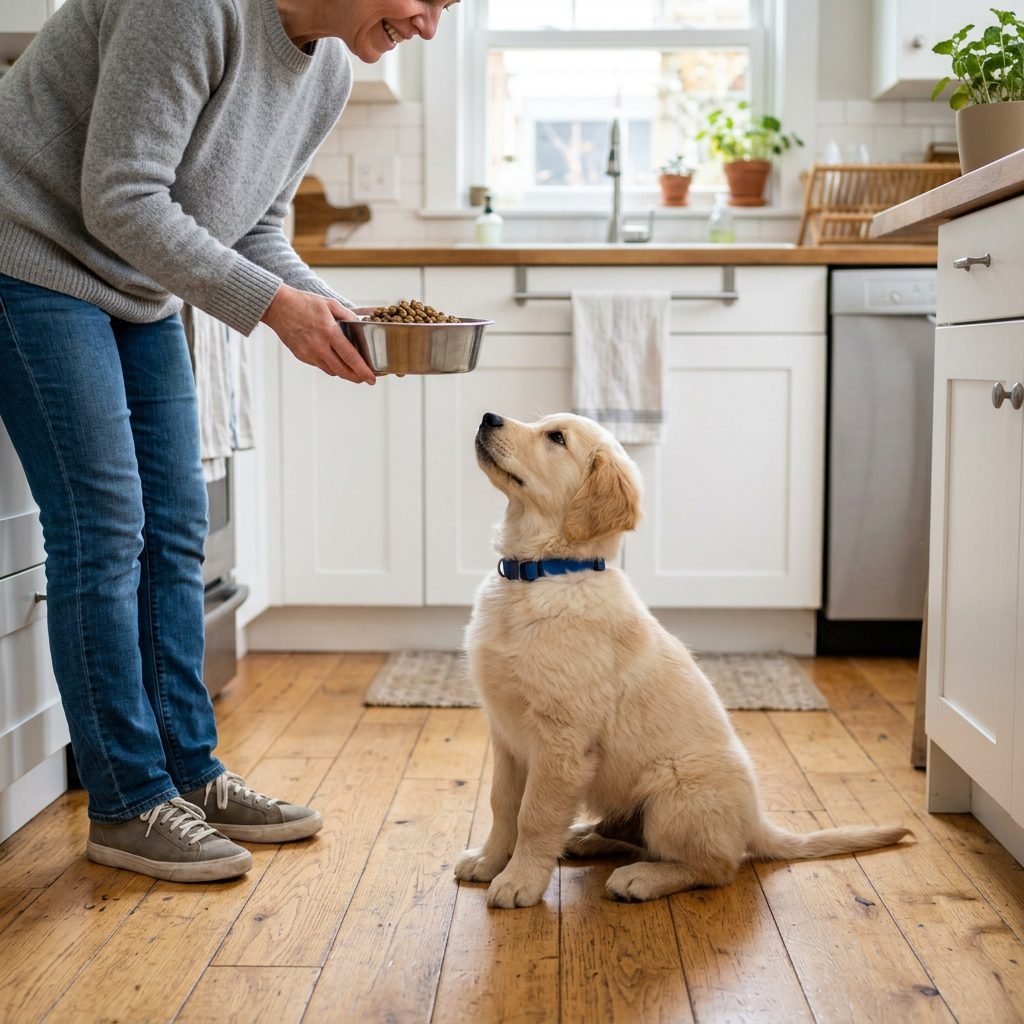
Stand in the area where you normally feed your puppy. Hold the bowl of food up at your chest level. Do not say anything. Do not ask for a “sit.” Just stand completely still like a statue and wait. Your puppy will likely jump, bark, and spin. Ignore it all. Eventually, your puppy will realize that jumping is not working. They will stop, look at you, and likely offer a “sit” to see if that gets a reaction. The moment their bottom hits the floor, mentally mark that as step one complete.
Step 2: The Elevator Descends
As soon as your puppy is sitting, begin lowering the bowl slowly towards the floor. Think of it as a slow-moving elevator. Keep your eyes on your puppy’s hips, not their face.
Step 3: The Abort Mission (If They Break)
This is where the magic happens. The second your puppy’s bottom lifts off the floor to lunge at the descending bowl, immediately pull the bowl straight back up to your chest. Stand up straight and look away. Do not say “No,” do not scold them, just remove the opportunity. The elevator goes back to the top floor.
Consistency is your best friend here. Even if the bowl is one inch from the floor, if that puppy’s bottom lifts, the bowl shoots back up. No exceptions!
Step 4: The Reset and Repeat
Wait for them to sit again. Lower the bowl again. You might have to do this “elevator up, elevator down” dance 10, 20, or even 30 times in the first two minutes. That is perfectly normal! You are letting their brain process the puzzle. Suddenly, you will see the lightbulb go on. They will realize, “Oh! My movement makes the food go away. My stillness brings the food closer.”
Step 5: The Release Word
When you successfully get the bowl all the way to the floor and your puppy is still sitting, do not let them eat just yet. Keep your hand on the edge of the bowl. If they dive for it, cover the bowl with your hand or lift it back up. Once the bowl is on the floor and they look up at you for permission, enthusiastically say your release word (like “Okay!”, “Break!”, or “Eat!”) and step back, allowing them to enjoy their meal.
This entire process takes about 5 minutes of intense focus, but the results are almost instantaneous if your timing is precise.
Troubleshooting Common Puppy Mistakes
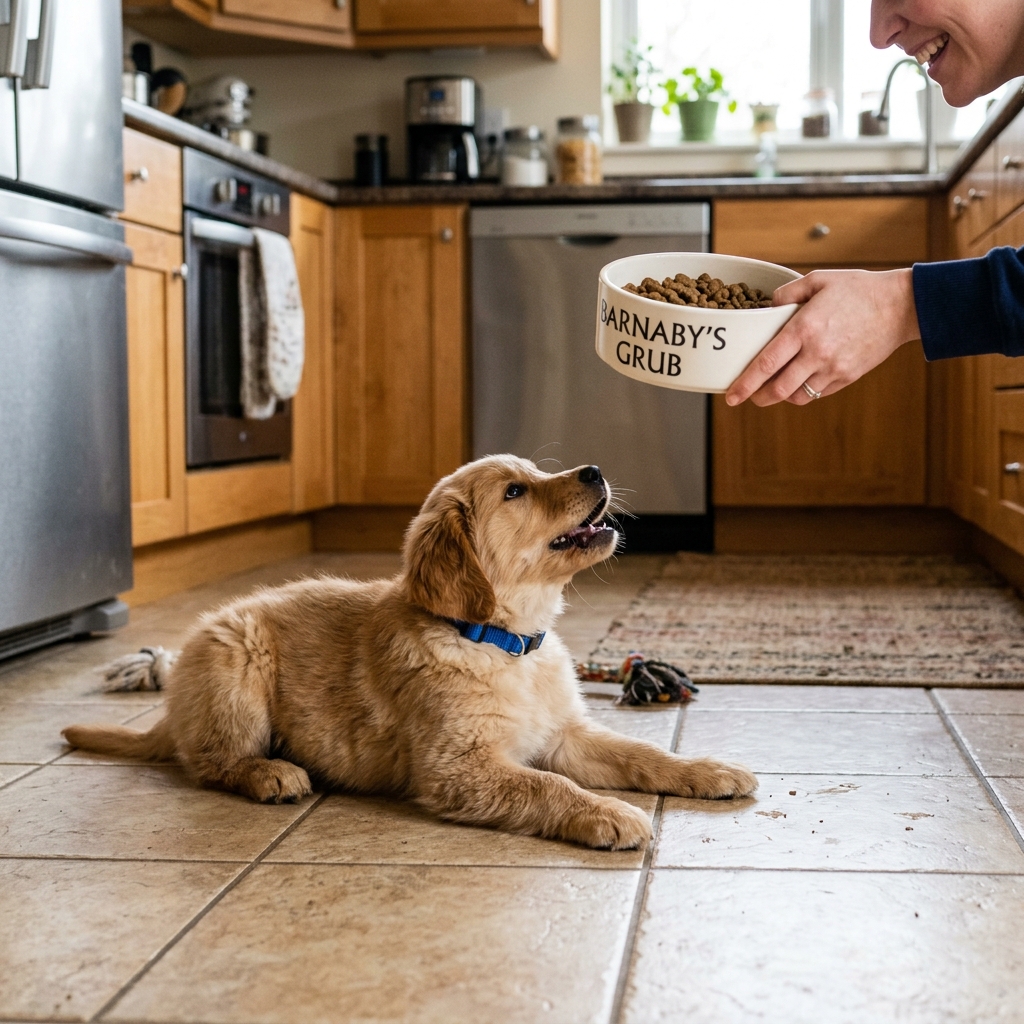
Even with a foolproof hack, puppies are creative little creatures and will try different tactics to get what they want. If your puppy is struggling to grasp the concept, do not worry. Here are the most common issues you might encounter during the Elevator Game and exactly how to troubleshoot them.
The Puppy Barks Non-Stop
Some puppies get highly vocal when frustrated. If your puppy is sitting but barking their head off, do not lower the bowl. Lowering the bowl while they bark teaches them that barking works. Wait for a moment of complete silence—even just one second—before you begin lowering the bowl. Reward the quiet.
The Puppy Paws at the Bowl
If you get the bowl to the ground and your puppy stays sitting but uses their front paw to try and pull the bowl towards them, immediately pick the bowl back up. Pawing is a form of breaking the boundary. The rule is absolute stillness until the release word is given.
The Puppy Crawls Forward
Sometimes a puppy will keep their bottom on the ground but slowly army-crawl forward as the bowl descends. This is a clever loophole, but you must close it! If they move out of their original footprint, the bowl goes back up. They must hold a stationary sit.
| Common Problem | Why It Happens | Your Immediate Action |
|---|---|---|
| Lunging when the bowl is 1 inch from the floor | The temptation is too great at close range. | Swiftly lift the bowl back to chest height. Do not hesitate. |
| Refusing to sit in the first place | Over-arousal; they are too excited to think. | Stand still, look at the ceiling, and wait. Do not repeat the “sit” command. |
| Breaking the sit when you say “Good boy” | They confuse praise with the release word. | Keep quiet during the lowering phase. Only speak the release word. |
| Jumping up and biting your clothes | Extreme frustration and lack of impulse control. | Step on the leash to prevent jumping, or calmly walk out of the room for 30 seconds. |
Remember, troubleshooting is just part of the communication process. You are learning their language, and they are learning yours. Keep your emotions neutral and let your actions (lifting the bowl) do all the talking.
Consistency and Advancing the Wait Command
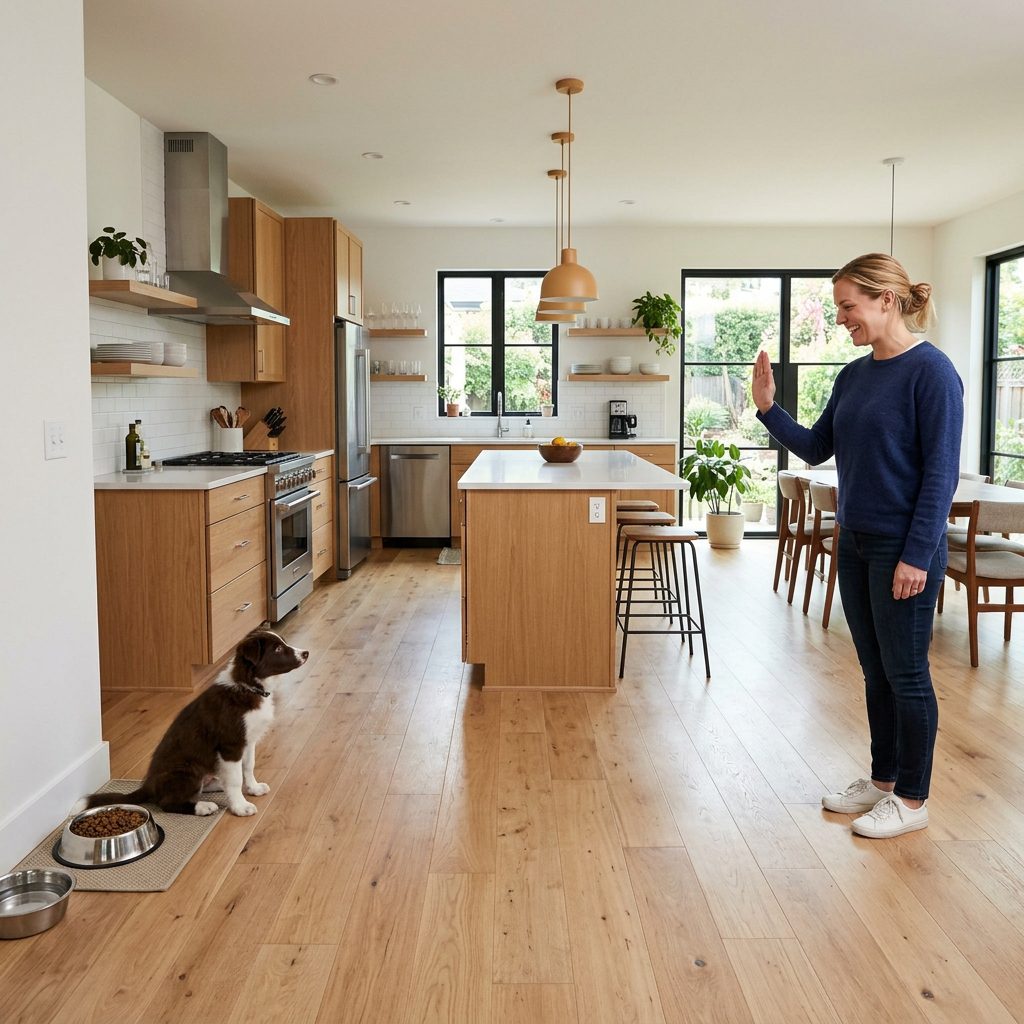
Congratulations! You have successfully completed the 5-minute hack, and your puppy sat beautifully for their meal. But the journey does not end here. True behavioral change comes from relentless consistency and gradually increasing the difficulty of the task. If you only play the Elevator Game on Mondays but let them jump on Tuesdays, you will ruin the training.
The Golden Rule: Every Meal, Every Time
From this day forward, your puppy must sit and wait for every single meal. This includes meals fed by your spouse, your children, or the pet sitter. Everyone in the household must be on the same page. If the rules are consistent, the behavior will become a permanent habit within a couple of weeks.
Advancing the Skill: The 3 D’s
Once your puppy has mastered the basic wait, it is time to challenge their impulse control using the Three D’s of dog training: Duration, Distance, and Distractions.
- Duration: Instead of releasing your puppy the second the bowl touches the floor, start building time. Make them wait for 3 seconds, then 5 seconds, then 10 seconds before you say “Okay!”. This builds incredible mental stamina.
- Distance: Place the bowl on the floor, tell your puppy to wait, and take one step back. If they stay, step forward and release them. Gradually increase your distance until you can walk across the room while they wait patiently by their bowl.
- Distractions: Once Duration and Distance are solid, add real-world distractions. Bounce a tennis ball, have a family member walk past, or drop a piece of kibble on the floor. If your puppy maintains their sit through the distraction, they get the ultimate reward: their dinner!
Pro Tip: Do not increase all three D’s at the same time. If you are working on making them wait longer (Duration), stay close to them (Distance). Set them up for success, not failure!
By continually challenging your puppy, you are not just teaching them a neat mealtime trick; you are building a highly focused, obedient, and respectful canine companion. The impulse control they learn at the food bowl will bleed over into every other aspect of their life, making your journey as a dog owner infinitely more enjoyable.
Conclusion
Teaching your puppy to wait for their food bowl without jumping is a milestone achievement in your dog training journey. The 5-Minute Hack—the Elevator Game—is a testament to the power of positive reinforcement, clear communication, and understanding canine psychology. By simply using the food as the ultimate reward for calmness, you eliminate the need for force, yelling, or frustration.
Remember that puppies are constantly learning from their environment. Every interaction is a training session, whether you intend it to be or not. By taking control of mealtime, you are establishing a foundation of respect and impulse control that will serve you both for years to come. There will be days when your puppy tests the boundaries, and there will be days when they sit like a perfect angel before you even touch the bowl. Embrace the process, stay consistent with the rules, and never forget to celebrate the small victories.
You are now equipped with the knowledge and the exact steps to turn mealtime chaos into a beautifully orchestrated routine. So, grab that food bowl, stand tall, and get ready to amaze yourself with how quickly your savvy little puppy catches on. Happy training, and bon appétit to your furry friend!