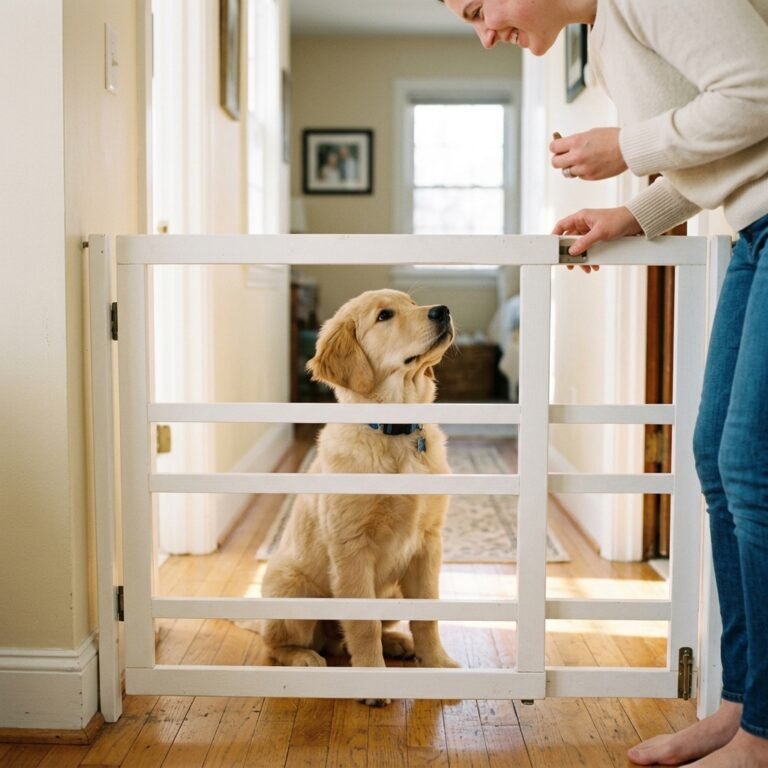

Why Is My Puppy Eating Dirt? 4 Danger Signs You Should Never Ignore
Welcome to the wonderful, messy, and often confusing world of puppy parenthood! If you have recently caught your furry bundle of joy face-down in a flowerpot or snacking on the backyard topsoil, you are likely feeling a mix of disgust and genuine concern. Why on earth would a creature provided with premium kibble and gourmet treats choose to eat literal dirt? This behavior, known scientifically as geophagia (a form of pica), is more common than you might think, but that does not mean it should be ignored. While puppies are naturally curious and explore the world with their mouths, eating dirt can range from a harmless phase to a cry for help regarding their internal health. In this comprehensive guide, we will dive deep into the biological and behavioral reasons behind this habit and, most importantly, identify the four critical danger signs that mean your puppy needs professional medical attention immediately. Grab a cup of coffee, and let’s get to the bottom of this muddy mystery.
The Science of Geophagia: Why Puppies Are Drawn to Dirt

Understanding the ‘Oral Explorer’ Phase
First, let’s normalize the situation slightly. Puppies are essentially toddlers with four legs and a much stronger jaw. Since they lack hands to pick up and examine objects, they use their mouths. This ‘oral exploration’ is a vital part of their sensory development. When a puppy tastes dirt, they aren’t just eating; they are gathering data about their environment. However, when the tasting turns into swallowing and purposeful ingestion, we move from exploration into the realm of pica.
The Role of the Vomeronasal Organ
Dogs possess a specialized sensory organ called the vomeronasal organ (or Jacobson’s organ) located in the roof of their mouth. This organ allows them to ‘taste’ smells. Dirt is a complex cocktail of organic matter, pheromones from other animals, and minerals. To a puppy, a patch of soil might smell like a fascinating storybook of who has been in the yard, and eating it might be an attempt to ‘read’ that story more clearly.
Behavioral vs. Medical Triggers
It is crucial to distinguish between a puppy who is bored and a puppy who is sick. Behavioral dirt eating often happens during play or when the puppy is left alone too long. Medical dirt eating, however, is often compulsive. Your puppy might seem desperate to get to the soil, ignoring toys or treats in favor of a mouthful of mud. This distinction is the first step in solving the puzzle.
The 4 Danger Signs You Should Never Ignore
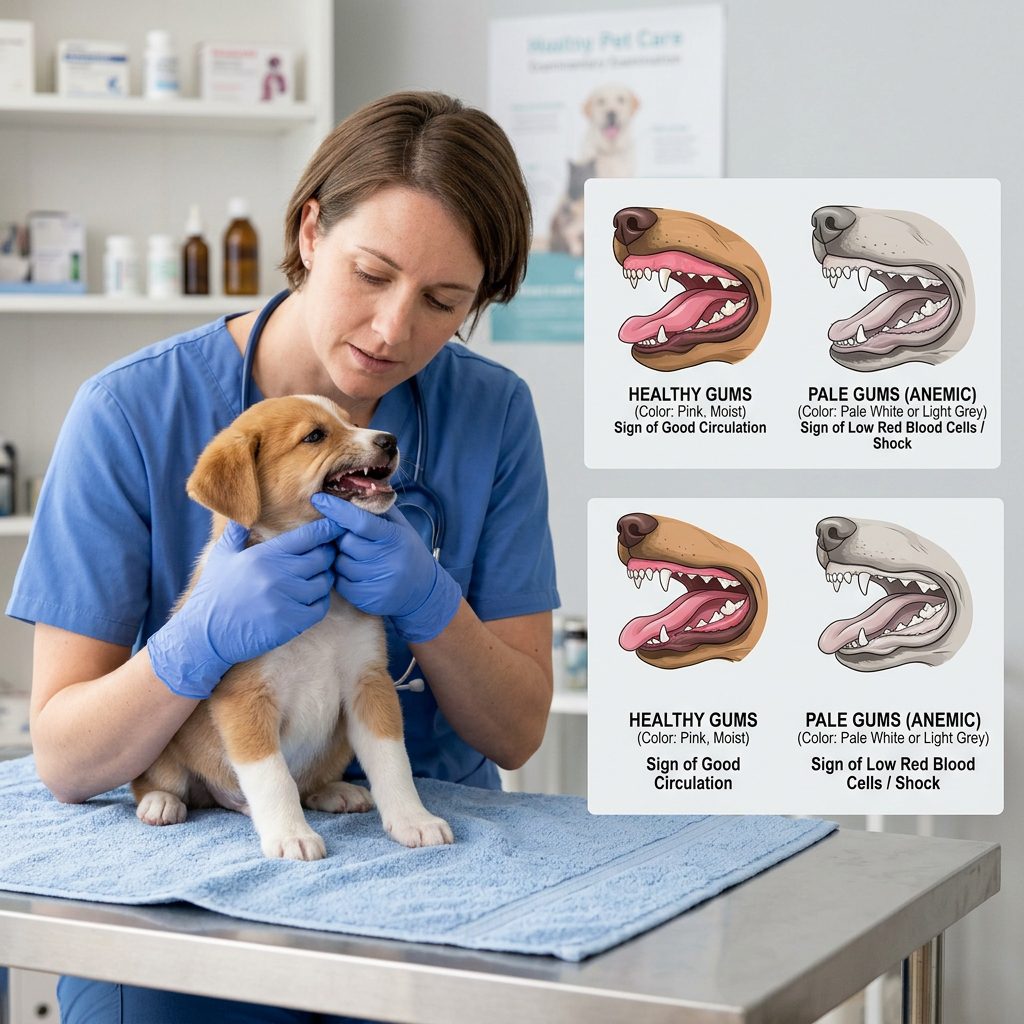
1. Pale or Porcelain-White Gums (Anemia)
One of the most serious reasons a puppy eats dirt is anemia. When a puppy lacks sufficient red blood cells or hemoglobin, they may instinctively crave the iron found in soil. This is a biological drive to self-medicate a nutritional deficit. If you notice your puppy eating dirt, immediately lift their lip and check their gums. Healthy gums should be a vibrant, ‘bubblegum’ pink. If they look pale pink, white, or yellowish, this is a medical emergency.
2. Persistent Vomiting or Diarrhea
While a little dirt might cause a mild upset stomach, consistent vomiting or liquid stools after eating soil suggest a deeper issue. This could indicate that the dirt has already caused a gastrointestinal blockage or that the puppy has ingested soil-borne parasites like hookworms or roundworms. If the ‘input’ (dirt) is causing a violent ‘output’ (vomiting), the habit has moved into the danger zone.
3. Extreme Lethargy and Weakness
A puppy should be a ball of energy interspersed with deep naps. If your dirt-eating puppy seems ‘flat,’ refuses to play, or struggles to get up, the dirt-eating is likely a symptom of an underlying metabolic or systemic disease. This could range from liver shunts to severe electrolyte imbalances.
Expert Tip: Never dismiss a sudden drop in energy as ‘just a growth spurt’ if it is accompanied by pica.
4. Intense Abdominal Pain or Bloating
If your puppy’s stomach feels hard to the touch, looks distended, or if they ‘pray’ (stretching their front legs out while keeping their rear in the air) to relieve pressure, they may have an impaction. Soil, especially clay-heavy soil, can clump together in the intestines, creating a physical wall that prevents food and gas from passing. This is life-threatening and requires immediate veterinary imaging.
Nutritional Gaps and the Search for Minerals
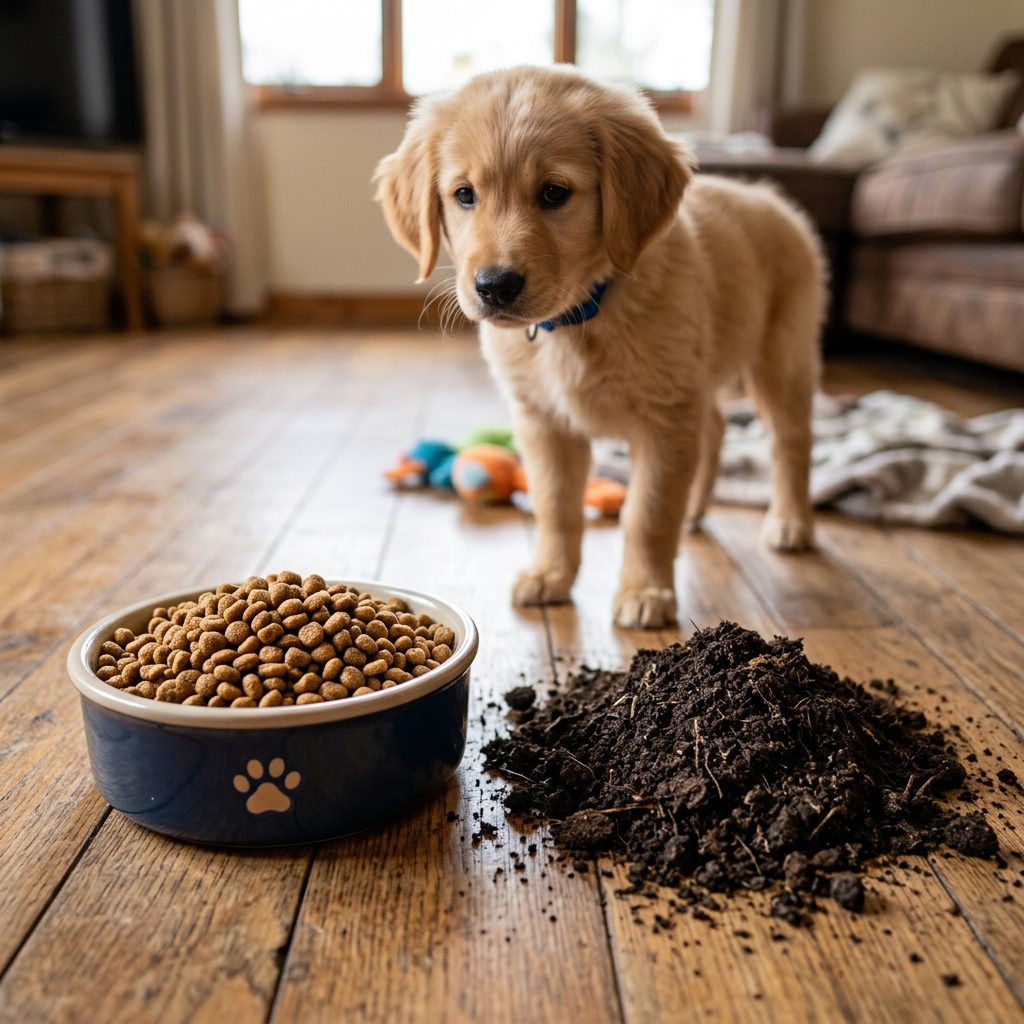
Is the Kibble Cutting It?
Sometimes, the reason for dirt eating is as simple (and as complex) as a nutrient deficiency. If a puppy’s diet lacks essential minerals like iron, calcium, or magnesium, they will seek them out in the earth. This is particularly common in puppies fed an unbalanced home-cooked diet or a low-quality commercial kibble that uses fillers instead of bioavailable nutrients.
| Mineral | Role in Puppy Health | Signs of Deficiency |
|---|---|---|
| Iron | Oxygen transport in blood | Anemia, dirt eating, weakness |
| Calcium | Bone growth and muscle function | Weak bones, muscle tremors |
| Magnesium | Enzyme function and energy | Anxiety, poor growth |
| Zinc | Skin health and immunity | Cracked paws, frequent infections |
The ‘Boredom’ Factor
Don’t overlook the psychological aspect. A savvy dog owner knows that a bored puppy is a destructive puppy. If your puppy is left in a dirt-filled yard without toys or interaction, they will make their own fun. Digging and eating the loosened soil provides tactile stimulation and a ‘flavor’ that breaks the monotony of their day.
Hidden Hazards in the Soil
Pesticides and Fertilizers
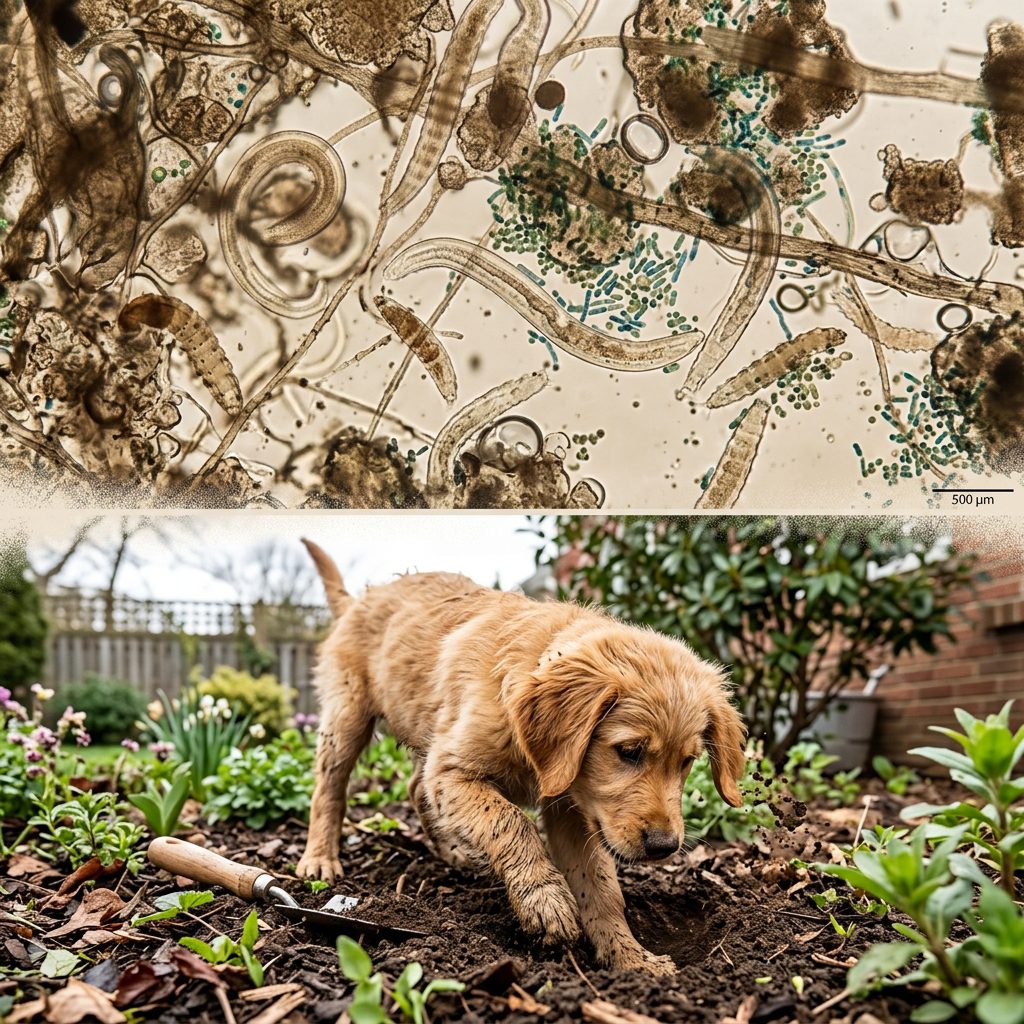
The dirt itself isn’t the only risk; it’s what we put on the dirt. Many lawn treatments contain chemicals that are toxic to canines. Organophosphates found in some fertilizers can cause tremors, seizures, and respiratory failure. Even ‘organic’ fertilizers like bone meal or blood meal are dangerous; they smell like food to a puppy, leading them to ingest large quantities of soil that can then form a concrete-like ‘bezoar’ in the stomach.
Parasites and Fungi
Soil is a living ecosystem. Unfortunately, it often hosts the larvae of hookworms, roundworms, and whipworms. It can also harbor fungal spores like Blastomyces or Histoplasma, which can cause severe respiratory and systemic infections. When your puppy eats dirt, they are essentially playing ‘parasite roulette.’
Physical Obstructions
Dirt often contains small pebbles, mulch, or pieces of plastic. While the dirt might pass, these ‘extras’ can snag in the narrow intestines of a puppy, leading to expensive and risky surgeries. Prevention is always cheaper and safer than a surgical extraction.
How to Stop the Habit: Training and Management

The ‘Leave It’ Command
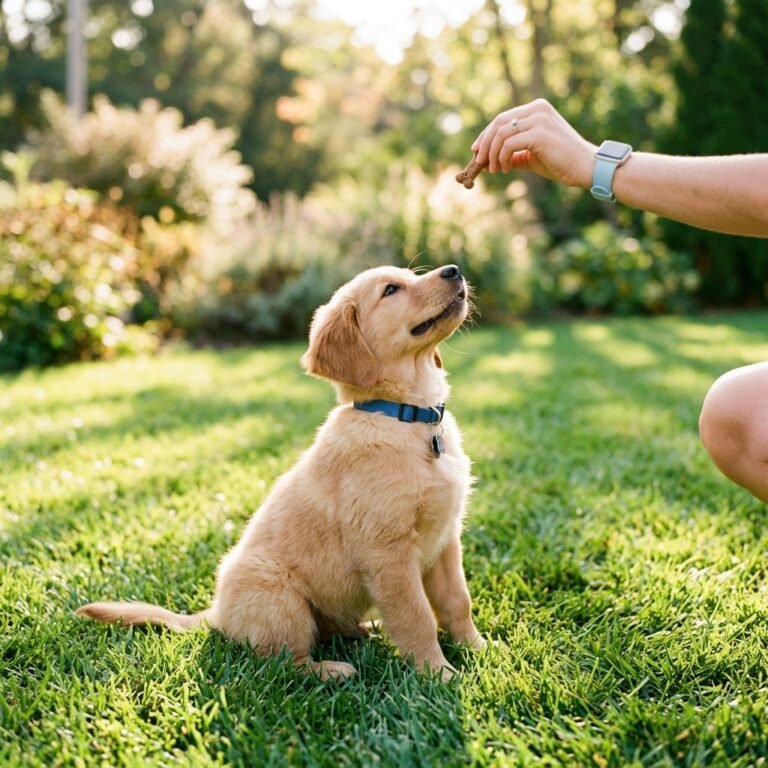
Training is your strongest tool. The ‘Leave It’ command is a literal lifesaver. Start by practicing with low-value items and reward with high-value treats. Gradually move the training sessions to the backyard near their favorite ‘snacking’ spots.
Steps for a Solid ‘Leave It’:
- Place a treat in your closed hand. Let them sniff. When they stop sniffing/pawing, click and treat from the other hand.
- Move to an open hand. If they move for it, cover it. Reward when they look away.
- Place the treat on the floor. Repeat.
- Finally, use the command when they approach a patch of dirt.
Management and Supervision
Until your puppy is reliably trained, they should not have unsupervised access to dirt. This might mean using a long line leash in the yard or setting up an exercise pen on a patio where there is no access to soil. If you cannot watch them, they shouldn’t be in the ‘buffet’ area.
Environmental Enrichment
Replace the ‘fun’ of eating dirt with better options. Use food puzzles, frozen Kongs, or snuffle mats. If their mouth is busy working on a legal, delicious toy, they won’t feel the need to vacuum up the flowerbed.
When to Call the Vet: Diagnosis and Treatment

The Veterinary Diagnostic Process
If your puppy is showing any of the four danger signs, or if the dirt eating is compulsive, a trip to the vet is mandatory. Be prepared to provide a ‘fecal sample’ (yes, it’s gross, but it’s necessary!). The vet will likely perform the following:
- Complete Blood Count (CBC): To check for anemia and signs of infection.
- Blood Chemistry Profile: To evaluate liver and kidney function and electrolyte levels.
- Fecal Flotation: To look for parasite eggs.
- Abdominal X-rays: To ensure there is no physical blockage or accumulation of rocks.
Treatment Options
If the cause is nutritional, your vet may prescribe a specific therapeutic diet or supplements. If it’s behavioral, they may refer you to a certified veterinary behaviorist. If parasites are found, a deworming protocol will begin immediately. Most puppies recover perfectly if the underlying cause is caught early.
Conclusion
While catching your puppy eating dirt can be frustrating and a little bit gross, it is essentially a communication tool. Your puppy is telling you something—whether they are bored, curious, or suffering from a nutritional or medical deficit. By staying vigilant for the four danger signs—pale gums, vomiting, lethargy, and abdominal pain—you can ensure that a minor quirk doesn’t turn into a major health crisis. Remember, as a savvy dog owner, your best tools are observation, supervision, and a strong partnership with your veterinarian. Keep those snouts clean, keep the training sessions fun, and your puppy will soon grow out of their ‘earth-eating’ phase and into a healthy, happy adult dog.