Stop The Embarrassing Whining! 5 Easy Fixes For A Frustrated Greeter Puppy On Walks
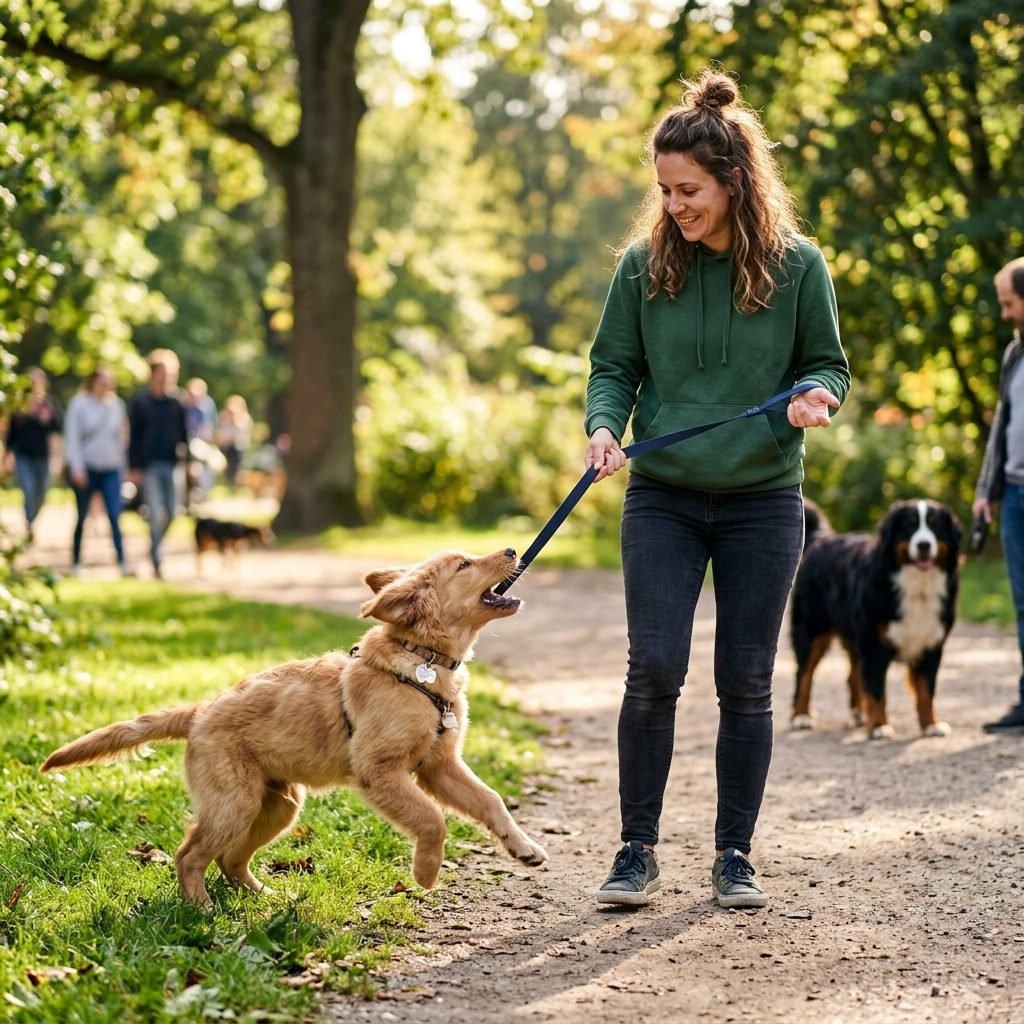
We have all been there. You are enjoying a crisp morning walk, your coffee in hand, and your puppy is trotting along—until they spot it: another dog. Suddenly, your adorable companion transforms into a high-pitched, whining, lunging, and spinning whirlwind of fur. Passersby give you sympathetic (or judgmental) looks, and you find yourself apologizing for the ‘over-excitement’ while your puppy sounds like they are auditioning for a dramatic opera.
If this sounds familiar, you don’t have a ‘bad’ dog. You likely have a Frustrated Greeter. This behavior is incredibly common in puppies and young dogs who simply love the world too much and haven’t yet learned how to handle their big emotions. The whining isn’t usually born of aggression; it’s born of a desperate desire to say hello, coupled with the physical barrier of the leash preventing them from doing so.
In this comprehensive guide, we are going to dive deep into why this happens and, more importantly, how to fix it. We will cover five actionable, science-backed strategies to turn those embarrassing walks into a calm, bonding experience for both you and your pup. Grab your treat pouch, and let’s get started!
Understanding the ‘Frustrated Greeter’ Psychology
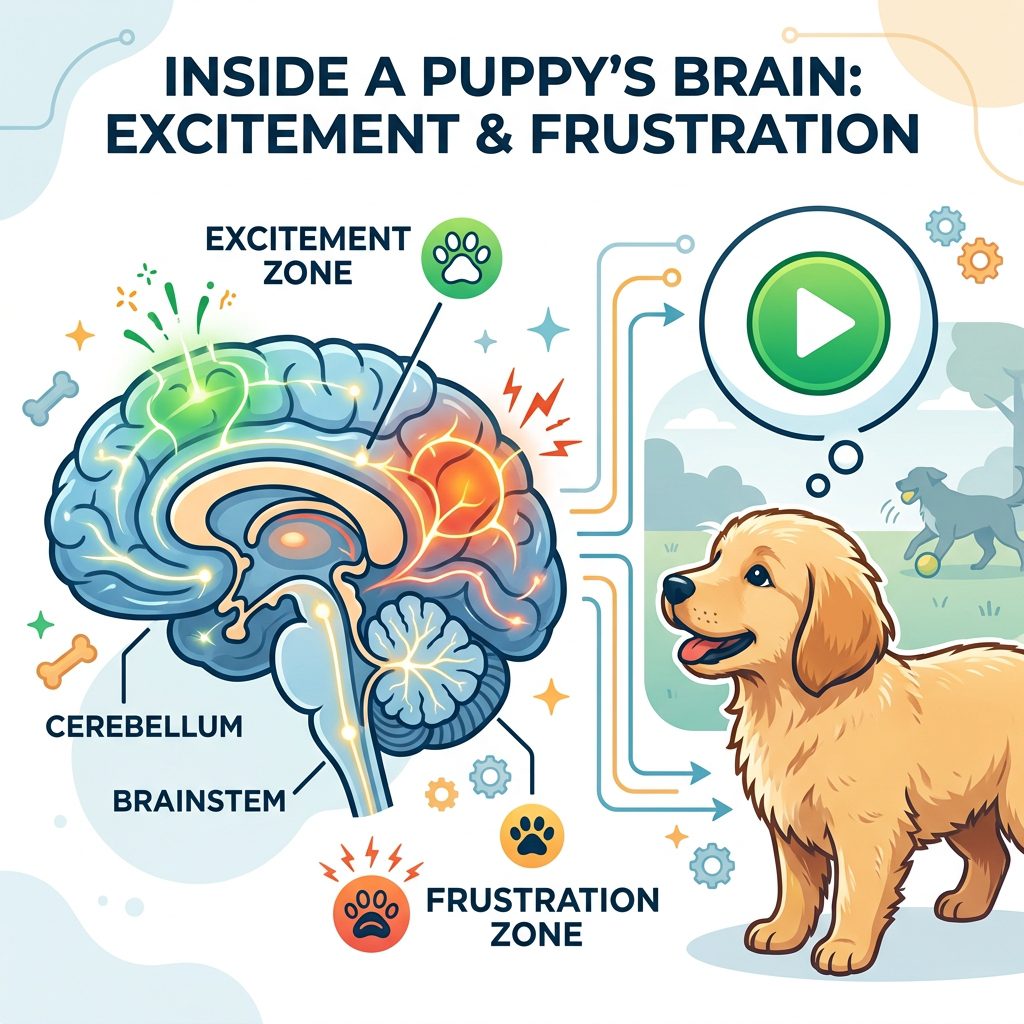
Before we can fix the whining, we have to understand the ‘why’ behind it. A frustrated greeter is a dog that experiences a surge of arousal (excitement) when they see a social stimulus, like another dog or a person. When the leash prevents them from reaching that stimulus, that excitement turns into frustration.
The Arousal Cycle
When a puppy sees a potential friend, their brain releases a cocktail of chemicals, including dopamine and adrenaline. In a ‘normal’ setting, they would run over, sniff, and the energy would dissipate. On a leash, that energy has nowhere to go. It manifests as:
- Vocalization: High-pitched whining, yipping, or even ‘screaming.’
- Physical Tension: Lunging, pulling, or standing on hind legs.
- Displacement Behaviors: Biting the leash or spinning in circles.
It is crucial to distinguish this from fear-based reactivity. While the behaviors look similar, the intent is different. A fearful dog wants the ‘scary thing’ to go away. A frustrated greeter wants to get closer to the ‘fun thing.’ However, if left unaddressed, frustration can eventually sour into true reactivity or aggression because the dog begins to associate the sight of other dogs with the negative feeling of being restrained.
Pro Tip: Training a frustrated greeter is about teaching impulse control and emotional regulation, not just ‘obedience.’
The Essential Toolkit: Gear That Helps (and Gear That Hurts)
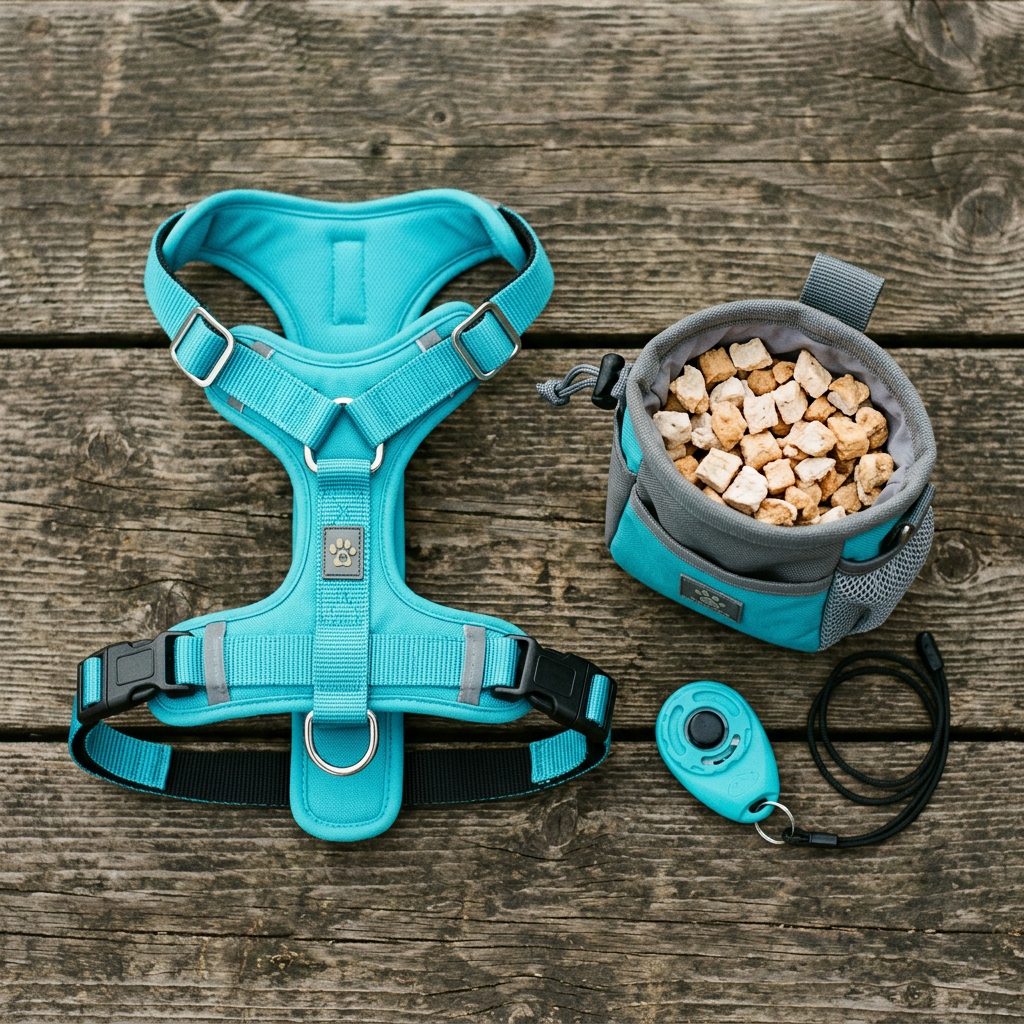
Your equipment plays a massive role in how you manage a frustrated greeter. If your puppy is constantly choking themselves on a flat collar, the physical pain can increase their frustration levels. Conversely, certain tools can give you better leverage without causing harm.
| Tool Type | Pros | Cons |
|---|---|---|
| Front-Clip Harness | Redirects the puppy’s body toward you when they pull; reduces choking. | Requires proper fitting to avoid affecting gait. |
| Standard Flat Collar | Lightweight, easy to use. | Can cause neck injury and increase frustration if the dog lunges heavily. |
| Head Halter | Maximum control over the head and mouth. | Many puppies find them invasive and require a long desensitization period. |
| Long Line (10-15ft) | Allows for more natural movement in open spaces. | Dangerous on city sidewalks or high-traffic areas. |
Why High-Value Treats are Non-Negotiable
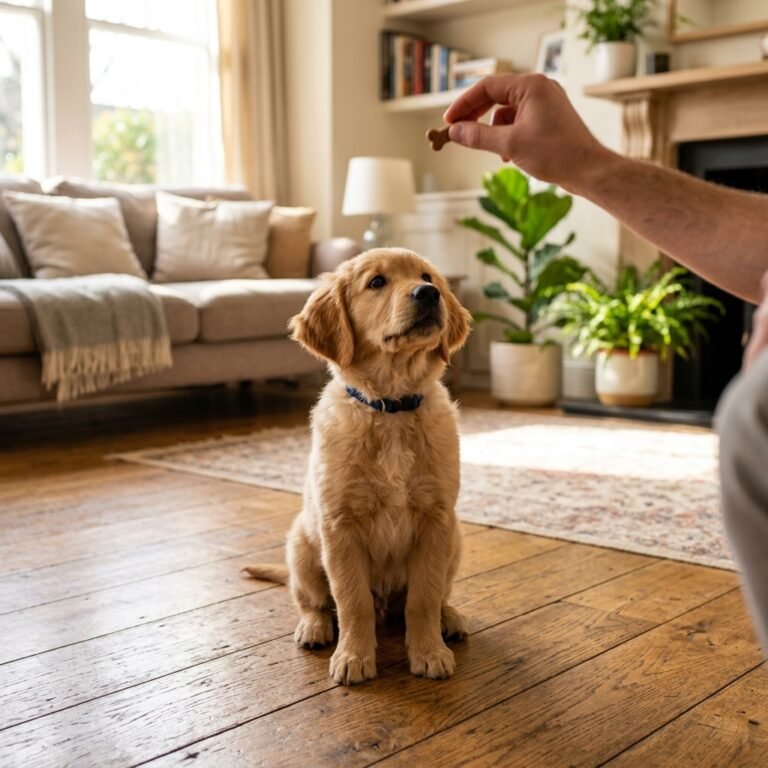
You cannot compete with the excitement of another dog using standard kibble. To change your puppy’s emotional state, you need ‘the good stuff.’ Think small, pea-sized pieces of boiled chicken, string cheese, or freeze-dried liver. These treats should only appear during training walks to keep their value exceptionally high.
Fix #1: The ‘Look at That’ (LAT) Game
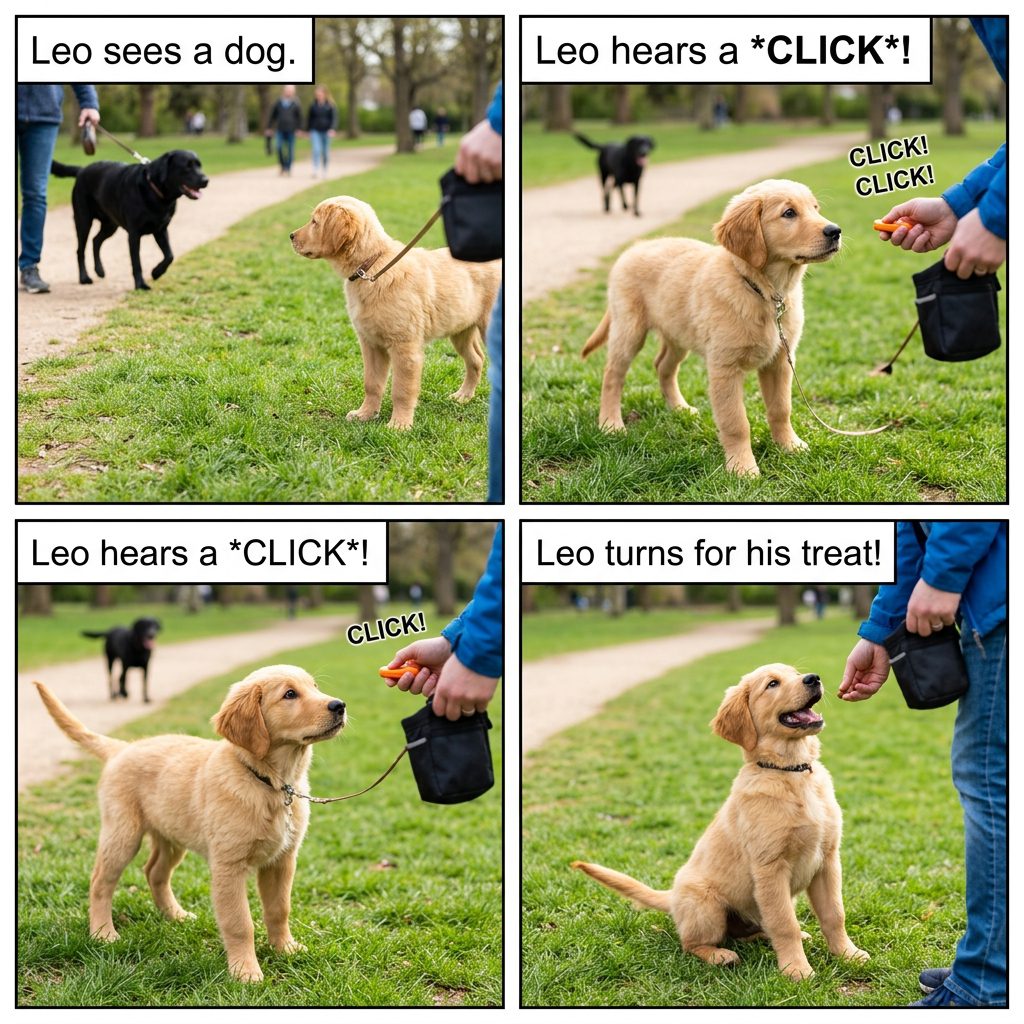
The ‘Look at That’ game, popularized by trainer Leslie McDevitt, is the gold standard for frustrated greeters. The goal is to teach your puppy that seeing another dog is actually a cue to look at you for a reward.
How to Play LAT:
- Identify the Threshold: Find the distance where your puppy sees the other dog but hasn’t started whining yet (the ‘Green Zone’).
- The Observation: The moment your puppy glances at the other dog, click your clicker or say your marker word (like ‘Yes!’).
- The Reward: When they turn back to you to collect their treat, give them high-praise and a high-value snack.
- Repeat: Do this every time they look at the dog. Eventually, they will look at the dog and immediately whip their head back to you, expecting a treat.
By doing this, you are changing the ‘look’ from a trigger for frustration into a ‘job’ that earns them something better than a greeting. You are essentially building a new neural pathway that says: Dog = Look at Mom/Dad = Chicken!
Fix #2: Master the Art of the ‘Find It’ Scatter
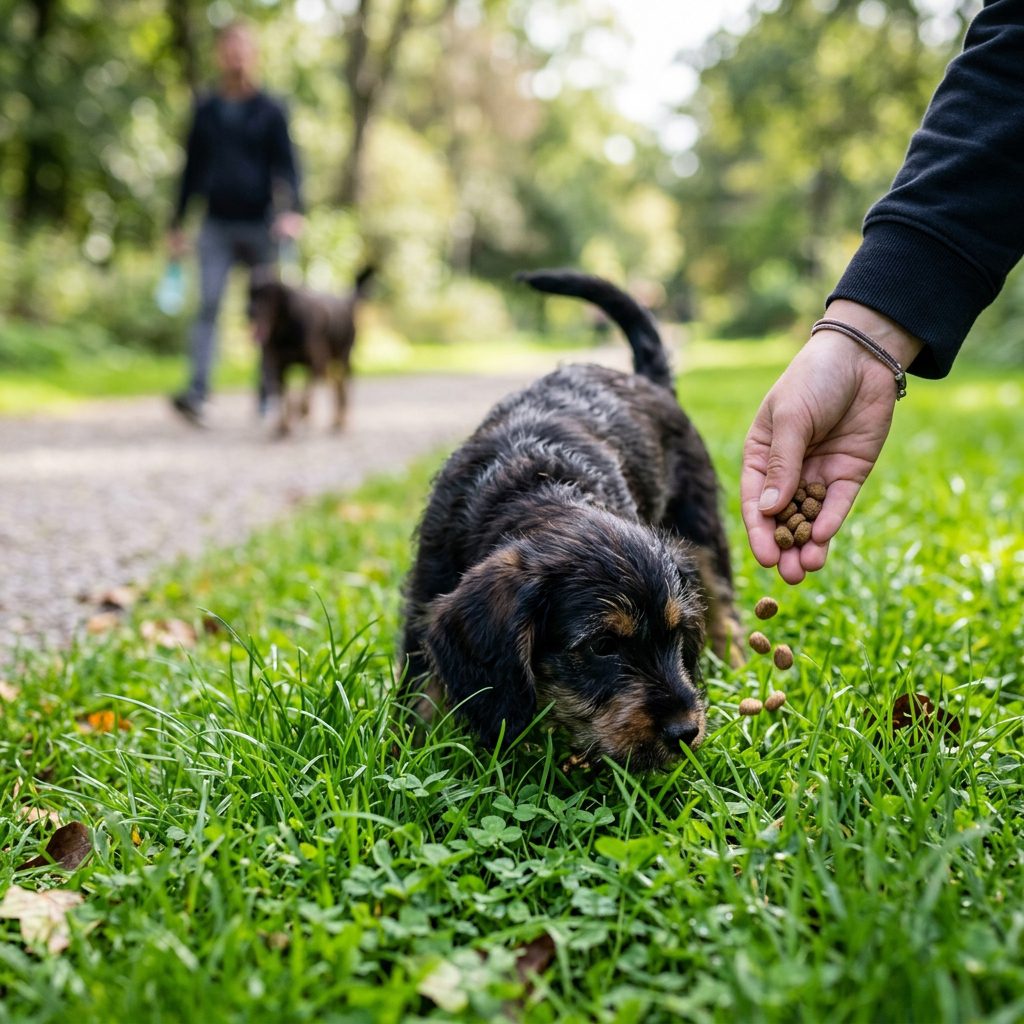
Sometimes, the ‘Look at That’ game is too hard if the other dog is too close or moving too fast. This is where the ‘Find It’ scatter comes in. This technique uses the dog’s nose to ground them and lower their arousal levels.
Why Sniffing Works
Sniffing is a natural calming behavior for dogs. It lowers their heart rate and shifts their focus from the visual trigger (the other dog) to a tactile and olfactory task. When you see a potential ‘whining situation’ approaching, follow these steps:
- Step 1: Say ‘Find it!’ in an upbeat tone.
- Step 2: Toss 5-10 small, high-value treats into the grass or onto the pavement near your feet.
- Step 3: While the puppy is busy searching for the treats, the other dog passes by.
By the time your puppy finishes their treasure hunt, the ‘trigger’ is gone, and they have remained under their emotional threshold. This prevents the whining behavior from being practiced in the first place.
Fix #3: The Emergency U-Turn and ‘Let’s Go!’
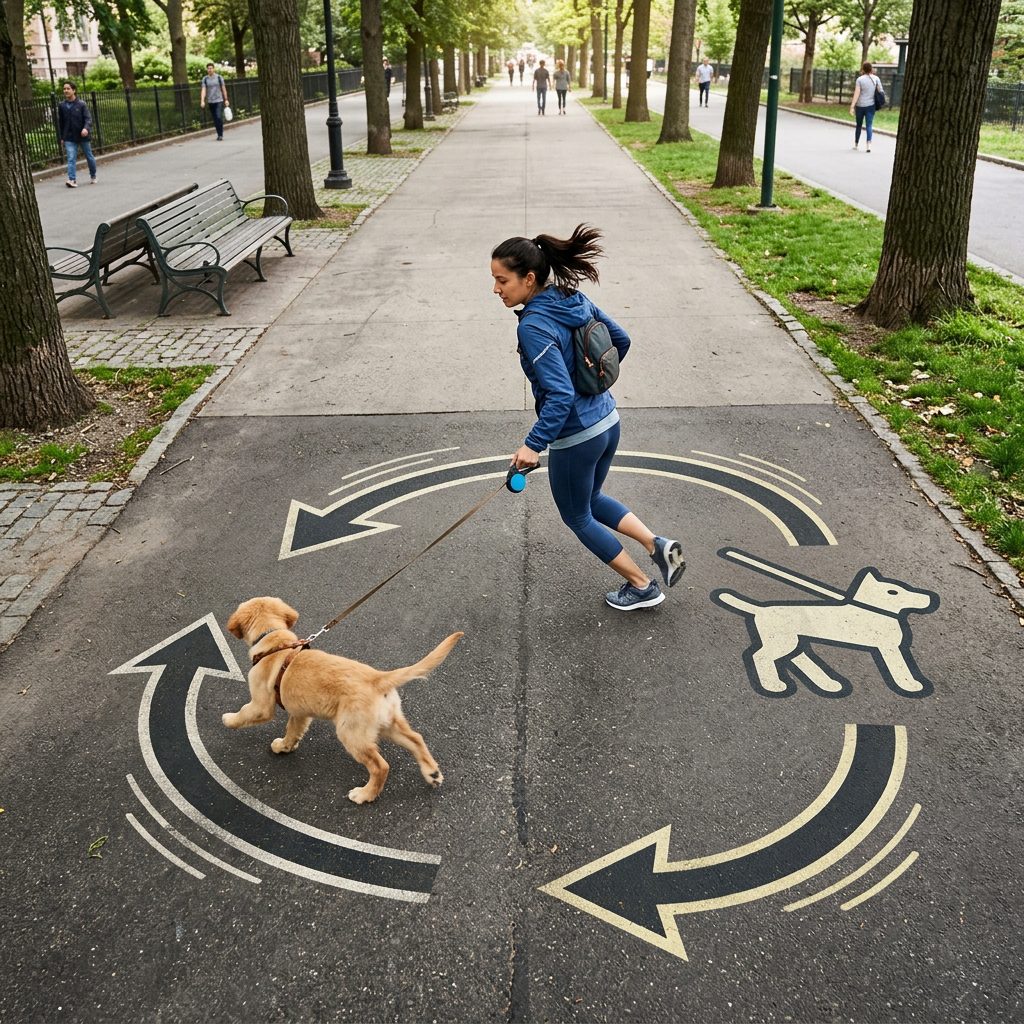
There will be times when a dog suddenly appears around a corner, and you are far too close for ‘LAT’ or ‘Find It’ to work. In these moments, you need an exit strategy. The Emergency U-Turn prevents the ‘staring contest’ that often leads to a whining meltdown.
Executing the Perfect U-Turn
Don’t just yank the leash. Instead, use a cheerful ‘Let’s Go!’ cue. Turn your body 180 degrees and move quickly in the opposite direction. As your puppy follows you, reward them heavily for choosing to move with you rather than staying fixated on the other dog.
Remember: You are not ‘running away’ in fear; you are proactively managing your puppy’s environment to ensure they stay successful. If you feel the leash go taut, keep moving. Once you’ve put 20-30 feet of distance between you and the other dog, you can reset and try a calmer approach or a different path.
Fix #4: Distance is Your Best Friend
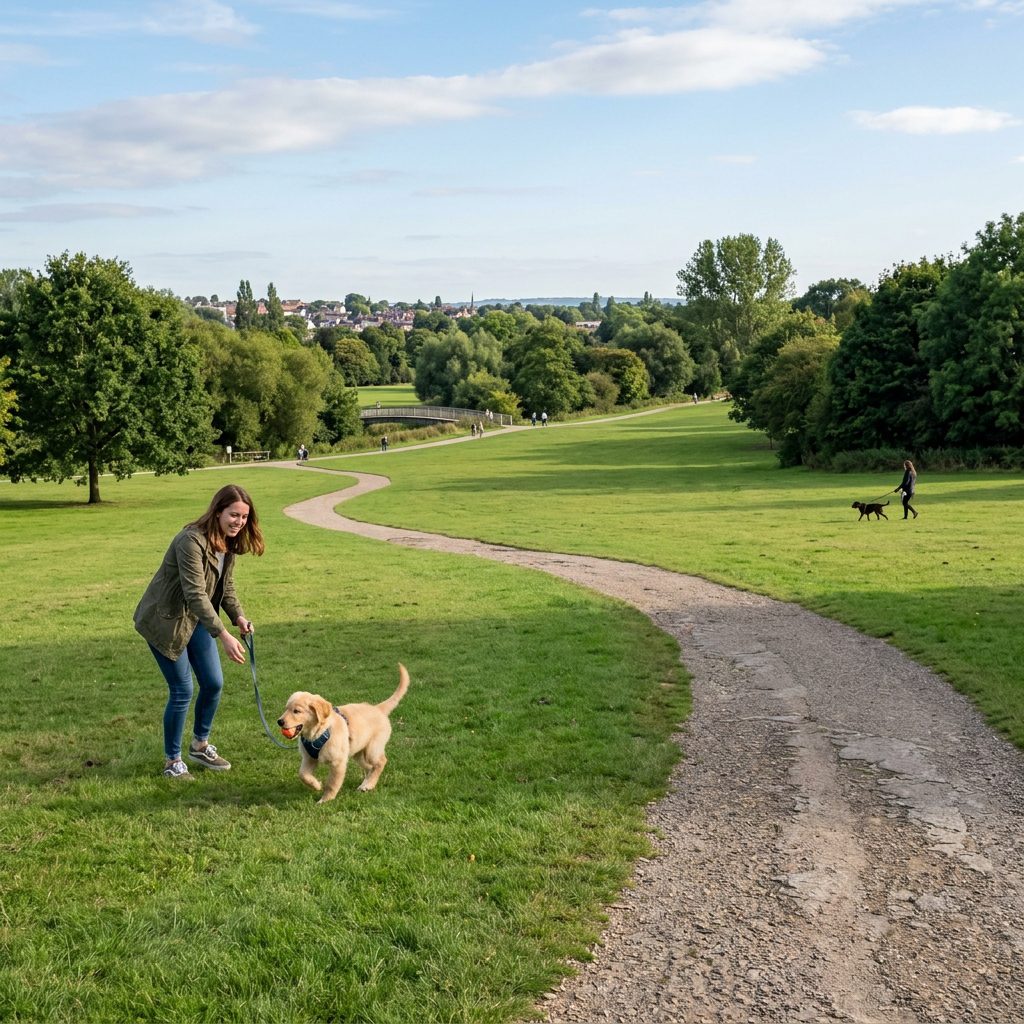
The biggest mistake owners make is trying to train too close to the ‘distraction.’ If your puppy is already whining, you are too close. You are in the ‘Red Zone,’ and no learning is happening there. Their brain is essentially ‘offline.’
Managing the Threshold
Use the following table to help gauge where you should be training:
| Zone | Behavior | Action |
|---|---|---|
| Green Zone | Puppy sees dog, remains calm, can take treats. | Train here! Practice LAT and engagement. |
| Yellow Zone | Puppy is staring, tail is stiff, might whine once. | Increase distance. Move further away immediately. |
| Red Zone | Full-blown whining, lunging, spinning. | Management. Use an emergency U-turn and leave. |
When you start these exercises, you might need to be 50 or even 100 feet away from other dogs. That is perfectly okay! Over weeks and months, that distance will naturally shrink as your puppy develops better impulse control.
Fix #5: The ‘Say Hello’ Permission Protocol
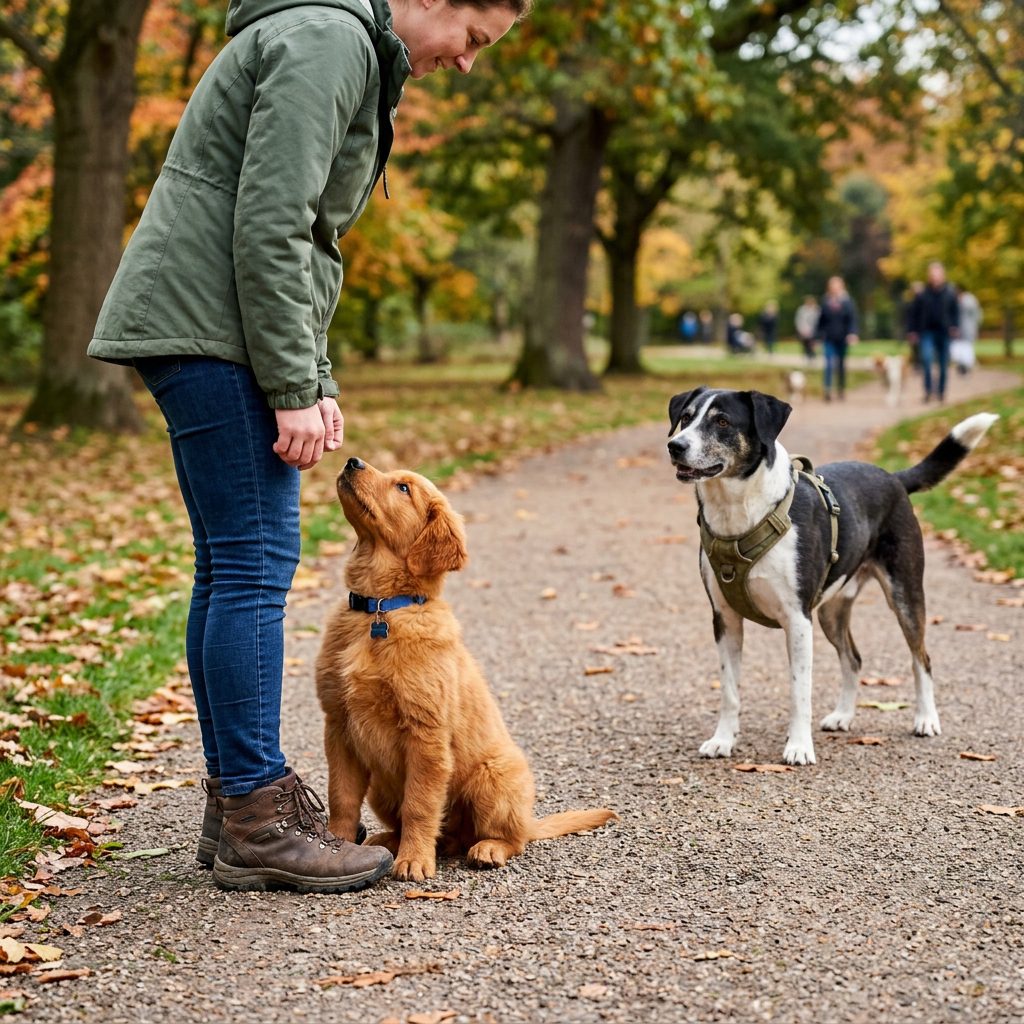
A common misconception is that frustrated greeters should never meet other dogs. While we want to limit on-leash greetings (which are often awkward and high-pressure), we can use the possibility of a greeting as a reward for calm behavior. This is known as Premack’s Principle.
The Rules of Engagement:
- Sit for Permission: The puppy must sit and look at you before they are allowed to move toward the other dog.
- The ‘Go Say Hi’ Cue: Only move forward when you give the specific verbal release.
- The 3-Second Rule: If you do allow a greeting, keep it to 3 seconds. Count ‘1-2-3’ and then use your ‘Let’s Go!’ cue to move away. This prevents the play-arousal from escalating into over-excitement or frustration.
Warning: Only use this with dogs you know are friendly and owners who have given consent. Never ‘surprise’ another dog with your frustrated greeter puppy!
Troubleshooting: When Things Go Wrong
Even with the best training, setbacks happen. Perhaps a ‘flexi-leash’ dog charges yours, or a neighbor’s dog barks incessantly from a fence. Here is how to handle the ‘oops’ moments:
Don’t Scold the Whining
Correcting a frustrated greeter with a ‘No!’ or a leash pop often backfires. It adds more negative pressure to an already high-stress situation. If they ‘blow it,’ simply move away. No treats, but no yelling either. The loss of the opportunity to see the other dog is the consequence itself.
Check Your Own Body Language
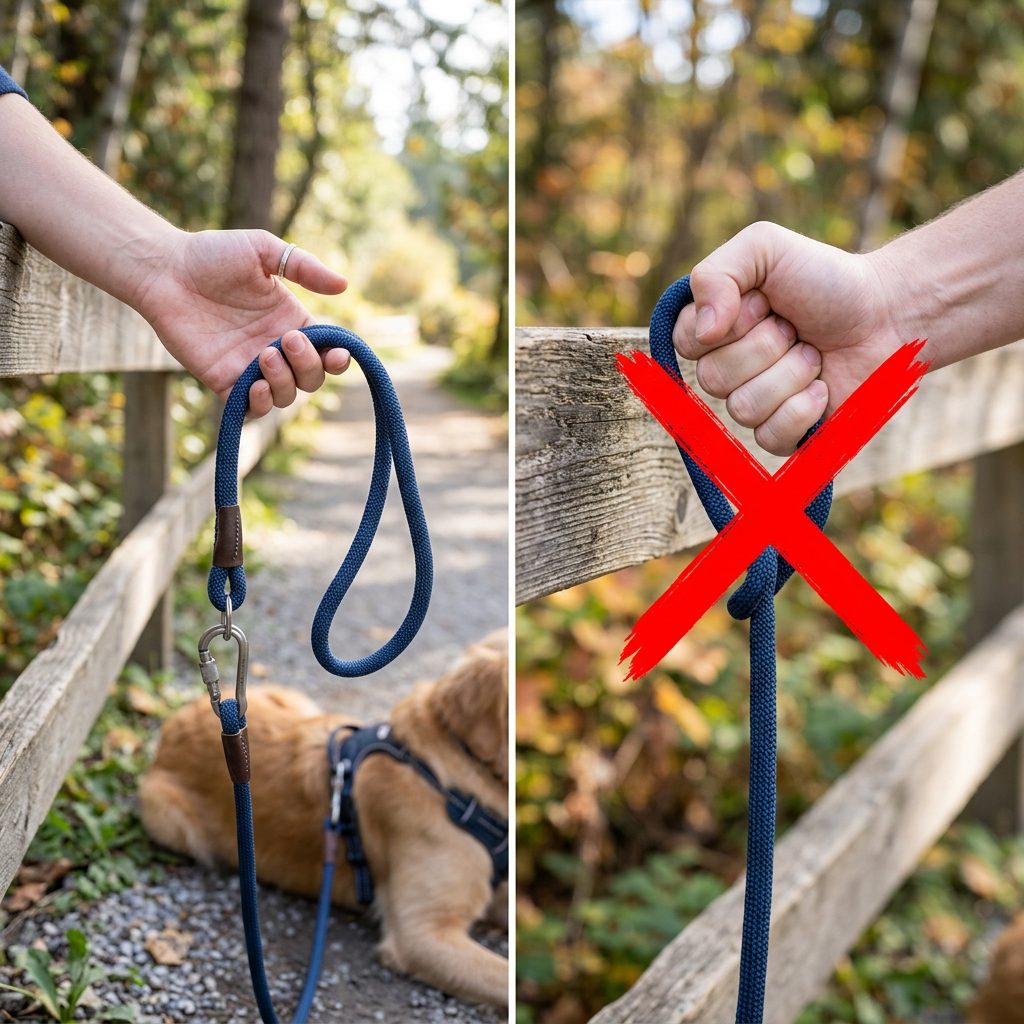
Are you holding your breath? Are you gripping the leash so tight your knuckles are white? Puppies are masters at ‘reading down the leash.’ If you are tense, they will assume there is a reason to be worked up. Keep your leash ‘smiley’ (a loose J-shape) whenever possible and keep your voice light and encouraging.
Conclusion
Transforming a frustrated greeter is not an overnight process. It requires patience, consistency, and a lot of high-quality chicken. Remember that your puppy isn’t trying to be difficult; they are just a ‘big feeler’ who needs your guidance to navigate a very exciting world.
By implementing these five fixes—focusing on the LAT game, using scatters for management, mastering the U-turn, respecting thresholds, and using permission-based greetings—you are giving your puppy the tools they need to be a calm, confident adult dog. Celebrate the small wins: the day they glance at a dog and look back at you without a sound is a day worth celebrating. Happy training, and enjoy those peaceful walks!