Soothe Your Spooked Pup: Stopping Ceiling Fan Fear Instantly
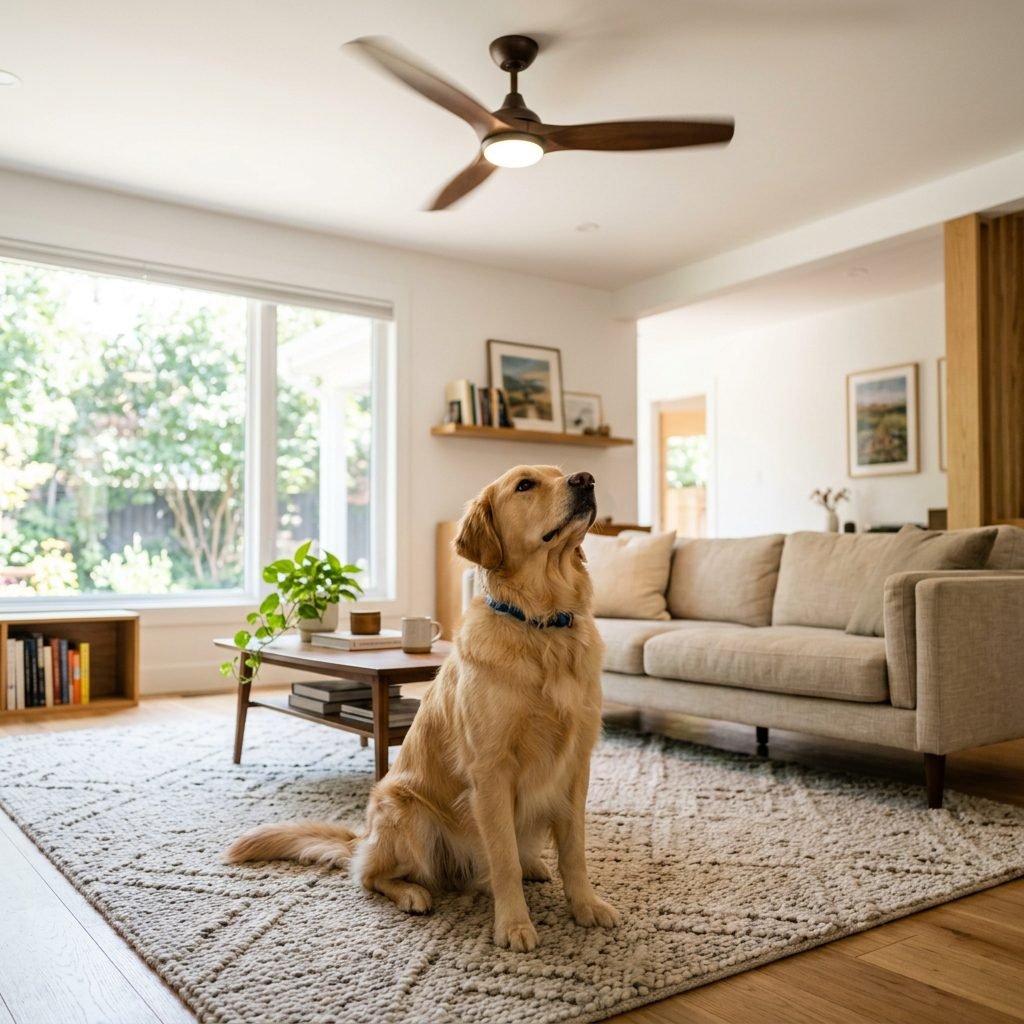
We have all been there: you flick a switch to get a little breeze going, and suddenly, your brave protector is transformed into a shivering mess under the coffee table. To us, a ceiling fan is a simple appliance. To a dog, it is a giant, clicking, shadow-casting predator that has somehow infiltrated the ‘safe zone’ of the ceiling. This fear, while it might seem irrational to humans, is deeply rooted in canine instinct and sensory processing.
Understanding why your dog treats the ceiling fan like a mortal enemy is the first step toward a peaceful home. Whether it is the visual stimulus of the blades, the high-pitched hum of the motor, or the flickering shadows on the walls, this phobia can significantly impact your dog’s quality of life. In this comprehensive guide, we are going to dive into the psychology of ‘fan-phobia’ and provide you with a professional, step-by-step roadmap to help your pup conquer their fears once and for all.
The Psychology of the ‘Sky Monster’
Why Dogs Fear the Fan
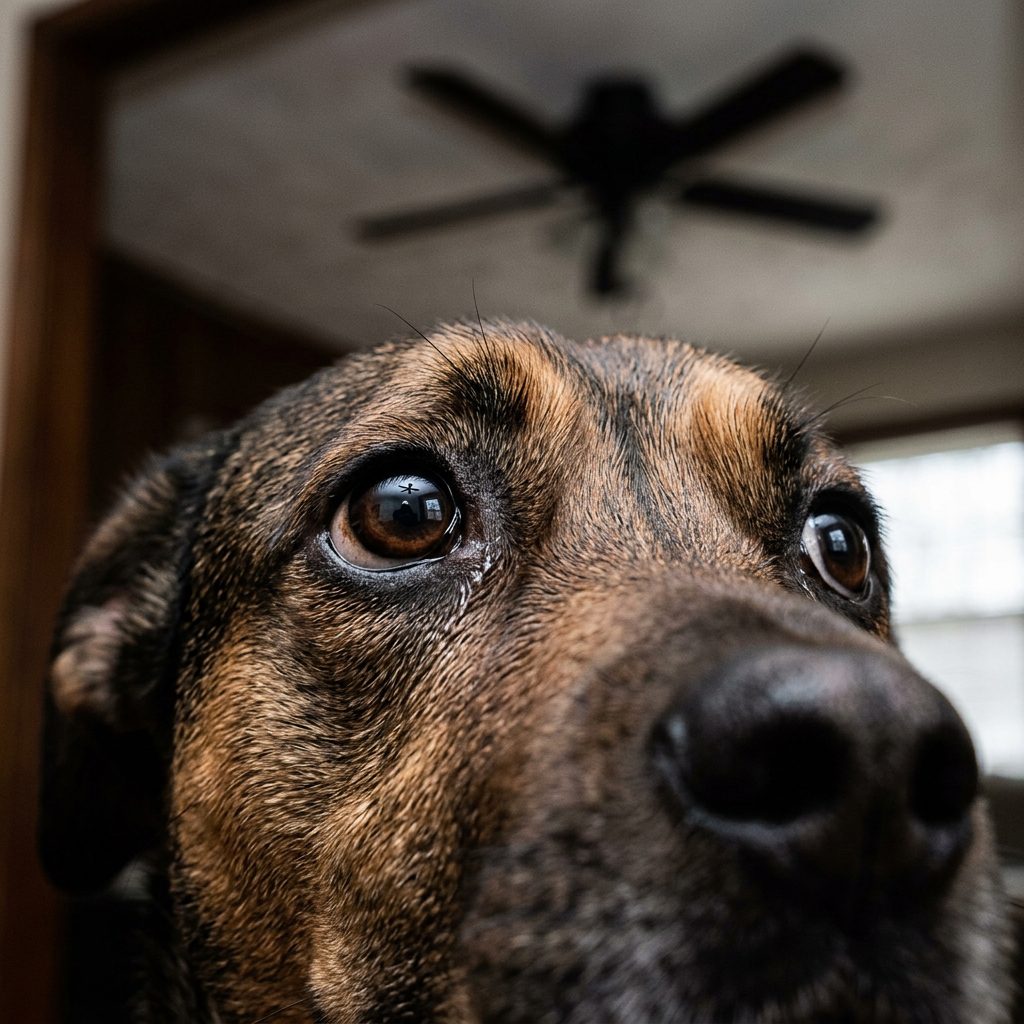
Before we can fix the fear, we need to understand its origin. Dogs experience the world differently than we do. Their vision is optimized for motion detection, and their hearing picks up frequencies far beyond our range. A ceiling fan presents a ‘triple threat’ of sensory triggers.
1. The Predatory Instinct
In the wild, threats often come from above. Large birds of prey are a natural concern for smaller mammals. A spinning fan can mimic the visual profile of a large bird circling or hovering. For a dog with a high startle response, that movement on the ceiling triggers a ‘fight or flight’ reaction from the amygdala.
2. The Sound of Trouble
Even if a fan sounds quiet to you, it might be emitting a high-frequency whistle or a mechanical grind that is grating to canine ears. Older fans often have a slight ‘wobble’ that creates a rhythmic thumping sound, which can be perceived as an approaching threat.
3. The Shadow Factor
This is the most common hidden trigger. Depending on your room’s lighting, a spinning fan creates rapidly moving shadows on the walls and floor. To a dog, these shadows look like something darting around the room, which can be incredibly disorienting and frightening.
| Trigger Type | Canine Perception | Impact Level |
|---|---|---|
| Visual Movement | Large bird or unstable object | High |
| Auditory Hum | High-frequency mechanical distress | Medium |
| Shadow Flickering | Darting ‘ghost’ prey or predators | Very High |
Preparation: The De-Spooking Toolkit
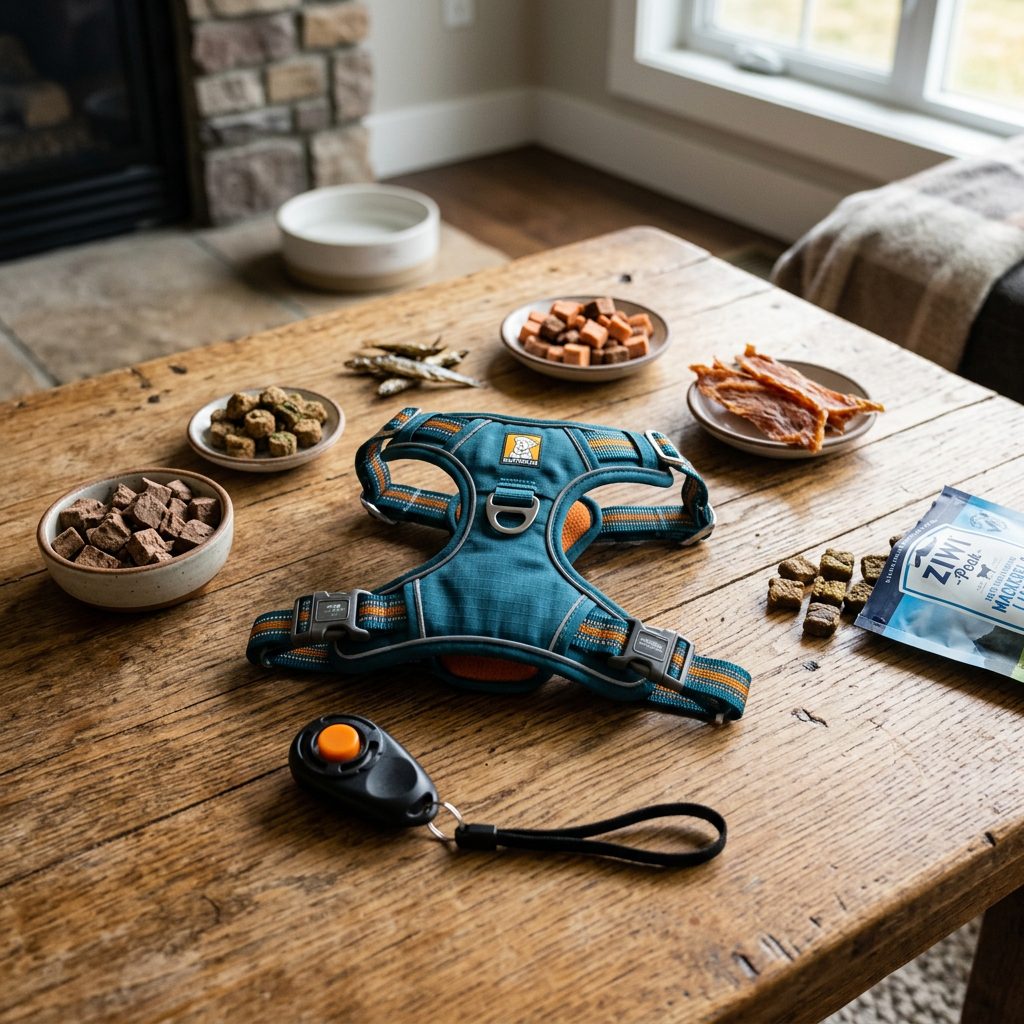
Gathering Your Training Supplies
You cannot rush a fear response. To succeed, you need to be prepared with the right tools to create a positive association. We are moving from a state of fear to a state of ‘conditioned emotional response’ (CER).
- High-Value Treats: Think beyond standard kibble. We need ‘jackpot’ treats like boiled chicken, small pieces of cheese, or freeze-dried liver. These should be reserved only for fan training.
- A Clicker: If you use clicker training, this is the perfect time for it. It marks the exact moment of calm behavior.
- A Leash and Harness: This isn’t for restraint, but for gentle guidance to keep your dog from bolting and injuring themselves.
- Patience: This is your most important tool. Desensitization can take days or even weeks depending on the severity of the phobia.
Pro Tip: Never force your dog to stay directly under the fan. This is called ‘flooding’ and it almost always makes the fear worse. Success happens at the edge of the dog’s comfort zone.
Step 1: Low-Level Desensitization
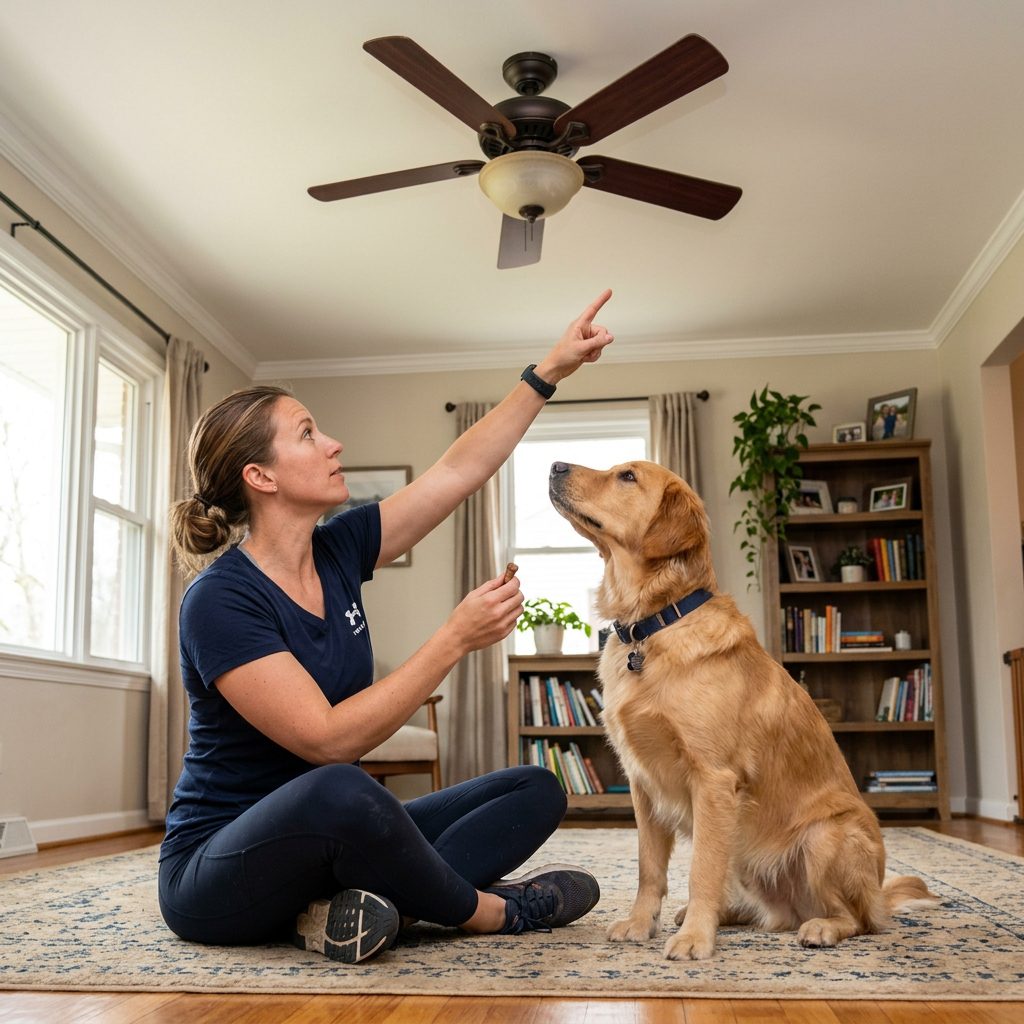
Starting with the ‘Off’ Position
Our goal is to make the fan a ‘background’ object. We start with the fan completely still. If your dog is afraid of the fan even when it is off, start in a room where the fan is not visible and slowly move toward the ‘scary’ room.
The ‘Look at That’ Game
- Stand at a distance where your dog knows the fan is there but isn’t yet shaking or panting.
- When your dog looks at the (still) fan, click or say ‘Yes!’ and immediately give a high-value treat.
- Repeat this 10-15 times. We are teaching the dog that Looking at the Fan = Chicken.
- Gradually move closer to the fan over several sessions, always rewarding the look.
If your dog stops taking treats, you are too close. Back up and start again from a distance where they feel safe enough to eat.
Step 2: Introducing Slow Motion
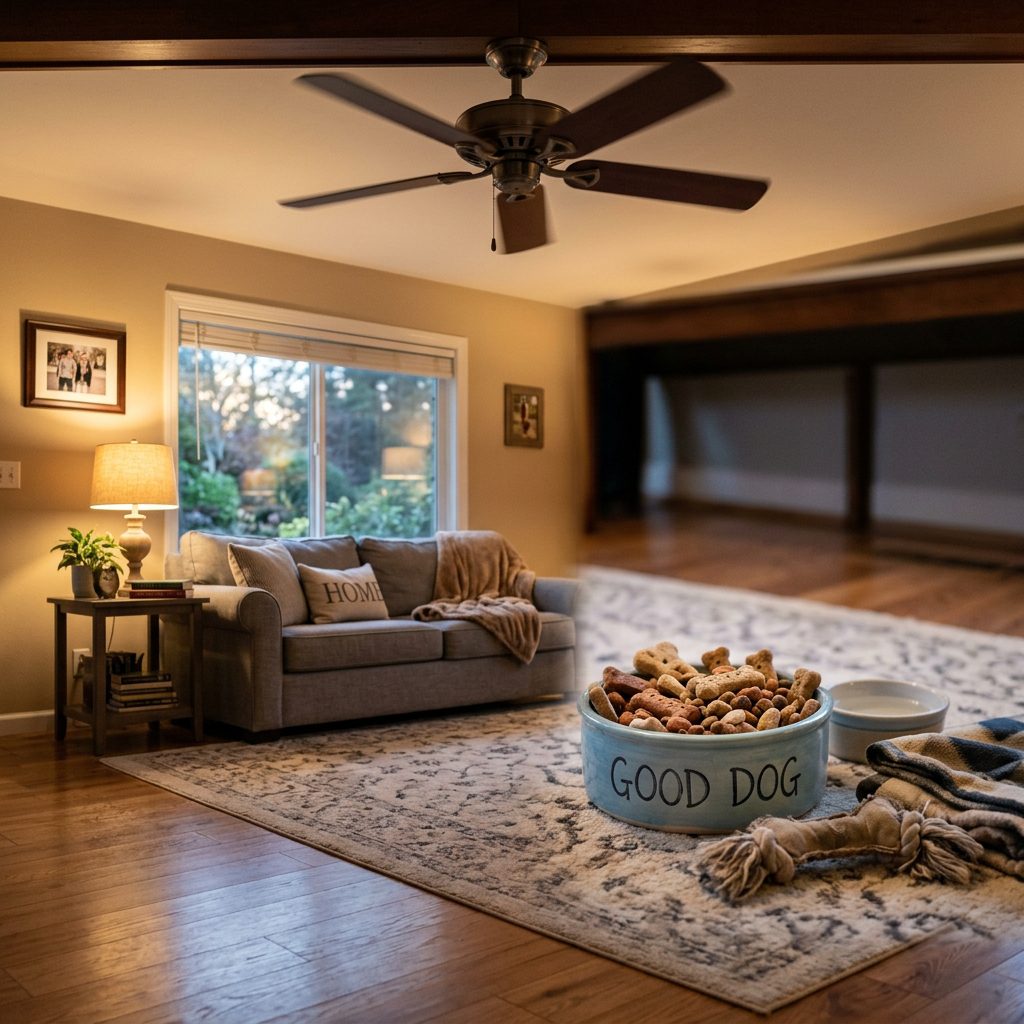
The First Spin
Once your dog is comfortable being in the room with a stationary fan, it is time to introduce movement. Most modern fans have multiple speed settings. We want the absolute lowest setting possible.
Managing the Initial Reaction
Turn the fan on the lowest setting while your dog is outside the room. Bring them in on a leash, starting at the furthest point possible. The moment they see the movement, start a ‘treat rain.’ Drop a constant stream of tiny treats on the floor.
We want the dog to be so busy eating that the movement of the fan becomes a secondary thought. Keep these sessions very short—no more than 2 to 3 minutes. You want to end the session while the dog is still successful and calm.
| Step | Action | Goal |
|---|---|---|
| Initiation | Fan on lowest speed | Introduce movement without panic |
| Distance | Max distance (e.g., hallway) | Maintain ‘under-threshold’ state |
| Reward | Continuous high-value treats | Create ‘Treat Rain’ association |
Step 3: Counter-Conditioning Shadows and Noise
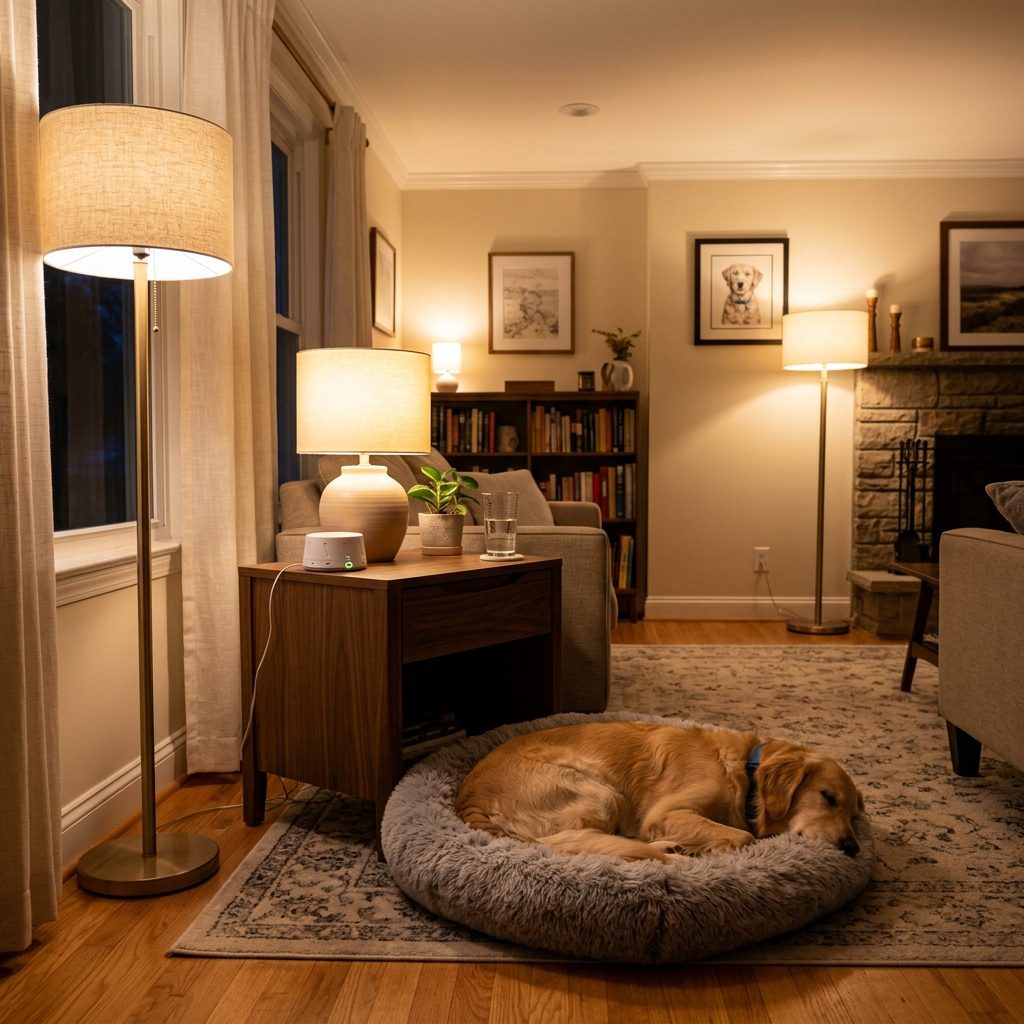
Addressing the Secondary Triggers
Sometimes it isn’t the blades; it is the shadows they cast. If your dog gets ‘spooked’ when the sun hits the fan, you need to manage the environment while training.
Shadow Management
Try training at different times of day. If the shadows are the main trigger, turn on all the lights in the room to ‘wash out’ the shadows cast by the fan. As your dog gets more confident, you can gradually dim the lights to reintroduce the shadows in a controlled way, rewarding calm behavior throughout.
Sound Masking
If the mechanical hum is the issue, try playing white noise or calming classical music (like ‘Through a Dog’s Ear’) while the fan is running. This helps ‘blur’ the sharp mechanical sounds of the fan motor, making it less startling for a sensitive pup.
Common Mistakes and Troubleshooting

What to Avoid During Training
Even the best-intentioned owners can accidentally reinforce the fear. Avoid these common pitfalls to ensure your progress stays on track.
- Forcing Interaction: Never pick your dog up and hold them near the fan to ‘show them it’s okay.’ This is terrifying for them and destroys trust.
- Soothing the Fear: While it sounds counter-intuitive, overly coddling a dog while they are in a state of panic (e.g., ‘It’s okay, baby, don’t be scared’ in a high-pitched voice) can sometimes validate their anxiety. Instead, be a calm, confident leader. Use a ‘matter-of-fact’ tone.
- Rushing the Speeds: Don’t move to ‘High Speed’ until your dog is 100% relaxed on ‘Low’ and ‘Medium.’
Troubleshooting: What if they won’t enter the room?
If your dog refuses to even step into the room with a fan, move the ‘training zone’ to the doorway. Feed all their meals in the doorway of that room. Slowly move the food bowl six inches closer to the center of the room every day. This uses ‘passive desensitization’ to build comfort.
When to Consult a Professional
Identifying Severe Phobias
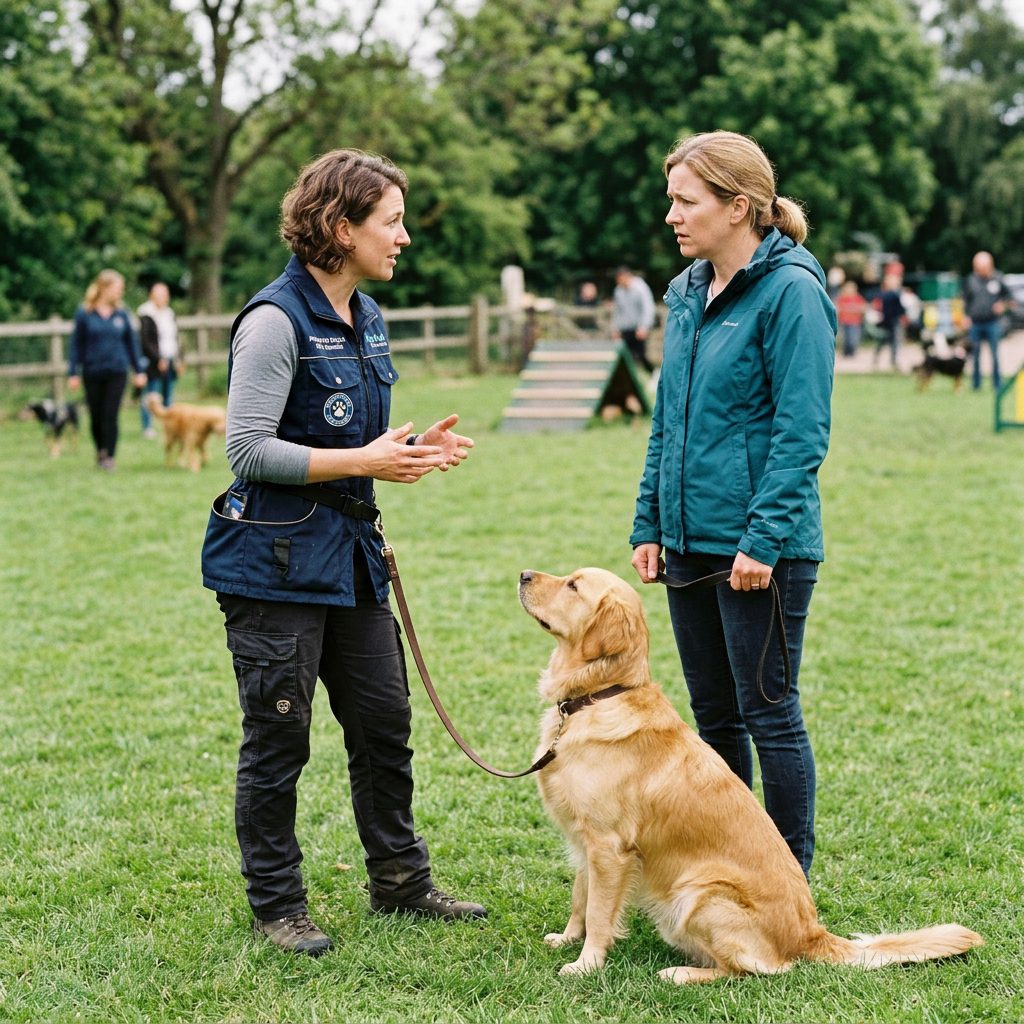
Most dogs can overcome fan fear with the steps above. However, some dogs suffer from ‘Global Fear,’ where a ceiling fan trigger can lead to a full-blown panic attack, self-injury, or destructive behavior. If your dog exhibits the following, it is time to call a Certified Applied Animal Behaviorist (CAAB) or a Veterinary Behaviorist:
- Inability to settle for hours after the fan is turned off.
- Loss of bladder or bowel control when the fan is present.
- Attempting to jump through windows or chew through doors to escape.
- Aggression when you try to move them toward the room.
In these cases, your vet may recommend temporary anti-anxiety medication to ‘lower the ceiling’ of their stress, allowing the training to actually take root.
Long-Term Management Strategies
Life After the Fear
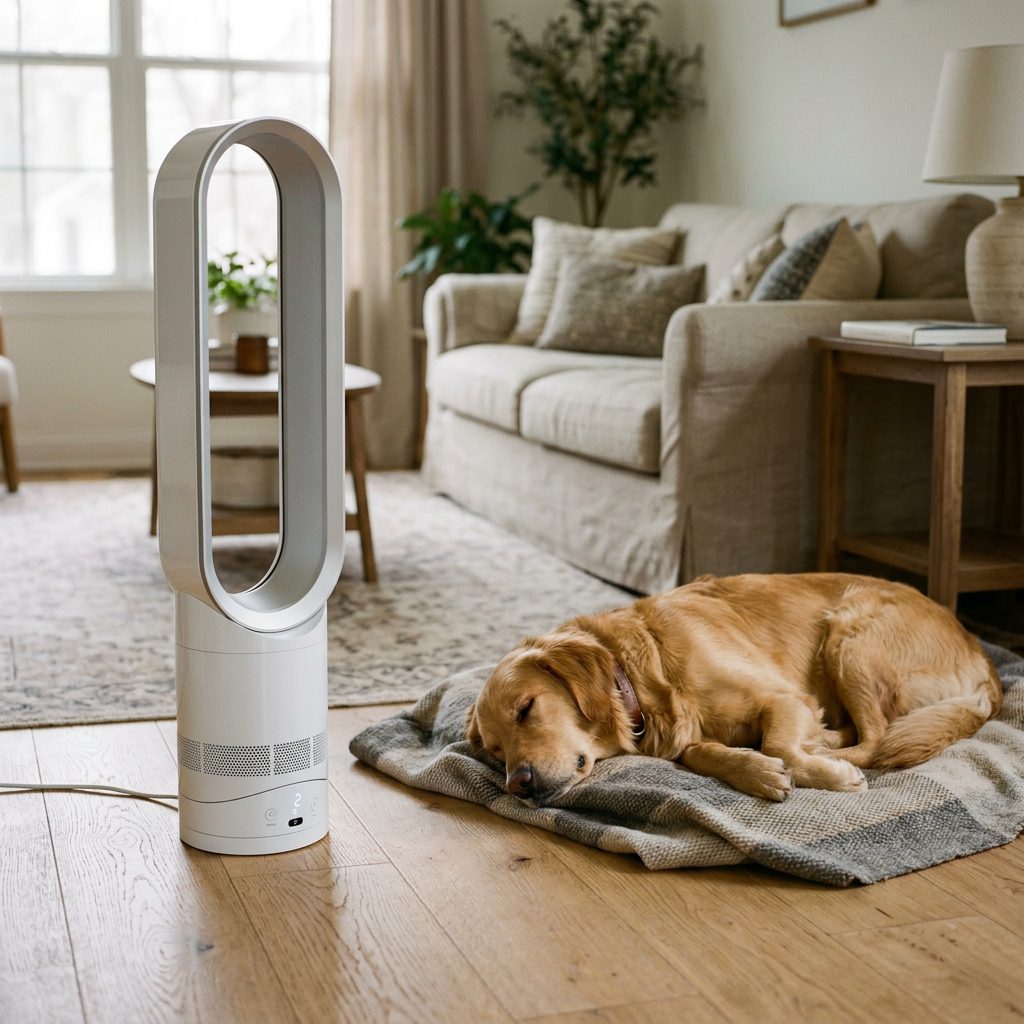
Once your dog is comfortable, don’t just stop the rewards. Occasionally ‘pay’ your dog for being calm under the fan to keep the positive association strong. If you buy a new fan, remember that the different look or sound might require a quick 5-minute ‘refresher’ course.
Consider these environmental upgrades for sensitive dogs:
- Bladeless Fans: If the visual of spinning blades is too much, bladeless ‘Air Multiplier’ fans are a great alternative.
- DC Motor Fans: These are significantly quieter than standard AC motor fans and have a smoother start-up.
- Smart Fans: These allow you to set very gradual ‘ramp-up’ speeds via an app, preventing the sudden ‘whoosh’ that startles many dogs.
Conclusion
Stopping ceiling fan fear isn’t about the fan at all; it’s about building trust and changing your dog’s emotional state from one of peril to one of peace. By using slow, systematic desensitization and high-value rewards, you are teaching your dog that they can look to you for safety. Remember, every dog progresses at their own pace. Some might be fine in a weekend, while others might take a month. Celebrate the small wins—the first time they don’t leave the room, the first time they take a treat under the fan, and finally, the first time they nap peacefully while the breeze blows above them. You’ve got this, and so does your pup!