Doorbell Nightmare? How to Train Your Puppy to Stay Dead Silent When Someone Rings
We have all been there. You are finally settling into a deep focus at work, or perhaps you have just managed to get the baby to sleep, and then it happens: DING-DONG. Within milliseconds, your adorable puppy transforms into a furry siren, lunging at the door and unleashing a barrage of ear-piercing barks that echo through the entire neighborhood. It is frustrating, it is startling, and for many savvy dog owners, it feels like an unsolvable ‘Doorbell Nightmare.’
But here is the good news: your puppy isn’t trying to be a nuisance. In their mind, they are performing a vital job. Whether they are ‘alerting’ you to a potential intruder or simply exploding with social excitement because they think a new best friend has arrived, the behavior is deeply rooted in canine instinct. However, instinct does not have to dictate your household’s volume levels. With the right strategy, a dash of patience, and the professional training techniques we are about to dive into, you can teach your puppy that the doorbell is actually a cue to be dead silent and perfectly calm.
In this comprehensive guide, we will move beyond simple ‘shushing’ (which, spoiler alert, usually sounds like barking to your dog) and implement a structured behavioral protocol. We will cover the psychology of the bark, the essential toolkit you will need, and a step-by-step training plan that has worked for thousands of professional trainers. Let’s turn that doorbell nightmare into a peaceful reality.
Understanding the ‘Why’: The Psychology Behind the Doorbell Bark
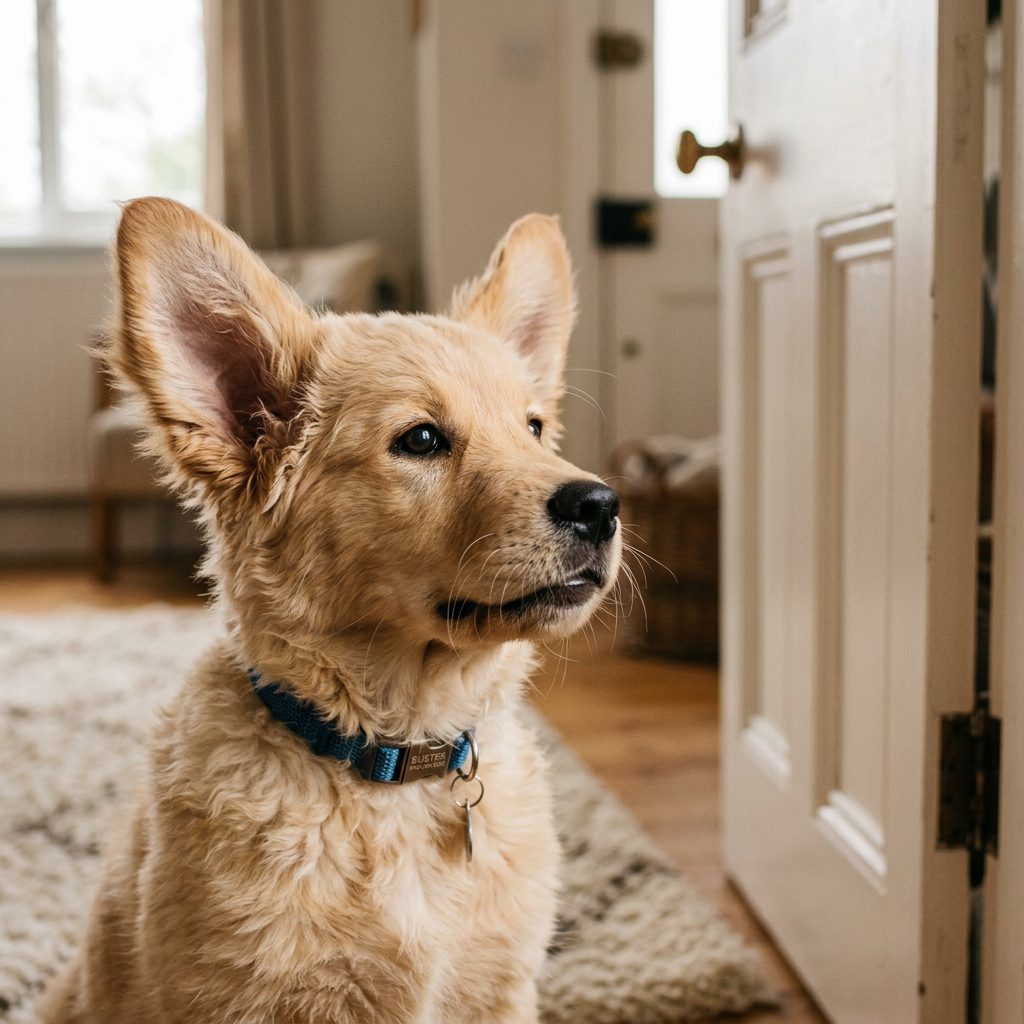
Before we can fix the behavior, we have to understand why it is happening. To a puppy, the doorbell is the most significant event in their world. It is a high-pitched, sudden sound that is almost always followed by something high-stakes: a stranger entering the ‘den,’ a delivery person dropping off a package, or a burst of energy from the humans in the house.
The Three Main Motivations
- Alert Barking: This is the ‘Watchdog’ instinct. Your puppy hears a sound on the perimeter and wants to make sure you know about it. They are essentially saying, ‘Hey! Someone is here! Pay attention!’
- Excitement/Greeting: Many puppies are social butterflies. To them, the doorbell is the ‘Party Bell.’ It means a new person is coming to pet them, play with them, or give them attention.
- Fear or Anxiety: For some pups, the sudden noise and the prospect of a stranger can be intimidating. Barking is their way of trying to create distance between themselves and the ‘scary’ thing behind the door.
Regardless of the motivation, the reinforcement cycle is often the same. If the puppy barks and the person at the door eventually leaves (like a mail carrier), the puppy thinks, ‘Aha! My barking worked! I chased the intruder away!’ This self-reinforcing loop is what makes doorbell barking so persistent. To break it, we need to change the puppy’s emotional response and provide an alternative, more rewarding behavior.
The Training Toolkit: Preparing for Success
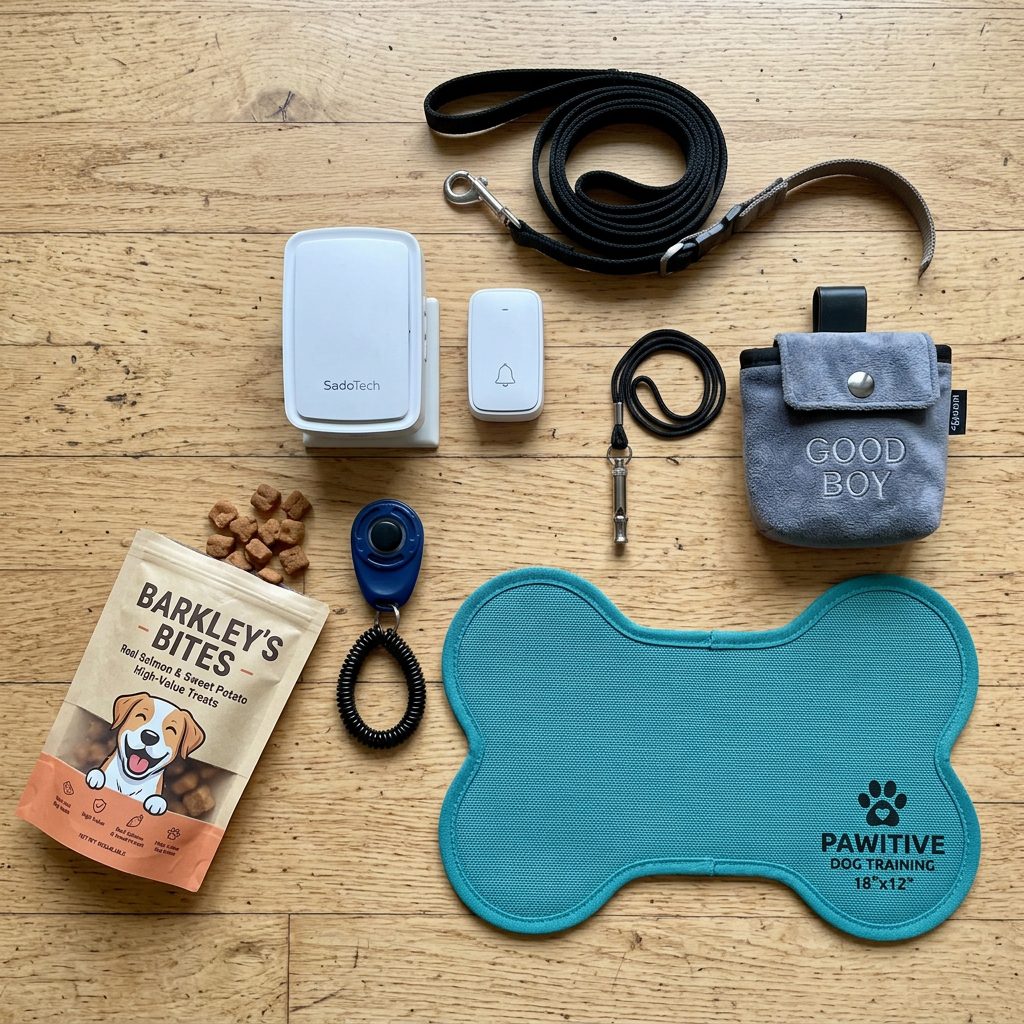
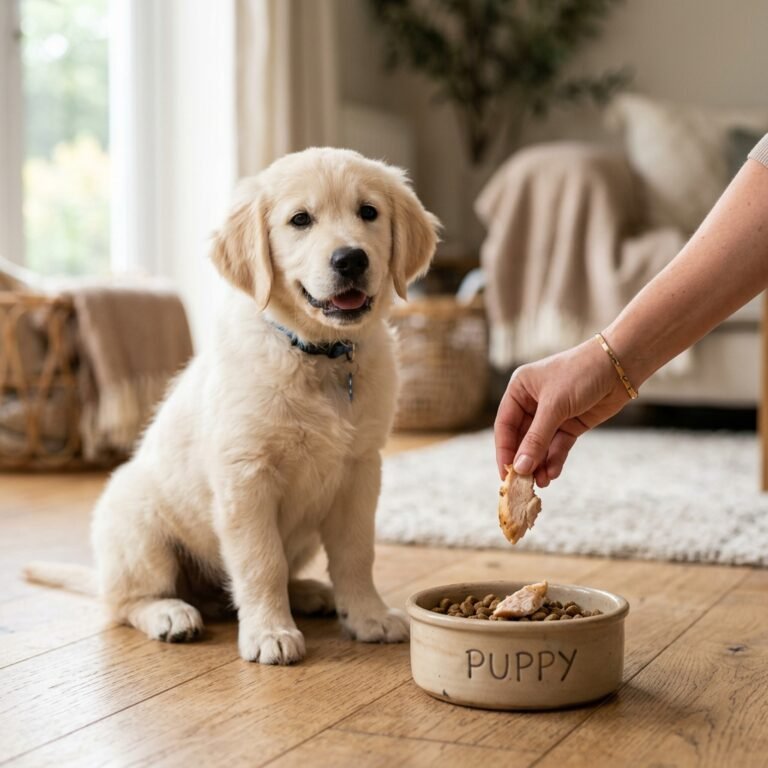
You wouldn’t try to build a house without the right tools, and you shouldn’t try to tackle doorbell training without a specific set of gear. Because this training requires high levels of focus and many repetitions, your rewards need to be top-tier. We are competing with the ‘high’ of barking, so your treats need to be more exciting than the noise.
Essential Gear List
| Tool | Purpose | Expert Recommendation |
|---|---|---|
| High-Value Treats | To reward silent behavior instantly. | Small pieces of boiled chicken, freeze-dried liver, or string cheese. |
| A Training Mat or Bed | To give the puppy a specific ‘Place’ to go. | An elevated cot or a distinct non-slip rug. |
| A Remote Doorbell | To trigger the sound without needing a second person. | A wireless plug-in doorbell you can hold in your hand. |
| A Clicker (Optional) | To mark the exact moment of silence. | A standard wrist-loop clicker for precision timing. |
| A Treat Pouch | To ensure you are always ready to reward. | A clip-on pouch for quick access during sessions. |
Expert Tip: Ensure your puppy has been exercised before you start a training session. A puppy with too much pent-up physical energy will find it much harder to control their vocal impulses. However, don’t do it right after a meal; we want them ‘food motivated’ so those treats really matter!
Phase 1: Desensitization and Counter-Conditioning
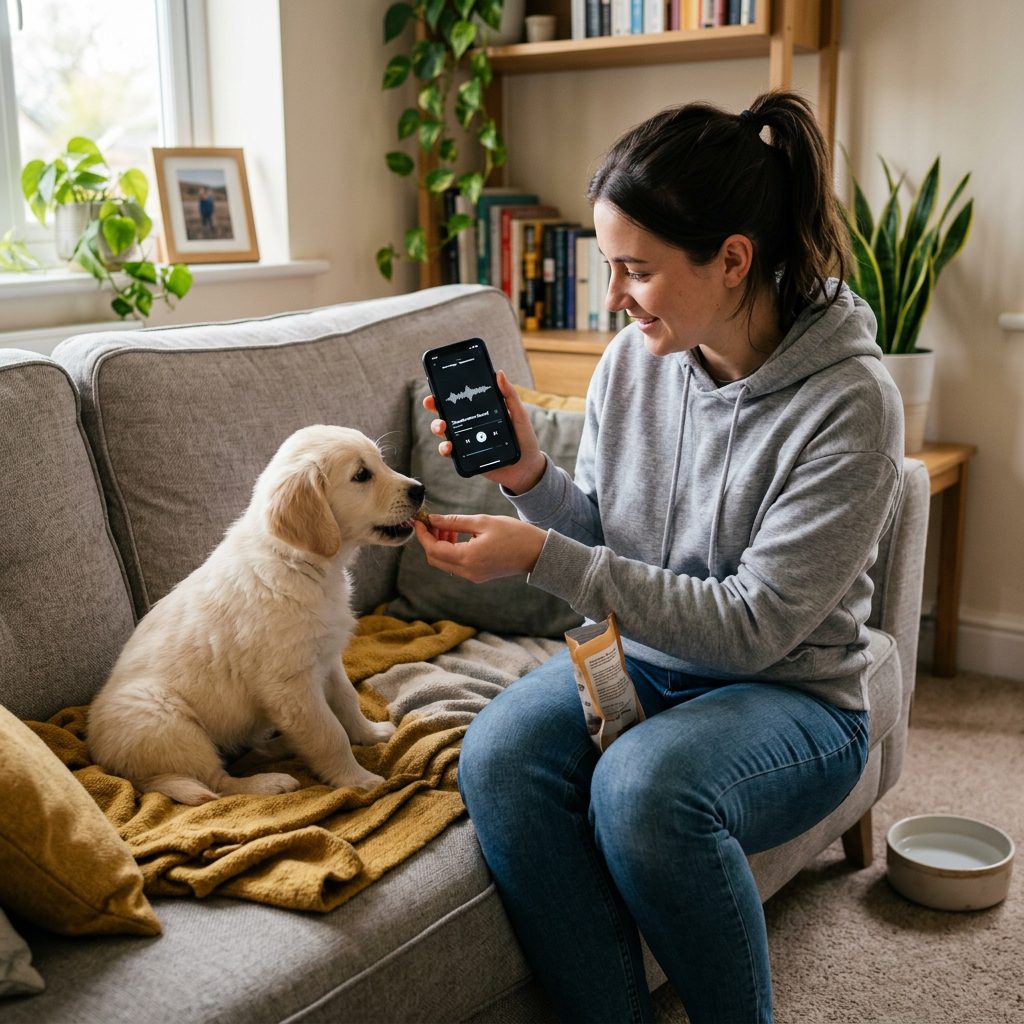
The first step in our journey is to take the ‘power’ away from the doorbell sound. Right now, the sound triggers an automatic spike in adrenaline. We want to change that response so that the sound instead triggers a look toward you for a treat.
Step 1: The Low-Volume Approach
If your puppy is highly reactive, start by recording your doorbell sound on your phone. Play it at a very low volume—so low the puppy barely tilts their head. The moment it plays, toss a treat. Do this 10 to 15 times. We are building a new association: Sound = Food.
Step 2: Gradually Increasing the Stakes
Slowly increase the volume of the recording over several sessions. If the puppy barks, the volume is too high; go back a step. Once they can hear the recording at full volume and look at you expectantly rather than barking at the door, you are ready for the real doorbell.
Step 3: The ‘Neutral’ Doorbell
Using your wireless remote doorbell, trigger the sound while you are sitting on the couch with your puppy. Again, the goal is to treat them before they have a chance to bark. We are looking for that ‘split second’ of silence. If they stay quiet, give them a ‘jackpot’ (3-5 treats in a row). This phase is about changing the internal chemistry of the puppy from ‘Panic/Excitement’ to ‘Focused/Calm.’
Phase 2: The ‘Place’ Command – Giving Them a Job
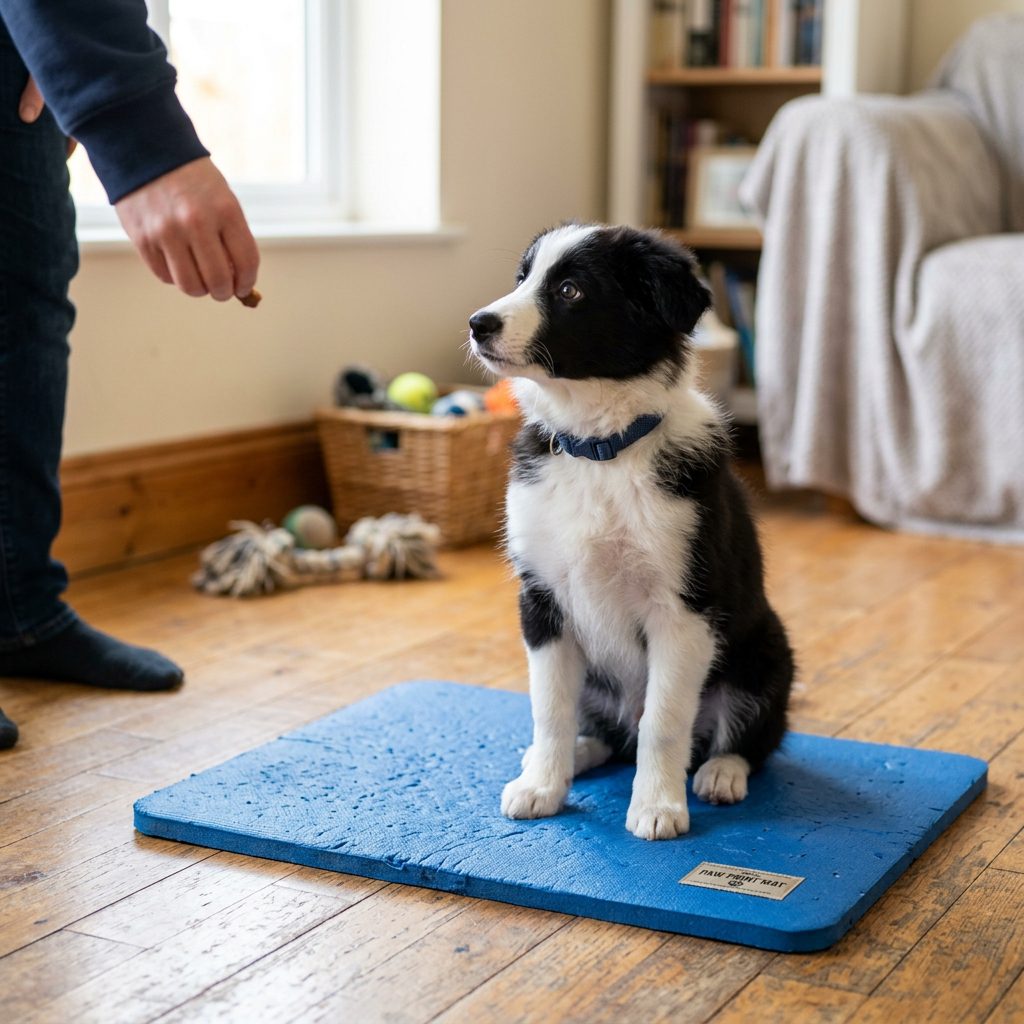
Silence is a ‘lack of behavior,’ which is actually very hard for a puppy to understand. It is much easier to teach them to do something else instead of barking. This is where the ‘Place’ command comes in. We want the doorbell to become a signal for the puppy to run to their mat and stay there silently.
Teaching the Place Command
- Lure to the Mat: Use a treat to lead your puppy onto their designated mat. As soon as all four paws are on it, say ‘Place’ and reward.
- Add Duration: Slowly wait longer and longer before giving the treat. They must stay on the mat to get the reward.
- Add Distance: Start moving a few steps away from the mat. If they stay, go back and reward them.
Linking the Doorbell to the Mat
Now, we combine the two. Trigger the doorbell (using your remote), and immediately point to the mat. When the puppy goes there and sits silently, provide a high-value reward. You are creating a new ‘chain’ of behavior:
“The bell rings, I run to my mat, I sit quietly, and I get the best chicken of my life.”
This gives the puppy a sense of purpose. Instead of feeling the need to guard the door, they feel the need to ‘win’ the game of getting to their mat. It replaces the ‘Alert’ instinct with a ‘Task’ instinct.
Phase 3: Real-World Scenarios and Generalization
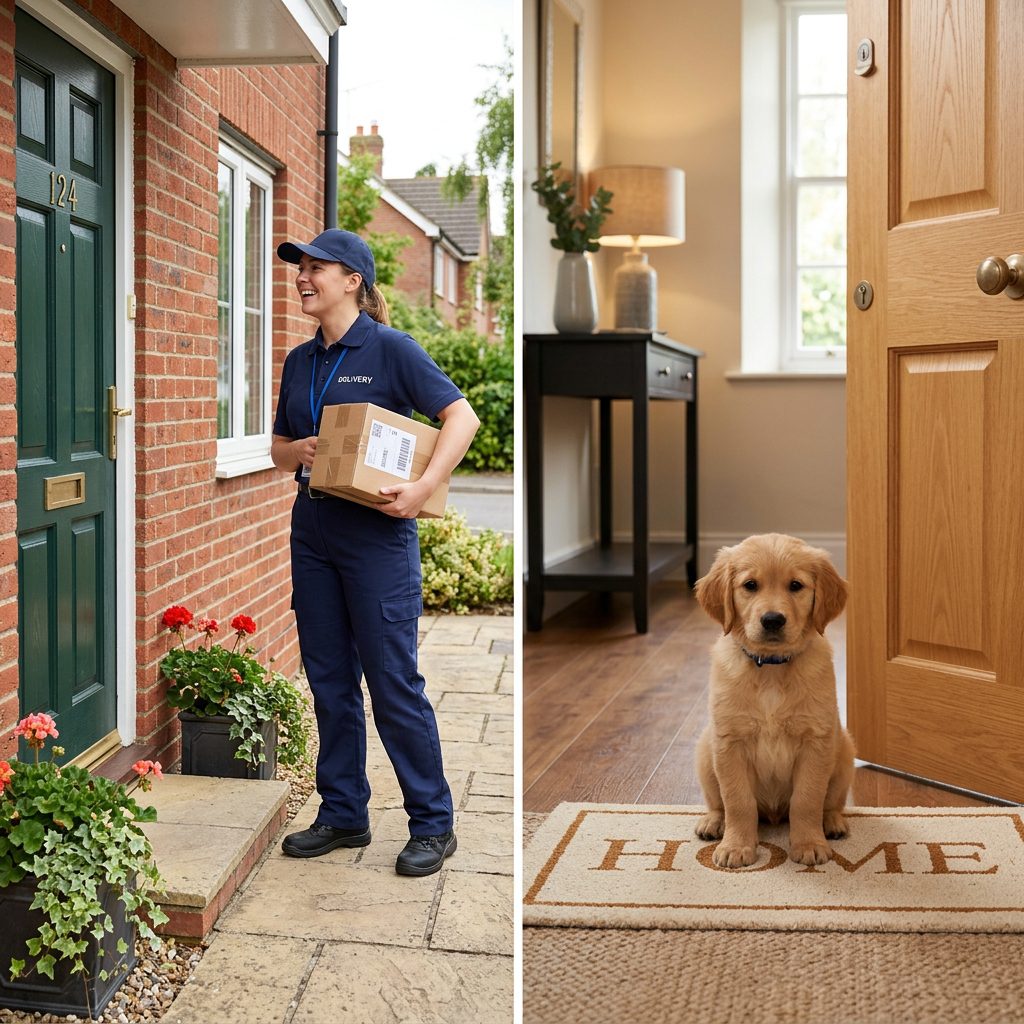
Training in a quiet living room is one thing, but what happens when the UPS driver actually arrives? This is where many owners see a breakdown in progress. To avoid this, we need to ‘generalize’ the training by simulating real-world distractions.
The ‘Helper’ Strategy
Ask a friend or family member to help you. Have them stand outside and ring the bell at irregular intervals. This allows you to focus entirely on the puppy without the pressure of a real visitor waiting.
Managing the ‘Front Door’ Energy
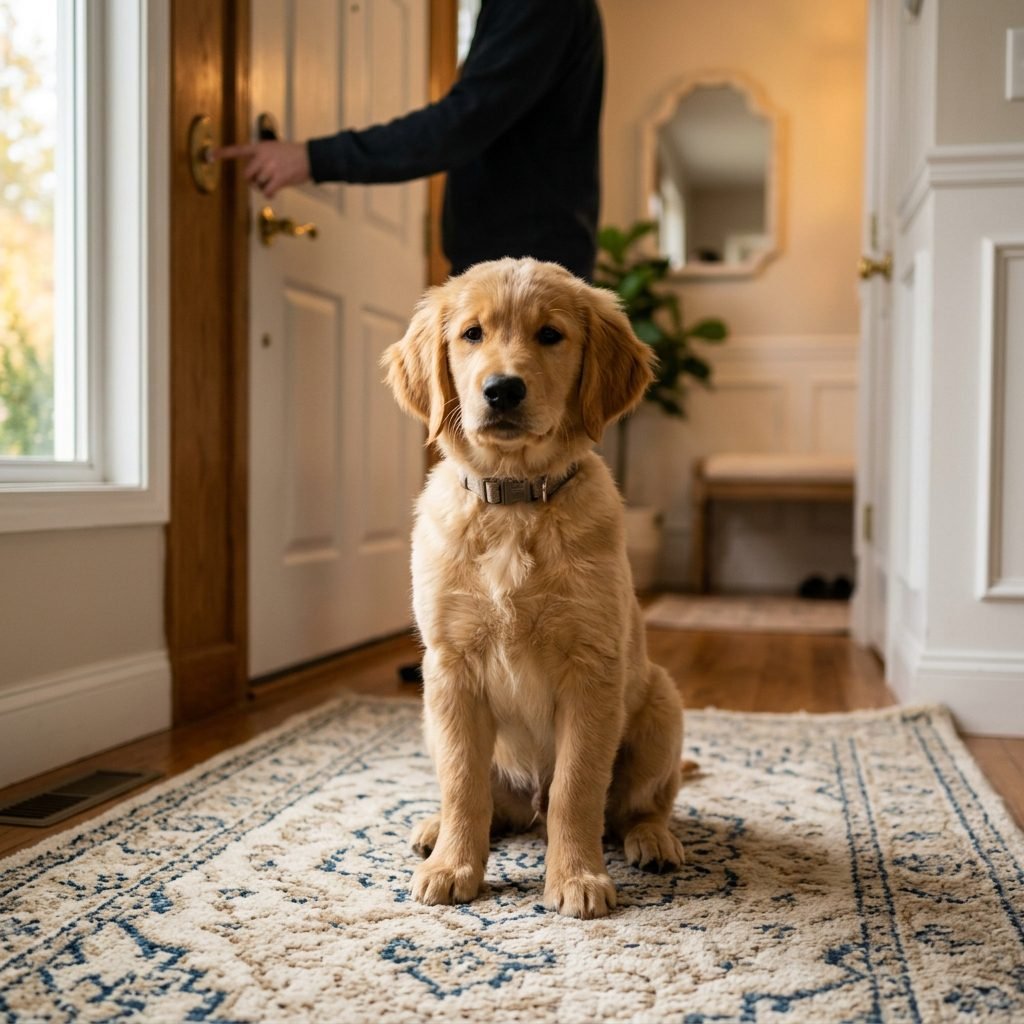
When the helper rings the bell, follow your ‘Place’ protocol. If the puppy stays silent on their mat, walk toward the door but do not open it yet. If the puppy breaks their stay or starts to bark, stop moving. Only open the door when the puppy is silent and in position. This teaches them that their silence is the key that ‘unlocks’ the door.
Using a ‘Quiet’ Cue
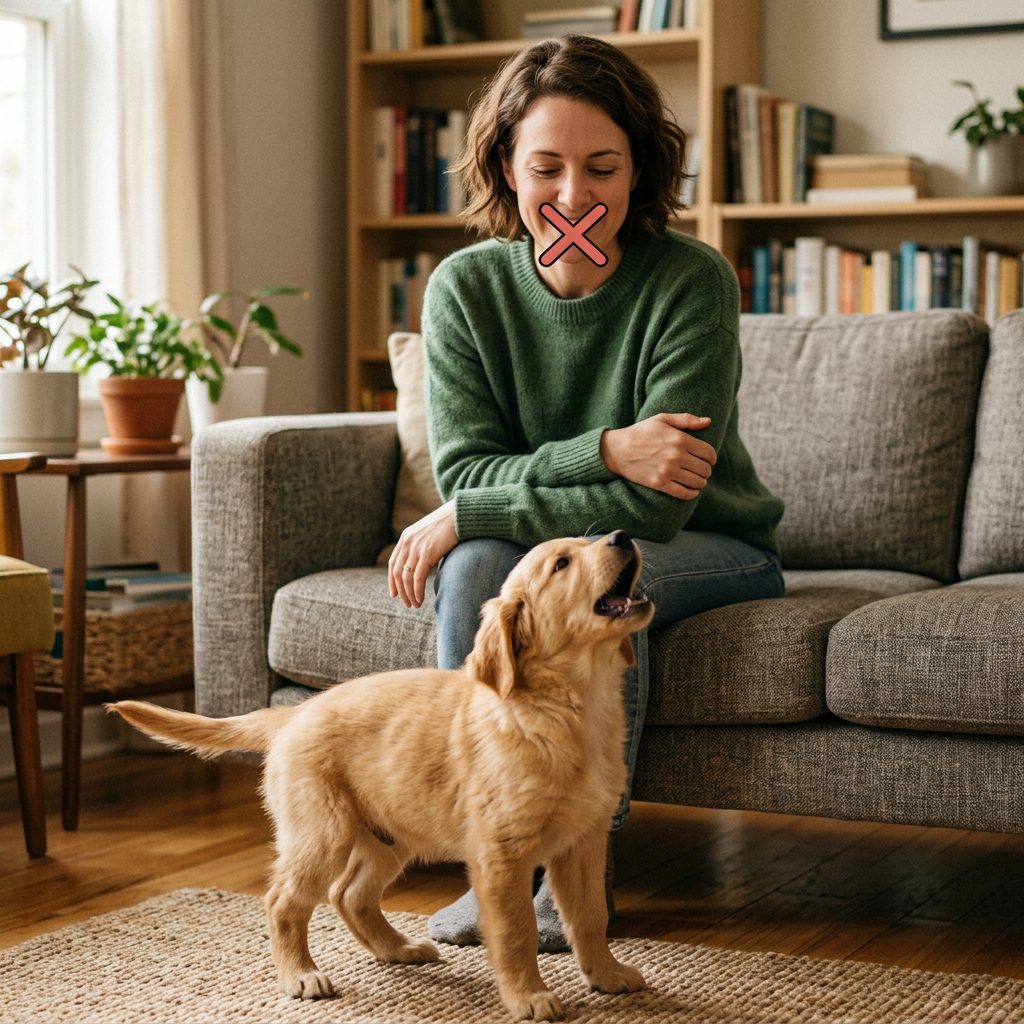
You can also introduce a verbal ‘Quiet’ cue. If the puppy let’s out a single ‘woof’ (which is acceptable for an alert), say ‘Quiet’ in a calm, low voice. The moment they stop to breathe or look at you, mark it with a ‘Yes!’ or a click and reward. Never yell ‘Quiet!’ as the puppy will simply think you are barking along with them, which encourages more noise.
Troubleshooting: When Things Don’t Go to Plan
Puppy training is rarely a straight line. You will likely encounter setbacks where it feels like your pup has ‘forgotten’ everything. Don’t panic; this is a normal part of the learning curve. Here are the most common issues and how to fix them.
The Puppy Won’t Stop Barking Long Enough to Reward
If your puppy is in a ‘barking loop,’ you are likely too close to the door or the sound is too loud. Increase the distance. Move the training mat to a different room where the door is not visible. Once they can handle the sound from a distance, slowly move the mat closer to the action over several days.
The ‘Demand’ Barking
Sometimes, a puppy learns that ‘Silence = Treat,’ so they bark once, then go quiet just to get the treat. This is called ‘yo-yoing.’ To fix this, increase the duration of silence required. They don’t get the treat for one second of silence; they get it for five seconds, then ten.
Common Mistakes to Avoid
- Yelling: As mentioned, yelling adds energy to an already high-energy situation. Stay ‘boringly calm.’
- Inconsistency: If you let them bark at the mailman on Monday but try to train them on Tuesday, they will be confused. The rules must be the same every single day.
- Poor Timing: If you reward the puppy while they are still growling or ‘muffing’ (those low, under-the-breath barks), you are rewarding the noise. Wait for total physical and vocal stillness.
Advanced Tips for Long-Term Success
Once you have the basics down, you want to ensure this behavior sticks for a lifetime. Savvy owners know that training never truly ‘ends’; it just becomes a part of daily life. Here are some advanced strategies to solidify your puppy’s silent greeting.
The ‘Settling’ Exercise
Practice ‘capturing calmness’ throughout the day. If you see your puppy lying down quietly on their own, walk over and drop a treat between their paws without saying a word. This reinforces a default state of relaxation, making them less likely to ‘explode’ when the doorbell rings.
Visual Barriers
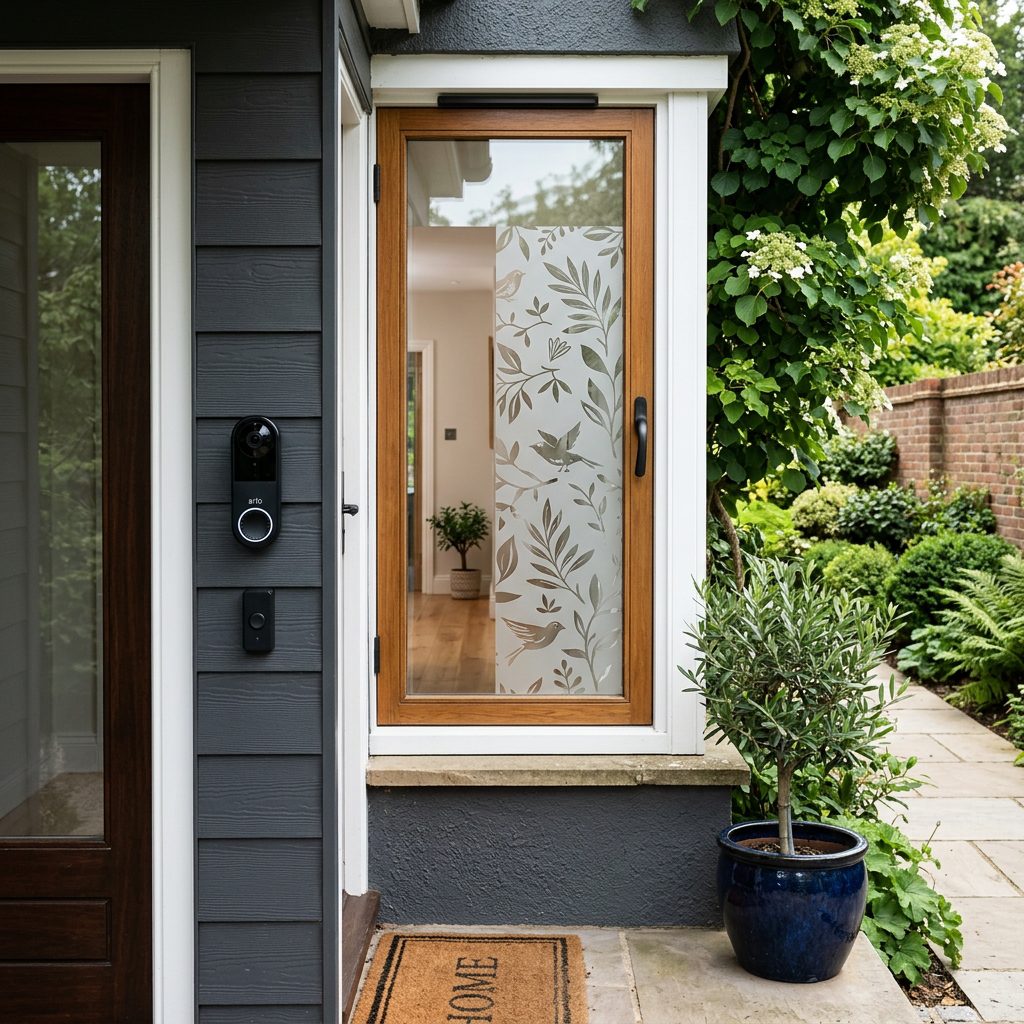
If your puppy barks because they see people through a glass door or a low window, use frosted window film or close the blinds during peak delivery hours. Reducing the visual trigger can lower the puppy’s overall ‘arousal’ level, making your training sessions more effective.
Tech Integration
Consider using a smart doorbell with a customizable chime. Sometimes, a softer, more melodic chime is less triggering than a traditional ‘buzz’ or ‘loud bell.’ You can also use indoor cameras to monitor your puppy’s reaction when you aren’t home and see if they are maintaining their silence.
Conclusion
Transforming a ‘Doorbell Nightmare’ into a silent, calm greeting is one of the most rewarding challenges you can take on as a puppy owner. It requires moving away from the reactive ‘No!’ and moving toward the proactive ‘Do this instead.’ By understanding your puppy’s motivations, preparing with the right tools, and methodically working through desensitization and the ‘Place’ command, you are not just stopping a bark—you are building a deeper bond of communication and trust with your dog.
Remember, consistency is your greatest ally. Every time the doorbell rings, it is an opportunity to practice. There will be days when they slip up, and that is okay. Stay patient, stay positive, and keep those high-value treats handy. Before you know it, you will be able to welcome guests and receive packages in total, blissful silence. You’ve got this!