Better Late Than Never: The 7-Day Guide To Housebreak An Older Puppy
So, you have an older puppy—perhaps six, nine, or even twelve months old—and the “potty training” ship feels like it sailed months ago. Maybe you adopted a rescue, or perhaps life just got in the way during those early weeks. Whatever the reason, you are currently dealing with a dog who thinks your living room rug is a perfectly acceptable alternative to the backyard. I have been there, and as a canine specialist, I am here to tell you: It is never too late.
Housebreaking an older puppy is actually quite different from training a 10-week-old fluffball. While the older dog has more bladder control, they also have something a younger pup lacks: established habits. They have learned that going indoors is fine. Our goal over the next seven days isn’t just to teach them where to go, but to systematically overwrite their current preferences with a new, structured routine. This guide is intensive, but if you commit to the next 168 hours, you can achieve results that have eluded you for months.
Essential Tools for the 7-Day Reset
Before we begin the clock on Day 1, we need to ensure you have the right gear. Attempting to housebreak an older puppy without the proper tools is like trying to build a house without a hammer. You might get somewhere, but it will take twice as long and probably fall apart.
The Management Arsenal
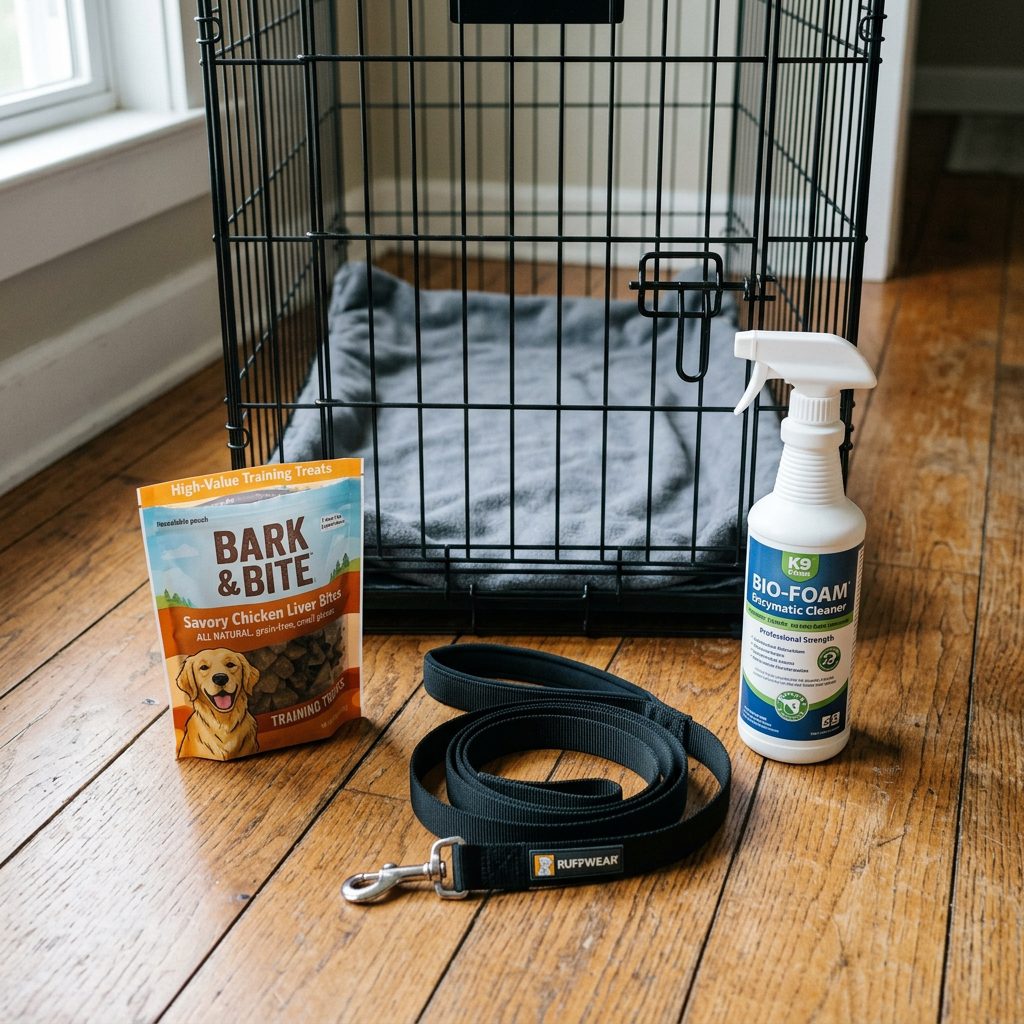
We need to prevent accidents before they happen. This requires restricting the dog’s environment. If they have the run of the house, they will find a quiet corner to soil. We use the following tools to manage their space:
| Tool | Purpose | Why it Works |
|---|---|---|
| Crate | Sleeping and short-term confinement. | Utilizes the dog’s natural instinct not to soil their sleeping area. |
| Exercise Pen (X-Pen) | Semi-restricted play area. | Keeps the dog in a washable area while still allowing movement. |
| 4-Foot Leash | The “Umbilical Cord” method. | Keeping the dog tethered to you prevents them from wandering off to pee. |
| Enzymatic Cleaner | Odors removal. | Breaks down uric acid crystals that regular soap leaves behind. |
Expert Tip: If you aren’t using an enzymatic cleaner, your dog can still smell the ‘potty spot’ even if you can’t. To a dog, a faint scent of old urine is a neon sign saying ‘Bathroom Here!’
Days 1-2: The Great Reset and Observation
Establishing the New Normal
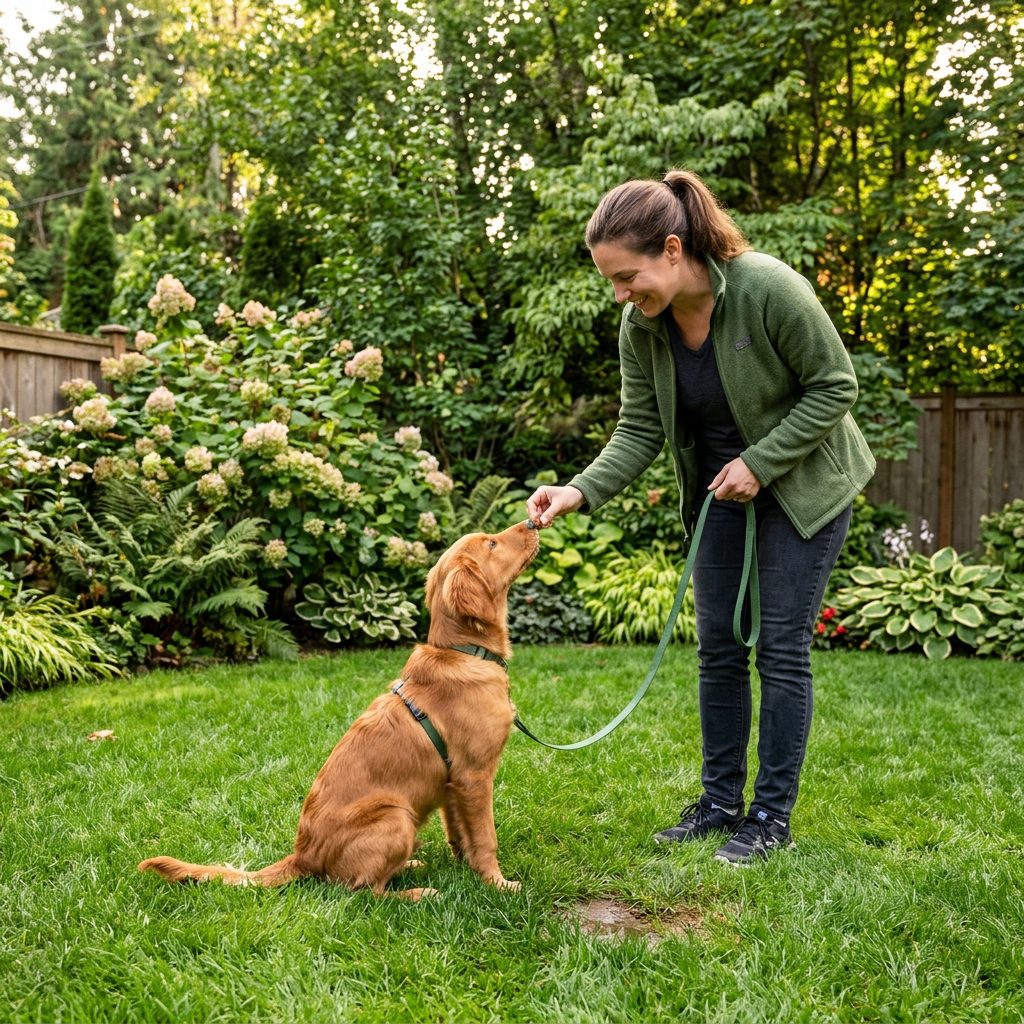
The first 48 hours are about breaking the old cycle. You must treat your older puppy as if they have zero knowledge of housebreaking. This means constant supervision. If you cannot see them, they should be in their crate or tethered to your belt loop.
The 15-Minute Rule
For these first two days, you will take your dog outside every 60 to 90 minutes. However, the 15-minute rule applies to specific activities. You must take them out 15 minutes after:
- Eating a meal.
- Drinking a significant amount of water.
- A vigorous play session.
- Waking up from a nap.
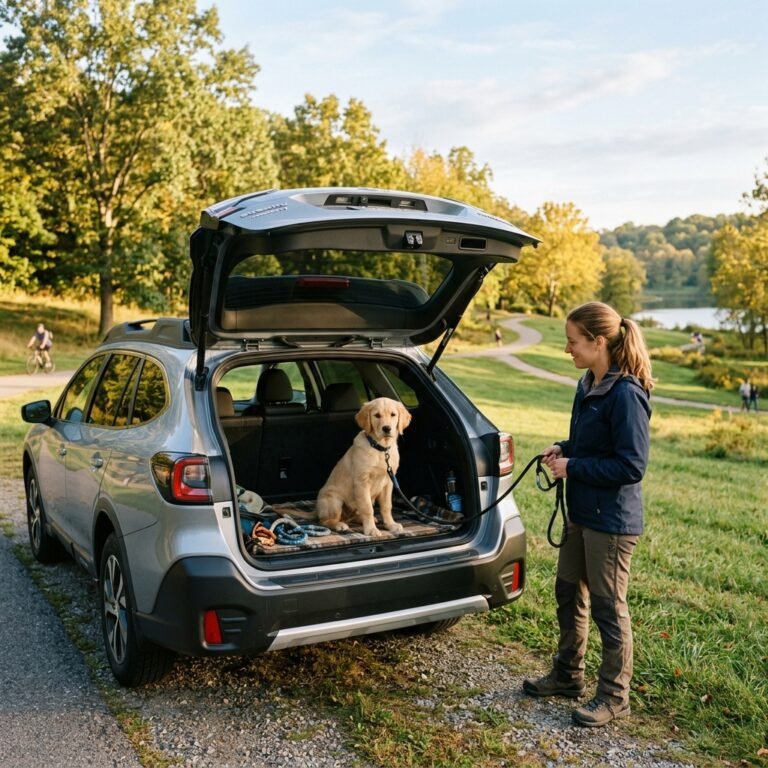
When you go outside, do not just open the door and let them out. Go with them on a leash. This is crucial. You need to be there to witness the success so you can reward it instantly. When they finish their business, provide a high-value treat (think boiled chicken or freeze-dried liver) within three seconds. We want them to think, ‘Wow, peeing on this grass is the most profitable thing I’ve ever done!’
Days 3-4: Building Communication and Cues
Introducing the ‘Go Potty’ Command
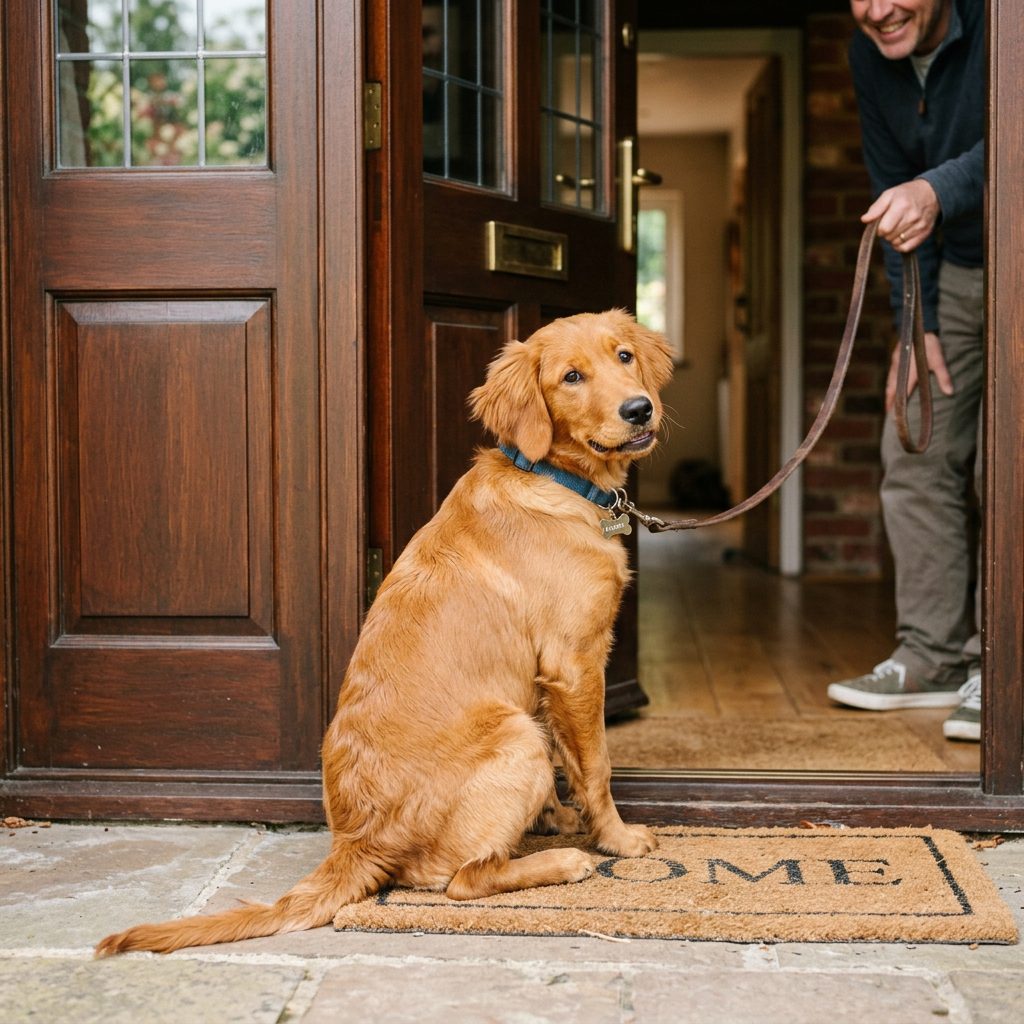
By Day 3, your puppy should be getting used to the frequent trips outside. Now, we start naming the behavior. As soon as your dog begins to circle or sniff—the universal signs of an impending ‘deposit’—calmly say your chosen cue, such as “Go Potty” or “Business Time.”
The Schedule is King
Consistency is the secret sauce. An older puppy thrives when they can predict exactly when their next opportunity to go will be. Below is a sample schedule we recommend following strictly during these middle days:
| Time | Activity | Potty Break? |
|---|---|---|
| 7:00 AM | Wake up and immediate leash walk. | Yes |
| 7:30 AM | Breakfast and Water. | No |
| 7:45 AM | Post-meal walk. | Yes |
| 12:00 PM | Mid-day walk and play. | Yes |
| 5:00 PM | Dinner and Water. | No |
| 5:20 PM | Post-dinner walk. | Yes |
| 10:00 PM | Final ‘Empty’ walk before bed. | Yes |
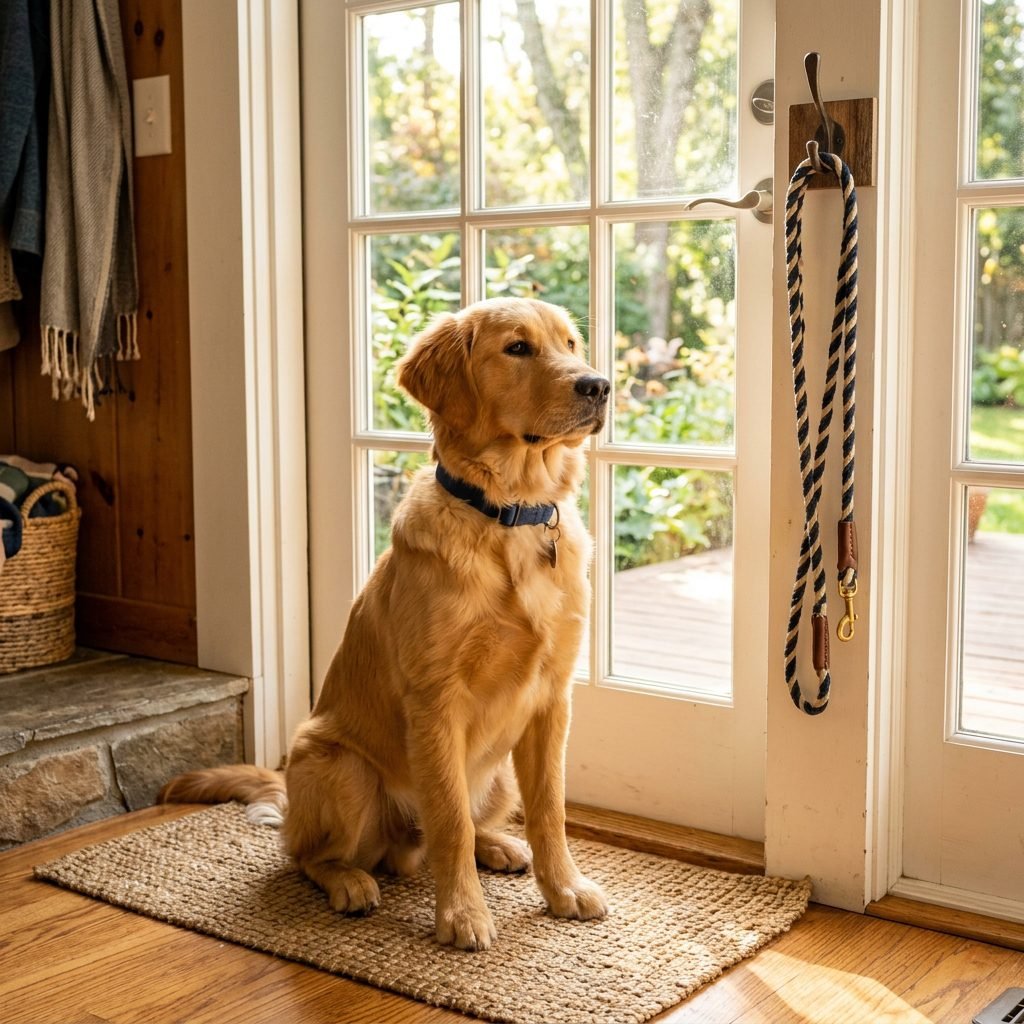
During Days 3 and 4, you might notice your dog starts looking at the door or looking at you when they need to go. Capture these moments! This is the beginning of communication. If they even glance at the door, take them out immediately.
Days 5-6: Testing and Generalization
Expanding the Circle of Trust
Now that you have had a few days with zero accidents (hopefully!), it is time to slowly increase the dog’s freedom. This is where many owners fail by giving too much freedom too fast. We call this ‘Generalization.’
The ‘One Room’ Rule
Allow your dog to be off-leash, but only in the room you are currently in. Close doors to bedrooms and bathrooms. If the dog moves toward the door of the room you are in, follow them. If they look like they are searching for a spot, whisk them outside.
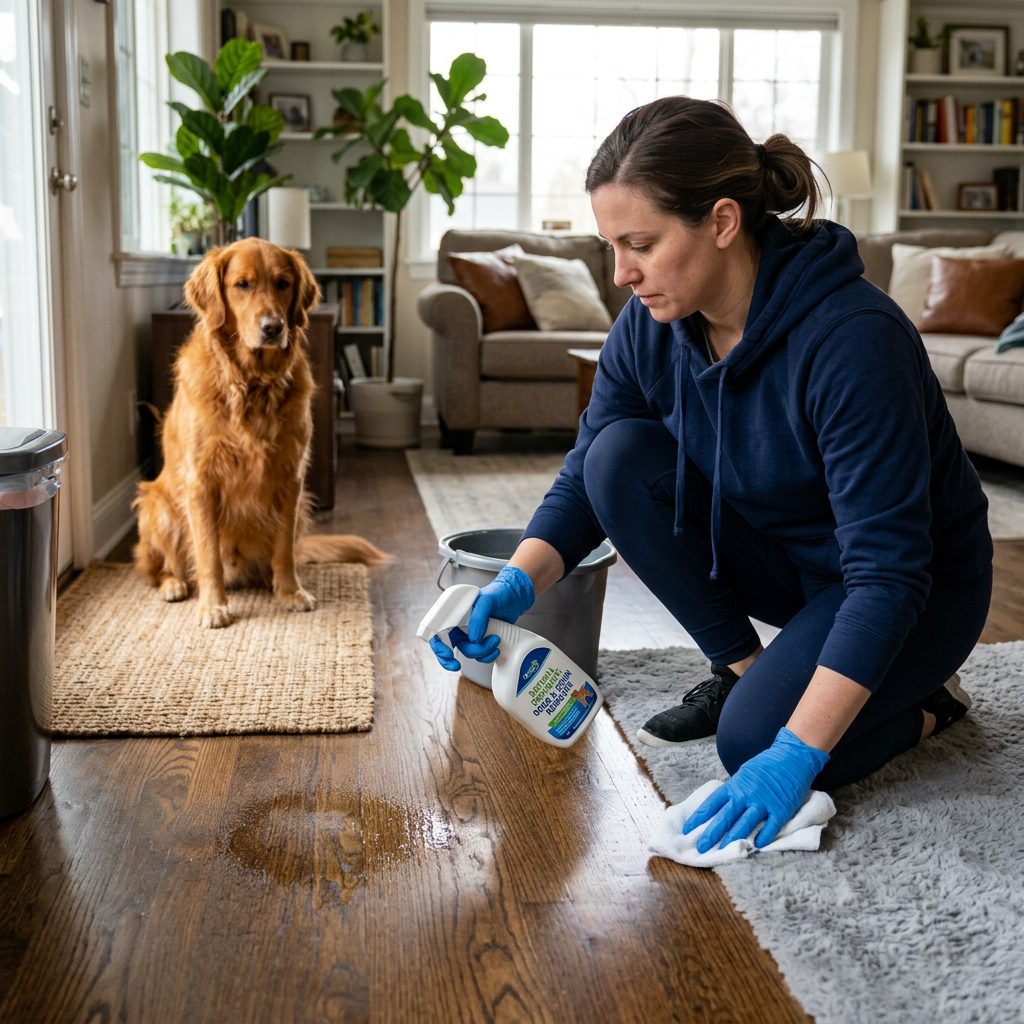
What if an accident happens? If you catch them in the act, make a startling noise (a sharp “Ah-Ah!”) to stop the flow, then immediately rush them outside to finish. If they finish outside, reward them. If you find an accident after the fact, do not punish the dog. They lack the cognitive ability to connect a puddle from ten minutes ago with your current anger. Simply clean it with your enzymatic cleaner and resolve to supervise better.
Day 7: The New Lifestyle
Solidifying the Habit
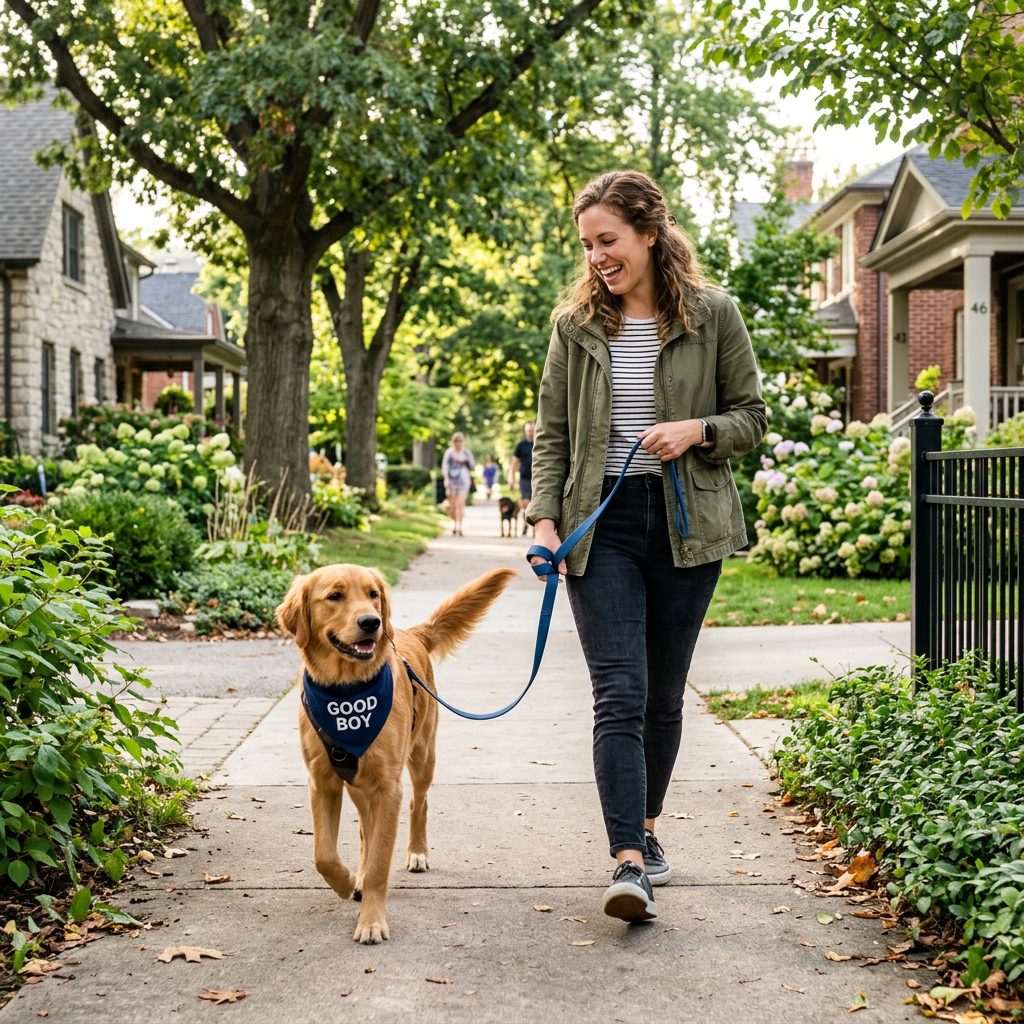
On the final day of our intensive week, we focus on maintenance. Housebreaking isn’t truly finished until the dog has gone several weeks without an accident, but by Day 7, the foundation should be rock solid. Your dog should now understand that the outdoors is the designated ‘safe zone’ for pottying.
Transitioning to Long-Term Success
As you move forward, keep these three pillars in mind:
- Watch the Water: Don’t restrict water to the point of dehydration, but consider picking up the water bowl two hours before bedtime to prevent overnight accidents.
- High-Value Only: Keep using those special treats for pottying for at least another month. Don’t switch to boring kibble yet; we want the motivation to remain high.
- The ‘Sniff’ Test: If you take your dog to a new place (a friend’s house or a pet-friendly store), remember that they may not realize the ‘no peeing indoors’ rule applies there too. Revert to Day 1 supervision levels in new environments.
Troubleshooting Common Roadblocks
When Things Don’t Go to Plan
Even with a perfect 7-day plan, biological and behavioral outliers exist. If you are struggling, consider these two major factors:
Medical Issues
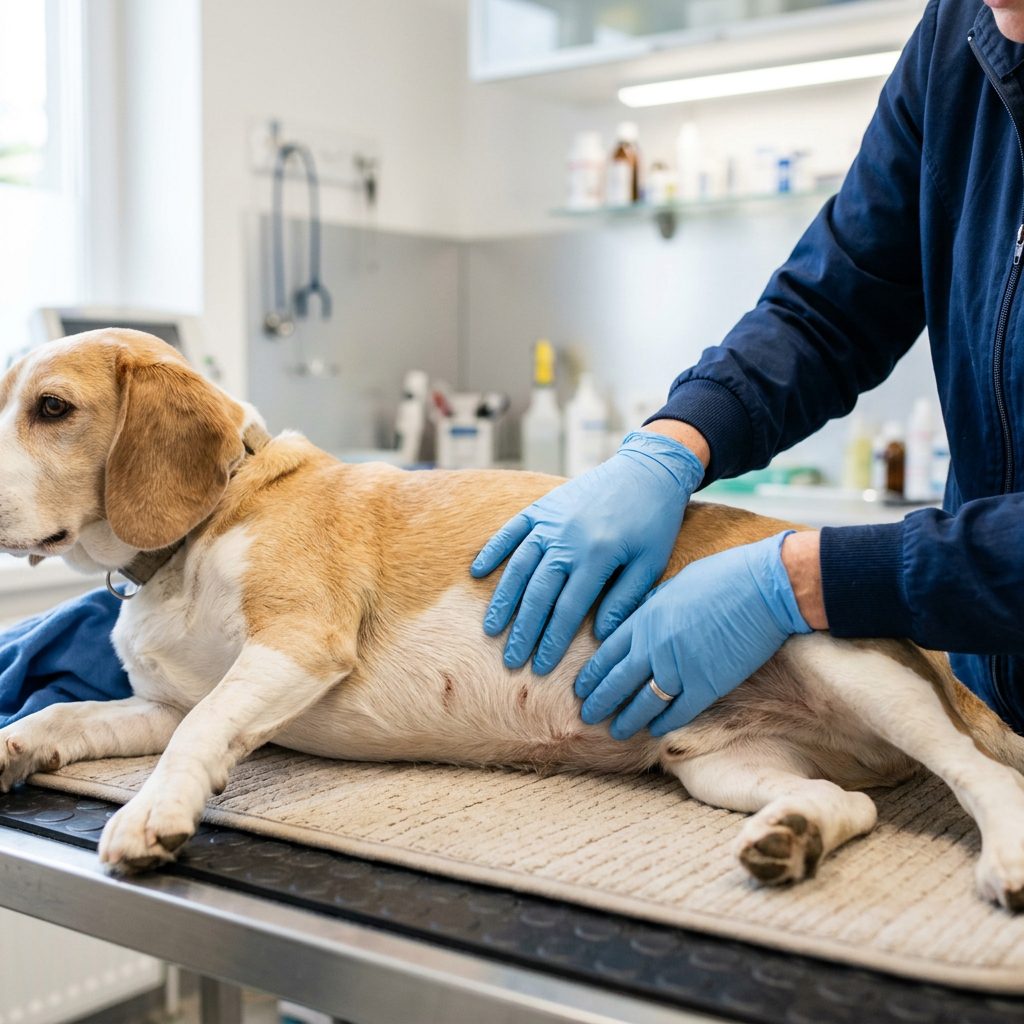
If your older puppy is leaking urine frequently or seems to have no control, they may have a Urinary Tract Infection (UTI) or an anatomical issue like ectopic ureters. No amount of training will fix a medical condition. If you see straining or blood, see a veterinarian immediately.
Submissive or Excitement Urination
Does your dog pee a little bit when you come home or when someone reaches over to pet them? This isn’t a housebreaking issue; it’s a social/emotional response.
Handling this requires a ‘low-key’ approach. Ignore the dog for the first five minutes when you get home, and avoid leaning over them. Keep greetings calm and at ground level.
Conclusion
Housebreaking an older puppy is a marathon, not a sprint, even if this 7-day guide feels like a dash. The key is to replace frustration with structure. By controlling the environment, rewarding the right choices, and maintaining a rigorous schedule, you are giving your dog the clarity they need to succeed. Remember, your dog isn’t trying to ‘get back at you’ or being stubborn; they are simply following the habits they’ve developed. Be patient, be consistent, and soon enough, those indoor accidents will be a distant memory. You’ve got this!