How I Taught My Hyperactive Puppy To Chill Out Using This 1 Simple ‘Calmness’ Trick
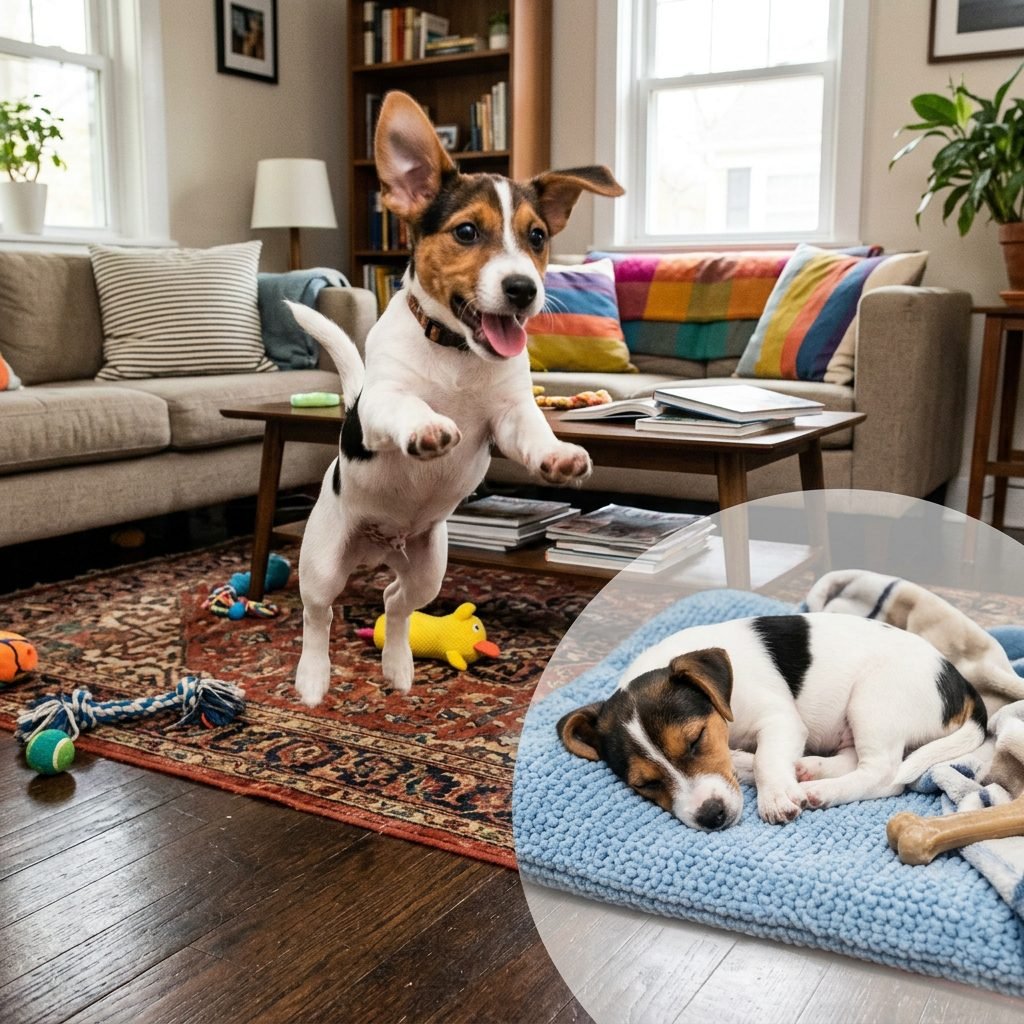
If you are reading this, you probably know the feeling of “puppy burnout” all too well. You’ve taken your pup for a three-mile walk, played twenty minutes of fetch, and engaged in a rigorous game of tug-of-war, yet your four-legged roommate is currently doing laps around the sofa at Mach 5. It feels like they have an infinite battery pack, and you? You’re running on 1% power. Many savvy dog owners fall into the trap of thinking that a hyperactive puppy just needs more exercise. We think if we can just tire them out physically, they will finally settle down. However, as a canine specialist, I’m here to let you in on a little secret: you aren’t just building a tired dog; you’re building an elite athlete with a higher and higher threshold for exhaustion.
The missing link in most puppy raising programs isn’t physical activity—it’s the mental skill of relaxation. We spend so much time teaching our dogs how to ‘Sit,’ ‘Stay,’ and ‘Come,’ but we almost never teach them how to do nothing. In this guide, I’m going to walk you through the exact ‘Calmness’ trick I used to transform my own “land shark” into a dog that actually knows how to switch off. We are going to move away from the idea of ‘tiring them out’ and move toward the concept of ‘Capturing Calmness.’ This isn’t just a command; it’s a lifestyle shift that will save your sanity and help your puppy thrive in a busy world.
The Science of the ‘Zoomies’: Why Your Puppy Won’t Stop
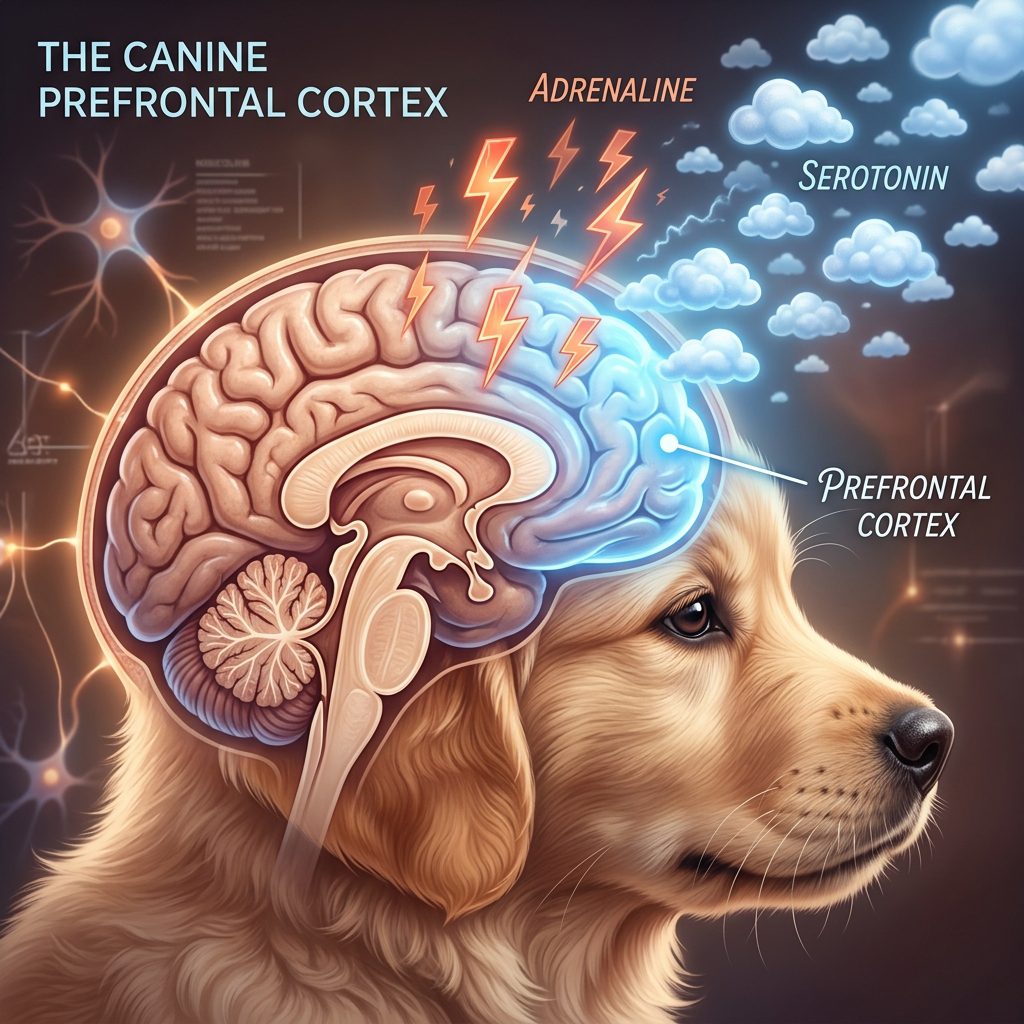
Before we dive into the trick itself, we need to understand what is happening inside that fuzzy little head. Puppies are essentially toddlers with teeth and fur. Their prefrontal cortex—the part of the brain responsible for impulse control—is still under construction. When a puppy becomes overstimulated, their body is flooded with cortisol and adrenaline. Unlike us, they don’t have the internal dialogue to say, ‘I’m feeling a bit stressed, I think I’ll go take a nap.’ Instead, they go into overdrive.
The Athlete Paradox
Many owners believe that the solution to hyperactivity is more physical output. While exercise is vital, there is a point of diminishing returns. If you rely solely on physical exhaustion, you are essentially putting your dog on a treadmill. Over time, their cardiovascular fitness improves, meaning it takes more work to get them to that same level of tiredness the next day. This is the Athlete Paradox. You aren’t fixing the hyperactivity; you’re just raising the bar for what ‘tired’ looks like.
Arousal vs. Energy
It is crucial to distinguish between high energy and high arousal. High energy is a biological need for movement. High arousal is an emotional state where the dog is ‘wired’ and unable to process information. The ‘Calmness Trick’ targets arousal levels, teaching the brain to down-regulate from a state of excitement to a state of rest. By focusing on the nervous system rather than just the muscles, we create a dog that is naturally more peaceful.
The 1 Simple Trick: Capturing Calmness
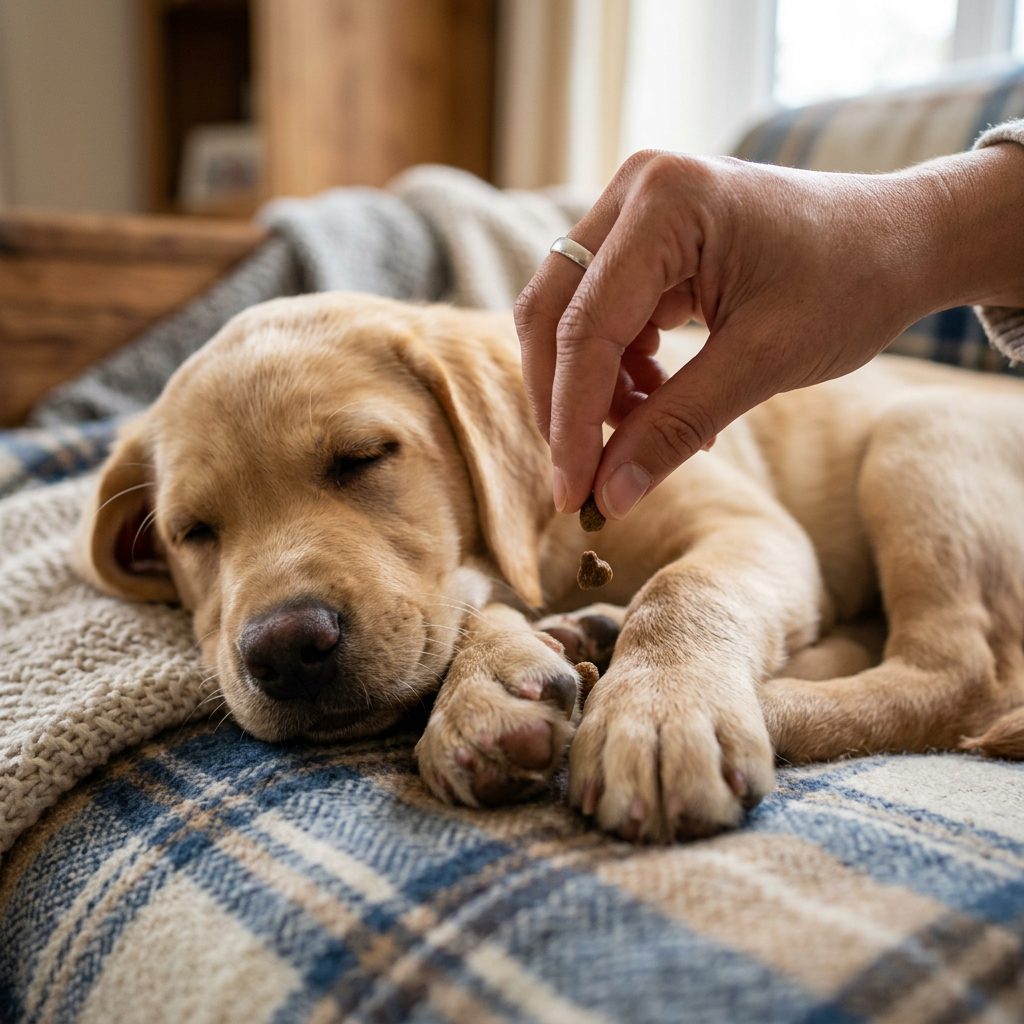
The trick I’m talking about is formally known in the training world as ‘Capturing Calmness.’ It was popularized by trainers like Kikopup, and it is the single most effective tool for hyperactive dogs. The beauty of this method is its simplicity: you aren’t asking the dog to do anything. In fact, the less you ‘command’ them, the better it works.
Step 1: The Setup
To start, you need to have rewards ready at all times. I recommend wearing a treat pouch or having small bowls of low-calorie kibble or treats placed safely around your home (out of the dog’s reach). The goal is to be able to reward your dog instantly without having to fumble with a bag, which usually triggers excitement.
Step 2: The Observation Phase
Go about your day as normal. Ignore your puppy when they are jumping, nipping, or pacing. However, the moment you see your puppy choose a calm behavior on their own—such as lying down, sighing, or even just standing still for a second—you are going to ‘capture’ it. This is where the magic happens.
Step 3: The Silent Delivery
This is the most important part. Do not say ‘Good boy!’ or ‘Yes!’ in a high-pitched voice. If you do, you’ll startle them out of their calm state and back into ‘work mode.’ Instead, calmly and silently walk over and drop a treat right between their front paws. Then, walk away. No eye contact, no petting, no verbal praise. You are rewarding the state of being calm, not the performance of a trick.
Step 4: Increasing the Criteria
As your puppy starts to realize that ‘chilling out’ is a high-paying job, they will start to offer it more often. You can then start to look for deeper levels of calm:
- Rewarding when they rest their chin on the floor.
- Rewarding when they shift their weight onto one hip.
- Rewarding the ‘big sigh’—a classic sign of the nervous system shifting into a parasympathetic state.
Tools of the Trade: What You Need for Success
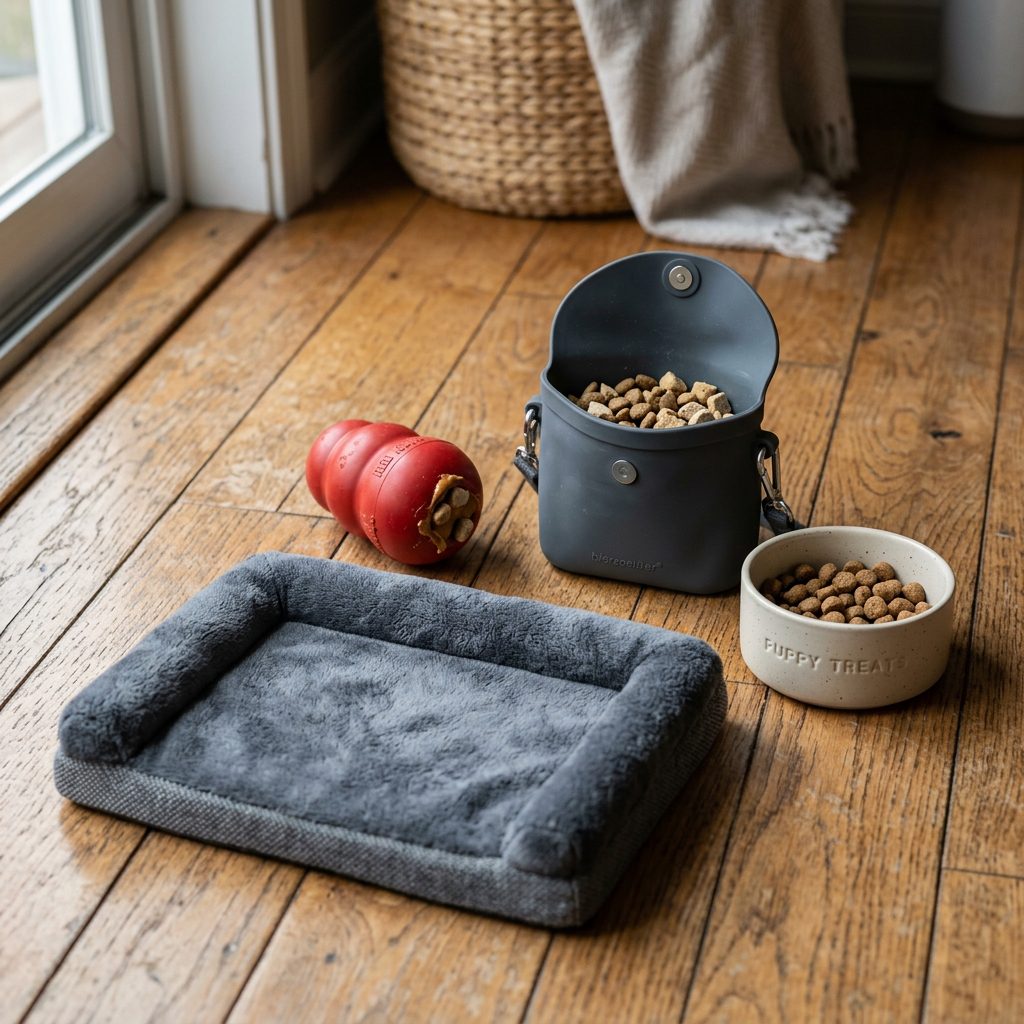
While ‘Capturing Calmness’ is mostly about your observation skills, having the right tools can accelerate the process. Not all treats are created equal, and the environment plays a huge role in how quickly your puppy learns to settle.
| Tool | Purpose | Why It Matters |
|---|---|---|
| Low-Value Kibble | Daily Rewards | Prevents over-excitement and weight gain during high-repetition training. |
| A Dedicated Mat | Stationing | Gives the dog a physical ‘boundary’ that represents the ‘Calm Zone.’ |
| Long-Lasting Chews | Passive Calming | Chewing and licking release endorphins that naturally lower heart rate. |
| Treat Pouch | Accessibility | Ensures you never miss a ‘calm moment’ because you were looking for the bag. |
The Role of the ‘Place’ Mat
I highly recommend using a specific rug or mat for this training. By consistently rewarding your puppy for being calm on this specific surface, the mat itself eventually becomes a ‘conditioned reinforcer.’ Just seeing the mat will start to trigger a relaxation response in your puppy’s brain. This is incredibly helpful for taking your puppy to cafes, vet offices, or a friend’s house.
Common Mistakes: Why Your Puppy Isn’t Chilling Yet
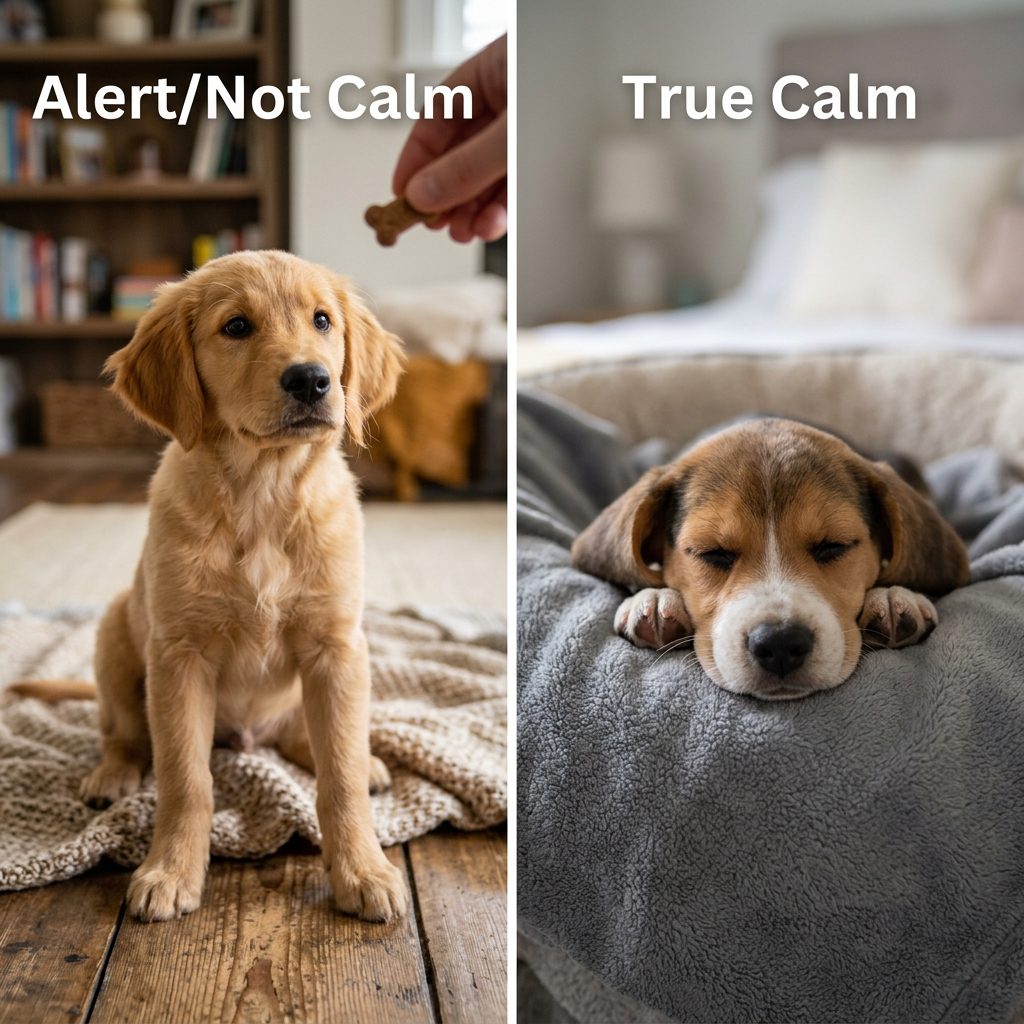
Even with the best intentions, it’s easy to accidentally reinforce the wrong behaviors. If your puppy still seems hyperactive, check if you are falling into these common traps.
1. Rewarding ‘Alert’ Calmness
If your puppy is lying down but their ears are forward, their body is tense, and they are staring at your treat pouch, they aren’t actually calm. They are ‘waiting for work.’ If you reward this, you are rewarding anticipation. Wait for the muscles to soften and the eyes to drift before dropping the treat.
2. The ‘Bribe’ vs. The ‘Reward’
Never show the treat to get the puppy to lie down. This is a bribe. If you use a bribe, the puppy is only ‘calm’ because they see the food. ‘Capturing Calmness’ relies on the puppy making the choice before they know a treat is coming. This builds internal motivation and true behavioral change.
3. Over-Stimulating Environments
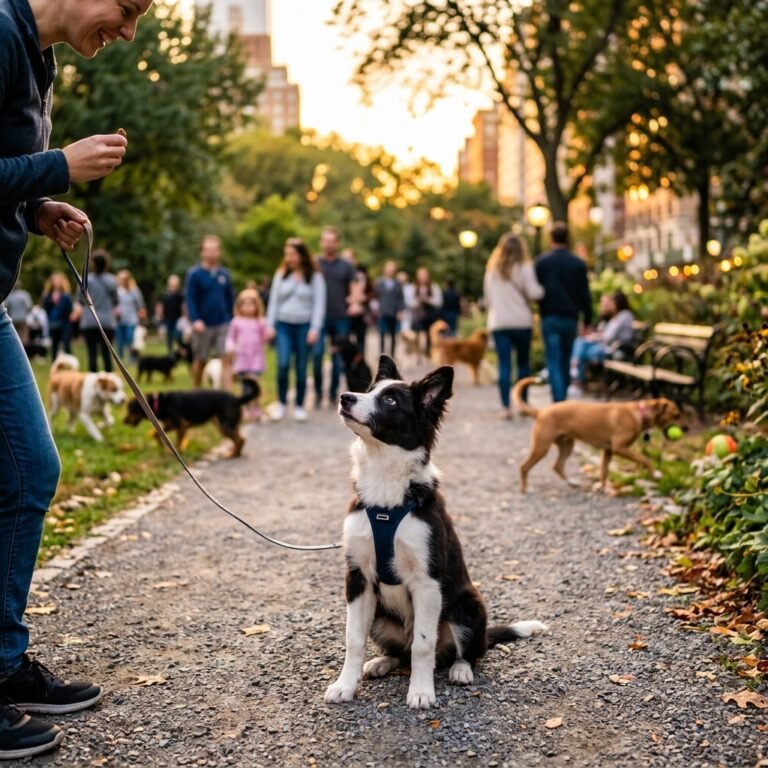
You cannot expect a puppy to learn to chill out in the middle of a construction site or a busy park. Start in the most boring room of your house. Once they are a ‘Calmness Pro’ in the kitchen, move to the hallway, then the backyard, and finally, public spaces.
“Training calmness is not about suppressing energy; it is about providing the dog with the vocabulary to express that energy in a controlled, peaceful way.” – Canine Behavioral Specialist
The Daily Calmness Schedule
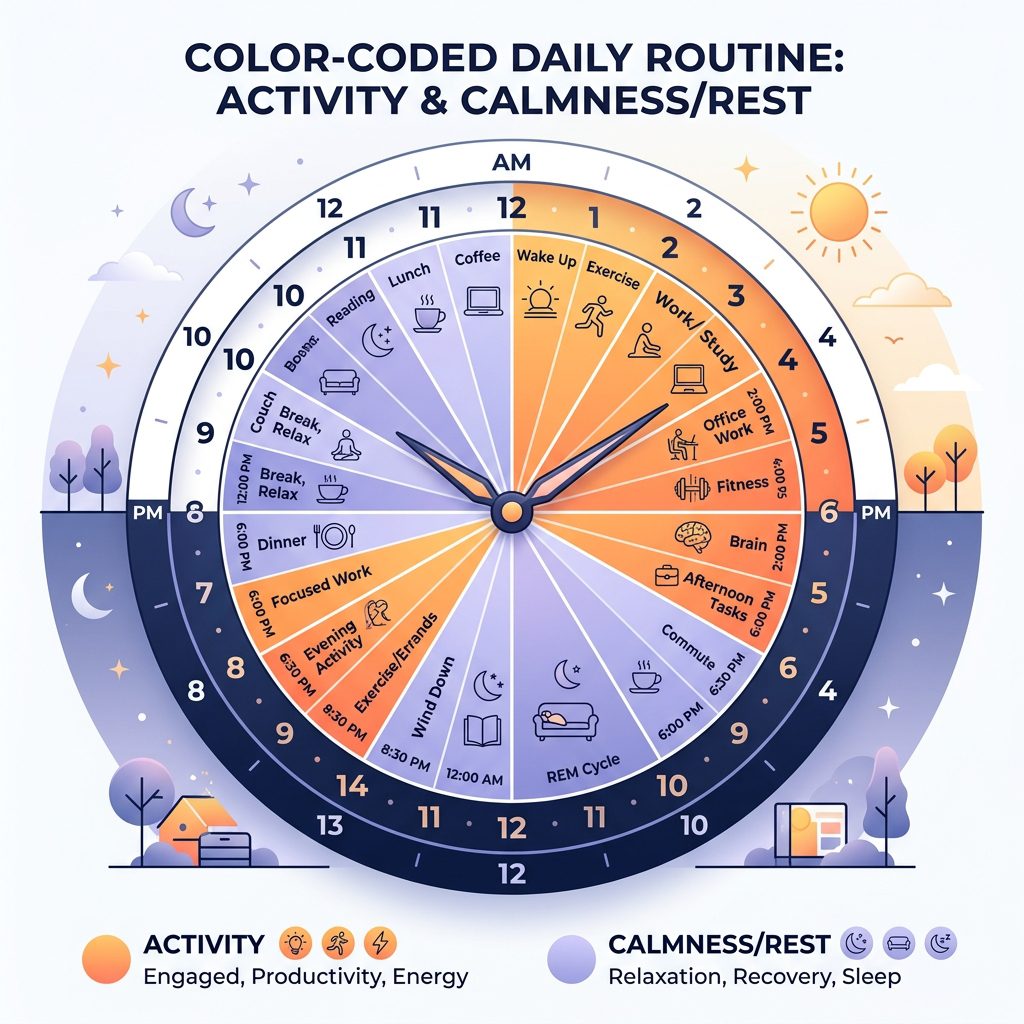
Consistency is the secret sauce. You can’t just do this for five minutes a day and expect a different dog. You need to integrate ‘Calmness Intermissions’ into your puppy’s daily routine. Here is a sample schedule that balances activity with essential ‘chill time.’
| Time of Day | Activity Type | Focus |
|---|---|---|
| 7:00 AM – 8:00 AM | High Energy | Walk, play, and breakfast in a puzzle toy. |
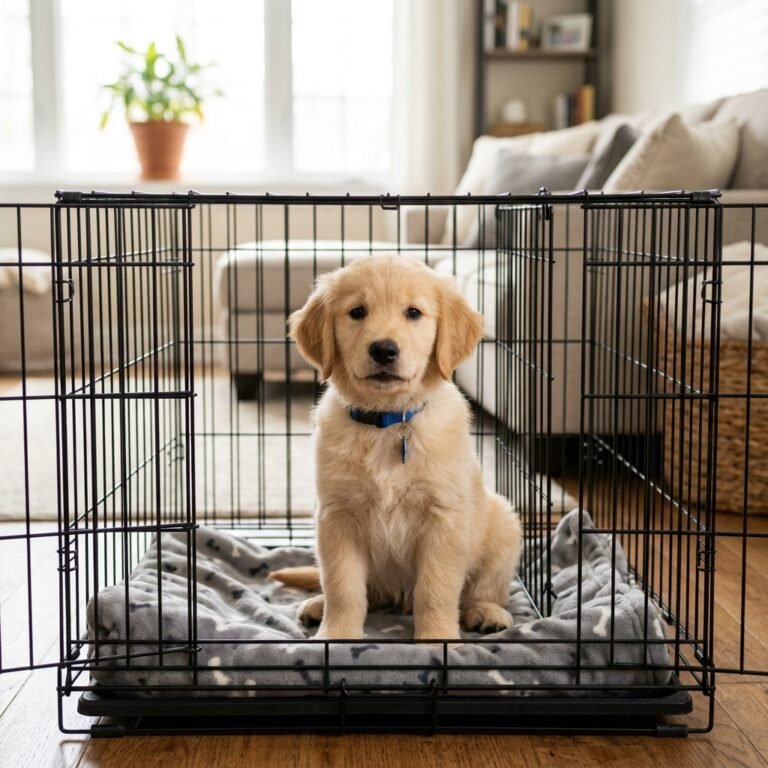
| 8:00 AM – 10:00 AM | Mandatory Nap | Crate or pen time in a darkened room. |
| 10:00 AM – 11:00 AM | Low Impact | Sniffing in the yard or a short training session. |
| 11:00 AM – 1:00 PM | Capturing Calmness | Tether the puppy to you or use a mat while you work/read. Reward settles. |
| 1:00 PM – 2:00 PM | Mental Stimulation | Scent work or learning a new ‘active’ trick. |
| 2:00 PM – 5:00 PM | Rest & Chew | Provide a long-lasting chew (Bully stick, etc.) on their mat. |
| 5:00 PM – 7:00 PM | Family Time | Moderate play, followed by rewarding ‘calm’ during dinner prep. |
| 7:00 PM – Bedtime | The Wind Down | Dim lights, no high-intensity play, frequent ‘calmness’ rewards. |
Notice that the schedule includes ‘Mandatory Naps.’ Much like human toddlers, puppies often get ‘the zoomies’ because they are actually overtired. An overtired puppy loses the ability to regulate their emotions. By enforcing rest, you are giving their brain the break it needs to process the day’s learning.
Conclusion
Teaching a hyperactive puppy to chill out is not a sprint; it’s a marathon. It requires you to change your perspective from being a ‘Puppy Entertainer’ to being a ‘Calmness Coach.’ By using the 1 simple trick of Capturing Calmness, you are giving your dog a gift that will last their entire life: the ability to feel comfortable and relaxed in their own skin, regardless of what is happening around them.
Remember, every time you silently drop a treat between those paws when your puppy is resting, you are rewiring their brain. You are telling them that being peaceful is just as rewarding as chasing a ball. Be patient, stay consistent, and keep your treat pouch full. Before you know it, you’ll look down and realize that the frantic, hyperactive puppy is gone, replaced by a focused, relaxed companion who knows exactly how to settle down and enjoy the quiet moments with you.