Tired of Getting Dragged? How to Leash Train a Puppy Who Pulls Like Crazy
Listen, I have been exactly where you are. You envision a peaceful morning stroll, coffee in one hand, your well-behaved puppy trotting perfectly by your side. Instead, you are being dragged down the sidewalk like you are competing in a world-class weight-pulling competition. Your shoulder hurts, your coffee is spilled, and your puppy looks like they are trying to reach the next county. It is exhausting, frustrating, and—let’s be honest—a little embarrassing. But here is the good news: pulling is not a sign that your puppy is dominant or trying to be the boss. It is simply a natural behavior that we can gently and effectively redirect. In this comprehensive guide, we are going to dive deep into the world of loose-leash training. We will cover the gear that actually works, the psychology behind why your puppy thinks they are a sled dog, and a step-by-step roadmap to turn those chaotic drags into delightful walks. Grab some high-value treats and your patience; we are about to transform your walks forever.
The Essential Gear: Setting Your Puppy Up for Success
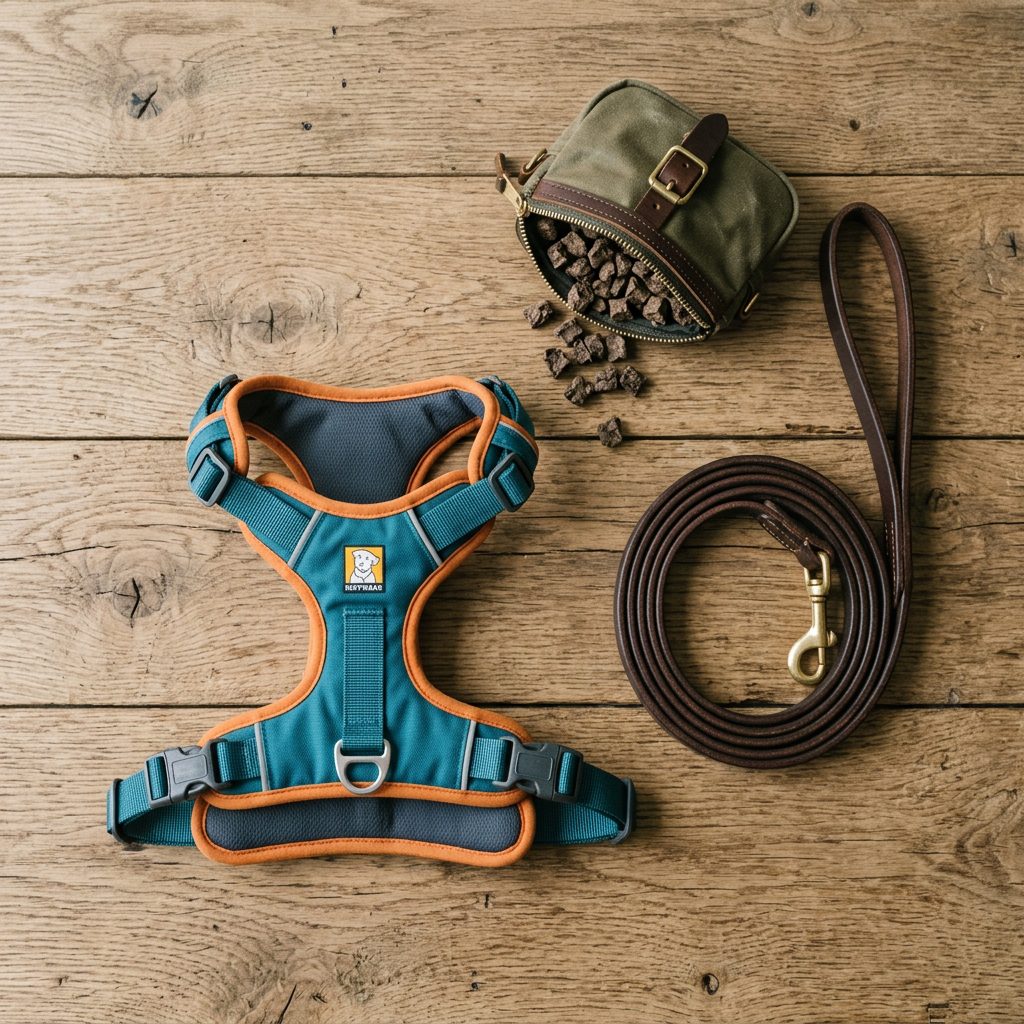
Before we even step foot outside, we need to talk about your toolkit. If you are using the wrong equipment, you are essentially fighting an uphill battle against physics. Many owners reach for a standard neck collar, but for a puppy who pulls like a freight train, this can actually cause physical harm to their delicate trachea. Furthermore, the type of leash you use determines how much control you have and how clearly you can communicate with your pup.
Harnesses vs. Collars
When dealing with a strong puller, a front-clip harness is often a game-changer. Unlike back-clip harnesses, which can actually encourage pulling (think of a sled dog’s harness), a front-clip harness redirects the puppy’s momentum back toward you when they reach the end of the leash. This makes it physically difficult for them to keep charging forward.
The Leash Debate
I am going to be very direct here: throw away the retractable leash. Retractable leashes teach puppies that if they pull, the leash gets longer—the exact opposite of what we want. A standard 6-foot nylon or leather leash is the gold standard for training. It provides a consistent length and allows for clear communication.
| Gear Type | Pros | Cons |
|---|---|---|
| Front-Clip Harness | Redirects pulling momentum, protects the neck. | Can interfere with shoulder gait if fitted poorly. |
| Flat Collar | Great for ID tags and light walking. | Risk of tracheal damage for heavy pullers. |
| 6-Foot Fixed Leash | Consistent feedback, maximum control. | Requires more active handling from the owner. |
| Retractable Leash | Gives dog more freedom. | Encourages pulling, dangerous in high-traffic areas. |
Expert Tip: Always pair your training gear with a treat pouch. Having quick access to rewards is the difference between a successful training session and a missed opportunity.
The Psychology of Pulling: Why Do They Do It?
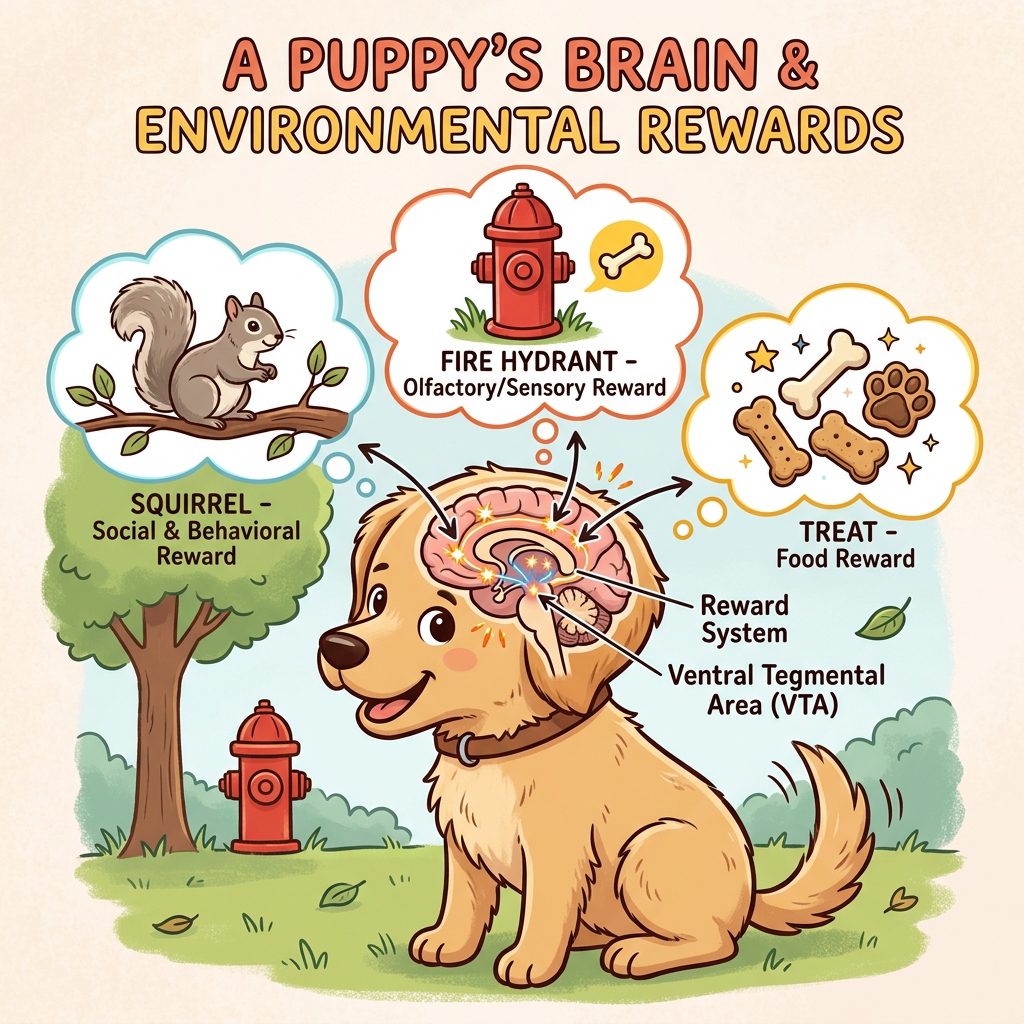
To fix the pulling, we have to understand why it happens in the first place. Puppies do not pull because they are being ‘bad.’ There are three main reasons why your puppy is currently winning the tug-of-war.
1. The Opposition Reflex
Biologically, dogs have something called an opposition reflex. This is a natural physical response that causes them to lean into pressure. If you pull back on the leash, their instinct is to lean forward even harder. It is not stubbornness; it is literally how their bodies are wired to maintain balance.
2. They Are Faster Than Us
The average human walking speed is about 3 miles per hour. The average puppy’s ‘comfortable’ trot is significantly faster. To them, we are walking in slow motion. They pull because they are simply trying to get to a comfortable cruising speed.
3. The Environment is a Reward
Every time your puppy pulls and successfully reaches that interesting fire hydrant or a patch of grass, the behavior is reinforced. They learn that ‘Pulling = Reaching the Cool Stuff.’ Our job is to change the equation so that ‘Walking Nicely = Reaching the Cool Stuff.’
The Step-by-Step Guide to Loose Leash Walking
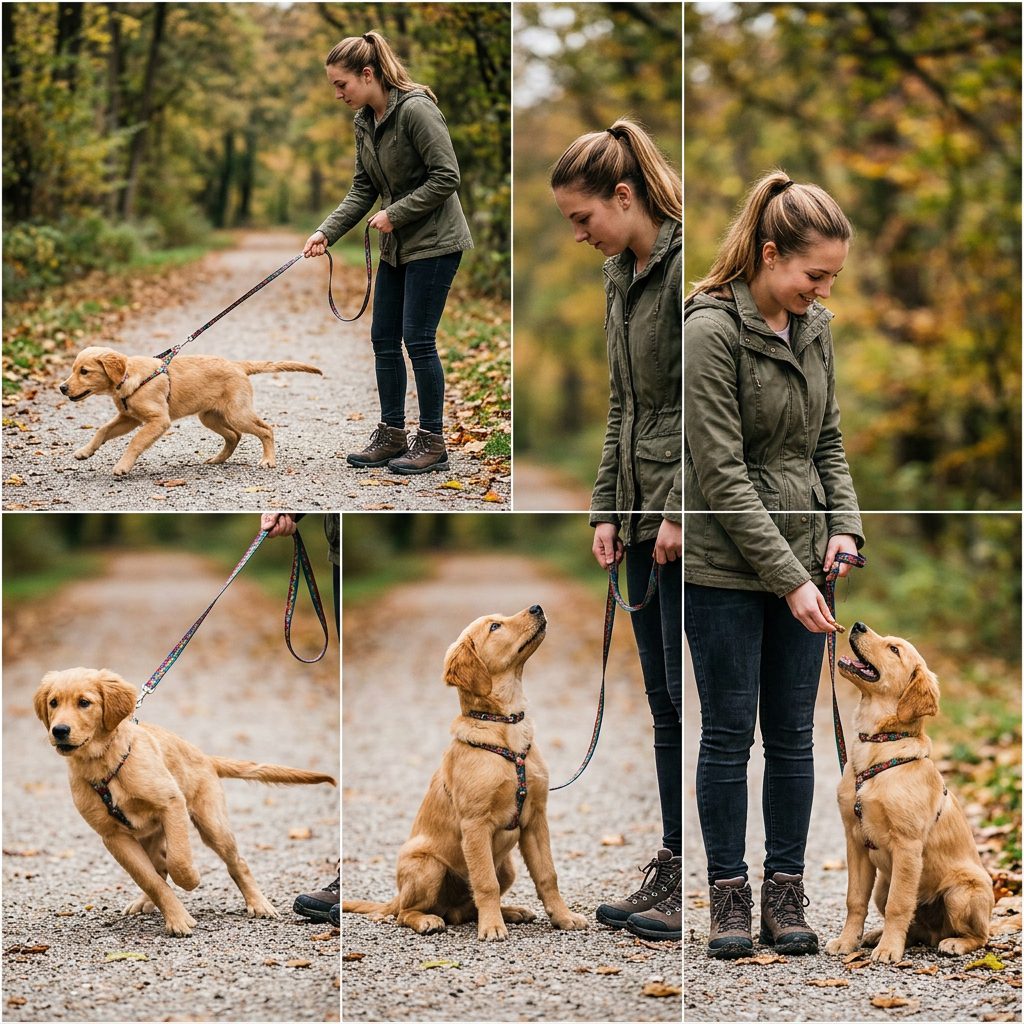
Now, let’s get into the nitty-gritty. Training a puppy to walk on a loose leash requires consistency, patience, and about a million tiny treats. We are going to use the ‘Penalty Yard’ and ‘Be a Tree’ methods combined with ‘The Reward Zone.’
Step 1: Define the Reward Zone
The ‘Reward Zone’ is the area right next to your leg (usually the left side, but pick one and stick to it). You want your puppy to believe that this specific spot is the most magical place on earth where treats fall from the sky.
Step 2: The ‘Be a Tree’ Technique
The moment the leash goes taut, you must stop immediately. Do not jerk the leash; just become an unmovable tree. Do not move forward until the puppy creates slack in the leash, either by stepping back or looking at you. As soon as the leash is loose, say ‘Yes!’ and move forward. This teaches them that a tight leash is a red light, and a loose leash is a green light.
Step 3: Penalty Yards
If your puppy is highly motivated and ‘Being a Tree’ isn’t working, try ‘Penalty Yards.’ When they pull, gently turn around and walk several steps in the opposite direction. This removes the reward (the thing they were pulling toward) and forces them to refocus on you.
Step 4: The Check-In
While walking, reward your puppy every single time they look up at you voluntarily. This ‘checking in’ behavior is the foundation of a focused walk. Use high-value treats like boiled chicken or small pieces of cheese to compete with the distractions of the great outdoors.
- Start Indoors: Practice in your hallway first with zero distractions.
- Keep Sessions Short: 5 to 10 minutes is plenty for a young puppy’s brain.
- Be Consistent: If you let them pull ‘just this once,’ you reset their progress.
Troubleshooting Common Leash Struggles
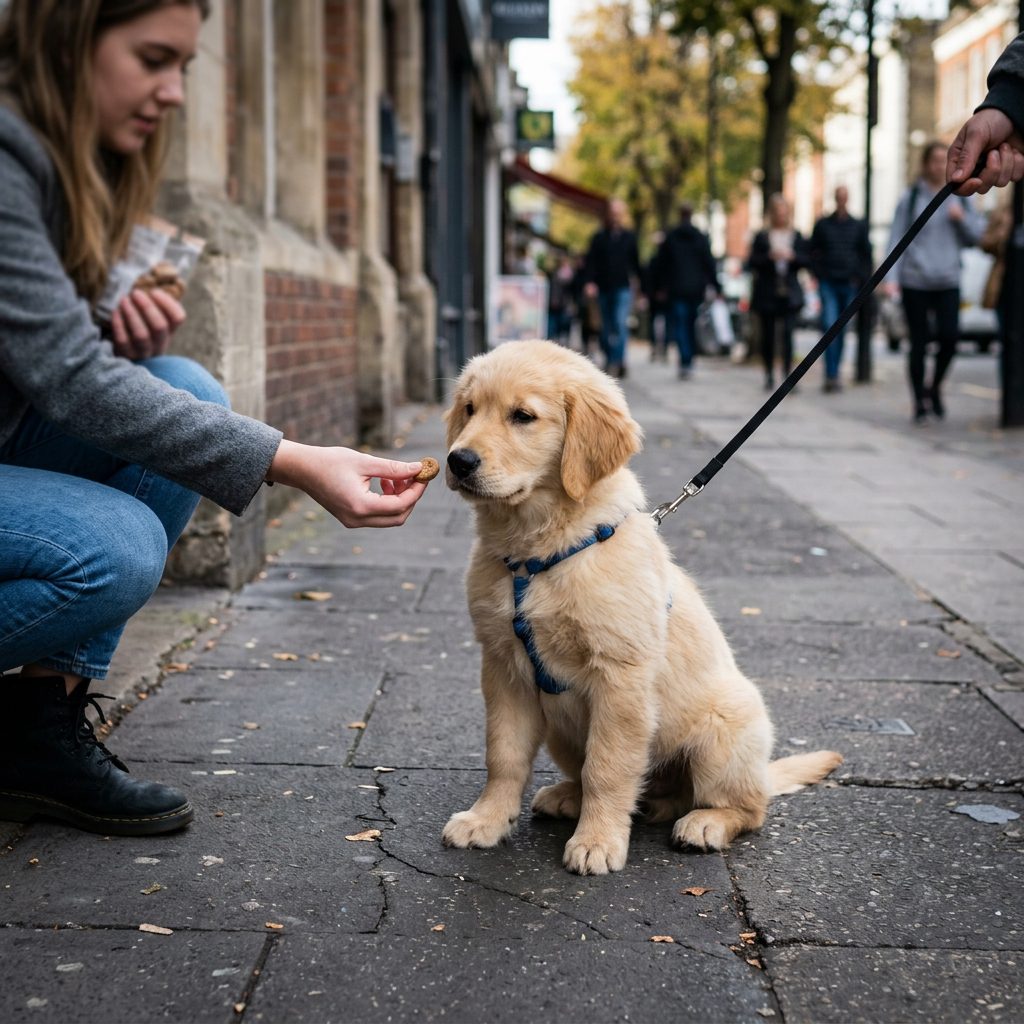
Even the best training plans hit snags. Let’s look at how to handle the most common issues savvy dog owners face when leash training.
The ‘Statue’ Puppy
Sometimes, instead of pulling forward, a puppy will simply sit down and refuse to move. This is often due to fear or being overwhelmed by the environment. Never drag a puppy who has shut down. Instead, crouch down, offer a high-value treat, and encourage them to take just one or two steps toward you. Build their confidence slowly.
The Leash Biter
If your puppy thinks the leash is a giant tug toy, they are likely over-excited or frustrated. Try using a chain leash for a short period (it’s not fun to bite) or redirect them to a designated ‘walking toy’ they can carry in their mouth while they trot along.
High-Value Distractions (The Squirrel Factor)
When a squirrel or another dog appears, your puppy’s brain might ‘exit the chat.’ In these moments, you need to increase your value. Use a ‘scatter feed’ (dropping several treats on the ground) to keep their nose down and focused on you until the distraction passes.
Pro Tip: If your puppy is constantly over-stimulated outside, try burning off some energy with a game of fetch or tug in the house *before* your walk. A tired puppy is a much more focused student.
The Long Game: Schedule and Consistency
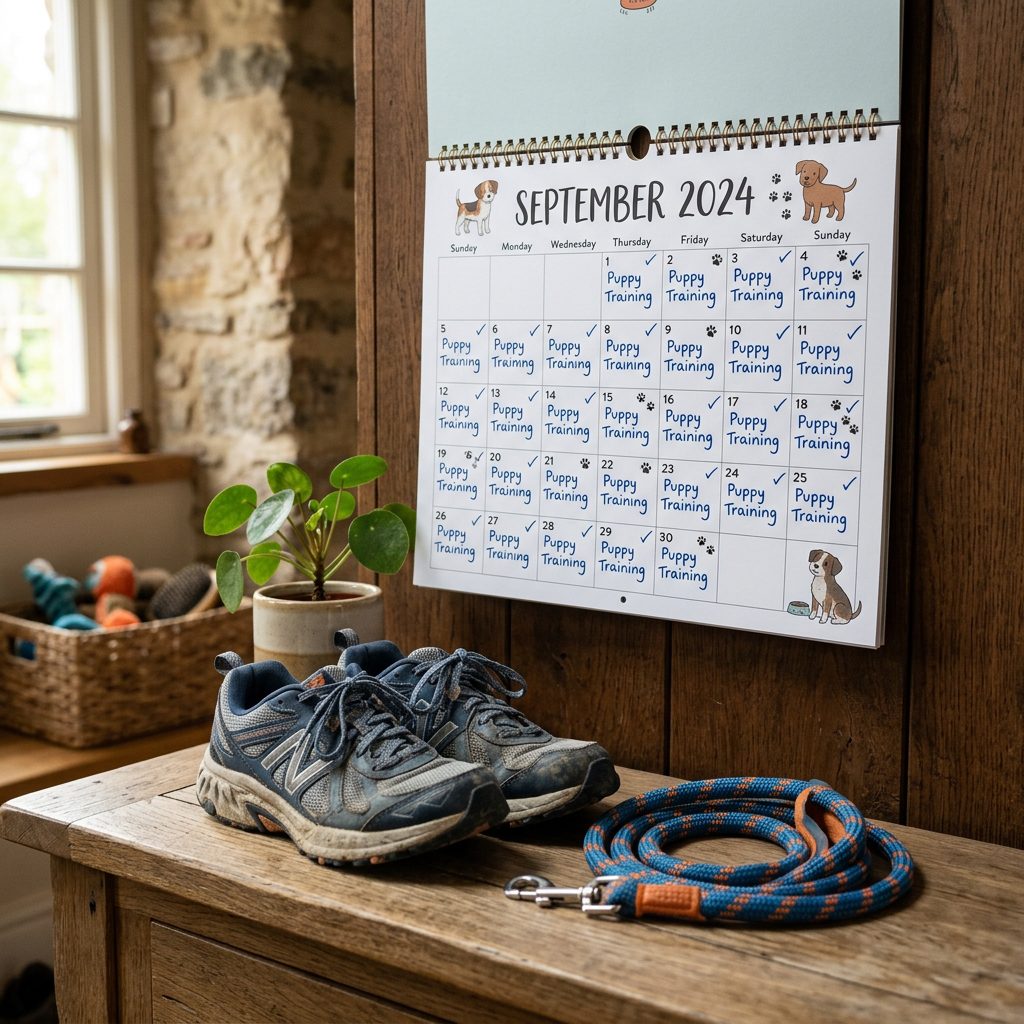
Leash training is not a ‘one and done’ event. It is a skill that takes months to perfect. Puppies go through developmental stages, including a ‘teenage’ phase where they might suddenly ‘forget’ everything you taught them. Stick to the plan!
| Training Phase | Focus Area | Daily Duration |
|---|---|---|
| Weeks 1-2 | Inside the house, no leash tension. | 3 sessions of 5 mins. |
| Weeks 3-4 | Backyard or quiet driveway. | 2 sessions of 10 mins. |
| Weeks 5-8 | Quiet neighborhood streets. | 2 sessions of 15 mins. |
| Ongoing | High-distraction areas (parks, stores). | Varies based on success. |
Remember, the goal is not just a dog that doesn’t pull; it’s a dog that enjoys engaging with you. If you find yourself getting frustrated, end the session on a high note with a simple ‘sit’ and try again later. Your relationship with your puppy is more important than the distance you cover on a walk.
Conclusion
Leash training a puppy who pulls like crazy is one of the most challenging—yet rewarding—parts of early dog ownership. By choosing the right gear, understanding the ‘why’ behind the pull, and consistently applying the ‘Be a Tree’ and ‘Reward Zone’ techniques, you are setting the foundation for a lifetime of happy, healthy walks. It won’t happen overnight. There will be days when it feels like you’ve taken two steps back. But one day soon, you’ll realize the leash is hanging in a perfect ‘U’ shape, your arm is relaxed, and your best friend is trotting happily beside you. Hang in there, keep those treats handy, and enjoy the journey of growing together. Happy walking!