Stop Walking On The Street! Why Your Backyard Is The Secret To Perfect Loose Leash Walking
The Great Leash Tug-of-War
We have all been there. You grab the leash, your dog starts spinning like a top, and you head out for a relaxing neighborhood stroll. Within thirty seconds, your arm is being pulled out of its socket, your dog is wheezing like a steam engine, and you are scanning the horizon for any squirrel, cat, or neighbor that might turn this ‘walk’ into an Olympic weightlifting event. If you have ever felt like you are just an inconvenient anchor at the end of a rope, you are not alone. Most savvy dog owners believe that the only way to train a dog to walk on a leash is, well, to go for a walk. But here is the professional secret: the street is actually the worst place to teach your dog how to walk on a slack lead.
Why? Because the street is a sensory explosion. It is the canine equivalent of trying to teach a toddler algebra in the middle of a theme park. There are smells of other dogs, the roar of car engines, the visual stimulation of moving objects, and the unpredictable nature of the environment. When your dog is in that high-state of arousal, their brain literally shuts down the learning centers to focus on survival and exploration. To truly master the loose leash walk, we need to strip away the noise. We need a controlled, low-stakes environment where your dog can actually hear you. That place is your backyard. In this guide, we are going to dive deep into why your backyard is your secret weapon and provide a step-by-step protocol to transform your walks from a chaotic struggle into a harmonious partnership.
The Street Trap: Why Your Dog Can’t Learn Out There
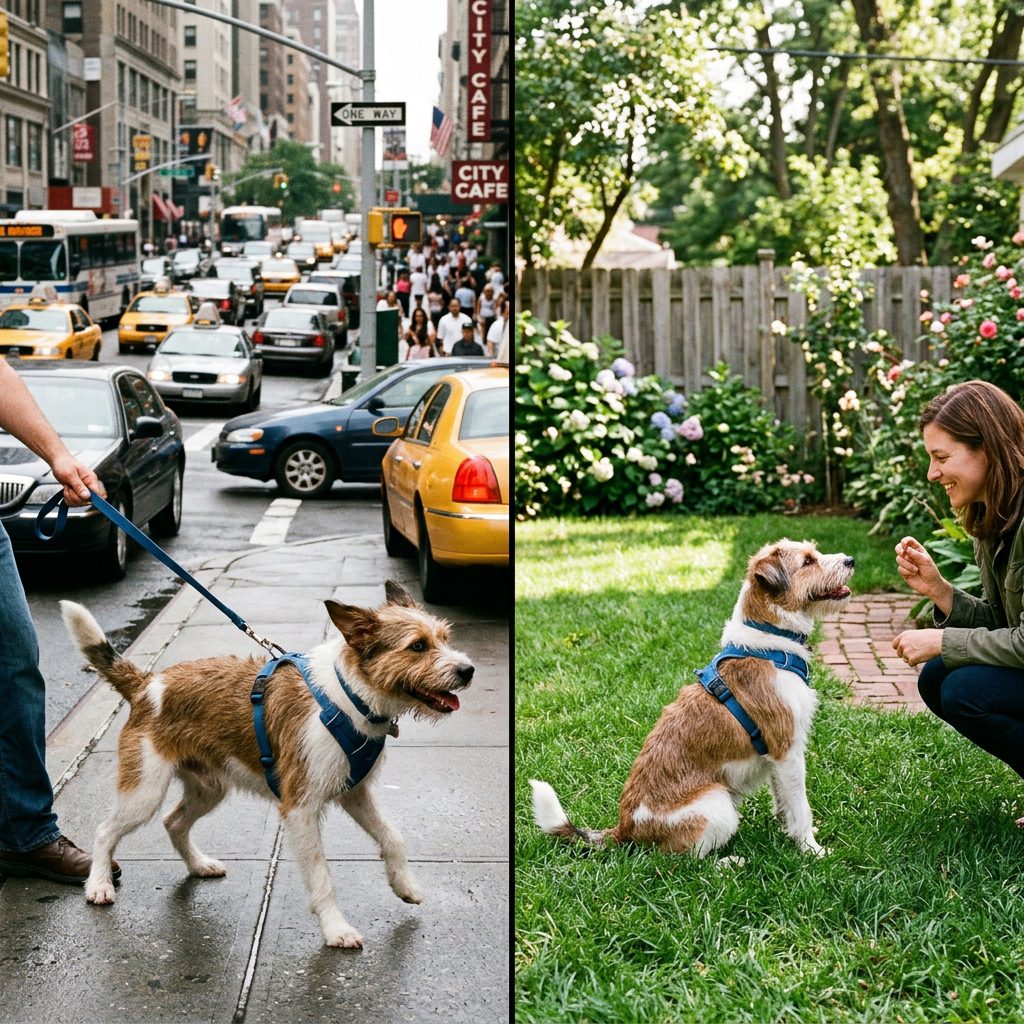
When you step out of your front door, your dog’s nervous system undergoes a massive shift. This is known as reaching a ‘threshold.’ For many dogs, the very act of crossing the threshold of the front door puts them at an 8 or 9 out of 10 on the excitement scale. In this state, the brain is flooded with cortisol and adrenaline. Expecting a dog to focus on the position of their neck relative to your left leg while their brain is screaming about the neighbor’s trash cans is simply unfair.
The Concept of Trigger Stacking
Dogs experience something trainers call trigger stacking. This is the cumulative effect of various stressors or excitements. A car goes by (trigger one), a bird chirps (trigger two), a breeze carries the scent of a distant dog (trigger three). By the time you ask for a ‘Heel,’ your dog’s cup is already full. There is no room left for your instructions. In the backyard, however, the environment is ‘stale.’ Your dog knows every blade of grass and every fence post. Because the environment is boring, you become the most interesting thing in it. This shift in focus is the foundation of all successful loose leash training.
Essential Gear: Setting the Stage for Success
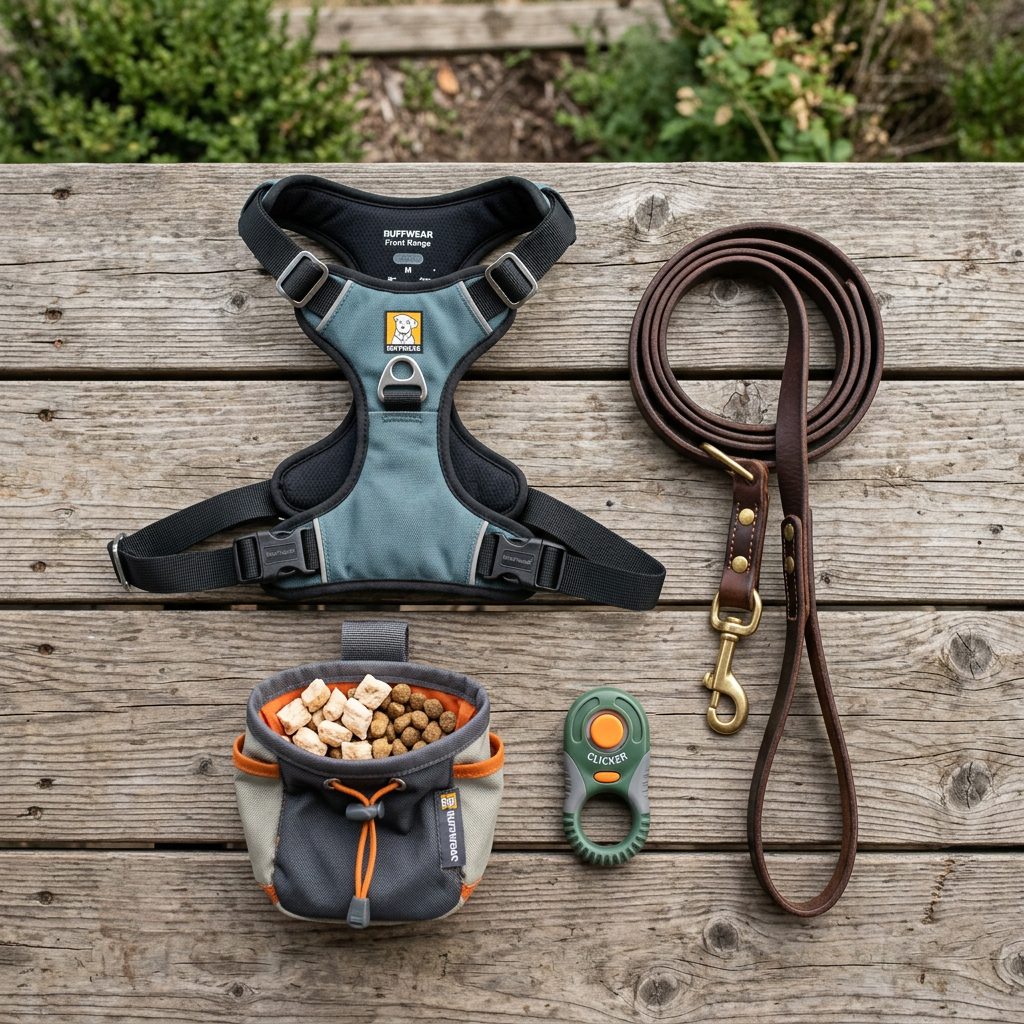
Before we step into our ‘Backyard Lab,’ we need the right equipment. Using the wrong gear can inadvertently reinforce pulling or cause physical discomfort that distracts from the lesson. Savvy owners know that training is 20% gear and 80% technique, but that 20% still matters immensely.
The Loose Leash Toolkit
We want to avoid equipment that relies on pain or ‘correction.’ Instead, we want tools that facilitate communication. A standard 6-foot fixed leash (leather or biothane is best for your hands) is the gold standard. Avoid retractable leashes at all costs during training; they teach the dog that tension on the neck is the only way to get more freedom.
| Tool Type | Best For | Why It Works in the Backyard |
|---|---|---|
| Front-Clip Harness | Strong Pullers | Redirects the dog’s momentum back toward the owner without neck pressure. |
| 6-Foot Fixed Leash | All Dogs | Provides a consistent boundary and allows for a clear ‘slack’ signal. |
| High-Value Treats | Motivation | Small, smelly rewards (like liver or cheese) keep the dog’s nose off the grass and on you. |
| Long Line (15-20ft) | Advanced Work | Allows for practicing ‘check-ins’ from a distance once basics are mastered. |
Expert Tip: Ensure your harness is Y-shaped and does not restrict the dog’s shoulder movement. If a dog’s gait is restricted, they are more likely to become frustrated and pull to relieve the tension.
The 5-Step Backyard Mastery Protocol
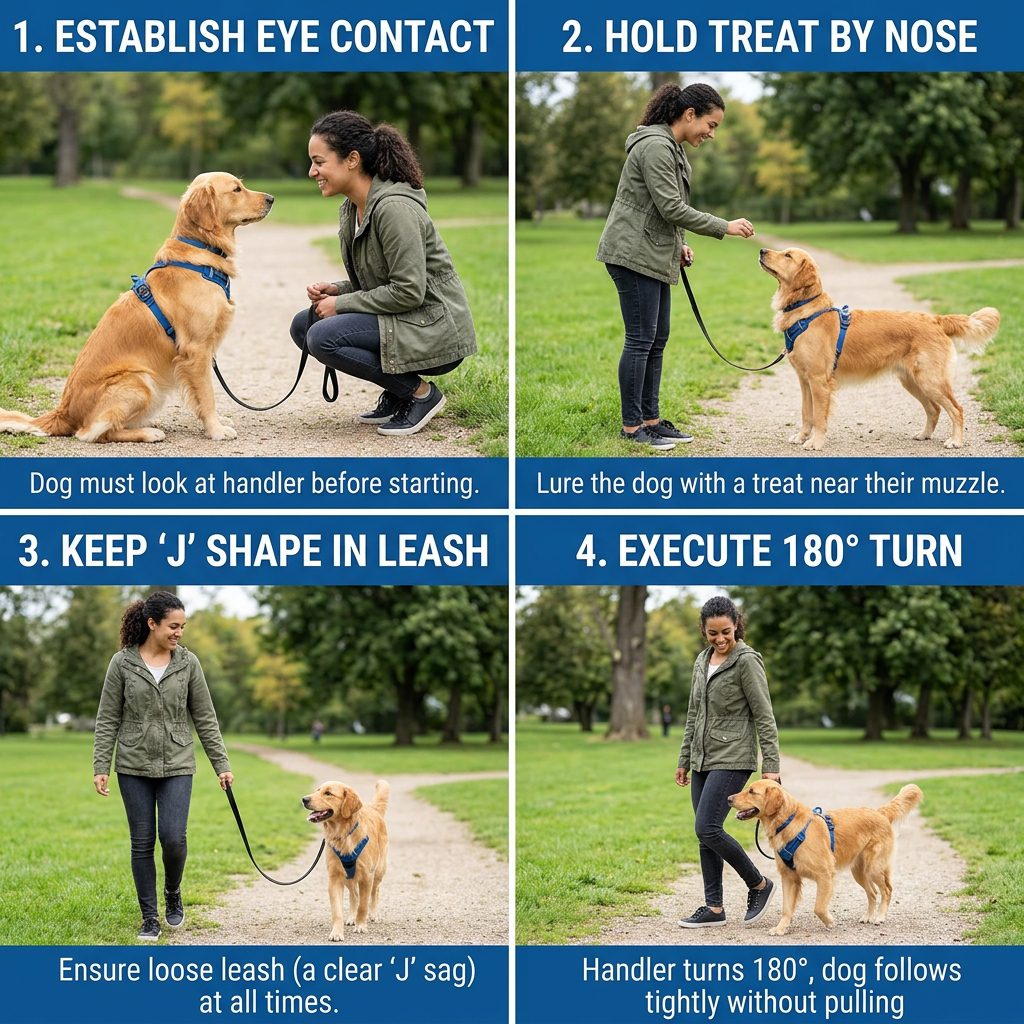
Now that we have our gear, it is time to start the work. Remember, our goal in the backyard is to build muscle memory. We want the dog to find the ‘Sweet Spot’ (the area by your side) so reinforcing that they don’t even think about it when you eventually transition to the street.
Step 1: The ‘Look at Me’ Foundation
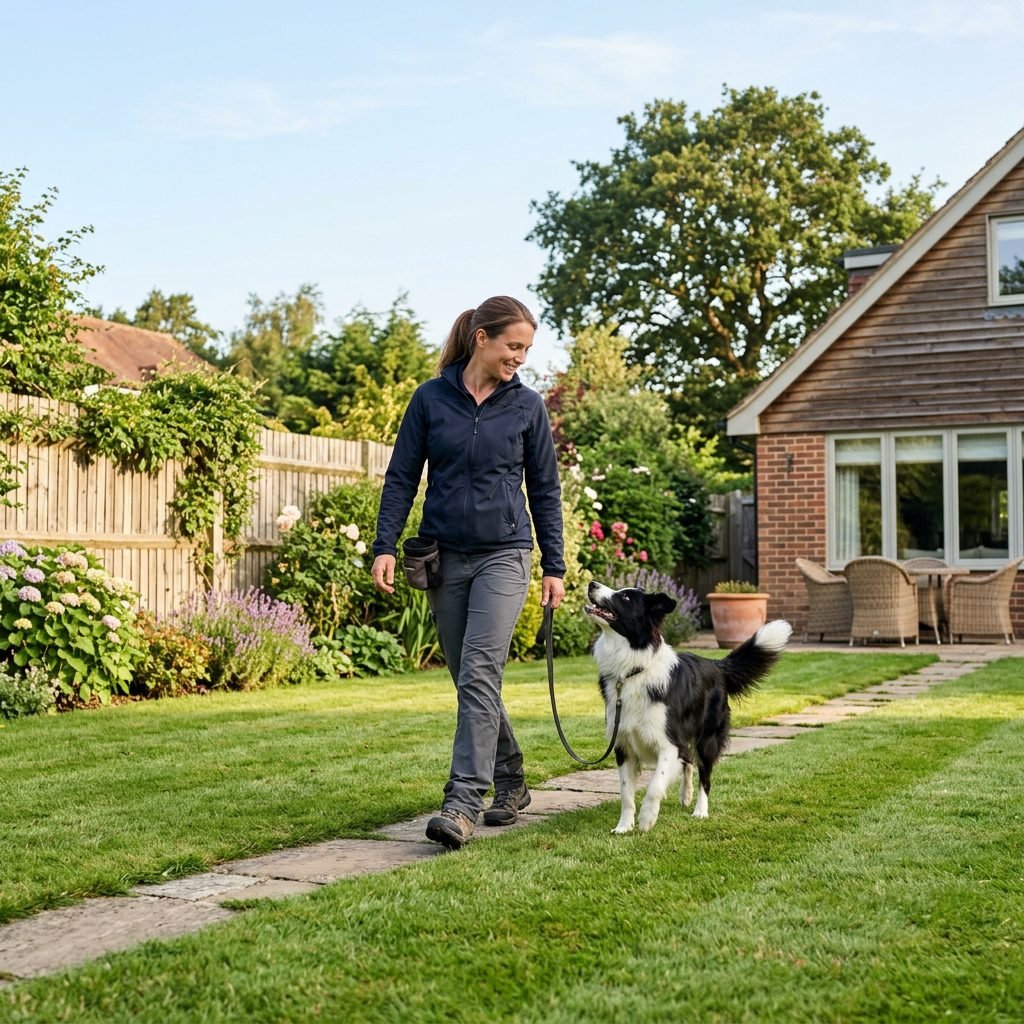
Before moving an inch, stand in the middle of your yard with your dog on a leash. Wait. Do not say anything. Eventually, your dog will get bored of looking at the fence and glance at you. The moment they make eye contact, Mark (use a clicker or a ‘Yes!’) and Reward. We are teaching the dog that checking in with you is the most profitable thing they can do.
Step 2: The Magnet Hand
Place a handful of treats in the hand closest to your dog. Start walking slowly. Keep your hand at your side and let the dog nibble or follow the scent of the treats. We are lure-walking to show them exactly where the ‘Sweet Spot’ is. After a few paces, stop and reward. Repeat this until the dog is glued to your side in anticipation.
Step 3: The J-Loop Mechanics
Now, take the treats out of your hand and put them in a pouch. Walk naturally. Your goal is to keep the leash in a ‘J’ shape. If the leash tightens even slightly, stop immediately. Do not yank back. Just become a statue. The moment the dog looks back to see why you stopped (which creates slack), mark and reward in the ‘Sweet Spot’ position.
Step 4: The About-Turn Game
To keep your dog engaged, don’t just walk in straight lines. The backyard is perfect for patterns. Walk in circles, zig-zags, and most importantly, do 180-degree ‘About-Turns.’ If your dog starts to get ahead of you, simply turn and walk the other way. This teaches the dog that they are responsible for keeping track of you, not the other way around.
Step 5: Adding ‘Controlled’ Distractions
Once your dog is a backyard pro, start adding ‘fake’ distractions. Toss a toy five feet away. If they pull toward it, stop. If they stay by your side, they get a high-value treat and eventually a ‘release’ command to go get the toy. This is how we build impulse control in a safe environment.
Troubleshooting Common Backyard Blunders
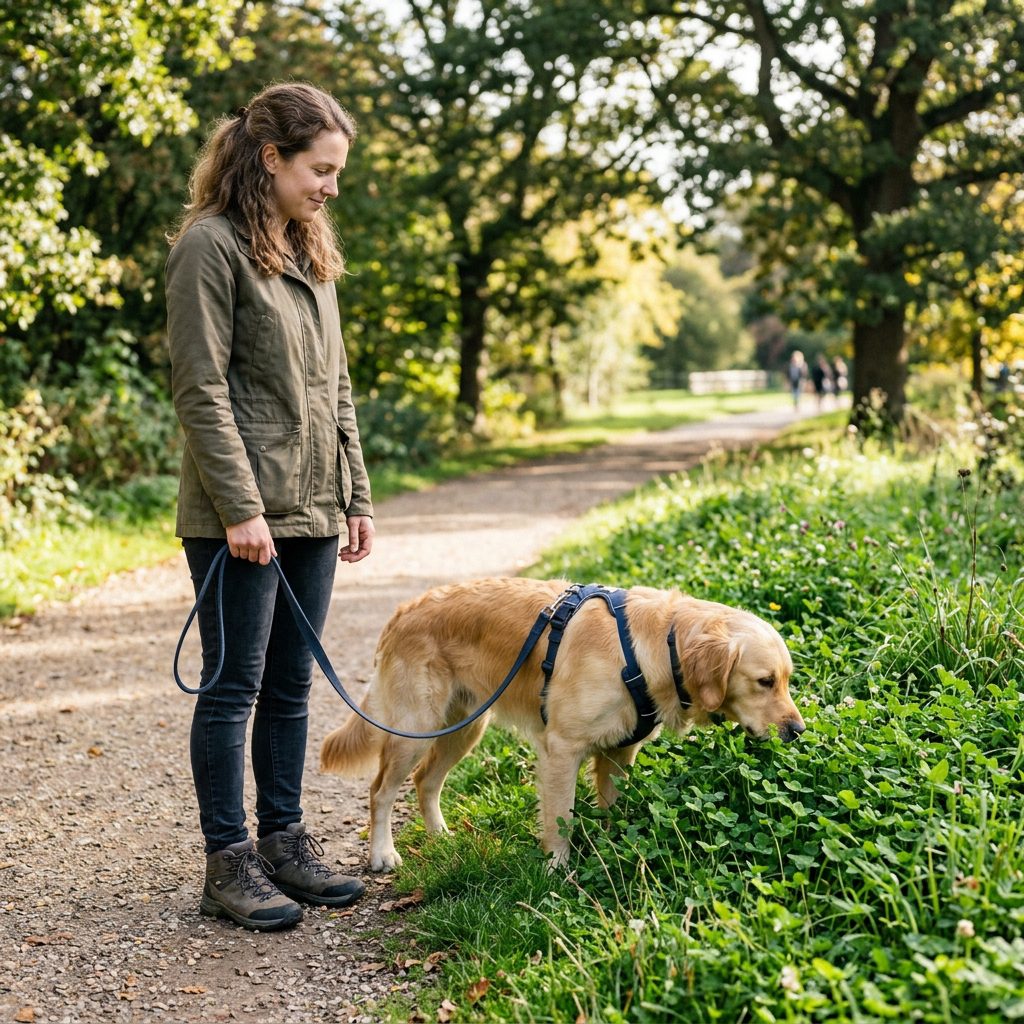
Even in the backyard, things won’t always be perfect. Dogs are sentient beings with their own agendas. Here is how to handle the most common roadblocks savvy owners encounter during this process.
The ‘Sniff-Fest’
Your dog’s nose is their primary way of experiencing the world. If they are constantly pulling to sniff a patch of grass, don’t fight it—use it!
The ‘Premack Principle’ suggests that a high-probability behavior (sniffing) can reinforce a low-probability behavior (walking nicely).
Tell your dog ‘Let’s Walk,’ and after five steps of good behavior, give them a release cue like ‘Go Sniff’ as their reward. This makes the environment work for you rather than against you.
| The Problem | The Likely Cause | The Solution |
|---|---|---|
| Dog won’t take treats | Arousal is too high | Move further away from the ‘exciting’ thing (even in the yard). |
| Dog sits and refuses to move | Confusion or fatigue | Shorten sessions to 5 minutes; use a more exciting lure. |
| Losing focus after 2 minutes | Mental exhaustion | Training is hard! End on a high note and play a game of fetch. |
Graduation Day: Transitioning to the Real World
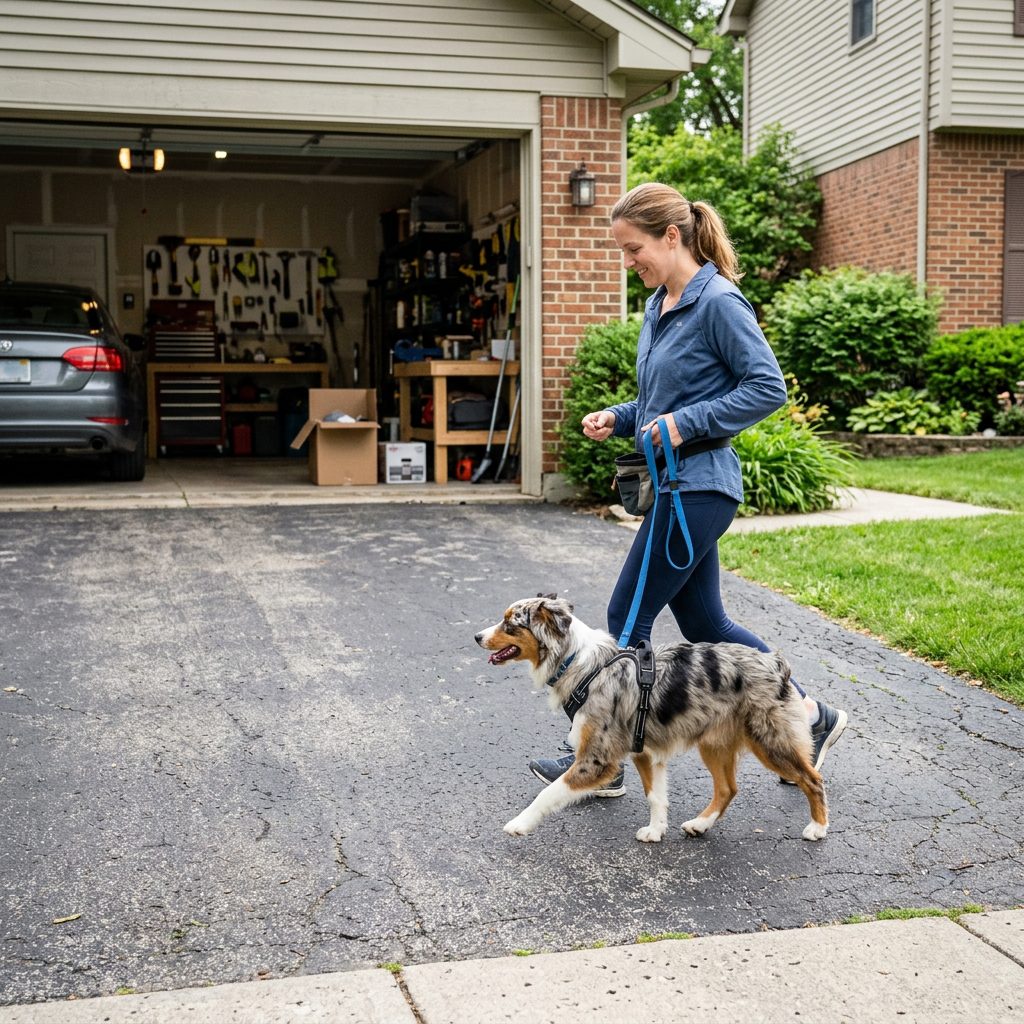
The biggest mistake owners make is going straight from the backyard to a 30-minute walk around the block. This is too big of a jump! Think of it as a ladder. You have mastered the bottom rung (the backyard). Now, we need to climb slowly.
The Driveway Test
The first step outside the ‘Safe Zone’ is your driveway or the area immediately in front of your house. It is familiar territory but has a slightly higher distraction level. Practice your ‘About-Turns’ and ‘Look at Me’ commands here for several days. If the dog can’t keep a loose leash in the driveway, they certainly won’t do it three blocks away.
The ‘Back-and-Forth’ Method
When you finally hit the sidewalk, don’t try to get somewhere. Your goal is not distance; it is quality. Walk ten feet down the sidewalk. If the leash stays loose, turn around and walk back to your house. Then walk twelve feet. By keeping the ‘destination’ close to home, you keep the dog’s anxiety and excitement levels manageable. Gradually increase the distance as the dog proves they can maintain their focus.
The Psychology of the Slack Leash
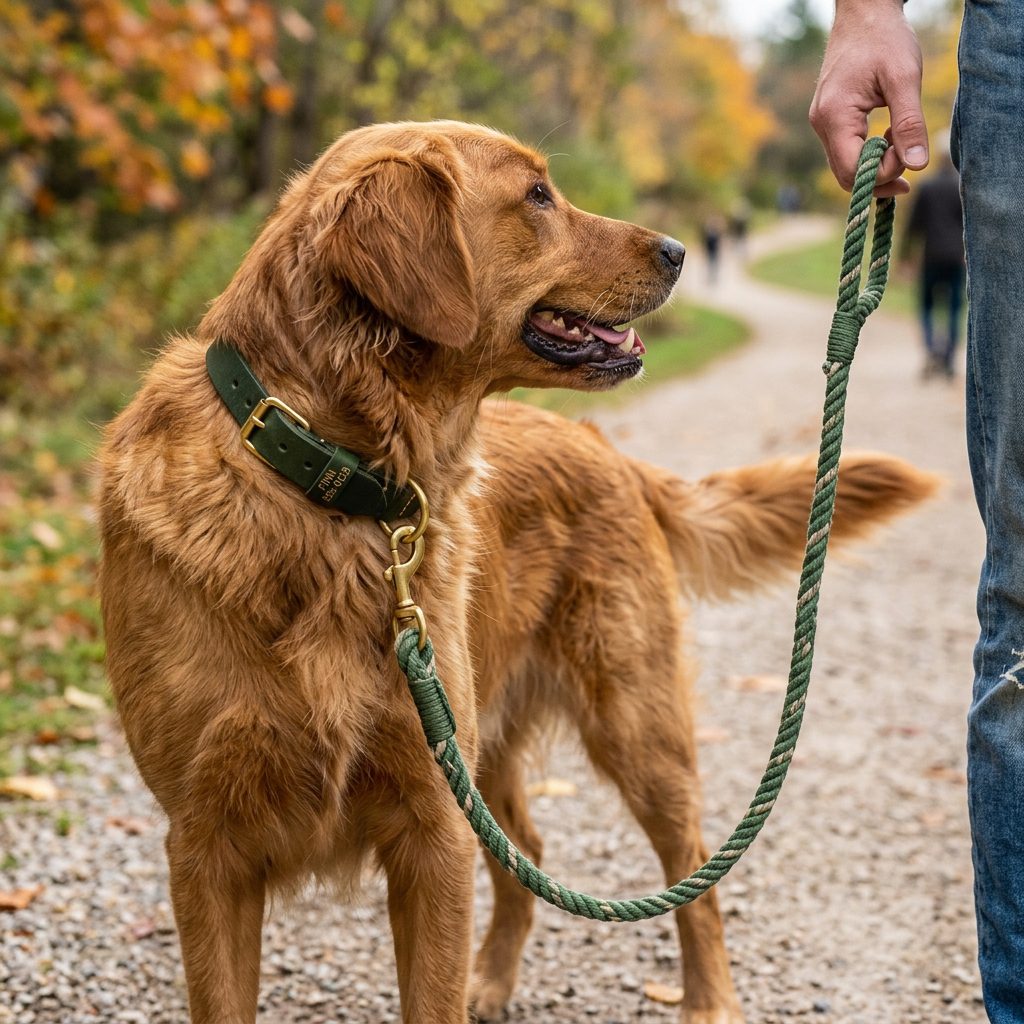
Why does this backyard method work so well? It comes down to how dogs perceive pressure. Dogs have an opposition reflex. If you pull them, their natural instinct is to pull back. By training in the backyard, we remove the constant ‘tension’ of the street, allowing the dog to learn what a loose leash actually feels like. A dog that has only ever known a tight leash literally doesn’t understand that the absence of pressure is the goal.
Furthermore, this method builds a deep bond of trust. When you train in the backyard, you aren’t a ‘handler’ barking orders; you are a partner in a fun game. That engagement carries over to every other aspect of your relationship. You’ll find that your dog starts looking to you for direction in the house, at the vet, and eventually, on those long walks you’ve been dreaming of.
Conclusion
Your Journey to the Perfect Walk Starts at Home
Loose leash walking is not a ‘command’ like sit or stay; it is a complex state of mind. It requires focus, impulse control, and a desire to be near the handler. By starting in your backyard, you are giving your dog the best possible chance to succeed. You are providing a classroom without distractions, a teacher (you!) who is calm and prepared, and a reward system that makes sense to the canine brain.
Don’t be discouraged if progress feels slow. Every minute you spend in the backyard reinforcing that ‘Sweet Spot’ is a deposit into your dog’s training bank account. Eventually, those deposits will grow into a lifetime of stress-free, enjoyable walks. So, for the next week, leave the street behind. Head out to your backyard, grab some high-value treats, and start building the walk of your dreams. Happy training!