Ripped Up Rugs? How to Stop Your Puppy Chewing Your Carpet Corners Instantly
You walk into the living room, coffee in hand, only to find your favorite Persian rug looking like it has been through a paper shredder. It is a classic puppy owner rite of passage, but that does not make it any less frustrating. Carpet chewing, specifically targeting those tempting, vulnerable corners, is a common behavioral hurdle that can leave your home looking tattered and your stress levels skyrocketing. But why do they do it? As a canine specialist, I can tell you that your puppy is not trying to be spiteful. To a young dog, your carpet is a multi-sensory playground. It has a unique texture, a fascinating scent, and it provides the perfect resistance for those itchy, teething gums. In this comprehensive guide, we are going to dive deep into the psychology of the nibble and provide you with a toolkit of instant fixes and long-term solutions. We will explore everything from the biological drivers of chewing to the most effective deterrents on the market today. By the end of this article, you will have a clear, actionable plan to protect your flooring and guide your puppy toward more appropriate chewing habits. We will cover the ‘why,’ the ‘how,’ and the ‘what now,’ ensuring that your rugs stay intact and your relationship with your new best friend remains harmonious. Let us get started on saving your decor and sanity.
The Psychology of the Nibble: Why Puppies Target Your Rugs
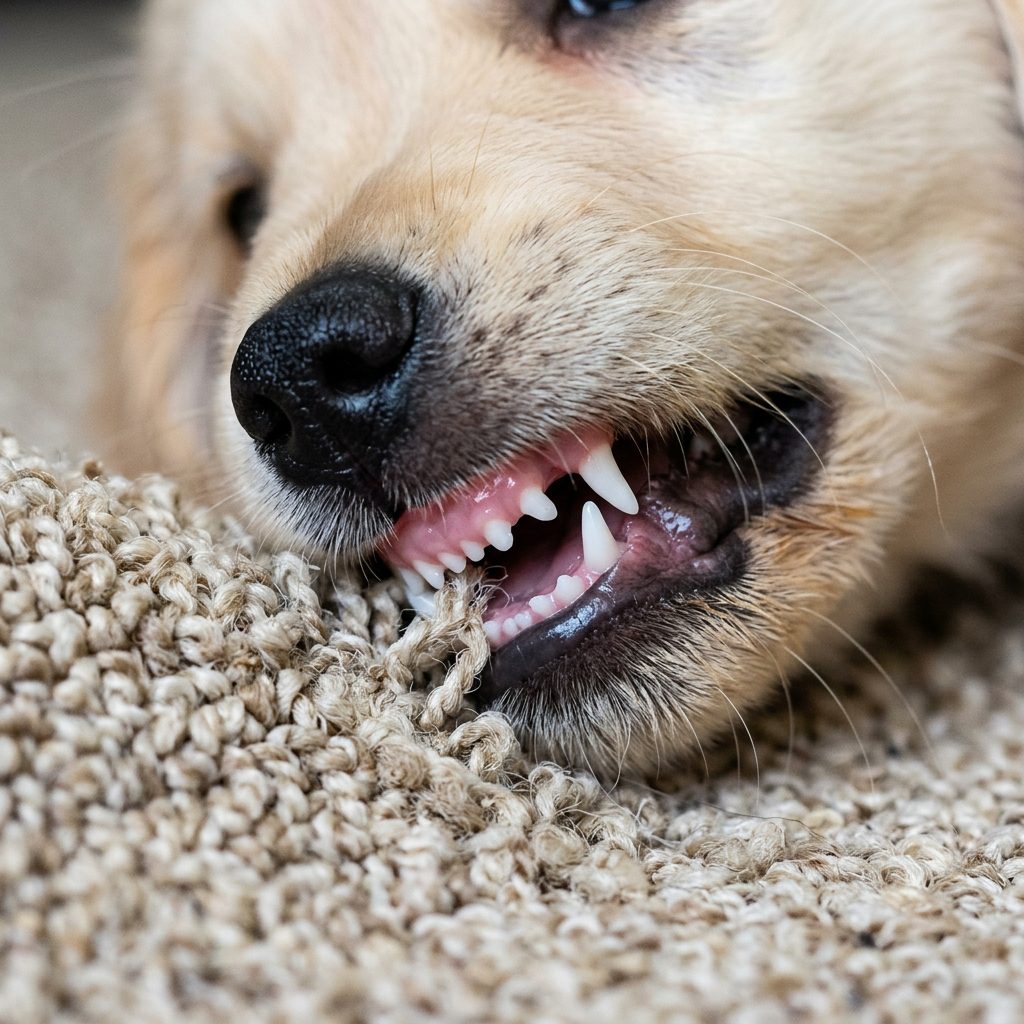
Before we can stop the behavior, we must understand the ‘why’ behind it. For a puppy, the world is explored primarily through their mouth. This is known as oral exploration. Think of their mouth as their hands; they touch, taste, and test everything to understand its properties. However, carpet chewing usually stems from three main areas: teething, boredom, and instinctual grooming behaviors.
The Teething Phase
Between the ages of 3 and 6 months, puppies go through a significant physiological shift. They lose their 28 needle-sharp deciduous (baby) teeth and make room for 42 permanent adult teeth. This process is physically uncomfortable. The pressure of chewing on something fibrous like carpet can help soothe the inflammation in their gums. The corners of rugs are particularly attractive because they are easy to grip and provide a firm surface to gnaw against.
Boredom and Mental Under-Stimulation
A puppy with nothing to do is a destructive puppy. If your dog is not getting enough mental or physical exercise, they will find their own ‘job.’ Often, that job is ‘Interior Decorator,’ which involves dismantling your carpet fiber by fiber. The repetitive motion of chewing can also be self-soothing, releasing endorphins that help a bored or slightly anxious puppy feel better. Understanding that your puppy might just be looking for a way to burn off steam is the first step toward a solution.
The Allure of Scent and Texture
Savvy owners should also consider the carpet itself. Many carpets are made with wool or synthetic fibers that trap interesting smells—spilled food, outdoor scents from your shoes, or even the scent of previous pets. Furthermore, some carpet backings use adhesives that contain volatile organic compounds (VOCs) which, believe it or not, some puppies find strangely enticing. The loop pile of certain rugs provides a satisfying ‘snap’ when pulled, which mimics the feeling of plucking feathers or fur in the wild, tapping into deep-seated predatory instincts.
The Immediate Fix: Deterrents and Distractions
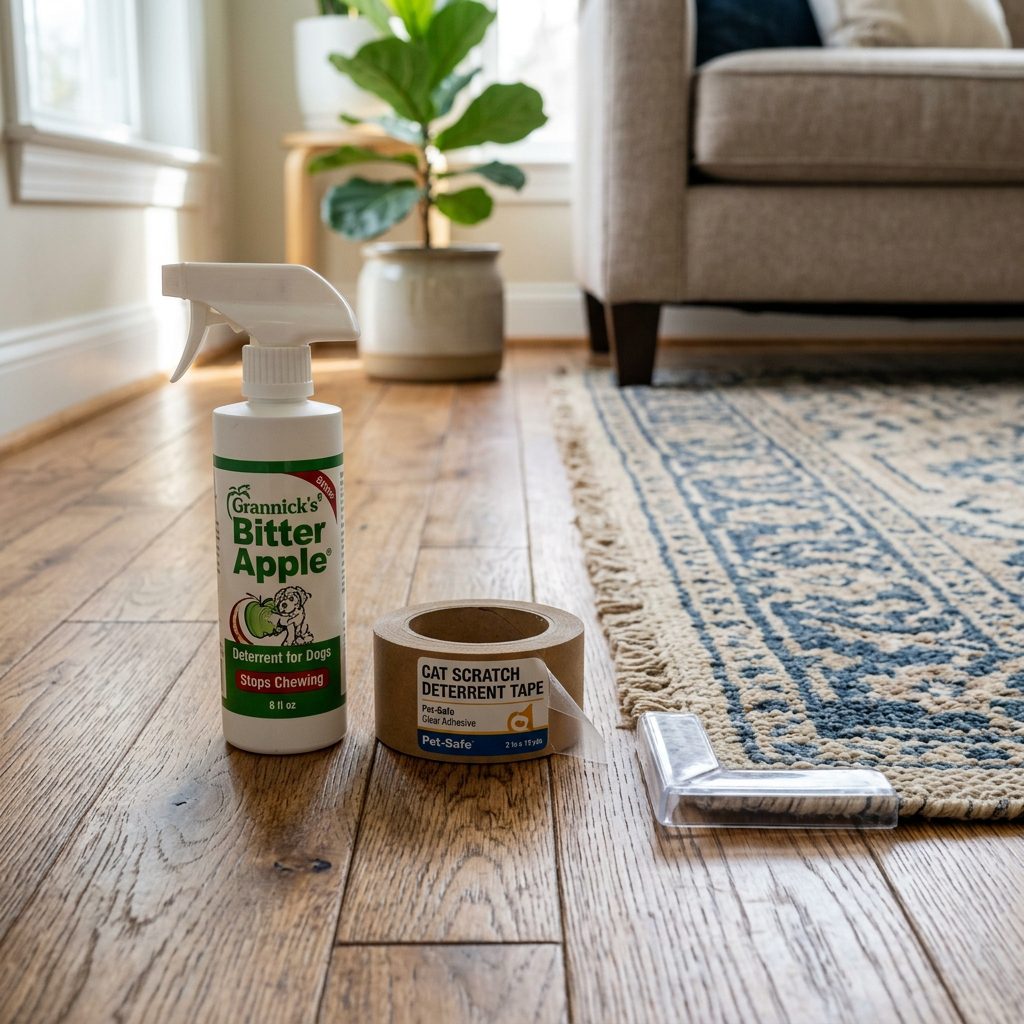
If your rug is currently under attack, you need solutions that work instantly. While training takes time, management and deterrents can provide immediate relief for your flooring. The goal here is to make the carpet corner the least attractive thing in the room while simultaneously providing a better alternative.
Using Taste Deterrents
Taste deterrents are a staple in any puppy owner’s cabinet. These sprays typically use bitter agents like bitter apple, black cherry, or even lemon to create a flavor profile that dogs find repulsive. Because dogs have a highly sensitive sense of taste, one lick of a treated rug corner is usually enough to make them think twice. However, consistency is key. These sprays evaporate and lose their potency over time.
| Deterrent Type | How it Works | Best Use Case | Reapplication Frequency |
|---|---|---|---|
| Bitter Apple Spray | Extreme bitterness triggers an immediate ‘yuck’ response. | General carpet edges and furniture legs. | Every 12-24 hours. |
| Double-Sided Pet Tape | Creates a tacky, sticky sensation that dogs dislike on their paws/snout. | Specific rug corners that are frequently targeted. | When the tape loses its stickiness. |
| Vinegar/Water Solution | Natural acidity and strong scent act as a mild deterrent. | Owners looking for a DIY, non-toxic home remedy. | Every 4-6 hours (volatile). |
| Clear Plastic Guards | Physical barrier that prevents teeth from reaching the fibers. | High-value heirloom rugs or permanent problem spots. | Permanent until removed. |
The ‘Search and Replace’ Strategy
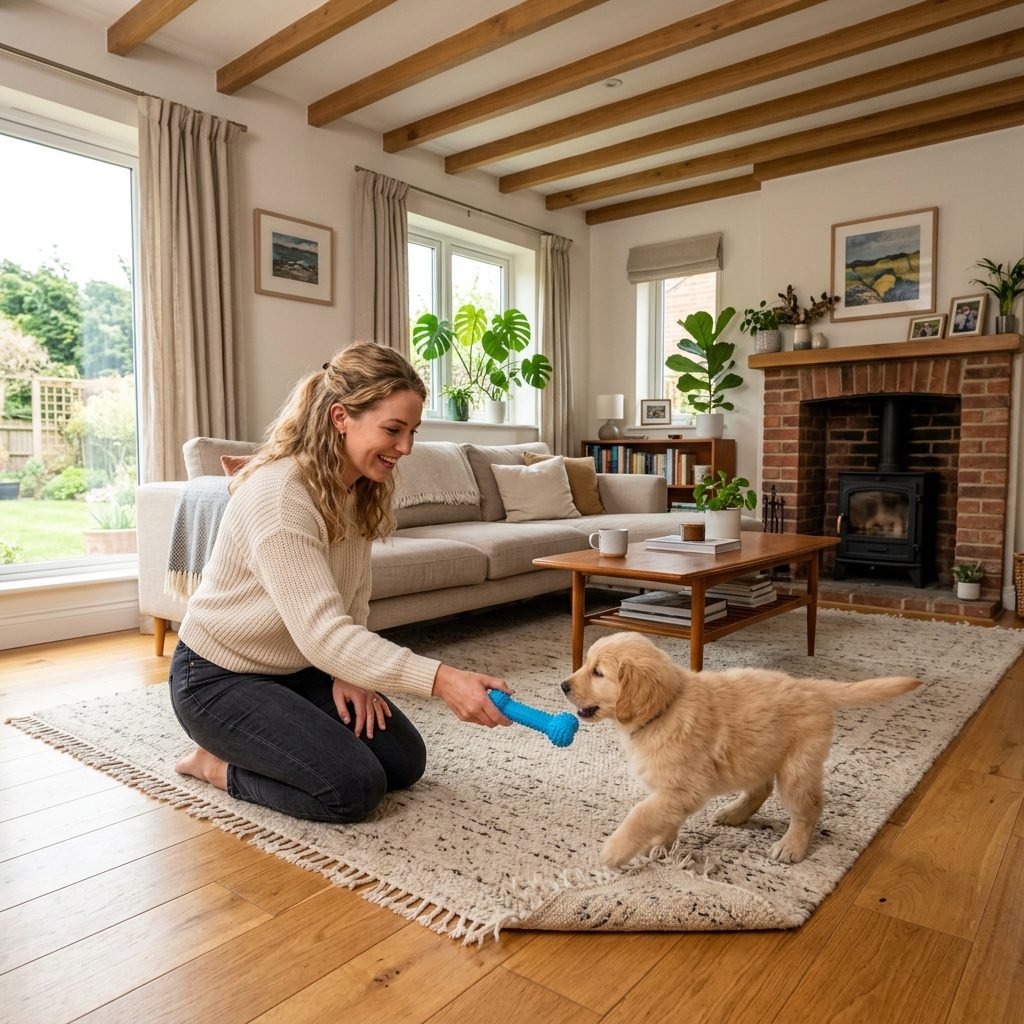
Deterrents only work if you provide an outlet for the chewing urge. This is the ‘Search and Replace’ method. Every time you see your puppy moving toward the carpet, you must provide a toy that offers a similar or better sensory experience. If they like the fibrous feel of the rug, try a rope toy. If they like the hardness of the floor underneath, try a nylon bone. By instantly swapping the ‘illegal’ item for a ‘legal’ one, you are teaching them what is appropriate without relying solely on punishment.
The Step-by-Step Training Protocol: Teaching ‘Leave It’
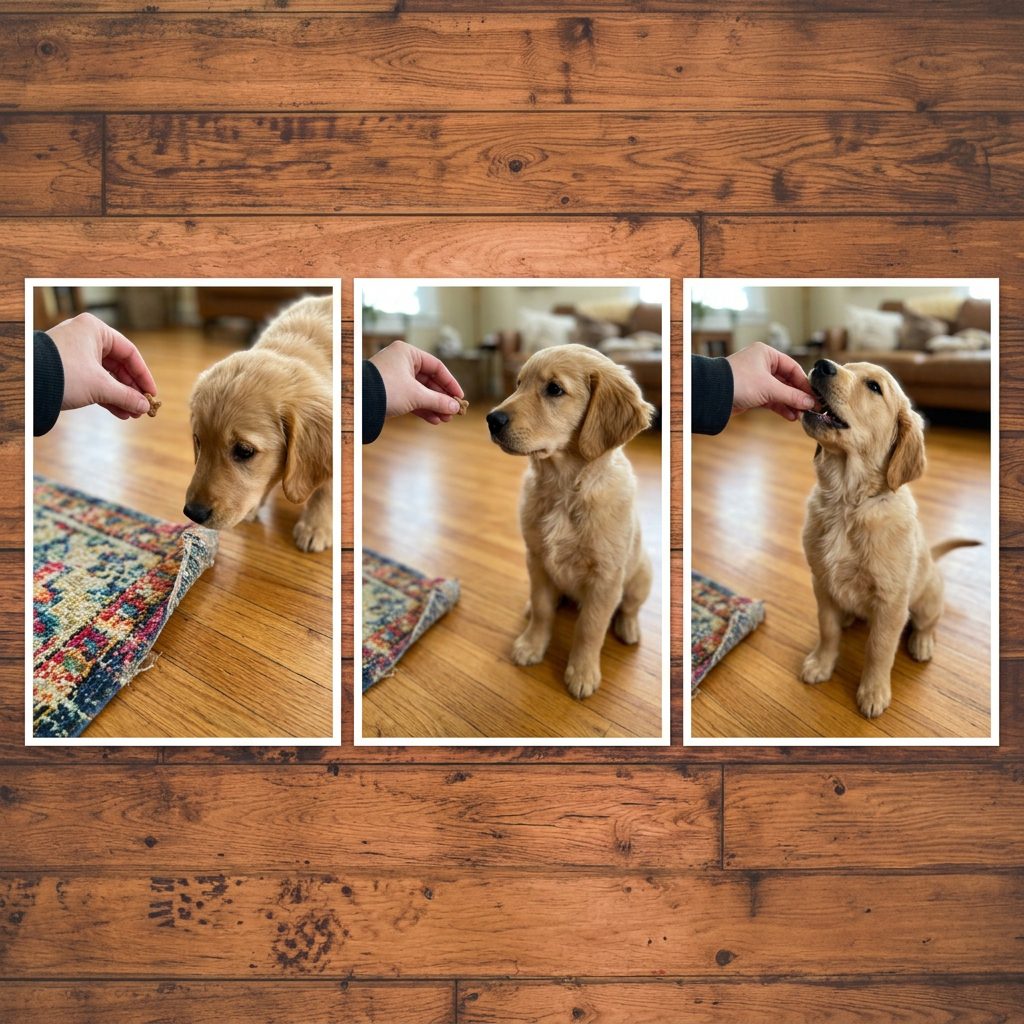
To stop carpet chewing forever, you must move beyond deterrents and into the realm of active training. The ‘Leave It’ command is the most powerful tool in your arsenal. It teaches your puppy to voluntarily disengage from something tempting in exchange for something better. Here is how to master it in the context of your rugs.
Step 1: The Basic Concept
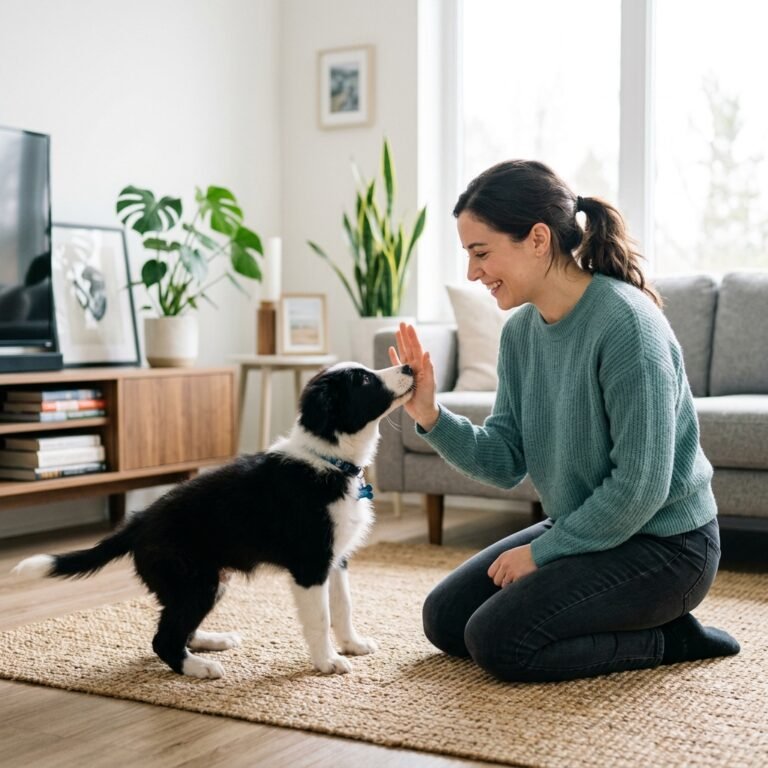
Start with a treat in your closed fist. Let your puppy sniff and lick your hand. The moment they stop trying to get the treat and pull their head back, say ‘Yes!’ or click your trainer, and give them a different treat from your other hand. You are teaching them that ignoring the ‘forbidden’ item leads to a reward.
Step 2: Introducing the Carpet Corner
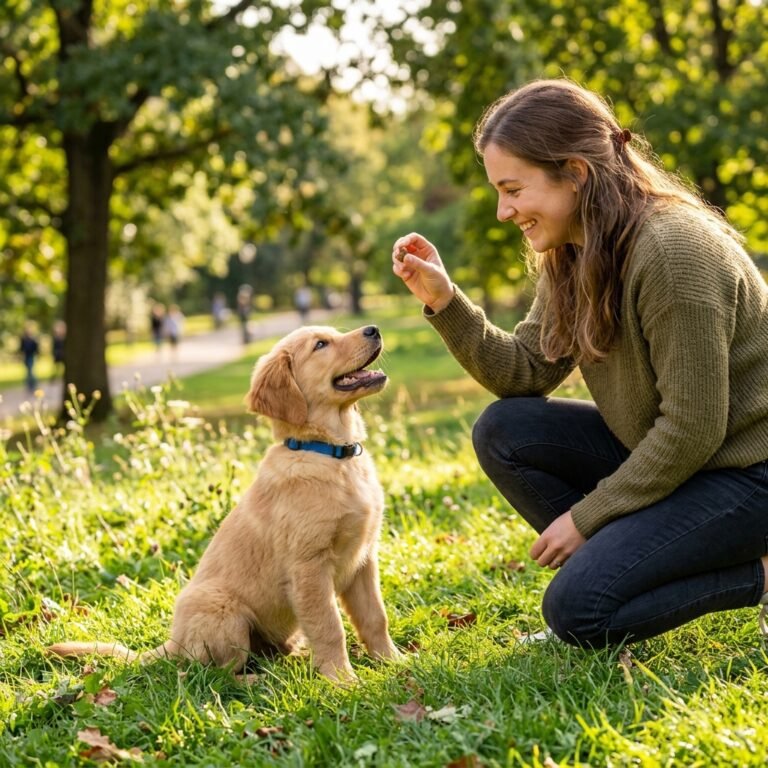
Once they understand the concept with your hand, move the training to the rug. Sit near the targeted corner. When your puppy looks at the corner, say ‘Leave It’ in a calm, firm voice. If they look at you instead of the rug, reward them immediately with a high-value treat like a small piece of boiled chicken or a specialized training nibble. You are creating a positive association with ignoring the carpet.
Step 3: Generalization and Distance
Puppies are not great at generalizing behaviors. Just because they ‘Leave It’ when you are sitting right there doesn’t mean they will do it when you are across the room. Gradually increase your distance. Use a long training lead if necessary to prevent them from reaching the rug if they fail the command. Consistency is the hallmark of a savvy owner. If you allow them to chew the rug ‘just once’ because you are too tired to get up, you are reinforcing the behavior through intermittent reinforcement, which actually makes the habit harder to break.
Step 4: Differential Reinforcement of Incompatible Behavior (DRI)
This is a fancy trainer term for a simple concept: your puppy cannot chew the rug if they are busy doing something else that is more rewarding. Encourage behaviors that are incompatible with chewing, such as ‘Go to your mat’ or ‘Find your ball.’ When the puppy chooses their bed over the rug corner, shower them with praise and rewards. You are effectively rewriting their brain’s ‘to-do’ list.
Environment Management: Puppy-Proofing Your Layout
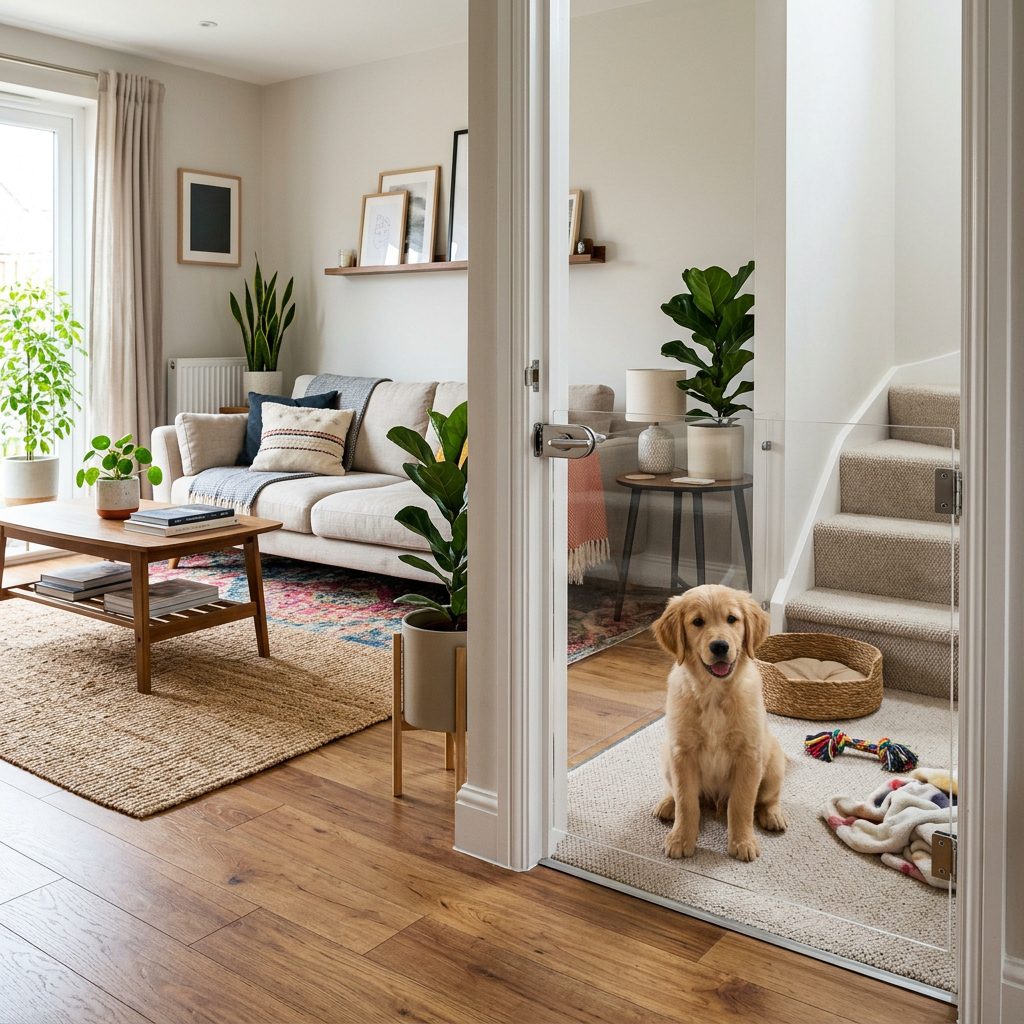
While you are working on training, you must manage the environment to prevent ‘accidental’ destruction. If the puppy does not have access to the rug corners, they cannot practice the bad habit. Management is about setting your puppy up for success and protecting your investment.
Using Physical Barriers
If you have a specific room with an expensive rug, the simplest solution is often the most effective: use baby gates or puppy playpens (X-pens). Restricting your puppy’s access to carpeted areas when you cannot supervise them 100% of the time is not ‘mean’—it is responsible. It prevents the habit from becoming ingrained. For area rugs, you can also try tucking the corners under heavy furniture temporarily, though this is not always aesthetically pleasing.
The Power of Crate Training
A crate-trained puppy is a puppy that cannot chew your carpet while you are in the shower or sleeping. Savvy owners know that the crate should be a ‘happy place,’ filled with safe chew toys and comfortable bedding. When you cannot keep your eyes on your pup, they should be in their crate or a puppy-proofed zone with hard flooring. This completely removes the opportunity for carpet destruction and helps with housebreaking simultaneously.
Strategic Rug Placement
Sometimes, the solution is as simple as moving the rug. If your puppy always targets the rug in the hallway because they are excited when you come home, consider moving that rug to a less ‘high-arousal’ area until the puppy is older. You can also use ‘rug-to-rug’ grippers that keep the corners pressed firmly to the floor, making them much harder for a puppy to get their mouth around. If there is no ‘lip’ to grab, the puppy will often lose interest.
Long-Term Enrichment: Keeping Jaws Busy with the Right Things
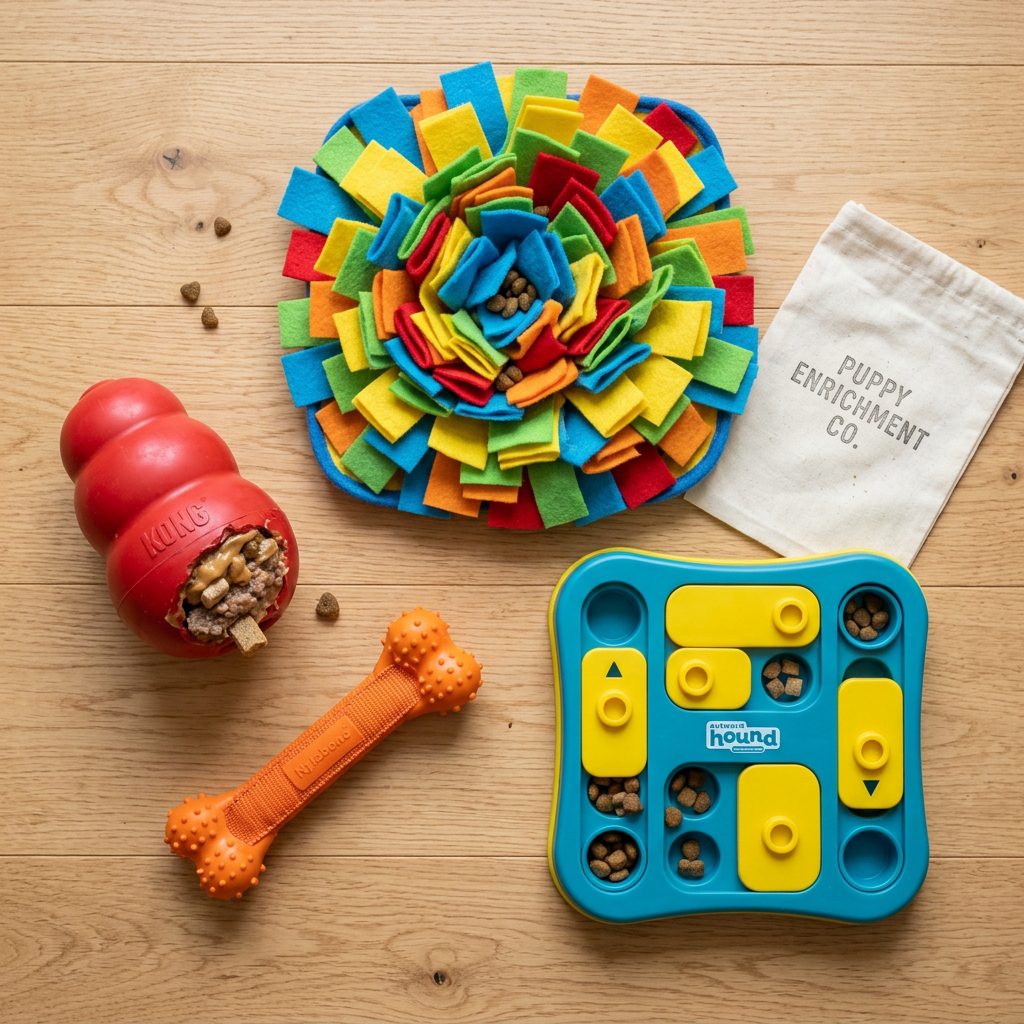
A tired puppy is a well-behaved puppy. Often, carpet chewing is a symptom of a puppy who has excess physical energy and not enough mental ‘work.’ To stop the chewing instantly and permanently, you need to provide enrichment that satisfies their biological needs.
Interactive Food Toys
Instead of feeding your puppy from a bowl, use their mealtime as an enrichment opportunity. Stuffable rubber toys (like Kongs), snuffle mats, and puzzle feeders are excellent. A frozen, food-stuffed toy can keep a puppy occupied for 30 minutes or more. The act of licking and gnawing on the rubber to get the food out satisfies the same urge that leads them to the carpet, but in a productive way. Pro tip: Freeze some wet dog food or peanut butter inside a toy for an extra-long-lasting challenge.
The ‘Chew Bar’ Concept
Give your puppy a variety of textures to chew on. Savvy owners provide a ‘chew bar’ consisting of different materials: rubber, nylon, and natural options like coffee wood sticks or bovine ears (always supervised). By offering a rotating selection of toys, you keep the ‘newness’ factor high, which prevents the puppy from getting bored and looking toward your furniture or flooring for novelty.
Mental Stimulation and Scent Work
Ten minutes of mental exercise can be as tiring for a puppy as a 30-minute walk. Engage in ‘scent work’ by hiding treats around a room (not on the carpet!) and encouraging them to ‘find it.’ This redirects their focus from their mouth to their nose. When a puppy’s brain is working hard to solve a puzzle or find a scent, the urge to destructively chew significantly decreases. You are essentially shifting their energy from ‘destruction’ to ‘discovery.’
Troubleshooting: When the Chewing Won’t Stop

What if you have tried deterrents, training, and enrichment, but your puppy is still obsessed with your carpet corners? In some cases, there may be an underlying issue that requires a different approach. It is important to distinguish between normal puppy behavior and something more serious.
Identifying Pica
Pica is a condition where a dog compulsively eats non-food items. If your puppy isn’t just chewing the carpet but is actually ingesting large amounts of fiber, this is a medical concern. Ingesting carpet can lead to dangerous intestinal blockages. If you notice your puppy is swallowing the rug, consult your veterinarian immediately. This could be a sign of a nutritional deficiency or a more complex behavioral disorder.
Separation Anxiety vs. Boredom
If the carpet chewing only happens when you are away, it may be a sign of separation anxiety rather than simple boredom. Dogs with separation anxiety chew to relieve the intense stress they feel when left alone. In these cases, the ‘Leave It’ command won’t help because you aren’t there to give it. You will need to work on a desensitization protocol to help your dog feel comfortable being alone, often with the help of a certified professional dog trainer or a veterinary behaviorist.
The Importance of Exercise
Never underestimate the power of a good walk. While puppies shouldn’t over-exercise due to their developing joints, they do need regular, age-appropriate physical activity. A puppy who has had a chance to sniff the grass, run in a safe area, and explore the neighborhood is much more likely to nap on your rug than to eat it. Ensure your daily routine includes enough physical outlets to match your puppy’s breed and energy level.
Conclusion
Stopping a puppy from chewing your carpet corners is a journey that requires patience, consistency, and a bit of ‘savvy’ strategy. By understanding that this behavior is a natural part of their development—driven by teething, curiosity, and a need for stimulation—you can move away from frustration and toward effective solutions. Remember the three pillars of success: Deter the behavior with safe sprays and tape, Redirect the energy toward appropriate toys and enrichment, and Reinforce the right choices through positive training. Your rugs are an investment in your home, but your puppy is an investment in your life. With the steps outlined in this guide, you can protect both. Stay consistent, keep those ‘legal’ chews exciting, and soon your carpet corners will be nothing more than a place for your well-behaved pup to take a nap. You’ve got this!