7 Shocking Ways To Stop Puppy Chewing Electrical Cords (Before It’s Too Late!)
The Hidden Danger Under Your Desk
We’ve all been there: you bring home a fluffy bundle of joy, and within forty-eight hours, your expensive MacBook charger looks like it’s been through a paper shredder. While losing a charger is annoying (and pricey!), the real concern is far more serious. Electrical cord chewing is one of the most dangerous behaviors a puppy can develop. It’s not just about property damage; it’s about the risk of severe oral burns, internal damage, and even fatal electrocution.
As a canine specialist, I’ve seen the aftermath of these ‘curiosity bites,’ and I’m here to tell you that waiting for your puppy to ‘grow out of it’ is a gamble you don’t want to take. Savvy dog owners know that puppy-proofing isn’t just about hiding shoes; it’s about creating a safe environment where your pup can’t make a life-threatening mistake. In this guide, we are going to dive deep into seven ‘shocking’ (pun intended!) strategies to redirect that chewing energy and secure your home once and for all.
Pro Tip: Puppies explore the world with their mouths. It’s not that they want to destroy your things; they are simply trying to figure out what a ‘wire’ is and why it feels so interesting against their gums.
1. The Psychology of the Chew: Why Wires?
Before we can stop the behavior, we have to understand the motivation. Why does a puppy choose a boring, plastic-covered wire over a high-quality chew toy? For most puppies, it comes down to three main factors: teething, boredom, and texture.
The Teething Factor
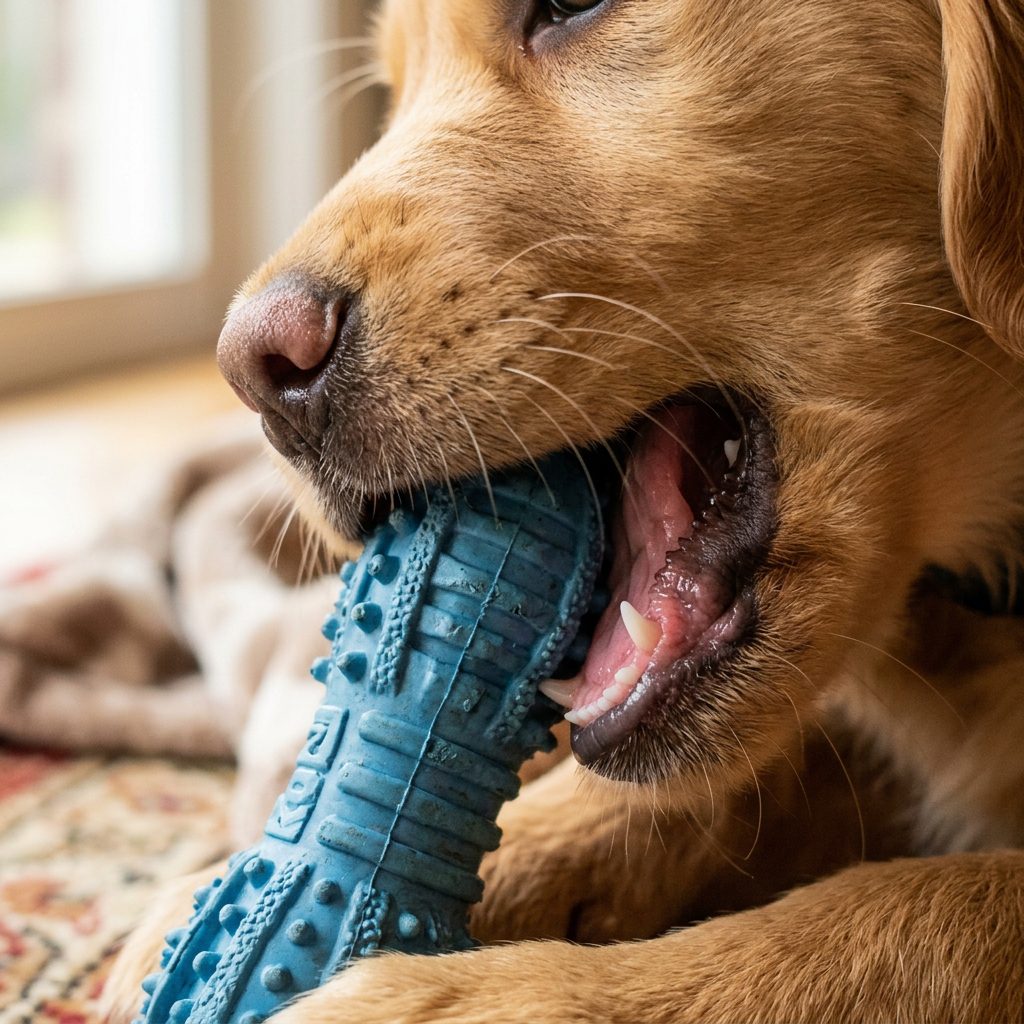
Between 3 and 6 months of age, puppies lose their baby teeth to make room for 42 permanent adult teeth. This process is incredibly uncomfortable. The pressure of chewing on something firm, like a rubberized electrical cord, provides temporary relief to their inflamed gums. If the cord is plugged in, it might even emit a slight hum or warmth that attracts them.
Boredom and Exploration
If a puppy isn’t getting enough mental or physical stimulation, they will find their own ‘job’ to do. Often, that job involves investigating the ‘snakes’ running along the floorboards. To a puppy, a dangling lamp cord is a toy waiting to be hunted.
Texture Seeking
Some dogs are ‘texture specific’ chewers. The rubbery, slightly yielding texture of electrical insulation is highly satisfying to certain breeds. Identifying this preference helps us choose the right alternative toys later on.
| Reason for Chewing | Puppy’s Motivation | Solution Strategy |
|---|---|---|
| Teething | Gum Pain Relief | Frozen Toys / Cold Treats |
| Boredom | Lack of Stimulation | Mental Puzzles / Exercise |
| Anxiety | Self-Soothing | Calming Techniques / Routine |
2. Immediate Environmental Management: The ‘Out of Sight’ Rule
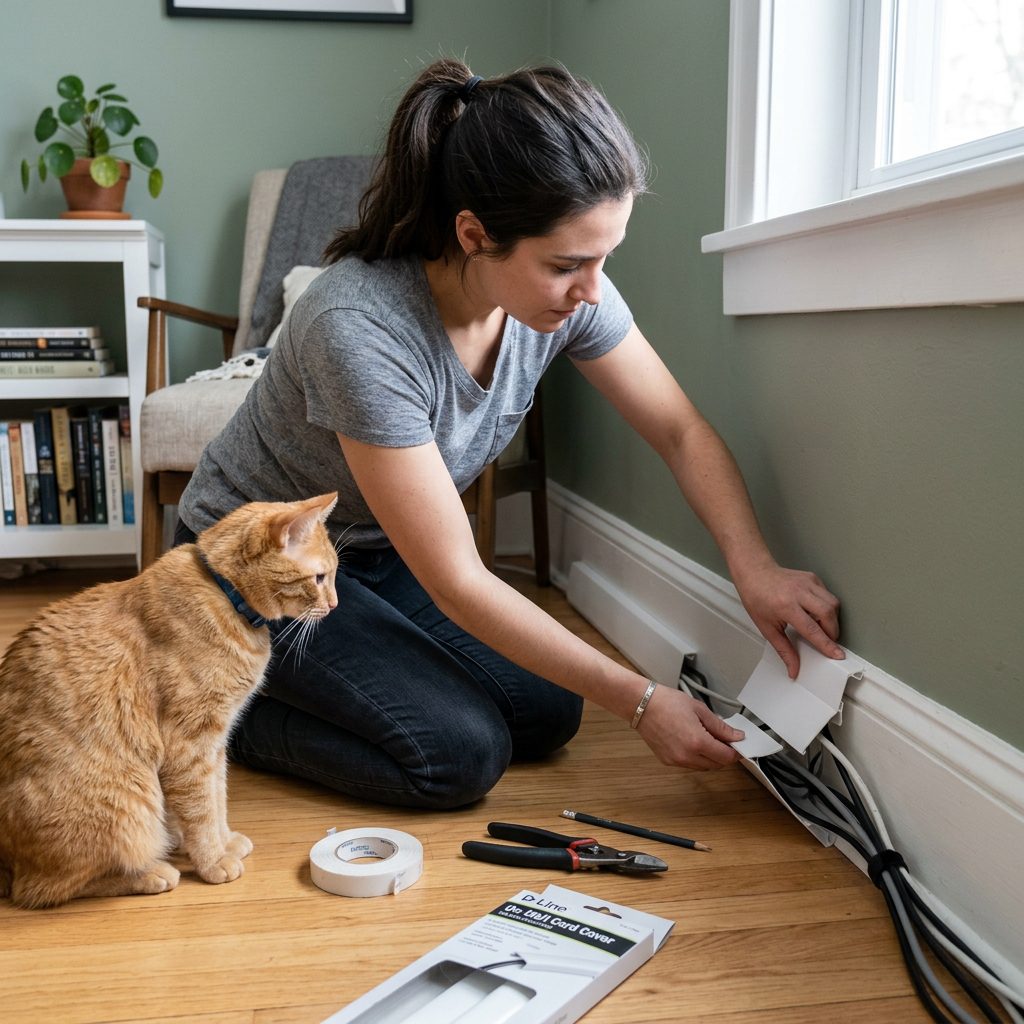
The most effective way to stop a behavior is to prevent it from happening in the first place. This is called environmental management. If the puppy can’t reach the cord, the puppy can’t chew the cord. It sounds simple, but it requires a ‘puppy-eye-view’ audit of your home.
The Vertical Solution
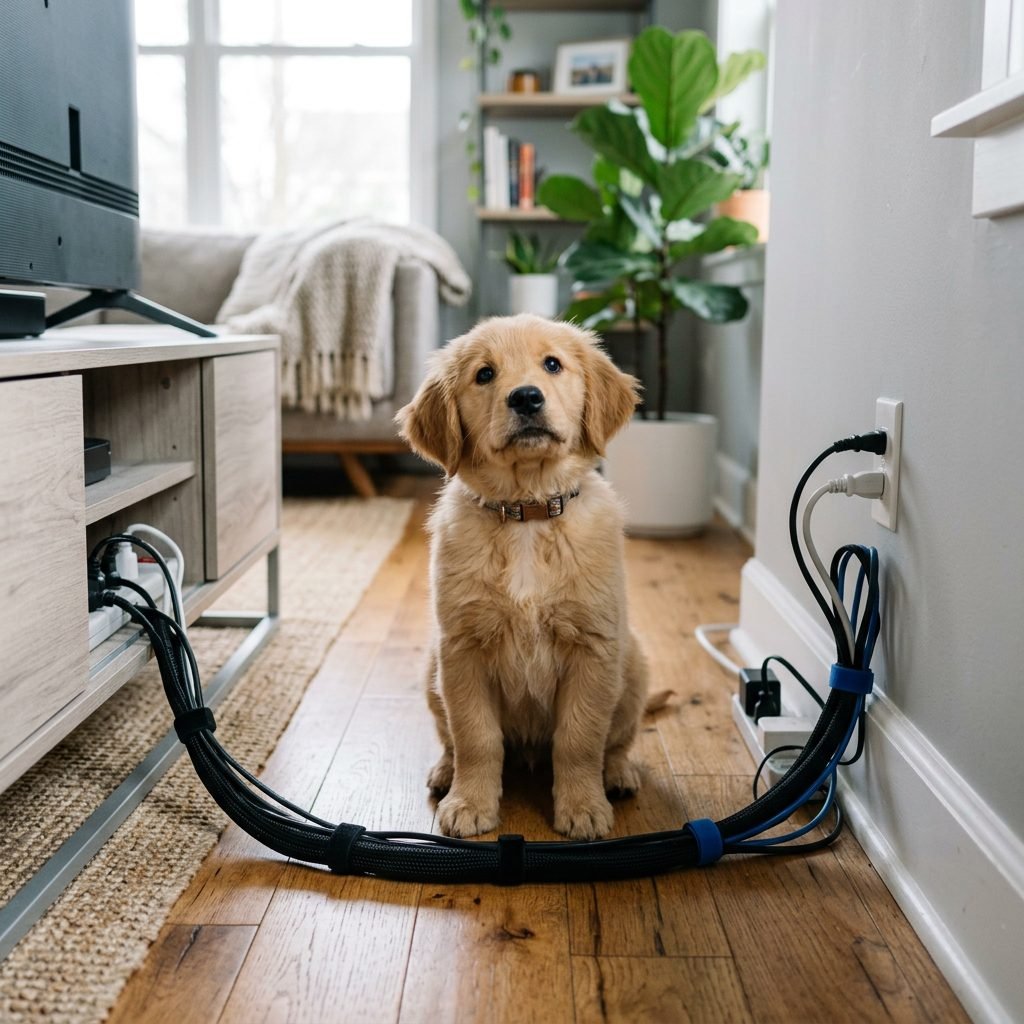
Use adhesive cord clips to run wires up the legs of furniture or along the top of baseboards where they are out of reach. For desk setups, use cable management boxes that hide power strips and excess cord length entirely.
Physical Barriers
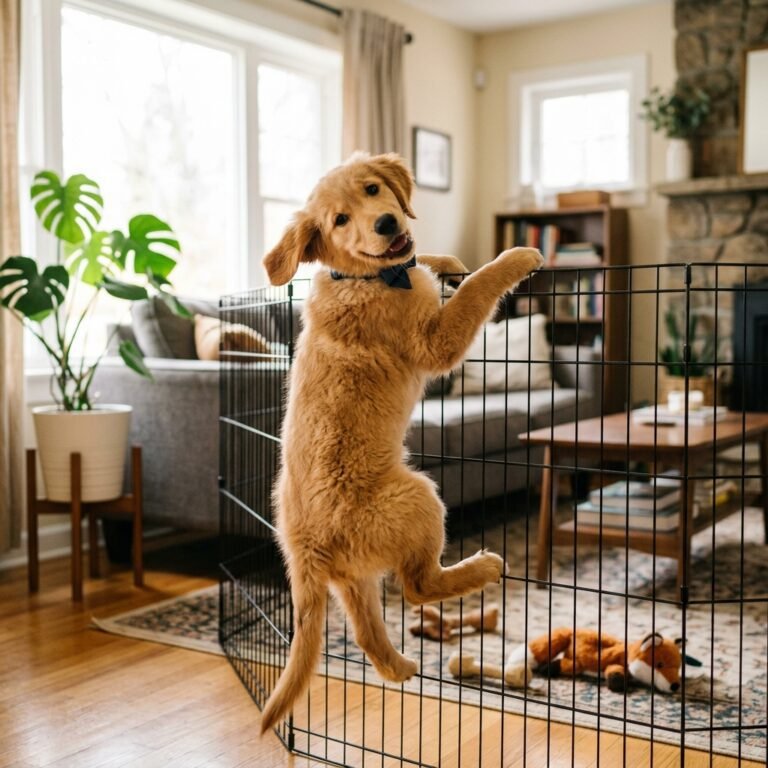
If you have a ‘hot zone’ of electronics (like a home theater or gaming setup), use exercise pens (X-pens) or baby gates to block off the entire area. Don’t assume your puppy won’t go back there; if there is a gap, they will find it.
- Cord Protectors: Use heavy-duty PVC tubing or flexible split-sleeve wire looms. These are much harder to puncture than standard insulation.
- Furniture Placement: Move couches and bookshelves to flush against outlets to trap cords behind heavy objects.
- Unplugging: When not in use, unplug chargers and store them in a drawer. A ‘dead’ cord is still a choking hazard, but it won’t electrocute your pet.
3. The Power of Taste Aversion: Using Safe Deterrents

If your puppy is a persistent chewer, you may need to utilize taste aversion. This involves coating the cords in a substance that tastes absolutely repulsive to dogs but is non-toxic. This creates a negative association with the cord.
Choosing the Right Deterrent
The most common deterrents are Bitter Apple spray, Bitter Cherry, or even a dilute mixture of white vinegar and water. However, some puppies are ‘weirdos’ and actually like the taste of bitter apple! You may need to experiment to find what your dog hates.
The ‘Scent Test’ Method
- Put a small amount of the deterrent on a cotton ball.
- Let your puppy sniff it. If they recoil or make a ‘yuck’ face, you’ve found a winner.
- Apply the liquid to a cloth and wipe down the cords (make sure the cords are unplugged during application and completely dry before plugging back in).
Caution: Never use spicy substances like hot sauce or cayenne pepper. These can cause severe irritation to a puppy’s eyes and nose if they rub their face after chewing, and can lead to painful digestive issues.
4. Training the ‘Leave It’ Command: A Life-Saving Skill

Deterrents and covers are great, but reliable training is the only permanent fix. The ‘Leave It’ command is arguably the most important safety skill you can teach. It tells your dog that ignoring a specific object results in a much better reward from you.
Step-by-Step ‘Leave It’ Training
- Level 1: The Hidden Treat. Place a treat in your closed fist. Let the puppy sniff and paw at your hand. The moment they stop and pull back, say ‘Yes!’ and give them a *different* high-value treat from your other hand.
- Level 2: The Open Palm. Place a treat in your open palm. If they lung for it, close your hand. Once they look away from the treat and make eye contact with you, reward them.
- Level 3: The Floor Drop. Drop a treat on the floor and cover it with your foot. Command ‘Leave it.’ When they stop trying to get it, reward them with a piece of chicken or cheese.
- Level 4: The Cord Simulation. Use a disconnected, safe cord. If they move toward it, say ‘Leave it.’ When they look at you instead, give them a jackpot of treats.
Consistency is key. Practice this for 5 minutes, three times a day. You want the response to be an automatic reflex.
5. Strategic Redirection: The ‘Trade-Up’ Game
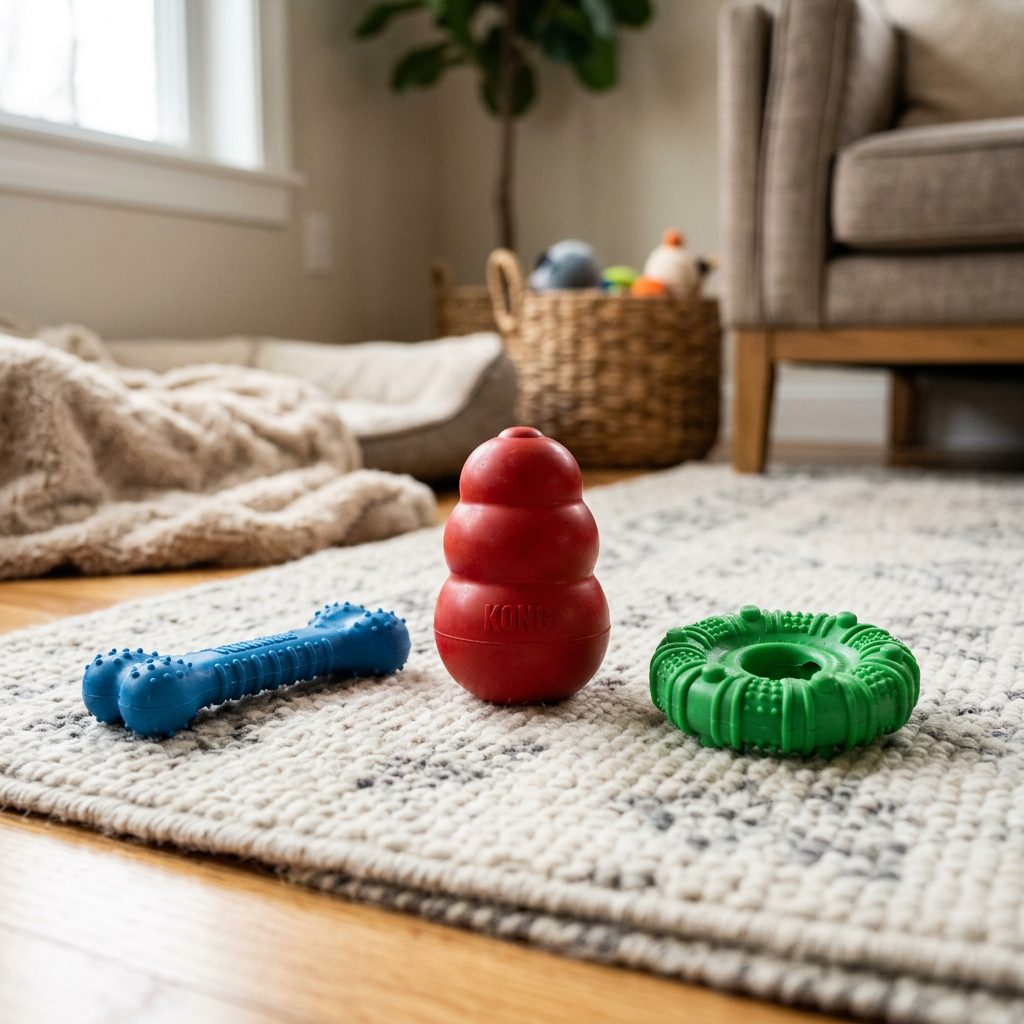
When you catch your puppy eyeing a cord, don’t just yell ‘No!’ This often creates a game of ‘catch me if you can.’ Instead, use redirection. You must provide an alternative that is more satisfying than the cord they were about to chew.
The Hierarchy of Chews
To successfully redirect, the new toy must match the ‘mouth-feel’ the puppy was seeking. If they were going for a rubbery cord, a hard wooden bone might not satisfy them. Use the table below to match the redirection:
| Target Object | Chew Preference | Recommended Alternative |
|---|---|---|
| Electrical Cord | Rubbery / Pliable | KONG Classic or Rubber Dental Bone |
| Wooden Furniture | Hard / Shredding | Coffee Wood Stick or Nylon Bone |
| Shoes / Leather | Soft / Scented | Leather Tug Toy or Stuffed Plush |
Always keep a ‘special’ toy hidden away. If you see the puppy approaching a cord, squeak the special toy to get their attention. When they come to you, ‘trade’ the toy for their interest in the wire. This reinforces that playing with *their* toys leads to fun and engagement with you.
6. Emergency Protocol: What to Do if the Worst Happens
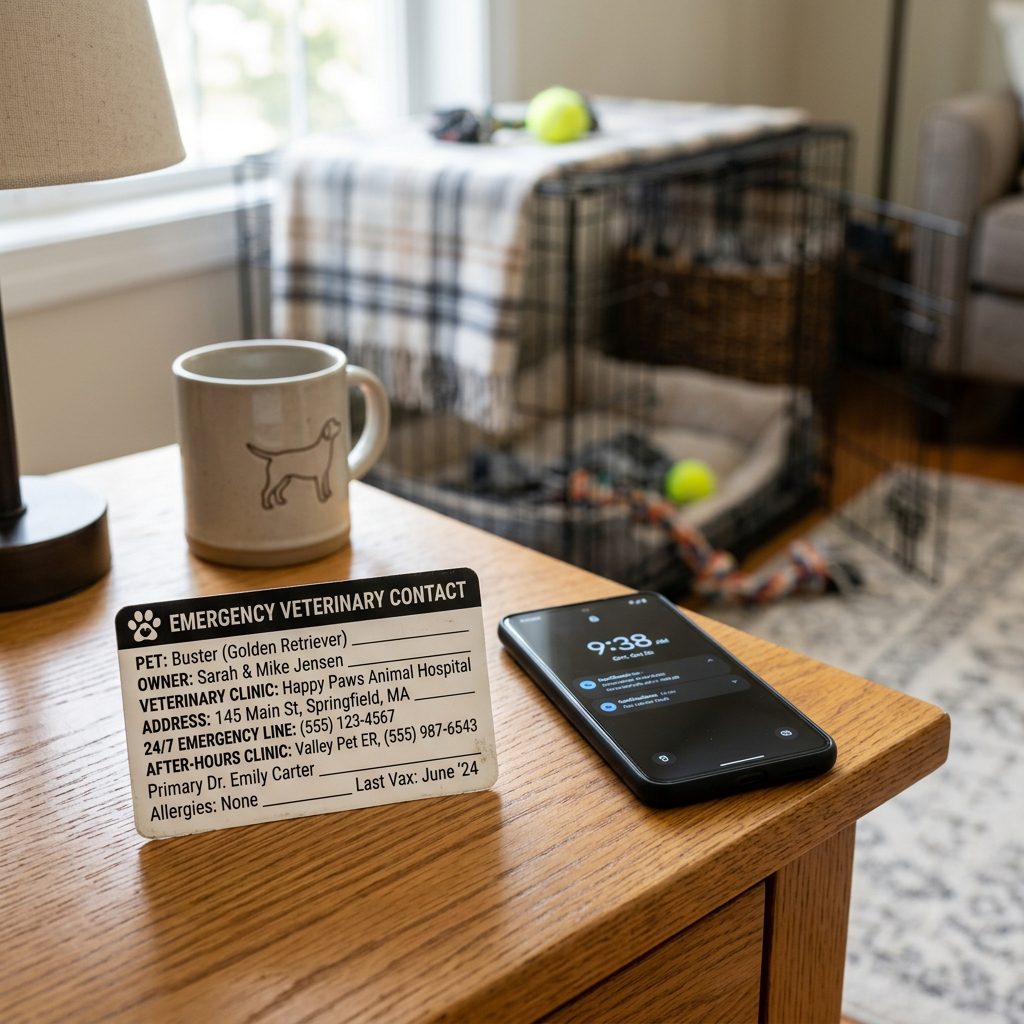
Even with the best precautions, accidents can happen. You need to know the signs of electrical shock and how to react without putting yourself in danger. If you see your puppy chewing a cord and they appear stuck or are twitching, DO NOT touch them immediately.
Step 1: Cut the Power
The puppy may still be conducting electricity. If you touch them, the current could pass to you. Immediately pull the plug from the wall or flip the main circuit breaker.
Step 2: Check Vitals
Once the power is off, check if the puppy is breathing. Look for ‘electrical burns’ around the mouth—these often look like white or bright red patches on the tongue or gums.
Step 3: Watch for Pulmonary Edema
This is the ‘silent killer.’ Electrical shocks can cause fluid to build up in the lungs hours after the incident. Even if your pup seems fine, they need a vet visit. Signs include:
- Difficulty breathing or panting.
- Coughing.
- Blue-tinged gums (lack of oxygen).
- Extreme lethargy.
Always keep your emergency vet’s number programmed into your phone. Speed is everything in these situations.
7. Mental Enrichment to Kill the Urge

A tired puppy is a well-behaved puppy. Often, cord chewing is simply a symptom of pent-up mental energy. If you stimulate their brain, they won’t feel the need to ‘redecorate’ your wiring.
Nose Work
Hide small treats around the room and encourage your puppy to ‘find it.’ Using their nose for 15 minutes is as tiring as an hour-long walk. It shifts their focus from chewing to sniffing.
Lick Mats and Snuffle Mats
Licking releases endorphins in dogs, which helps them self-soothe. If your puppy is chewing cords due to anxiety, a lick mat covered in peanut butter (Xylitol-free!) can provide a healthy outlet for that oral fixation.
The ‘Frozen Carrot’ Trick
For a teething puppy, a large frozen carrot is a miracle worker. It’s cold, hard, and edible. It numbs the gums and provides a safe, crunchy texture that mimics the resistance of a thick cable.
Conclusion
A Safer Home for a Happier Pup
Stopping a puppy from chewing electrical cords is a multi-pronged attack. It requires a mix of vigilant management, consistent training, and providing the right outlets for their natural instincts. Remember, your puppy isn’t trying to be ‘bad’; they are just learning how to navigate a world full of strange and tempting objects.
By implementing these seven strategies—from cord protectors to ‘Leave It’ training—you are doing more than just saving your electronics. You are potentially saving your puppy’s life. Stay patient, stay consistent, and always keep those cords tucked away. You’ve got this!