Lawn Mower Danger! How to Stop Your Puppy Chasing the Mower Before It’s Too Late
Why Do Puppies Chase Lawn Mowers? Understanding the Urge
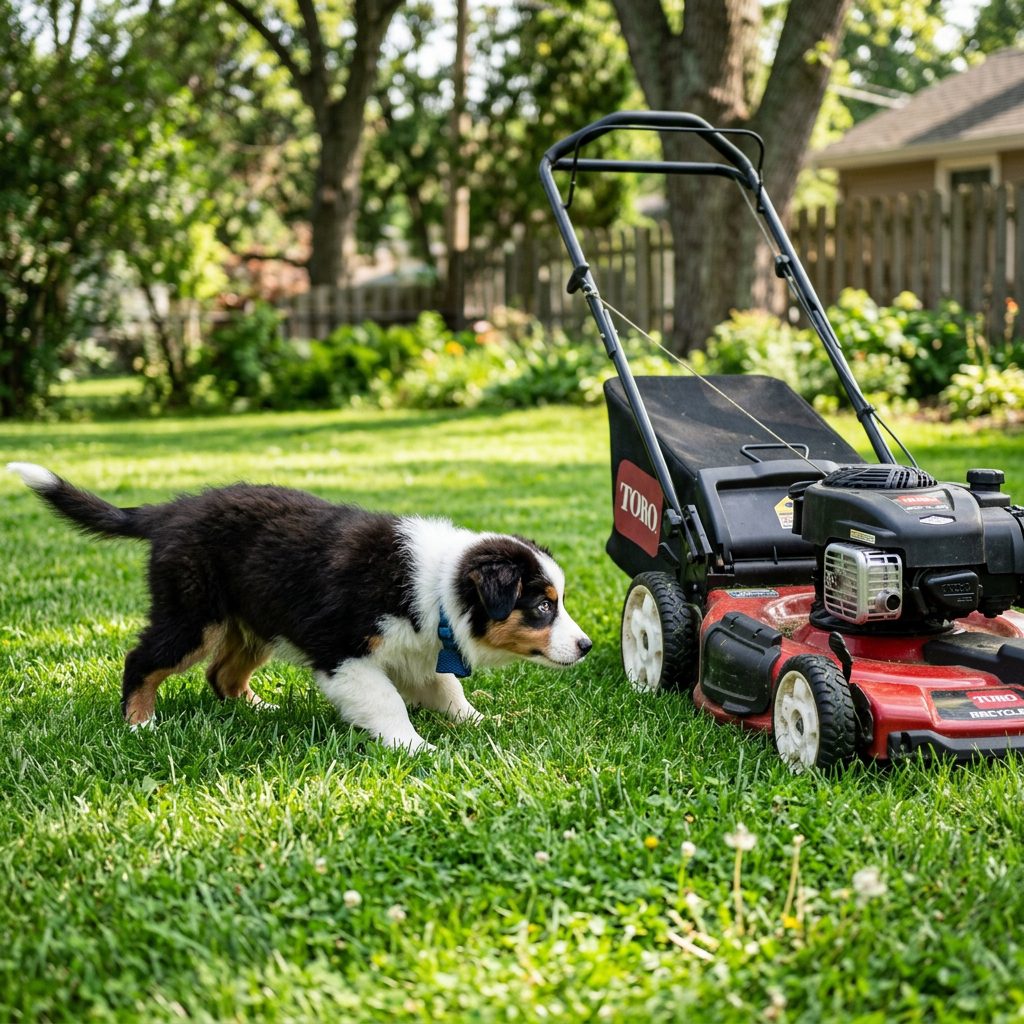
The Prey Drive Instinct
For many dogs, especially terriers and sporting breeds, anything that moves quickly across the ground triggers their prey drive. The mower is moving, it is making a commotion, and their brain screams, Chase it! This is an automatic, hardwired response.
The Herding Instinct
If you own a Border Collie, Australian Shepherd, Corgi, or any other herding breed, their reaction to the mower is likely rooted in their desire to control movement. Herding dogs are bred to manage the movement of erratic animals. When a loud, unpredictable machine starts zig-zagging across their territory, their natural instinct is to nip at its wheels to get it back in line.
Fear and Reactivity
Not all chasing is rooted in fun or instinct; sometimes, it is rooted in fear. The roar of a gas-powered engine can be terrifying to a puppy with sensitive hearing. A common defense mechanism in dogs is the concept that the best defense is a good offense. They bark, lunge, and bite at the mower to scare the big, scary monster away.
Understanding your dog’s specific motivation can help you tailor your training approach. A fearful dog needs more distance and slower desensitization, while a herding dog needs an alternative job to do.
| Breed Group | Primary Motivation | Behavioral Signs |
|---|---|---|
| Herding Breeds (Collies, Corgis) | Controlling movement | Nipping at wheels, circling the mower, barking intensely |
| Terriers & Hounds | Prey drive | Fixating, sudden lunging, trying to grab the mower deck |
| Toy Breeds & Companions | Fear or Sound Reactivity | Trembling, defensive barking, retreating then lunging |
Essential Tools for Lawn Mower Desensitization Training
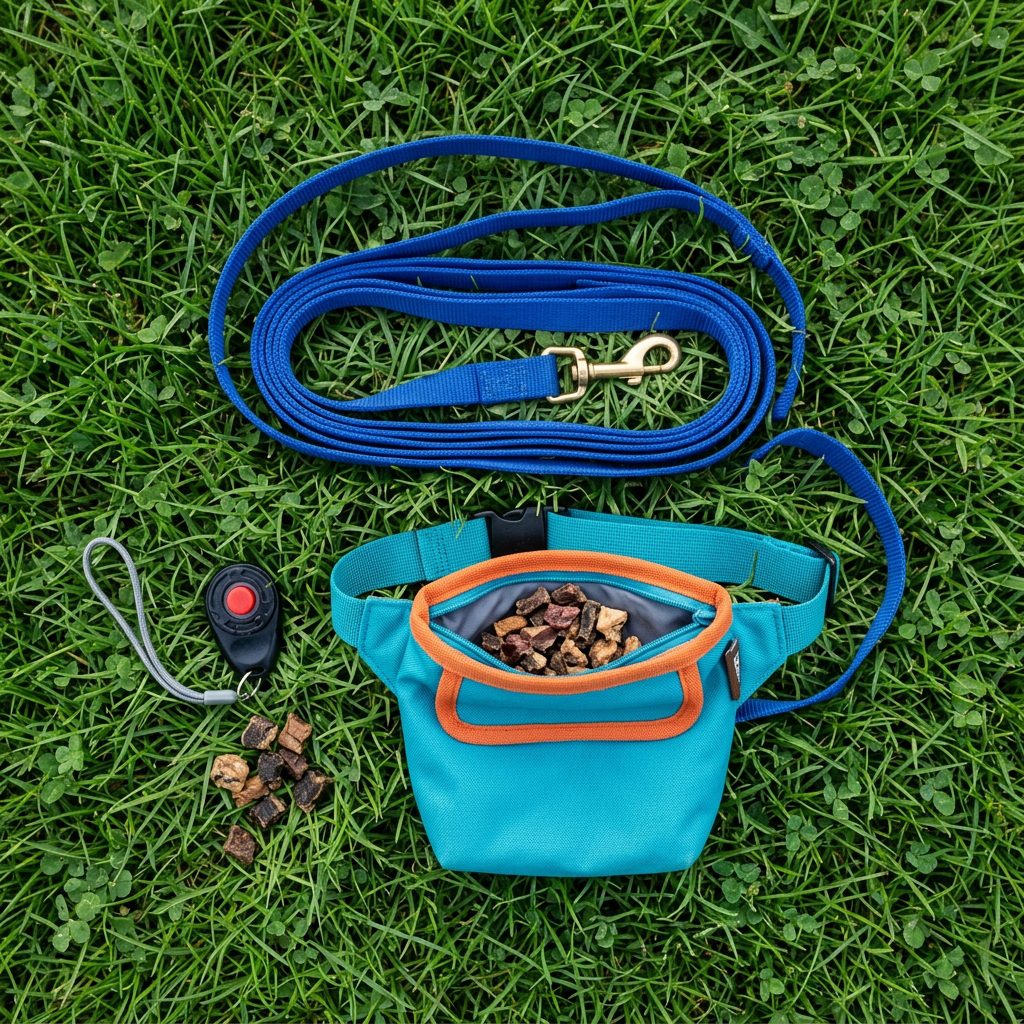
1. A Standard Six-Foot Leash and a Long Line
You will need a standard leash for the initial close-up work, but a 15 to 30-foot long line is going to be your best friend as we progress. The long line allows your puppy to feel freedom and make choices while still giving you a safety net to prevent them from actually reaching the mower.
2. Extremely High-Value Treats
When we are competing with a roaring lawn mower, dry kibble is not going to cut it. You need the good stuff. Think boiled chicken breast, hot dogs, freeze-dried liver, or small cubes of cheese. The treats need to be soft, smelly, and easy to swallow quickly.
3. A Training Pouch
Timing is everything in desensitization training. You need to be able to deliver a treat within a split second of your puppy making a good choice. A wearable silicone or fabric treat pouch ensures your hands are free to manage the leash.
4. A Helper (Crucial for Early Stages)
It is nearly impossible to push a lawn mower safely while simultaneously managing a puppy on a leash and delivering treats. For the first few sessions, you will need a friend, family member, or neighbor to either push the mower or handle the dog.
5. A Clicker (Optional but Recommended)
If your dog is already clicker trained, this is the perfect time to use it. The sharp click cuts through the noise of the mower and clearly marks the exact moment your dog chose to look away from the machine.
| Training Tool | Purpose in Mower Training | Pro Tip |
|---|---|---|
| High-Value Treats | Creates a positive association with the mower | Keep pieces pea-sized so the dog does not get full too quickly. |
| 15-Foot Long Line | Allows safe distance training without losing control | Never attach a long line to a neck collar; always use a well-fitted harness to prevent neck injury. |
| Treat Pouch | Ensures lightning-fast reward delivery | Keep it strapped to your front for easy access with either hand. |
| Clicker | Marks the exact moment of good behavior | Charge the clicker indoors before using it outside with distractions. |
The Step-by-Step Guide to Desensitizing Your Puppy
Step 1: The Sleeping Monster (Parked Mower)
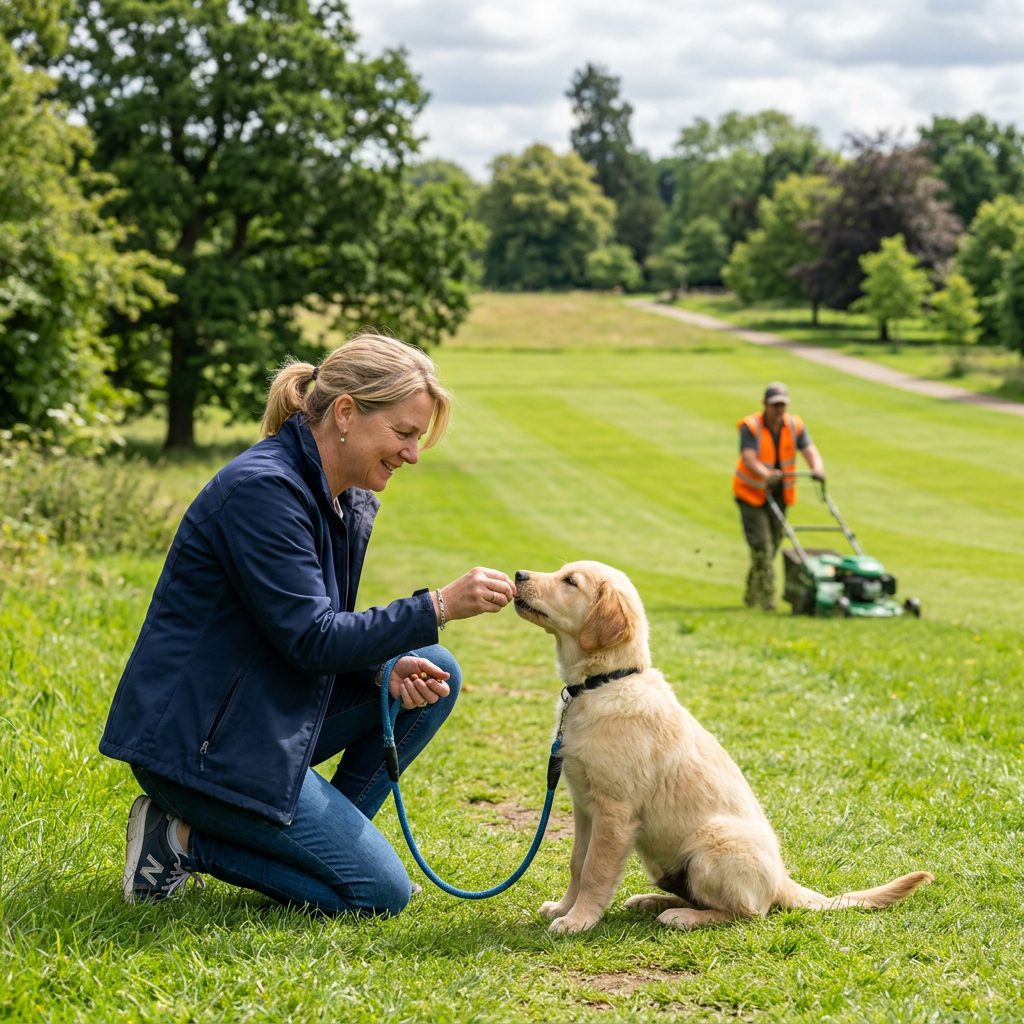
We start with the mower completely turned off and parked in the yard. Put your puppy on a leash and walk out into the yard. Stay at a distance where your puppy notices the mower but is not pulling toward it. Every time your puppy looks at the mower, say Yes! (or click) and give them a high-value treat. You are teaching them: Looking at that green machine makes chicken rain from the sky. Once they are comfortably looking at the mower and immediately looking back at you for a treat, you can take a step closer. Repeat this until you can walk all the way up to the parked mower, sniff it, and walk away calmly.
Step 2: The Purring Monster (Engine On, No Movement)
This is where you need your helper. Have your helper stand with the mower, but keep the engine OFF. Take your puppy on their leash about 50 feet away (or as far back as you need to be for them to feel safe). Signal your helper to turn the mower ON. The moment the engine roars to life, start feeding your puppy a rapid-fire stream of treats. Chicken, chicken, chicken! After 10 seconds, signal your helper to turn the mower OFF. Stop feeding treats immediately. We want the puppy to learn that the noise of the mower predicts amazing treats, and silence means the treats stop. Gradually decrease the distance between you and the stationary, running mower over several sessions.
Step 3: The Moving Monster (Engine Off, Moving)
Now we need to tackle the movement aspect, which triggers the prey and herding drives. Keep the engine OFF. Have your helper start pushing the mower around the yard. Again, start at a distance. When the mower moves, and your puppy stays by your side without lunging, reward heavily! If your puppy lunges, you are too close. Back up and try again.
Step 4: Putting It All Together (Engine On and Moving)
It is time for the final exam. Have your helper start the mower and begin pushing it. You and your puppy are on the sidelines at a safe distance. Play the Look at That game. Puppy looks at the moving, loud mower, you click or say yes, and give a treat. As your puppy gets better at this, they will start looking at the mower and then immediately whipping their head back to you in anticipation of the treat. This is the holy grail of training! It means they are choosing to disengage from the distraction and focus on you.
Always end your training sessions on a high note. Keep them short—just five to ten minutes at a time. Mental work is exhausting for a puppy, and pushing them past their threshold will only cause regression.
Troubleshooting and Common Mistakes to Avoid
Mistake 1: Moving Too Fast
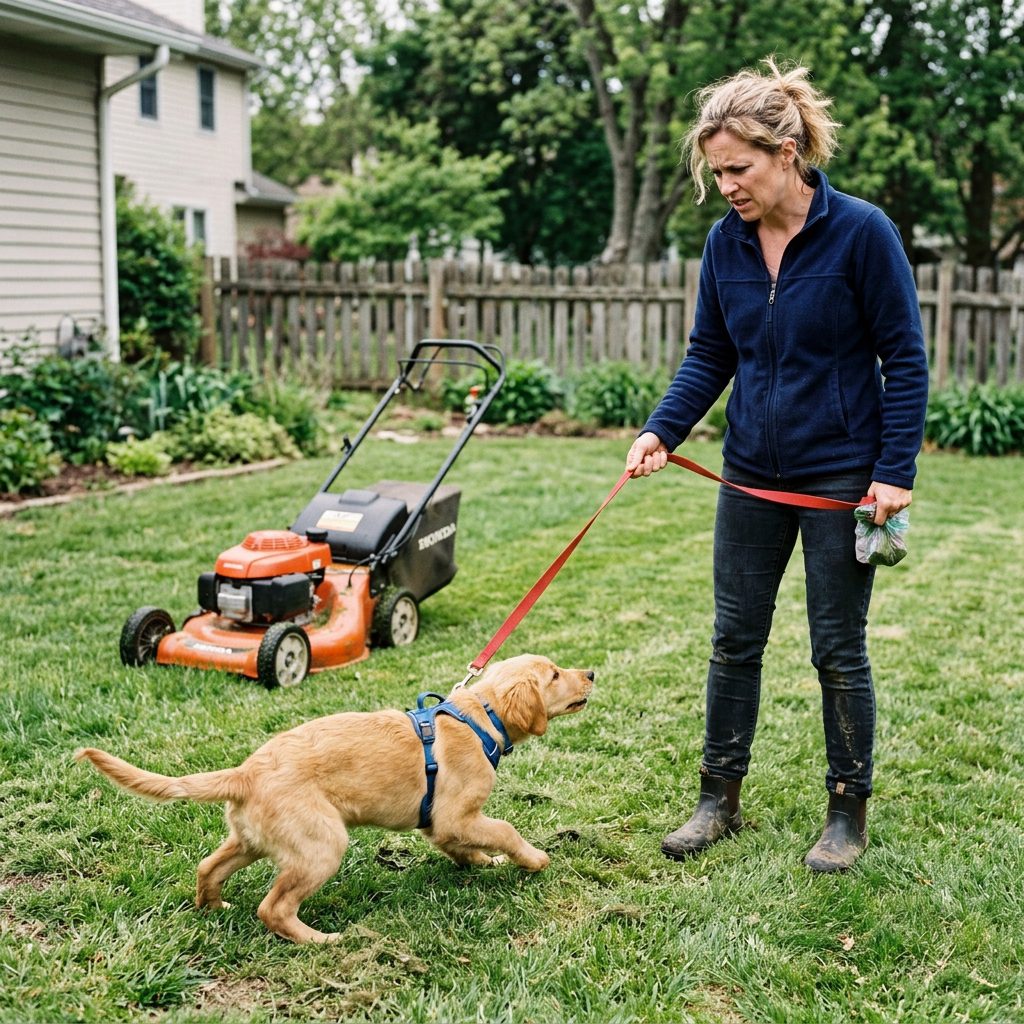
This is the number one reason desensitization fails. Owners get excited that the dog did well at 30 feet, so they immediately walk up to 5 feet. Suddenly, the dog is lunging and barking again. If your dog reacts, it means you have pushed them over their threshold. The Fix: Distance is your best friend. If your dog reacts, calmly walk them further away from the mower until they can focus on you again. Build distance back up gradually.
Mistake 2: Punishing the Behavior
It is incredibly frustrating when your dog is screaming at the lawn mower, but yelling at them, yanking their leash, or using a shock collar will only make the problem worse. If your dog is barking out of fear, punishing them confirms that the mower is indeed a bad, scary thing. If they are barking out of prey drive, your yelling just sounds like you are barking along with them, increasing their arousal. The Fix: Focus entirely on positive reinforcement. Reward the behaviors you want to see (calmness, looking at you) and prevent the behaviors you do not want (chasing) by using a leash.
Mistake 3: Off-Leash Too Soon
Do not trust a puppy! Just because they ignored the mower perfectly on a leash on Tuesday does not mean they will not try to attack it off-leash on Saturday. The Fix: Keep your dog on a long line during mowing sessions for several months. You need a massive history of successful, calm repetitions before you can even consider allowing them off-leash while the mower is running.
| If Your Dog Does This… | It Means… | Your Next Training Step |
|---|---|---|
| Takes the treat but immediately lunges back at the mower | They are over threshold but food-motivated. | Increase the distance between the dog and the mower by 10-15 feet. |
| Refuses a high-value treat entirely | They are extremely stressed or over-aroused. | Stop the session, move far away, and try again later at a much greater distance. |
| Looks at the mower, then looks at you without a prompt | They are understanding the game! | Jackpot reward! Give a handful of treats and lots of verbal praise. |
Alternative Management Strategies: Safety First
1. The Indoor Retreat
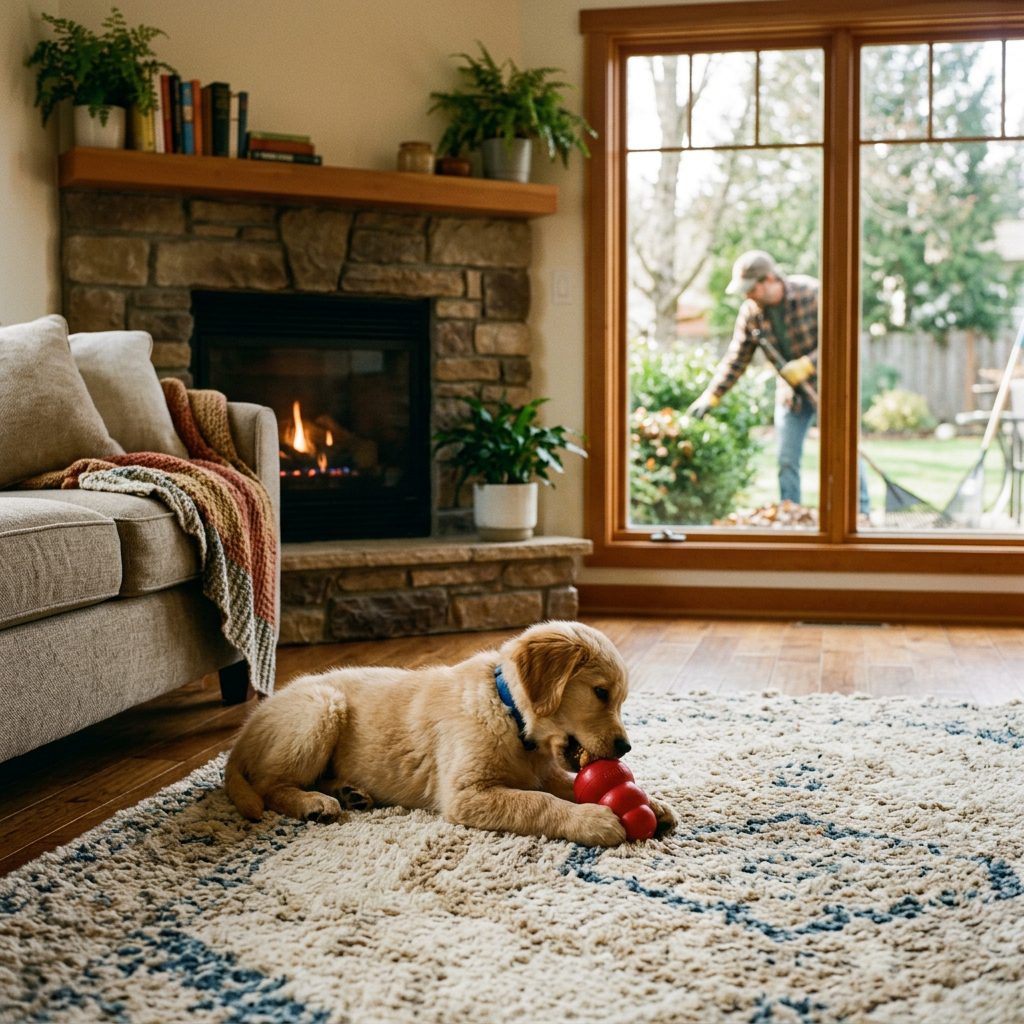
The absolute safest place for a puppy when the lawn mower is running is inside the house. Before you start the mower, bring your puppy indoors. To prevent them from barking at you through the window, close the blinds or curtains.
2. High-Value Distractions
Give your puppy something amazing to do indoors so they do not even care that you are outside mowing. A frozen Kong stuffed with peanut butter, a long-lasting chew like a bully stick, or a snuffle mat filled with their favorite treats can keep them occupied for the exact amount of time it takes you to mow the lawn.
3. Secure Fencing and Pens
If your dog absolutely must be outside while you mow, they must be physically separated from the mowing area. Use sturdy physical fences or heavy-duty outdoor playpens. Never rely on an invisible or electric fence to keep a dog away from a mower; a highly aroused dog will easily blow right through the shock to get to the machine.
4. The Tag-Team Approach
If you live in a multi-person household, coordinate your chores. One person takes the puppy for a long, tiring walk around the neighborhood while the other person stays home and mows the lawn. The puppy gets exercise, the lawn gets cut, and everyone stays safe.
- Pro Tip: Always do a quick sweep of the yard before mowing to ensure no dog toys or bones are hidden in the tall grass, which can become dangerous projectiles.
Conclusion