The 3-Step Life Saving Method: How To Teach Your Puppy To Find Pool Steps Instantly!
The Hidden Danger in Your Backyard
For many of us, the backyard pool is the heart of summer fun. It is where we host barbecues, relax in the sun, and watch our families play. However, for a savvy dog owner, that sparkling blue water can also be a source of significant anxiety. Did you know that even breeds known for swimming, like Labradors or Golden Retrievers, can find themselves in life-threatening situations if they do not know how to exit a pool? Puppies, with their boundless curiosity and lack of spatial awareness, are particularly at risk. They might jump in after a toy or accidentally tumble in while chasing a butterfly, only to realize that the sheer walls of the pool offer no way out. This is where the 3-Step Life Saving Method comes in. This isn’t just about teaching your dog to swim; it is about giving them a cognitive map of safety. We are going to transform your pool from a potential hazard into a controlled environment where your puppy feels confident and, most importantly, knows exactly where the ‘exit door’ is located. By the end of this guide, you will have the peace of mind that comes with knowing your furry friend has the skills to save their own life.
Safety is not an accident; it is the result of deliberate training and preparation.
In this comprehensive guide, we will walk through the psychology of how puppies perceive water, the essential gear you need to get started, and the exact three steps to ensure your puppy can find those steps instantly, every single time.
Preparation and Essential Safety Gear
Setting the Stage for Success
Before we even get your puppy’s paws wet, we need to ensure we have the right tools. Training a puppy in a pool requires more than just a handful of kibble. You need equipment that ensures their physical safety and markers that help their developing brains understand the environment. Puppies have a different field of vision than humans; they are much lower to the ground, and once they are in the water, their perspective shifts entirely. What looks like an obvious set of steps to you looks like a flat, endless blue horizon to them.
The Ultimate Pool Training Kit
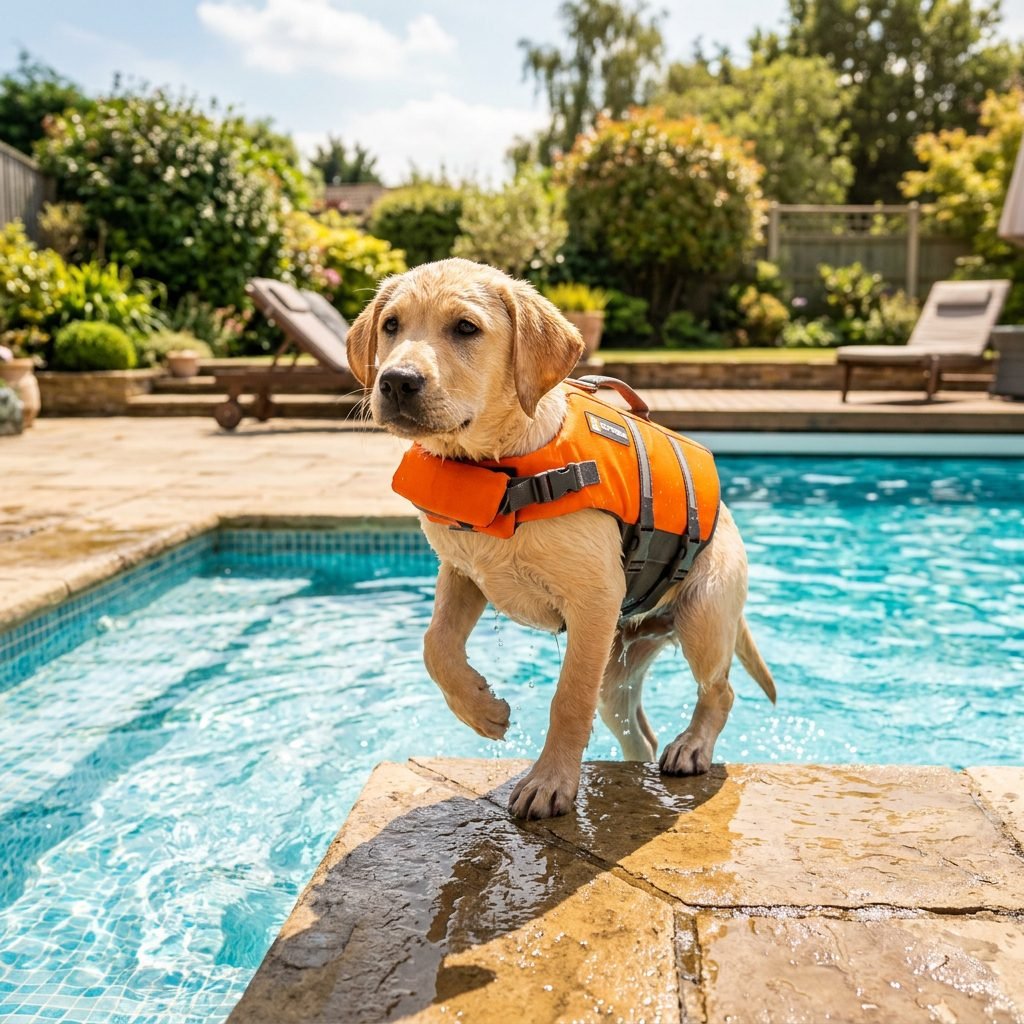
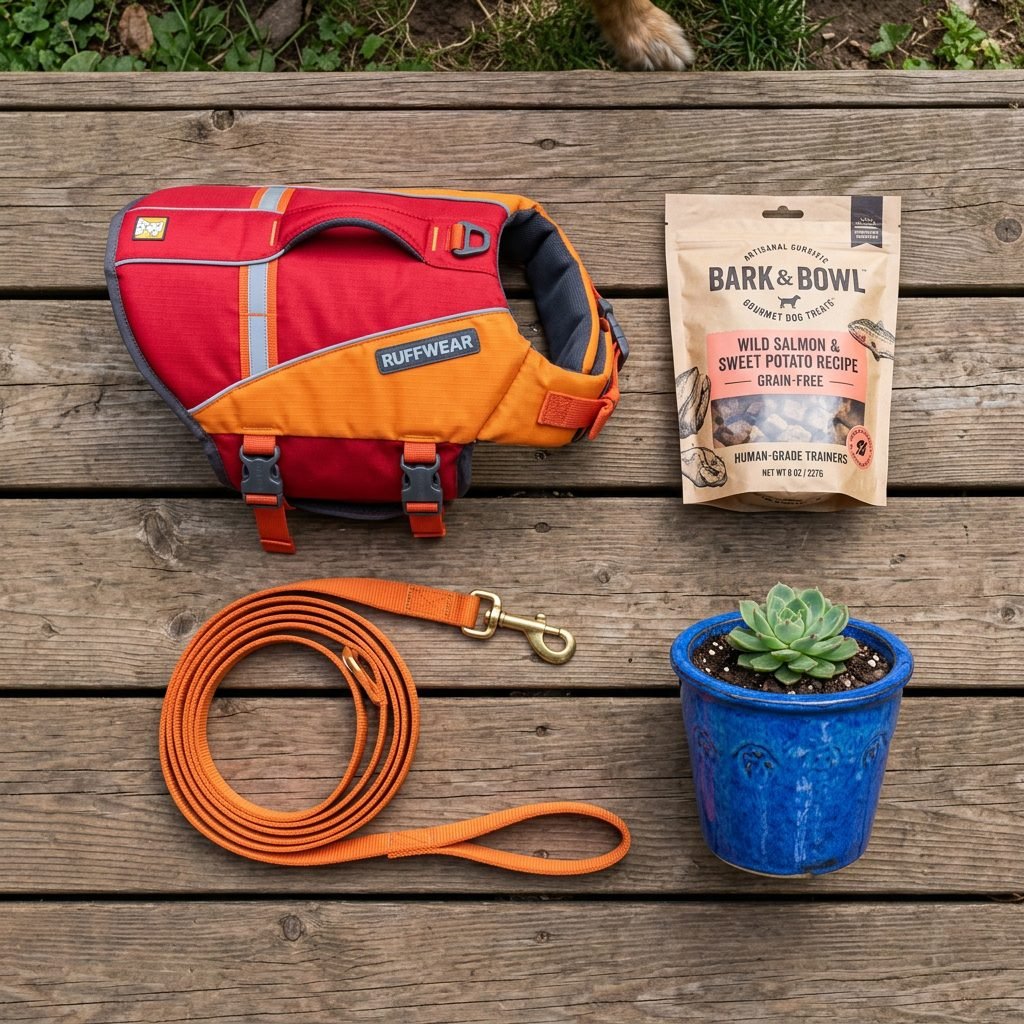
To make this training effective, I recommend the following items. Each serves a specific purpose in the 3-step method. For instance, a life jacket isn’t just for buoyancy; it provides a handle for you to guide them without putting pressure on their neck or throat.
| Tool | Purpose | Why It Is Essential |
|---|---|---|
| High-Visibility Life Jacket | Buoyancy and Control | Provides a handle to guide the puppy and keeps them afloat if they tire. |
| Visual Marker (The ‘Lighthouse’) | Spatial Orientation | A large, brightly colored object (like a blue or yellow potted plant) placed at the steps. |
| High-Value Treats | Positive Reinforcement | Freeze-dried liver or chicken to create a strong positive association with the steps. |
| Long Training Lead | Safety Tether | Ensures the puppy cannot drift into the deep end during early training phases. |
When choosing a visual marker, keep in mind that dogs see blue and yellow most clearly. A bright yellow flowering plant or a large blue outdoor urn placed right next to the pool steps acts as a ‘lighthouse,’ giving them a target to swim toward from anywhere in the water.
Step 1: The Lighthouse – Conditioning the Visual Marker
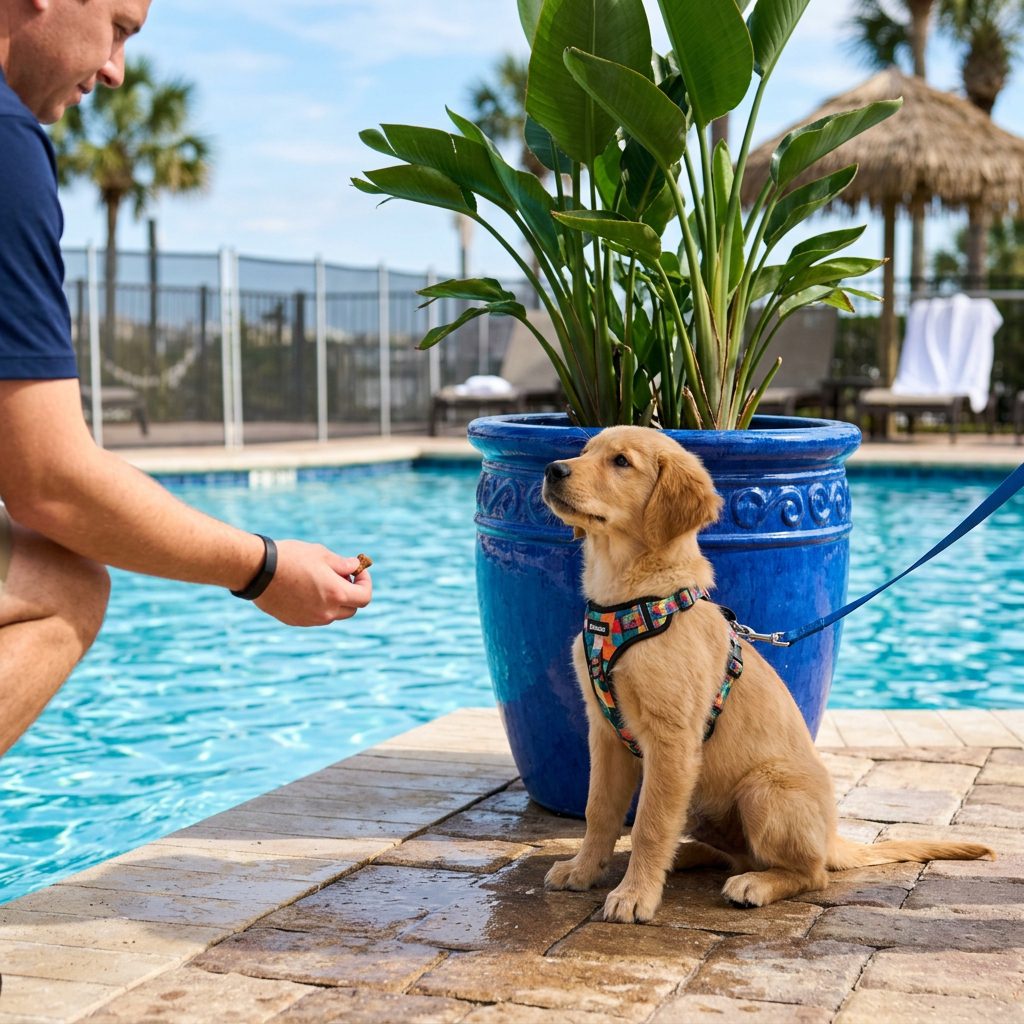
Step 1: Creating a Cognitive Map
The first step in our life-saving method doesn’t actually happen in the water. It happens on the pool deck. We want to teach your puppy that the Visual Marker (our ‘Lighthouse’) equals safety, rewards, and the way out. This is called ‘land-based conditioning.’ If your puppy understands that the big blue pot means ‘good things happen here,’ they will instinctively look for that pot when they are in the water and feeling a bit overwhelmed.
How to Condition the Marker
- Place your chosen marker (e.g., the blue pot) right at the edge of the pool steps.
- Walk your puppy around the pool deck on a leash.
- Every time you approach the marker, get excited! Use a high-pitched, friendly voice.
- Lead your puppy directly to the marker and place a treat on the top step of the pool.
- Repeat this 10-15 times until the puppy starts pulling you toward the marker as soon as they see it.
By doing this, you are building a strong neurological connection between the visual cue of the marker and the physical location of the exit. Puppies are excellent at pattern recognition. When they eventually find themselves in the water, their brain will search for a familiar pattern. That bright blue pot will stand out against the landscape, shouting ‘Exit here!’
Pro Tip: Do not rush this step. The stronger the association on land, the faster they will learn in the water.
Step 2: Guided Navigation – The ‘Cradle’ Entry
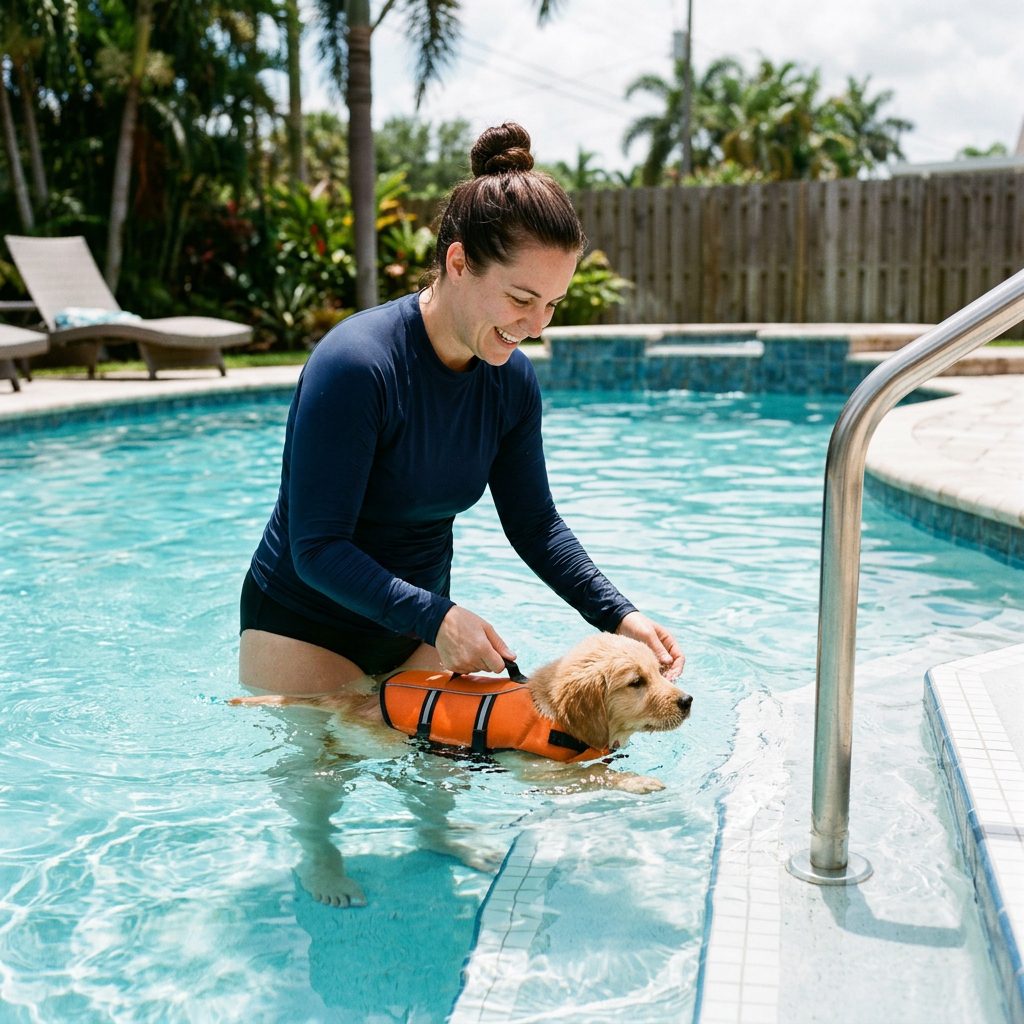
Step 2: The First Dip and Guided Exit
Now that your puppy loves the ‘Lighthouse,’ it is time to get wet. This step is about physical muscle memory. We want the puppy to experience entering the water and immediately turning back to the steps. Never throw your puppy into the pool. This can cause a trauma response that makes future training nearly impossible. Instead, we use the ‘Cradle Entry.’
Executing the Guided Exit
Put the life jacket on your puppy and ensure it is snug. Pick them up gently, supporting their chest and hindquarters. Walk into the pool via the steps so they feel the water rising on their legs. This prevents the ‘cold shock’ response.
- The Turn-Around: While standing in the shallow end, hold your puppy facing away from the steps. Gently lower them into the water.
- The Guide: As soon as they start to paddle, use the handle on the life jacket to gently turn them 180 degrees so they are facing the steps (and the Lighthouse marker).
- The Reward: Guide them to the steps. As their paws touch the stone, give them immense praise and a treat.
Repeat this process, gradually increasing the distance from the steps by a few inches each time. You are teaching them that no matter which way they are facing when they hit the water, the first thing they should do is look for the marker and turn toward it.
Step 3: The Independent Find – Proofing the Skill
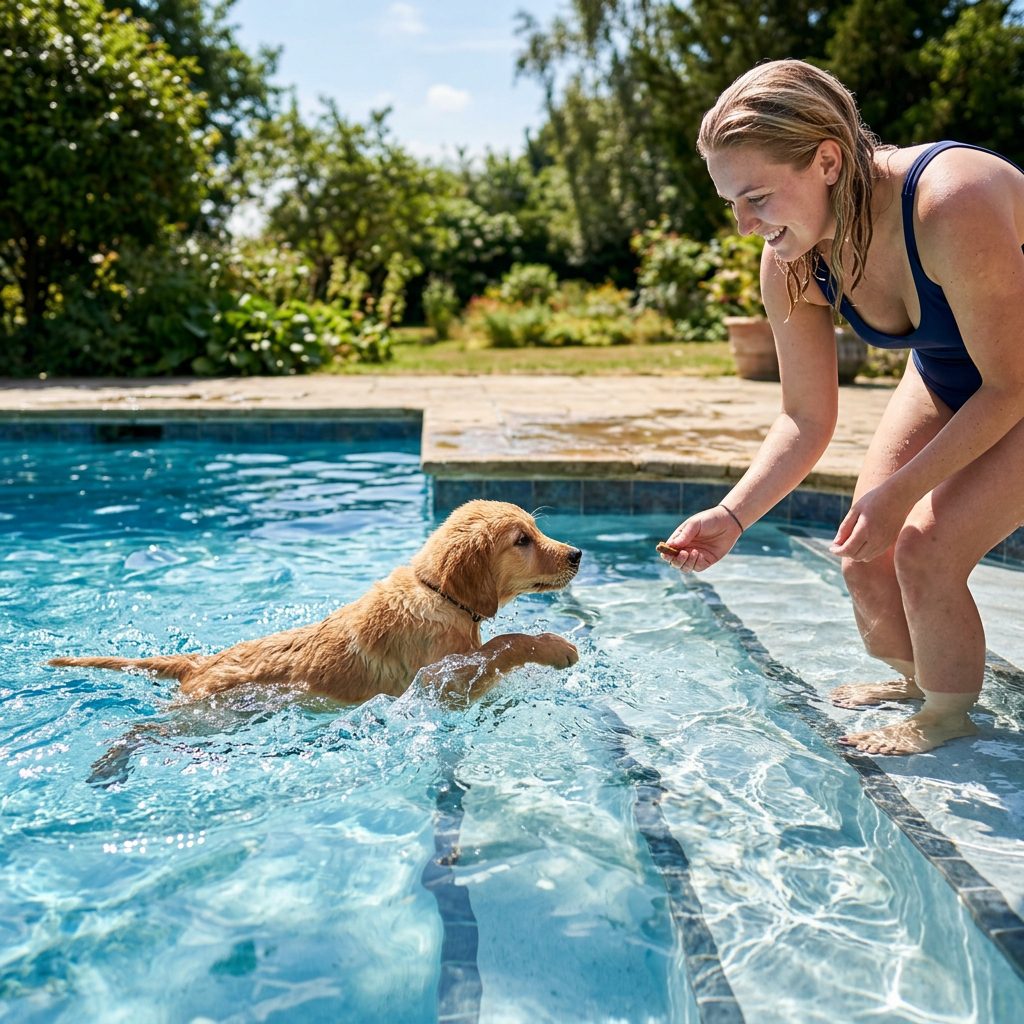
Step 3: Building Independence and Confidence
The final step is the most critical. This is where we ensure the puppy can find the steps without your physical guidance. We want to ‘proof’ the behavior from different angles of the pool. A puppy might know how to find the steps if they fall in right next to them, but what if they fall in at the far end? This is where the 3-Step Life Saving Method truly saves lives.
The ‘Drop and Find’ Drill
With the life jacket still on, have a second person stand a few feet away from the steps in the water. They will gently support the puppy in the water while you stand on the deck next to the Lighthouse marker. Call your puppy’s name enthusiastically.
| Phase | Action | Goal |
|---|---|---|
| Phase A | Release puppy 3 feet from steps. | Immediate recognition of the exit. |
| Phase B | Release puppy from the opposite side. | Long-distance navigation to the marker. |
| Phase C | Release puppy facing the ‘wrong’ way. | The 180-degree self-correction. |
During Phase C, if the puppy starts swimming toward the deep end or the flat walls, do not panic. Simply point toward the marker and call them. If they struggle, use the long lead to gently guide them back on track. Once they successfully find the steps from all angles of the pool multiple times, they have mastered the skill. Congratulations! You have just significantly reduced the risk of a backyard tragedy.
Troubleshooting and Common Pitfalls

What to Do When Things Don’t Go to Plan
Even with the best training, puppies are individuals. Some may take to the water like otters, while others may be terrified. It is important to recognize the signs of stress and fatigue. If your puppy is ‘climbing the ladder’ (splashing excessively with their front paws) or if their ears are pinned back and their eyes are wide (showing the whites), they are in the Panic Zone. No learning happens in the Panic Zone.
Common Mistakes to Avoid
- Over-training: Puppy attention spans are short. Limit sessions to 10 minutes. If they get tired, they will associate the pool with exhaustion rather than safety.
- Removing the Marker Too Soon: Keep that blue pot or flag out for at least the first full season. It takes time for that cognitive map to become permanent.
- Assuming One Step is Enough: If you have a large pool with multiple entry points, you must repeat this training for every set of steps or ramps.
If your puppy is particularly fearful, go back to Step 1. Spend more time playing near the pool without actually going in. Use a ‘high-value’ reward that they only get when they are near the water, like small pieces of plain, boiled hot dog or cheese.
Remember: Every puppy learns at their own pace. Patience is your greatest asset.
Beyond the Steps: Layers of Protection
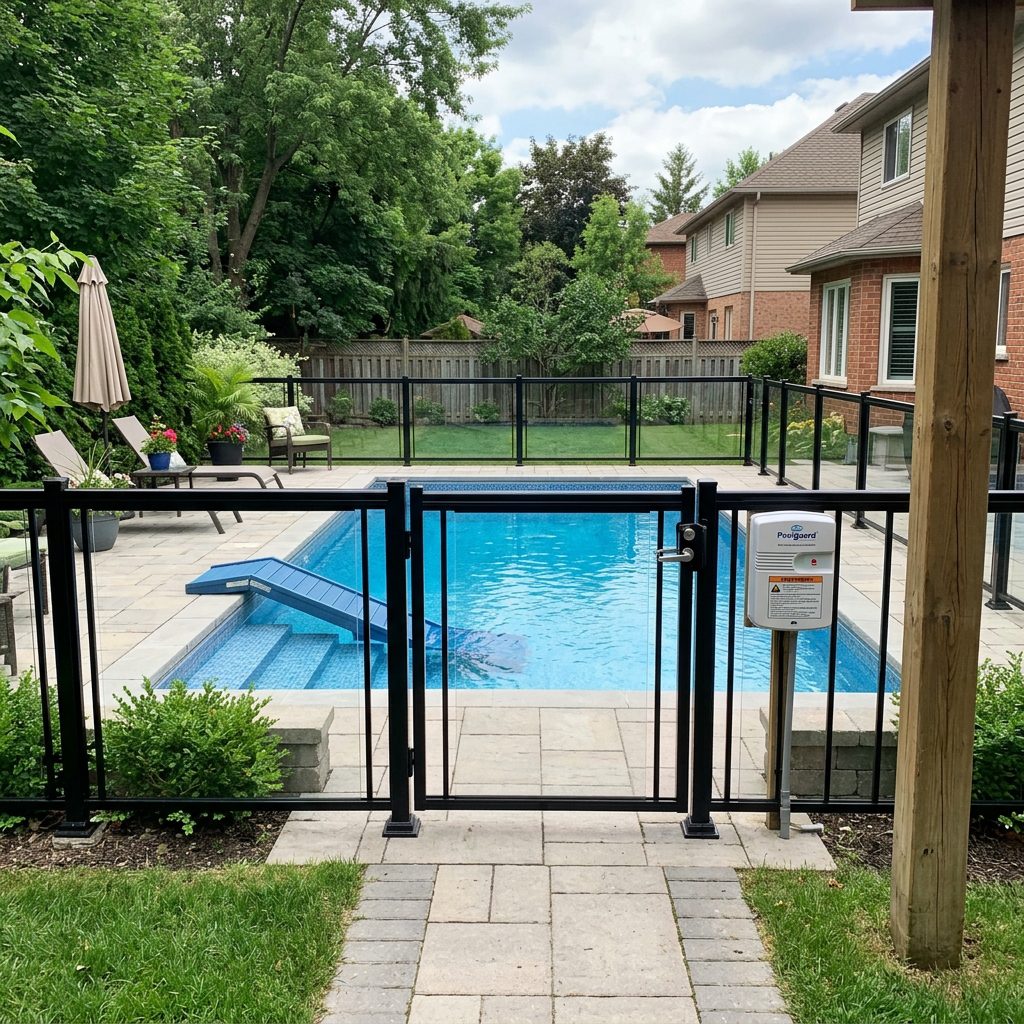
A Holistic Approach to Pool Safety
While the 3-Step Method is a life-saver, it should be part of a multi-layered safety strategy. No amount of training replaces active supervision. Think of your puppy like a toddler; they should never be near the water alone. As a savvy dog owner, you should consider adding physical barriers to your pool area.
Safety Enhancements for Your Pool
| Safety Feature | How It Works | Benefit |
|---|---|---|
| Pool Alarm | Sensors detect surface waves. | Alerts you immediately if something falls into the water. |
| Pet Ramp | A slanted mesh ramp. | Easier for small or senior dogs to climb than traditional steps. |
| Pool Fence | A physical 4-foot barrier. | Prevents unsupervised access to the pool deck entirely. |
Additionally, keep the water level high. If the water level drops too low, the puppy may reach the steps but be unable to pull themselves up over the ‘lip’ of the pool deck. Keeping the water at the midpoint of the tile line ensures the easiest possible exit for your furry friend.
Conclusion
Your Peace of Mind Starts Today
Teaching your puppy to find the pool steps is one of the most rewarding and vital skills you can provide. By using the 3-Step Life Saving Method—conditioning a visual marker, guiding their physical navigation, and proofing their independence—you are giving them the tools to stay safe in a potentially dangerous environment. We have covered the importance of the ‘Lighthouse’ effect, the necessity of the ‘Cradle Entry,’ and the value of multi-layered safety. But the most important takeaway is this: your presence is the ultimate safety feature. Always supervise your pets near water, continue to reinforce their training throughout their life, and enjoy those sunny pool days knowing that you have done everything possible to keep your puppy safe. Happy swimming!