No More Bolting! The 3-Step Trick to Teach Your Puppy to Wait Calmly at the Crate Door
We have all been there. You walk up to your puppy’s crate in the morning, coffee in hand, ready to start the day. The moment your fingers brush against the metal latch, it is as if a starting pistol goes off. Your adorable, sleepy puppy suddenly transforms into a furry torpedo, launching themselves against the door, squeezing through the tiniest gap, and bolting into the living room before you can even blink.
While this explosive enthusiasm might seem cute at first, a bolting puppy is actually a recipe for frustration and, more importantly, a significant safety hazard. Dogs that bolt from their crates are at risk of catching their collars on the metal wiring, injuring their paws, or knocking over young children and elderly family members. Furthermore, a dog that learns to barge through doors without permission is a dog that will eventually try to bolt out of the front door, out of the car, or out of the vet’s office.
As savvy dog owners, we know that true freedom for our dogs comes from discipline and impulse control. Teaching your puppy to wait calmly at the crate door is not just about convenience; it is a foundational life skill that translates to every other aspect of their training. It teaches them that calm behavior, rather than frantic movement, is the key that unlocks what they want.
Pro Tip: Impulse control is like a muscle. The more you work it in low-stakes environments like the crate, the stronger it will be when you need it in high-stakes situations, like a dropped piece of chocolate on the kitchen floor.
If you are tired of the daily crate escape, you are in the right place. In this comprehensive guide, we are going to break down the psychology behind why your puppy bolts, set you up with the exact tools you need, and walk you through a foolproof, step-by-step trick to transform your chaotic crate releases into moments of zen-like patience. Let’s get started!
Why Does Your Puppy Bolt? Understanding the Urge
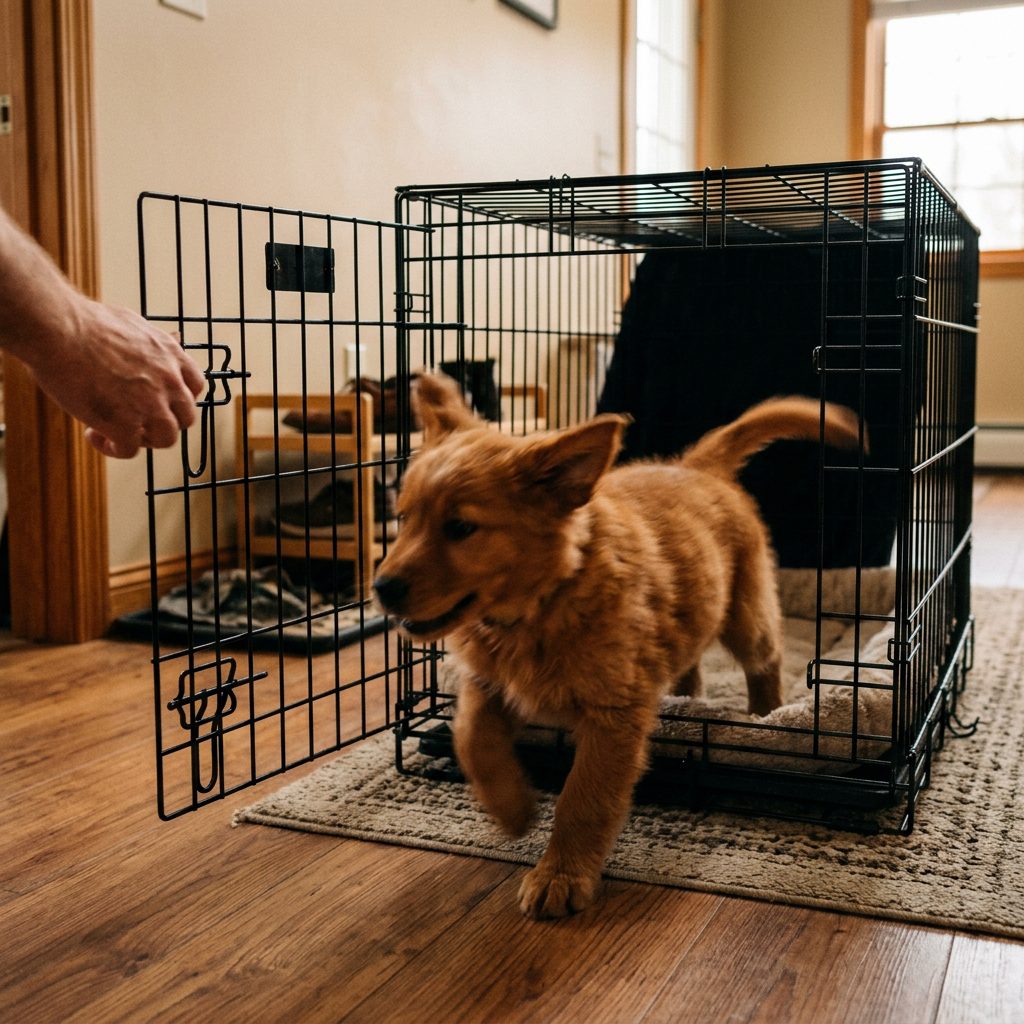
Before we can fix the bolting behavior, we need to understand the ‘why’ behind it. Puppies do not bolt out of their crates because they are trying to be dominant, stubborn, or naughty. They bolt because they are overwhelmed by anticipation and lack the necessary impulse control to manage their own excitement.
Think about it from your puppy’s perspective. The crate is their den, a place for rest and relaxation. But outside the crate? That is where the magic happens. Outside is where breakfast is served, where their favorite squeaky toys live, where potty breaks happen, and where their favorite human (you!) is waiting to play. The moment they hear you approaching, their adrenaline spikes. The click of the latch becomes a highly charged conditioned stimulus that tells their brain, ‘GO!’
Here are the primary reasons your puppy struggles to wait at the door:
- Pent-Up Energy: After a long night’s sleep or a few hours safely tucked away while you are at work, your puppy is physically ready to move. Their little bodies are buzzing with stored energy.
- Lack of Clear Boundaries: If you have never explicitly taught your puppy that they must wait for a release cue, they simply assume an open door means they are free to exit. Dogs are opportunists; if a gap opens, they will take it.
- Accidental Reinforcement: This is the most common culprit. If your puppy pushes against the door and you eventually open it completely, you have just taught them that pushing works. You have inadvertently rewarded the exact behavior you want to stop.
To break this cycle, we have to change the rules of the game. We must teach the puppy that a hand on the latch or a partially opened door is not a cue to rush forward, but rather a cue to sit back and wait. We are shifting the trigger from ‘excitement’ to ‘focus.’ By doing this, we engage their thinking brain rather than their reactive brain.
Tools for Success: What You Need Before We Start
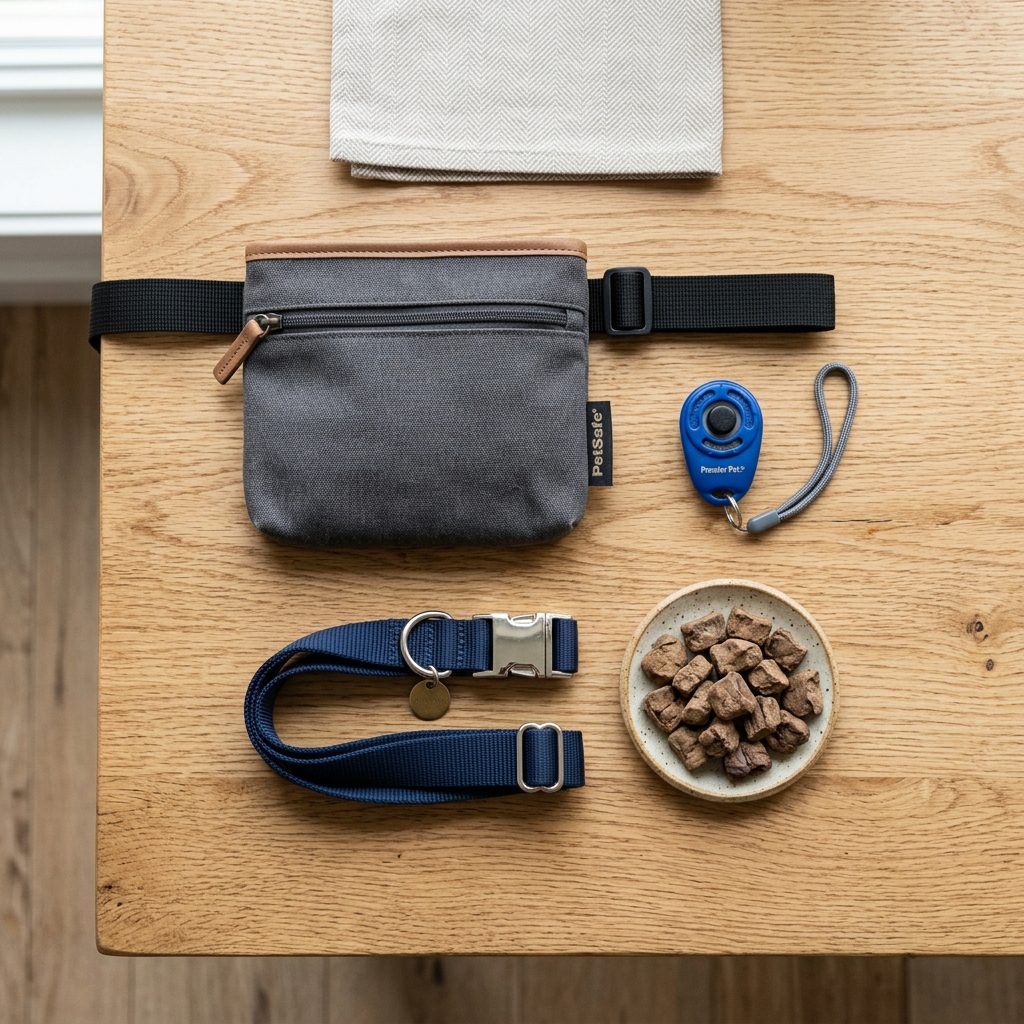
Preparation is the key to successful dog training. If you try to teach this 3-step trick when you are rushing to get to work or when you are out of training treats, you are setting both yourself and your puppy up for failure. We want to set the stage for clear communication and rapid learning.
Because we are teaching impulse control, we need rewards that are valuable enough to make waiting worthwhile. Plain kibble might work for a hungry puppy, but having something a little more special in your toolkit will speed up the process immensely. You also need a marker—a way to tell your puppy, ‘Yes, that exact choice you just made is the correct one!’
Here is a breakdown of the essential tools you will need before we begin the 3-step trick:
| Training Tool | Why You Need It | Pro Tip for Savvy Owners |
|---|---|---|
| High-Value Treats | To reward impulse control instantly and make the crate a highly positive space. | Use pea-sized, smelly treats like freeze-dried beef liver, boiled chicken, or hot dogs. Keep them small so the puppy doesn’t get full or distracted chewing. |
| Clicker or Marker Word | To pinpoint the exact moment your puppy makes the right choice (e.g., shifting their weight backward). | If you don’t have a clicker, choose a sharp, consistent word like ‘Yes!’ or ‘Good!’ Deliver the treat within one second of the marker. |
| A Properly Sized Crate | To ensure the puppy feels secure but doesn’t have so much room that they can build up a running start. | The crate should only be large enough for the puppy to stand up, turn around, and lie down comfortably. Use dividers if necessary. |
| Patience & Timing | Impulse control is hard for young brains. Your calm demeanor sets the tone. | Keep training sessions short—no more than 3 to 5 minutes at a time. End on a successful note rather than pushing until the puppy gets frustrated. |
Once you have your treats prepped in a pouch or a bowl near the crate, and you have taken a deep breath to center your own energy, you are ready to begin the training. Remember, during these initial sessions, we are completely silent. We are going to let the door do the talking.
Step 1: The ‘Door Game’ (Building the Foundation)
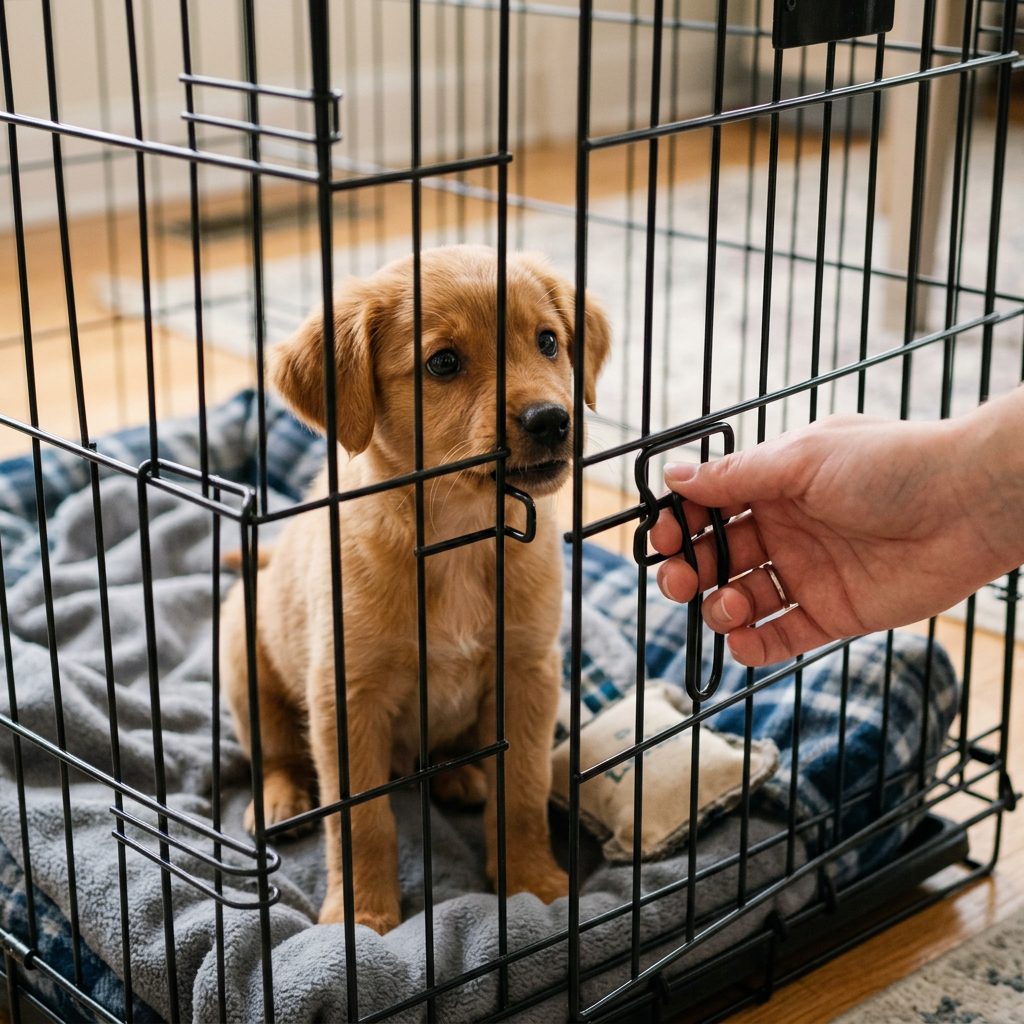
The first step in our 3-step trick is affectionately known in the dog training world as the ‘Door Game.’ The beauty of this step is that it requires absolutely no verbal commands. You are not going to say ‘Wait,’ ‘Stay,’ ‘No,’ or ‘Back.’ Instead, you are going to use the crate door as a mechanical boundary to teach your puppy that their actions control the door.
The concept is simple: Calmness opens the door; forward movement closes the door. It is a game of ‘Simon Says’ where the puppy has to figure out the rules through trial and error. Because savvy dog owners know that dogs learn best when they make choices themselves, this method creates a deep, lasting understanding of impulse control.
How to Play the Door Game:
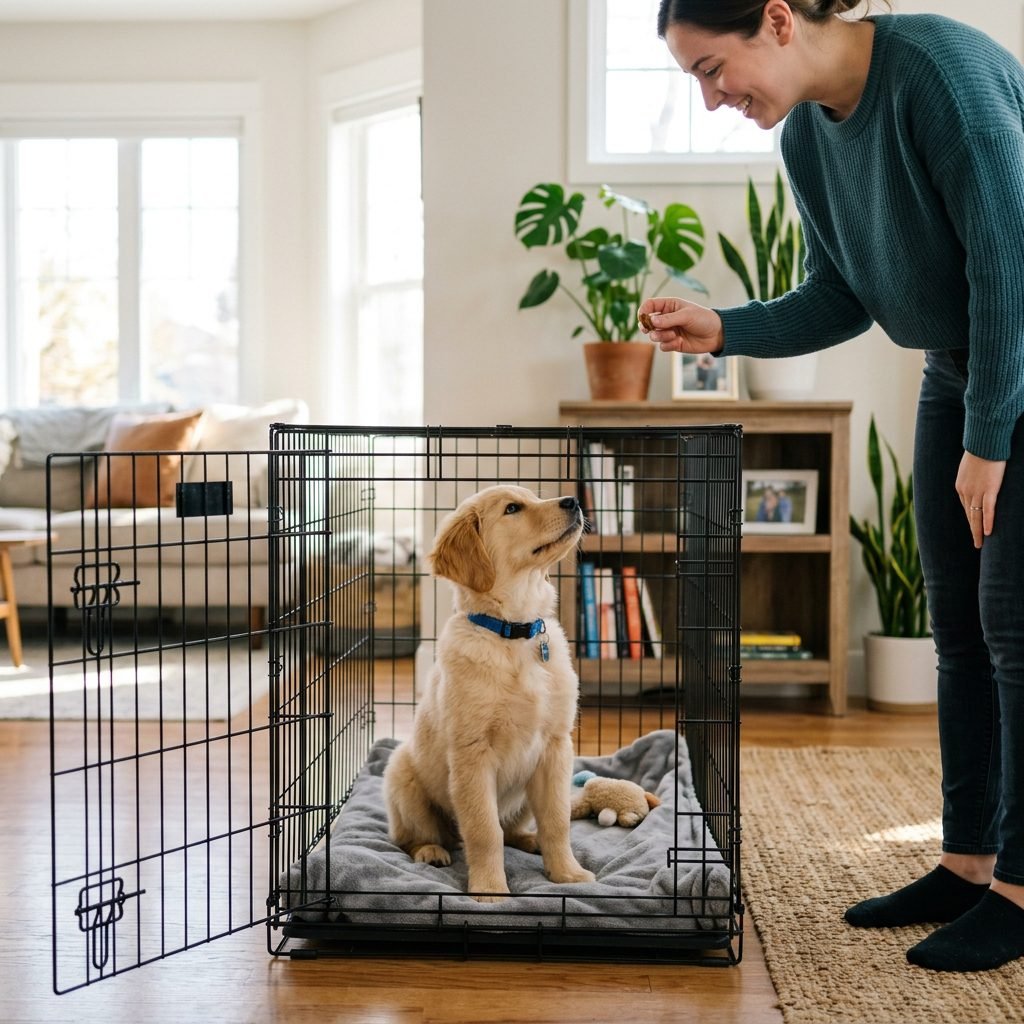
- Approach the Crate Calmly: Walk up to the crate with your treats ready. If your puppy is whining, barking, or pawing at the door, stand perfectly still and wait. Do not make eye contact. Wait for a moment of silence and stillness.
- Touch the Latch: Reach out and touch the latch. If your puppy lunges forward, immediately pull your hand back and stand up straight. Wait for them to settle again. Repeat this until you can touch the latch without the puppy moving.
- Open the Door One Inch: Unlatch the door and open it just a tiny crack—about an inch. The second your puppy’s nose moves toward the gap, gently but swiftly shut the door. Do not slam it or scare the puppy; just close it so they cannot get out.
- Wait for the Back-Up: This is the crucial moment. Keep your hand on the latch. Eventually, your puppy will realize that pushing forward makes the door close. They will likely sit down, look at you, or shift their weight backward. The exact millisecond they do this, mark it (click or say ‘Yes!’) and toss a treat into the back of the crate.
- Expand the Gap: Try opening the door two inches. If they stay still, mark and treat. If they move forward, close the door. Gradually increase how wide the door opens.
Your goal for Step 1 is to be able to swing the crate door completely wide open while your puppy remains sitting or lying down inside. Do not ask them to come out yet. Just practice opening and closing the door, rewarding them for holding their position. You are rewiring their brain to understand that an open door is an invitation to relax, not an invitation to bolt.
Expert Tip: Tossing the treat into the back of the crate is a strategic move. It physically resets the puppy away from the door and reinforces that the back of the crate is a highly rewarding place to be.
Step 2: Adding the ‘Wait’ Cue and Duration
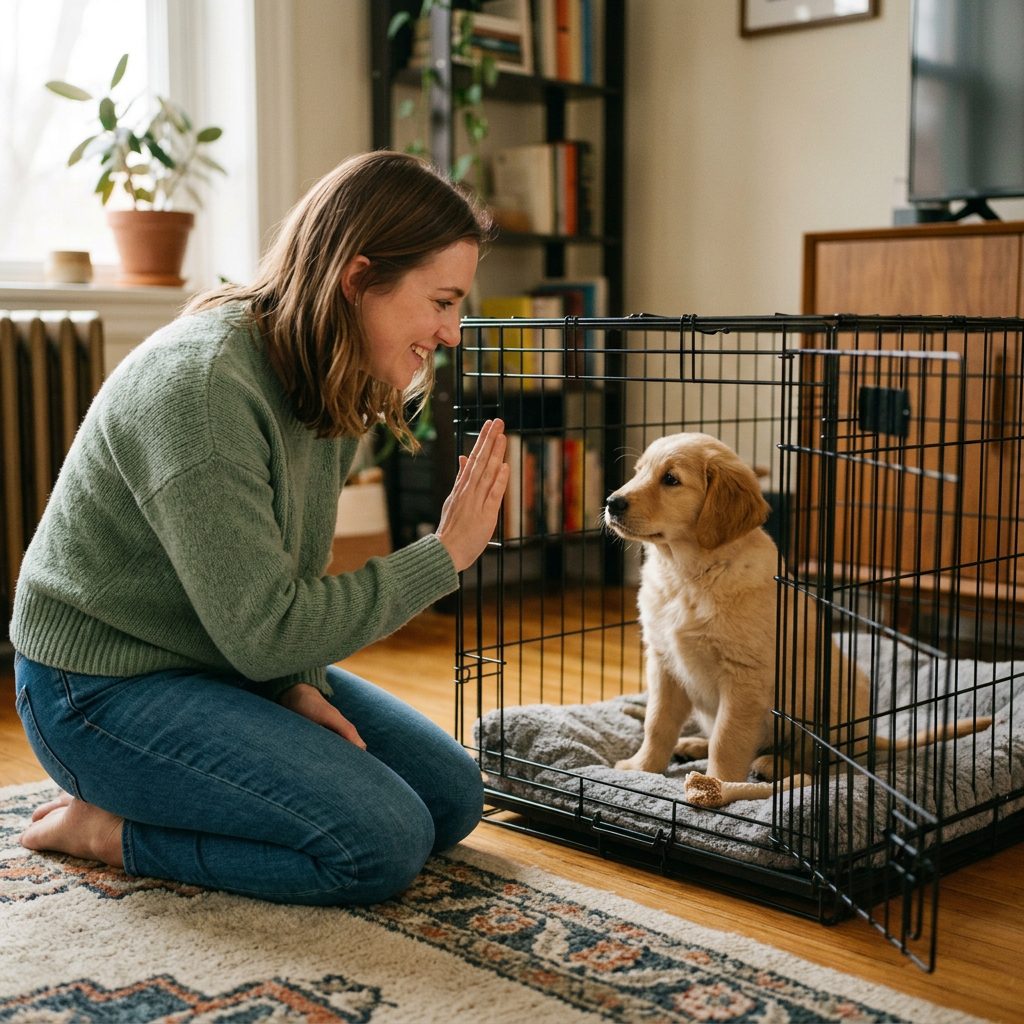
Once your puppy has mastered the Door Game and can reliably sit calmly while you swing the door wide open, it is time to introduce the verbal cue and build up their endurance. We are transitioning from a physical boundary (the door) to a verbal and psychological boundary (the ‘Wait’ cue).
Why didn’t we use the word ‘Wait’ in Step 1? Because dogs do not speak English. If you say ‘Wait’ while the puppy is actively trying to bolt, they will associate the word ‘Wait’ with the act of struggling against the door. By teaching the physical behavior first, we can now attach the word to a behavior the puppy already understands.
Introducing the Verbal Cue
Start your session just like you did in Step 1. Approach the crate, wait for calmness, and reach for the latch. Just before you begin to open the door, say the word ‘Wait’ in a calm, conversational tone. Use a flat hand signal (like a stop sign) if you want to add a visual cue.
Proceed to open the door. Because you have already practiced the Door Game, your puppy should remain seated. If they hold their position, mark (‘Yes!’) and treat. You have now successfully paired the word ‘Wait’ with the action of staying put.
Building Duration
Now we need to teach the puppy that ‘Wait’ doesn’t just mean pause for one second; it means hold this position until I release you. We do this by slowly increasing the time between opening the door and delivering the reward.
- The 3-Second Rule: Open the door fully. Say ‘Wait.’ Count to three in your head. If the puppy remains still, mark and treat. If they break position before you reach three, gently close the door, reset, and try again for just one second.
- Eye Contact is Key: While building duration, encourage your puppy to look at you, not at the open door. When a dog locks eyes with you, they are checking in for direction. Reward eye contact heavily. It shows they are engaged with you, not the environment outside the crate.
- The Release Cue: You must have a clear release word to tell your puppy the waiting game is over and they are free to exit. Common release words are ‘Break,’ ‘Okay,’ or ‘Free.’ After your puppy has waited successfully for a few seconds, say your release word enthusiastically, step back, and encourage them to come out.
Remember, the release word is just as important as the wait cue. If you don’t release them clearly, they will eventually decide to release themselves, which undoes all your hard work. You control the start of the exercise, and you must control the end.
Step 3: The Ultimate Test (Distractions and Distance)
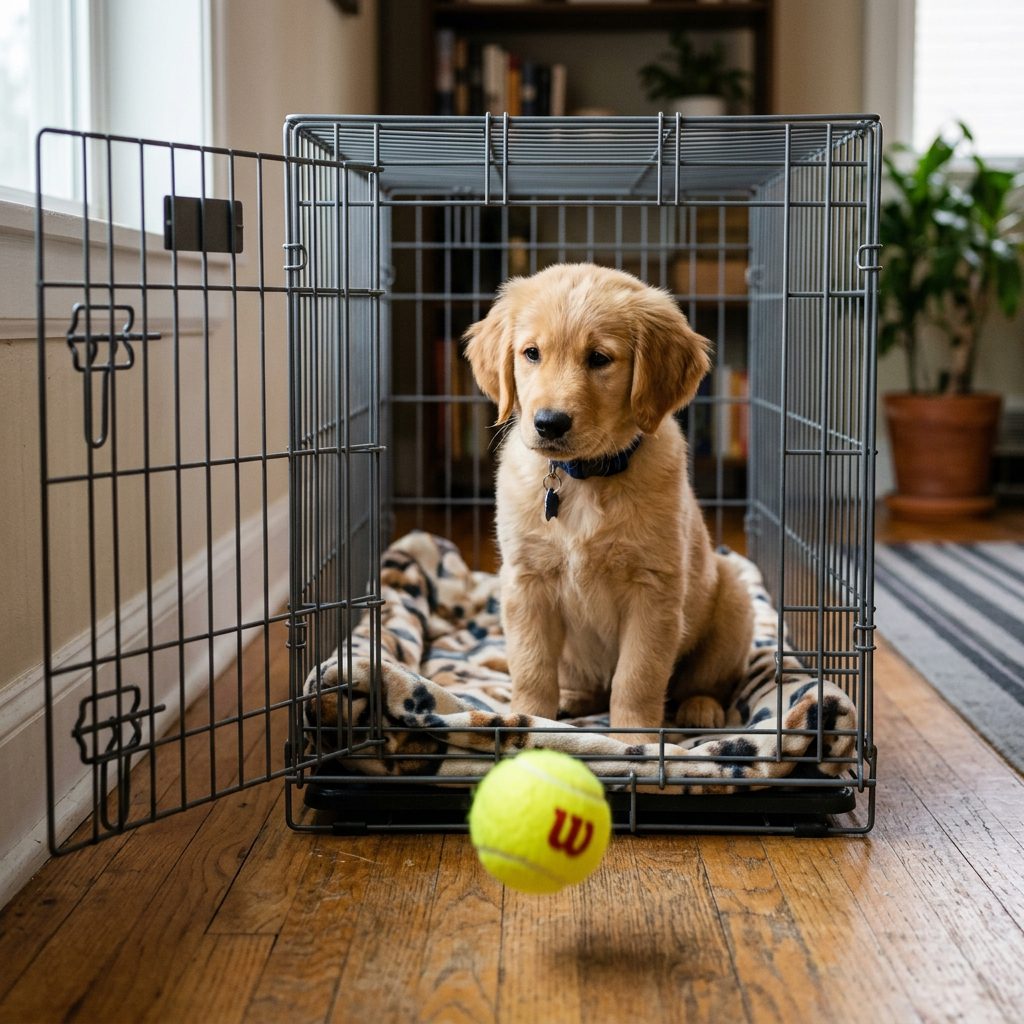
Congratulations! You have a puppy that can wait at an open crate door for several seconds. For many owners, this is enough. But savvy dog owners know that real life is messy, unpredictable, and full of distractions. If your puppy can only wait when the house is perfectly quiet and you are standing right in front of them, the training will fall apart the moment the doorbell rings or another pet walks by.
Step 3 is all about ‘proofing’ the behavior. Proofing means exposing your puppy to various challenges to ensure they truly understand the command regardless of the environment. We do this by manipulating two variables: Distractions and Distance.
Adding Distractions
We want to teach the puppy that ‘Wait’ means wait, even if something incredibly exciting is happening right outside their crate. Start with low-level distractions and gradually work your way up to the hard stuff.
- The Treat Drop: With the crate door open and the puppy in a ‘Wait,’ intentionally drop a piece of kibble on the floor outside the crate. If they lunge for it, close the door immediately. If they stay put, mark, pick up the dropped kibble, and give them a much higher-value treat from your pouch.
- The Toy Squeak: Hold one of their favorite toys outside the open crate. Squeak it once. If they hold their wait, reward them generously.
- The Happy Dance: Try waving your arms, jumping up and down slightly, or talking in an excited voice. Your puppy must learn to regulate their own arousal levels even when you are acting silly.
Adding Distance
Next, we need to teach the puppy that they must wait even if you walk away from the crate. This is crucial for safety, as you may need to open the crate and then step across the room to grab their leash.
With the door open, give your ‘Wait’ cue. Take one single step backward. Immediately step back to the crate, mark, and treat. Do not call them out to you yet! We want them to understand that you moving away does not equal a release. Gradually increase your distance: take two steps back, then three, then walk across the room. If at any point the puppy breaks their wait and steps out of the crate without their release word, calmly walk them back into the crate, close the door, and start again at an easier distance.
By combining distance and distractions, you forge an unbreakable impulse control habit. Your puppy will learn that the safest, most rewarding choice is always to stay put until they hear that magical release word.
Troubleshooting Common Crate Training Mistakes
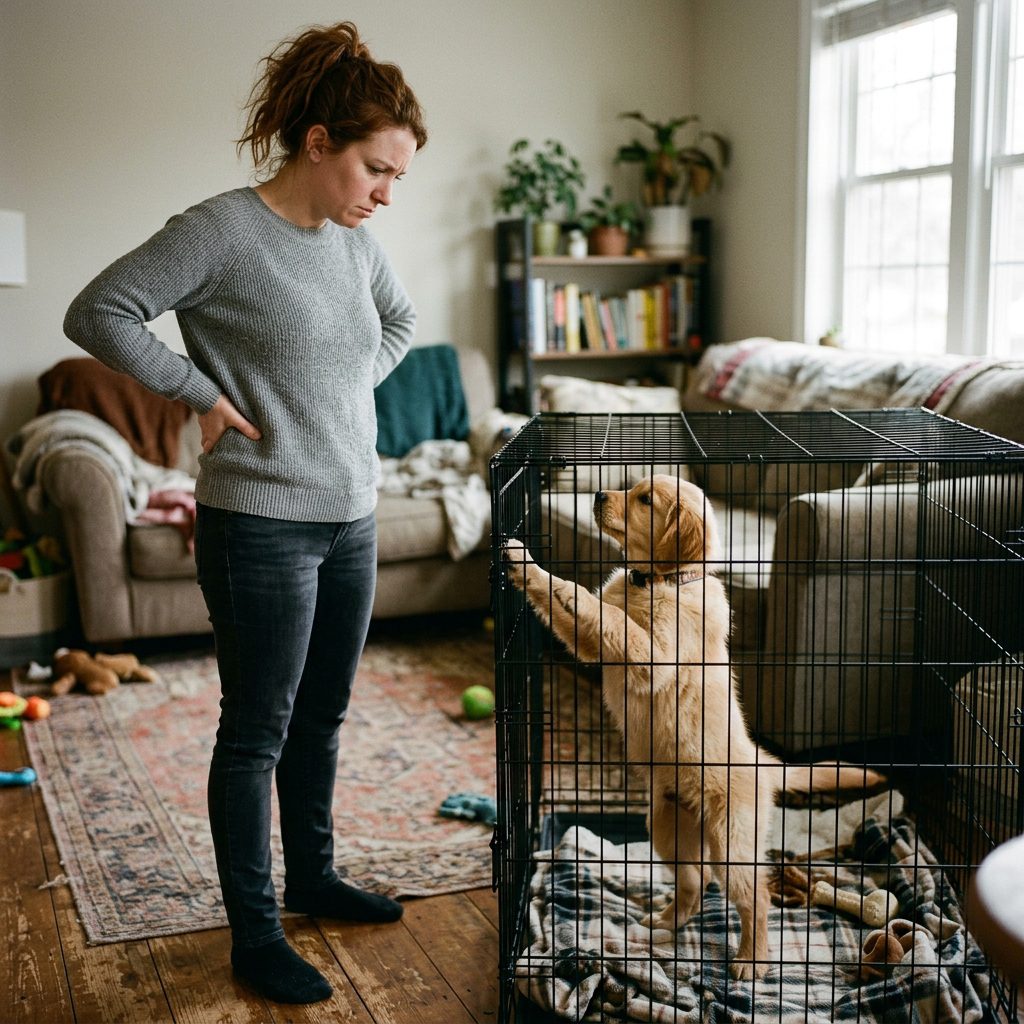
Even with the best intentions and the smartest puppy, dog training is rarely a perfectly linear journey. You will have days where your puppy seems to have forgotten everything, and days where they test boundaries they previously respected. This is completely normal and is simply a part of the adolescent canine development phase.
When things go wrong, it is important not to get frustrated. Dogs are incredibly adept at reading human emotions, and if you become tense or angry, your puppy will become stressed, making learning impossible. Instead of getting mad, get analytical. Look at the situation like a mechanic looking at an engine. What part of the process broke down?
Here is a troubleshooting guide for the most common issues owners face when teaching the crate door wait, along with savvy solutions to get you back on track:
| The Problem | The Root Cause | The Savvy Solution |
|---|---|---|
| Puppy continuously paws at the door when you touch the latch. | They are trying to use physical force to open the door, likely because it worked in the past. | Stand completely still. Do not open the door even a millimeter until all four paws are on the floor. If they paw, remove your hand from the latch entirely. |
| Puppy whines or barks loudly during the exercise. | Frustration. They know what they want (to get out) but don’t understand the new rules yet. | Ignore the vocalizations. Do not look at them or speak to them. The moment they are quiet for just two seconds, mark and treat. Reward the silence. |
| Puppy waits perfectly, but explodes like a rocket when released. | The release word has become too highly charged, and the environment outside is too stimulating. | Change the post-release routine. Instead of releasing them to play wildly, release them and immediately ask for a ‘Sit’ or ‘Touch’ outside the crate to keep their brain engaged. |
| Puppy regresses and starts bolting again after weeks of success. | You likely got sloppy with your criteria and started letting them out without a clear release word. | Go back to basics. Revisit Step 1 (The Door Game) for a few sessions to remind them that the physical boundary still exists. Consistency is everything. |
The most important rule of troubleshooting is to never lower your ultimate standard, but always be willing to lower your immediate criteria. If your puppy is failing at a 10-second wait with the door wide open, don’t just give up. Lower the criteria: ask for a 2-second wait with the door open only halfway. Find the level where they can succeed, reward that success, and slowly build back up.
Conclusion
Teaching your puppy to wait calmly at the crate door is one of the most rewarding investments you can make in your dog’s behavioral foundation. By implementing this 3-step trick—mastering the Door Game, adding the verbal cue, and proofing against real-world distractions—you are doing so much more than just preventing a morning headache. You are teaching your dog emotional regulation, respect for boundaries, and the value of looking to you for guidance.
Remember, savvy dog ownership is not about quick fixes or intimidation; it is about clear communication, consistency, and positive reinforcement. There will be days when your puppy tests your patience, but if you stick to the rules and refuse to reward the bolting behavior, the lightbulb will go off in their head.
So, grab those high-value treats, take a deep breath, and head over to the crate. Your days of dodging a furry torpedo are officially over. With a little practice and a lot of consistency, you will soon be opening that crate door to a calm, focused, and beautifully well-behaved canine companion. Happy training!