The “Touch” Trick: Why Every Puppy Owner Needs To Teach This One Game-Changing Command
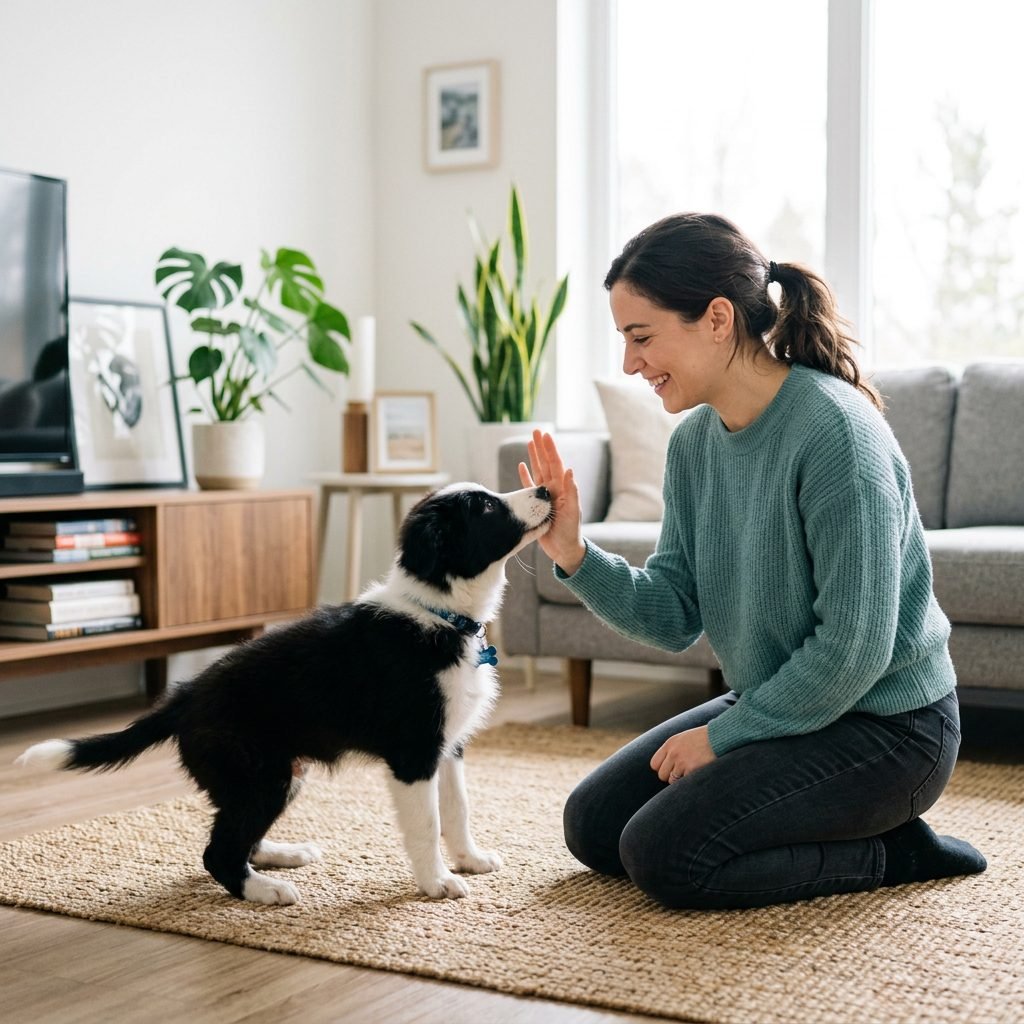
Welcome to the wonderful world of puppy parenthood! If you have recently brought home a furry bundle of joy, you are likely navigating the whirlwind of potty training, teething, and the quest for the perfect ‘Sit.’ But what if I told you there is a single command that acts as a Swiss Army knife for nearly every behavioral challenge you will face? Enter the ‘Touch’ command, also known as hand targeting. While it might look like a simple party trick where your dog boops your hand with their nose, it is actually one of the most versatile and powerful tools in a professional trainer’s toolkit. In this deep dive, we are going to explore why ‘Touch’ is a total game-changer for savvy dog owners and how you can master it in just a few short sessions.
The ‘Touch’ command is the foundation of communication; it moves a dog’s mind by moving their body.
Unlike ‘Sit’ or ‘Down,’ which are static behaviors, ‘Touch’ is dynamic. It invites your puppy to move through space, engage their brain, and target a specific point with precision. Whether you are dealing with a distracted pup at the park, a shy dog at the vet, or a rambunctious teenager who has forgotten their recall, the ‘Touch’ command is your secret weapon. Let’s get started on why this command deserves a top spot in your training repertoire.
The Science and Psychology Behind Hand Targeting
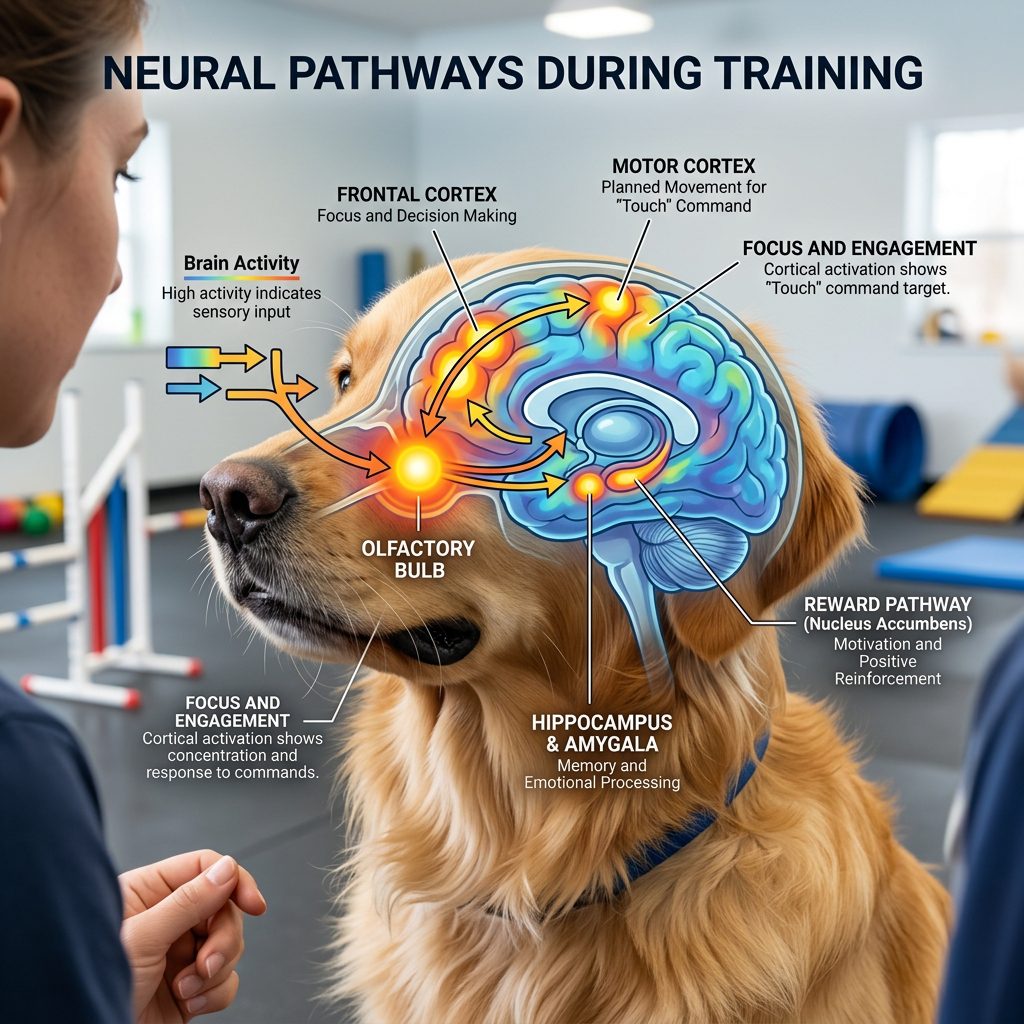
To understand why ‘Touch’ is so effective, we have to look at how puppies perceive the world. A dog’s nose is their primary interface with their environment. By asking them to target your hand with their nose, you are tapping into a natural, instinctive behavior. This is fundamentally different from commands like ‘Stay,’ which require the dog to suppress their energy. ‘Touch’ encourages active engagement and movement.
Operant Conditioning and the ‘Touch’ Response
When we teach ‘Touch,’ we are using operant conditioning—specifically positive reinforcement. Your puppy learns that the action of touching their nose to your palm results in a high-value reward. Over time, this creates a strong ‘history of reinforcement.’ This means the behavior becomes almost reflexive. When your puppy hears the word ‘Touch,’ their brain immediately associates the movement with a dopamine hit, making them eager to comply even in distracting environments.
| Feature | Traditional ‘Sit’ Command | Dynamic ‘Touch’ Command |
|---|---|---|
| Energy Level | Low (Static) | High (Active) |
| Focus Point | General area | Specific target (Your hand) |
| Utility | Impulse control | Movement, redirection, and recall |
| Confidence Building | Moderate | High (Encourages exploration) |
Furthermore, hand targeting helps build a puppy’s confidence. For a shy or fearful puppy, being asked to approach a hand can be a bridge to interacting with new people or objects. It gives them a ‘job’ to do, which can alleviate anxiety by focusing their mind on a specific, achievable task.
Tools for Success: What You Need Before You Start
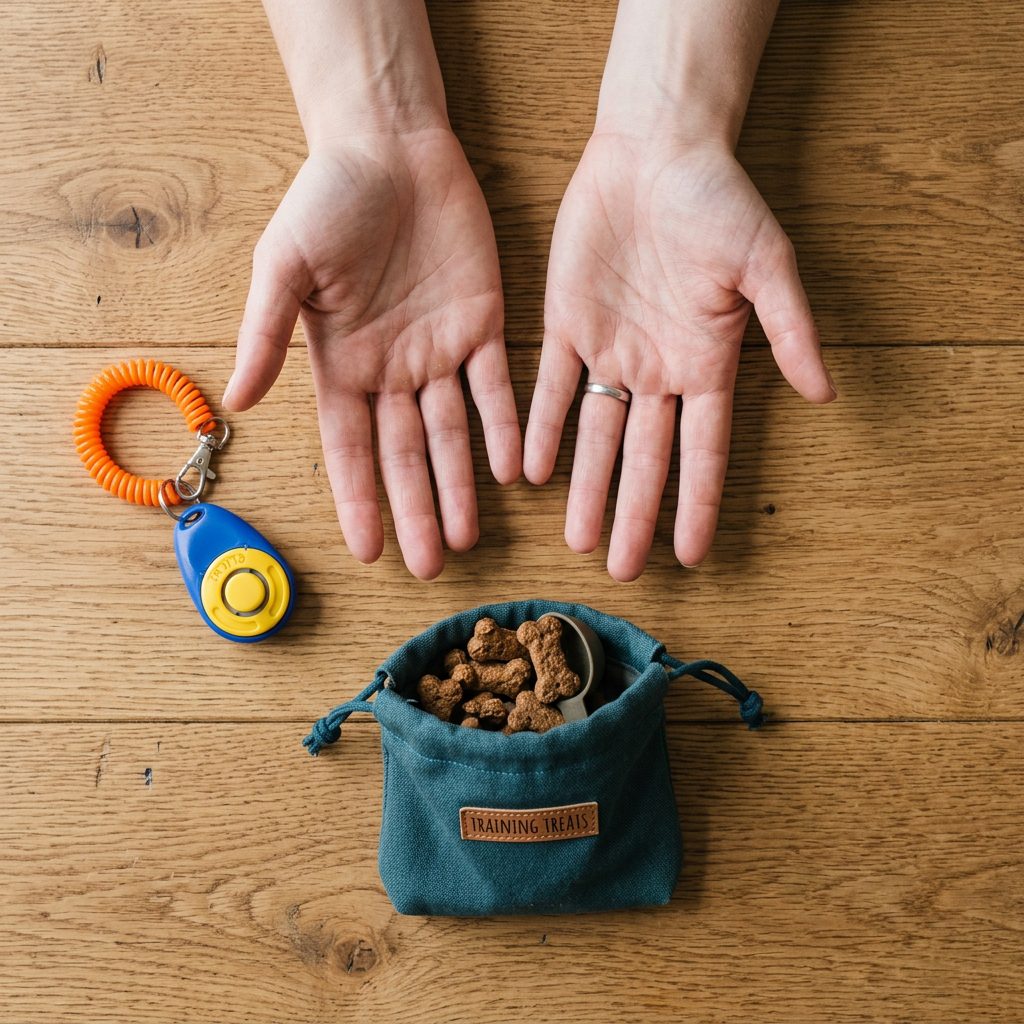
Before we dive into the steps, let’s make sure you have everything you need. The beauty of the ‘Touch’ command is its simplicity—you don’t need expensive equipment, just a few basics and a positive attitude.
- High-Value Treats: Puppies are motivated by their stomachs. Use small, pea-sized treats that your dog absolutely loves—think boiled chicken, string cheese, or specialized training treats.
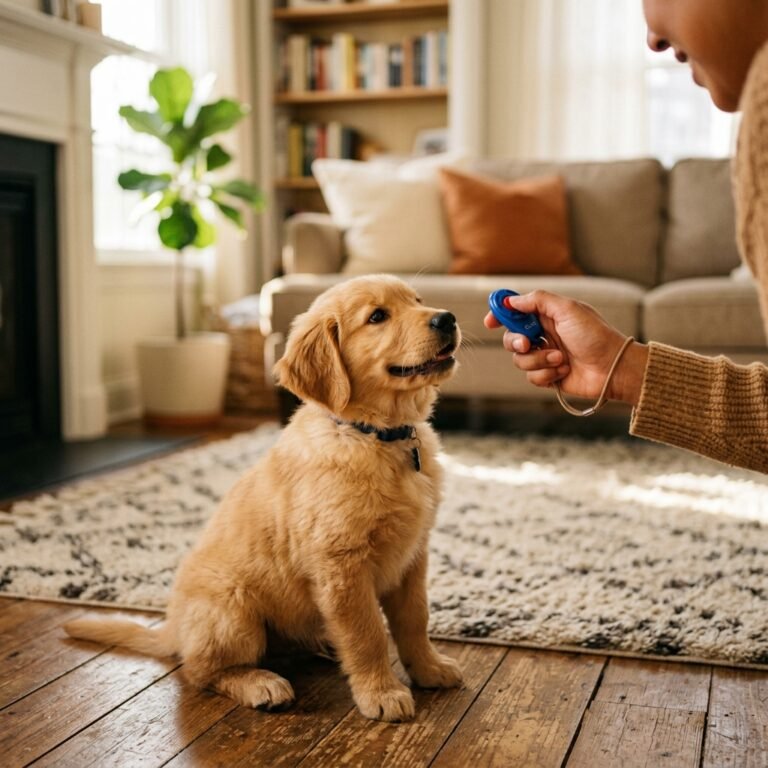
- A Clicker (Optional): A clicker is a great way to mark the exact moment your puppy’s nose hits your hand. If you don’t have one, a consistent verbal marker like ‘Yes!’ works perfectly.
- A Quiet Environment: Start in a room with zero distractions. No TV, no other pets, and no squeaky toys. We want your puppy to focus entirely on the new game.
- Your Hands: Obviously! You will be using your palm as the target. Ensure your hands are clean and free of strong scents (like citrus) that might repel your puppy.
Remember, training should be fun! If you are feeling stressed or tired, it is better to wait until you are in a better headspace. Puppies are incredibly sensitive to our emotions, and your frustration will only slow down their learning process.
Step-by-Step Guide: Teaching the ‘Touch’ Command
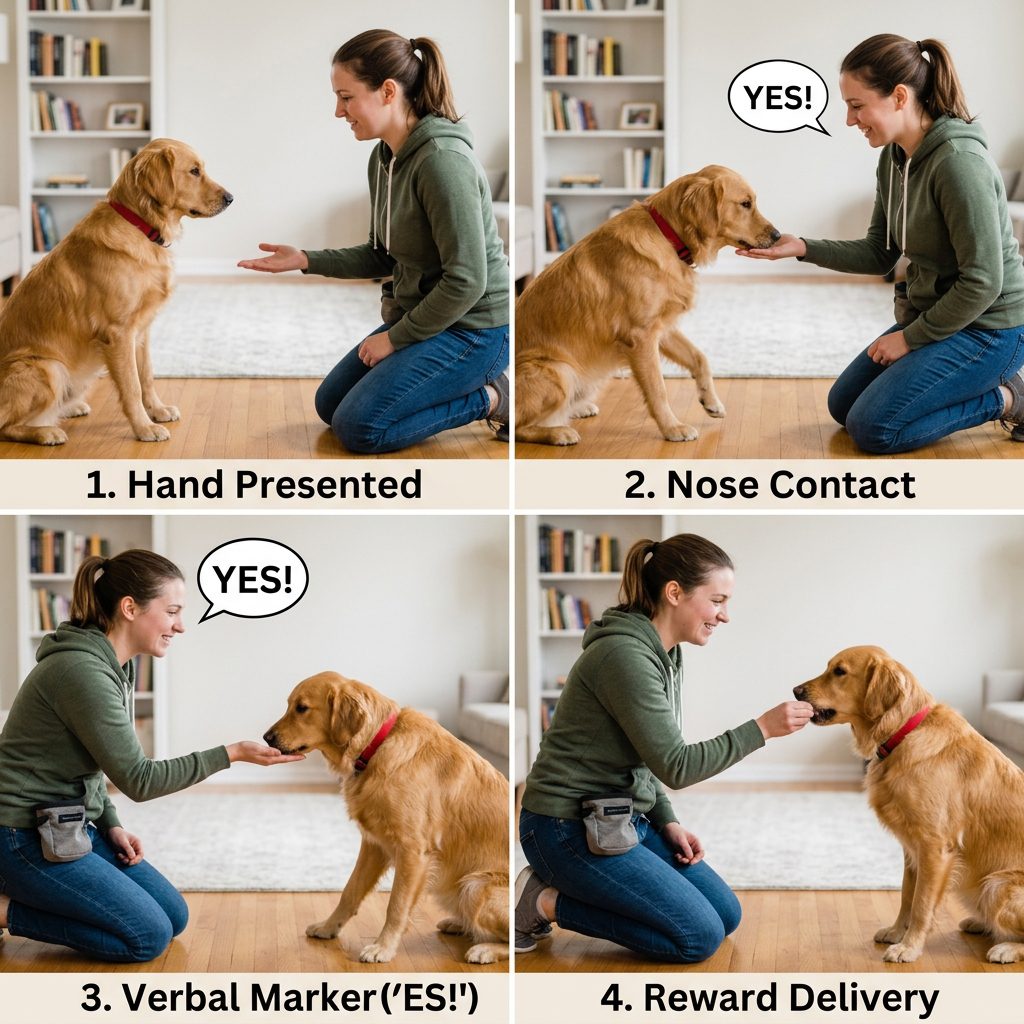
Now, let’s get into the nitty-gritty. Follow these steps, and you will have a puppy who loves to ‘boop’ in no time. We will break this down into stages to ensure your puppy fully grasps the concept before we add complexity.
Stage 1: The Initial Interaction
- Present the Target: Hold your hand about 2-4 inches away from your puppy’s nose. Keep your palm flat and fingers closed, pointing slightly toward the floor.
- Wait for Curiosity: Naturally, your puppy will lean in to sniff your hand to see if you are holding food. The moment their nose makes contact with your palm, Click or say ‘Yes!’
- Reward Immediately: Deliver a treat from your other hand. It is important that the treat doesn’t come from the targeting hand initially, so they don’t just think they are sniffing for food.
- Reset: Pull your hand away, wait a second, and present it again. Repeat this 5-10 times.
Stage 2: Adding the Verbal Cue
Once your puppy is reliably bumping your hand as soon as you present it, it is time to name the behavior.
- Say the Word: Just as you are presenting your hand, say ‘Touch’ in a clear, friendly voice.
- Mark and Reward: As soon as the nose hits the palm, mark with ‘Yes!’ and reward.
- Consistency is Key: Practice this for several short sessions (2-3 minutes each) throughout the day.
Stage 3: Increasing Difficulty
Now that they know the word, let’s make them work for it! Start presenting your hand in different positions: higher up, lower down, to the left, and to the right. This teaches the puppy that ‘Touch’ means ‘find the hand wherever it is.’
Troubleshooting Common Challenges
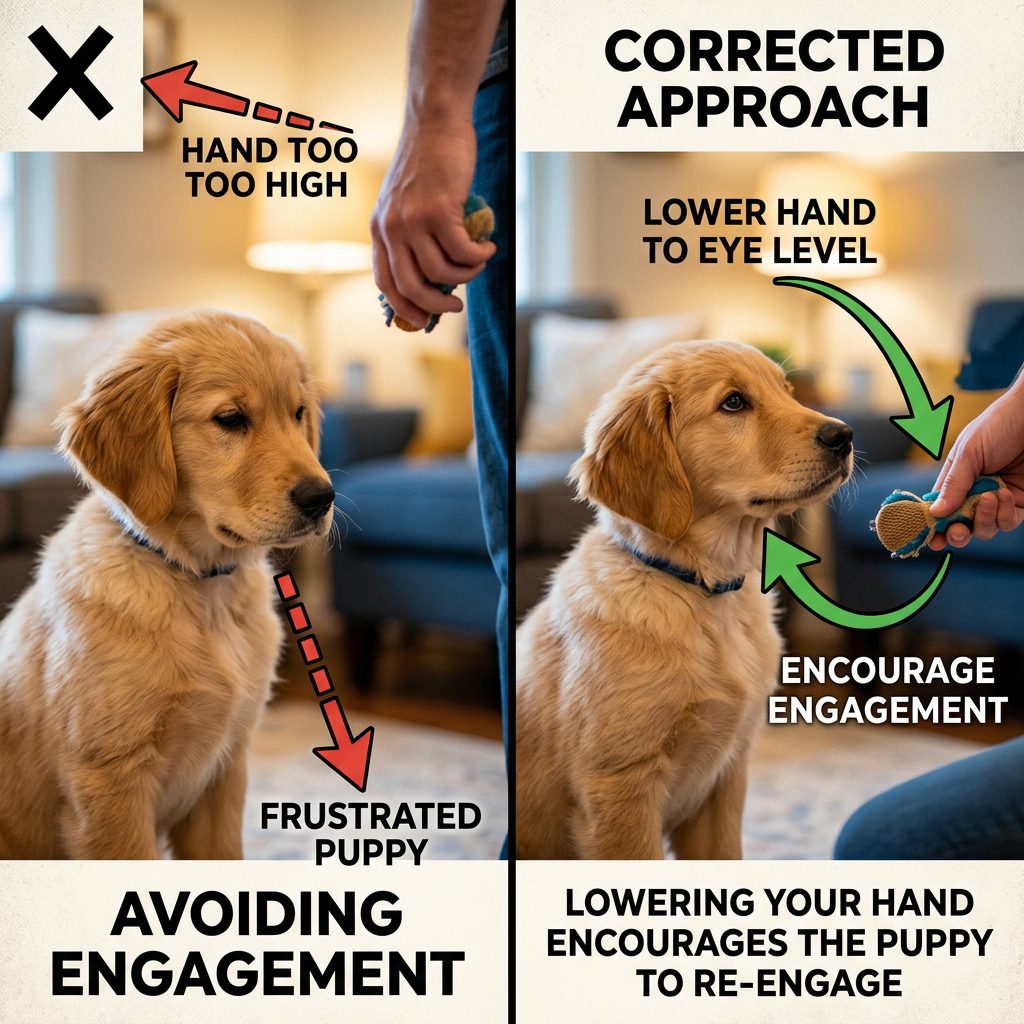
Even the smartest puppies hit a few bumps in the road. If your training session isn’t going as planned, don’t worry! Here are some common issues and how to fix them.
My Puppy Won’t Touch My Hand
If your puppy is ignoring your hand, it might be because they don’t realize there’s a reward involved. Try rubbing a little bit of treat scent on your palm to entice them. Alternatively, make sure you aren’t holding your hand too high; start right at their nose level.
My Puppy is Nipping Instead of Touching
Some puppies get over-excited and try to ‘mouth’ the hand. If this happens, do not reward the nip. Simply pull your hand away, wait for them to calm down, and try again. You want to reward the gentle nose contact, not the teeth. You can also try presenting your hand with a flatter palm to discourage biting.
My Puppy Loses Interest Quickly
Puppies have short attention spans! Keep your sessions very short—no more than 5 minutes. If they walk away, the session is over. Always try to end on a successful repetition so they leave the game feeling like a winner.
Pro Tip: If your dog is ‘hand-shy’ and retreats when you reach out, start by rewarding them just for looking at your hand, then for moving toward it, before asking for a physical touch.
Real-World Applications: Why This Command is a Lifesaver
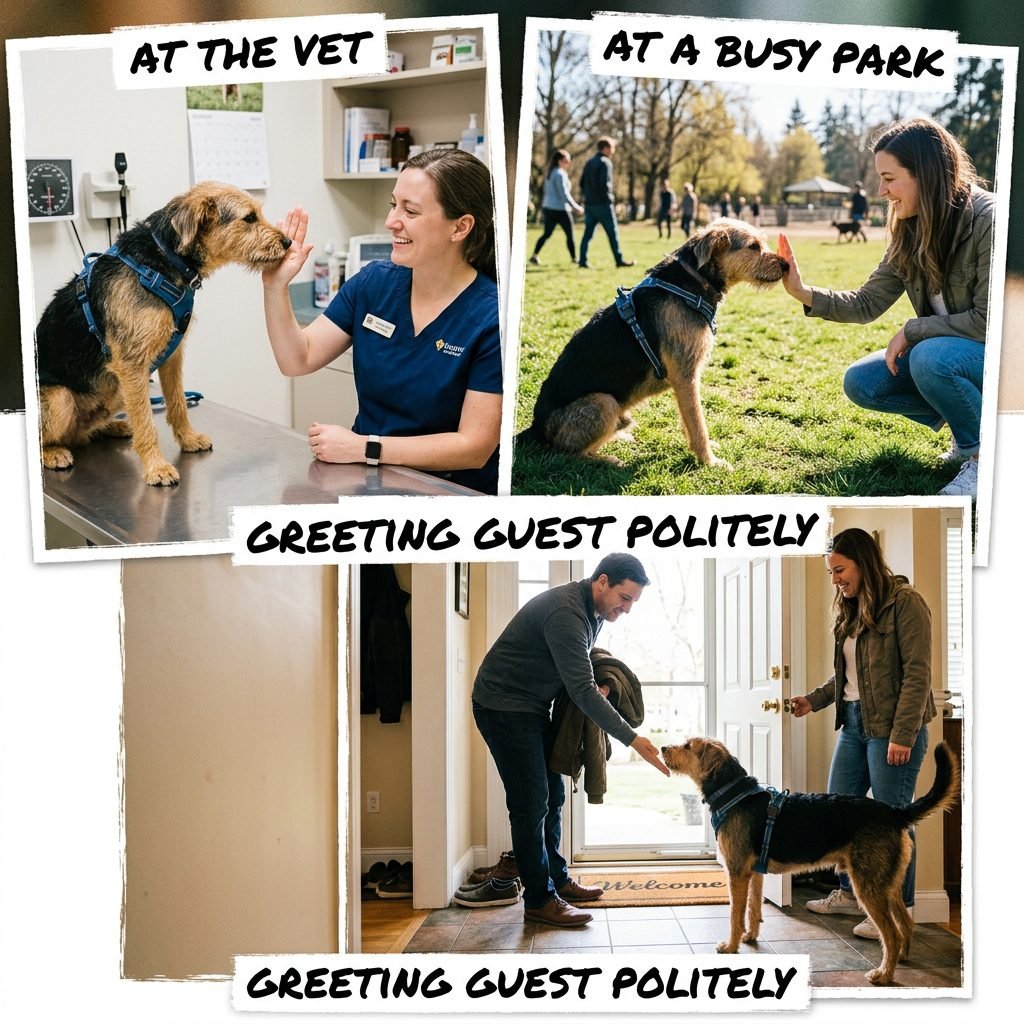
Once your puppy has mastered the ‘Touch’ command in your living room, it’s time to take it on the road. This is where the magic really happens. Here is how you can use ‘Touch’ in everyday life:
- Emergency Recall: If your puppy is running toward something dangerous, a loud, enthusiastic ‘Touch!’ cue can often work better than ‘Come!’ because it is a fun game they love to play.
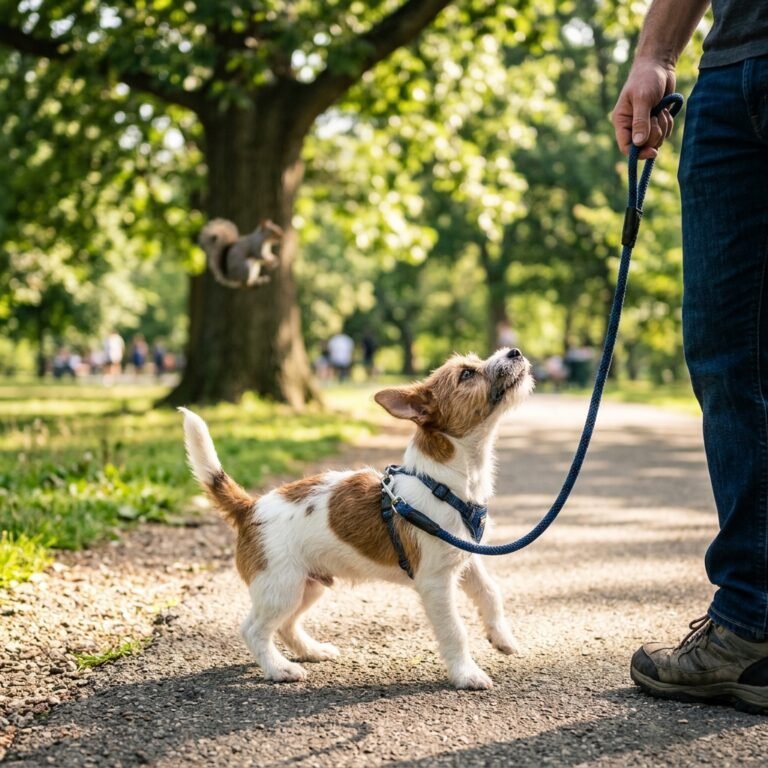
- Loose Leash Walking: If your puppy is pulling or getting distracted on a walk, use ‘Touch’ to bring them back to your side. It resets their focus on you without you having to yank the leash.
- Vet Visits and Grooming: You can use your hand to guide your puppy’s head onto a scale or to keep them still while a vet examines them. It provides a familiar, rewarding task in a stressful environment.
- Meeting New People: Instead of letting your puppy jump on a stranger, ask them to ‘Touch’ the person’s hand (with permission). It provides a polite way for the puppy to greet someone while keeping all four paws on the floor.
- Positioning for Photos: Want that perfect Instagram shot? Use ‘Touch’ to get your puppy to look exactly where you want them to.
| Scenario | How ‘Touch’ Helps | ||||
|---|---|---|---|---|---|
| The Front Door | Redirects puppy away from bolting out when guests arrive. | Distractions | Moves focus from a squirrel back to the owner. | Anxiety | Provides a ‘safe’ task to perform in new places. |
Advanced Variations: Taking Targeting to the Next Level
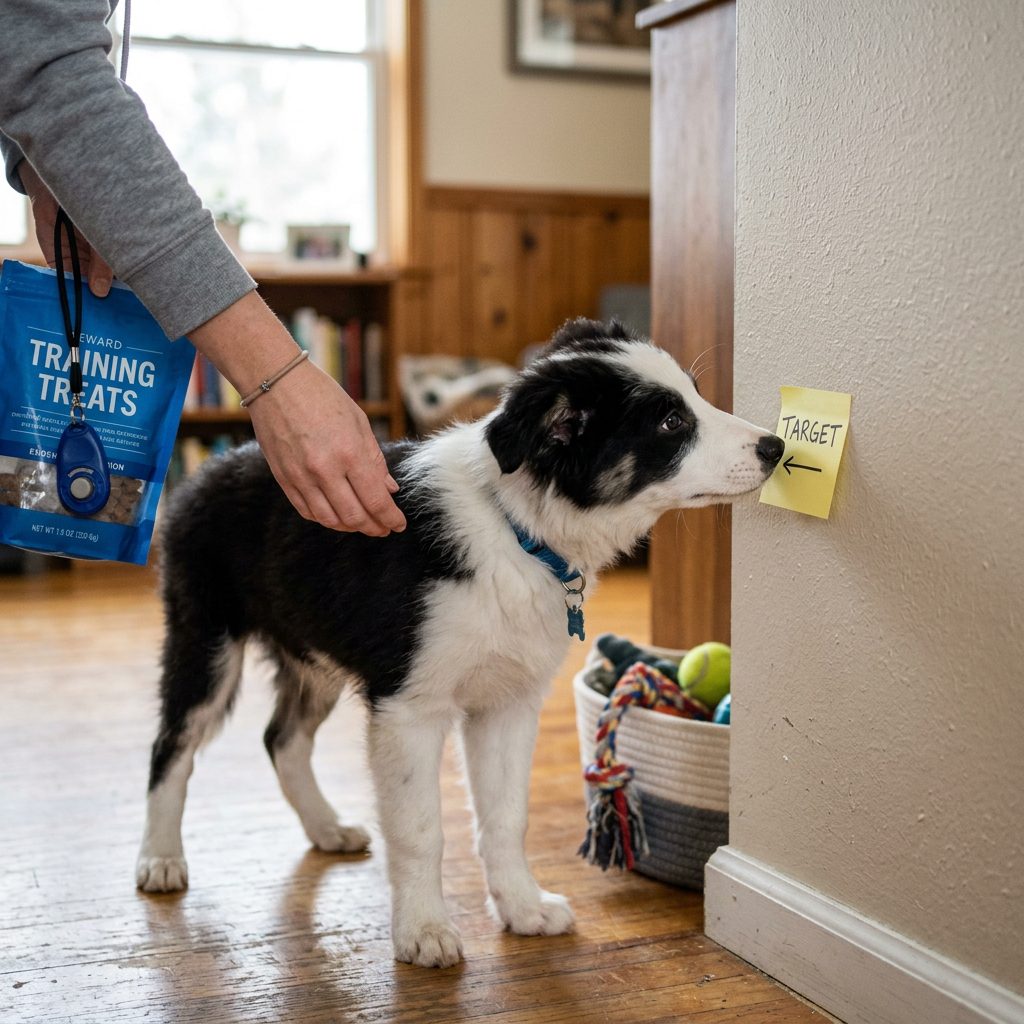
Ready for a challenge? Once your puppy is a ‘Touch’ pro, you can expand the concept to other objects. This is known as Target Training and is used in everything from service dog work to agility competitions.
Targeting Objects
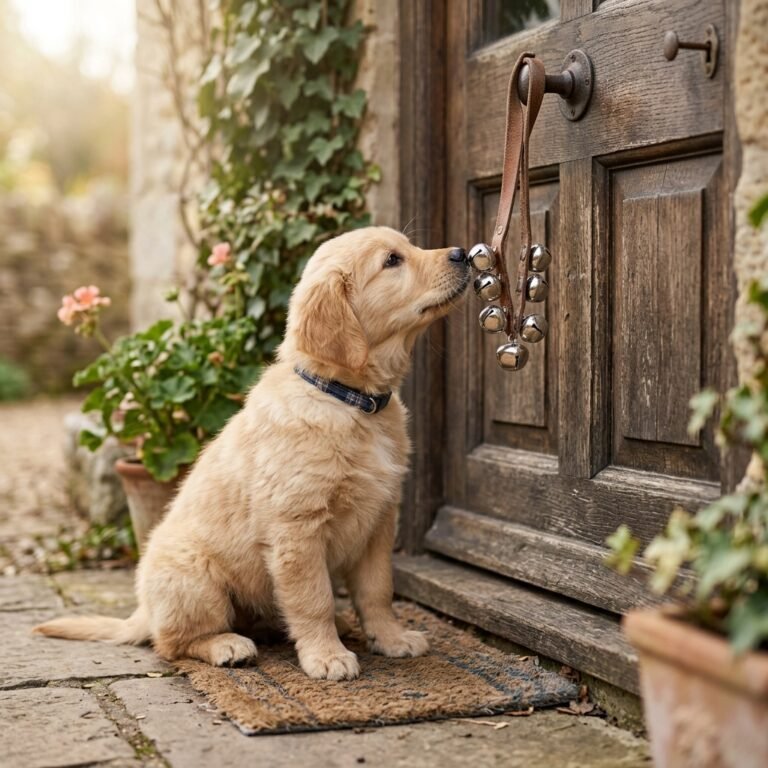
Instead of your hand, teach your puppy to touch a sticky note or a plastic lid. Once they understand the ‘Touch’ cue applies to the object, you can move that object around. This is how trainers teach dogs to close doors, turn off lights, or ring a bell to go outside.
Long-Distance Targeting
Place a target on the floor several feet away and send your puppy to ‘Touch’ it. This is a fantastic way to burn off physical and mental energy. It also builds ‘send-away’ skills which are vital for advanced obedience and dog sports.
Targeting with Other Body Parts
While nose-touching is the standard, you can also teach ‘Paw Touch.’ This is the foundation for ‘Shake’ or ‘High Five.’ The principles remain the same: mark the contact, reward the effort, and keep it fun!
Conclusion
The ‘Touch’ command is far more than a simple trick; it is a fundamental communication bridge between you and your puppy. By mastering this game-changing command, you are giving your dog a way to navigate the world with confidence and giving yourself a versatile tool to manage almost any situation. Remember to keep your training sessions positive, brief, and filled with rewards. Your puppy doesn’t just learn a command when you practice ‘Touch’—they learn to trust you, to focus on you, and to enjoy the process of learning. So, go ahead, put some treats in your pocket, clear a space on the floor, and start booping! You will be amazed at how this one simple move can transform your relationship with your four-legged best friend.