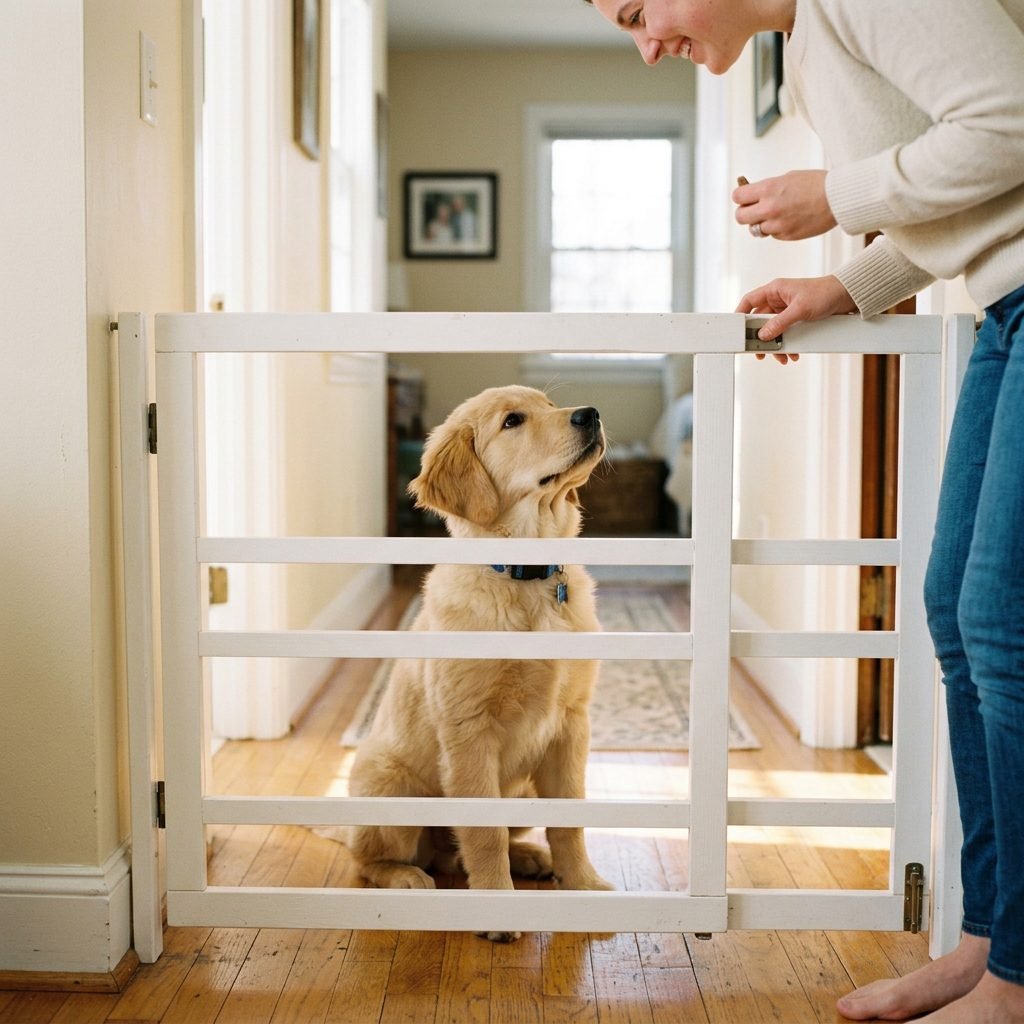
How to Teach Your Puppy to Stay Calm Behind a Baby Gate
The Challenge of the Baby Gate
For many savvy dog owners, the baby gate is an essential tool for managing a growing puppy’s access to the house. It keeps them out of the kitchen during meal prep, prevents them from wandering into carpeted rooms during potty training, and provides a safe space when guests arrive. However, for a puppy, that thin mesh or metal barrier can feel like a personal affront. It is common for puppies to respond to a closed gate with a symphony of whines, frantic pawing, or even full-blown tantrums. This reaction is often rooted in barrier frustration or a mild form of separation distress. The good news is that calmness is a skill that can be taught. By shifting your puppy’s perspective from seeing the gate as a prison to seeing it as a place of relaxation and reward, you can create a harmonious household where boundaries are respected without a fuss. In this guide, we will dive deep into the psychology of barrier training and provide a step-by-step roadmap to achieving a serene pup behind the gate.
Choosing Your Arsenal: The Right Gate and Rewards
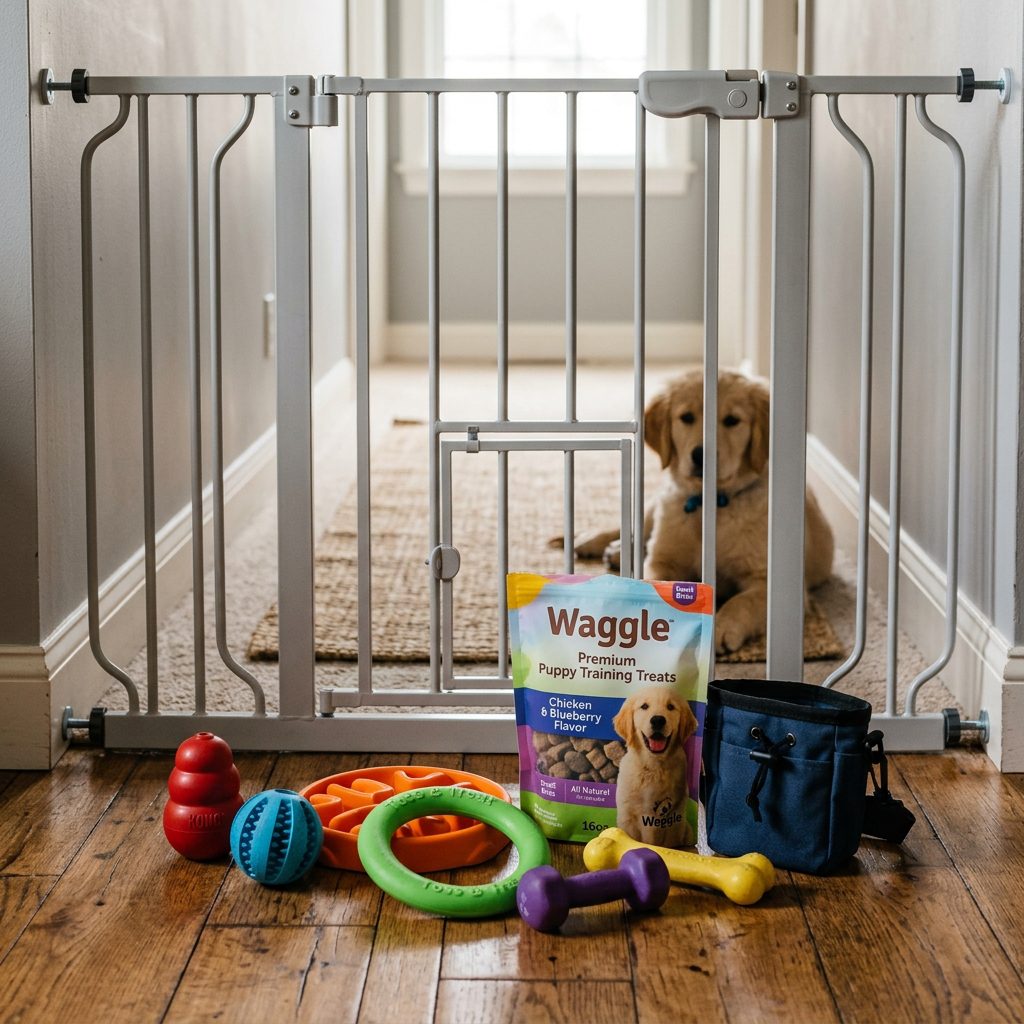
Before you begin the training process, you need to ensure you have the right equipment. Not all baby gates are created equal, and the type you choose can significantly impact your puppy’s success. Furthermore, the rewards you use must be high-value enough to compete with the desire to be right at your heels. Savvy owners know that preparation is half the battle in canine education.
Selecting the Perfect Gate
Consider your puppy’s breed, size, and athletic ability. A tiny Chihuahua might be contained by a simple pressure-mounted gate, while a determined Labrador puppy might require a hardware-mounted solution that can withstand a bit of leaning or jumping. Look for gates with a walk-through door to make your own life easier, and ensure the slats are narrow enough that your pup can’t get their head stuck.
| Gate Type | Pros | Cons |
|---|---|---|
| Pressure-Mounted | No drilling, portable, easy to install. | Less sturdy, can be pushed over by large dogs. |
| Hardware-Mounted | Extremely secure, best for stairs. | Requires permanent holes in walls, fixed location. |
| Retractable Mesh | Space-saving, no tripping hazard. | Can be noisy to open, less durable against chewers. |
| Freestanding | No wall contact, highly portable. | Easiest for a puppy to bypass or knock down. |
The Power of High-Value Rewards
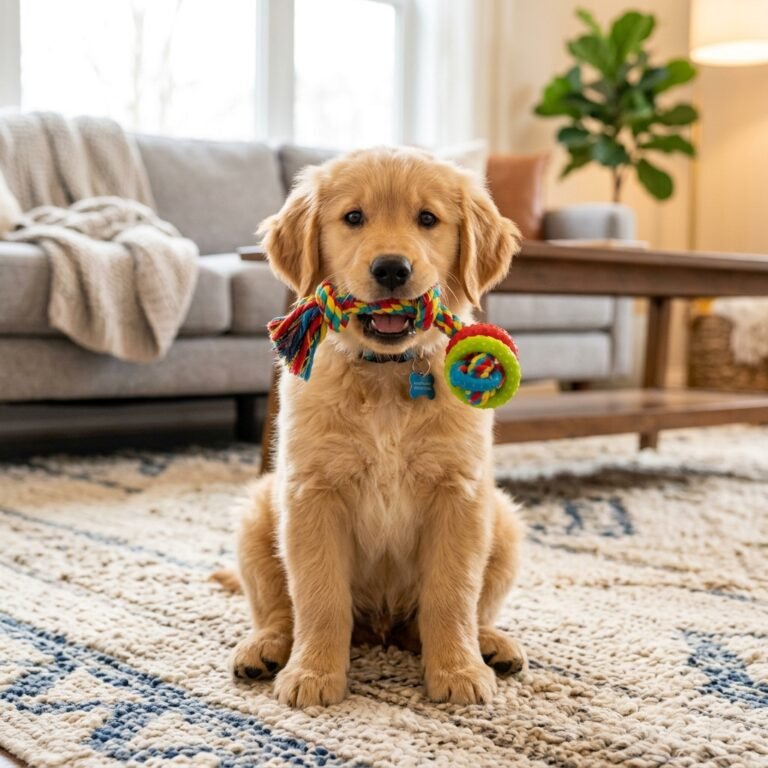
When training for calmness, the reward must be worth the effort of staying still. We recommend using long-lasting chews or stuffed interactive toys. These tools serve two purposes: they provide a positive association with the gate and they encourage the physical act of licking or chewing, which is naturally soothing for dogs. Items like frozen peanut butter-stuffed toys, bully sticks, or specialized dental chews are excellent choices for gate training sessions.
Phase 1: Creating a Positive Association
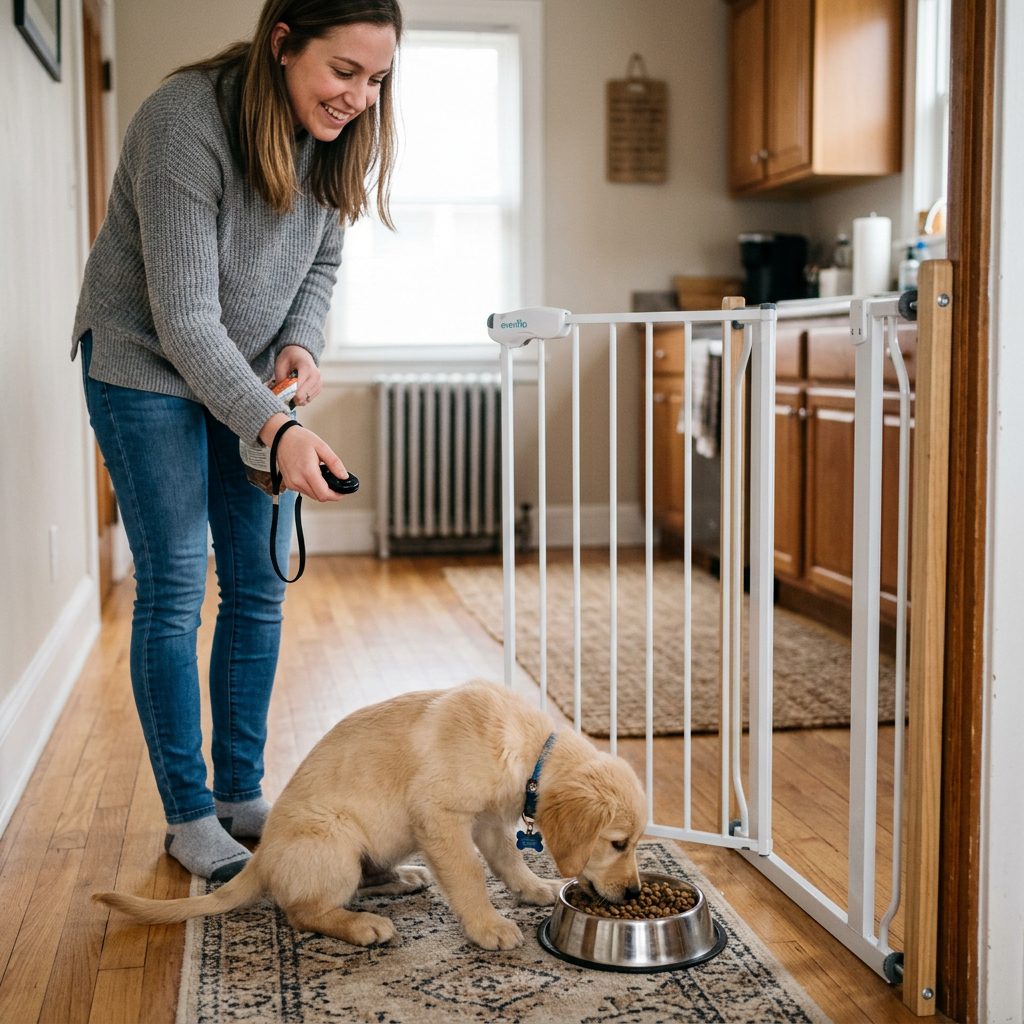
The biggest mistake owners make is only using the baby gate when they want to ‘get rid’ of the puppy. If the gate only closes when you are leaving or when the puppy is in trouble, they will quickly learn to hate it. Instead, we need to build a positive emotional response to the sight and sound of the gate.
The Treat Bar is Open
Start by leaving the gate open. Spend time with your puppy near the gate, playing and offering treats. You want them to feel that the area around the gate is a ‘hot spot’ for good things. Occasionally, toss a handful of kibble or small treats through the gate while it is open, encouraging the puppy to walk through it freely without any sense of confinement.
Feeding Near the Barrier
One of the most effective ways to change a dog’s emotional state is through mealtime. Begin feeding your puppy their breakfast and dinner right next to the gate. Initially, do this with the gate wide open. Over several days, gradually move the bowl closer to the gate, and eventually, start closing the gate for just a few seconds while they eat, opening it before they finish. This teaches the puppy that the gate closing is the signal that a delicious meal is happening.
Expert Tip: If your puppy is particularly anxious, start by just touching the gate or moving it slightly while they eat, rewarding them for remaining focused on their food.
Phase 2: The Step-by-Step Calmness Protocol
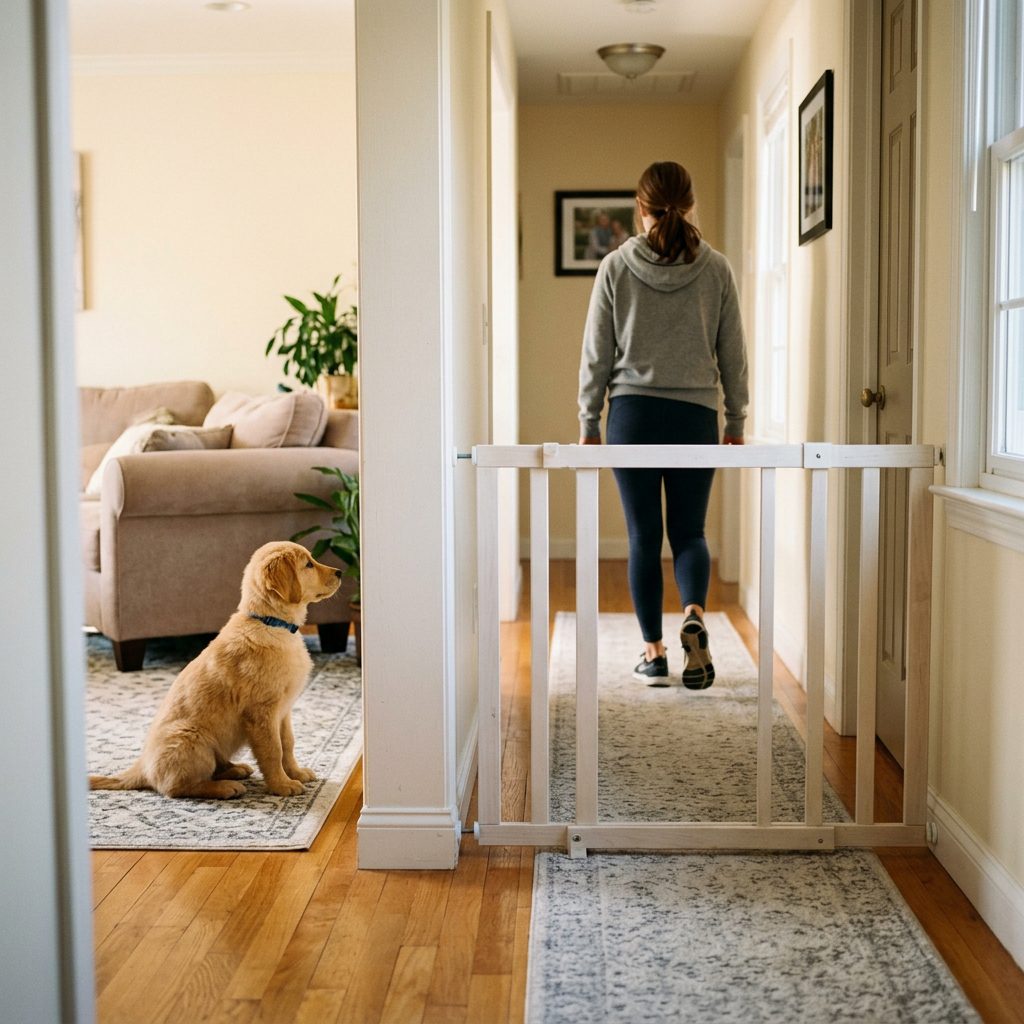
Once your puppy is comfortable being near the gate, it is time to formalize the training. This process uses successive approximations, which means we reward small steps toward the final goal of long-term calmness.
- Step 1: The Micro-Closure. With your puppy on one side and you on the other, close the gate. Immediately drop a treat over the gate and then open it. Do this several times. The goal is for the puppy to realize that the gate closing leads to a treat and then immediately opens.
- Step 2: Increasing Duration. Close the gate and wait for two seconds. If the puppy is quiet and has four paws on the floor, deliver a treat and open the gate. Gradually increase this to five, ten, and thirty seconds. If the puppy whines, you have moved too fast; go back to a shorter duration.
- Step 3: Adding Distance. This is the hardest part for many puppies. Close the gate, give a treat, and take one step back. Immediately return, treat again, and open the gate. Slowly increase the number of steps you take away. You want to return before the puppy starts to feel anxious.
- Step 4: Out of Sight. Once you can walk across the room, try stepping around a corner for one second. Return immediately and reward. This builds the puppy’s confidence that even if they can’t see you, you will always return.
Capturing Calmness
Keep an eye out for moments when your puppy chooses to lie down behind the gate on their own. This is ‘gold’ in training terms. Quietly walk over and drop a high-value treat between their paws without making a big fuss. You are reinforcing the state of being relaxed rather than the act of performing a command.
Troubleshooting: Managing Whining and Jumping
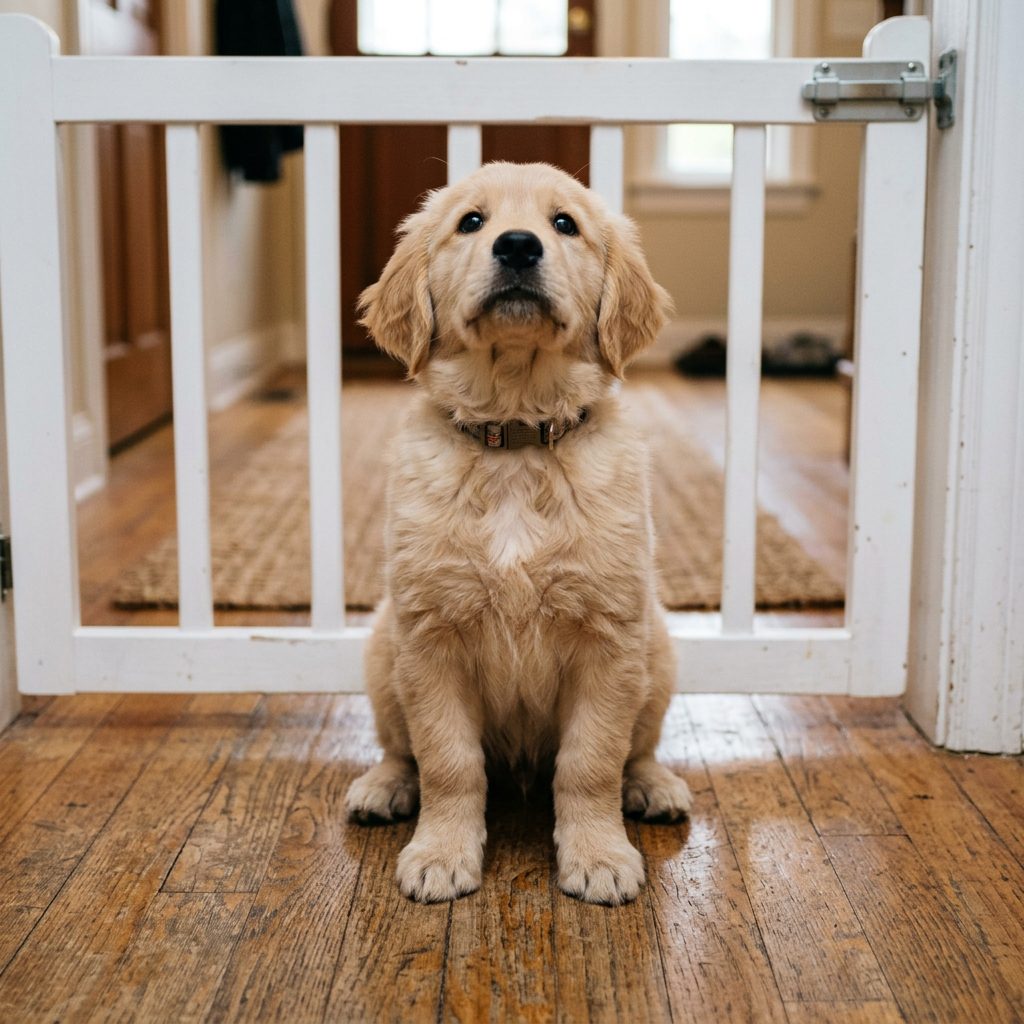
Even with the best training, your puppy will likely test the boundaries. How you respond to ‘protest behavior’ like whining, barking, or jumping on the gate will determine how quickly they learn to be calm. Consistency is the hallmark of the savvy owner.
The Rule of Silence
If your puppy begins to whine or bark, the most important thing you can do is ignore it. Any attention—even negative attention like saying ‘no’ or ‘quiet’—can reinforce the behavior. By responding, you are teaching the puppy that making noise gets you to engage with them. Instead, wait for a split second of silence. The moment they take a breath or stop to look at you, that is the moment you return and reward. You are teaching them that silence is the key that brings you back.
Preventing the Jump
Jumping on the gate is often a sign of over-excitement or frustration. If your puppy is a jumper, try the following schedule to manage their energy levels during training:
| Time of Day | Activity Level | Gate Training Focus |
|---|---|---|
| Morning | High (Post-sleep) | Physical exercise first, then short gate sessions with a chew. |
| Mid-Day | Medium | Active distance training (walking away and returning). |
| Evening | Low (Winding down) | Duration training (puppy settles with a toy while you watch TV). |
Takeaway: Never open the gate while the puppy is jumping or barking. Wait for all four paws to be on the floor and a quiet mouth before the barrier is removed.
Common Mistakes to Avoid
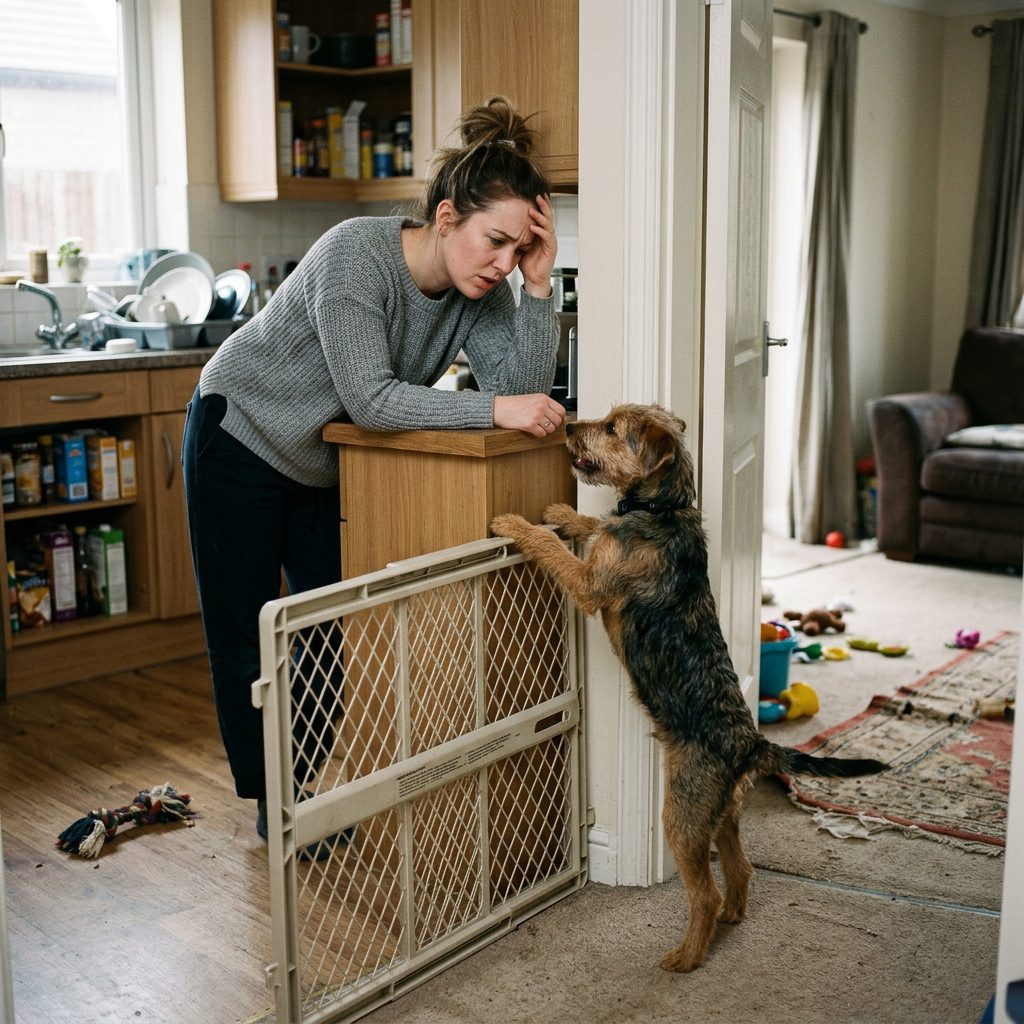
Training a puppy is as much about human behavior as it is about canine behavior. Here are the most common pitfalls that can stall your progress in gate training.
- Using the Gate as Punishment: If you angrily shove your puppy behind a gate for a ‘time out’ after they’ve done something wrong, they will associate the gate with your frustration and their own isolation. Use a neutral ‘settle’ command and lead them there calmly.
- Moving Too Fast: Many owners try to leave the puppy for an hour before the puppy has mastered five minutes. This leads to a ‘panic response’ which can set your training back weeks. Slow and steady wins the race.
- Inconsistency Among Family Members: If you ignore the whining but your partner talks to the puppy or lets them out, the puppy will become ‘intermittently reinforced.’ This actually makes the whining behavior stronger and harder to extinguish.
- Ignoring Physical Needs: A puppy who hasn’t been pottied, exercised, or fed will find it nearly impossible to stay calm behind a gate. Ensure all their basic needs are met before asking them to practice emotional regulation.
Remember, your puppy isn’t giving you a hard time; they are having a hard time. Empathy combined with clear structure is the fastest path to success.
The Long-Term Vision: A Relaxed Companion
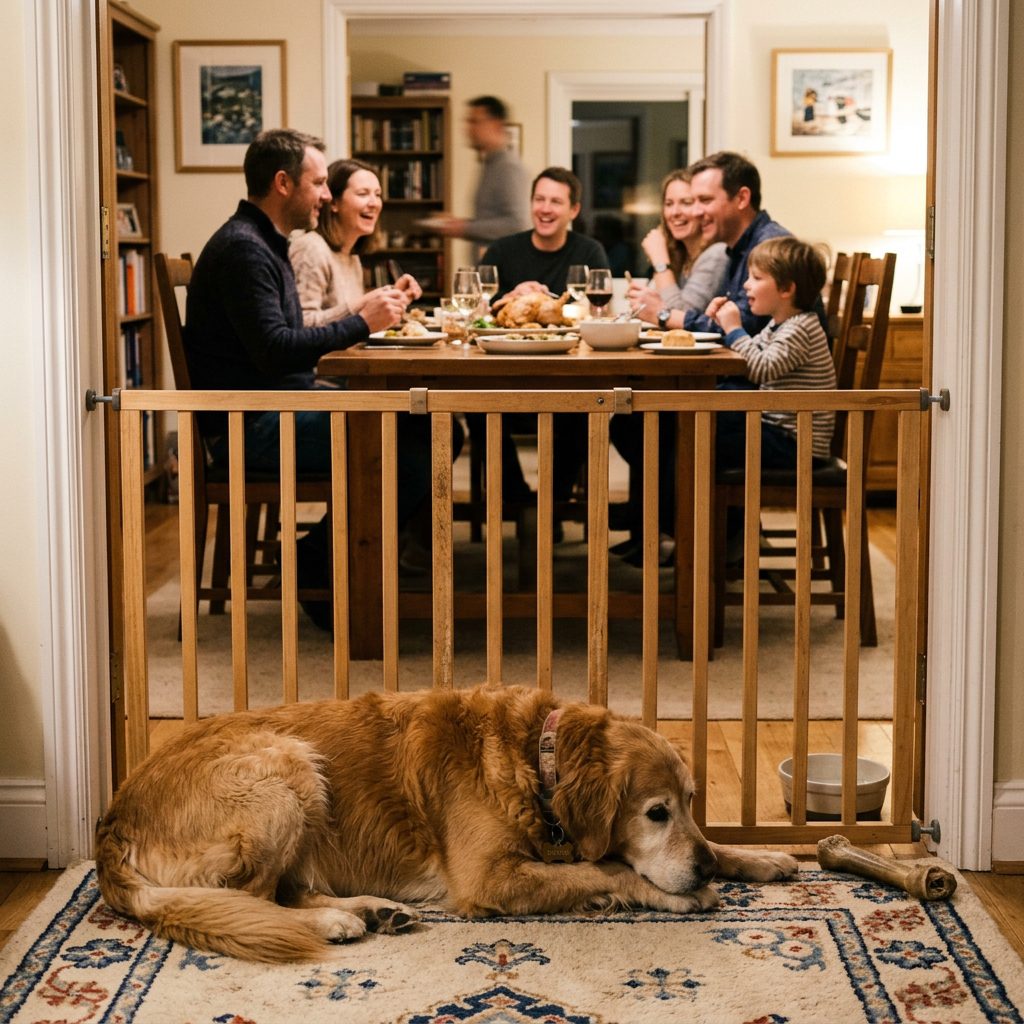
Teaching your puppy to stay calm behind a baby gate is about more than just convenience; it is about teaching them impulse control and independence. These are foundational skills that will serve them throughout their lives, preventing separation anxiety and making them a pleasure to take to dog-friendly patios or on vacations.
Maintenance and Progression
Even after your puppy is a ‘gate pro,’ continue to reward them occasionally for their good behavior. You can also start to use the gate in different locations or during more distracting events, such as when the delivery person rings the doorbell. The goal is for the puppy to see the gate as their ‘safe zone’ where they can relax regardless of what is happening on the other side. With patience, consistency, and plenty of high-value treats, you will soon have a puppy who views the baby gate not as a barrier, but as a peaceful boundary.
Conclusion
Success is a Journey
Teaching a puppy to remain calm behind a baby gate is a marathon, not a sprint. It requires a savvy owner who understands that behavior is shaped through positive reinforcement and clear communication. By following the steps outlined in this guide—building a positive association, gradually increasing duration and distance, and managing protest behavior with consistency—you are setting your puppy up for a lifetime of confidence and calm. Stay patient, stay consistent, and celebrate the small wins. Before you know it, that baby gate will be a symbol of peace and relaxation in your home. Happy training!