Don’t Let Them Run! 4 Steps To Prevent Your Puppy Bolting From The Car Door Safely
We’ve all been there: you pull up to your favorite park, the engine is barely off, and your puppy is already a blur of fur and excitement, ready to launch themselves through the smallest crack in the door. It’s a heart-stopping moment for any savvy dog owner. One second they are in the backseat, and the next, they are darting toward a busy parking lot or a distracted driver. This behavior, known as bolting, is one of the most dangerous habits a young dog can develop.
As a canine specialist, I’ve seen how quickly a fun outing can turn into a frantic chase. Training your puppy to remain calm and wait for a release cue isn’t just about good manners; it’s a critical safety skill. In this comprehensive guide, we are going to break down the psychology of why puppies bolt and provide you with a foolproof 4-step system to ensure your pup stays put until you say it’s okay to move. Grab your treats and your patience—we’re turning your car into a zone of zen.
The Psychology of the Bolt: Why Puppies Can’t Wait
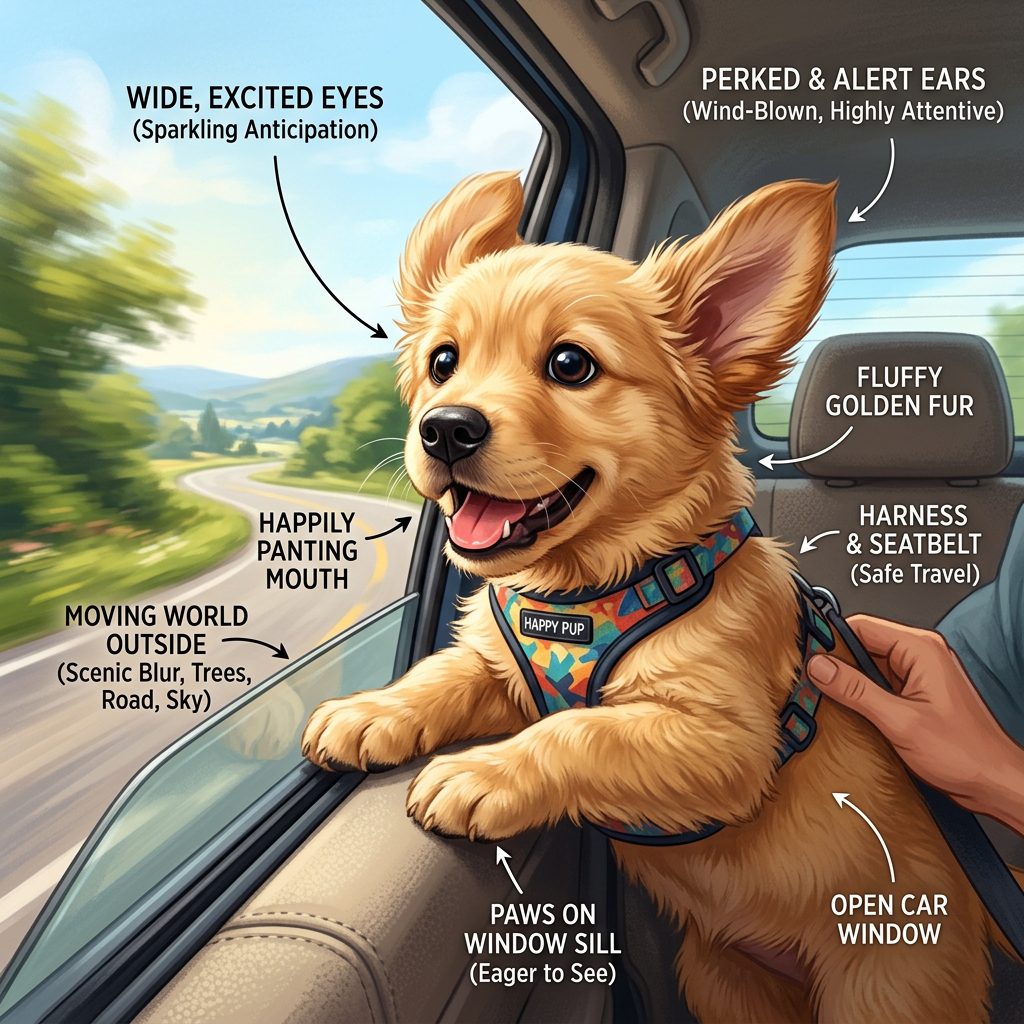
Before we dive into the ‘how,’ we need to understand the ‘why.’ Puppies aren’t trying to be disobedient when they rush the door; they are simply reacting to a cocktail of biological and environmental triggers. For a puppy, the car door is a portal to an exciting new world full of smells, squirrels, and adventures.
Common Triggers for Bolting
- High Arousal: The sight of the park or the sound of the engine turning off signals that ‘the fun’ is about to begin, causing a spike in adrenaline.
- Lack of Impulse Control: A puppy’s prefrontal cortex isn’t fully developed, making it physically difficult for them to resist an immediate reward (like running outside).
- Fear or Anxiety: In some cases, a puppy may bolt because they find the car environment stressful and want to escape the confined space as quickly as possible.
Understanding your dog’s motivation is the first step toward changing their behavior. If they are bolting out of excitement, we focus on calm. If they are bolting out of fear, we focus on comfort.
Essential Gear for Car Safety Training
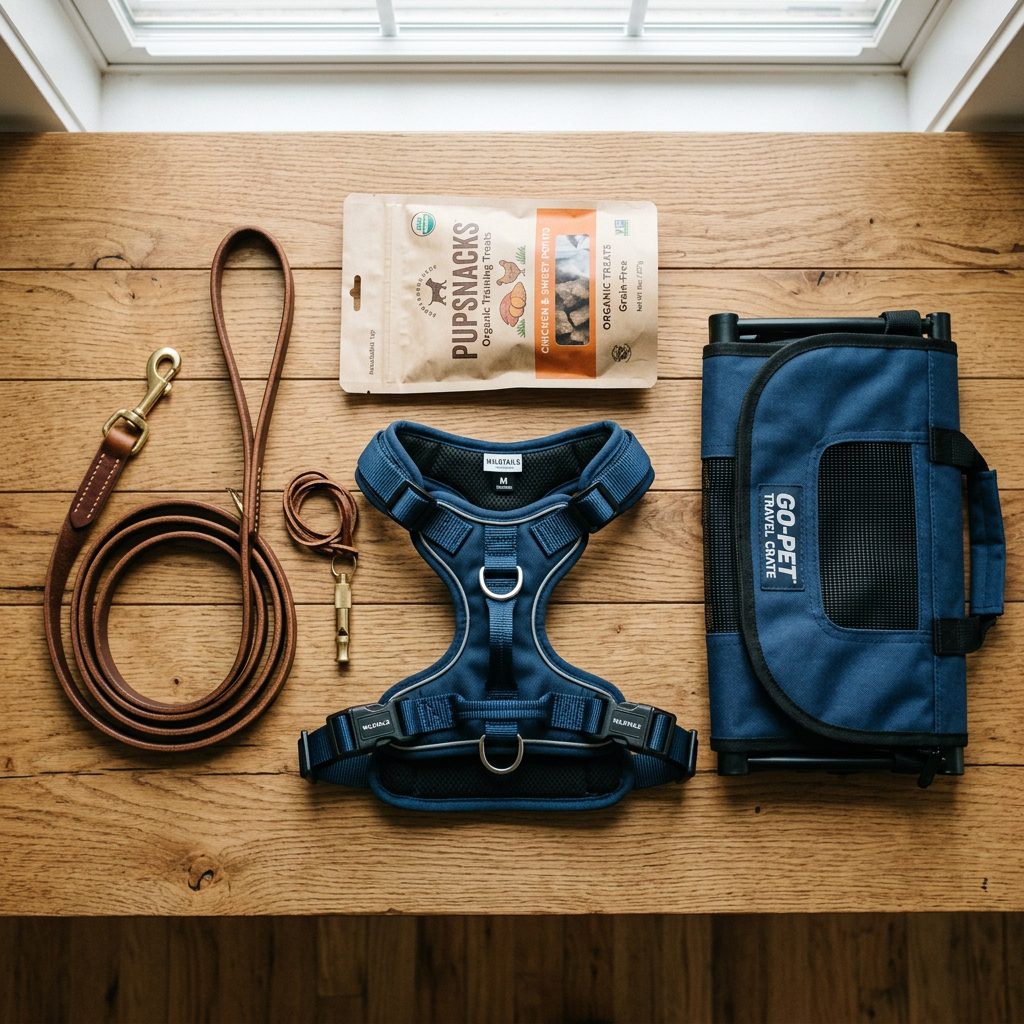
You wouldn’t build a house without a hammer, and you shouldn’t start car training without the right tools. Safety is paramount during the learning phase, as mistakes can happen. Here is the gear I recommend for every savvy owner.
| Tool | Purpose | Why It’s Essential |
|---|---|---|
| Fixed-Length Leash | Control | Prevents the puppy from reaching the ground if they attempt a jump during training. |
| Back-Clip Harness | Safety | Distributes pressure across the chest rather than the neck if the pup lunges. |
| High-Value Treats | Motivation | Small pieces of chicken or cheese that are more exciting than the environment outside. |
| Car Tether or Crate | Containment | Keeps the pup secure while the vehicle is in motion and provides a physical boundary. |
A quick note on retractable leashes: Please avoid using these during car training. They do not provide the immediate control needed to stop a bolt, and the thin cord can cause injuries in tight spaces like a car door frame.
Step 1: Establishing the ‘Wait’ Foundation Indoors
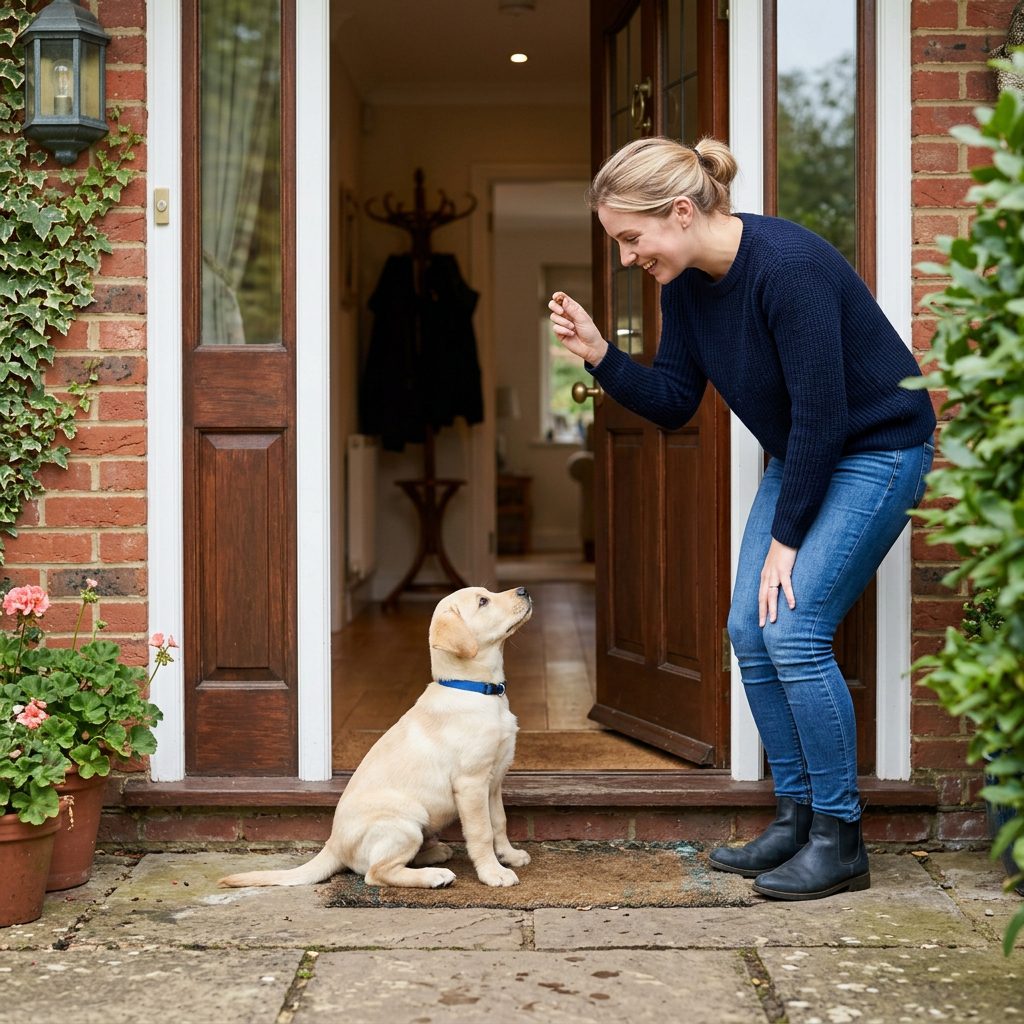
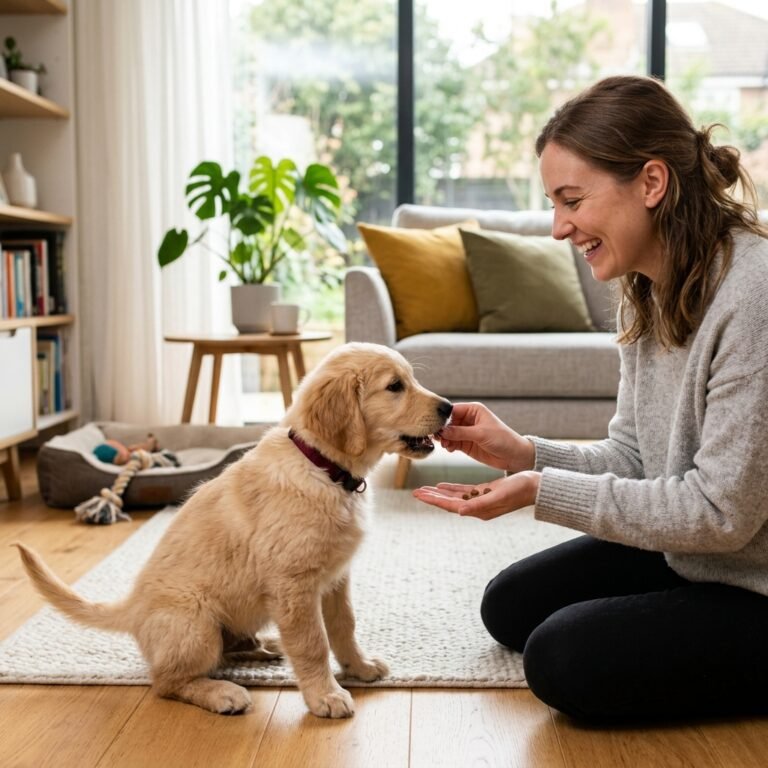
The biggest mistake owners make is trying to teach a new command in the middle of a high-distraction environment like a parking lot. We need to start in the living room. The goal of Step 1 is to teach your puppy that ‘Wait’ means ‘don’t move until you hear the magic word.’
The Indoor Drill
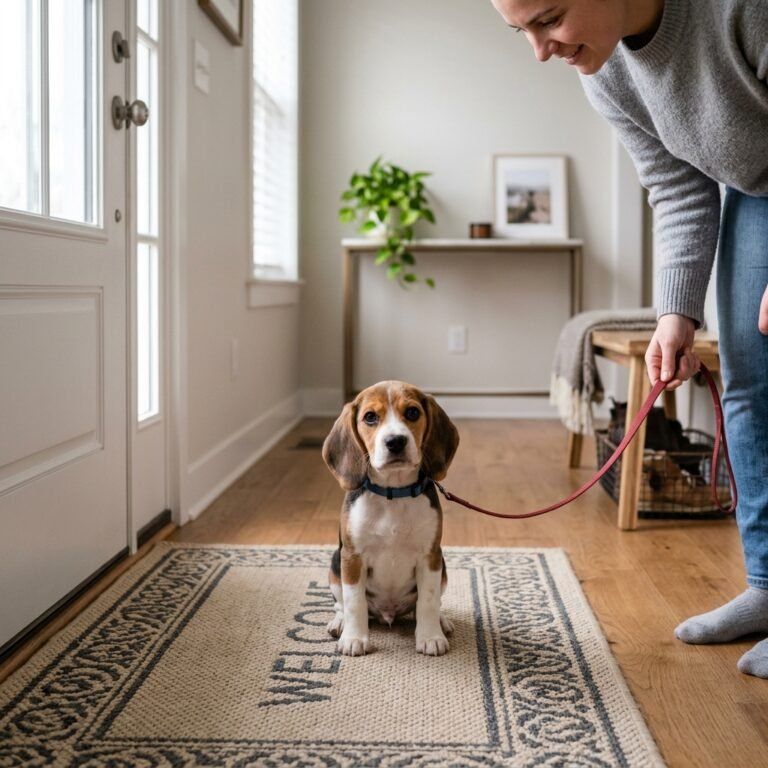
- Stand at your front door with your puppy on a leash.
- Reach for the doorknob. If your puppy moves forward, immediately take your hand off the knob and wait for them to sit.
- Once they are sitting, say ‘Wait’ and turn the knob slightly. If they stay still, click (if using a clicker) and treat.
- Gradually increase the door opening. If they move, close the door. The door only opens when they are still.
- Introduce your release word (e.g., ‘Okay!’ or ‘Free!’). They only get to walk through the door after that specific word is spoken.
Practice this at every doorway in your house until your puppy looks at you for permission before crossing any threshold.
Step 2: The ‘Inch-by-Inch’ Car Door Progression
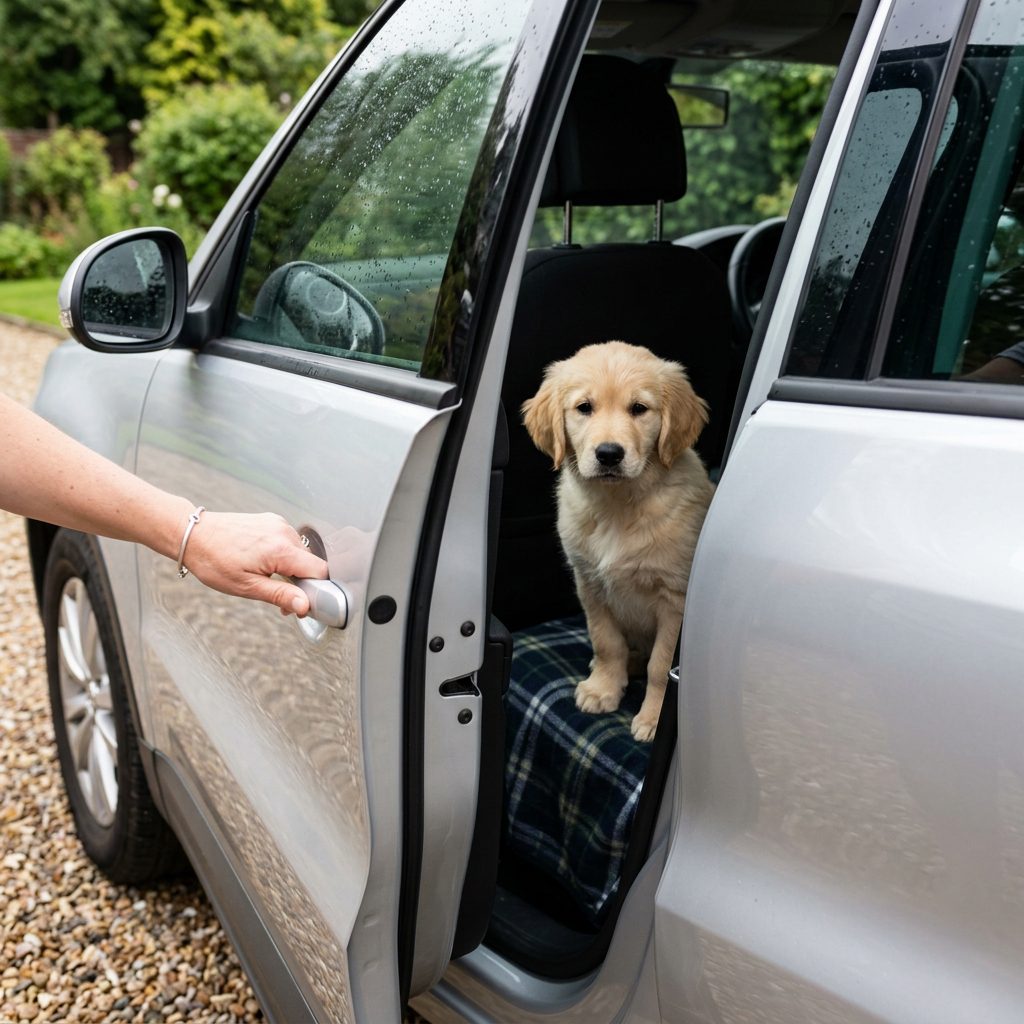
Now that your puppy understands the concept of ‘Wait’ at a house door, it’s time to move to the car. We aren’t going anywhere yet; the car should be parked in your driveway or a quiet garage.
The Driveway Drill
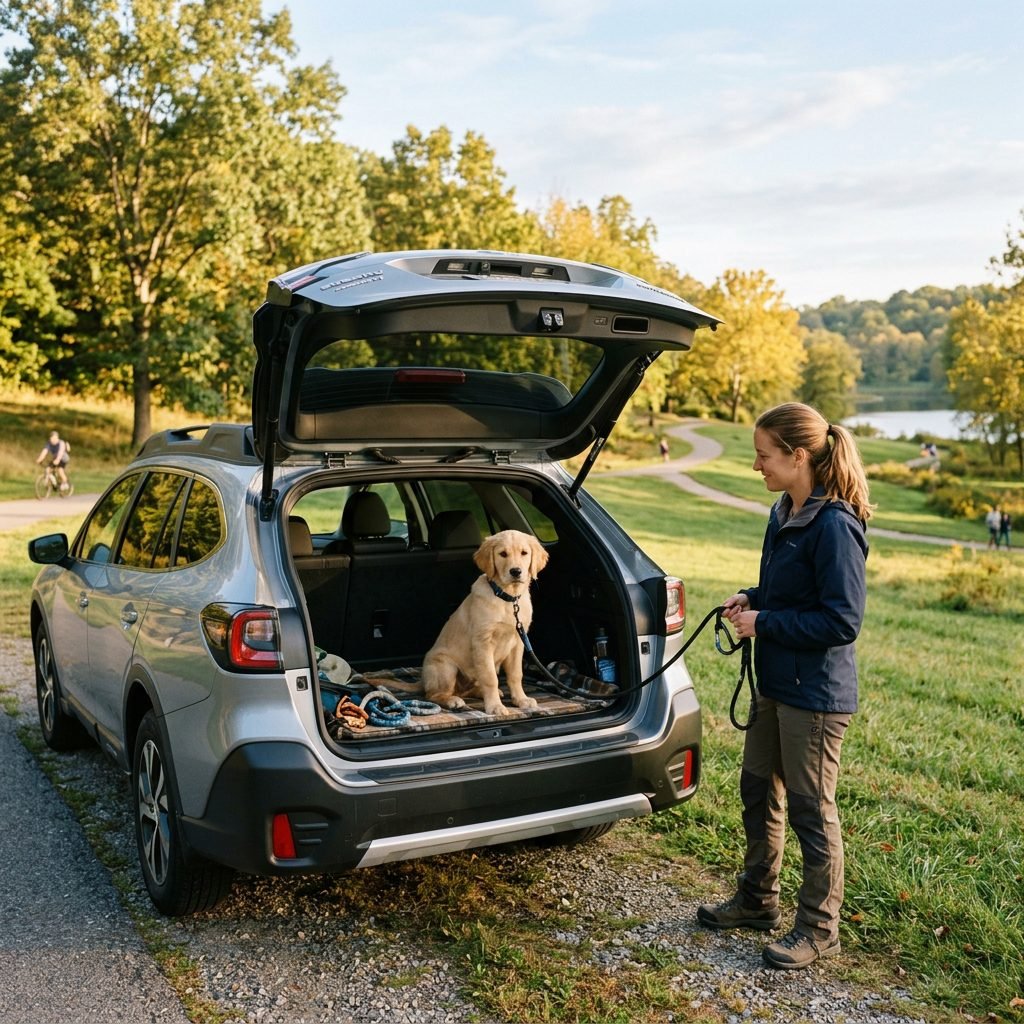
Position your puppy in their usual spot in the car. If they are in a crate, the crate door acts as your primary boundary. If they are on a seat tether, the car door is the boundary.
- The Setup: Have your puppy on a leash held firmly in your hand before you even think about opening the door.
- The Crack: Open the car door just one inch. If the puppy lunges, close it immediately (be careful of paws!).
- The Reward: If the puppy remains seated or even just stays back, reach in and deliver a high-value treat.
- The Widening: Slowly open the door further. Every time the puppy stays back, they get a treat. If they move toward the opening, the door closes.
You are teaching them that the opening of the door is not the signal to exit. The signal to exit is your voice.
Step 3: Introducing the Release Cue and ‘Touch’ Landing
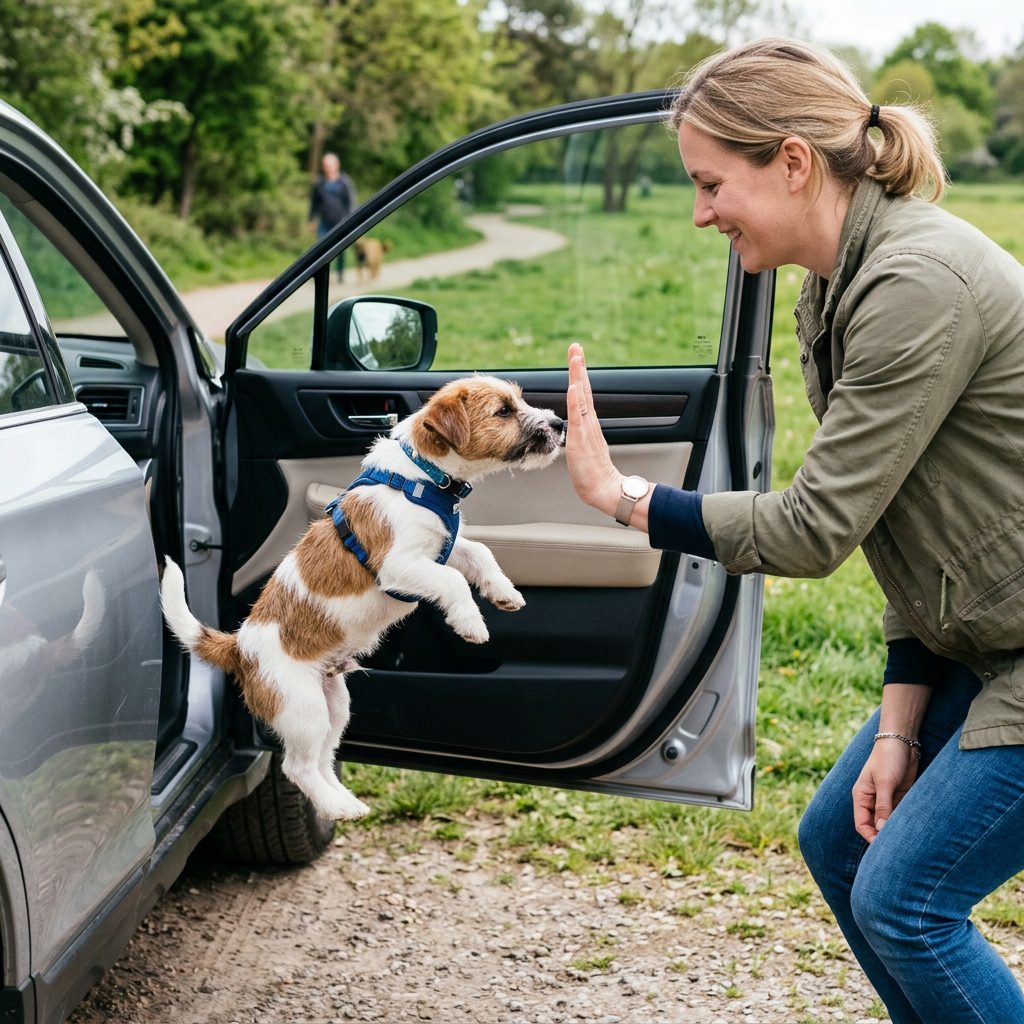
Once your puppy can sit patiently with the door wide open, you need to manage the actual exit. We don’t want them to just leap out into the abyss; we want a controlled descent.
The Controlled Exit
With the door open and the puppy waiting, give your release word: ‘Okay!’ As they hop out, immediately ask for a ‘Touch’ (hand target) or a ‘Sit’ the moment their paws hit the pavement. This gives them a job to do immediately upon exiting, preventing them from looking around for things to chase.
Pro Tip: Always keep the leash short during this step. You want to guide them to a specific spot right next to the car, ensuring they don’t wander into the ‘traffic lane’ of the driveway.
Step 4: Proofing in High-Distraction Areas
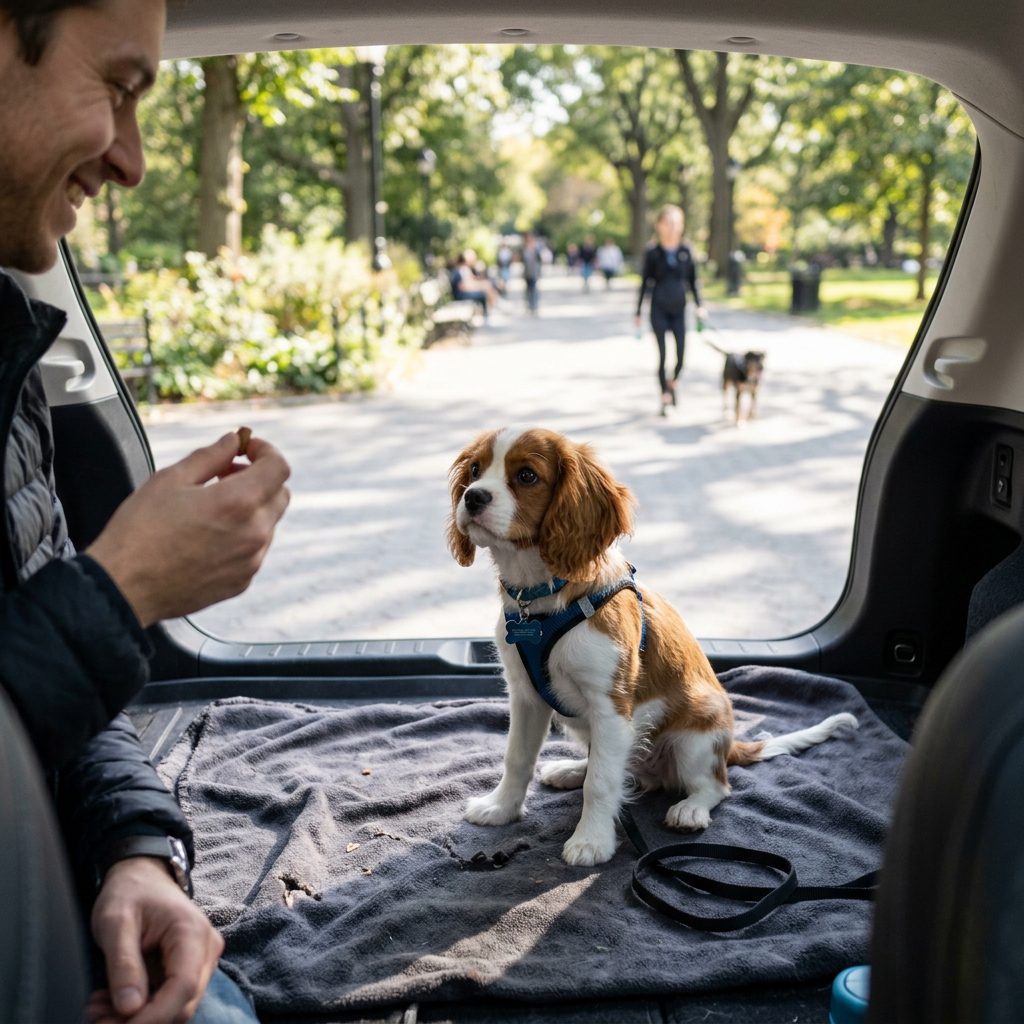
The final step is ‘proofing.’ This means taking the training to the real world where there are other dogs, people, and interesting smells. This is where most puppies fail if you haven’t been consistent.
Milestones for Success
| Environment | Difficulty | Goal |
|---|---|---|
| Empty Parking Lot | Low | Puppy waits 10 seconds with door open before release. |
| Quiet Park Perimeter | Medium | Puppy ignores a distant person walking by while waiting. |
| Busy Pet Store Front | High | Puppy remains seated despite hearing other dogs barking nearby. |
If your puppy fails at a higher level, simply go back one step. There is no shame in returning to the driveway for a refresher course. Consistency is the key to muscle memory.
Common Mistakes and Troubleshooting
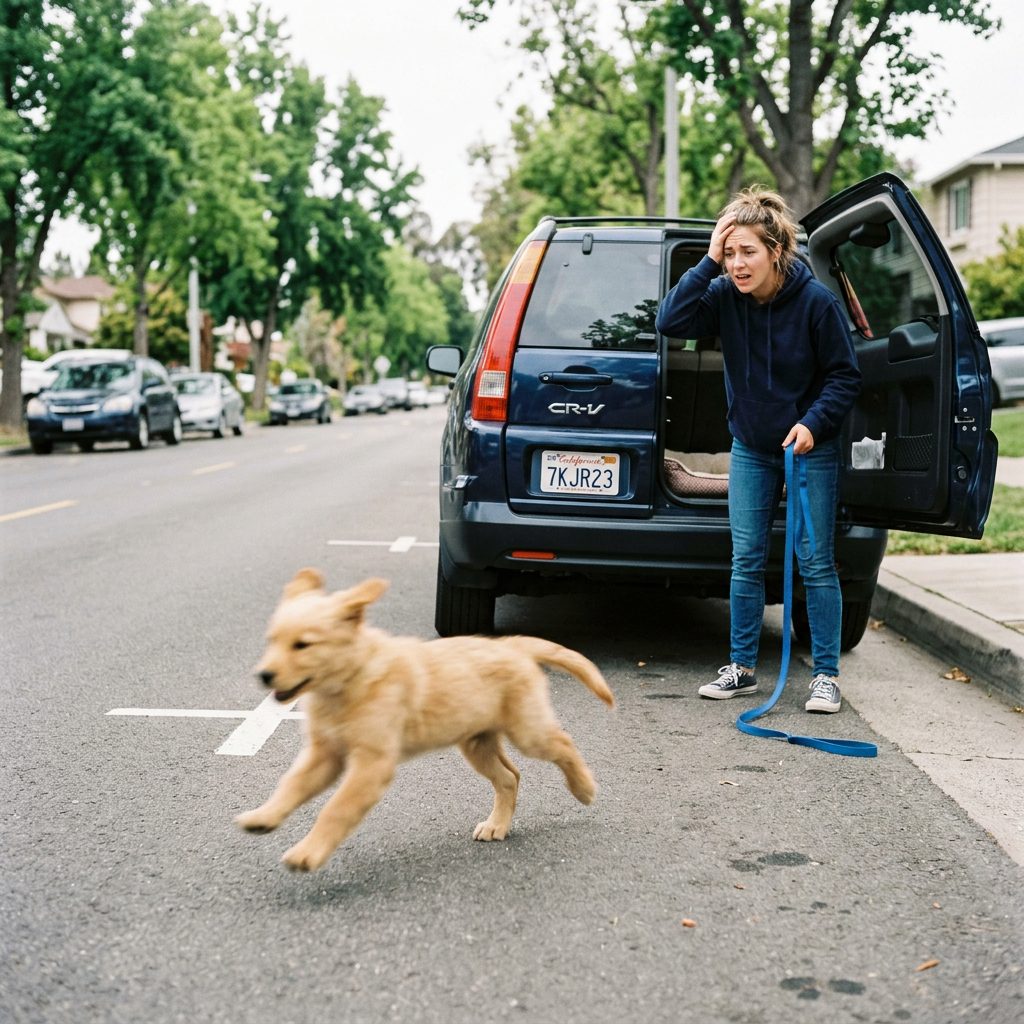
Even the most diligent owners run into hurdles. If your puppy is still struggling, check if you are falling into these common traps:
- Being Too Slow with Rewards: In the beginning, you need to treat the puppy while they are waiting, not just after they get out. Reward the ‘staying’ behavior.
- Using a ‘Mean’ Voice: ‘Wait’ shouldn’t be a threat. It should be an invitation to earn a reward. Keep your tone light and encouraging.
- Failing to Secure the Leash: Never open the door until the leash is in your hand or stepped on. One mistake is all it takes for an accident to happen.
- Rushing the Process: Don’t try to do all 4 steps in one day. Spend a week on Step 1 if you have to!
Conclusion
Preventing your puppy from bolting from the car door is a journey that requires patience, repetition, and a lot of treats. By breaking the process down into these four manageable steps, you are doing more than just preventing a chase; you are building a foundation of impulse control that will serve your dog well in every aspect of their life. Remember, a safe dog is a happy dog, and a calm exit sets the tone for a wonderful adventure together. Keep practicing, stay consistent, and soon enough, your pup will be the gold standard of car etiquette at the local park!