Why You Should Stop Using A Dog Bowl: 5 Mind-Blowing Benefits Of Hand Feeding Your Puppy
Let us talk about a daily routine that almost every dog owner takes for granted: mealtime. For generations, the standard procedure has been to scoop a cup of kibble, dump it into a ceramic or metal bowl, place it on the floor, and walk away. It is quick, it is easy, and it is what we have always done. But what if I told you that by simply using a bowl, you are throwing away one of the most powerful training and bonding opportunities you will ever have with your dog? Welcome to the transformative world of hand feeding.
As savvy dog owners, we are always looking for ways to improve our dogs’ lives, boost their cognitive abilities, and strengthen our relationship with them. We invest in high-quality diets, puzzle toys, and top-tier training classes. Yet, we often overlook the incredible value of the food we are already giving them. Your puppy’s daily caloric intake is a currency. When you put it in a bowl, you are essentially giving them a massive paycheck for doing absolutely nothing. Hand feeding changes that dynamic entirely.
Hand feeding is not just about delivering calories; it is about delivering communication, trust, and structure in a way your puppy inherently understands.
By ditching the bowl, you tap into your puppy’s natural canine drive to forage and work for their food. This simple shift in how you deliver meals can solve a myriad of behavioral problems before they even begin, from resource guarding to hyperactive jumping. In this comprehensive guide, we are going to dive deep into the five mind-blowing benefits of hand feeding your puppy, the tools you need to get started, and a step-by-step approach to making this your new favorite daily routine.
The 5 Mind-Blowing Benefits Of Hand Feeding
When you transition from bowl feeding to hand feeding, the changes in your puppy’s behavior can seem almost magical. However, it is not magic; it is behavioral science. Let us break down the five most significant benefits you will experience when you start hand feeding your puppy.
1. Building An Unbreakable Bond And Trust
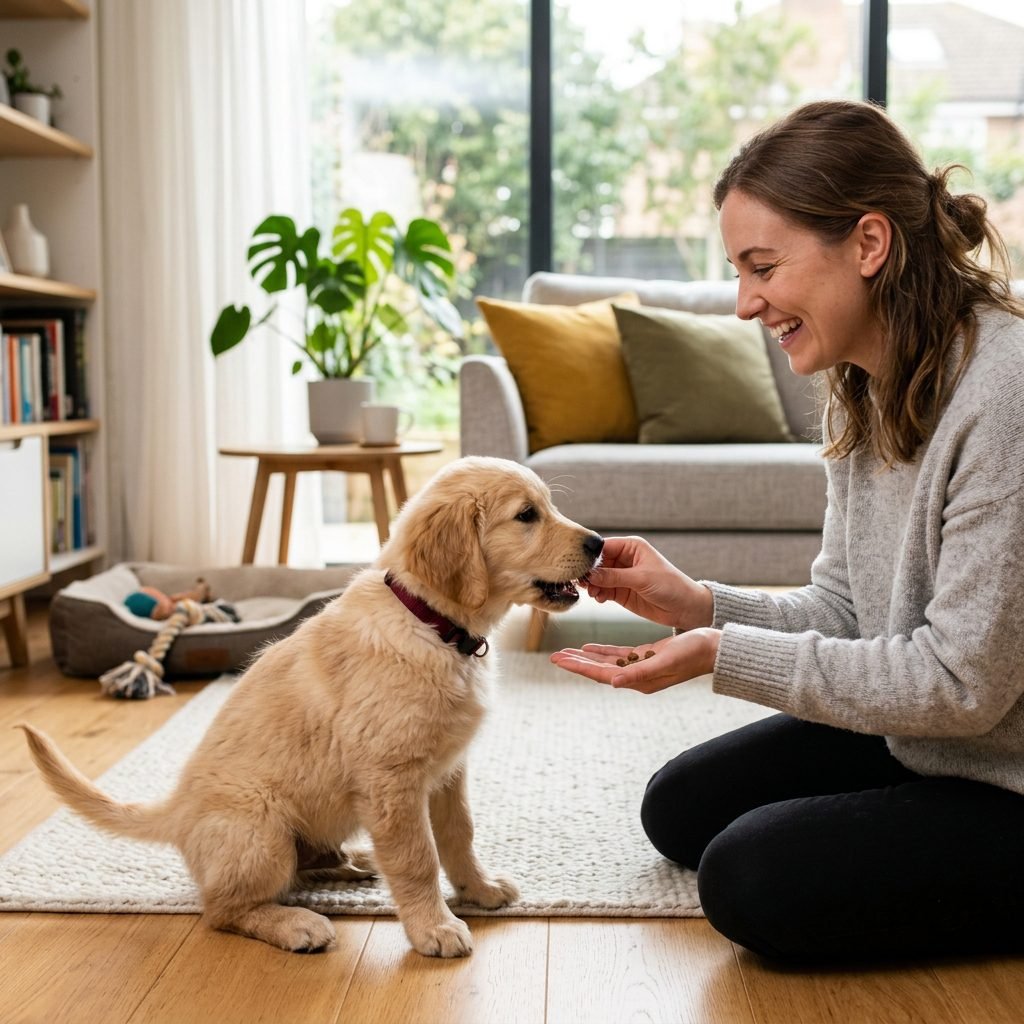
Dogs are opportunistic scavengers by nature, but they are also highly social creatures. When you become the direct source of their sustenance, you elevate your status in their eyes from a mere roommate to a vital, trusted provider. Hand feeding requires physical proximity, gentle touch, and sustained eye contact. Every time your puppy takes a piece of kibble from your fingers, they are learning that good things come directly from you. This builds a profound level of trust, especially for timid or anxious puppies who need to learn that human hands are safe and rewarding.
2. Built-In Impulse Control
Puppies are famous for their lack of impulse control. They jump, they nip, they bolt through open doors. Hand feeding is the ultimate exercise in teaching a puppy to control their impulses. If a puppy lunges or snaps at the food in your hand, the hand simply closes. The food is only released when the puppy backs off, sits, or shows calm behavior. They quickly learn that pushy, demanding behavior gets them nowhere, while patience and politeness unlock the reward. This foundational impulse control bleeds into every other aspect of their life.
3. Preventing Resource Guarding
Resource guarding is a dangerous behavioral issue where a dog aggressively protects their food, toys, or space. Traditional bowl feeding can inadvertently foster this behavior, as the dog views the bowl as their property and approaching humans as potential thieves. Hand feeding completely flips this script. Because the food comes from you, there is no bowl to guard. Your presence during mealtime is associated with receiving food, not losing it. This is arguably one of the most critical preventative measures a savvy dog owner can take.
4. Supercharging Your Training Sessions
Imagine having 100 to 300 tiny, high-value rewards to use for training every single day. That is what your puppy’s daily kibble allowance represents! Instead of trying to squeeze in separate training sessions with extra treats (which can lead to weight gain), hand feeding allows you to use their regular meals to teach basic obedience, loose leash walking, and complex tricks. You get hundreds of repetitions a day to reinforce commands like sit, stay, down, and come.
5. Better Digestion And Slower Eating
Many puppies are completely ravenous and will inhale a bowl of food in seconds. This rapid eating can lead to poor digestion, gas, vomiting, and in severe cases, a life-threatening condition called Gastric Dilatation-Volvulus (bloat). Hand feeding naturally forces your puppy to slow down. By dispensing food a few pieces at a time, you allow their stomach to properly digest the meal, promoting better overall gastrointestinal health.
| Feature | Traditional Bowl Feeding | Hand Feeding |
|---|---|---|
| Pacing | Often rapid, risking bloat and poor digestion | Naturally paced, promoting healthy digestion |
| Engagement | Zero engagement; dog focuses solely on the bowl | High engagement; requires eye contact and focus on the owner |
| Behavioral Impact | Can lead to resource guarding and food aggression | Builds trust, prevents guarding, and reinforces that humans provide value |
| Training Value | Missed opportunity; calories are given away for free | Maximum value; every piece of kibble is a paycheck for good behavior |
| Impulse Control | Minimal; dog eats whenever they want | High; dog must wait for the owner to release the food |
Tools Needed For Successful Hand Feeding
While hand feeding is a relatively simple concept, having the right tools can make the process significantly smoother, cleaner, and more enjoyable for both you and your puppy. You do not need a lot of expensive gear, but a few strategic items will set you up for success.
The Essential Treat Pouch
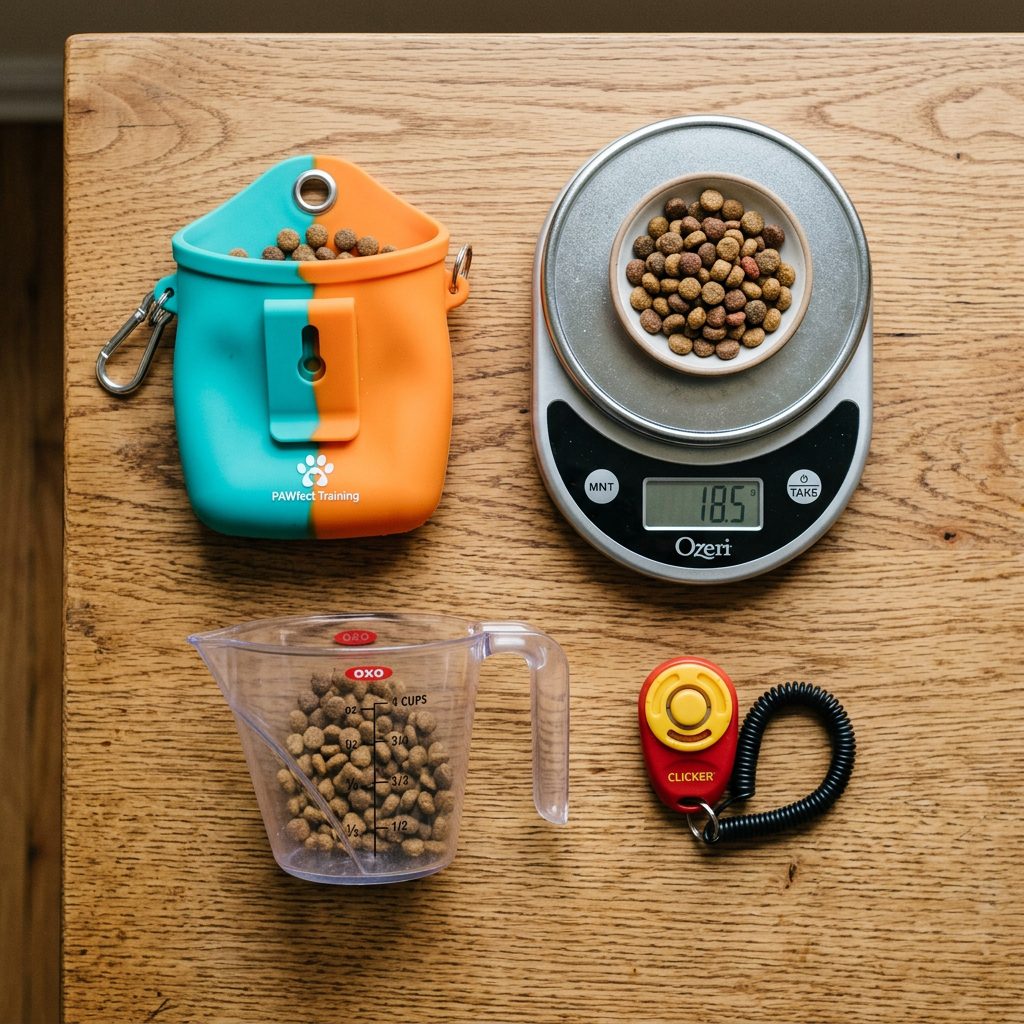
If you are going to hand feed your puppy’s meals, carrying a bowl around the house is clunky and impractical. A high-quality treat pouch is an absolute must-have. Look for a pouch made of food-grade silicone or durable, washable nylon. Silicone pouches are fantastic because they do not absorb oils from the dog food, they are easy to wipe clean, and they often feature magnetic closures that give you quick, one-handed access to the kibble while keeping it secure when you bend over.
Measuring Cups And Kitchen Scales
One of the risks of hand feeding is losing track of how much your puppy has eaten throughout the day. Overfeeding can lead to obesity, while underfeeding can stunt a puppy’s growth. To prevent this, you must measure out your puppy’s entire daily allowance of food every morning. Use precise measuring cups or, even better, a digital kitchen scale to weigh the food in grams. Place this daily ration into a dedicated container, and only pull from that container to fill your treat pouch. When the container is empty, feeding time is over for the day.
High-Value Mixers (Optional but Recommended)
Some puppies are highly food-motivated and will happily work for standard dry kibble. Others might need a little extra persuasion, especially when you are training in highly distracting environments like a park. Savvy owners will mix in a small handful of high-value treats into the daily kibble ration. Think freeze-dried liver, tiny pieces of boiled chicken, or small bits of cheese. By mixing these in, the regular kibble absorbs the scent of the high-value items, making the entire pouch more enticing. Plus, your puppy gets the thrill of a jackpot reward every so often!
- Silicone Treat Pouch: For easy access and sanitary storage on the go.
- Digital Kitchen Scale: To ensure accurate caloric intake and prevent overfeeding.
- Dedicated Daily Container: To hold the measured daily ration of food.
- High-Value Mixers: To boost the value of standard kibble during tough training sessions.
- A Clicker: To precisely mark the behavior you are rewarding during hand feeding sessions.
Step-By-Step Guide: How To Hand Feed Your Puppy
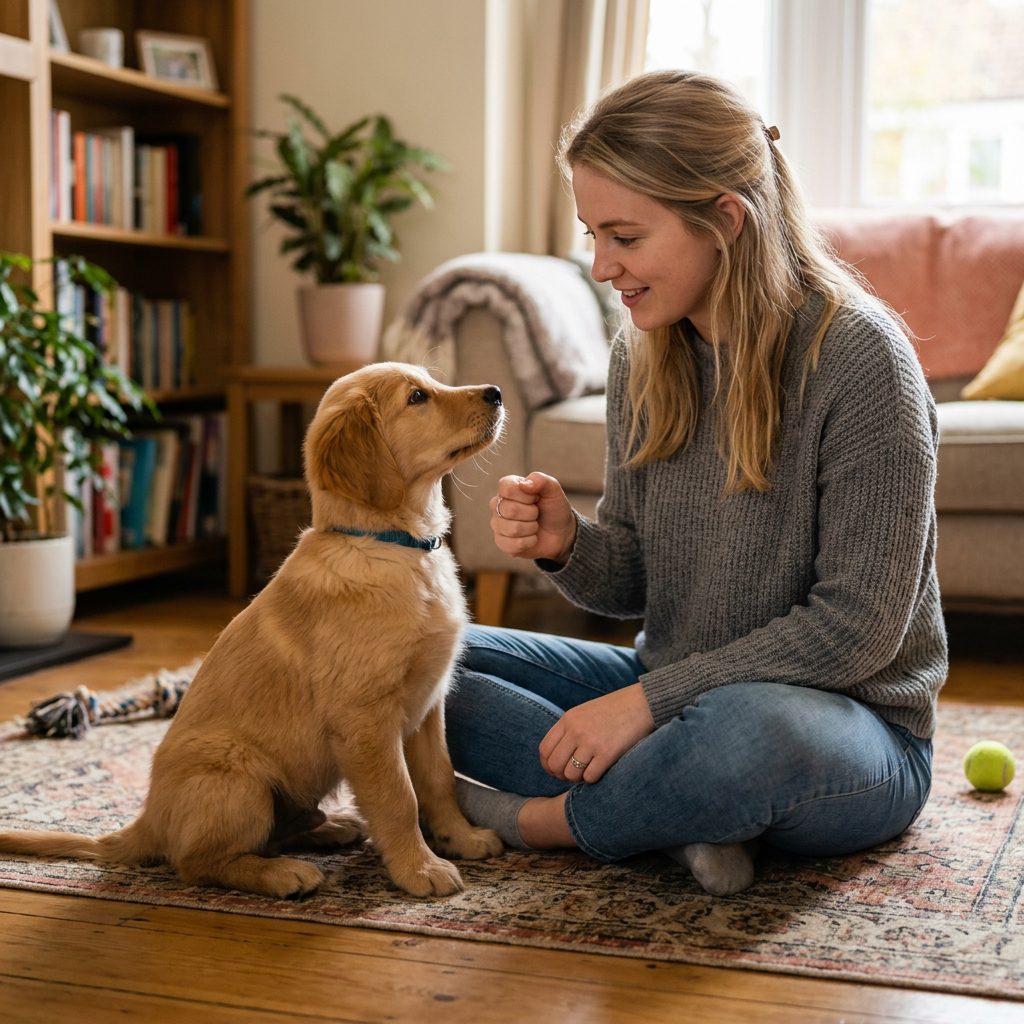
Transitioning from a bowl to hand feeding might confuse your puppy at first. They are used to free access, and now they have to engage with you to get their meals. It is crucial to introduce this concept gradually and positively. Here is the step-by-step method to seamlessly integrate hand feeding into your daily routine.
Step 1: Measure and Prepare
Start your morning by calculating your puppy’s total daily food requirement based on their age, weight, and your veterinarian’s recommendations. Weigh or measure this amount and place it in your daily container. Load up your treat pouch with the first portion of the day. Ensure your hands are clean and you are in a calm, positive state of mind.
Step 2: Start In A Low-Distraction Environment
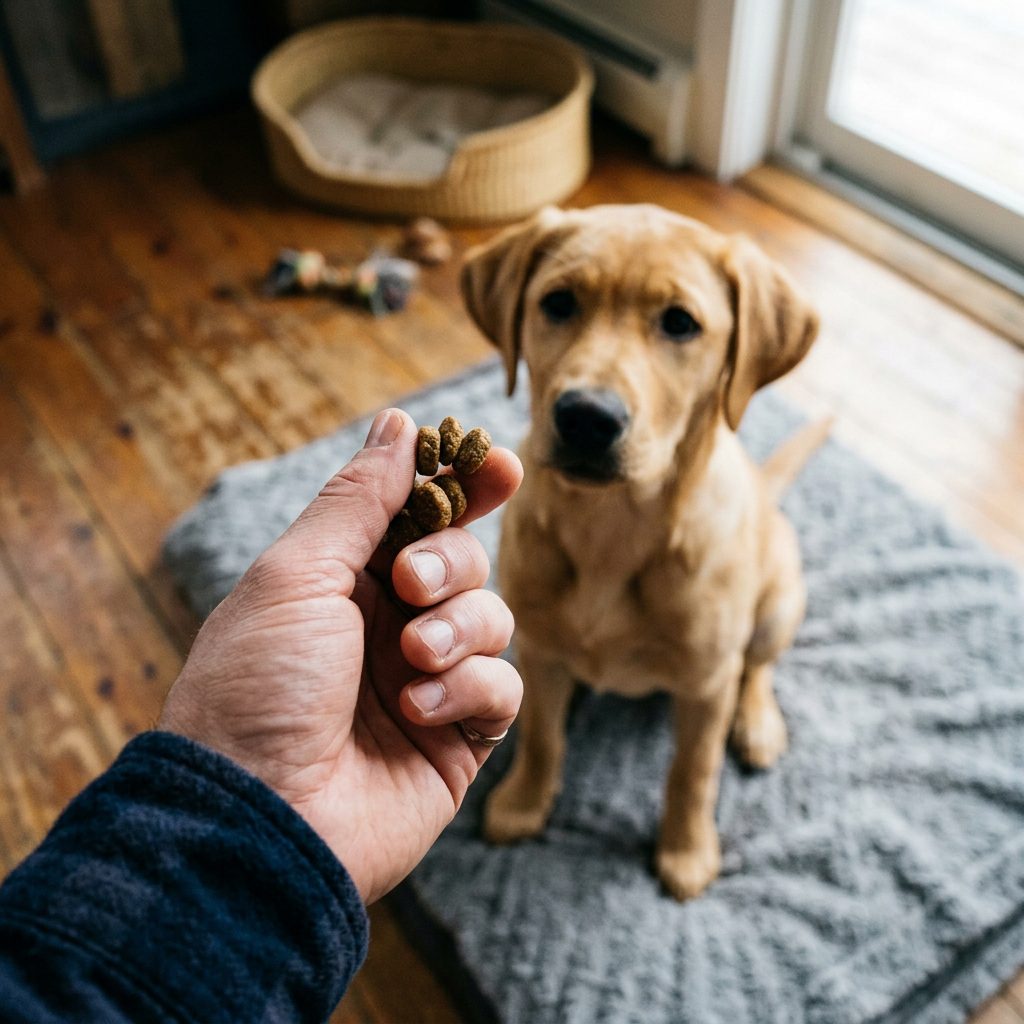
For the first few sessions, choose a quiet room in your house with no other pets, children, or loud noises. You want your puppy’s undivided attention. Sit on the floor or in a low chair to be closer to their level. Hold a small handful of kibble in a closed fist and present it to your puppy.
Step 3: Teach The Closed-Fist Game (Impulse Control)
Your puppy will likely try to sniff, lick, or gently nibble at your closed fist to get the food. Do not pull your hand away. Keep your fist closed and steady. The moment your puppy stops trying to force your hand open and pulls their head back even slightly, immediately open your hand and say Yes! or click your clicker, allowing them to eat the kibble from your open palm. Repeat this until they learn that a polite, patient retreat is the key to opening the hand.
Step 4: Introduce Basic Obedience
Once your puppy understands the closed-fist game, you can start asking for specific behaviors. Hold the food, wait for eye contact, and ask for a Sit. As soon as their bottom hits the floor, mark the behavior with a Yes! and deliver the food directly to their mouth. You can gradually chain behaviors together: ask for a sit, then a down, then a stand, rewarding after each successful completion. You are now officially training your dog using their daily meals!
Step 5: Take It On The Road
As your puppy becomes a hand-feeding pro indoors, start taking your treat pouch on walks. Use their meal to reward loose leash walking, checking in with you, and ignoring distractions like passing dogs or squirrels. By the end of the day, your daily container should be empty, and your puppy should be mentally and physically satisfied.
- Measure: Secure the exact daily portion to avoid overfeeding.
- Isolate: Begin in a quiet room to minimize distractions.
- Patience: Use the closed-fist method to teach impulse control.
- Command: Integrate basic obedience like sit, down, and eye contact.
- Generalize: Move the feeding sessions to outdoor environments to proof behaviors.
Troubleshooting Common Hand Feeding Mistakes
While hand feeding is an incredibly effective tool, it is not without its challenges. Puppies are learning how to interact with the world, and sometimes their enthusiasm (or confusion) can lead to roadblocks. Here are the most common issues dog owners face when hand feeding, and exactly how to troubleshoot them like a professional trainer.
Dealing With Shark Teeth (Nipping)
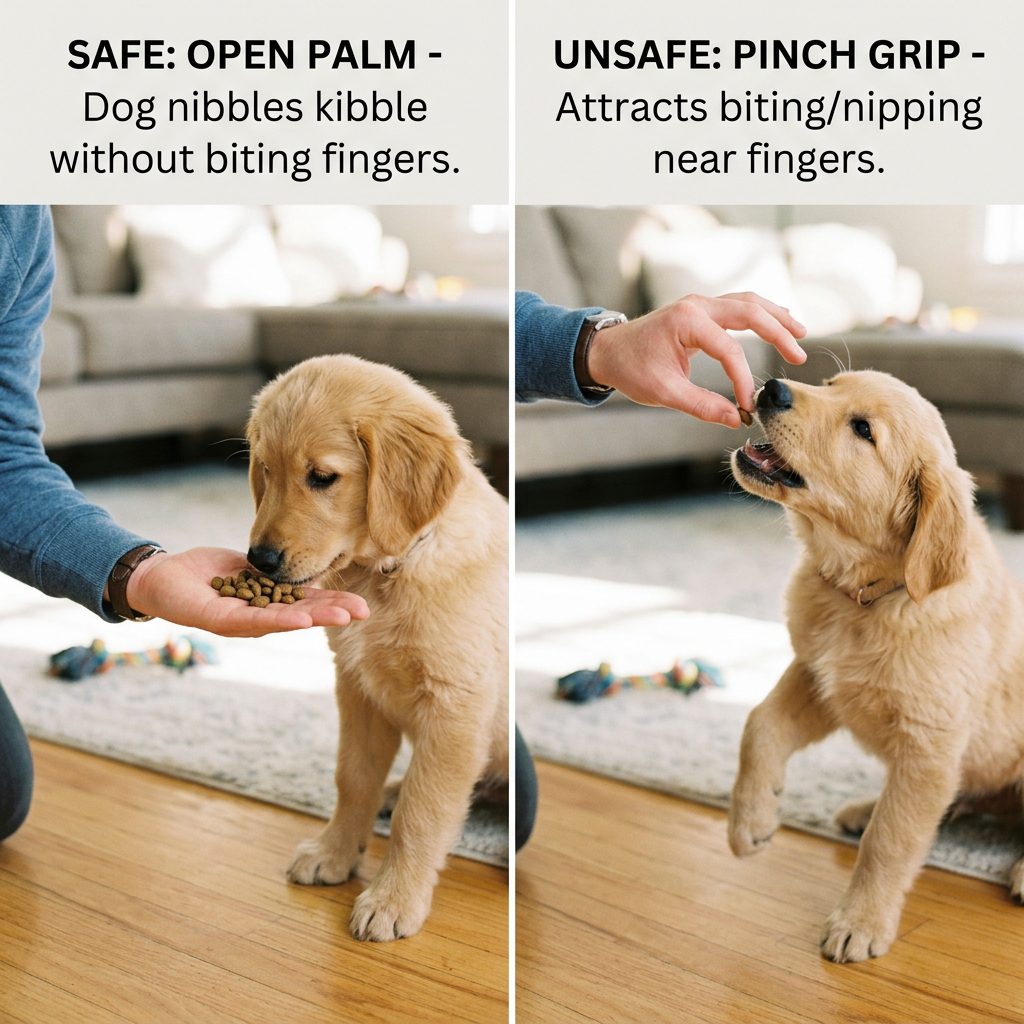
Puppies have razor-sharp teeth, and in their excitement to get the food, they might accidentally nip your fingers. If your puppy bites too hard, immediately say a firm Ouch! and remove the food, standing up and turning your back for 10 seconds. This teaches them that rough mouths make the food disappear. When you resume, ensure you are delivering the food on a flat palm, rather than pinching it between your fingers. A flat palm makes it physically difficult for them to nip your fingers, encouraging them to use a soft tongue instead.
The Puppy Loses Interest
Sometimes, a puppy will realize they have to work for their food and simply walk away, hoping you will eventually give up and put it in a bowl. Do not give in. If your puppy walks away, simply close your pouch and end the session. Try again in an hour or two. A healthy puppy will not starve themselves. Once they realize the bowl is truly gone and the only way to eat is to engage with you, their motivation will skyrocket. If they are consistently refusing food, ensure the kibble is fresh, consider adding a high-value mixer, or consult your vet to rule out any underlying health issues.
Frustration And Barking
If you ask for a behavior your puppy does not fully understand yet, they may become frustrated and start barking, pawing, or whining at you. This means you have pushed them too far, too fast. Take a step back. Lower your criteria. If they cannot hold a Down for five seconds, reward them for holding it for one second. Hand feeding should be a fun, confidence-building game, not a source of stress. Always end your feeding sessions on a high note with an easy win.
Transitioning Back To A Bowl (When Necessary)
You do not have to hand feed your dog for the rest of their life. Most owners use hand feeding intensively for the first 6 to 12 months to build a solid training foundation. When you are ready to reintroduce the bowl, do so gradually. Start by asking for a series of commands, and then place a handful of food in the bowl as the final reward. You can also transition to puzzle toys, snuffle mats, or Kongs to maintain the mental enrichment aspect of feeding without requiring your constant active participation.
Conclusion
Transitioning from a traditional dog bowl to hand feeding is one of the most impactful decisions you can make for your puppy’s development. It shifts mealtime from a passive, mindless activity into an engaging, relationship-building experience. By taking the time to hand feed, you are actively preventing behavioral issues like resource guarding, dramatically improving your dog’s impulse control, and getting hundreds of free training repetitions every single day.
Remember, consistency is key. It might feel like a lot of work initially to measure out daily portions and actively feed your puppy piece by piece, but the investment pays off exponentially. You are not just feeding a dog; you are shaping a well-adjusted, focused, and deeply bonded canine companion. So, toss the bowl in the cupboard, strap on that treat pouch, and get ready to unlock your puppy’s true potential. Happy training, and enjoy this incredible journey with your four-legged best friend!