Tired of Toilet Paper Shredding? How to Stop Your Puppy’s Favorite Messy Game
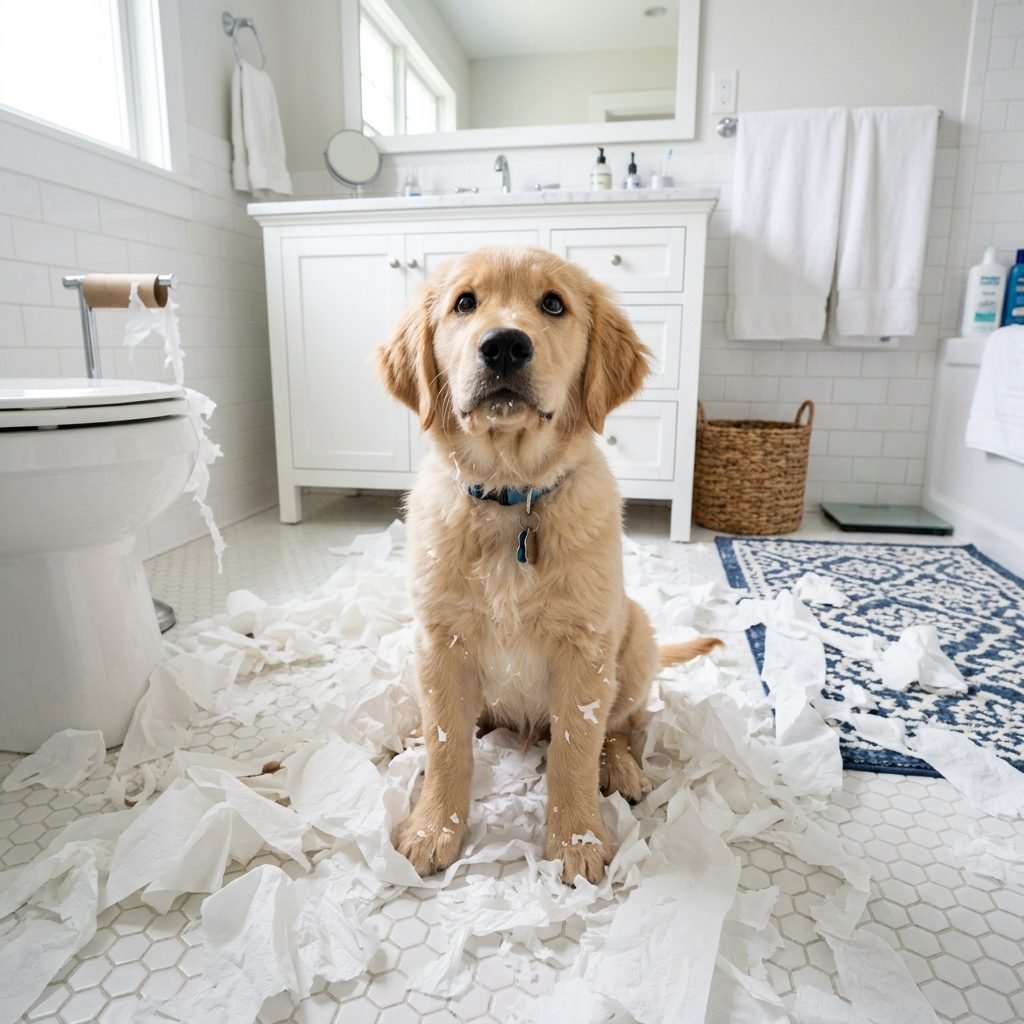
We have all been there. You walk into the bathroom only to find what looks like a localized blizzard has occurred. Your brand-new roll of premium soft-ply toilet paper has been transformed into a thousand tiny, soggy confetti pieces scattered across the tiles. In the center of the chaos sits your puppy, tail wagging, looking incredibly proud of their interior decorating skills. While it might be funny the first time—and certainly makes for a great social media photo—the ‘Toilet Paper Shredding Game’ is a habit that most savvy dog owners want to nip in the bud quickly. Not only is it wasteful and messy, but it can also lead to digestive issues if your pup decides to swallow the evidence.
As a canine specialist, I can tell you that this behavior isn’t your puppy being ‘spiteful’ or ‘bad.’ To a puppy, a roll of toilet paper is essentially a giant, self-dispensing toy that provides immediate tactile feedback and high-level entertainment. In this guide, we are going to dive deep into the psychology of why puppies love this messy pastime and, more importantly, provide you with a professional-grade roadmap to reclaim your bathroom and save your sanity. We will move beyond simple fixes and look at behavioral modification, environmental management, and appropriate enrichment to ensure your puppy learns that the bathroom is a ‘no-play zone.’
Understanding the Why: The Psychology of the Shred
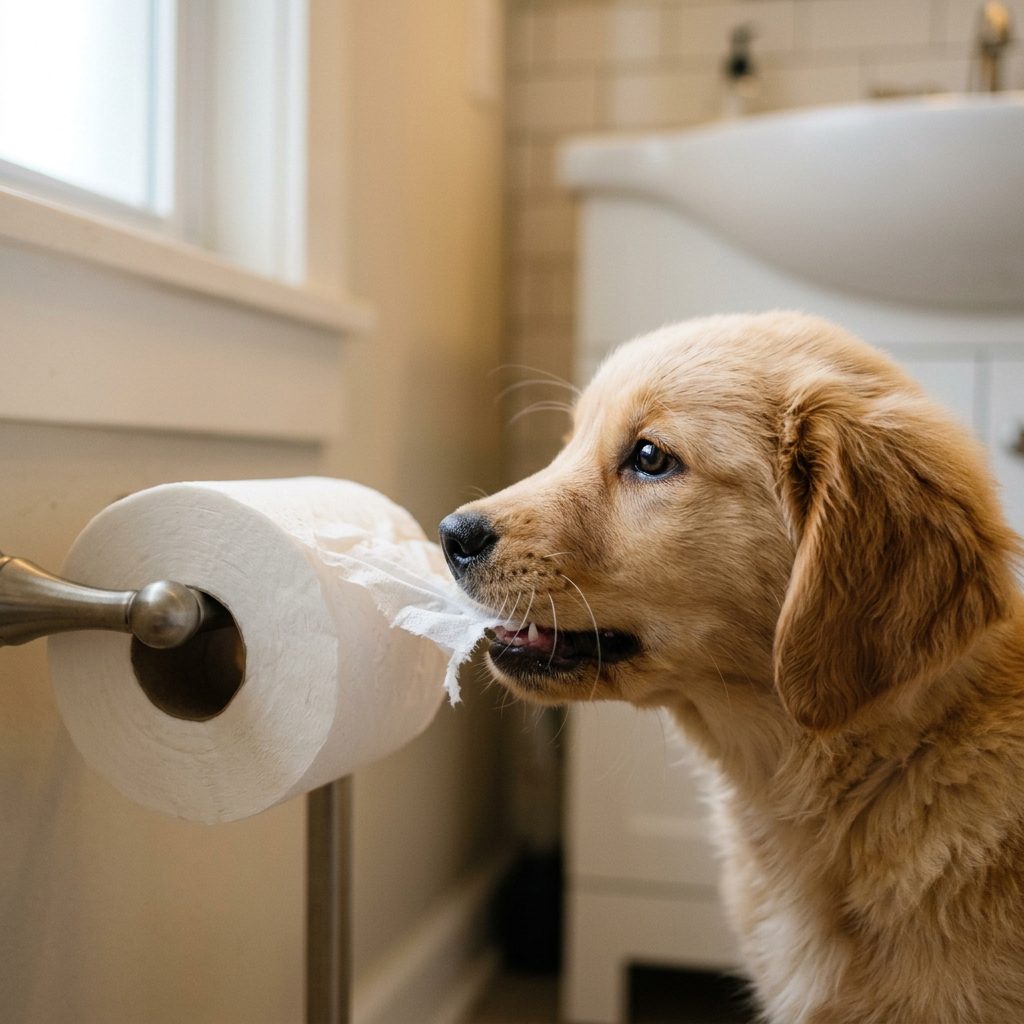
Before we can fix the behavior, we have to understand the motivation behind it. Puppies don’t view toilet paper as a hygiene product; they view it as an interactive puzzle. Understanding these triggers allows us to address the root cause rather than just the symptoms.
The Dissection Instinct
Dogs are naturally inclined to ‘dissect’ things. In the wild, this is a predatory motor pattern used to consume prey. In your living room, this translates to ripping the stuffing out of plush toys or shredding paper. The texture of toilet paper is particularly satisfying because it offers very little resistance, allowing the puppy to feel ‘successful’ in their destruction very quickly.
Teething Relief
If your puppy is between 4 and 7 months old, they are likely in the throes of teething. The soft yet firm texture of a cardboard roll and the paper itself can feel soothing on sore gums. The act of gnawing and pulling helps alleviate the pressure of new teeth breaking through.
The ‘Boredom’ Factor
A bored puppy is a creative puppy. If your dog isn’t receiving enough mental stimulation or physical exercise, they will go looking for a job. Finding the end of a toilet paper roll and running through the house with it provides a massive dopamine hit. It’s a game of ‘chase’ where they are the leader, and the ‘tail’ (the paper) follows them everywhere.
Attention-Seeking Behavior
If you usually react by chasing your puppy or shouting (even if it’s in frustration), your puppy might interpret this as a fun game of tag. To a puppy, negative attention is still attention. If they feel ignored, shredding a roll of TP is a guaranteed way to get you to engage with them immediately.
Immediate Management: Puppy-Proofing Your Bathroom
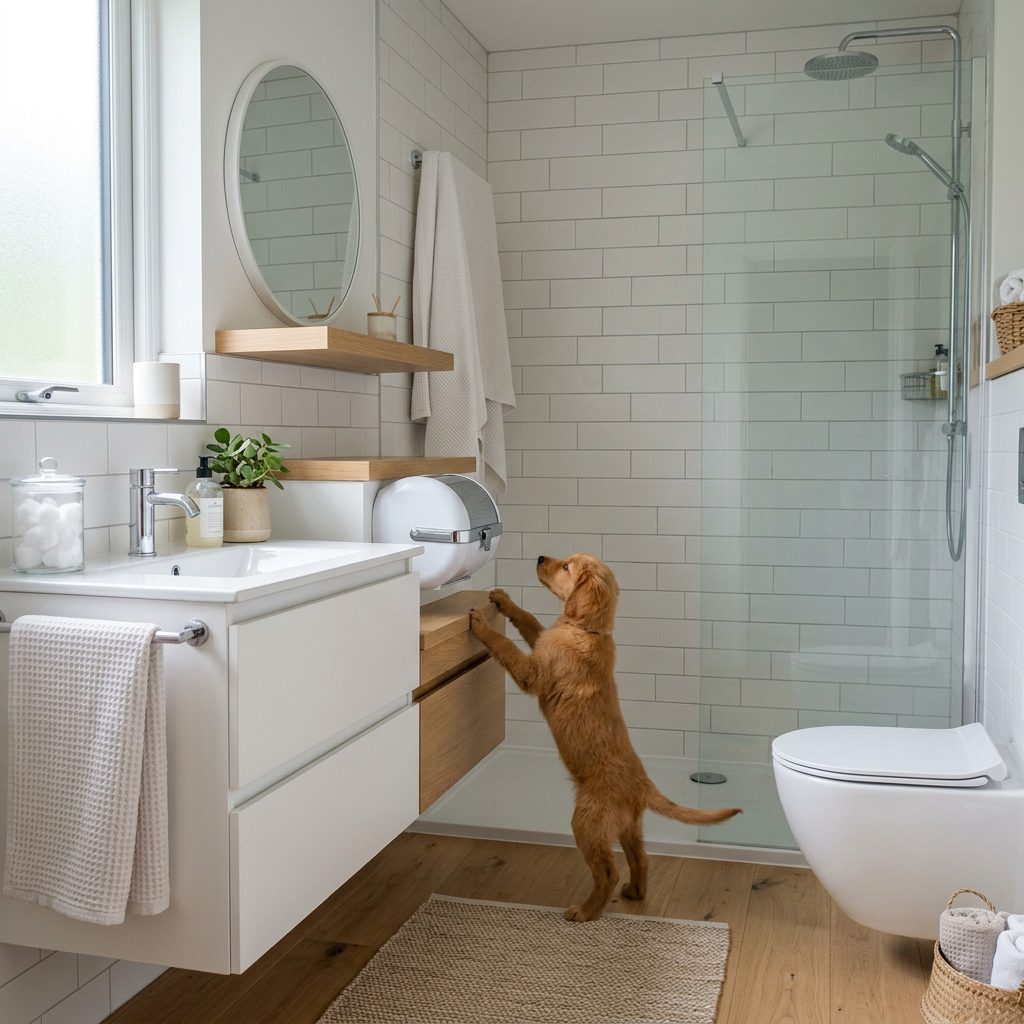
Training takes time, but you need your bathroom to stay clean today. Management is the process of preventing the puppy from practicing the unwanted behavior while they are still learning. Every time your puppy successfully shreds a roll, the behavior is reinforced, making it harder to stop later.
The ‘Close the Door’ Rule
The simplest solution is often the most overlooked. Keeping the bathroom door shut at all times is 100% effective. However, if you have guests or children, this isn’t always reliable. Consider installing a self-closing hinge or a simple baby gate if the bathroom is part of a larger suite you want to keep accessible.
Vertical Adjustments
If your puppy is a small breed, simply moving the toilet paper holder higher up the wall can solve the problem. For larger breeds or ‘jumpers,’ this might not be enough. You can also place the roll on a high shelf or inside a cabinet when not in use.
Specialized Hardware
There are several products designed specifically to stop ‘TP-unrolling.’ These include covered dispensers or tension-based holders that make it difficult for a paw to spin the roll freely.
Pro Tip: If you can’t change the hardware, try the ‘squish’ method. Squish the toilet paper roll so it’s no longer round but oval. This prevents it from spinning easily on the holder, removing the ‘unrolling’ fun for the puppy.
Essential Gear: Tools to Deter the Shredder
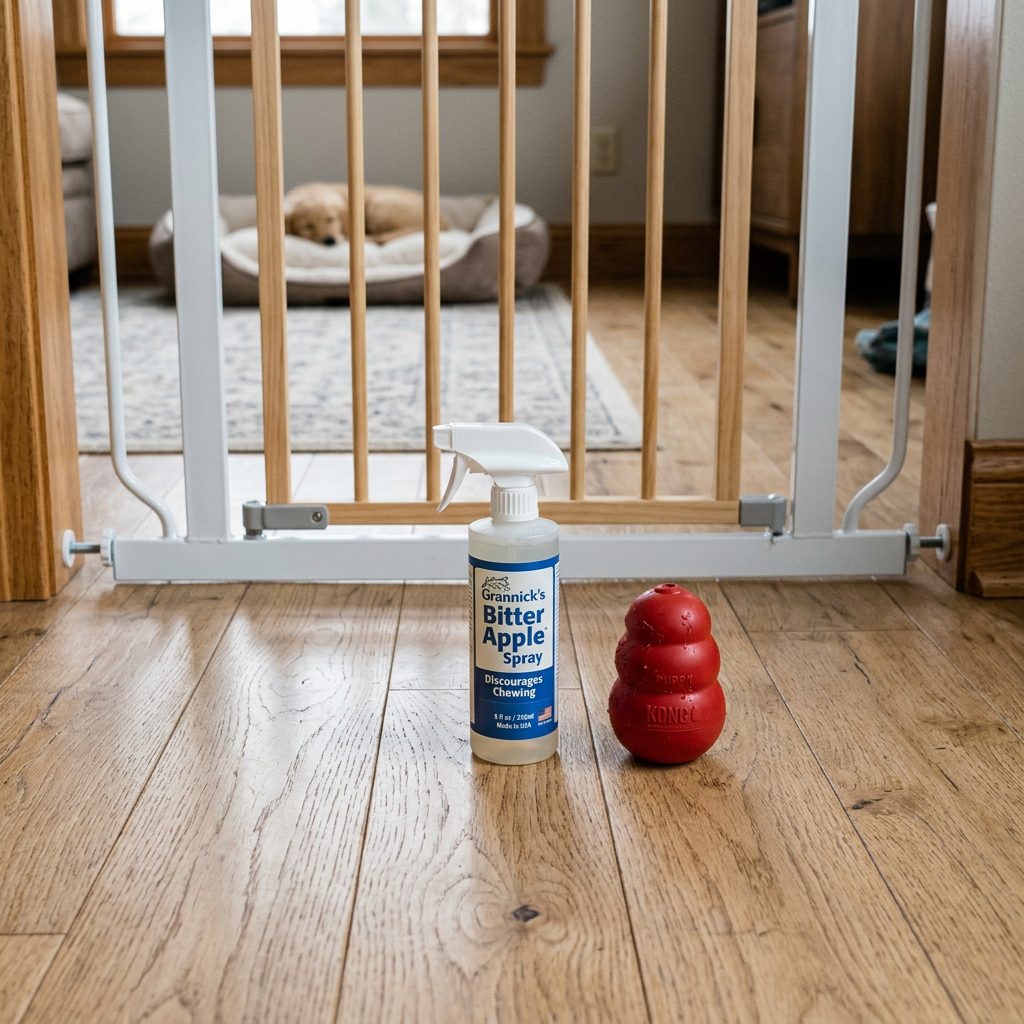
To successfully transition your puppy away from the bathroom confetti game, you might need a few tools in your arsenal. These tools range from physical barriers to deterrents that make the toilet paper less appealing.
| Tool Category | Specific Item | Purpose |
|---|---|---|
| Physical Barrier | Baby Gates | Prevents access to the bathroom entirely. |
| Deterrent | Bitter Apple Spray | Makes the first layer of paper taste unpleasant. |
| Storage | Enclosed TP Holder | Hides the roll behind a plastic or metal shield. |
| Redirection | Rubber Chew Toys | Provides a safe alternative for the ‘mouthy’ puppy. |
Using Deterrents Wisely
While bitter sprays can work, they are not a magic bullet. Some puppies actually don’t mind the taste, and others will simply find a spot you missed. Use deterrents as a secondary measure alongside active training and management. Always ensure the spray you use is pet-safe and non-toxic.
The Step-by-Step Training Protocol
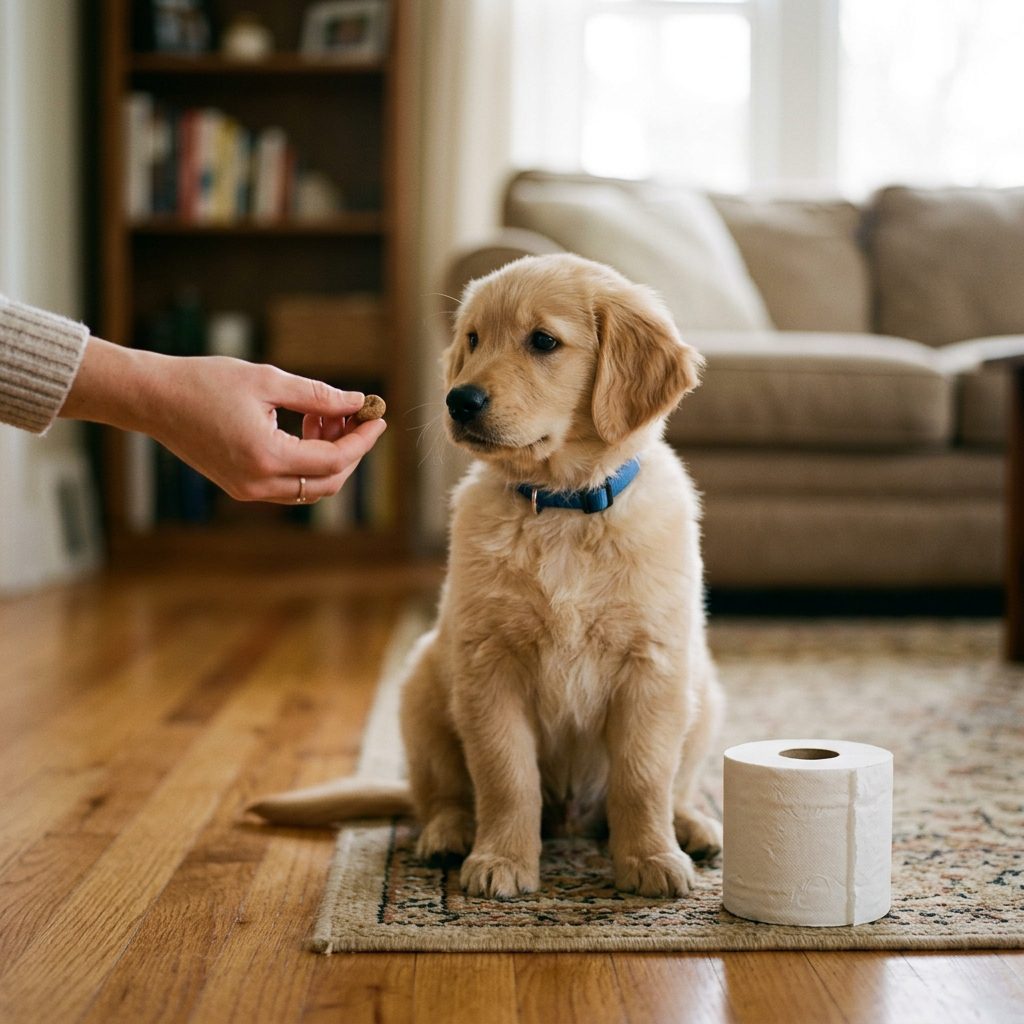
Now we get to the heart of the matter: teaching your puppy that toilet paper is boring and other toys are rewarding. We will focus on two main commands: ‘Leave It’ and ‘Drop It.’
Step 1: The ‘Leave It’ Foundation
- Hold a high-value treat in a closed fist. Let your puppy sniff and lick your hand.
- Wait for them to stop trying to get the treat. The second they back away, say ‘Yes!’ and give them a different treat from your other hand.
- Repeat until they immediately back away when they see your closed fist.
- Progress to an open palm, then a treat on the floor, always rewarding them for choosing to ignore the ‘forbidden’ item.
Step 2: Redirection to ‘Legal’ Shredding
When you catch your puppy eyeing the toilet paper, immediately call their name and offer a toy that has a similar ‘mouth-feel.’ A plush toy with a squeaker or a rope toy can provide that tactile satisfaction they are looking for. When they engage with the toy, praise them enthusiastically.
Step 3: The ‘Drop It’ Command
If the puppy already has the paper in their mouth, do not chase them! Chasing is a reward. Instead:
- Grab a handful of high-value treats (chicken, cheese, or freeze-dried liver).
- Toss the treats on the floor near the puppy.
- As they open their mouth to eat the treats, say ‘Drop It.’
- While they are busy eating, calmly pick up the shredded paper and move the puppy out of the room.
Step 4: Reward-Based Bathroom Visits
Take your puppy into the bathroom on a leash. Stand near the toilet paper. If they look at it but then look back at you, give them a treat. You are teaching them that ‘ignoring the paper in this room results in snacks.’
Enrichment: Providing Legal Outlets for Shredding
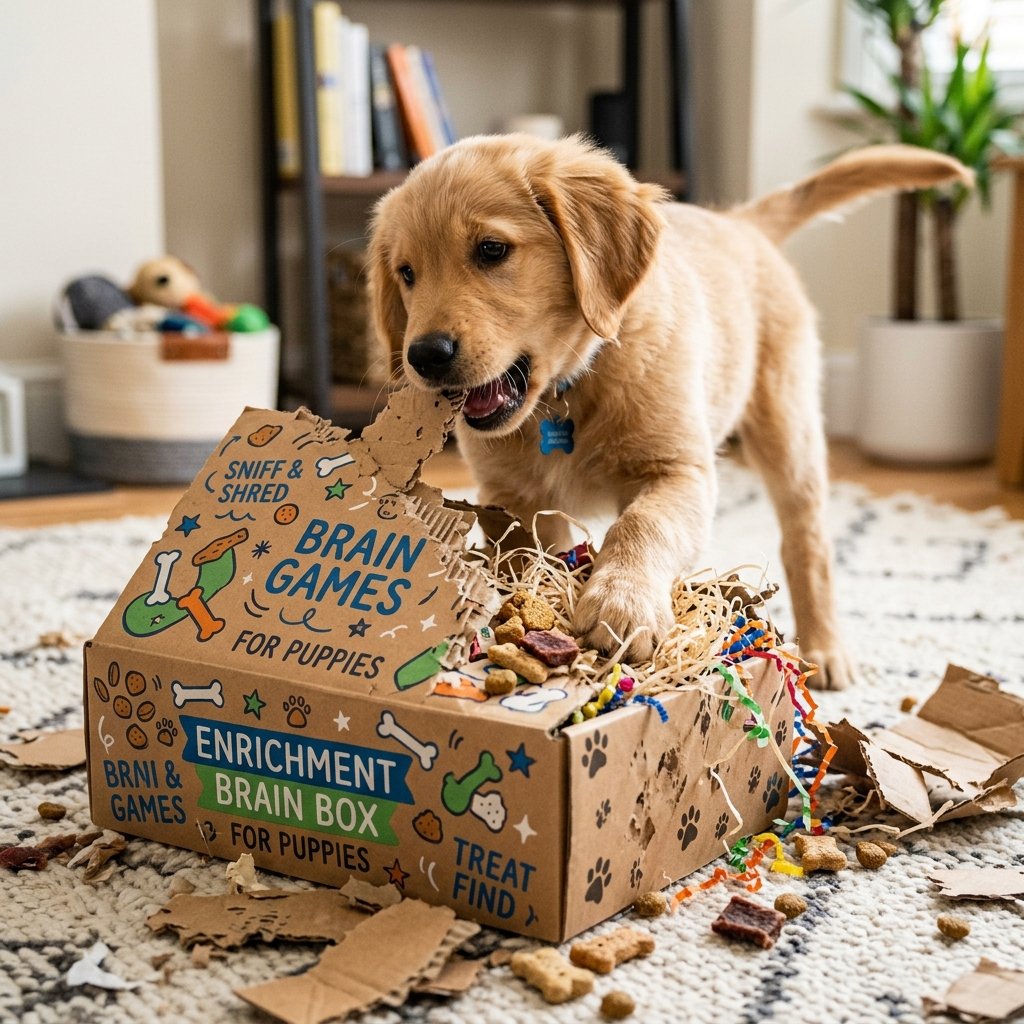
If your puppy has a high ‘shred drive,’ simply telling them ‘no’ won’t be enough. You need to provide a legal way for them to satisfy this biological urge. This is where enrichment comes in.
| Activity Name | Materials Needed | Skill Level |
|---|---|---|
| The Cardboard Box Destruction | Empty cereal or shipping boxes | Beginner |
| The Cabbage Shred | A head of cold cabbage | Intermediate |
| The Hidden Treat Roll | Empty TP tubes and kibble | Advanced |
The ‘Hol-ee Roller’ Hack
Take a rubber lattice ball (like a Hol-ee Roller) and stuff it with strips of old fleece or fabric. Your puppy can pull the fabric out over and over again, mimicking the ‘unrolling’ of the toilet paper without the mess or the waste. This is a fantastic way to keep their brain and mouth busy.
Destruction Boxes
Take a cardboard box, put some treats inside, and tape it shut (using paper tape). Let your puppy go to town. This allows them to use their paws and teeth to ‘dissect’ something, which is exactly what they are trying to do with your toilet paper. Note: Always supervise this to ensure they aren’t eating the cardboard.
Troubleshooting: When the ‘Game’ Won’t End
Even with the best training, some puppies are persistent. If you find your progress has stalled, consider these common pitfalls.
Are You Accidentally Rewarding Them?
If your puppy shreds the paper and you come running in making ‘Ooh’ and ‘Aah’ noises—even if you are upset—you have just provided the most exciting event of their day. Try to remain calm. If you find a mess, don’t scold the puppy (they won’t associate the scolding with an act they did 10 minutes ago). Just clean it up silently while the puppy is in another room.
Is the Puppy Under-Exercised?
A tired puppy is a well-behaved puppy. If the shredding is getting worse, increase their physical activity. A long sniffy walk or a game of fetch can drain the energy that would otherwise be spent on bathroom destruction.
The ‘Velcro Puppy’ Syndrome
Sometimes, shredding is a sign of separation anxiety. If the puppy only shreds paper when you are gone, they might be doing it to relieve stress. In this case, you may need to consult with a professional behaviorist to address the underlying anxiety.
Expert Insight: Consistency is the enemy of bad habits. If you let them play with the ’empty’ cardboard tube but tell them ‘no’ to the full roll, you are sending mixed signals. For a puppy, the tube and the paper are the same thing. Until the behavior is fully extinguished, keep all paper products off-limits.
Conclusion
Stopping the ‘Toilet Paper Shredding Game’ is a rite of passage for many puppy owners. By combining strict environmental management (keeping that door closed!) with positive reinforcement training and appropriate enrichment, you can save your bathroom from future blizzards. Remember that your puppy isn’t trying to be difficult; they are simply following their instincts and looking for fun. As a savvy owner, your job is to guide that energy into more productive outlets. Be patient, stay consistent, and soon enough, your toilet paper will stay exactly where it belongs—on the roll. Happy training!