
Survival Guide: What to Do During the Puppy Teething Timeline to Save Your Sanity
Welcome to the Land Shark Phase
If you have recently welcomed a bundle of fur into your home, you are likely currently alternating between heart-melting cuddles and frantic attempts to save your favorite pair of sneakers. Welcome to the puppy teething phase—a period affectionately known by veteran dog owners as the ‘land shark’ era. While those tiny, needle-like teeth are a natural part of your pup’s development, they can be a significant source of stress for both the dog and the owner.
Understanding the puppy teething timeline is not just about knowing when the biting will stop; it is about providing the right support at the right time to ensure your puppy grows into a healthy adult with a strong set of permanent teeth. In this guide, we will walk through the biological milestones of puppy dental development, provide a toolkit for soothing sore gums, and offer professional training strategies to redirect that chewing energy away from your furniture and toward appropriate outlets. Let’s dive into the timeline and save your sanity!
The Biological Roadmap: Understanding the Teething Timeline
When Do the Sharks Get Their Teeth?
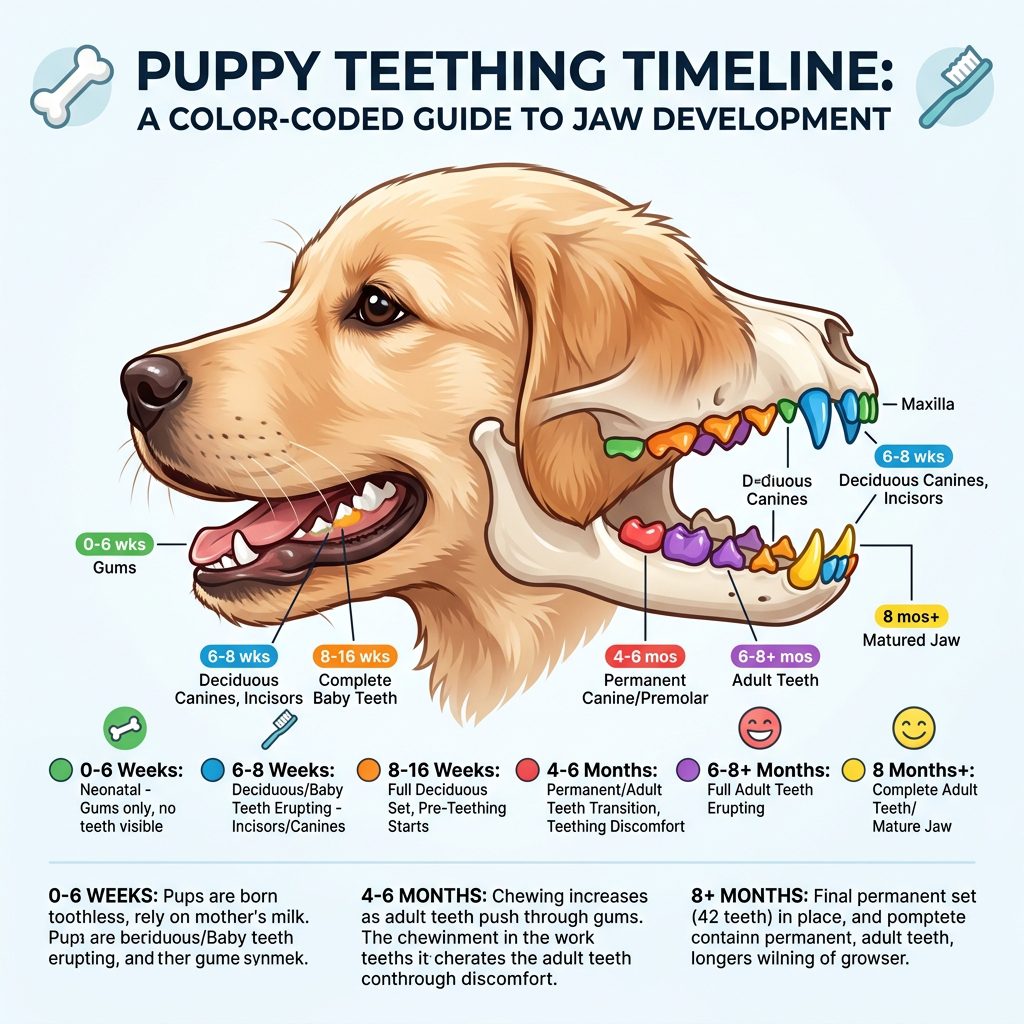
Puppies are born without teeth, which is a blessing for their nursing mothers. However, the development happens rapidly. Understanding what is happening inside your puppy’s mouth helps you empathize with their need to chew everything in sight.
| Puppy Age | Dental Development Stage | What to Expect |
|---|---|---|
| Birth to 2 Weeks | Neonatal Phase | No teeth; puppy is nursing and eyes are opening. |
| 3 to 5 Weeks | Deciduous (Milk) Teeth Emerge | Sharp incisors and canines begin to poke through the gums. |
| 6 to 8 Weeks | Full Set of Primary Teeth | Most puppies have all 28 milk teeth. This is usually when they go to new homes. |
| 12 to 16 Weeks | The Great Shedding Begins | Milk teeth start falling out to make room for adult teeth. You might find teeth on the floor! |
| 4 to 6 Months | Adult Molars Erupt | The most intense chewing phase as the large back teeth settle into the jaw. |
| 7 Months and Beyond | Full Adult Set | Most dogs have all 42 permanent teeth by this stage. |
The Transitional ‘Gap’ Period
Between 12 and 16 weeks, you may notice small gaps in your puppy’s smile. This is perfectly normal. During this time, the adult teeth are pushing against the roots of the baby teeth, causing the body to reabsorb those roots until the baby tooth becomes loose and falls out. You might even see a little bit of blood on a chew toy—don’t panic! A small amount of spotting is expected during this transition.
Symptoms and Red Flags: Is It Just Teething?
Recognizing the Signs of Oral Discomfort
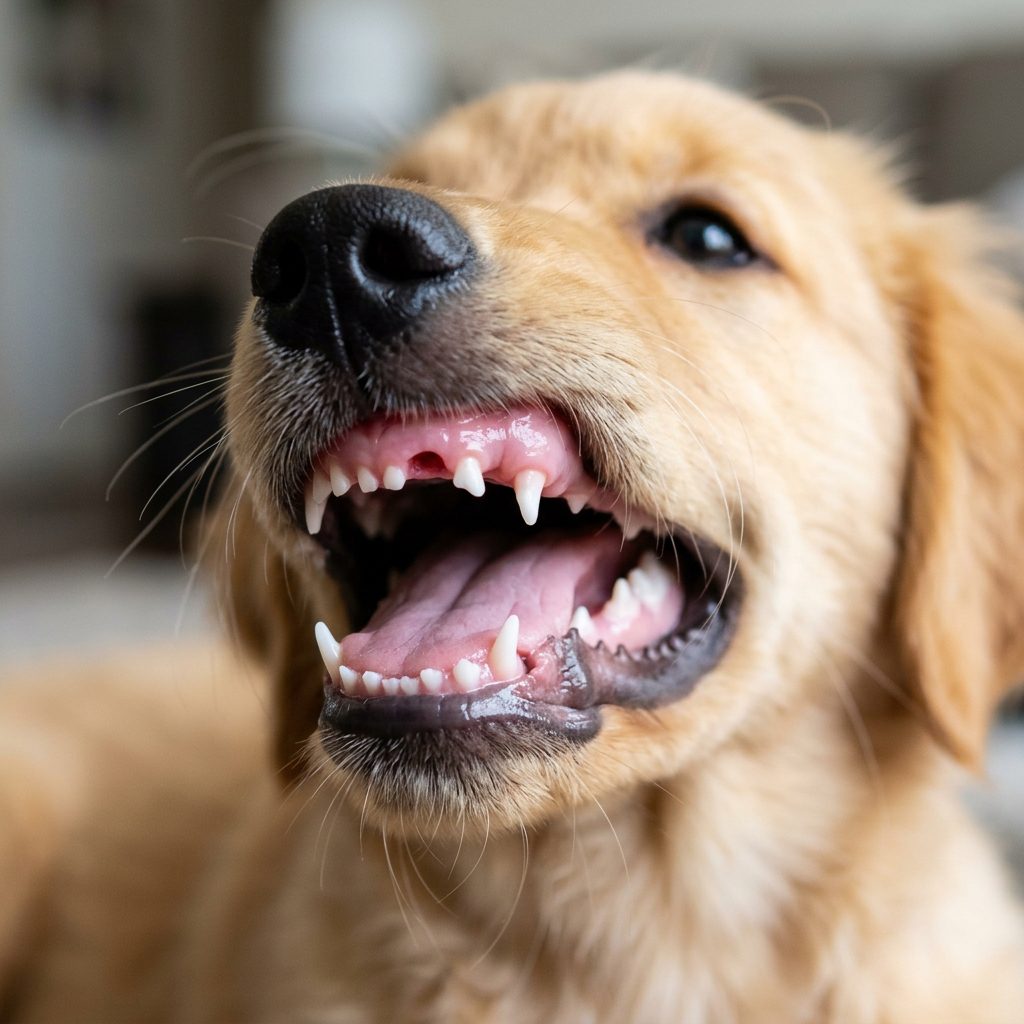
While chewing is the most obvious sign, teething affects your puppy’s behavior and physical state in several ways. Savvy owners know how to spot these signs early to provide relief before the puppy becomes overly frustrated.
- Excessive Drooling: The irritation of the gums often stimulates the salivary glands.
- Low-Grade Fever: Some puppies may feel slightly warm or lethargic as their body processes the inflammation.
- Whining or Irritability: Imagine a constant dull ache in your jaw; your puppy might be a bit more ‘grumpy’ than usual.
- Facial Pawing: If your pup is rubbing their face against the carpet or pawing at their mouth, they are trying to massage their own gums.
- Changes in Eating Habits: Hard kibble might be painful to crunch, leading to a temporary decrease in appetite.
When to Call the Vet
While teething is a natural process, complications can arise. Keep an eye out for retained deciduous teeth. This occurs when an adult tooth erupts but the baby tooth refuses to fall out, leading to a ‘double row’ of teeth. This can cause crowding and misalignment, often requiring veterinary intervention. Additionally, if you notice an extremely foul odor from the mouth or gums that are bright purple rather than pink, a professional check-up is necessary.
Pro Tip: During the peak of teething (4-6 months), try soaking your puppy’s kibble in warm water or low-sodium chicken broth to soften it and make mealtime less painful.
The Teething Toolkit: Essential Gear for Relief
Choosing the Right Chew Toys
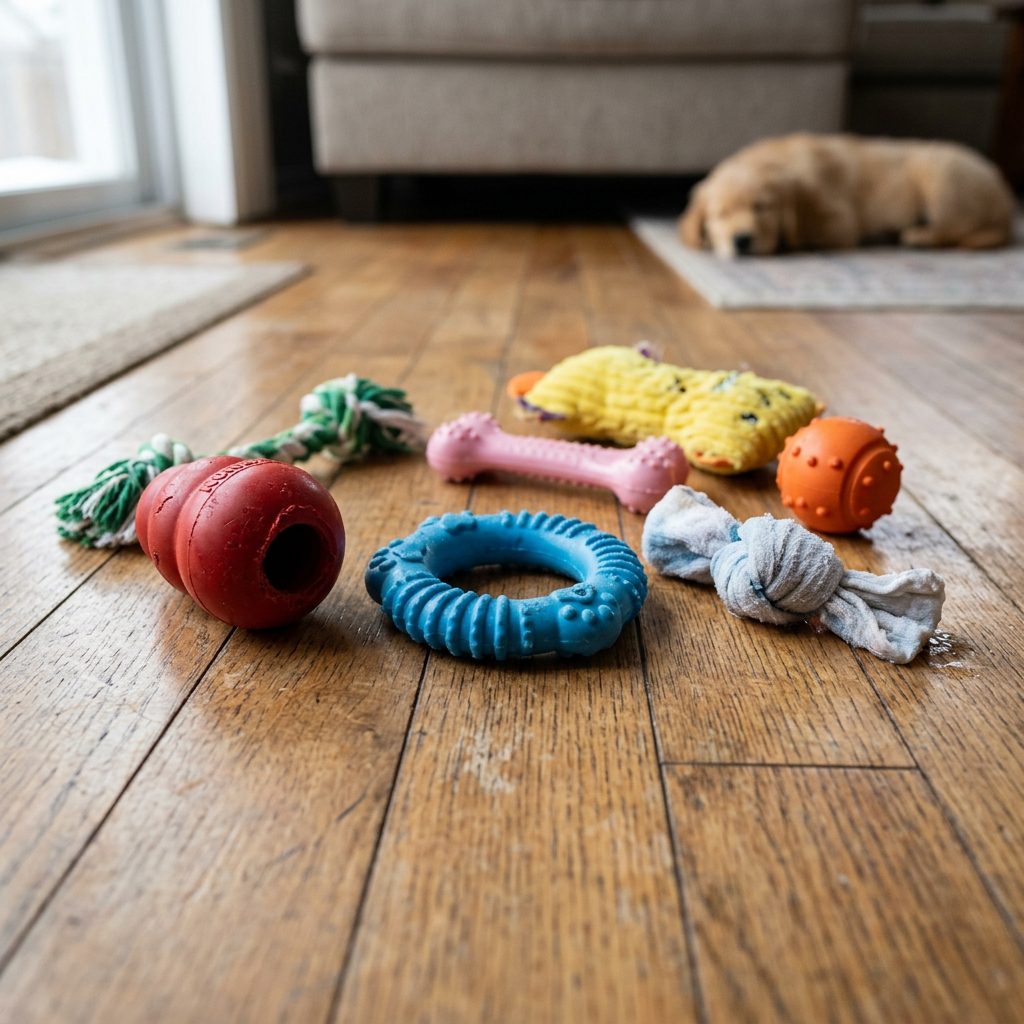
Not all chew toys are created equal. During teething, you need a variety of textures to satisfy different needs: some for massaging, some for cooling, and some for durability.
| Toy Type | Purpose | Recommended Material |
|---|---|---|
| Cooling Toys | Reduce inflammation and numb the gums. | Freezable rubber or water-filled rings. |
| Textured Toys | Massage the gums and help clean teeth. | Nubs, ridges, and braided ropes. |
| Soft Chews | For light gnawing when gums are very sore. | Plush toys with reinforced seams (supervised). |
| Interactive Chews | Mental stimulation to distract from pain. | Stuffable rubber toys (like Kongs). |
Items to Avoid
Your puppy’s teeth are surprisingly fragile during this stage. Avoid cooked bones, which can splinter, and extremely hard nylon bones or stones, which can actually fracture the incoming adult teeth. If you cannot indent the toy with your thumbnail, it might be too hard for a teething puppy. Always supervise play to ensure no small pieces are swallowed.
Home Remedies and DIY Soothing Strategies

Natural Ways to Cool the Burn
You don’t always need to head to the pet store to find teething relief. Some of the best remedies are already in your kitchen. Using cold temperatures is the most effective way to provide immediate numbing for inflamed gums.
The Frozen Washcloth Trick
- Take a clean, small washcloth.
- Soak it in water or a little bit of diluted, unsalted beef broth.
- Wring it out and twist it into a rope shape.
- Freeze it until solid.
- Let your puppy gnaw on the frozen fabric. The cold numbs the gums, and the texture of the cloth provides a satisfying massage.
Nature’s Teething Ring: Frozen Carrots
Whole, large frozen carrots are a fantastic, low-calorie teething snack. They are hard enough to provide resistance but will eventually shave off into digestible pieces. Warning: Carrots can be a choking hazard if they get too small, so take the nub away once it reaches a size your puppy could swallow whole.
Ice Cubes and Fruit Pops
Plain ice cubes can be a fun game for puppies, but you can level up by freezing pieces of strawberry or banana into ‘puppy pops.’ This provides a high-value distraction that keeps them occupied for 10-15 minutes of blissful silence.
Training Strategies: Protecting Your Hands and Furniture
Redirecting the ‘Land Shark’
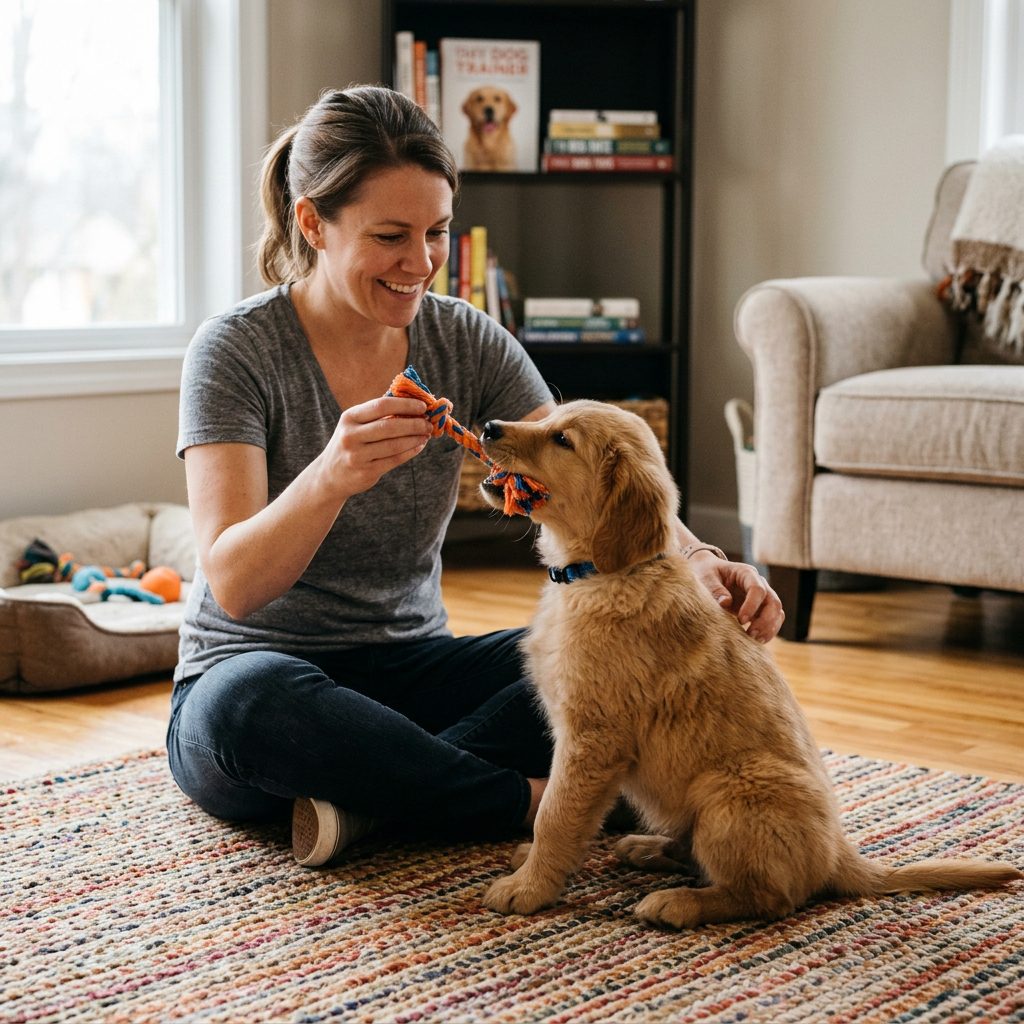
Teething is a physical need, but it shouldn’t result in the destruction of your home or the scarring of your hands. You must teach your puppy bite inhibition and appropriate redirection.
The Art of Redirection
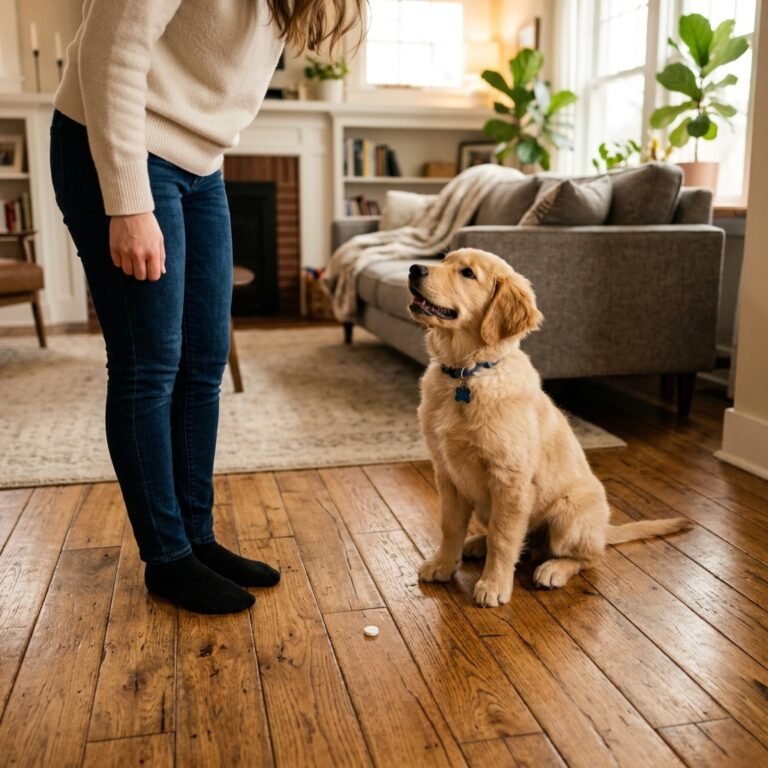
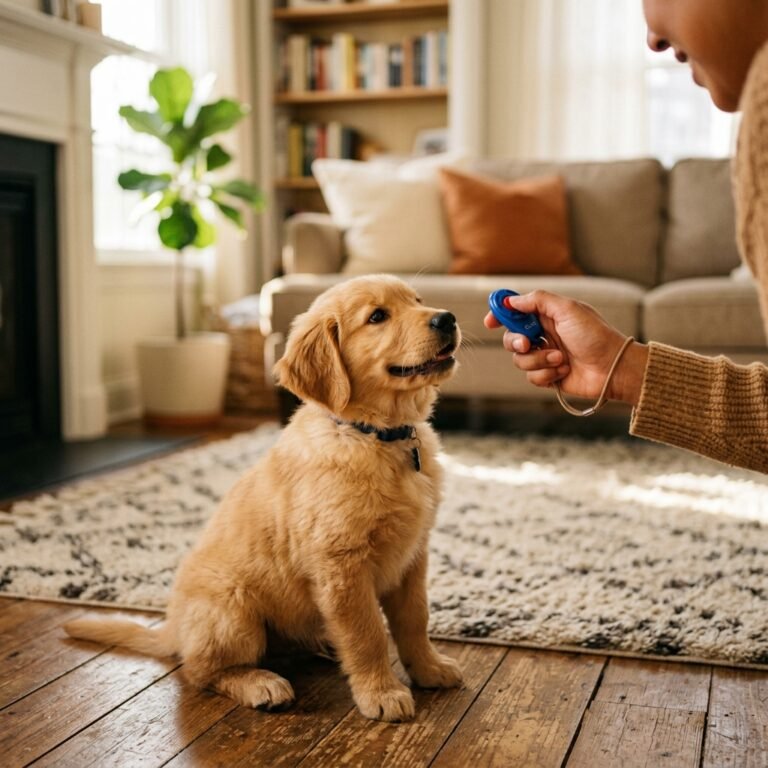
When your puppy latches onto your sleeve or your ankle, the goal isn’t just to stop them; it’s to show them what they should be doing. Always keep a toy within arm’s reach. As soon as the puppy nips, say a firm (but not screaming) ‘Ouch!’ and immediately place a toy in their mouth. When they start chewing the toy, offer calm verbal praise.
The ‘Reverse Time-Out’
If your puppy is over-stimulated and won’t stop nipping despite redirection, they likely need a nap. Puppies, like toddlers, get ‘cranky’ when they are tired. A reverse time-out involves you leaving the room. Walk behind a baby gate or close a door for 30 seconds. This teaches the puppy that biting causes the fun person to disappear, which is the ultimate ‘punishment’ for a social creature.
Protecting Your Furniture
For table legs and baseboards, consider using a bitter deterrent spray. However, remember that these only work if you also provide an attractive alternative. A spray might stop them from chewing the chair, but only a good chew toy will satisfy the underlying urge.
Long-Term Dental Health: Beyond the Teething Phase
Establishing a Grooming Routine
Once the adult teeth are in (around 6-7 months), your job isn’t over. This is the perfect time to establish a dental hygiene routine that will save you thousands of dollars in veterinary dental cleanings later in life.
Desensitization to Handling
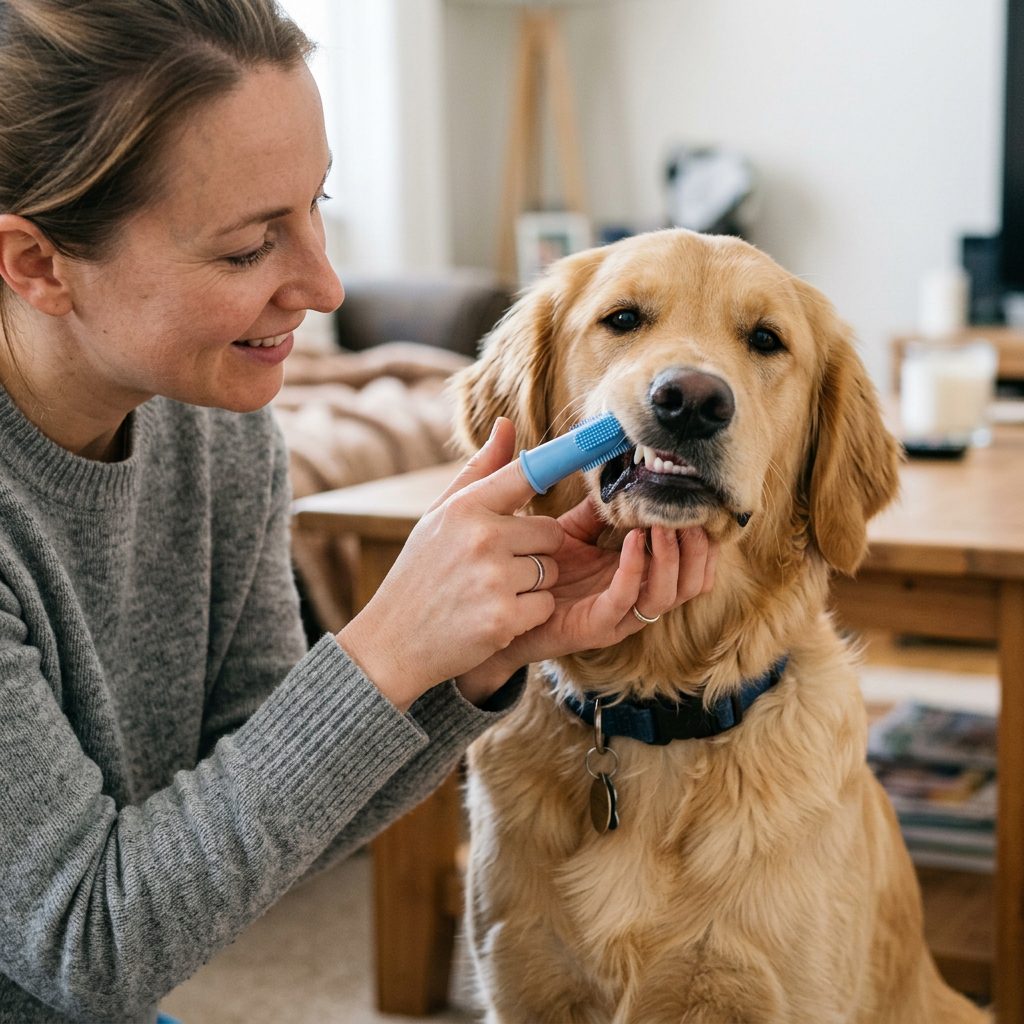
While the puppy is still young, get them used to you touching their mouth. Lift their lips, touch their gums, and reward them with high-value treats. This makes future vet exams and tooth brushing much easier.
The First Brushing
Use a dog-specific toothpaste (never human toothpaste, as it contains xylitol which is toxic) and a finger brush. Start by just letting them lick the paste, which usually tastes like poultry or beef. Gradually move to brushing one or two teeth a day until they are comfortable with a full mouth cleaning.
| Age | Dental Goal |
|---|---|
| 8-12 Weeks | Handling of the mouth and lips. |
| 4-6 Months | Introduction to the taste of dog toothpaste. |
| 6-8 Months | Initial brushing of the front incisors. |
| 1 Year+ | Full daily or every-other-day brushing routine. |
Conclusion
You Will Survive This!
The puppy teething timeline can feel like an eternity when you are constantly guarding your furniture and nursing nipped fingers. However, it is a relatively short phase in the long life of your canine companion. By providing a variety of textures, utilizing cold remedies like frozen carrots or washcloths, and consistently redirecting inappropriate biting, you are doing more than just saving your sanity—you are building a bond of trust and setting the foundation for a lifetime of good behavior.
Remember, your puppy isn’t being ‘bad’ or ‘destructive’ on purpose; they are simply navigating a significant physical milestone. Stay patient, stay consistent, and keep those chew toys handy. Before you know it, the ‘land shark’ will transform into a gentle adult dog with a gleaming, healthy smile. You’ve got this!