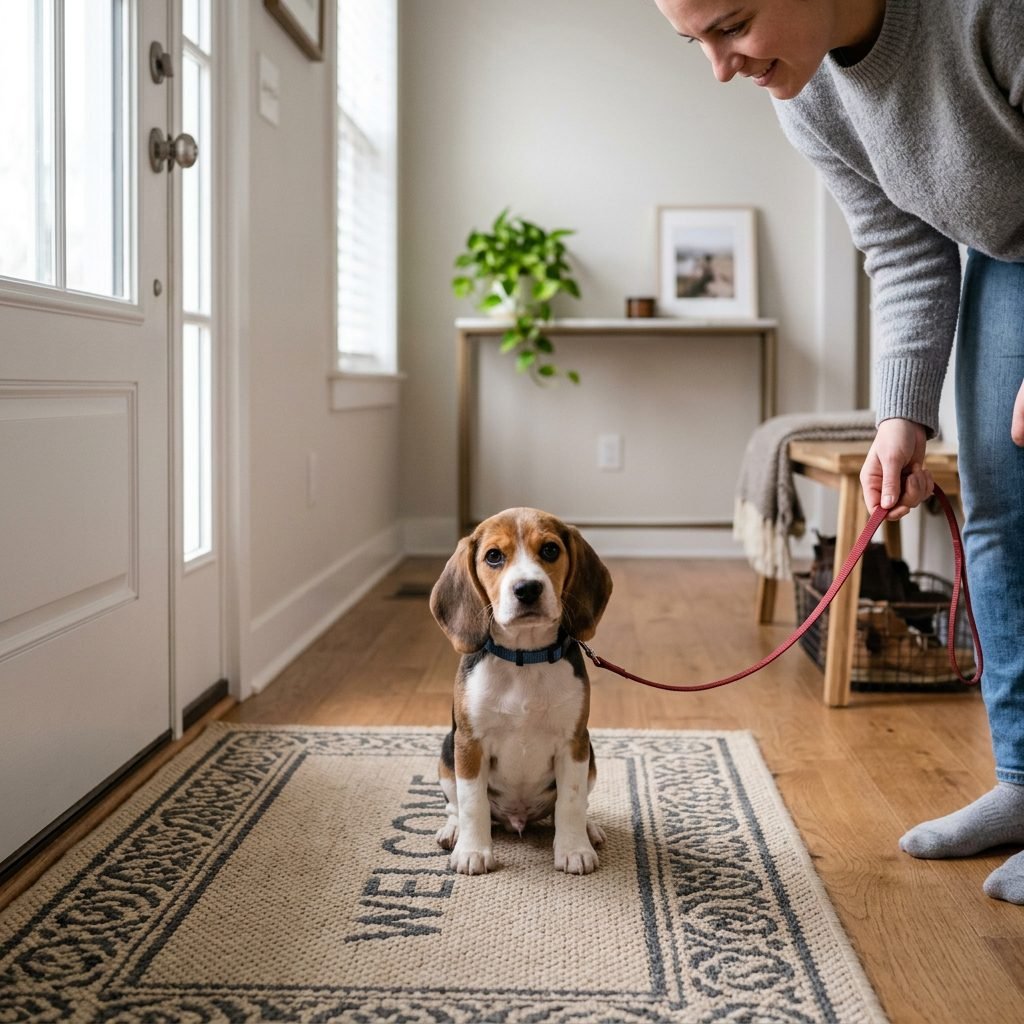
Why Your Puppy Only Pees on Doormats (And How to Fix It in 3 Days)
Welcome to the wonderful, rewarding, and sometimes incredibly soggy world of puppy parenthood. If you have found yourself staring in disbelief at your favorite welcome mat—now serving as a high-absorbency sponge for your puppy’s latest ‘contribution’—you are certainly not alone. It is one of the most common and confounding challenges for savvy dog owners: the dreaded doormat fixation. You take them outside, you wait in the rain, you cheer for every blade of grass they sniff, only for them to walk back inside and make a beeline for the rug by the door. It feels personal, doesn’t it? But here is the good news: your puppy isn’t trying to spite you or ruin your decor. They are simply following a set of biological and sensory cues that make that doormat the most logical bathroom in the house from their perspective. In this comprehensive guide, we are going to dive deep into the canine psychology of ‘substrate preference,’ explain exactly why doormats are so enticing, and provide you with a rigorous, professional-grade 3-day reset plan to reclaim your floors. We will cover everything from the science of scent to the logistics of a perfect potty schedule, ensuring that by the end of 72 hours, your puppy understands exactly where their business belongs.
The Science of Substrate Preference: Why Doormats?
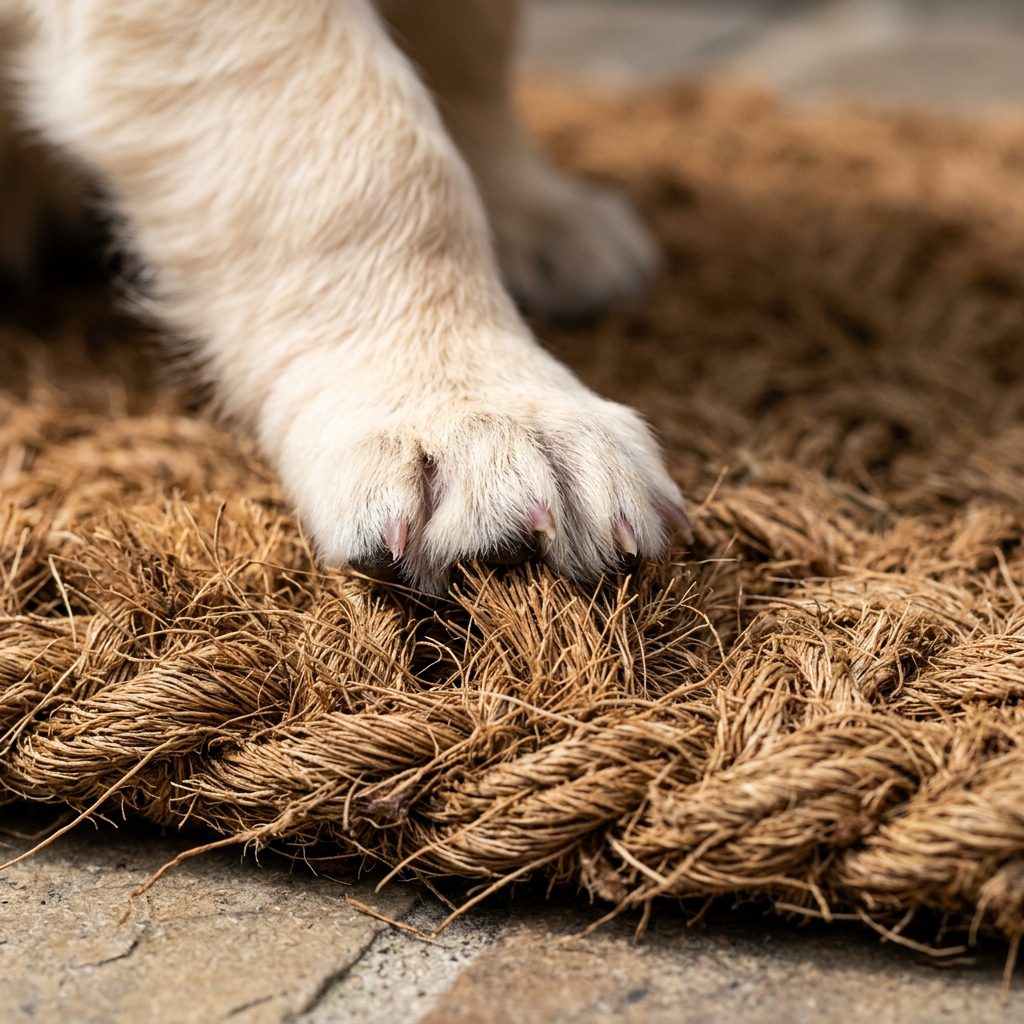
To fix the behavior, we first have to understand the ‘why.’ Puppies develop something called substrate preference between the ages of 8.5 and 20 weeks. This is a fancy way of saying they learn to associate a specific texture or surface with the act of relieving themselves. If a puppy is raised in a kennel with shredded paper or wood shavings, they will seek out those textures later in life. Doormats, unfortunately, hit the sensory jackpot for a developing puppy. They are usually made of natural fibers like coir or jute, or soft synthetic blends that feel remarkably similar to dry grass or mulch. Furthermore, doormats are designed to be absorbent. From a puppy’s perspective, a surface that doesn’t splash back on their paws is a premium bathroom choice. There is also the ‘location factor.’ Doormats are almost always placed right next to the exit. When a puppy feels the urge to go, they often head toward the door. If they haven’t yet mastered the concept of waiting for the door to open, the doormat is the closest available ‘natural-feeling’ surface to the outside world.
Comparing Surface Appeal
Understanding how different surfaces rank in your puppy’s mind can help you redirect their focus. Below is a comparison of common household surfaces and their ‘potty appeal’ to a young dog.
| Surface Type | Absorbency Level | Texture Similarity to Grass | Risk Level for Accidents |
|---|---|---|---|
| Coir/Fiber Doormats | High | Very High | Critical |
| Hardwood/Tile | Low | Low | Low |
| Shag Carpet | High | Medium | High |
| Outdoor Grass | High | Perfect | Target Surface |
Expert Tip: Puppies are ‘paws-first’ learners. If the texture under their feet feels like a place where liquid disappears, they will instinctively return to it.
The Essential Toolkit for a 3-Day Reset
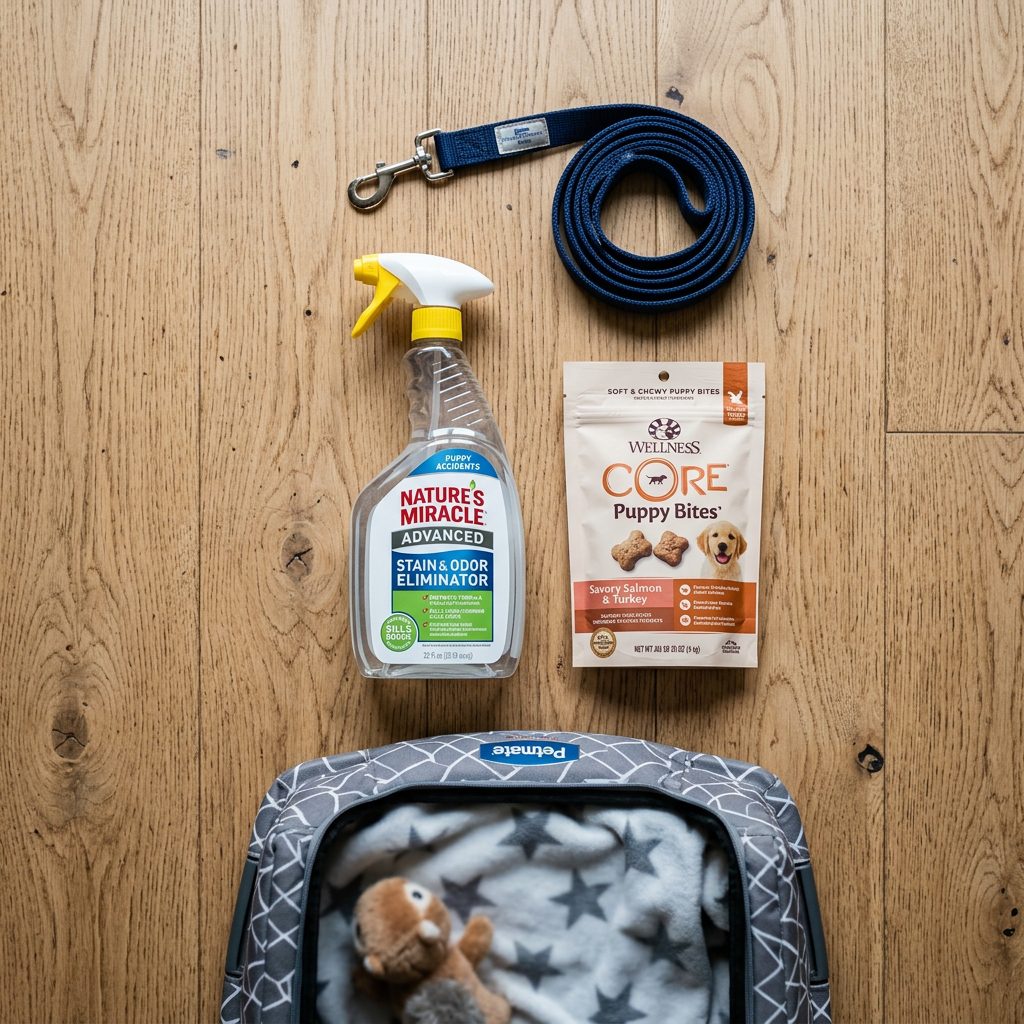
Before we begin the 72-hour intensive training protocol, you need to gather your supplies. You cannot fight biology with a standard paper towel and a prayer. The most important tool in your arsenal is a high-quality enzymatic cleaner. Traditional household cleaners often contain ammonia, which is a component of urine. If you clean a spot with an ammonia-based product, you are essentially telling the puppy, ‘This is a great place to pee!’ Enzymatic cleaners actually break down the uric acid crystals, removing the scent entirely—not just for you, but for the puppy’s sensitive nose.
Your Shopping List
- Enzymatic Cleaner: Look for brands specifically labeled for pet stains.
- High-Value Treats: Think boiled chicken, small bits of cheese, or freeze-dried liver. These are only for outdoor successes.
- A Long Leash: Even for backyard trips, a leash keeps the puppy focused.
- Temporary Mat Replacement: A rubberized, non-absorbent mat if you absolutely must have something by the door.
- A Crate or Exercise Pen: For management during the ‘off’ hours.
By removing the doormat entirely during these three days, you break the visual and tactile habit. You are creating a ‘blank slate’ for the puppy’s brain. If the doormat isn’t there, they have to look elsewhere—and you will be right there to show them the correct path.
The 3-Day Action Plan: Day 1 – Management and Observation
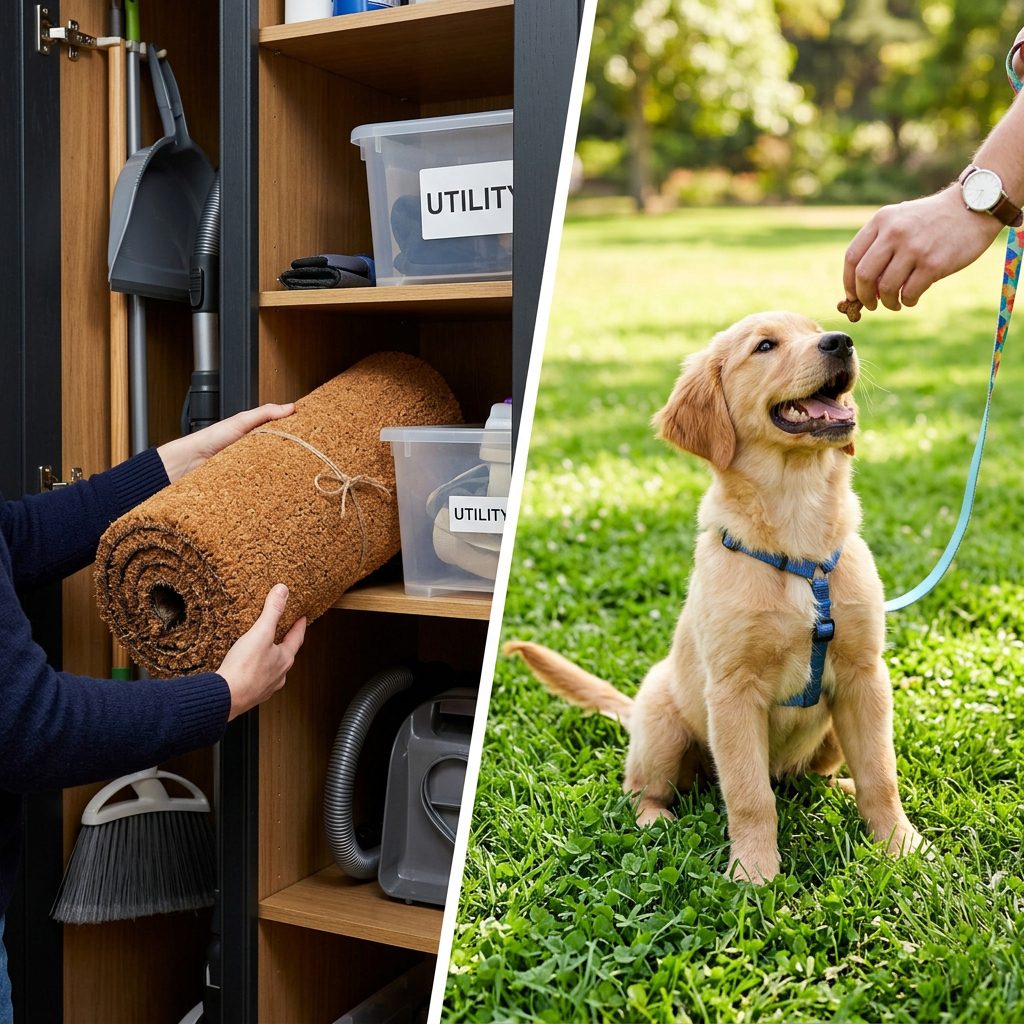
Day one is all about strict management. Today, the doormat disappears. Roll it up and put it in the garage or a closet where the puppy cannot see or smell it. Your goal for the first 24 hours is zero accidents inside. To achieve this, you must follow a ‘tethering’ or ‘crating’ strategy. If the puppy is not in their crate, they should be on a leash attached to your belt. This prevents them from sneaking off to the door area to find their missing mat.
The Hourly Potty Schedule
Follow this schedule religiously for the next three days. Consistency is the only way to override the doormat habit.
| Time | Action | Purpose |
|---|---|---|
| 07:00 AM | Immediate Outdoor Trip | First morning relief; highest success rate. |
| 07:15 AM | Breakfast/Water | Fueling the system. |
| 07:30 AM | Outdoor Trip | Post-meal gastrocolic reflex. |
| 09:00 AM | Outdoor Trip | Mid-morning check-in. |
| 12:00 PM | Lunch and Outdoor Trip | Mid-day routine. |
| 03:00 PM | Outdoor Trip | Afternoon relief. |
| 06:00 PM | Dinner and Outdoor Trip | Evening routine. |
| 09:00 PM | Final Outdoor Trip | Emptying the bladder for sleep. |
On Day 1, when you go outside, do not just stand there. Walk them to a specific ‘potty spot’ that has a similar texture to the mat they liked (perhaps a patch of dry, long grass). When they finally go, provide a jackpot reward—three or four tiny treats in a row and lots of verbal praise. We want them to think, ‘Wow, peeing on this grass is way more profitable than that old mat ever was!’
Day 2 & 3: Reinforcement and Generalization
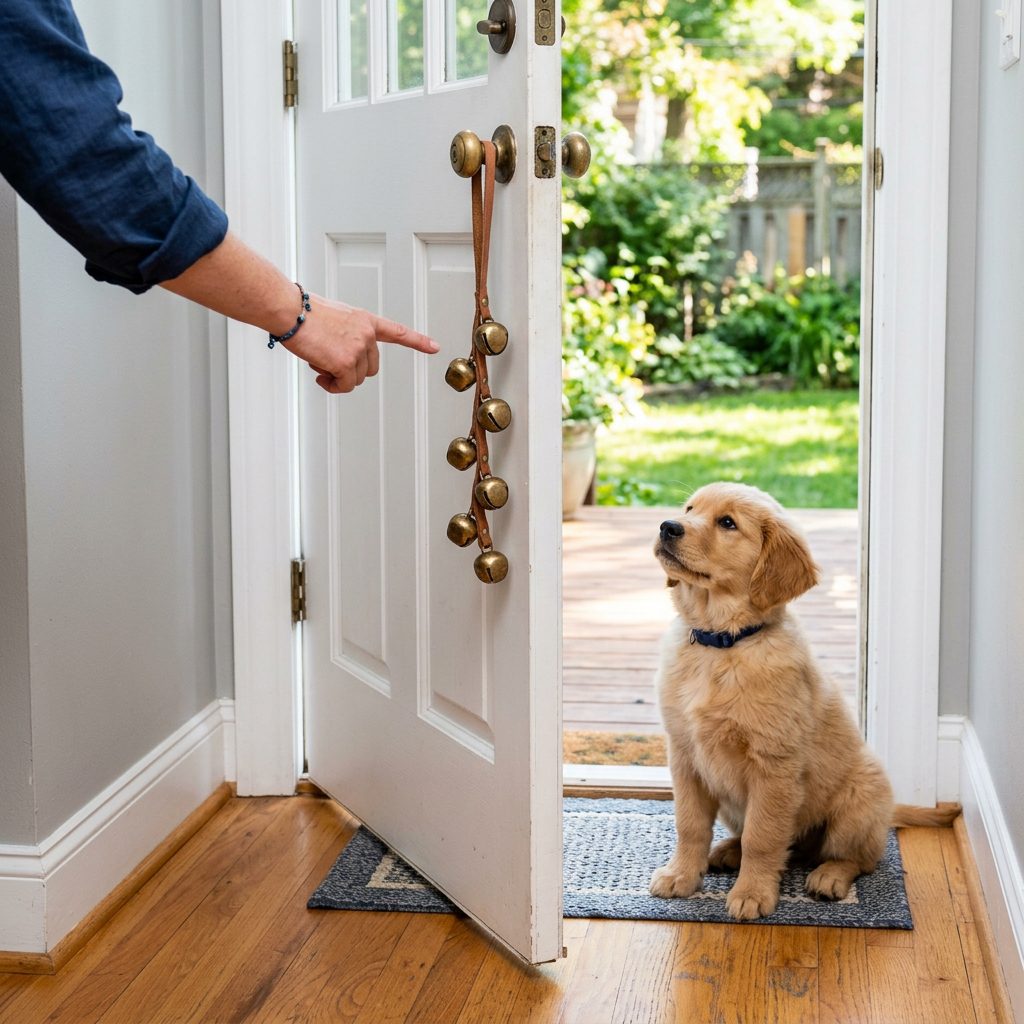
By Day 2, your puppy might start looking for the doormat. When they head toward the door, this is your cue! Instead of letting them sniff around, immediately open the door and lead them to their outdoor spot. You are teaching them that the urge to go near the door means ‘I need to go outside,’ rather than ‘I need to find the mat.’
Building the ‘Door Signal’
On Day 2, we introduce a signal. This could be hanging bells on the door or simply asking for a ‘sit’ before the door opens. This adds a cognitive step between the urge to pee and the act itself. By Day 3, you can begin to reintroduce a surface to the door area, but not the old mat. Use a hard rubber mat or a plastic tray. These do not have the ‘grass-like’ feel and are far less likely to trigger the substrate preference. If the puppy sniffs the new rubber mat, redirect them outside immediately. You are generalizing the rule: ‘We do not go on anything near this door; we go on the grass.’
Pro-Trainer Secret: If your puppy has a ‘favorite’ doormat, they have likely left microscopic scent markers there. Even after cleaning, avoid putting that specific mat back for at least two weeks while the new habit solidifies.
Troubleshooting and Common Pitfalls
Even with the best plan, setbacks can happen. The most common mistake owners make is punishment. If you catch your puppy peeing where the doormat used to be, do not scold them, rub their nose in it, or yell. This only teaches the puppy that you are scary when they pee, which leads them to hide their accidents in the future (like behind the sofa). Instead, make a neutral noise to interrupt them (like a clap), and whisk them outside to finish. If they finish outside, reward them heavily.
When to See a Vet
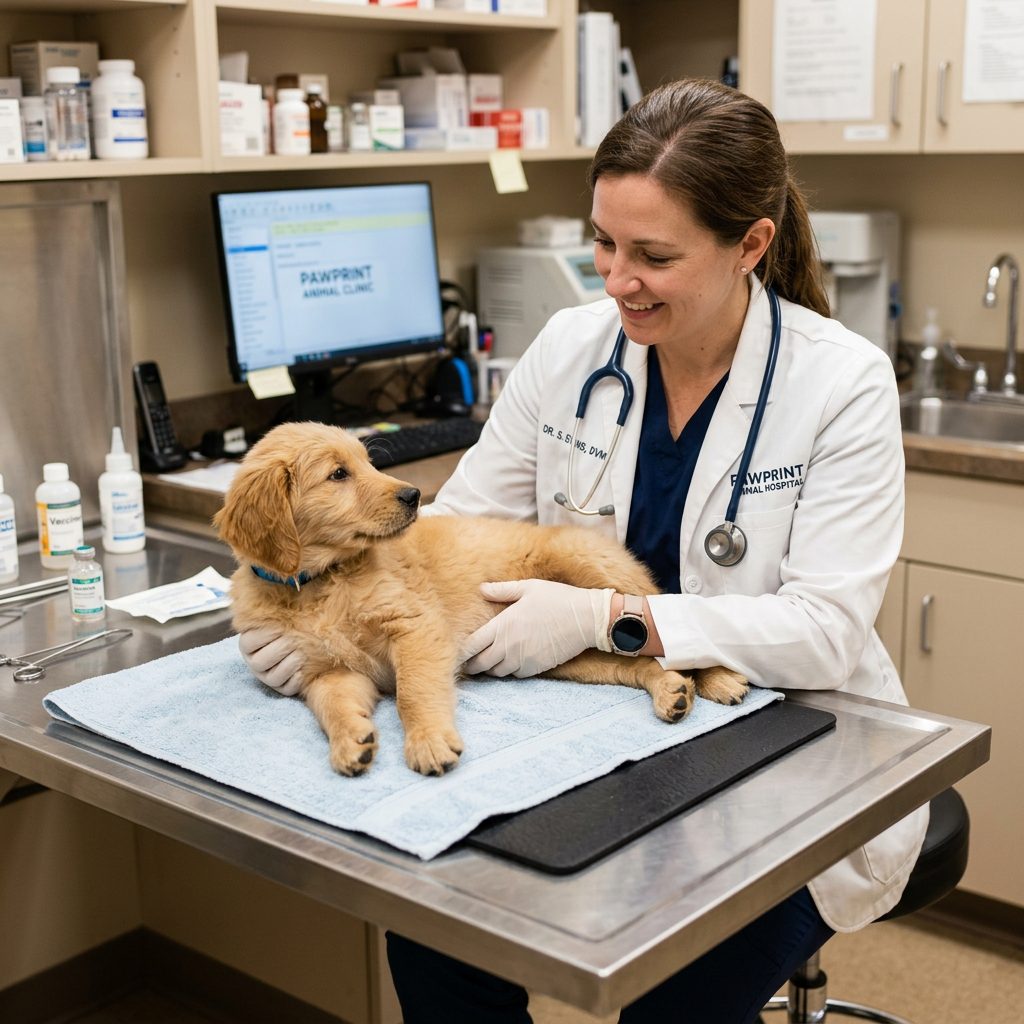
If your puppy is over 16 weeks old and is truly unable to hold their bladder for more than 30-60 minutes, or if they are leaking urine while sleeping, it is time for a veterinary check-up. They could be suffering from:
- Urinary Tract Infection (UTI): Very common in female puppies; makes holding it painful and difficult.
- Ectopic Ureter: A physical abnormality that requires medical intervention.
- Diabetes or Kidney Issues: Rare in puppies, but can cause excessive thirst and urination.
Always rule out the physical before assuming a behavior is purely ‘stubbornness.’ Most ‘stubborn’ puppies are actually just confused puppies who haven’t had the right communication from their humans yet.
Long-Term Maintenance: Keeping the Mats Clean
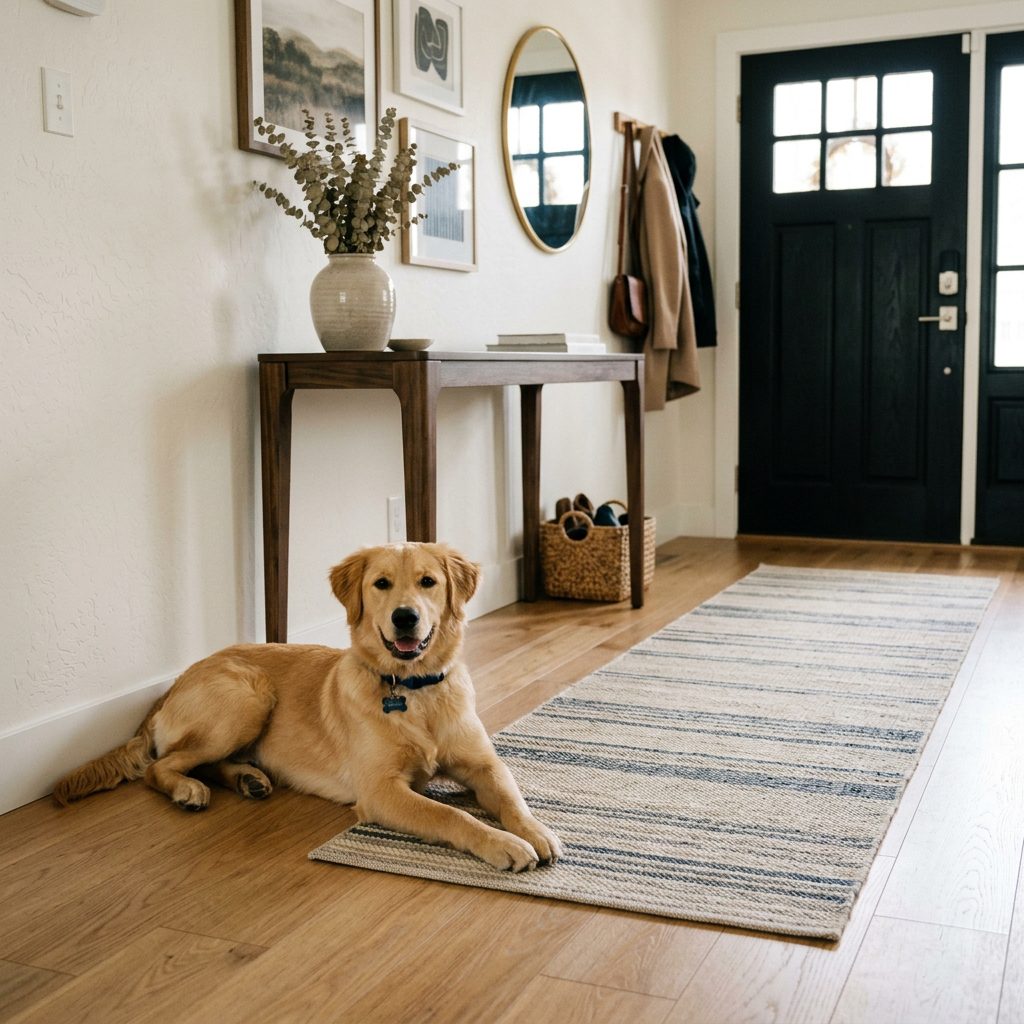
Once you have successfully navigated the 3-day reset, you must maintain the ‘sanctity’ of your entryway. This means keeping the area clean and ensuring the puppy doesn’t regress during times of stress, such as when guests arrive or during a change in routine. As your puppy matures, their bladder capacity will increase, but their memory of the ‘doormat bathroom’ can be long-lasting. Continue to use enzymatic cleaners for any household spill to ensure no lingering odors attract them back to the indoor-potty lifestyle.
Gradually, you can reintroduce more comfortable mats, but wait until the puppy has been accident-free for at least 30 consecutive days. If you see them circling a new rug, it is a sign that they are still associating soft indoor textures with potty time, and you should take a step back in your training. Remember, housebreaking is not a race; it is a foundation of communication between you and your dog.
Conclusion
Fixing the doormat habit is one of the most satisfying milestones in puppy training. By understanding that your puppy was simply responding to the tactile cues of the mat, you can move away from frustration and toward a solution-oriented mindset. Over these three days, you have transitioned from being a ‘clean-up crew’ to a proactive leader. You’ve removed the temptation, established a rock-solid schedule, and rewarded the behaviors you want to see. Your puppy now understands that the world is divided into two places: the ‘living space’ where we play and sleep, and the ‘potty space’ which is strictly outdoors. Keep up the consistency, stay patient, and enjoy your clean, fresh-smelling home. You’ve got this!