Escape Artist! The Secret 4-Step Method to Stop Your Puppy Climbing Out of the Playpen
The Great Escape: Why Your Puppy is a Tiny Mountaineer
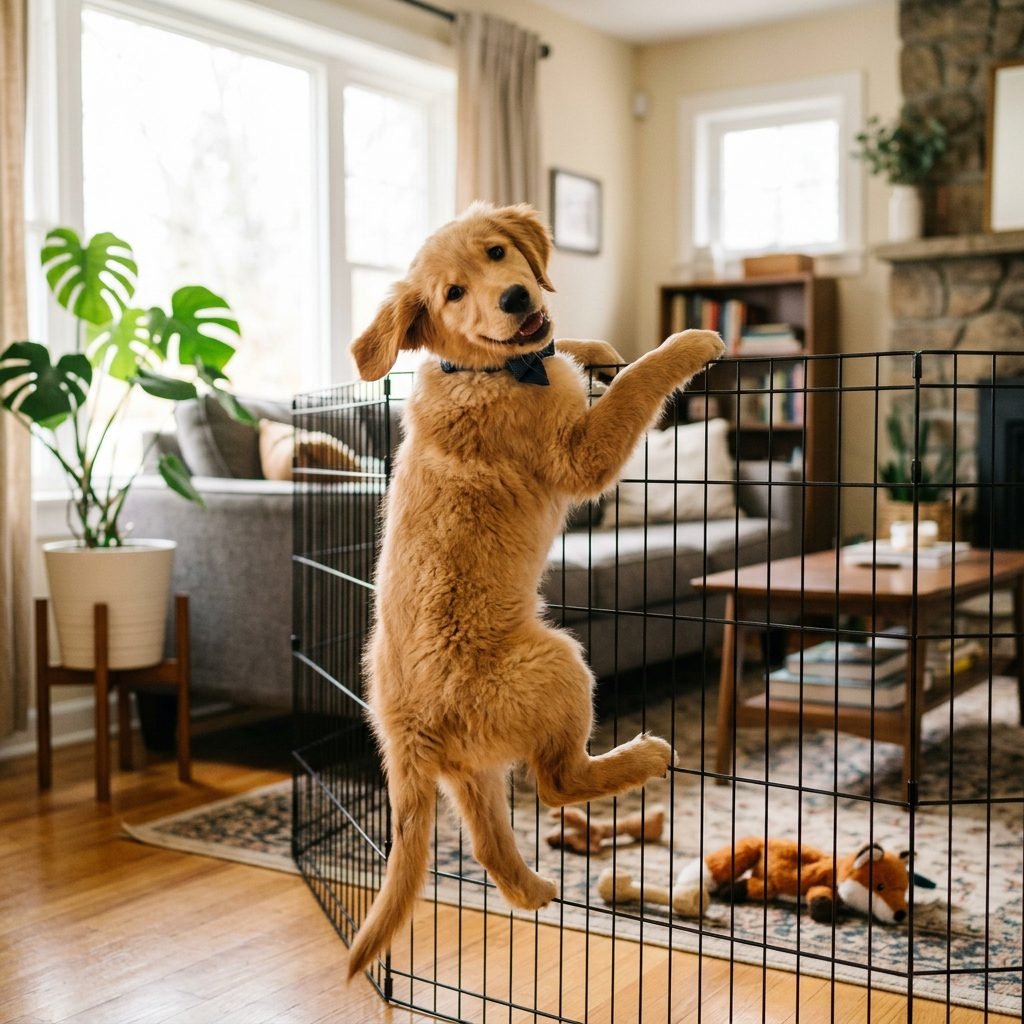
Welcome to the ‘Puppy Houdini’ support group! If you are reading this, chances are you have just turned your back for two seconds to grab a coffee, only to find your precious pup sitting triumphantly on the wrong side of their playpen. It is a common, albeit frustrating, rite of passage for many savvy dog owners. While it might seem impressive that your eight-week-old furball has the climbing skills of a professional alpinist, an escaping puppy is a safety hazard. Not only can they fall and injure their developing joints, but they also gain access to all the ‘forbidden snacks’ of the household—like your favorite leather shoes or the power cords behind the TV. As a canine specialist, I have seen every trick in the book. The good news? Climbing is a behavior, and like any behavior, it can be redirected, managed, and ultimately stopped. In this comprehensive guide, we are going to dive deep into the psychology of the escape artist and reveal my secret 4-step method to keep your puppy safely grounded. We will cover everything from the physics of the pen to the mental game of containment, ensuring your home remains a safe haven for your growing companion.
Understanding the ‘Why’ Behind the Climb
The Motivation of a Canine Climber
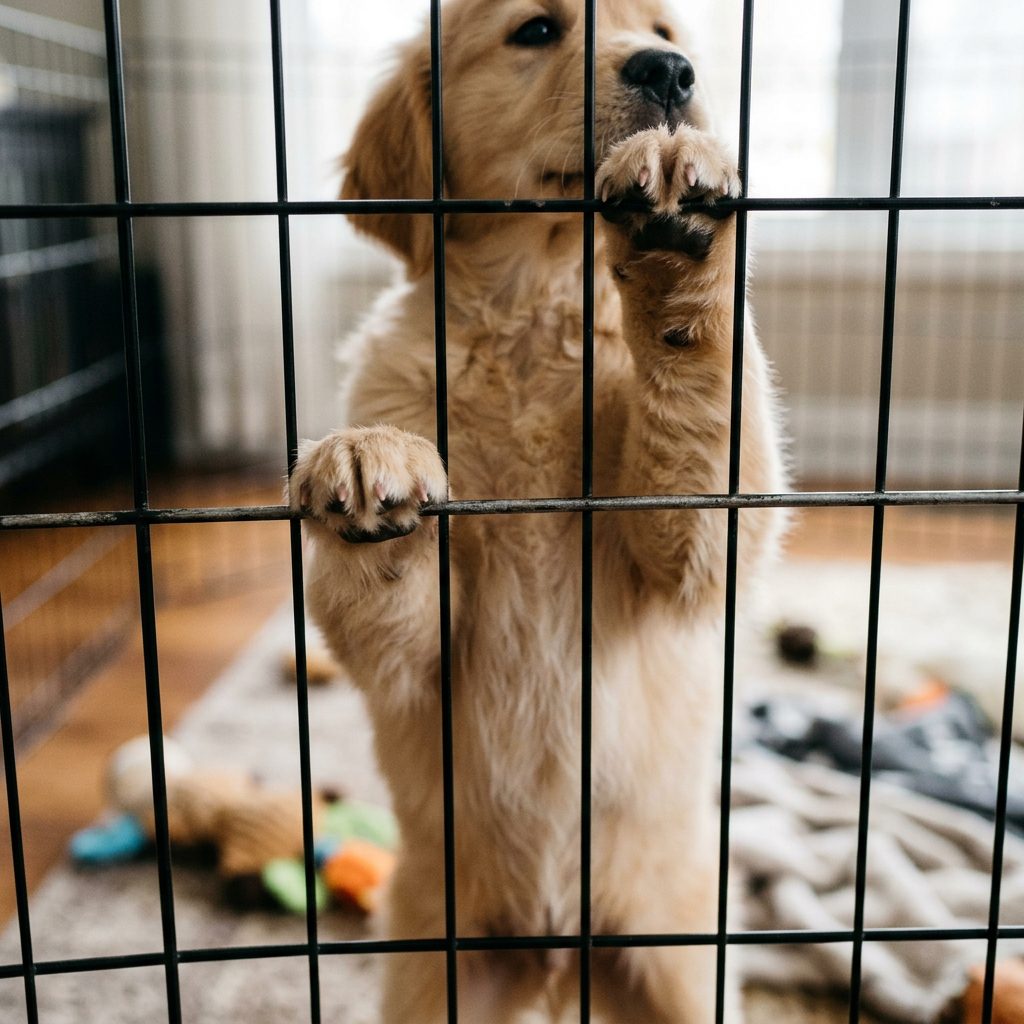
Before we can fix the problem, we have to understand why it is happening. Puppies do not climb out of spite; they do it because they are driven by specific biological and emotional needs. The most common reason is FOMO (Fear Of Missing Out). Your puppy is a social creature. When you put them in a pen and walk away, their natural instinct is to follow the ‘pack.’ Climbing is simply the most direct route to getting back to you. Separation anxiety can also play a role, though in young puppies, it is usually just a lack of ‘confinement training.’ Furthermore, some puppies climb out of pure boredom. If the pen is just a cage with no stimulation, the outside world looks like a high-stakes adventure. Finally, we cannot ignore the ‘Self-Rewarding’ nature of the escape. The moment your puppy’s paws hit the floor outside the pen, they receive a massive dopamine hit of freedom. This reinforces the climbing behavior, making them more likely to try it again. To stop this cycle, we must address the environment, the equipment, and the puppy’s mental state simultaneously.
The Physical Mechanics of a Puppy Escape
Puppies are surprisingly agile. They use the horizontal bars of traditional wire pens like a ladder. If they can get a toe-hold, they can pull their weight up. Once their chin hooks over the top rail, gravity and momentum do the rest. Understanding this physical process is key to selecting the right tools to stop them.
The Essential Gear for Secure Play
Choosing the Right Fortress
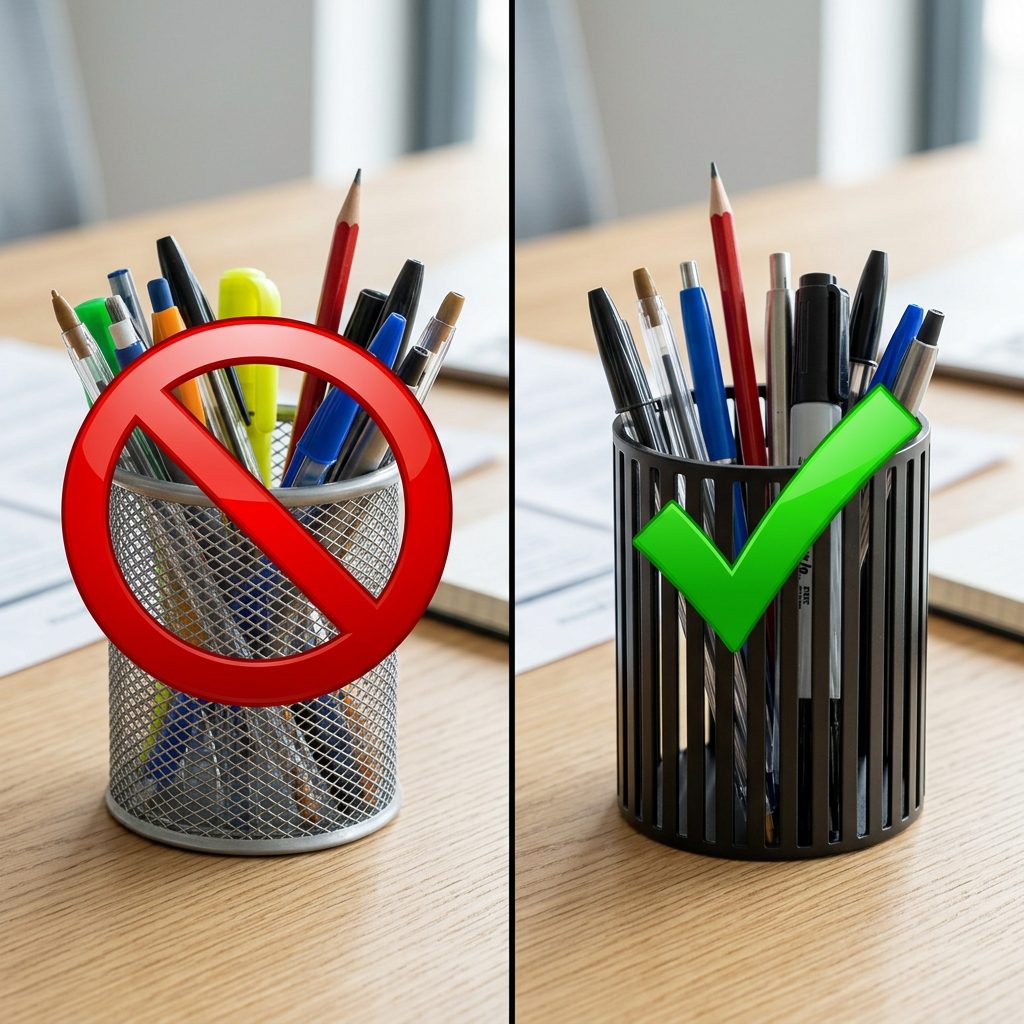
Not all playpens are created equal. If you have a climber, a standard 24-inch wire pen is essentially a jungle gym. To truly secure your ‘Escape Artist,’ you need to look at the design and material of the pen. Savvy owners know that the goal is to eliminate ‘toe-holds.’ This is why vertical-slat pens are far superior to mesh or cross-wire designs. When the bars only run up and down, the puppy has nothing to step on to gain upward momentum.
Comparison of Playpen Types
| Pen Material | Climb Risk | Best For | Expert Rating |
|---|---|---|---|
| Standard Wire (Grid) | High | Small, low-energy breeds | 2/5 |
| Vertical Slat Metal | Low | High-energy, agile breeds | 5/5 |
| Heavy-Duty Plastic | Medium | Small breeds with weak grip | 3/5 |
| Fabric Mesh (Lidded) | Very Low | Travel and young puppies | 4/5 |
Expert Tip: If you already own a wire pen, do not throw it out! You can ‘climb-proof’ it by attaching smooth plastic sheets (like Coroplast) to the inside, preventing the puppy from getting a grip on the wires.
The Secret 4-Step Method to Stop the Climbing
Step 1: Environmental De-Escalation
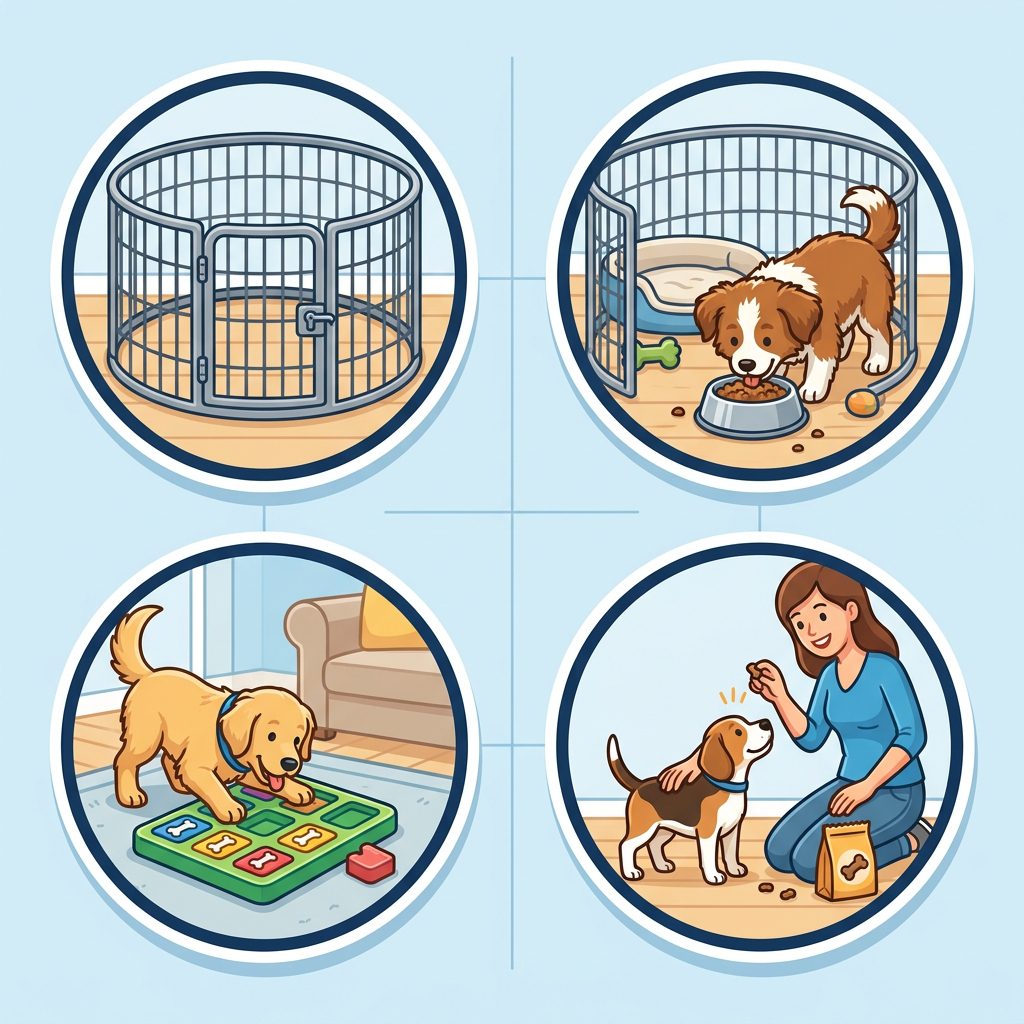
The first step in my secret method is to look at the ‘furniture’ inside the pen. Many owners inadvertently provide their puppies with a ‘boost.’ If you place a dog bed, a crate, or a large toy right next to the wall of the pen, you have just given your puppy a stepping stool. Clear the perimeter. Keep all items in the center of the pen, leaving a ‘no-fly zone’ of at least six inches around the edges. This forces the puppy to rely solely on their climbing ability rather than a physical head start.
Step 2: The ‘Den’ Association Technique
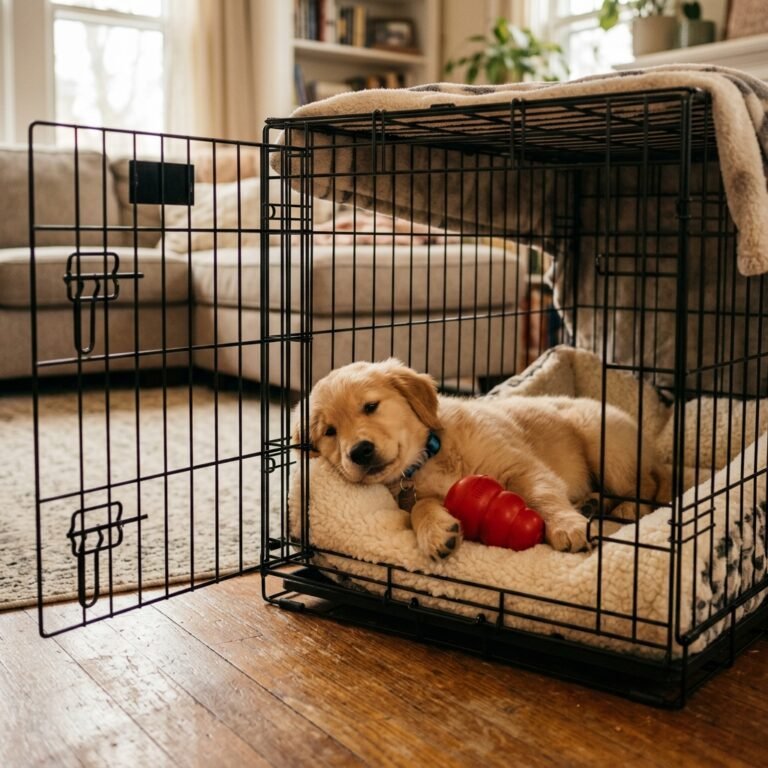
We need to change your puppy’s perception of the pen from a ‘jail’ to a ‘high-value den.’ This is achieved through Positive Reinforcement. For the next week, every single meal should be served inside the pen. Additionally, hide high-value treats (like small pieces of boiled chicken or freeze-dried liver) inside the pen when the puppy isn’t looking. When they go in, they find ‘magic’ snacks. The goal is to make the interior of the pen so rewarding that the desire to leave is outweighed by the desire to stay and forage.
Step 3: Strategic Energy Management
A tired puppy is a stationary puppy. Most climbing attempts happen when a puppy has ‘the zoomies’ or pent-up mental energy. Before you place your puppy in the pen, engage in 10-15 minutes of active play or training. Use a flirt pole or play a game of ‘find the toy.’ Once the puppy has reached their ‘settle point,’ place them in the pen with a long-lasting chew or a stuffed puzzle toy. By the time they finish the treat, they should be ready for a nap, not a climb.
Step 4: The ‘Four on the Floor’ Protocol
This is the behavioral core of the method. You must catch the ‘intent’ to climb before the act occurs. Watch your puppy closely. The second they put two paws on the side of the pen, make a neutral ‘oops’ sound and immediately redirect them to a toy on the floor. When all four paws are on the ground, reward heavily. We are teaching the puppy that ‘Paws on Wires = Nothing Happens,’ while ‘Paws on Floor = Treats and Praise.’ Consistency is vital here; if they successfully escape even once, the behavior is reinforced.
Troubleshooting the Toughest Escape Artists
When the 4-Step Method Needs a Boost
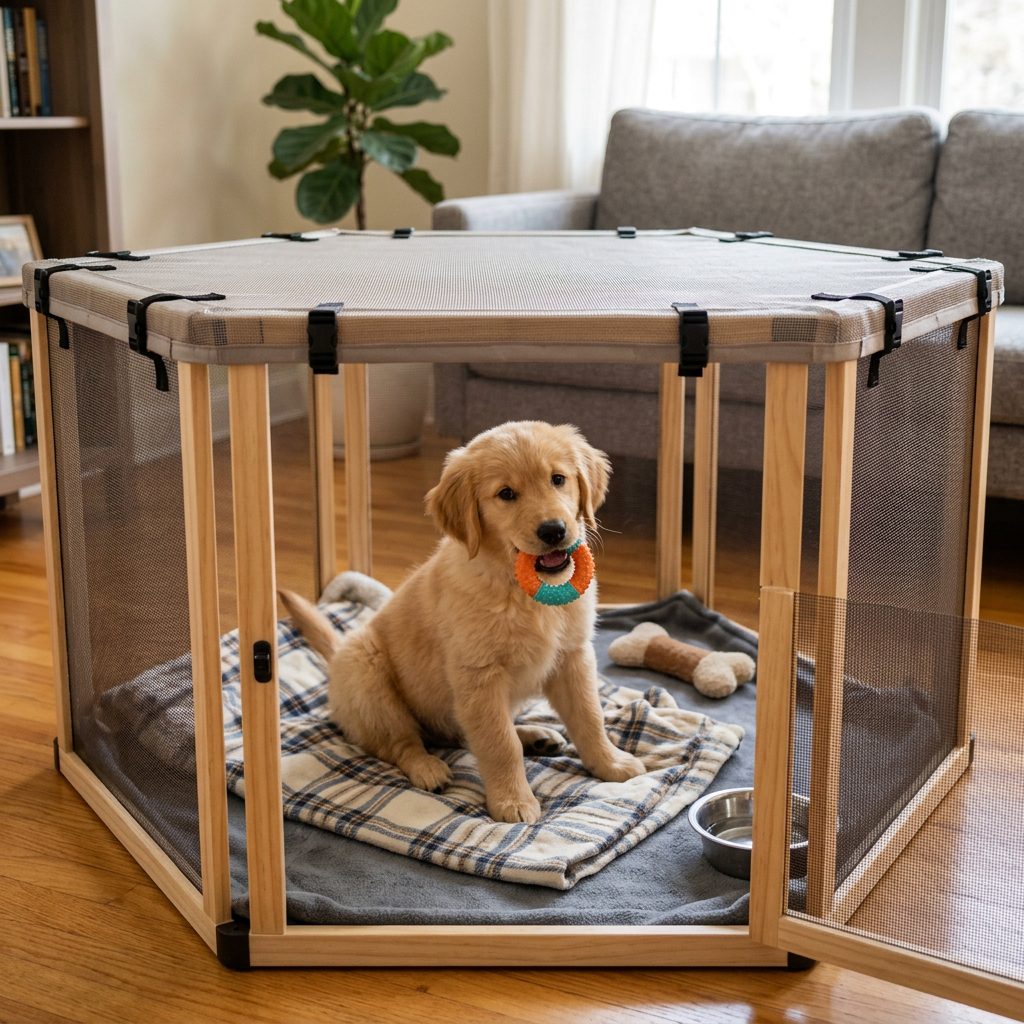
Some puppies are simply more determined than others. If you have a Jack Russell Terrier, a Border Collie, or a particularly athletic Labrador, you might need to add physical barriers. The most effective addition is a playpen lid. Many manufacturers sell mesh or wire tops that clip directly onto the pen. This creates a completely enclosed environment, making climbing physically impossible. However, ensure the lid is breathable and secure.
Breed-Specific Considerations
- Scent Hounds: Often climb because they smell something interesting. Keep the area around the pen ‘scent-neutral.’
- Working Breeds: Need more mental stimulation. Swap standard toys for advanced puzzle feeders.
- Toy Breeds: May be climbing because they feel vulnerable. Cover half the pen with a blanket to create a ‘roof’ and a sense of security.
Safety Warning: Never leave a puppy unattended in a pen with a collar on. Collars can snag on the wire during a climb attempt, leading to a dangerous strangulation risk. Always remove collars or use ‘breakaway’ safety collars in the pen.
Common Pitfalls That Encourage Escaping
Avoid These Training Traps
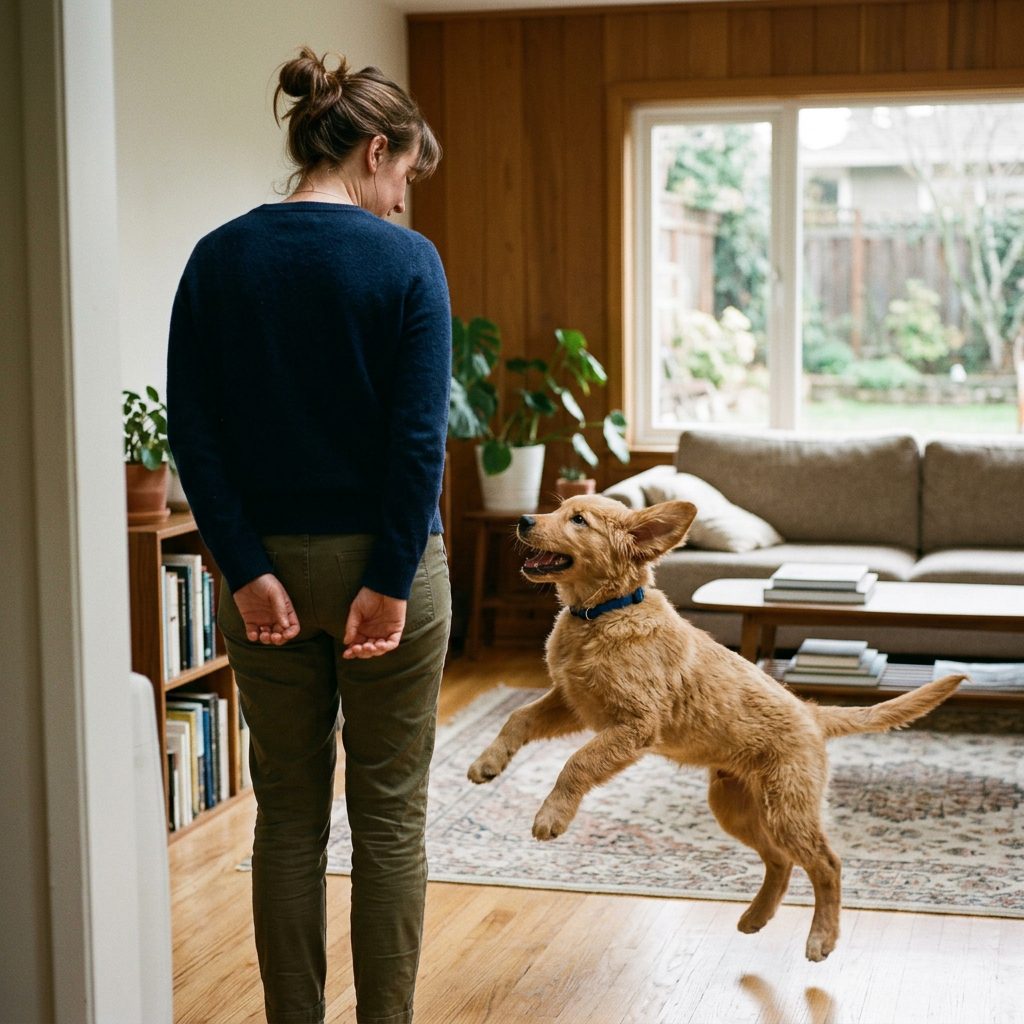
Even the best intentions can backfire if your timing is off. One of the biggest mistakes is responding to the climb with attention. If your puppy starts to climb and you run over, shouting ‘No, get down!’ and picking them up, you have just given them exactly what they wanted: your undivided attention. To a puppy, even a ‘scolding’ is a social interaction. Instead, use the redirection technique mentioned in Step 4, or if they have already escaped, calmly put them back in without a word, wait for a moment of calm, and then reward the calm behavior.
The ‘Punishment’ Pitfall
Never use the playpen as a ‘time-out’ for bad behavior. If the pen is associated with negative emotions, the puppy will work twice as hard to escape it. The pen should always be a ‘Happy Place.’ If you need to separate your puppy because they are overstimulated, do it calmly and provide a calming aid like a lick mat to help them self-soothe.
Conclusion
Final Thoughts: From Escape Artist to Zen Master
Stopping your puppy from climbing out of the playpen is a journey that requires patience, the right equipment, and a solid strategy. By understanding the ‘why’ behind the behavior and implementing the 4-step method—Environmental De-escalation, Den Association, Energy Management, and the Four on the Floor Protocol—you are setting your puppy up for a lifetime of good manners and safety. Remember, the goal is not just to ‘contain’ your puppy, but to teach them that their pen is a wonderful, rewarding place to be. As your puppy grows and masters these boundaries, you will find that the need for the pen diminishes, leading to a well-adjusted adult dog who respects the rules of the house. Stay consistent, stay positive, and enjoy this wonderful ‘puppyhood’ phase—even the parts where they try to outsmart you! Happy training!