Is Your Puppy Crazy Or Just Tired? 5 Warning Signs Of An Overstimulated Puppy You’re Missing!
The Puppy Paradox: Why ‘Crazy’ Often Means ‘Exhausted’
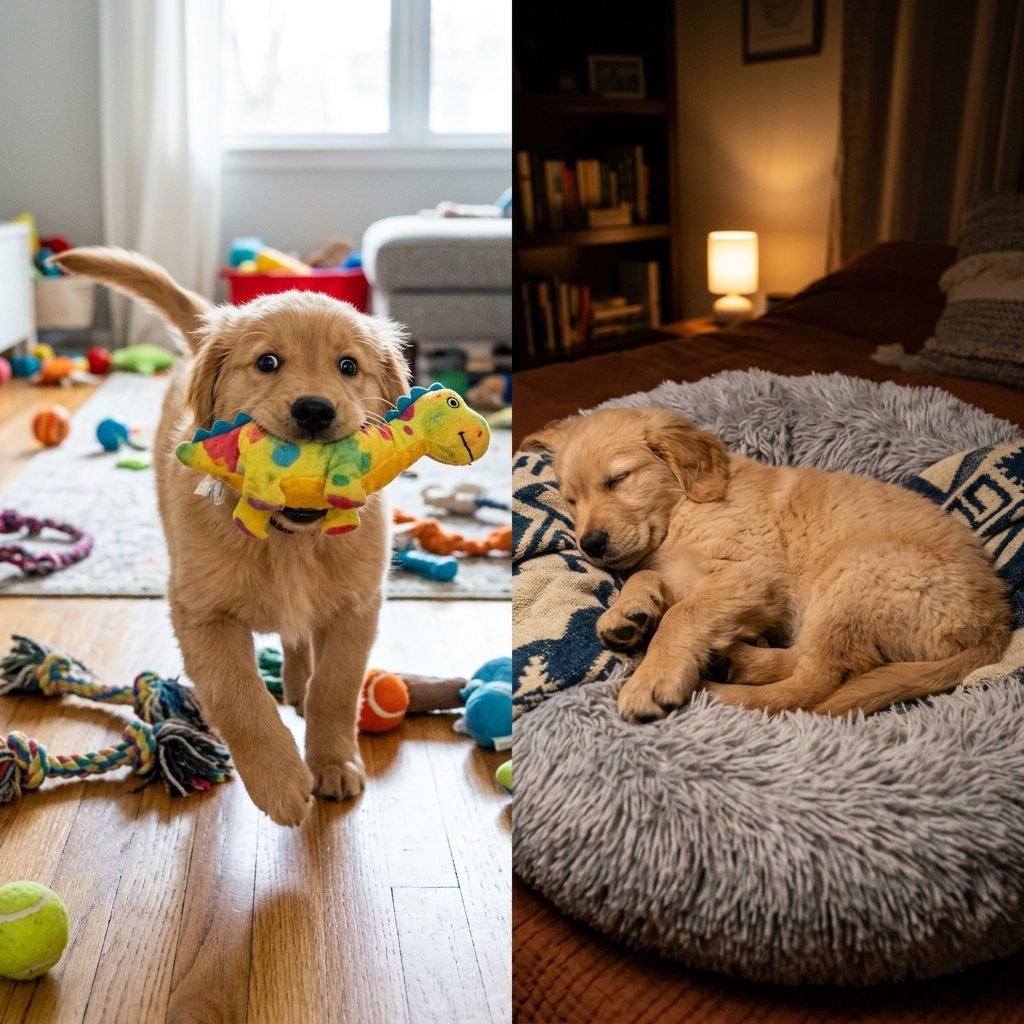
If you have recently brought a new puppy into your home, you have likely experienced the ‘Witching Hour.’ It usually happens around 7:00 PM. Your once-cuddly ball of fluff suddenly transforms into a frantic, biting, zooming Tasmanian Devil. You might find yourself wondering if you accidentally adopted a wild animal or if your puppy is simply ‘high energy.’ However, as a canine behavior specialist, I can tell you that more often than not, your puppy isn’t crazy—they are actually severely overstimulated and desperately in need of a nap. Puppies, much like human toddlers, lack the self-regulation skills to know when they have had enough. They don’t have an internal ‘off switch’ that tells them to go to bed when they are tired. Instead, their bodies produce a surge of cortisol and adrenaline to keep them going, leading to a state often called being ‘tired-wired.’ In this comprehensive guide, we are going to dive deep into the biological reasons behind this behavior and uncover the five subtle warning signs that your puppy is hitting their limit. Understanding these signs is the key to transforming your home from a chaotic battleground into a peaceful environment where your puppy can thrive and grow into a well-adjusted adult dog.
The Science of the Tired-Wired Puppy Brain
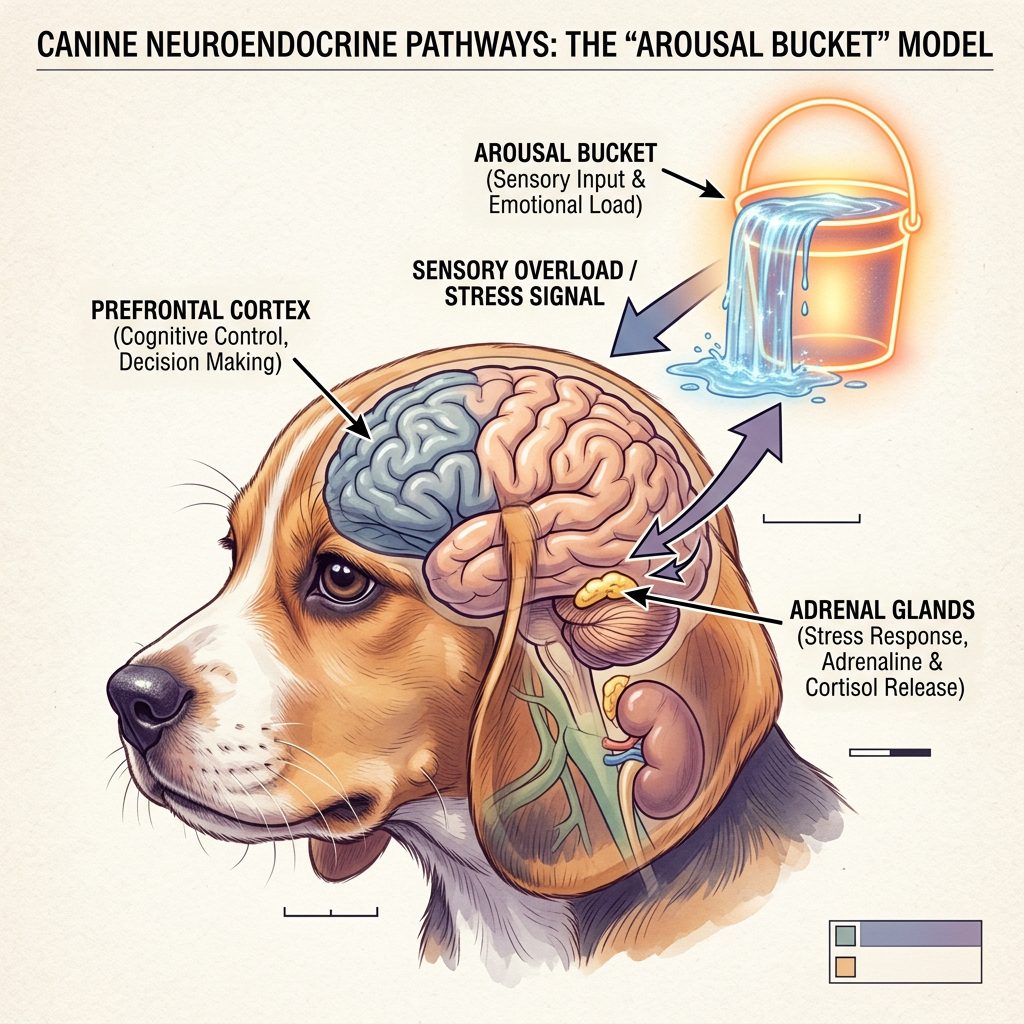
To understand overstimulation, we first need to look at the unique biology of a developing puppy. A puppy’s brain is a sponge, constantly absorbing new sights, sounds, and smells. While this is essential for socialization, it is also incredibly taxing on their nervous system. Puppies typically require between 18 and 20 hours of sleep per day to process these experiences and support physical growth. When a puppy stays awake for too long, their ‘arousal bucket’ begins to overflow.
The Cortisol Connection
When a puppy becomes overstimulated, their adrenal glands release cortisol and adrenaline. These are ‘fight or flight’ hormones designed for survival. In a state of overstimulation, the puppy’s prefrontal cortex—the part of the brain responsible for decision-making and impulse control—essentially goes offline. This is why a puppy who knows ‘sit’ perfectly at 10:00 AM might completely ignore you at 6:00 PM. They aren’t being stubborn; they are neurologically incapable of processing your request. The goal for any savvy dog owner is to manage the puppy’s environment so their ‘bucket’ never overflows.
| Age of Puppy | Sleep Requirement | Maximum Awake Time |
|---|---|---|
| 8-12 Weeks | 18-20 Hours | 45-60 Minutes |
| 3-5 Months | 16-18 Hours | 1-1.5 Hours |
| 6-12 Months | 14-16 Hours | 2-3 Hours |
Sign #1: The Relentless ‘Land Shark’ (Frantic Nipping)
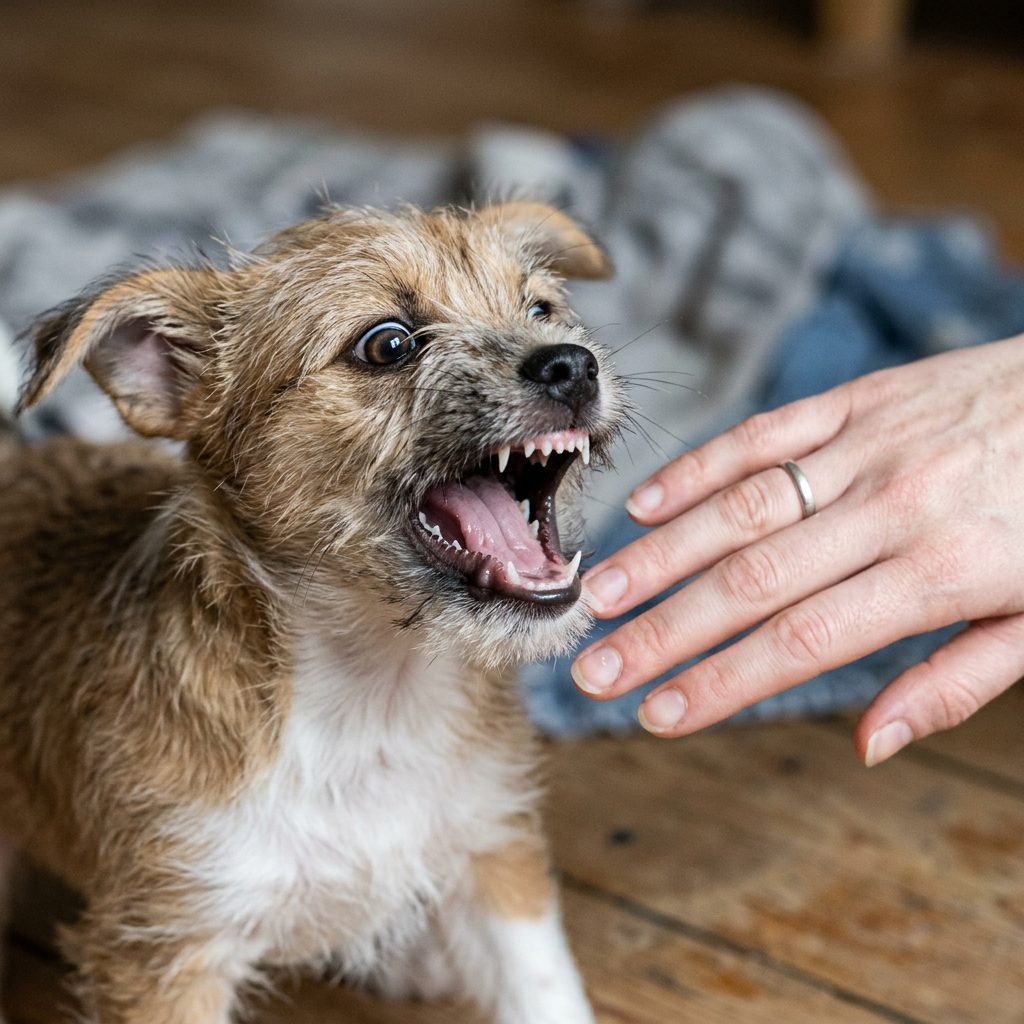
The most common sign of an overstimulated puppy is a sudden escalation in biting and nipping. While all puppies mouth and bite as part of their natural development and teething process, overstimulated biting has a different quality. It is often described as ‘land sharking.’ Normal play biting is usually accompanied by a soft body and can be easily redirected to a toy. Overstimulated biting, however, is frantic, hard, and persistent. The puppy may latch onto your pant legs, jump up to bite your hands, or even snap at your face with a glazed look in their eyes.
How to Tell the Difference
If your puppy is biting and seems to be getting more worked up the more you try to redirect them, they have likely crossed the threshold into overstimulation. At this point, the puppy is no longer learning. Continuing to engage with them, even to say ‘no’ or ‘ouch,’ can actually increase their arousal levels. The best course of action is a ‘negative punishment’ (removing something the puppy wants—you) followed by a forced nap in a quiet area.
Sign #2: FRAPs and the ‘Zoomie’ Danger Zone
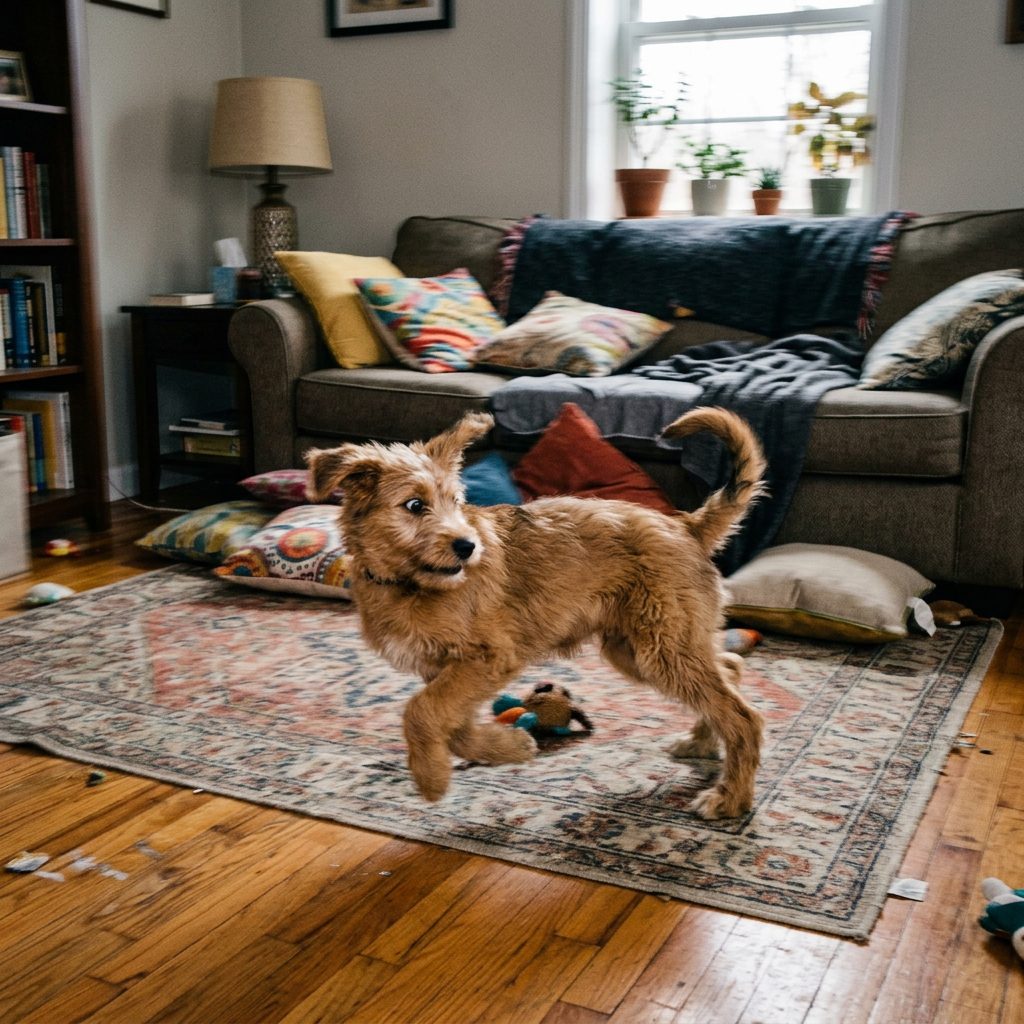
FRAPs, or Frenetic Random Activity Periods, are commonly known as ‘the zoomies.’ While a quick burst of energy after a bath or a poop is perfectly normal, zoomies that last for more than a minute or two are often a sign of a brain that has lost control. An overstimulated puppy in a FRAP state will often run at full speed, tucking their hind end under them, and may crash into furniture or people without regard for their own safety. These movements are jerky and uncoordinated compared to regular play.
Expert Tip: If your puppy’s zoomies include growling, snarling, or snapping at the air, they are likely experiencing a ‘stress release’ rather than joy. It is time to lower the lights and settle them down.
During these episodes, the puppy’s heart rate is soaring, and their body is flooded with stress hormones. It is important not to chase the puppy, as this only adds to the excitement and reinforces the high-arousal state. Instead, try to lead them calmly into a smaller, puppy-proofed space where they can eventually settle.
Sign #3: Total Loss of Impulse Control and ‘Selective Hearing’
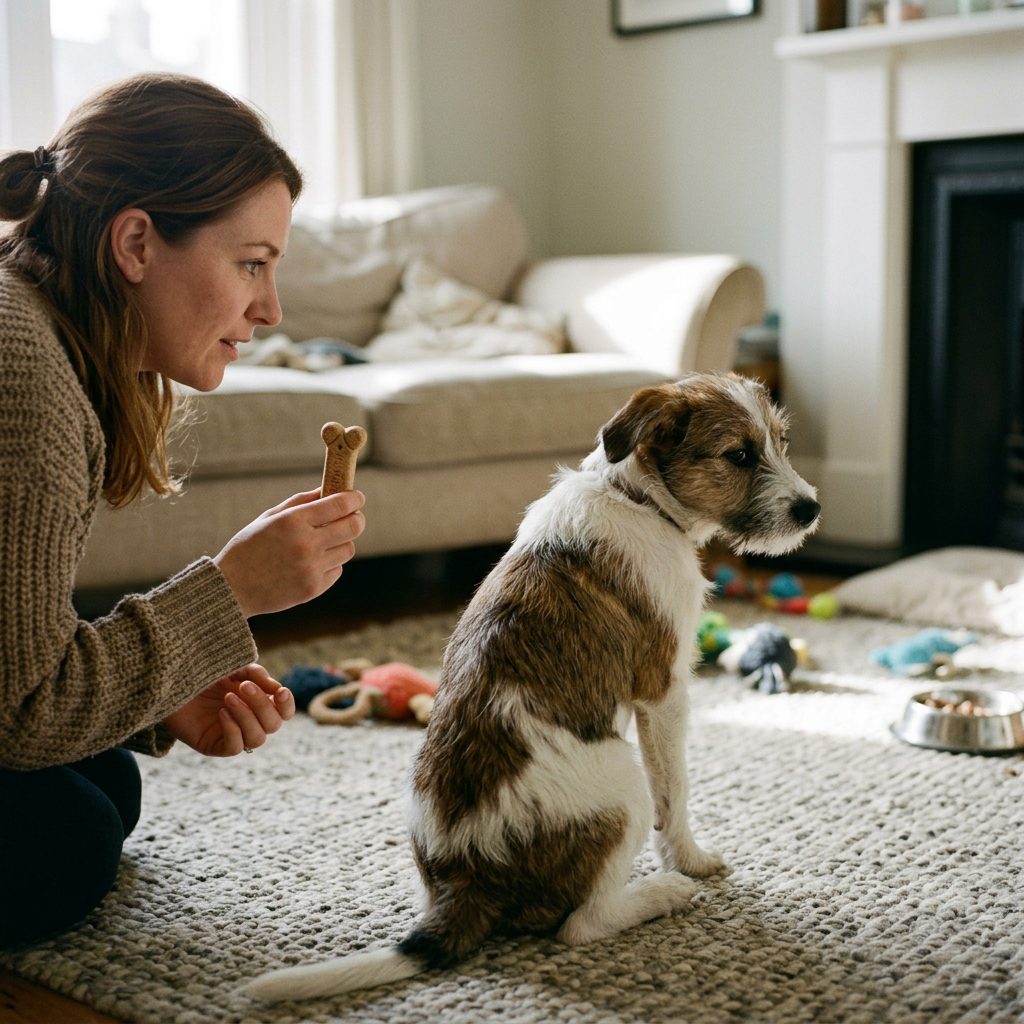
Has your puppy suddenly ‘forgotten’ every command they ever learned? One of the most frustrating signs of overstimulation is when a previously obedient puppy starts ignoring cues, jumping on guests, or raiding the trash can with reckless abandon. This is not a ‘dominance’ issue or a sign of a ‘bad’ dog; it is a sign of cognitive fatigue. When the brain is tired, the ability to resist urges (impulse control) is the first thing to go.
The Science of Decision Fatigue
Just like humans experience decision fatigue after a long day at work, puppies experience it after a few hours of navigating their world. If they have had to work hard on ‘stay’ or ‘leave it’ during a walk, they may have no mental energy left to keep four paws on the floor when you get home. Savvy owners recognize that a puppy who is failing to listen is a puppy who needs a break, not more training.
| Behavior | Normal Tired | Overstimulated (Tired-Wired) |
|---|---|---|
| Response to Cues | Slow but tries to comply | Completely ignores or barks back |
| Physical Movement | Heavy eyelids, slow walking | Frantic, jerky, ‘pacing’ |
| Body Language | Soft, relaxed ears | Tense, pinned ears, dilated pupils |
Sign #4: Hyper-Vigilance and Excessive Barking
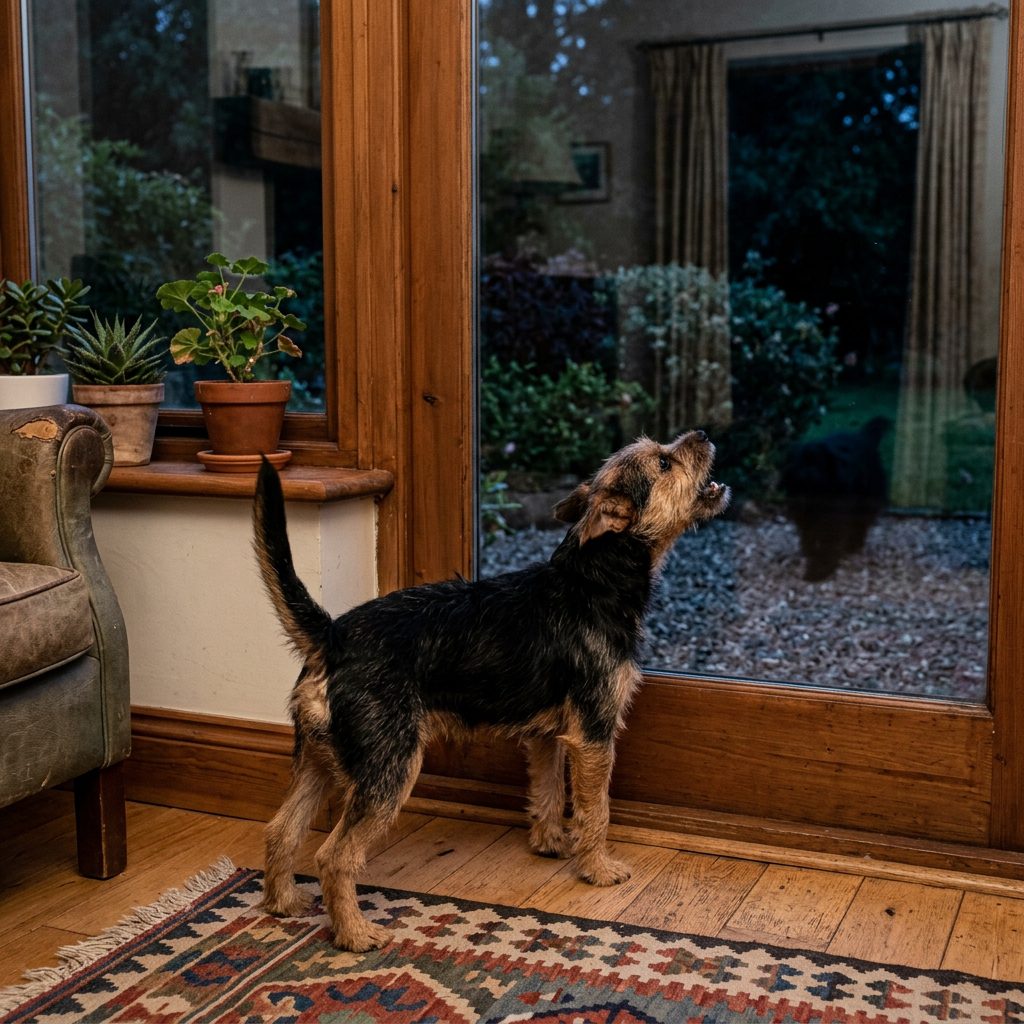
An overstimulated puppy is often a hyper-vigilant puppy. This means they are suddenly reacting to every little sound or movement in their environment. A leaf blowing past the window, a floorboard creaking, or a distant car door slamming might trigger a prolonged barking fit. This is because their nervous system is in a state of ‘high alert.’ They are looking for threats because their brain is too tired to filter out irrelevant information.
The ‘Alarm’ Response
This type of barking is usually high-pitched and repetitive. The puppy may look around frantically between barks. To help a puppy in this state, you need to reduce the sensory input. Close the curtains, turn on some white noise, and remove them from the ‘hub’ of the house. Providing a ‘safe haven’ like a covered crate can help them feel secure enough to finally close their eyes and rest.
Sign #5: The Glassy-Eyed ‘Thousand-Yard Stare’

The final and perhaps most subtle sign of an overstimulated puppy is the ‘glassy-eyed’ look. If you look closely at your puppy’s eyes during a period of high arousal, you might notice that their pupils are dilated, even in a bright room. Their eyes may look red or bloodshot, and they might have a ‘wild’ or ‘vacant’ expression. This is a physical manifestation of the adrenaline surge they are experiencing.
Physical Indicators to Watch For
- Dilated Pupils: The ‘deer in the headlights’ look.
- Red Ears: Increased blood flow due to high blood pressure and stress.
- Excessive Panting: Panting when it is not hot or after minimal exercise.
- Whale Eye: Showing the whites of their eyes as they scan the room frantically.
When you see these physical signs, your puppy is past the point of ‘just being energetic.’ They are in a state of physiological stress. The only cure is sleep.
The Solution: Implementing the Forced Nap Protocol
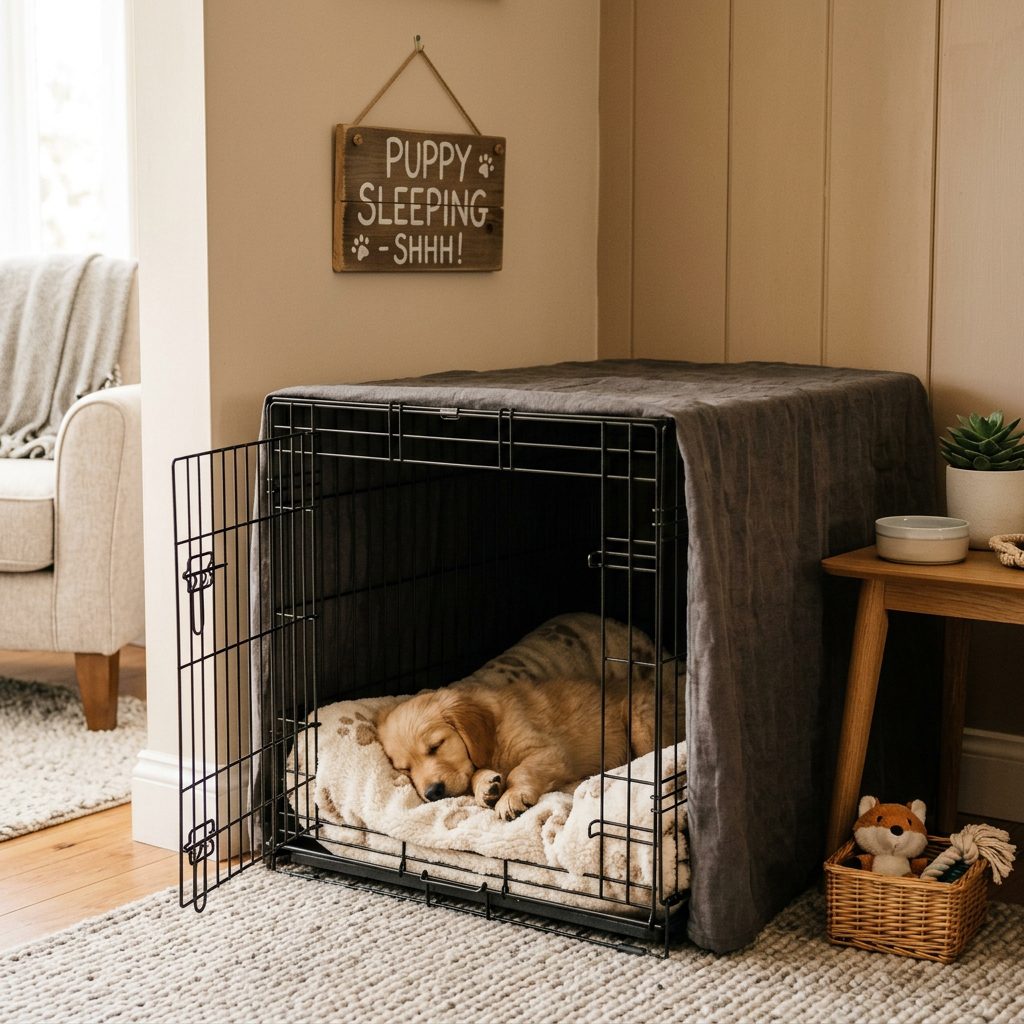
Now that you recognize the signs, how do you fix it? The answer is the ‘Forced Nap.’ This sounds harsh, but it is actually the kindest thing you can do for an overstimulated puppy. Most puppies do best on a schedule of one hour of awake time followed by two hours of nap time.
Steps to a Successful Forced Nap
- Identify the Sign: As soon as you see the land-sharking or the glassy eyes, stop all active play.
- Low-Energy Transition: Don’t just scoop them up and toss them in the crate. Spend 5 minutes doing very calm ‘scent work’ (scattering treats in the grass) or a slow ‘calm-down’ massage.
- The Sanctuary: Place the puppy in their crate or exercise pen in a quiet, dark room. A crate cover is highly recommended to block out visual stimuli.
- White Noise: Use a fan or a white noise machine to drown out household sounds that might trigger their hyper-vigilance.
- Consistency: Stick to the schedule even on weekends. Puppies thrive on the predictability of knowing exactly when sleep is coming.
Expert Tip: If your puppy cries in the crate during a forced nap, ensure their physical needs (potty, hunger, thirst) are met. If they are, the crying is often just ‘the wind-down’—much like a tired baby crying before falling asleep.
Advanced Calming Strategies for High-Arousal Pups
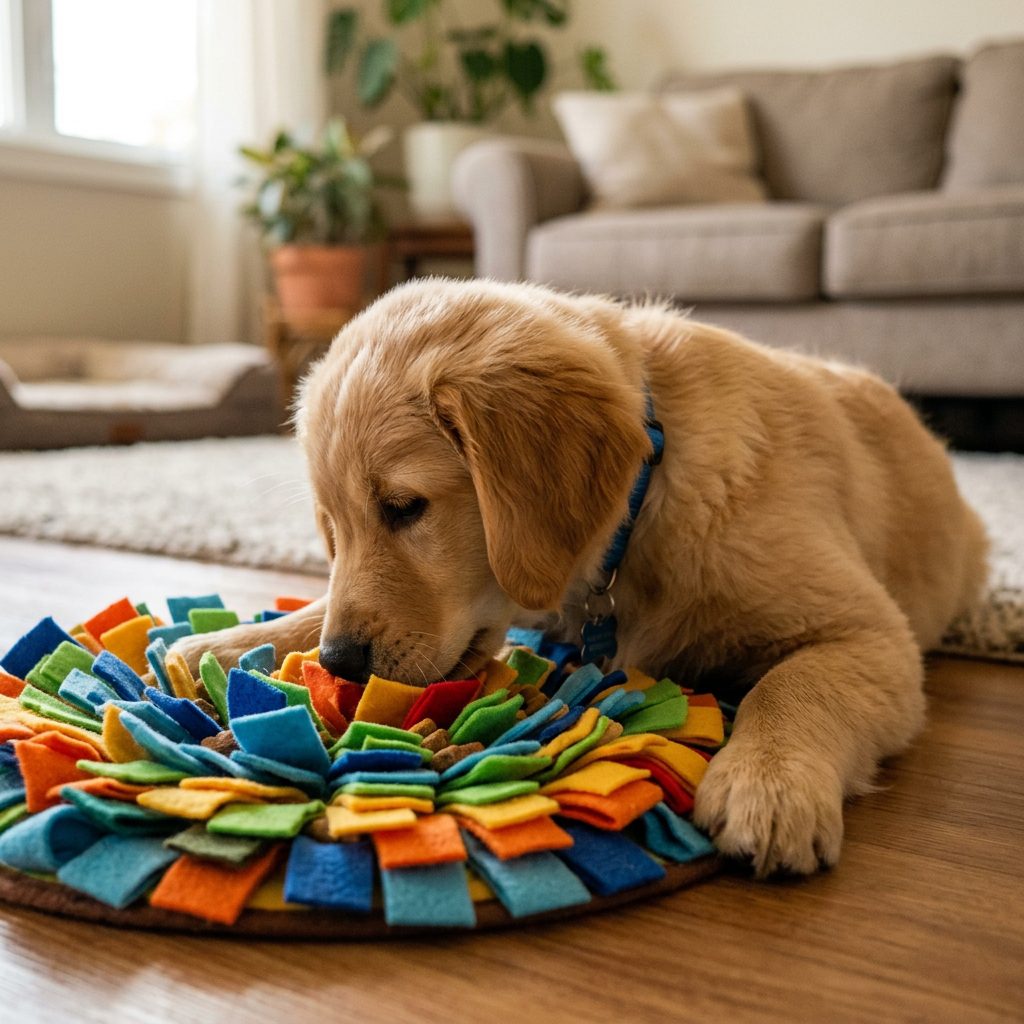
Some puppies, particularly high-drive working breeds like Border Collies or German Shepherds, find it harder to settle than others. For these ‘high-arousal’ pups, you may need to incorporate specific calming activities into their daily routine to keep their ‘bucket’ from filling too quickly.
The Power of Licking and Sniffing
Licking and sniffing are naturally calming behaviors for dogs. They release endorphins and lower the heart rate. Instead of a game of fetch (which increases adrenaline), try these activities:
- Lick Mats: Spread some dog-safe peanut butter or Greek yogurt on a textured mat. The repetitive licking motion is a powerful sedative for a puppy brain.
- Snuffle Mats: Hide kibble or treats inside a fabric mat. Using their nose to find food is mentally tiring and incredibly soothing.
- Long-Lasting Chews: Providing a safe chew (like a stuffed KONG or a bully stick) can help a puppy transition from a high-energy state to a restful one.
By focusing on ‘calmness training’ rather than just ‘wearing the puppy out,’ you are teaching them the valuable life skill of how to relax in a busy world.
Conclusion
Embracing the Quiet: Your Path to a Calmer Puppy
Living with a puppy is a journey filled with joy, but it is also one of the most challenging phases of dog ownership. It is easy to feel overwhelmed when your puppy is acting ‘crazy,’ but by shifting your perspective and recognizing these 5 warning signs of overstimulation, you can change the dynamic of your household. Remember, your puppy isn’t trying to give you a hard time; they are having a hard time. They are navigating a world that is loud, fast, and confusing, all while their body and brain are growing at an astronomical rate. By prioritizing sleep, implementing a structured nap schedule, and providing calming outlets for their energy, you are giving your puppy the greatest gift possible: a balanced nervous system. Be patient with them, and more importantly, be patient with yourself. The ‘land shark’ phase is temporary, but the bond you build by understanding and meeting their needs will last a lifetime. Keep your ‘arousal bucket’ awareness high, and soon enough, those frantic witching hours will be replaced by peaceful evenings and a well-rested, happy companion.