Stop Vet Visit Terror: 5 Easy Cooperative Care Exercises For Puppies
We have all been there: the frantic scrambling on the linoleum floor, the desperate attempts to hide under the waiting room chairs, and the heartbreaking whimpers as the vet tech approaches with a thermometer. For many dogs, the veterinary clinic is a place of pure, unadulterated terror. But what if I told you it doesn’t have to be this way? As a savvy dog owner, you have the power to change the narrative before your puppy even reaches adulthood. Enter Cooperative Care.
Cooperative care is a training philosophy that shifts the dynamic from ‘doing things to the dog’ to ‘doing things with the dog.’ It is about communication, consent, and empowerment. By teaching your puppy specific exercises now, you are giving them a ‘voice’ in their medical care. This doesn’t just make the vet’s job easier; it builds a profound bond of trust between you and your furry companion. In this comprehensive guide, we will explore five foundational exercises that will transform your puppy into a confident, cooperative patient. Let’s dive into the world of fear-free husbandry and stop the vet visit terror before it starts.
The Cooperative Care Toolkit: What You Need to Start
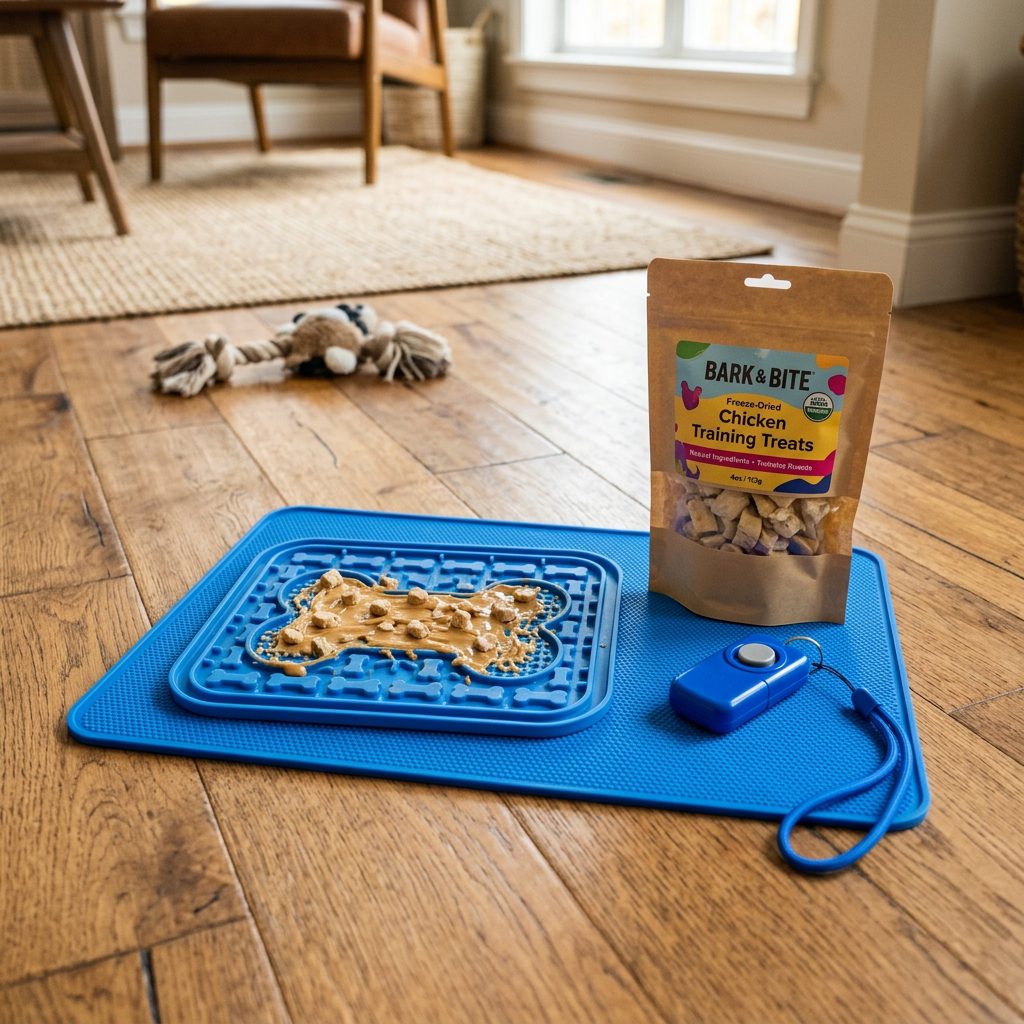
Before we jump into the exercises, we need to set the stage for success. Cooperative care isn’t about physical restraint; it’s about creating a positive association with handling. To do that, you need the right tools in your arsenal. Think of this as your puppy’s ‘spa kit’ combined with a high-stakes reward system.
The most important tool is your reward. For these exercises, we aren’t just using standard kibble. We need ‘high-value’ treats—things like boiled chicken, small cubes of cheese, or commercial freeze-dried liver. These treats should be reserved specifically for husbandry training to signal to your puppy that this work is extra special.
| Item | Purpose | Expert Tip |
|---|---|---|
| High-Value Treats | Positive reinforcement for handling | Use pea-sized amounts to prevent overfeeding. |
| A Non-Slip Mat | Designated ‘work station’ for the puppy | The mat becomes a safe space where the dog knows what to expect. |
| Lick Mat or Squeeze Tube | Long-duration distraction | Great for procedures that take more than a few seconds, like nail clipping. |
| Target Stick or Finger | Focusing the puppy’s attention | Helps in positioning the puppy without physical force. |
Beyond the physical tools, you need the right environment. Choose a quiet room with minimal distractions. Your puppy should be well-rested and slightly hungry to ensure they are motivated. Remember, the goal is to keep the stress levels at zero. If your puppy shows signs of discomfort, we stop immediately.
Exercise 1: The Chin Rest (The Consent Signal)
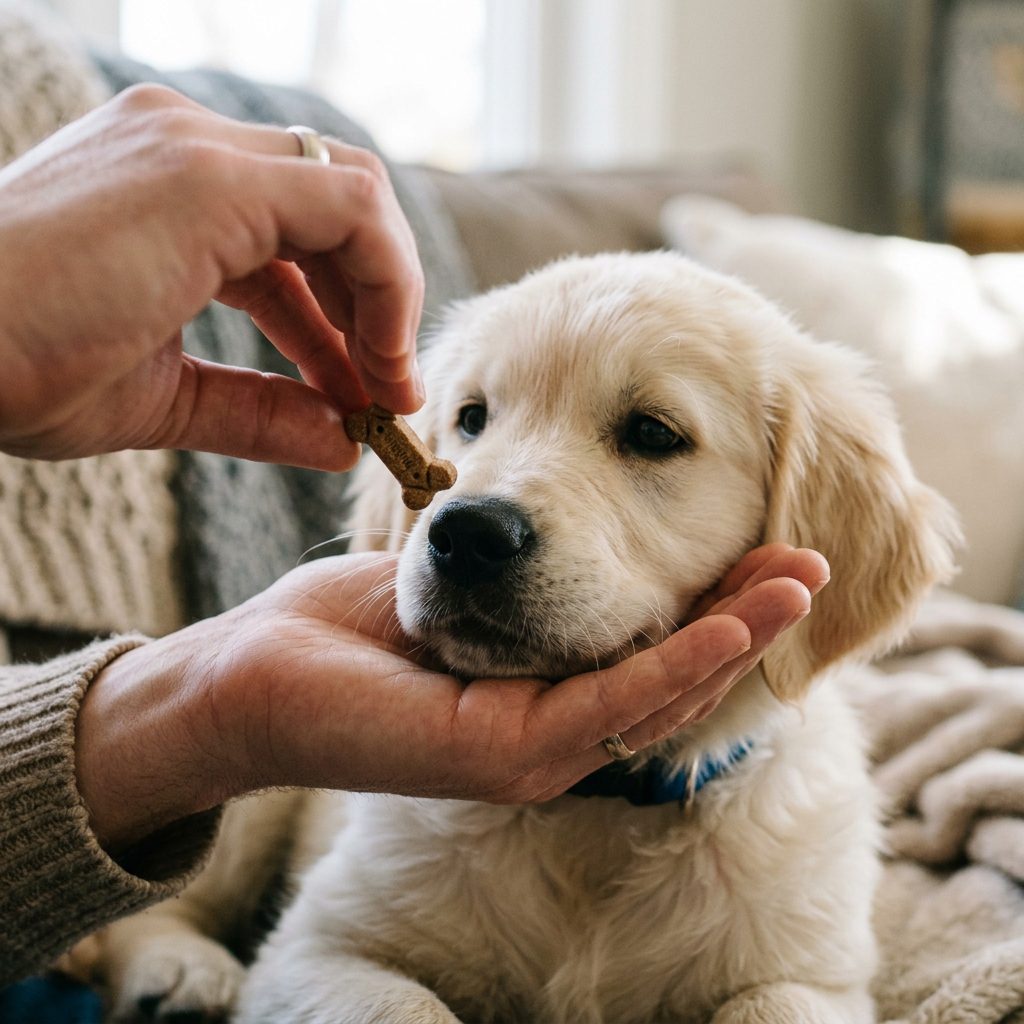
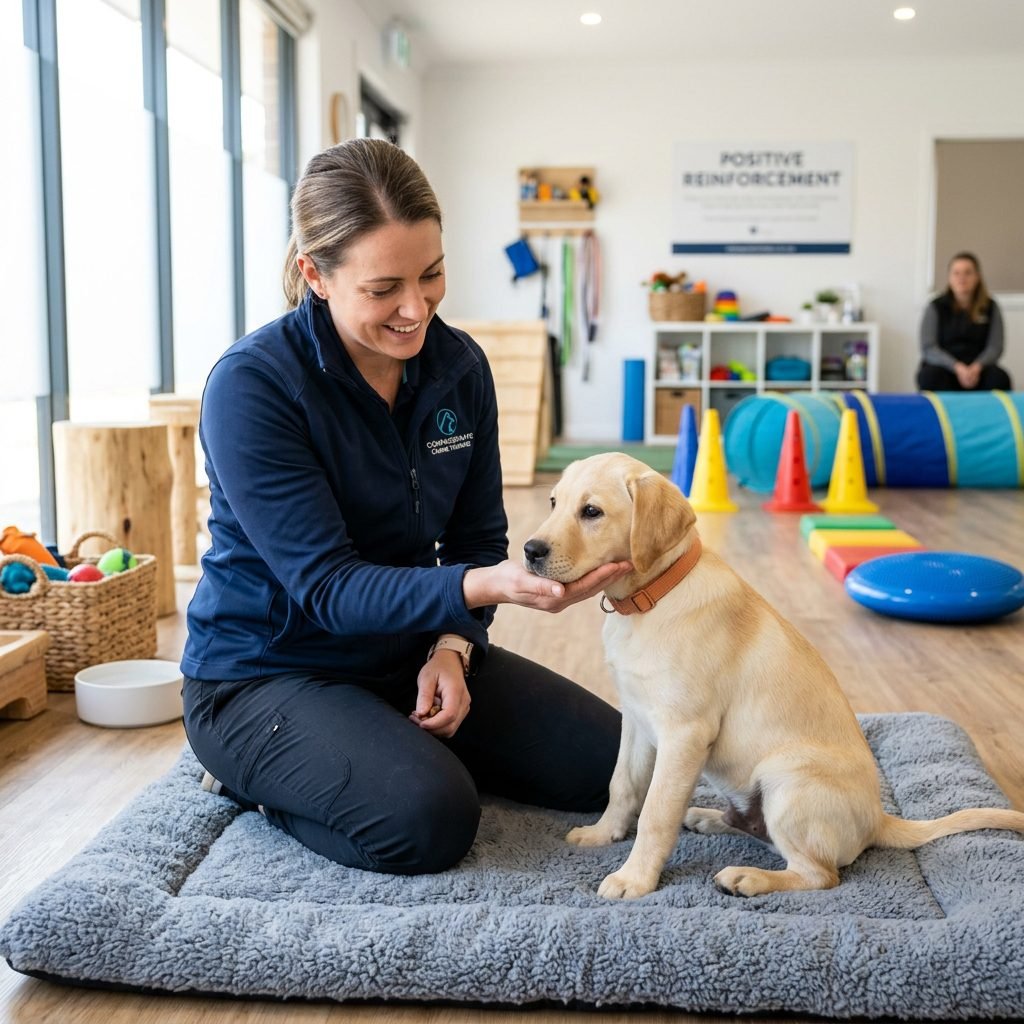
The Chin Rest is the ‘Holy Grail’ of cooperative care. It serves as a ‘start button’ behavior. When your puppy places their chin in your hand or on a stool, they are essentially saying, ‘I am ready, you may proceed.’ If they lift their head, the procedure stops. This gives the puppy a sense of control that drastically reduces anxiety.
How to Teach the Chin Rest
- Lure the Position: Hold a treat in your palm and place your hand flat. As your puppy reaches for the treat, lower your hand slightly so their chin naturally rests on your palm.
- Capture and Reward: The moment their chin touches your skin, say ‘Yes!’ or click, and deliver the treat.
- Build Duration: Gradually wait a second, then two, then three before rewarding. You want the puppy to understand that holding the position is what earns the prize.
- Add a Cue: Once they are reliably offering the behavior, add a verbal cue like ‘Chin’ or ‘Rest.’
Expert Tip: Never force the puppy’s head down. The beauty of this exercise is that the puppy chooses to stay. If they pull away, simply wait and see if they offer it again. If they don’t, the session is over.
Once the chin rest is solid, you can begin to introduce light touching on the back or shoulders while the puppy maintains the rest. If the head pops up, the touching stops. This is the foundation of consent-based veterinary care.
Exercise 2: The ‘Tickle-Treat’ Paw Handling
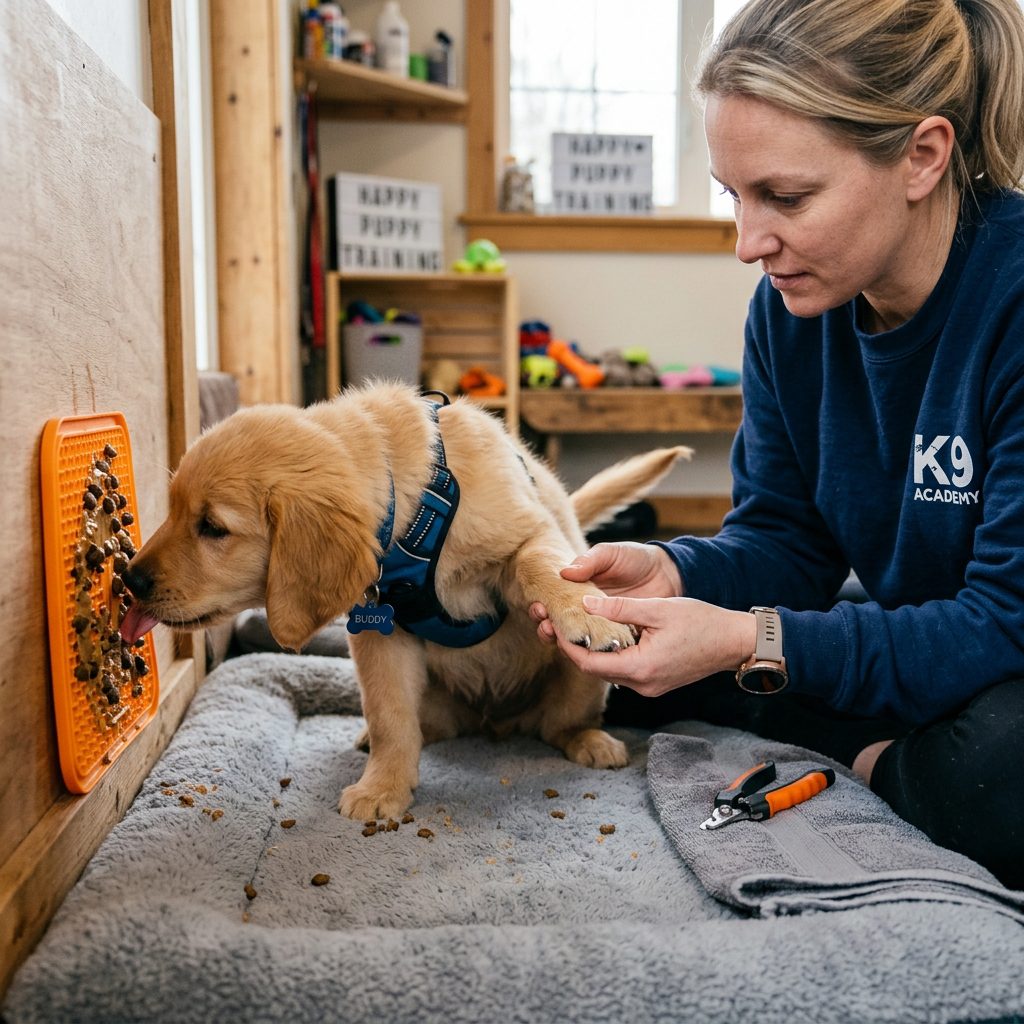
Nail trims are often the most stressful part of a vet visit. Many puppies develop ‘paw sensitivity’ because they are only touched there when something scary (like a clipper) is present. We need to flip that script by making paw handling synonymous with the best treats on earth.
Step-By-Step Paw Desensitization
- Level 1: The Reach: Simply reach toward your puppy’s leg. If they don’t pull away, reward. Do this 10 times.
- Level 2: The Touch: Briefly touch the shoulder, then the elbow, then the wrist. Reward after every single touch.
- Level 3: The Hold: Gently cup the puppy’s paw in your hand for one second. Release and reward. Gradually increase the hold time.
- Level 4: The Toe Separation: This is crucial for nail trims. Gently press on the paw pad to extend the nails. Reward heavily for this, as it feels ‘weird’ to most dogs.
By breaking this down into tiny, manageable steps, you prevent the puppy from ever reaching a state of fear. We call this systematic desensitization. If your puppy pulls their paw back, you’ve moved too fast. Go back to the previous level where they were comfortable.
Exercise 3: Ear and Eye Inspection Prep
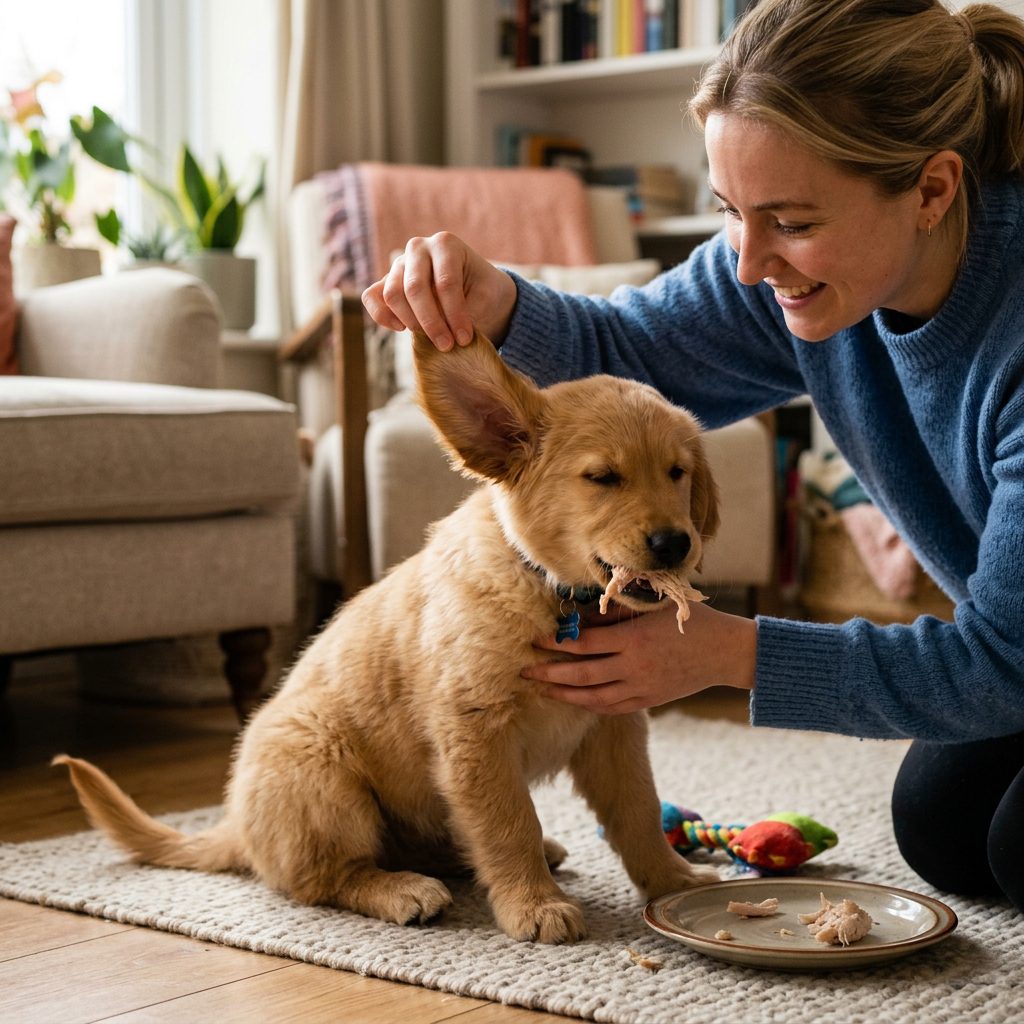
Vets often need to peer into ears with an otoscope or check eyes for redness. These areas are sensitive and having a stranger loom over them can be intimidating. Exercise 3 focuses on making these ‘intrusive’ checks feel like a game.
The Ear Flip
Gently lift your puppy’s ear flap. While the flap is held up, feed a continuous stream of small treats. Drop the ear, stop the treats. This creates a powerful association: Ear up = Food party. Ear down = Party ends. Eventually, you can start to mimic the vet’s actions by gently massaging the base of the ear or looking inside with a small flashlight (to simulate the otoscope).
The Eye Target
For eye exams, we need the puppy to hold their head still while we look. You can use your ‘Chin Rest’ for this! While the puppy is in the chin rest, gently use your thumb to lift the skin above the eye for a split second. Reward immediately. We are teaching the puppy that ‘looking’ is safe and rewarding.
Remember: The goal is not just to get the job done, but to ensure the puppy is emotionally comfortable throughout the process.
Exercise 4: The ‘Vet Hug’ (Restraint Training)
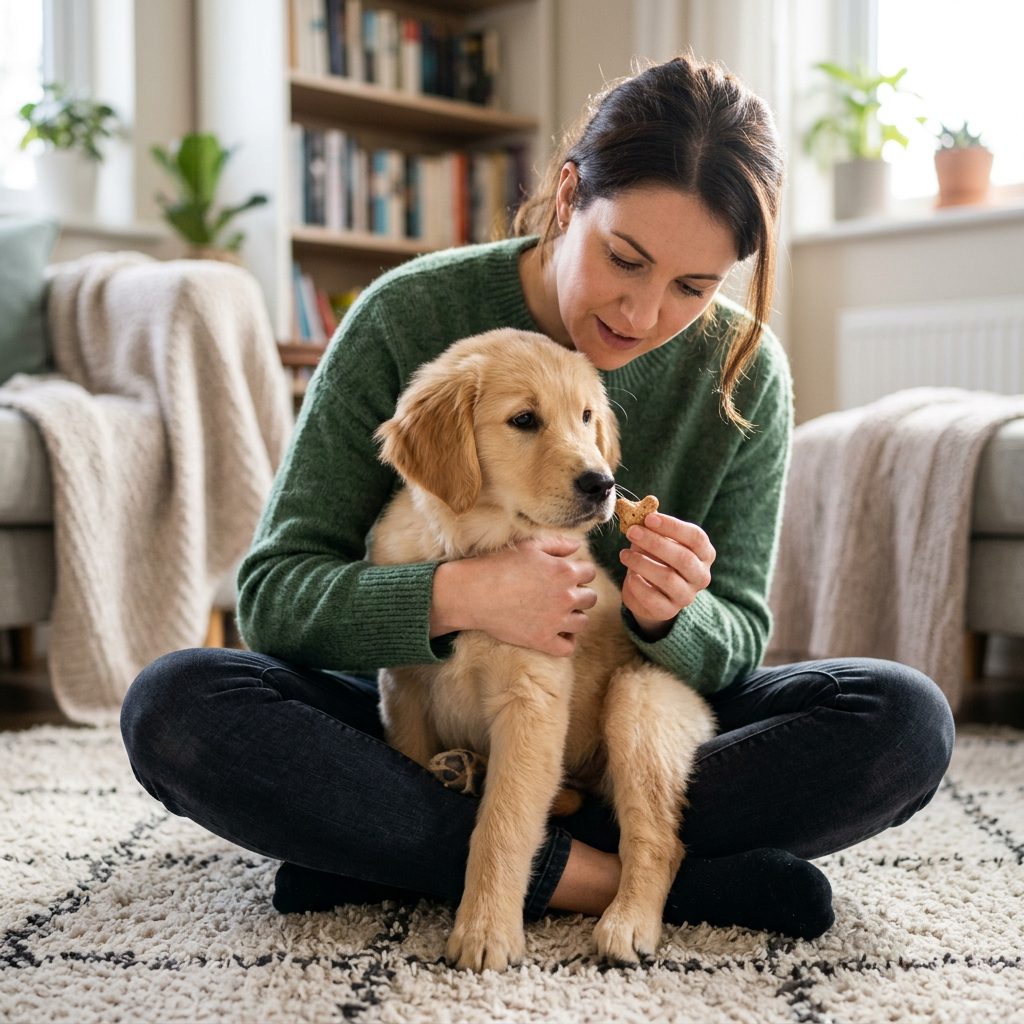
In a medical setting, puppies often need to be held still for blood draws or vaccinations. This ‘restraint’ can trigger a ‘fight or flight’ response. We can prevent this by teaching the puppy that being ‘hugged’ is actually a high-value trick.
Teaching the Cooperative Restraint
- The Side-by-Side: Sit next to your puppy. Reach your arm over their back and gently touch their far side. Reward.
- The Gentle Wrap: Wrap your arm around their chest and the other under their belly, mimicking a vet tech’s hold. Hold for one second, release, and reward.
- The Pressure Gradation: Slowly increase the ‘firmness’ of the hold. It should never be painful, just a steady, reassuring pressure.
- Introduction of ‘The Poke’: While in the ‘hug,’ have a partner gently pinch a bit of skin on the scruff or flank (mimicking a needle). Immediately follow with a jackpot of treats.
By practicing this at home in a relaxed state, the puppy learns that being held firmly isn’t a precursor to danger—it’s a precursor to snacks. This makes the actual vaccination at the vet’s office a non-event.
Exercise 5: Table Manners and Tool Desensitization
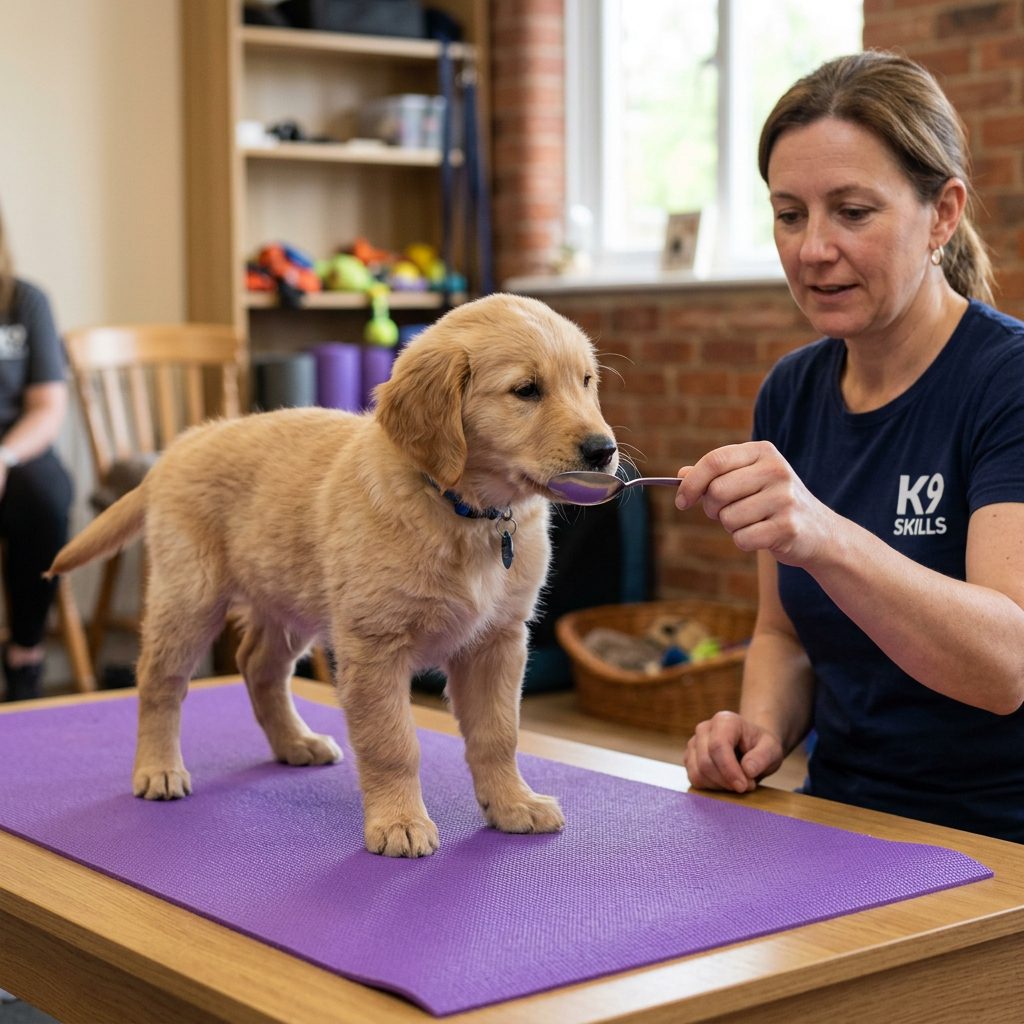
The final hurdle is the environment and the ‘scary’ tools. The cold, metal exam table is a major trigger for many dogs. If you have a small puppy, you can practice this on your kitchen counter (with a non-slip mat!) or even the top of a washing machine. If you have a large breed, practice on a low bench.
The ‘Table is a Treat’ Drill
Lift your puppy onto the designated surface. Immediately provide a ‘jackpot’ (5-10 treats in a row). Let them explore the surface. Then, lift them down. We want the puppy to think the exam table is the best place in the world. Never perform scary procedures on the table during the first few training sessions.
Mock Tool Introduction
Puppies are often spooked by the smell of alcohol wipes or the cold touch of a stethoscope. You can simulate these at home:
- The Stethoscope: Use the back of a cold metal spoon. Touch it to the puppy’s chest and reward.
- The Alcohol Prep: Open a rubbing alcohol wipe nearby so they get used to the scent. Reward for calm sniffing.
- The Scale: If you can, visit your vet just to use the scale in the lobby. Go in, weigh the puppy, give a treat, and leave. This is called a ‘Happy Visit.’
Troubleshooting and Common Pitfalls
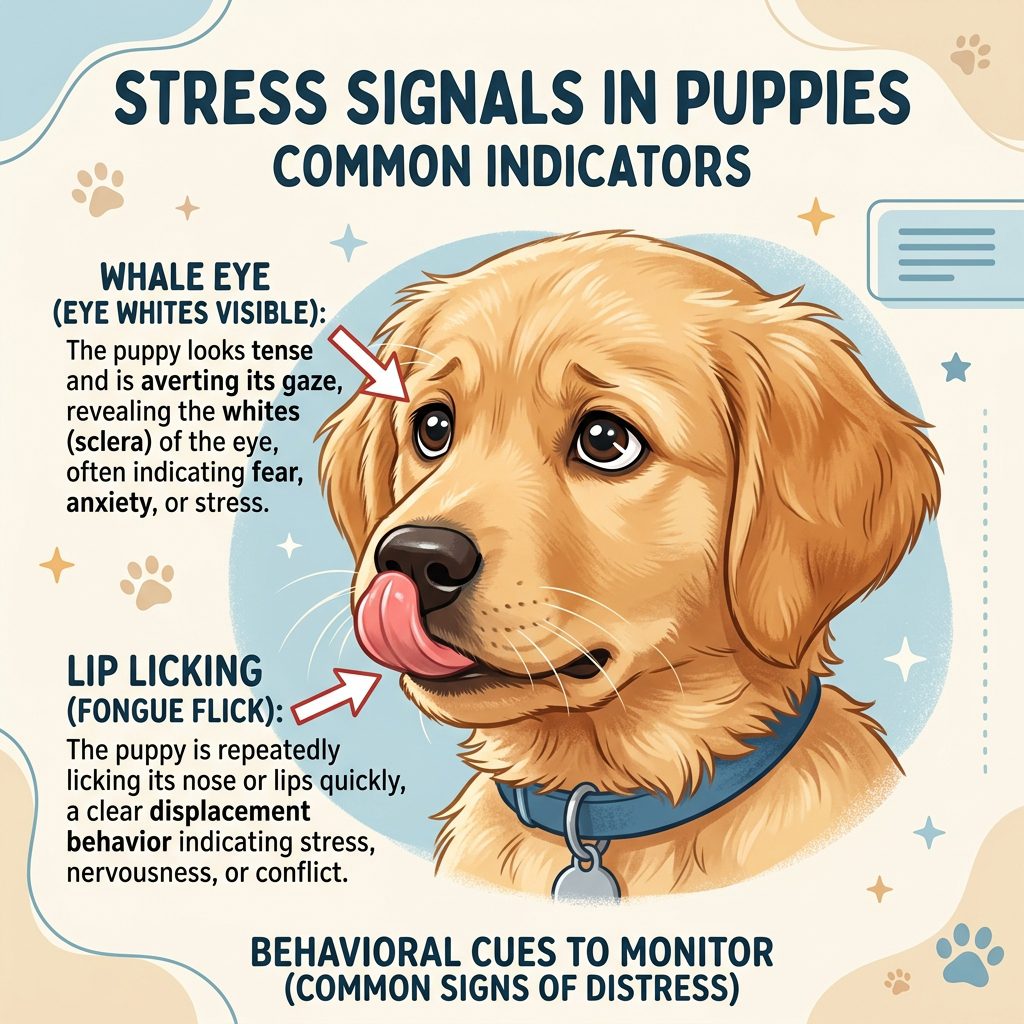
Training isn’t always a linear path. You will have days where your puppy is distracted or sensitive. The key is to remain patient and observant. Here are some common mistakes to avoid:
1. Moving Too Fast
This is the number one error. If your puppy is pulling away, growling, or showing ‘whale eye’ (showing the whites of their eyes), you have pushed too far. Stop, take a break, and start at a much easier level next time.
2. Forcing the Issue
If you force a puppy into a chin rest or a hold, you are teaching them that they have no control. This will lead to increased resistance later. Always look for willing participation.
3. Using Low-Value Rewards
Husbandry work is hard work for a puppy. Don’t expect them to stay calm for a dry biscuit. Use the ‘good stuff’ to keep their motivation high.
| Sign of Stress | What it Means | Your Action |
|---|---|---|
| Licking Lips | Mild anxiety | Slow down, offer a break. |
| Yawning | Conflict or stress | Lower the difficulty of the task. |
| Tucking Tail | Fear | Stop the session immediately. |
| Refusing Treats | High stress/Shutdown | End the session, move to a safe space. |
Conclusion
Building a cooperative puppy doesn’t happen overnight. It is a journey of a thousand tiny steps, each paved with chicken and praise. By implementing these five exercises—the Chin Rest, Paw Handling, Ear/Eye Inspections, Restraint Training, and Tool Desensitization—you are giving your puppy the ultimate gift: the gift of confidence.
Imagine a future where you walk into the vet clinic and your dog’s tail is wagging. Imagine a vet who thanks you because your dog is their easiest patient of the day. This isn’t a dream; it’s the direct result of the work you do now during these formative puppy months. Keep your sessions short, keep them fun, and always listen to what your puppy is telling you. You’ve got this, savvy owner!