Avoid Disaster: How To Introduce A New Puppy To Your Older Dog Safely
The High Stakes of the First Impression
Adding a new puppy to your household is a moment filled with joy, excitement, and, let’s be honest, a healthy dose of anxiety. As a savvy dog owner, you know that your resident dog isn’t just a pet; they are a family member with established routines, territories, and a unique personality. Introducing a bouncy, uncoordinated, and often boundary-clueless puppy into their world can feel like a recipe for disaster if not handled with precision. The goal isn’t just to ‘get it over with’ but to lay the foundation for a lifelong friendship. A botched introduction can lead to fear-based aggression, lifelong resentment, or even physical injury. However, by following a structured, science-based approach, you can mitigate these risks and ensure a harmonious transition.
In this guide, we will walk through the critical phases of introduction, from the psychological preparation of your older dog to the physical logistics of the first meeting and the long-term management of a multi-dog home. We aren’t just looking for ‘tolerance’; we are aiming for a relationship where both dogs feel safe, respected, and valued. Whether your older dog is a grumpy senior or a high-energy adult, the principles of scent, space, and positive association remain the same. Let’s dive into how you can transform a potentially volatile situation into a masterclass in canine social engineering.
Phase One: Pre-Meeting Preparation and Scent Swapping
Setting the Stage Before the Arrival
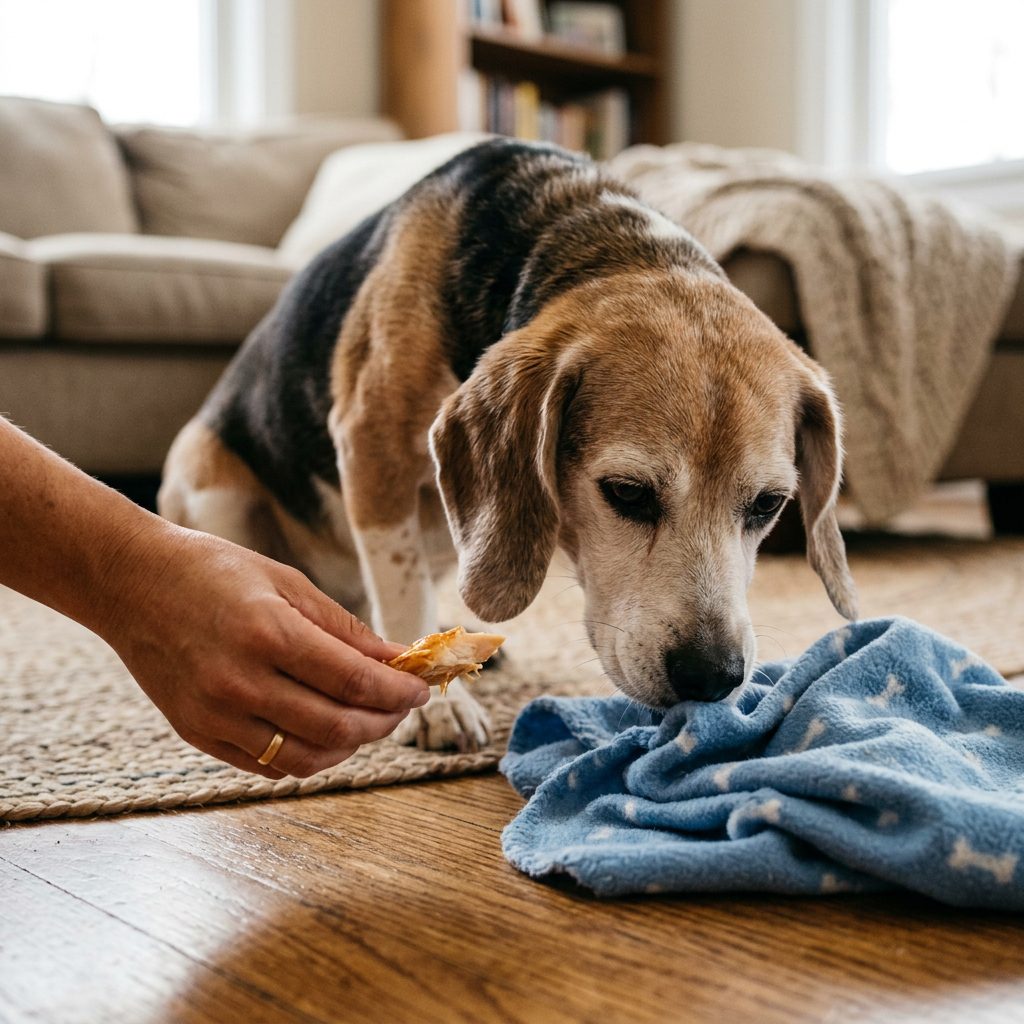
The introduction doesn’t begin when the puppy walks through the front door; it begins days, or even weeks, before. Dogs live in a world of scent, and familiarizing your older dog with the puppy’s ‘olfactory signature’ is the first step in reducing the shock of their arrival. This process, known as scent swapping, allows your resident dog to process the new addition in a low-stress environment without the physical pressure of a wiggly puppy in their face.
The Scent Swapping Protocol
- Step 1: Obtain a blanket or towel that the puppy has slept on. If the puppy hasn’t arrived yet, ask the breeder or shelter to provide one.
- Step 2: Place this item in your older dog’s environment, but not in their primary sleeping area. Let them investigate it on their own terms.
- Step 3: Whenever your older dog sniff the item calmly, offer a high-value treat. You are creating a positive association: ‘This new smell means delicious things happen.’
- Step 4: Reverse the process. Take a scent item from your older dog and give it to the puppy.
Beyond scent, you must prepare your home. This means creating ‘Safe Zones’ where your older dog can escape the puppy’s relentless energy. Puppies lack an ‘off’ switch and often fail to read the ‘leave me alone’ signals of older dogs. Baby gates, crates, and exercise pens are your best friends during this phase.
| Essential Tool | Purpose in Introduction | ||
|---|---|---|---|
| Extra-Tall Baby Gates | Allows visual contact without physical access; provides an easy escape for the older dog. | High-Value Treats | Used to reward calm behavior and create positive associations with the other dog’s presence. |
| Two 6-Foot Leashes | Ensures both dogs are under control during the first meeting; avoids the ‘tangle’ of retractable leads. | ||
| Pheromone Diffusers | Helps lower overall household stress levels using synthetic calming scents. |
Expert Tip: Before the puppy arrives, ensure your older dog is 100% solid on their basic cues, especially ‘Leave It’ and ‘Go to Mat.’ These will be your primary communication tools when the puppy starts pestering them.
Phase Two: The Neutral Territory Meeting
The First Face-to-Face Encounter
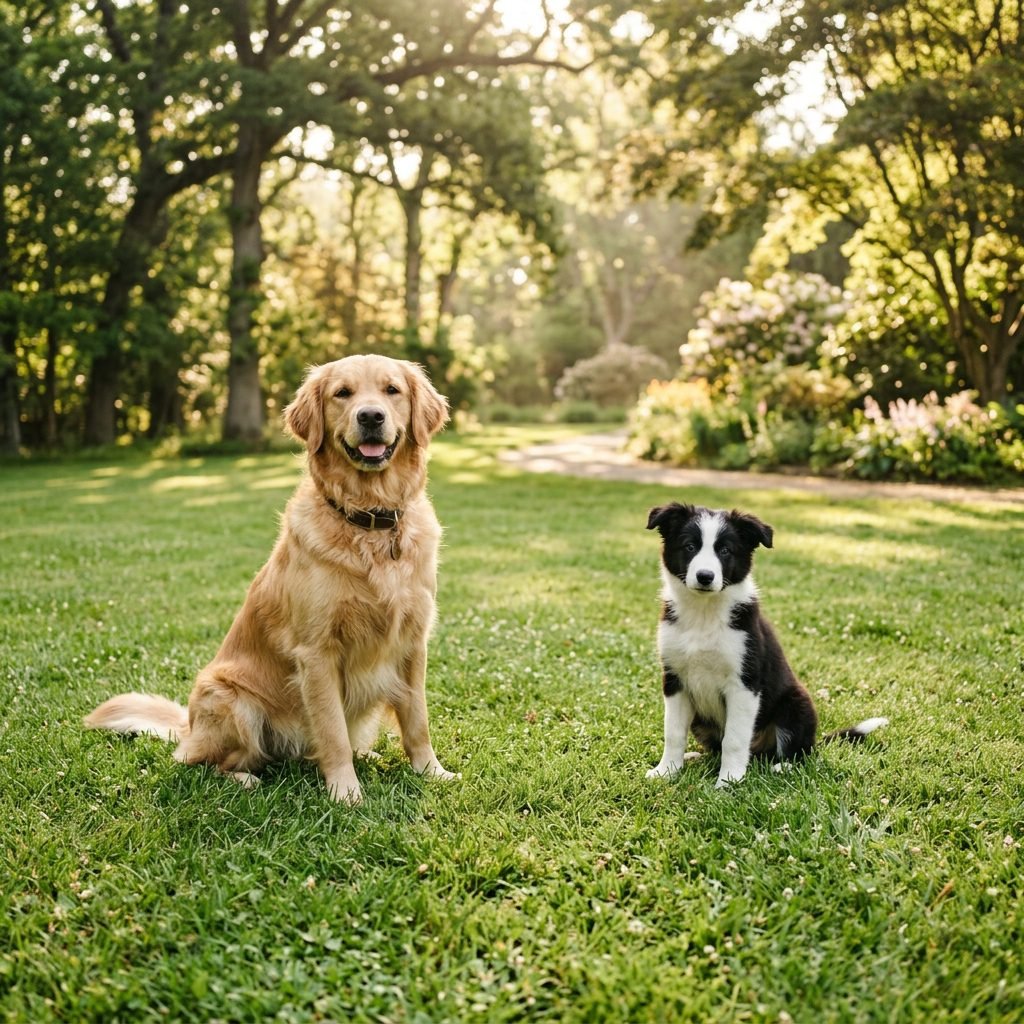
Never introduce a new puppy to an older dog inside your home. To your resident dog, the home is a fortified castle, and the puppy is an uninvited intruder. Instead, choose a neutral location that neither dog has a strong territorial claim over—a quiet park, a neighbor’s yard, or a wide-open parking lot. The goal is to minimize the older dog’s need to ‘defend’ their space.
The Parallel Walk Method
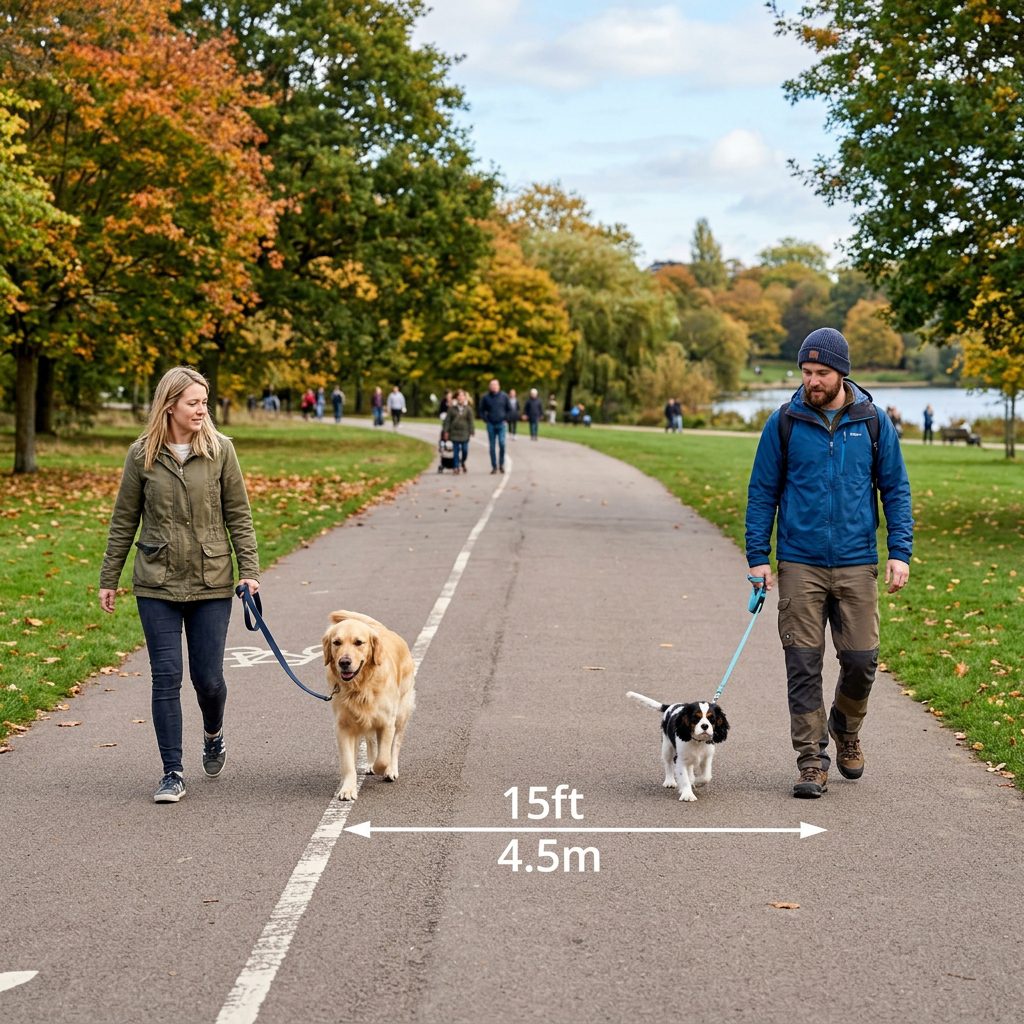
One of the most effective ways to introduce two dogs is the parallel walk. This method allows them to get used to each other’s presence and movement without the high-pressure ‘head-on’ greeting that often triggers defensive behavior.
- Maintain Distance: Start with two handlers walking the dogs in the same direction, about 20 feet apart. Both dogs should be on loose leashes.
- Observe Body Language: If both dogs are calm, gradually decrease the distance between them. If either dog shows signs of tension (stiffening, staring, hackles raised), increase the distance immediately.
- The ‘Scent Trail’ Swap: Allow the older dog to walk in the path where the puppy just walked to catch their scent, and vice versa. This is ‘pee-mail’ communication at its finest.
- The Brief Greeting: If both dogs are relaxed, allow a 3-second ‘nose-to-butt’ greeting. In the dog world, face-to-face staring is rude. Butt-sniffing is the polite way to say hello. After 3 seconds, call them away and reward them.
Keep the first meeting short and sweet. You want to end on a high note before anyone gets overstimulated or cranky. If the older dog shows any signs of aggression, do not punish them. Punishment will only make them associate the puppy with negative consequences. Instead, simply increase the distance and try again later.
Phase Three: Establishing the New Normal at Home
Bringing the Puppy Inside the ‘Castle’
Once the neutral meeting is a success, it’s time to move the operation home. This is where most disasters occur because owners let their guard down too quickly. Your resident dog may have been fine in the park, but they might feel differently when the puppy tries to jump into their favorite bed or drink from their water bowl.
Management and Barriers
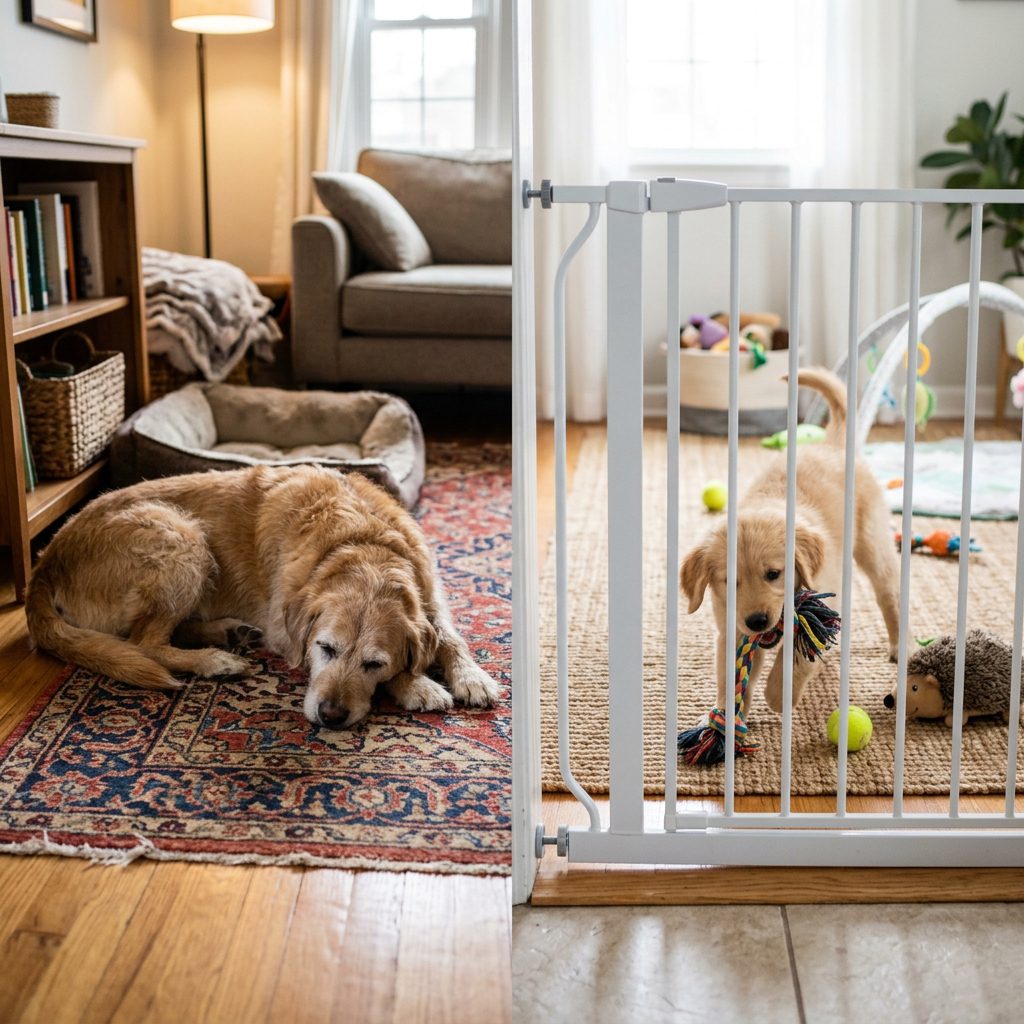
For the first few weeks, use the ‘Crate and Rotate’ system or baby gates to ensure the dogs are never left together unsupervised. The older dog must feel that their personal space is sacrosanct. If the puppy is constantly ‘sharking’ (nipping and chasing) the older dog, the older dog will eventually lose patience and corrected the puppy. While a ‘correction’ is a natural part of dog communication, an over-correction can lead to a fight.
Feeding and Resource Management
Resource guarding is a primary cause of conflict in multi-dog households. To avoid disaster, follow these rules:
- Separate Feeding: Feed the dogs in different rooms or on opposite sides of a sturdy baby gate.
- Pick Up High-Value Toys: Remove favorite bones or squeaky toys that might trigger a ‘mine!’ response from the older dog.
- Individual Attention: Make sure the older dog still gets one-on-one time with you. They shouldn’t feel that the puppy’s presence has resulted in the loss of their favorite resource: you.
| Scenario | Best Management Strategy |
|---|---|
| Puppy is over-excited and jumping | Use a baby gate to give the older dog a break. |
| Feeding time | Physical separation (crates or separate rooms). |
| Owner is giving affection | Reward both dogs for sitting calmly; do not favor the puppy. |
| Older dog is growling softly | Listen to the warning! Move the puppy away immediately. |
Phase Four: Decoding Canine Communication
Understanding the Language of Peace and War
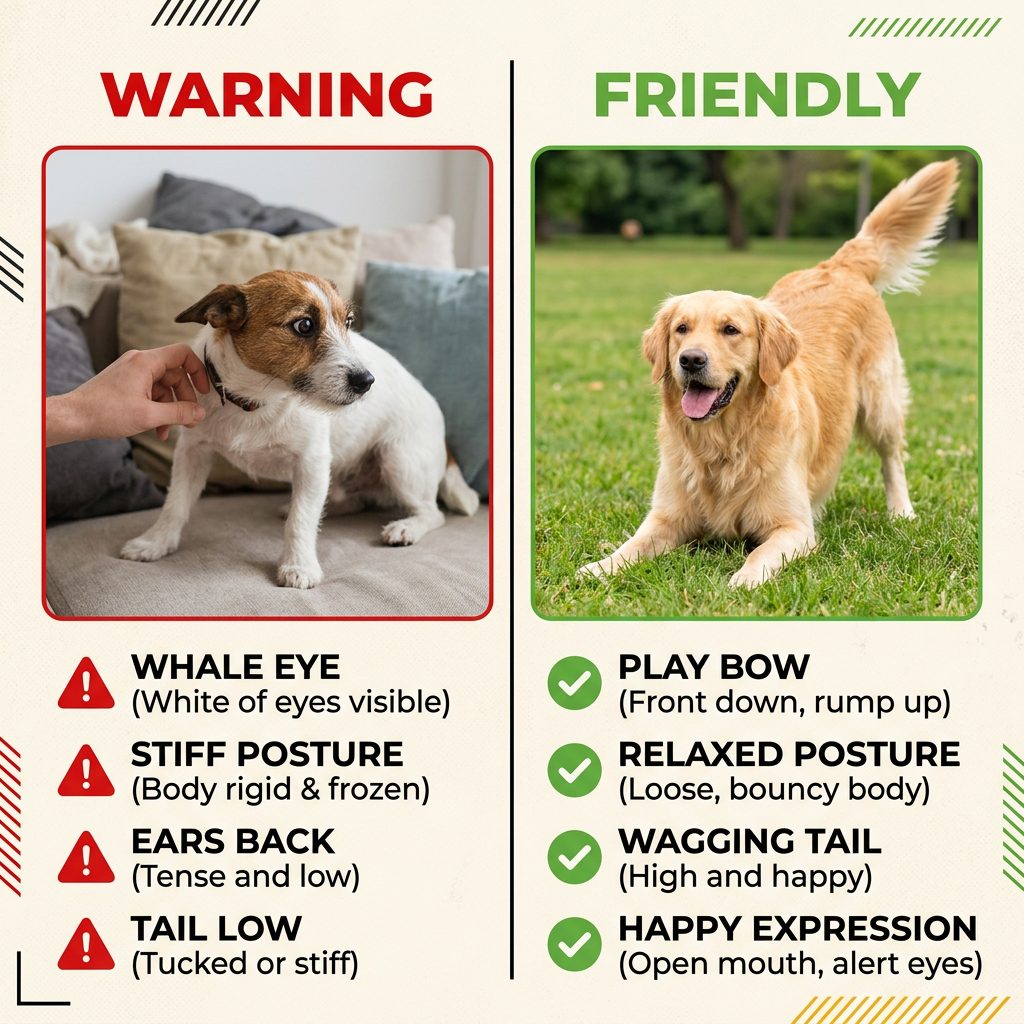
To keep both dogs safe, you must become an expert in canine body language. Dogs communicate primarily through subtle shifts in posture, ear position, and eye contact. Savvy owners know that a wagging tail doesn’t always mean ‘happy’—it simply means ‘arousal.’ A fast, stiff wag can actually be a precursor to a bite.
Green Flags: Signs of a Budding Friendship
- Play Bows: The classic ‘butt in the air, chest on the ground’ signal that everything following is ‘just for fun.’
- Self-Handicapping: The older, stronger dog voluntarily laying down or slowing down to let the puppy ‘win’ during play.
- Loose, Wiggly Bodies: Both dogs look like they have ‘noodle spines.’
- Role Reversal: During play, the dogs take turns being the ‘chaser’ and the ‘chasee.’
Red Flags: Signs of Impending Conflict
- The ‘Hard Stare’: One dog freezes and stares intently at the other. This is a threat.
- Lip Curling or Low Growling: These are clear ‘stop what you are doing’ signals. Respect them.
- Whale Eye: Seeing the whites of the dog’s eyes indicates extreme stress or fear.
- Tucked Tail and Hiding: If the puppy or the older dog is constantly trying to hide, the introduction is moving too fast.
Takeaway: Never punish a growl. A growl is a dog’s way of saying ‘I’m uncomfortable.’ If you take away the growl, the dog may move straight to a bite without warning next time.
Phase Five: Troubleshooting and Long-Term Success
Navigating Common Roadblocks
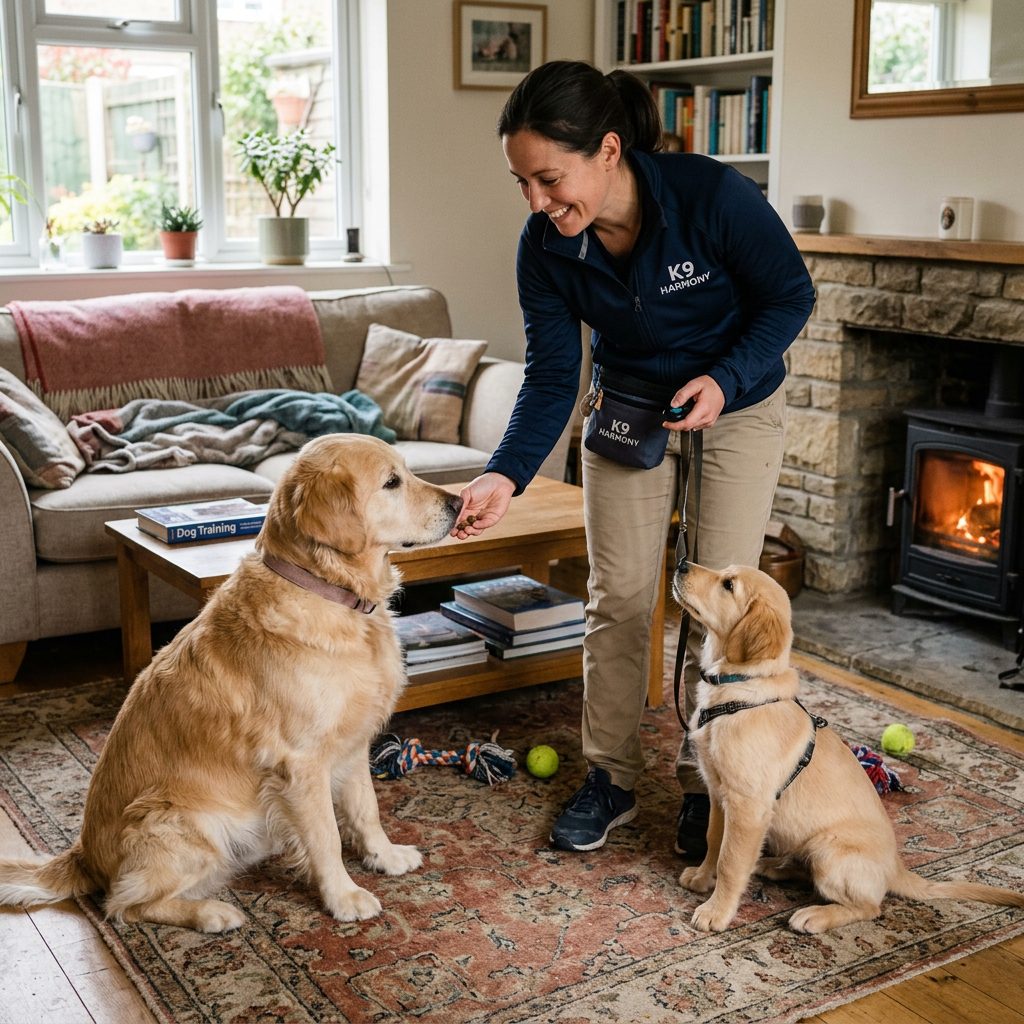
Even with the best preparation, you might encounter setbacks. Perhaps your older dog has become withdrawn, or the puppy is being particularly relentless. Understanding how to troubleshoot these moments is key to avoiding a long-term disaster.
The ‘Three-Three-Three’ Rule for Introductions
Adapted from rescue dog integration, this rule helps set realistic expectations:
- The First 3 Days: The ‘Decompression’ phase. Expect everyone to be on edge. Focus on management and safety over interaction.
- The First 3 Weeks: The ‘Routine’ phase. The dogs start to learn each other’s boundaries. You should see fewer ‘explosive’ reactions and more ‘negotiation.’
- The First 3 Months: The ‘Bonding’ phase. This is when true friendship begins to form, and you can start to relax some of the stricter management protocols.
When to Call a Professional
If you see any of the following, it is time to consult a certified animal behaviorist or a professional trainer who uses positive reinforcement:
- Unprovoked snapping or lunging that results in contact.
- One dog is living in a constant state of fear (refusing to eat or move from a specific spot).
- Resource guarding that escalates to physical fighting.
- The older dog is showing signs of ‘shutting down’ (extreme lethargy or loss of interest in usual activities).
Remember, your resident dog did not ask for a roommate. It is your responsibility to ensure their quality of life does not diminish because of your desire for a second dog. Respect their seniority, protect their peace, and the bond will follow in its own time.
Conclusion
A Journey, Not a Race
Successfully introducing a new puppy to an older dog is one of the most rewarding challenges a dog owner can face. It requires patience, keen observation, and a commitment to safety. By prioritizing neutral ground meetings, utilizing physical barriers, and respecting the communication signals of both dogs, you can avoid the ‘disaster’ scenarios that haunt many multi-dog households. Remember that every dog is an individual; some pairs will become best friends in days, while others may take months to achieve a peaceful coexistence. As long as both dogs feel safe and their needs are being met, you are on the right track. Stay consistent, stay positive, and enjoy the beautiful process of watching two different lives weave into one harmonious pack.