3 Ridiculously Fun Games That Teach Your Wild Puppy Mind-Blowing Impulse Control
The ‘Land Shark’ Phase and the Power of Choice
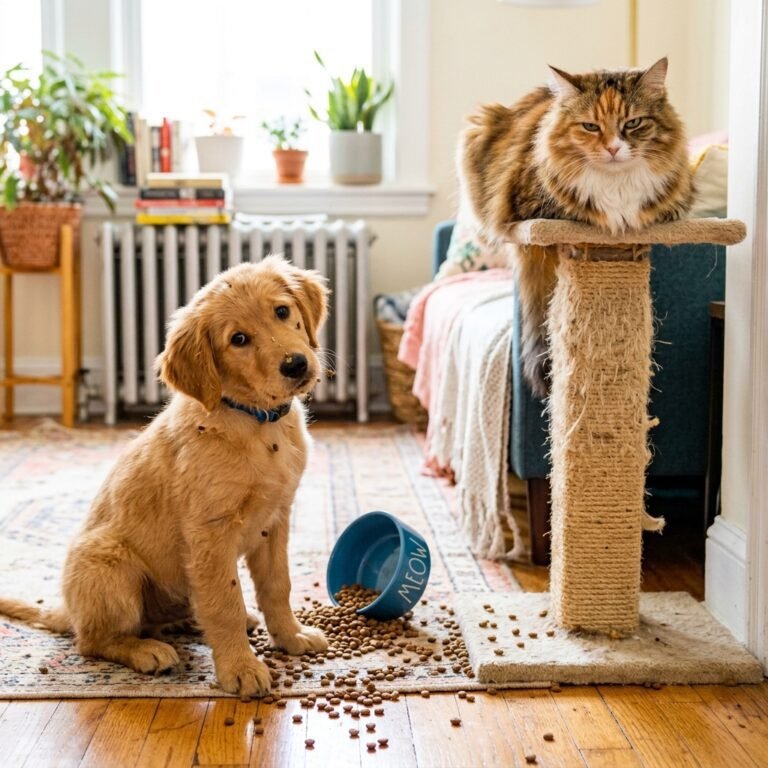
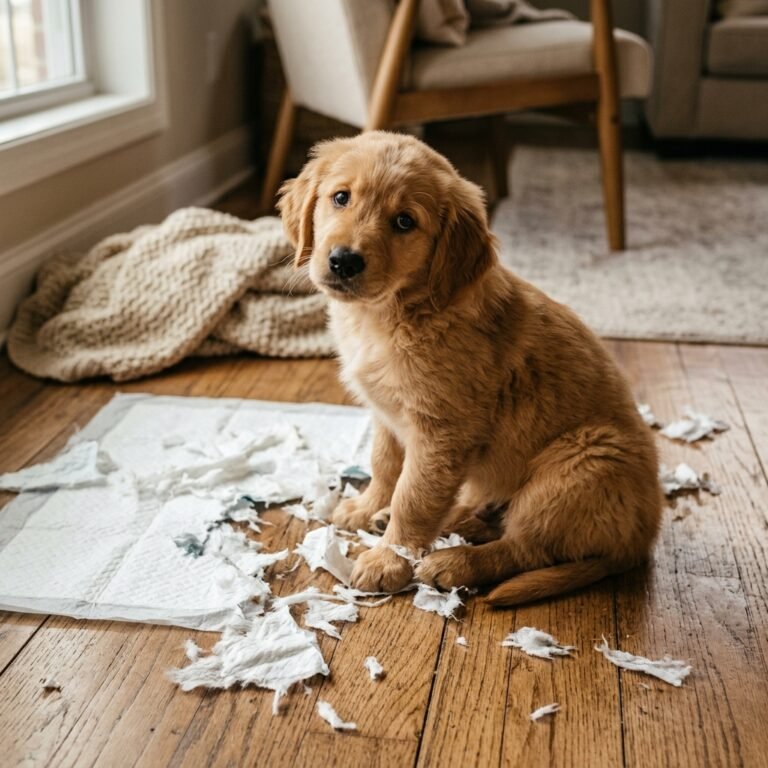
If you are reading this, you are likely the proud—and perhaps slightly exhausted—owner of a ‘wild’ puppy. You know the type: the one who treats your ankles like chew toys, launches themselves at the dinner table like a heat-seeking missile, and possesses the attention span of a caffeinated goldfish. We often call this the ‘land shark’ phase, and while it is perfectly normal, it can be incredibly taxing. The missing ingredient in most of these chaotic interactions isn’t a lack of love or a ‘bad’ dog; it is a lack of impulse control.
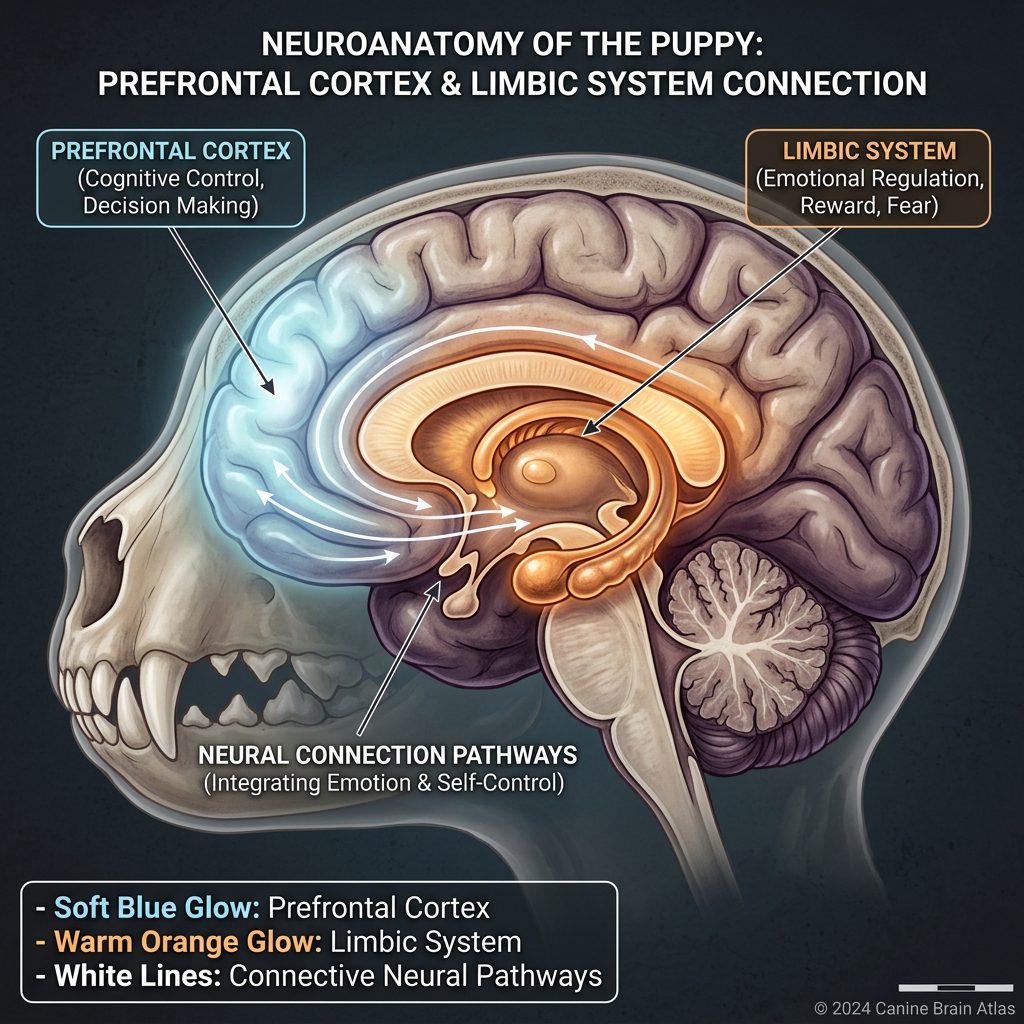
Impulse control is effectively the ‘off switch’ for a dog’s brain. It is the ability to resist a tempting stimulus—like a squirrel, a falling piece of bacon, or a guest walking through the door—in favor of a more appropriate behavior. For a puppy, whose prefrontal cortex is still very much under construction, this is a monumental task. However, the good news is that impulse control is a muscle. The more you exercise it, the stronger it becomes. But here is the secret: you don’t need boring, repetitive drills to build this muscle. In fact, the most effective way to teach a puppy to control their wilder urges is through ridiculously fun games.
In this guide, we are going to dive deep into three specific games that shift the narrative from ‘No, stop that!’ to ‘I choose to wait because it’s rewarding.’ By the end of this article, you will have a roadmap to transform that wild energy into mind-blowing focus, all while strengthening the bond between you and your savvy canine companion.
The Science of the Puppy Brain: Why They Can’t Just ‘Sit Still’
Understanding the Biological ‘Go’ Switch
Before we jump into the games, it is crucial to understand what is happening inside your puppy’s head. Puppies are biologically wired to be impulsive. In the wild, an impulsive reaction to movement or food meant survival. Their brains are dominated by the limbic system, which handles emotions and survival instincts, while the prefrontal cortex—the part responsible for decision-making and impulse regulation—won’t be fully developed until they are well into adulthood (often 18 to 24 months depending on the breed).
The Dopamine Loop
When your puppy sees something exciting, their brain releases a surge of dopamine. This ‘feel-good’ chemical creates an intense drive to act now. If they jump on you and get attention (even if it’s you pushing them off), that dopamine loop is closed and the behavior is reinforced. To break this, we need to teach them that calmness is the fastest way to get what they want. We aren’t just teaching a command; we are rewiring their reward system.
Impulse control isn’t about suppression; it’s about teaching your dog that ‘waiting’ is an active, rewarding choice.
By using games, we tap into their natural play drive. This makes the learning process ‘sticky.’ When a dog learns through play, the information is processed differently than when they learn through fear or pressure. We want them to think, ‘If I hold still, the fun starts!’ rather than ‘I better hold still or I’ll get in trouble.’
Preparation: Setting the Stage for Success
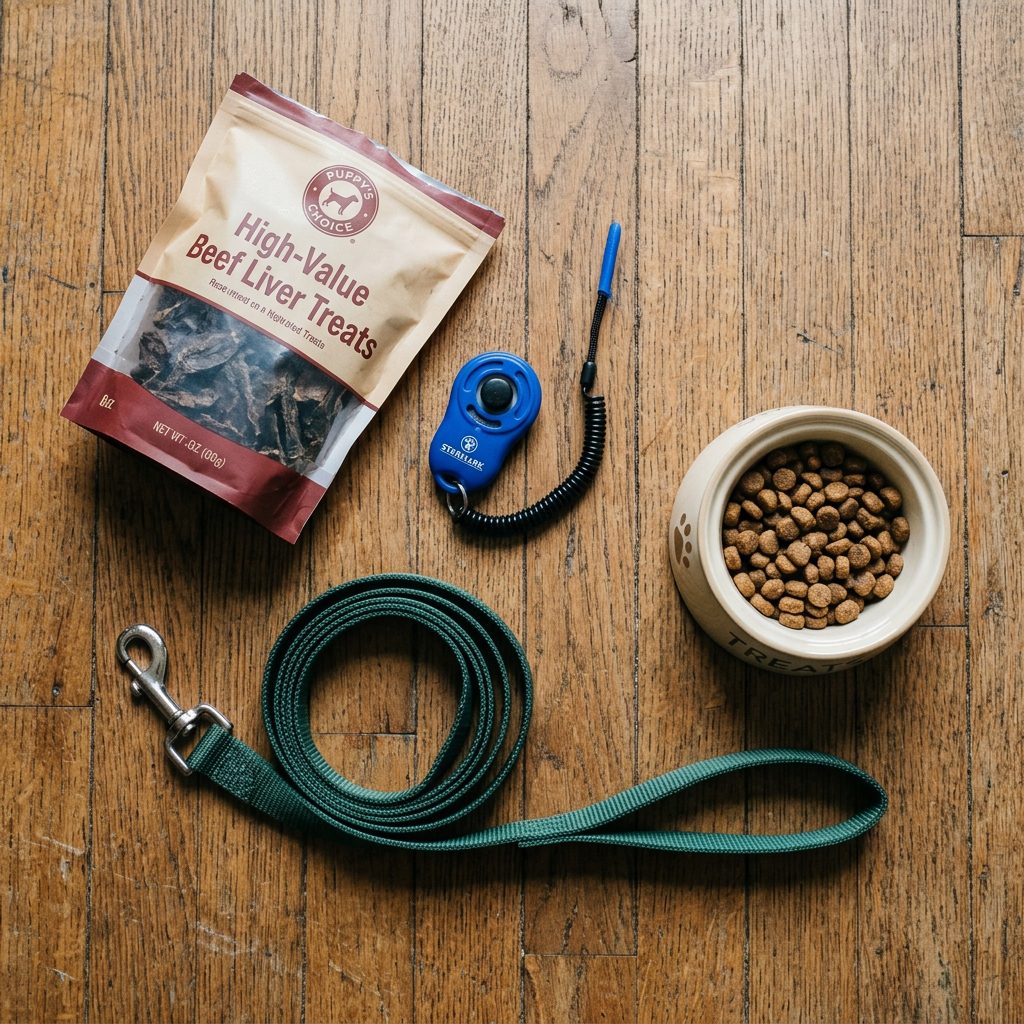
Tools of the Trade
You wouldn’t show up to a marathon without the right shoes, and you shouldn’t start impulse control training without the right gear. Because we are asking your puppy to do something very difficult (resisting their instincts), the rewards must be commensurate with the effort. We use a hierarchy of rewards to ensure the puppy stays engaged.
The Reward Hierarchy Table
| Reward Level | Example Item | Best Used For |
|---|---|---|
| Low Value | Standard Kibble | Known behaviors in quiet environments. |
| Medium Value | Crunchy Biscuits / Charlee Bears | Learning new steps of a game indoors. |
| High Value | Boiled Chicken / String Cheese | High-distraction environments or difficult games. |
| Ultra-High Value | Freeze-Dried Liver / Salmon | The ‘Big Wins’ or extreme impulse challenges. |
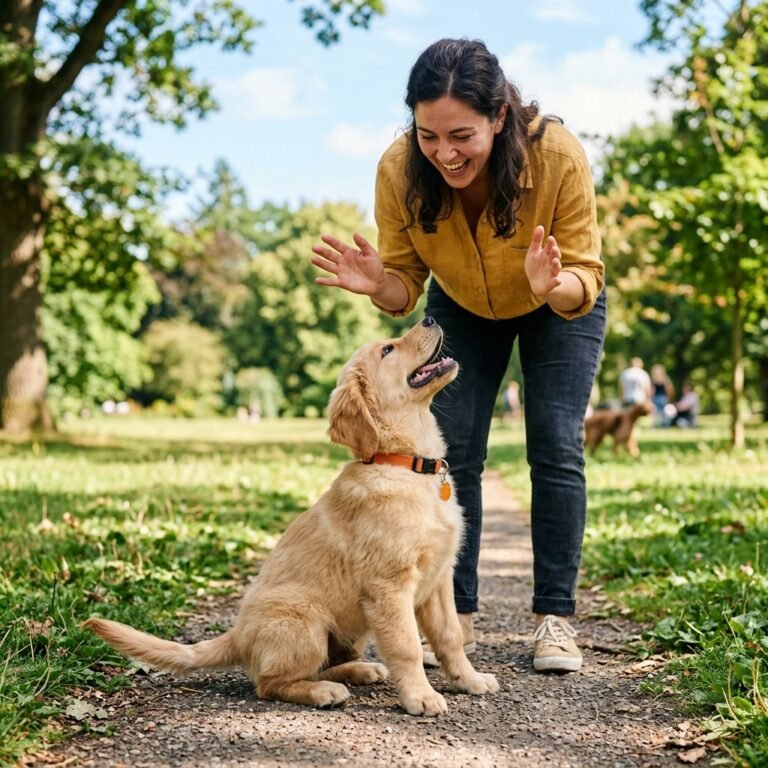
Beyond treats, you will need a quiet environment to start. Trying to teach impulse control at a busy park for the first time is a recipe for failure. Start in your living room, then move to the backyard, and only then tackle the real world. You may also want a clicker or a consistent ‘marker word’ like ‘Yes!’ to pinpoint the exact moment your puppy makes the right choice.
Game 1: The Zen Hand (The Foundation)
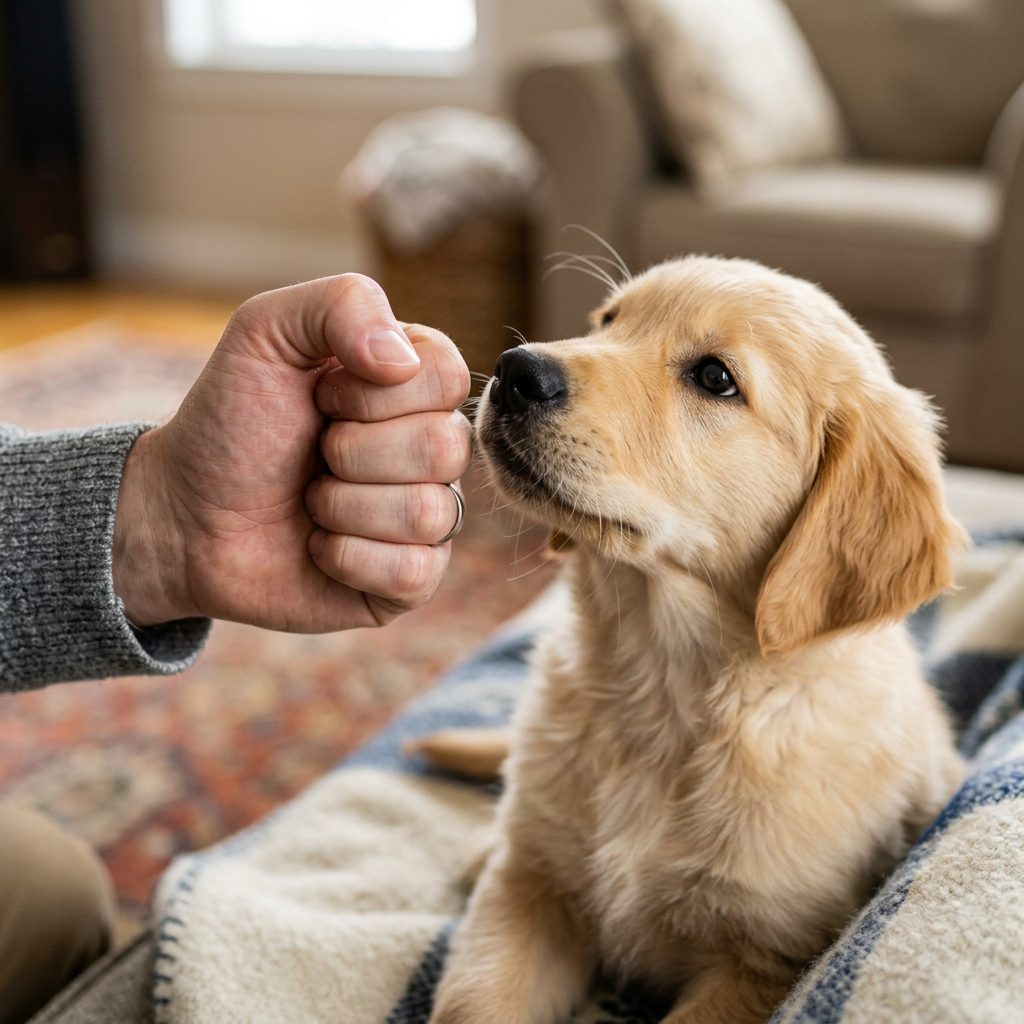
The Art of Doing Nothing
The ‘Zen Hand’ is the foundational game of impulse control. It teaches your puppy that lunging, nibbling, or pawing at a reward actually makes that reward disappear. Only by showing restraint does the hand open and the reward become available. It is the literal embodiment of ‘Zen.’
Step-by-Step Instructions
- The Closed Fist: Take a high-value treat and place it inside your fist. Hold your fist out to your puppy.
- Ignore the Chaos: Your puppy will likely sniff, lick, and perhaps even nibble at your hand. Do not say anything. Do not pull your hand away. Simply keep your fist closed.
- The Moment of Choice: Eventually, the puppy will pull back, even if just for a second, out of confusion or frustration. The moment they move their nose away from your hand, say ‘Yes!’ (or click) and open your hand to let them eat the treat.
- Increasing the Duration: Repeat this until the puppy immediately sits or backs away when they see the closed fist. Now, start waiting for 2 seconds of ‘calm’ before opening the hand.
- The Open Palm Challenge: Once they master the closed fist, try it with an open palm. If they lung for the treat, quickly close your hand. If they remain still, they get the prize.
Troubleshooting Common Mistakes
The most common mistake is pulling the hand away. If you move your hand, you turn it into a game of ‘keep-away,’ which triggers the puppy’s prey drive. Keep your hand stationary. Let the puppy figure out the puzzle. Your silence is powerful here; it forces the puppy to use their brain rather than just reacting to your voice.
Game 2: ‘Red Light, Green Light’ (Dynamic Control)
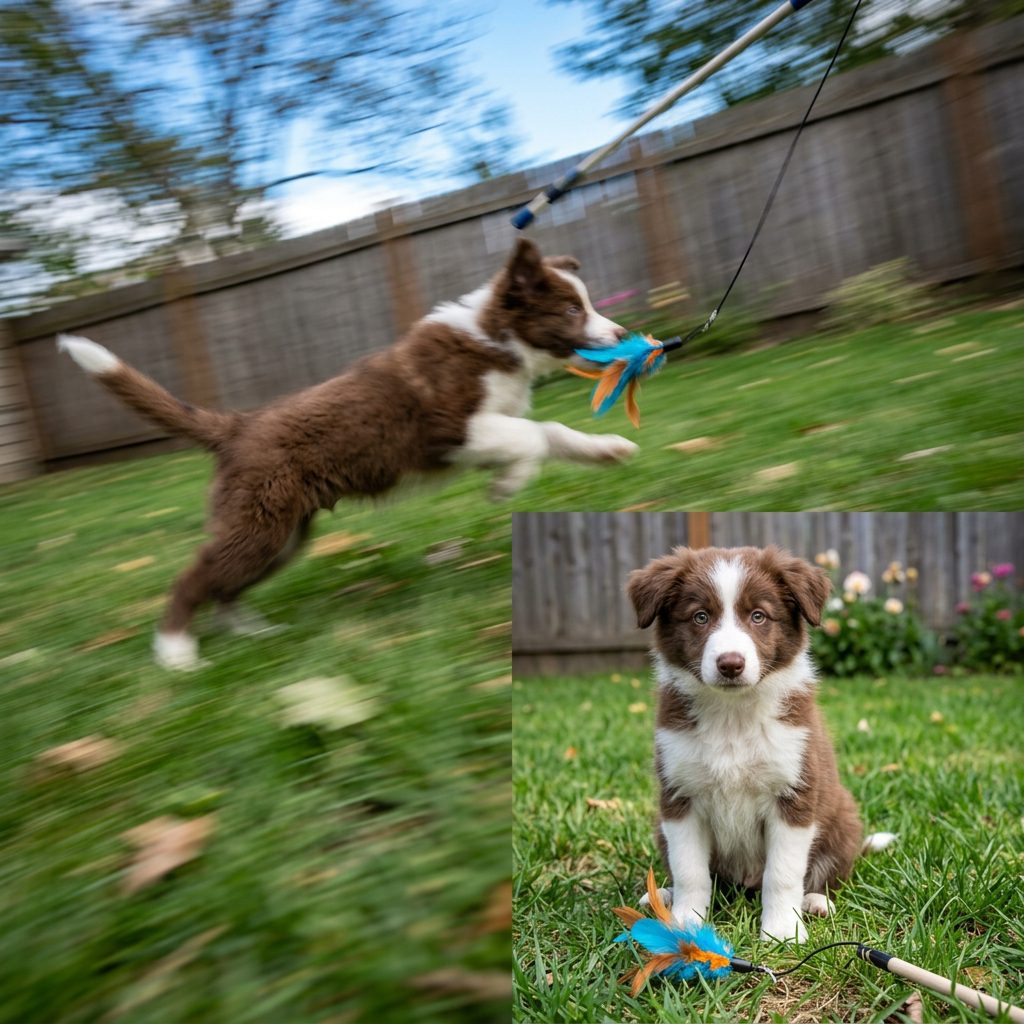
Adding Movement to the Mix
The Zen Hand is great for stationary control, but real life is moving. Puppies often lose their minds when things start moving fast. ‘Red Light, Green Light’ (also known as the Flirt Pole Game or the Tug Reset) teaches them to go from 100 to 0 instantly. This is a literal life-saver if your dog ever decides to chase something toward a road.
How to Play
- Step 1: The Excitement (Green Light): Engage your puppy in a game of tug or use a ‘flirt pole’ (a toy on a string attached to a pole). Get them moving and excited!
- Step 2: The Freeze (Red Light): Suddenly stop all movement. If playing tug, make your arms go limp and ‘dead.’ If using a flirt pole, drop the toy to the ground and stand still.
- Step 3: The Reset: Wait for your puppy to let go or sit down. This is the ‘Red Light’ phase. As soon as they disengage and offer a calm behavior (like a sit or just looking at you), say ‘Yes!’ and immediately restart the game.
Why This Works
This game teaches emotional regulation. You are taking the puppy from a state of high arousal back to a state of calm focus. By making the ‘restart’ of the game the reward, you are reinforcing that being calm is the key to continuing the fun. Savvy owners know that a dog who can ‘off’ their excitement mid-play is a dog who can be trusted in any situation.
The goal is not to stop the fun, but to show the puppy that THEY have the power to start the fun by being calm.
Game 3: The ‘Wait for the Bowl’ Gauntlet
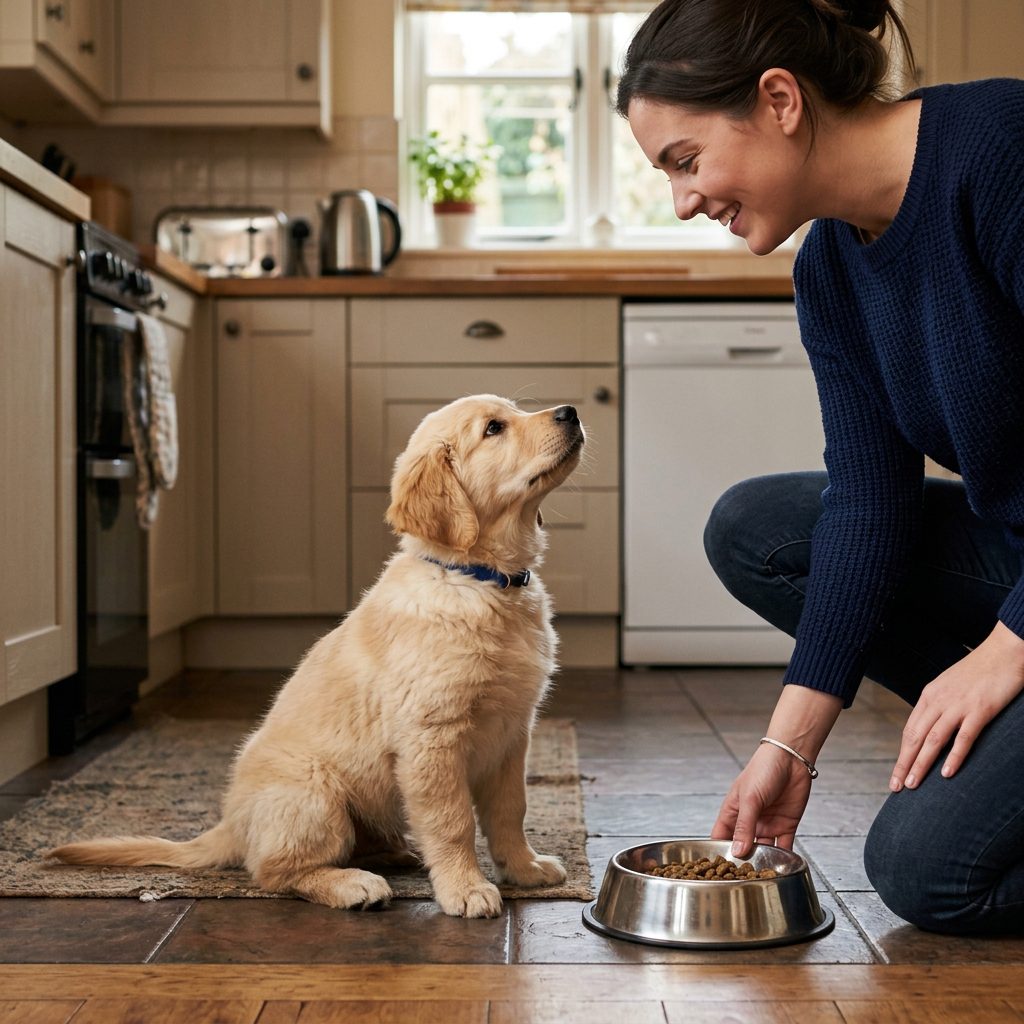
Real-World Application at Mealtime
Mealtime is often the most high-stakes moment of a puppy’s day. It is the perfect ‘gauntlet’ to test their growing impulse control. If your puppy is currently doing backflips and screaming while you prepare their dinner, this game will change your life.
The Execution
- The Starting Position: Ask your puppy to ‘Sit.’ If they don’t know sit yet, just wait for them to have four paws on the floor.
- The Descent: Slowly begin to lower the food bowl toward the floor.
- The Correction: If the puppy breaks the sit or moves toward the bowl, immediately lift the bowl back up to your chest. No scolding needed. The consequence is simply that the food moved further away.
- The Progress: Lower it again. Repeat this ‘yo-yo’ motion until you can place the bowl on the floor while the puppy remains still.
- The Release: Do not let them eat yet! Wait for a moment of eye contact, then give your release word (e.g., ‘Okay!’ or ‘Break!’).
Pro-Tip: The ‘Look at Me’ Connection
For advanced puppies, don’t just wait for them to stay seated. Wait for them to look at your eyes instead of the bowl. This teaches them to check in with you for permission when they want something valuable. This ‘auto-check-in’ is the holy grail of dog training.
Common Pitfalls and How to Avoid Them
Why Impulse Control Fails
Even with the best games, progress isn’t always linear. Puppies have ‘off’ days just like humans do. Understanding the common pitfalls will keep you from getting frustrated and help your puppy succeed faster.
1. Moving Too Fast
If your puppy was successful in the living room, don’t expect them to be perfect at the park. This is called ‘generalization.’ Dogs are very situational learners. When you change the environment, you must lower your expectations and go back to Step 1 of the game until they catch up.
2. Using the Wrong Rewards
If the distraction is a 10 (like a squirrel), and your treat is a 2 (kibble), the math doesn’t add up. Always match the reward to the level of difficulty. For impulse control, you are asking for a lot of mental ‘currency,’ so be prepared to pay well!
3. Ignoring ‘Trigger Stacking’
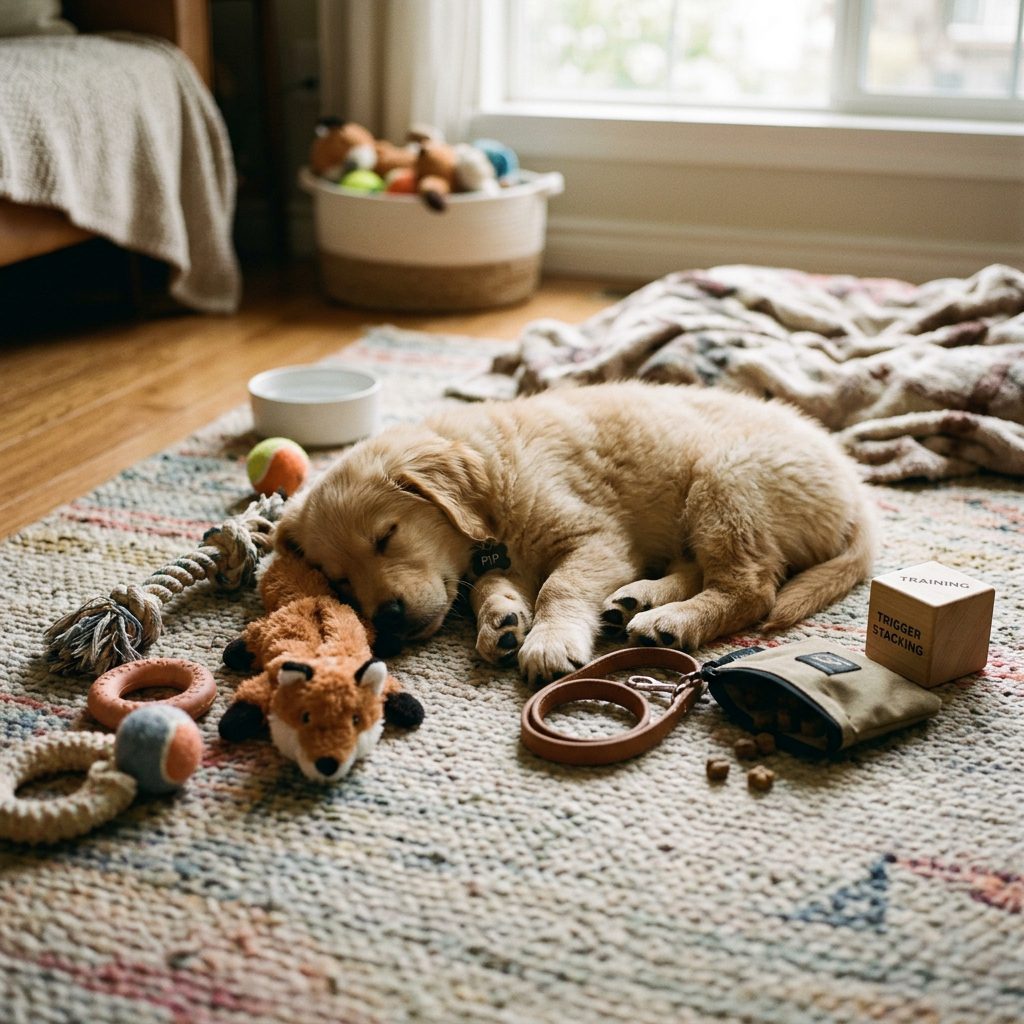
If your puppy has had a big day—a vet visit, a long walk, and a playdate—their ‘impulse control tank’ is likely empty. This is known as trigger stacking. On days like this, keep training sessions very short or skip them entirely. You can’t train a brain that is already over-stimulated.
Consistency is not about doing the same thing every day; it’s about being a predictable partner for your dog.
Advancing the Games: The ‘Proofing’ Phase
Taking It to the Streets
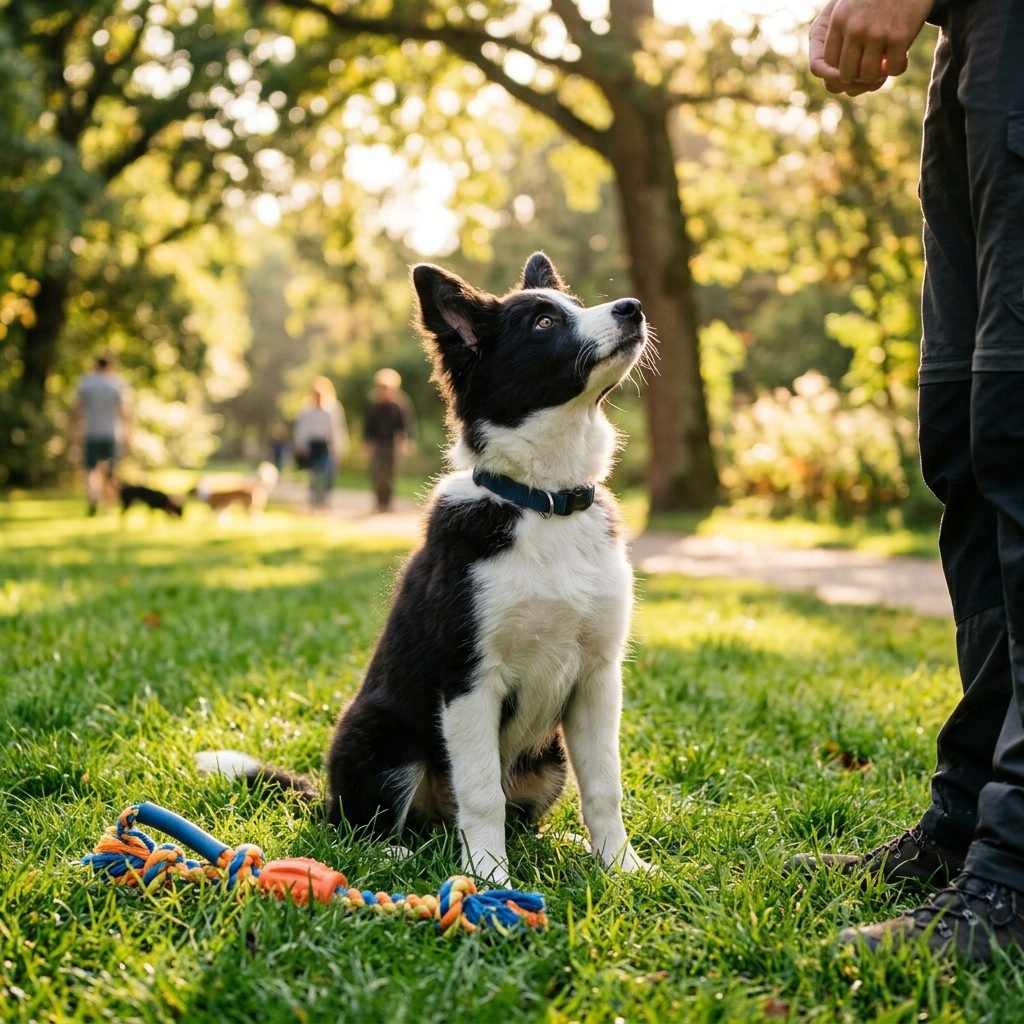
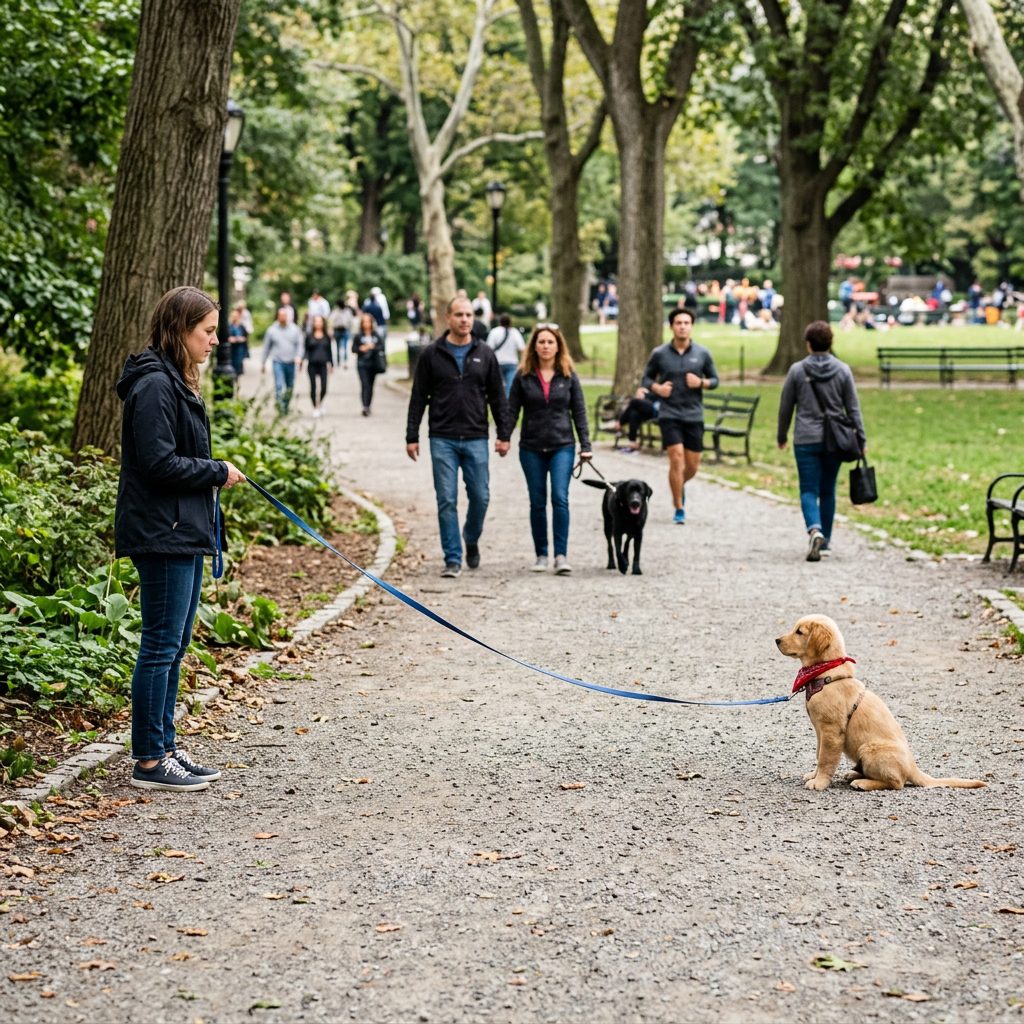
Once your puppy is a master of these three games in the house, it is time to ‘proof’ the behaviors. Proofing means practicing in increasingly difficult environments. This is where the ‘mind-blowing’ part of the impulse control comes in.
The Three Ds of Training
- Distance: Can they stay in a ‘Zen Hand’ position if you are three feet away? Ten feet?
- Duration: Can they wait for their bowl for 5 seconds? 30 seconds? A minute?
- Distraction: Can they play ‘Red Light, Green Light’ while a neighbor is mowing the lawn or another dog is barking?
Introduce only one D at a time. If you increase the distance, make the duration shorter. If you add a distraction, move closer to the puppy. This ‘layering’ approach ensures the puppy never feels overwhelmed and continues to view the games as a winning proposition.
Conclusion
From Chaos to Calm: The Long-Term Payoff
Teaching impulse control is one of the greatest gifts you can give your puppy. It is about more than just ‘good manners’; it is about safety, confidence, and freedom. A dog with high impulse control can go more places, meet more people, and enjoy more off-leash time because you can trust their choices. These three games—The Zen Hand, Red Light Green Light, and the Bowl Gauntlet—are your secret weapons. They turn the struggle of the ‘wild puppy’ phase into a collaborative, joyful experience. Remember to keep your sessions short (5-10 minutes), keep your rewards high, and most importantly, keep it fun. You aren’t just training a dog; you are building a relationship based on mutual respect and clear communication. Happy training!